Record book sales and 20% increase in footfall cement EIBF’s place at the heart of the most important conversations of our time

  • 20% increase in footfall, with more than 28,000 people welcomed to the site on each of the Book Festival’s three weekends
  • Fewer events delivered more ticket sales, with 62% of tickets sold to people in EH postcodes
  • Changing Your Mind: Book Festival audiences gathered to explore the defining questions of our age, from AI and social media to democracy, culture and the future of society
  • People in 52 countries tuned in online, extending the Book Festival’s international reach
  • 62 schools from across Scotland were welcomed during the National Year of Reading, with every child receiving a free book
  • 217 library watch parties across more than 80 libraries in 22 local authority areas brought Book Festival conversations to communities across Scotland
  • International artists, writers and cultural leaders came together through Global Ink and Scotland to the World
  • Val McDermid and Jo Sharp’s This Door of the Seas and Lyse Doucet’s The Finest Hotel in Kabul: A People’s History of Afghanistan were among the Book Festival’s bestselling books

Edinburgh International Book Festival has concluded a record-breaking year that reaffirmed its position as one of the world’s leading spaces for public conversation.

With a smaller programme but a higher proportion of available tickets sold, the Book Festival brought together writers, thinkers, artists and audiences to explore the defining issues of our time under this year’s theme, Changing Your Mind.

In its third year at Edinburgh Futures Institute, footfall increased by 20% compared with last year, while ticket sales rose despite a smaller programme. Meanwhile, 62% of tickets were sold to people in EH postcodes, underlining the Book Festival’s strong local support.

Alongside major discussions on politics, technology and society, audiences flocked to hear acclaimed fiction writers including John Grisham, Maggie O’Farrell and 2026 International Booker Prize winners Yáng Shuāng-zǐ and Lin King.

The programme also brought together leading voices writing in English alongside internationally celebrated authors in translation, reinforcing the Book Festival’s reputation as a global home for literature and storytelling.

Together, these conversations demonstrated the Book Festival’s role as a space where complex issues can be explored openly, while helping connect people of all ages with books, writers and reading.

Jenny Niven, Director and CEO of Edinburgh International Book Festival, said: “Changing Your Mind was more than this year’s theme. It was an invitation to approach the world with curiosity rather than certainty, and to do that in real life, in the company of other people, has felt both joyful and necessary. 

“In the National Year of Reading, it is heartening to see footfall increase, more tickets sold across a smaller programme and our Waterstones bookshop achieve its biggest-ever sales. At a time when literacy rates are declining, book festivals have an important role in helping people discover the pleasure, confidence and connection that reading can bring. Our schools programme, free books for every child attending and year-round work with communities are all part of that commitment. 

“With 62% of tickets sold to people in EH postcodes, the Book Festival remains deeply rooted in Edinburgh. At the same time, people in 52 countries joined us online. That combination of strong local support and international reach shows a Book Festival that is both determinedly local and open-heartedly international.”

A PLACE TO DISCUSS THE DEFINING ISSUES OF OUR TIME

From artificial intelligence and social media to democracy, culture and creativity, the Book Festival provided a space for audiences to engage with some of the defining questions of our age.

Former technology executive and whistleblower Sarah Wynn-Williams highlighted the urgency of debates around social media and public discourse, arguing that “it’s really important that we start to build up that offline muscle of disagreement”, and warning that social media algorithms encourage people “to fix our identity in increasingly strident and narrow boxes.”

Professor Daisy Fancourt explored the growing importance of meaning, creativity and culture in an AI-driven world, arguing that “What we’re all inherently going to want more and more in an AI world is meaning.”

Politics and public life also remained central to the programme. Former UK Prime Minister Gordon Brown considered how citizens can help bring about positive change, while former Scottish First Minister Nicola Sturgeon and former Finnish Prime Minister Sanna Marin reflected on the challenges and choices that shaped their leadership. Former Chancellor Jeremy Hunt also joined the programme, bringing audiences into conversations about the political and economic questions shaping public life.

The appetite for new perspectives extended beyond Book Festival events. The Book Festival’s Waterstones bookshop recorded its biggest-ever sales.

Among its bestselling titles were Val McDermid and Jo Sharp‘s This Door of the Seas and Lyse Doucet‘s The Finest Hotel in Kabul, reflecting audiences’ appetite for ideas and stories that help them see the world differently.

YEAR-ROUND IMPACT ACROSS SCOTLAND

The Book Festival’s commitment to access and participation extended far beyond Edinburgh through a programme of free digital activity hosted in communities across Scotland.

This year, more than 80 libraries across 22 local authority areas hosted 217 watch parties, enabling audiences to experience major Book Festival events together in their local communities. People from 52 countries also tuned in online, extending access to the programme around the world.

These free screenings ensured geography and cost were not barriers to participation and demonstrated how the Book Festival continues to use technology to connect audiences with writers, thinkers and ideas.

THE BBC

A new collaboration with the BBC brought Book Festival conversations to wider audiences through programmes including Front RowLoose Ends and Take Four Books, extending the reach of writers, thinkers and cultural commentators appearing across the programme.

SUPPORTING THE NEXT GENERATION OF READERS

The Book Festival welcomed more than 62 schools from across Scotland and 21 from Edinburgh, with every child receiving a free book to take home.

Taking place during the National Year of Reading, the schools programme is central to the Book Festival’s commitment to encouraging reading and helping children build lasting relationships with books.

GLOBAL REACH THROUGH GLOBAL INK

2026 marked the third year of Global Ink, supported by Expo, bringing international festival directors from four continents to Edinburgh. The programme created opportunities to exchange ideas, develop partnerships and strengthen Edinburgh’s position as a global meeting place for literature, culture and ideas.

SCOTLAND TO THE WORLD

This year’s Book Festival also saw the continued development of Scotland to the World, showcasing ambitious collaborations between writers, musicians and theatre-makers.

Highlights included India Alba, Ali Smith’s collaboration with the New European Ensemble, Delusions by Len Pennie and Paul Leonard-Morgan, and a Japanese Noh Theatre adaptation of The Song of Rona Island, demonstrating how Scottish stories can inspire new artistic forms and reach audiences around the world.
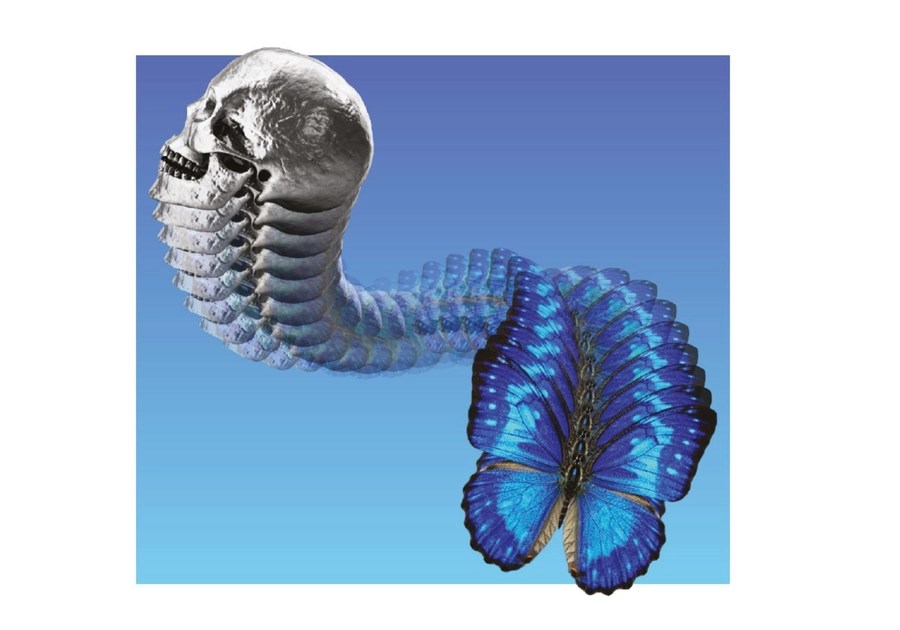
TONIGHT: Community Cabaret at Edinburgh International Book Festival

Monday 24 August 2026, 18:00

Spiegeltent, Edinburgh Futures Institute, Lauriston Place, EH3 9EF

We’ve challenged local writers and poets to respond to this year’s Festival theme: Changing Your Mind.

Join us as we bring them together to perform their work and create a patchwork of ideas on trying new things, listening to different perspectives, and keeping a sense of wonder in our ever-changing world. You can expect a diverse, thought-provoking, and energising evening of live music, poetry, and storytelling.

I’ll be joining Citizen writer colleagues to read a short piece at tonight’s event – see you there (unless I change my mind, of course!) – Ed.

Words From The Wards: The Exhibition

FREE EXHIBITION AT EDINBURGH INTERNATIONAL BOOK FESTIVAL

The Gallery, Edinburgh Futures Institute, 1 Lauriston Place, Edinburgh, EH3 9EF

Last year, through our Words from the Wards project, we asked the people of Edinburgh to share stories about the former Royal Infirmary, to honour the experiences and memories that people connect with the building’s previous life.

Following the success of the project, we worked with Edinburgh College of Art students to illustrate the collected stories.

Join us to view the stories and illustrations side by side in our new festival gallery.

The Gallery, Edinburgh Futures Institute, 1 Lauriston Place, Edinburgh, EH3 9EF

Exhibition runs until 17th August from 10am – 9pm daily

Tonight at Edinburgh International Book Festival: Stories and Scran

Enjoy tasty food and brilliant performances from local people. Returning for its fifth year, Stories and Scran celebrates dynamic, thought-provoking work created by our Citizen participants.

Expect diverse and creative talent from Project Esperanza’s Women’s Group, WHALE Arts, the Book Festival’s own Adults Writing Group, and Citizen Collective.

And Scran Academy are back to serve up delicious, sweet treats you can enjoy during the event.

Stories and Scran runs from 8 – 9.15pm at the Book Festival’s new home at Edinburgh Futures Institute on Lauriston Place.

Supported by Jenny Colgan Books

New Edinburgh Futures Institute welcomes first commercial tenant

The University of Edinburgh has welcomed its first commercial tenant to the new Edinburgh Futures Institute in the capital’s historic Old Royal Infirmary in Lauriston Place.

Smart Data Foundry has moved from the nearby Bayes Centre to a state-of-the-art workspace in one of the converted Nightingale wards in the A-listed building, which dates back to 1879.

SDF’s move follows a period of sustained growth for the organisation which was founded in 2022 to unlock the power of financial data to tackle the major issues facing society. Over the past two years it has seen its workforce grow and mature and forged partnerships with clients like Sage, NatWest Group and Financial Conduct Authority (FCA).

The data pioneer has moved into a purpose-built ward on the 2nd floor of the historic building which housed the city’s main hospital until 2003. The Institute officially opened to the public on 3rd of June, following a multi-million-pound, seven-year refurbishment programme.  

Professor Kev Dhaliwal, Interim Director of Edinburgh Futures Institute said: “Edinburgh Futures Institute is delighted to welcome Smart Data Foundry. As one of the region’s Data Driven Innovation Hubs, we bring together staff, students and partners into an inspiring, collaborative and entrepreneurial environment.

“Co-location with our financial and public services sector hubs, alongside numerous industrial partners, researchers, and talented students, will accelerate data innovation and insights to help solve national and global challenges. We share the ambition to deliver positive social impact and build a better world using the power of data.”

The building includes teaching facilities, rooms for co-working with industry partners, business incubation areas, labs for innovation and prototyping, a public square, café, and exhibition and performance spaces.

Dame Julia Unwin, Chair of Smart Data Foundry, said: “Edinburgh Futures Institute has an unrivalled range of facilities in the heart of Edinburgh, and this strategic relocation underscores our commitment to fostering greater collaboration, innovation and productivity in our mission to unlock the power of data for good.

“It’s our aim to cultivate a dynamic ecosystem where data scientists, researchers, and industry partners can collaborate seamlessly to unlock new insights and drive forward our purpose of creating positive impact across society, the economy and the environment. Our new home at the Edinburgh Futures Institute is the perfect base for this ecosystem to flourish.”

Dougie Robb, Chief Financial Officer at Smart Data Foundry, added: “The combination of modern design, restored historic architecture and beautiful grounds at Edinburgh Futures Institute will help us to showcase our services to clients and attract the best talent to the Smart Data Foundry team.

“It’s not just a new office; it’s a place where ideas will flourish and groundbreaking work will be done.”

Smart Data Foundry currently delivers pioneering projects including a Cost-of-Living Dashboard for East Renfrewshire Council. Utilising near real-time de-identified data from NatWest Group, this dashboard integrates financial well-being indicators with contextual information, helping the council to understand better the challenges citizens face and therefore how this might impact on future policy interventions.

Other projects include the launch of the groundbreaking Income Volatility Dashboard with Joseph Rowntree Foundation. This innovative platform provides a comprehensive and unique view of income volatility and insecurity on consumers throughout the United Kingdom as a research and policy platform.

New home for Hidden Door

An office space which has been vacant since 2021 will receive a colourful lease of life when the organisation behind the Hidden Door Festival takes up a new residency.

Councillors on the Finance and Resources Committee have agreed to lease the council-owned building at 133 Lauriston Place for the next 10 years to the Edinburgh-based arts charity, which is currently planning a festival later in 2024 to celebrate its 10th anniversary.

They will use the space as an office and creative hub, undertaking repairs to the building while they lease it, in exchange for a favourable rental price.

Finance and Resources Convener, Councillor Mandy Watt, said: “This is a building which needs a lot of work so it hasn’t been occupied for the last few years. I’m delighted that Hidden Door have agreed to take it on and make it their own.

“Known for rejuvenating spaces into vibrant venues, I’ve no doubt they will create an inviting creative hub here. The venue is situated just a short stroll away from the art college and other fantastic venues like the Cameo and the Usher Hall, so the opportunities for collaboration are countless.

“We’re pleased to support a well-loved community arts charity in this way. The permanent location throughout the term of this lease should provide them with greater security and stability and a more accessible building everyone can enjoy.”

Hazel Johnson, Hidden Door’s Festival Director, said: “This is a hugely exciting and important step for Hidden Door – a hub from which to plan our activity and festivals will enable us work more closely with Edinburgh’s creative communities, all year round.

“As a volunteer-led charity, this is a huge milestone – and the timing couldn’t be better, as we both celebrate 10 years of Hidden Door festivals, and look to the future. We can’t wait to get in and get cracking!”