Recovery Loan Scheme launched

A new UK government-backed loan scheme has launched to provide additional finance to those businesses that need it.

  • new loan scheme will provide further support to protect businesses and jobs
  • loans will include 80% government guarantee and interest rate cap
  • government has backed £75 billion of loans to date as part of unprecedented £350 billion wider support package

The Recovery Loan Scheme will ensure businesses continue to benefit from Government-guaranteed finance throughout 2021.

With non-essential retail and outdoor hospitality reopening next week, Ministers have ensured that appropriate support is still available to businesses to protect jobs. From today, businesses – ranging from coffee shops and restaurants, to hairdressers and gyms – and can access loans varying in size from £25,000, up to a maximum of £10 million. Invoice and asset finance is available from £1,000.

The Chancellor of the Exchequer, Rishi Sunak, said: “We have stopped at nothing to protect jobs and livelihoods throughout the pandemic and as the situation has evolved we have ensured that our support continues to meet businesses needs.

“As we safely reopen parts of our economy, our new Recovery Loan Scheme will ensure that businesses continue to have access to the finance they need as we move out of this crisis.”

This is in addition to furlough being extended until 30 September, and the New Restart Grants scheme launched last week, providing funding of up to £18,000 to eligible businesses.

The UK Government is also supplementing this with the Plan for Jobs, focused on protecting, supporting and creating jobs across the country through the Kickstart scheme, T-level and a National Careers Service.

The scheme, which was announced at budget and runs until 31 December 2021, will be administered by the British Business Bank, with loans available through a diverse network of accredited commercial lenders.

26 lenders have already been accredited for day one of the scheme, with more to come shortly, and the government will provide an 80% guarantee for all loans. Interest rates have been capped at 14.99% and are expected to be much lower than that in the vast majority of cases, and Ministers are urging lenders to ensure they keep rates down to help protect jobs.

The Recovery Loan Scheme can be used as an additional loan on top of support received from the emergency schemes – such as the Bounce Back Loan Scheme and Coronavirus Business Interruption Loan Scheme – put into place last year.

So far, the government’s emergency loan schemes have supported more than £75 billion of finance for 1.6 million British businesses and this new scheme will build on that success. This is part of the government’s unprecedented £350 billion support package which has included paying millions of workers’ wages through the furlough scheme and generous grants and tax deferrals.

Business Secretary Kwasi Kwarteng said: “We’re doing everything we can to back businesses as we carefully reopen our economy and recover our way of life.

“The launch of our new Recovery Loan Scheme will provide businesses with a firm foundation on which to plan ahead, protect jobs and prepare for a safe reopening as we build back better from the pandemic.”

Reactions from business groups:

Rain Newton-Smith, CBI Chief Economist, said: “The coronavirus loan schemes have provided a critical lifeline to businesses, and so its successor – the new Recovery Loan scheme – comes as a huge relief to firms.

“These loans can be taken alongside existing COVID loans to help firms refinance, restructure and go for growth.

“It’s vital support remains as restrictions relax and demand returns to normal, allowing businesses to recover, save jobs, and support for reopening.”

Commenting on the Recovery Loan scheme, Suren Thiru, Head of Economics at the BCC, said: Accessing finance remains crucial to the lifeblood of a business and so the launch of the Recovery Loan scheme is welcome.

“The new scheme can play a potentially pivotal role in supporting the recovery by getting credit flowing to the firms who most need it.

“Chambers of Commerce will continue to work with government and the banks to ensure that businesses have the clarity they need to enable them to use the new scheme to help them return to growth.”

David Postings, Chief Executive of UK Finance, said: The banking and finance industry remains committed to supporting businesses of all sizes through the next phase of the pandemic response.

“As focus turns to economic recovery, we know that many firms are still facing uncertainty. The new Recovery Loan Scheme, alongside other commercial financial support, will help firms rebuild and invest for future growth.”

One in three Scots experience financial shock during pandemic

Financially shook: 19.8 million people have experienced a financial shock since the pandemic began with an average decrease in income of £538 per month

•    Two out of five UK adults (38%) have experienced a financial shock as a result of the pandemic

•    Those who experienced a financial shock saw their income decrease by £538 per month on average– almost a full week of spending for the average household2 according to the ONS and equating to £11 billion3 nationally

•    Over half (51%) of UK consumers have not taken steps to protect themselves against a potential financial shock

New research from Yolt, the award-winning smart money app, reveals that almost 20 million UK adults have experienced a financial shock, such as a pay decrease, job loss or a drastic change in financial situation, since the beginning of the pandemic.

Those who have had to deal with a financial shock saw their income decrease by over £530 per month on average – which almost equates to one full week of spending for the average family in the UK, according to the Office for National Statistics (ONS). Despite this, over half (51%) of UK consumers revealed they have not taken steps to protect themselves against a sudden change in income, or a shift in their finances that would mean they couldn’t cover their usual outgoings.

The research found that in many cases (19%) people had seen their income decrease and one in ten (11%) have been furloughed during the pandemic. In responses to these shocks, over a third (34%) have dipped into their savings and a quarter have turned to credit card spending (26%). One in five people who experienced a financial shock (20%) tried to raise money by selling things online and one in seven (16%) borrowed money from their family.

Experiencing a financial shock makespeople much more likely to put precautions in place in the future, as three out of four (74%) who had previously experienced a financial shock have taken action – compared to a third (33%) who hadn’t faced a shock.

Amongst all UK adults, these preventative steps included, reviewing theirmonthly outgoingstosee where cutbackscanbe made (23%), putting money aside in a rainy day fund (15%) and a focused approach to paying off debts (12%) to help ease financial pressure.

In fact, one in four of Brits (25%) said that the pandemic has made them finally look totackle their debt – as evidenced by recent data from the Bank of England which found that UK households repaid a total of £16.6bn on credit cards and loans in 20205.

Financial uncertainty continues to fuel consumer anxiety in the UK. Almost two out of five UK adults (38%) are extremely worried about their financial future and half (54%) want to protect their family financially more now, than ever before.

Pauline van Brakel, Chief Product Officer at Yolt, said: “Our research shows that the impact of the pandemic on people’s finances has been far reaching.

“There is no uniform financial experience or response tothe current economic climate and we’re unfortunately seeing a widening wealth gap, with some people able to save during this period, as the opportunity to spend has declined, and other people unfortunately having suffered a significant reduction in income at an average cost of £538 per month.

“With the UK still experiencing great levels of uncertainty there could be further financial shocks on the horizon for many – especially with government support schemes such as furlough due to come to an end in the coming months.

It’s no doubt a challenging time for all but engaging with your finances and looking to see where you could make cutbacks to save even a small financial cushion can be a lifeline if you do experience a financial shock.

“At Yolt, our recently launched evolution of the app is designed to help you manage your finances and take the hassle out of saving – by helping people save while they spend and making creating savings habits easier.”

Full scale of Britain’s job crisis uncovered in new research

Seven new private sector jobs will be needed to create one viable job post-pandemic

  • Cities will lead economic bounce back but most new jobs are expected to be low-skilled and low-paid.
  • Government must upskill workers and encourage higher-skilled businesses to invest in cities – particularly in the North and Midlands.

New Centre for Cities’ research in partnership with HSBC UK reveals that Britain’s jobs crisis is bigger than realised as the economy will need to create almost ten million new private sector jobs just to reverse the damage done by the pandemic.

Analysis of Britain’s ‘jobs miracle’ from 2013 to 2019 – when the national economy created 2.7 million net new jobs – finds that 19.3 million private sector jobs were created during this period and 16.6 million were lost. This meant that seven new private sector jobs were needed to create one viable job.

If this pattern repeats post-Covid then 9.4 million new private sector jobs will be needed to get the 1.3 million people who lost their jobs during the pandemic working again.

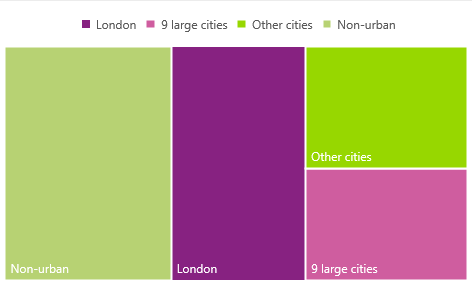
After the financial crisis big cities created the vast majority of new jobs and are expected to do so again post-Covid. London created one in four of all new private sector jobs (790,300) – equal to 17 Scarboroughs, or 25 Hartlepools. Other big cities also played an outsized role: in Manchester, 152,100 new jobs were created; in Birmingham 99,100 were; and in Glasgow 40,800 were.

In total, Britain’s ten largest cities created almost half (45.6%) of jobs during the ‘jobs miracle’, despite accounting for just 3.5% of land. In contrast, smaller towns and rural areas created 36% of new jobs. These findings underline the important role that big cities will play in helping the country recover from Covid-19.

Contribution of cities and non-urban areas to job creation, 2013-19

Fig 1.png

Source: ONS, Business Structure Database (BSD)

Many of the jobs lost in the pandemic were in sectors such as hospitality and tourism. While they are expected to recover quickly once the economy reopens, with an estimated three quarters of new jobs likely to come from sectors such as these, relying on them for new jobs will not address years of poor productivity and pay stagnation, particularly outside London and the Greater South East.

After the pandemic, the productivity problem that UK cities face will need to be addressed.

To do this the Government should invest in adult education to train people for higher-paid jobs in emerging industries. It should also recognise the crucial role that cities will play in building back better from the pandemic. It should invest £5 billion in a new City Centre Productivity Fund to make struggling city centres more attractive places for high-skilled businesses to locate.

The paper’s other proposals to help the country build back better from the pandemic include reforming business rates, which in their current form are a tax on business investment, and devolving more economic powers and resources to local government – particularly England’s metro mayors.

Centre for Cities’ Chief Executive Andrew Carter said: “Britain’s biggest cities will play a central role in our recovery from the pandemic, as they did after the last economic crisis when London alone created a quarter of all new jobs.

“We must use Covid-19 as an economic reset and address many of the long-standing problems that the economy has faced in recent years such as stalled productivity and stagnant pay. To do this the Government will need to focus on investing in adult education to train people for higher paid jobs.

“Addressing these problems will be be essential if the Government hopes to attract higher-skilled businesses in emerging industries to cities and large towns in the North and Midlands and meet its levelling up objectives.

Ian Stuart, CEO, HSBC UK said: “The employment challenge ahead for the country’s economy cannot be underestimated.

“Beyond the sheer volume of new jobs required, the UK will need to create high value, export-led employment across all regions, if it is to address the age-old productivity puzzle.

“Coming out of the Covid-19 pandemic, we will only truly succeed in levelling up the country if the challenge is shared between government and the private sector with a focus on reskilling our people and attracting new business growth and international investment in the sectors where we have a real competitive advantage.”

Capital Theatres is recruiting for recovery

Capital Theatres is looking to appoint three key individuals to its team – Director of Finance & Business Services, Director of Development & Head of Creative Engagement.

Under the leadership of a new Chief Executive Fiona Gibson, Capital Theatres is moving into an exciting new strategic phase as it spearheads the cultural and economic regeneration of its communities in the aftermath of the COVID-19 pandemic.

It is now recruiting for three key positions to help it move successfully forwards, including a new post for Head of Creative Engagement, further developing its increasing focus on community engagement and developing artistic talent, and a new Director of Development who will lead the fundraising campaign to support the redevelopment of the King’s Theatre as well as a variety of creative projects.

It’s current Director of Finance, Iain Ross is set to retire after 11 years with Capital Theatres and so the third role is set to steer the organisation financially as it charts its way through recovery and seeks to expand its creative vision.

Director of Development; an important role in the future strategic direction of the organisation, the post will be responsible for devising and implementing a creative and innovative fundraising strategy, of which a key priority will be the King’s Theatre Redevelopment Campaign.

Building on the success already achieved in the early phases of the capital appeal, the new Director will lead the public launch of a high-profile capital campaign, which will see the century-old, iconic landmark in Edinburgh transformed and restored it to its former glory, ensuring its future for generations to come.

Head of Creative Engagement; a new role for a special person who can grow and develop all aspects of the Creative Engagement programme, centring on Capital Theatres’ strategic ambition to co-create high quality projects that make a real difference inside the local communities it serves.

The role will also lead on increasing community engagement around the King’s Theatre Redevelopment Campaign, develop the Studio as a ‘go-to’ venue for emerging artists and new work, pioneer alternative performance experiences for audience members whose needs are not met by traditional models and evolve the organisation’s award-winning engagement activity with people living with dementia.

Director of Finance and Business Services: Resilience and longevity of the theatres is paramount and the Director of Finance & Business Services is pivotal to ensuring the long-term sustainability of the organisation.

The role will manage the financial business case for delivery of the King’s Theatre redevelopment project, along with financial decisions support for the broader organisational strategy including collaboration and co-production with cultural consortia and artistic partners, revenue growth through trading and the cashflow planning and reporting requirements of public and private fundraising.

More information on the roles and details on applying are available at https://www.capitaltheatres.com/about/jobs

One Year of Furlough

Yesterday marked the one-year anniversary of the furlough scheme being introduced. TUC’s ALEX COLLISON takes stock

The scheme, a big win for the union movement, guarantees that employees working for businesses that have been closed due to social restrictions, who may have otherwise lost their jobs, receive at least 80 per cent of their wages while they’re unable to work.

Numbers using the scheme

The furlough scheme has undoubtedly protected millions of jobs throughout the pandemic, making it one of the few big successes in the government’s response to the pandemic.

Between the scheme’s introduction and the middle of February 2021, 11.2 million jobs have been furloughed at some point, with 1.3 million employers making use of it.

Use of the furlough scheme peaked in early May 2020, when 8.9 million jobs were furloughed. 4.7 million jobs were still furloughed at the end of January 2021, the latest available day that HMRC figures cover. A business survey from the ONS provides more up-to-date information, showing that 19% of the private sector workforce was furloughed in early March. This has been the same since January, and suggests the number of people furloughed has likely stayed around the same since January.

The number of people furloughed in January 2021 is the highest it’s been since July.

As you’d expect given the sectors most impacted by social restrictions, use of the scheme has been much higher in some industries than others. At the end of January, 44% of all furloughed jobs are within two industries: accommodation and food services (24%) and wholesale and retail (20%).

This equates to 1.1 million jobs in accommodation and food, and 940,000 jobs in wholesale and retail.

Chart 1

While the arts and entertainment sector has less jobs furloughed (315,000), this constitutes a large percentage of its workforce. 55% of the workforce was furloughed at the end of January 2021. This is a similar rate to accommodation and food (56%).

Across all industries, the number of jobs furloughed at the end of January was 47% lower than it was when furlough was at its peak. But, again, this varies by industry.

Construction and manufacturing, for example, both had large numbers of jobs furloughed in May 2020. While there’s still a significant number of jobs furloughed in these industries, the number has fallen by around two-thirds. In contrast, the number of employments furloughed in accommodation and food and arts and entertainment has fallen by 30%.

And it’s worth noting where these jobs may have gone. HMRC data on the number of payrolled employees shows that accommodation and food and arts and entertainment saw the most job losses between April 2020 and January 2021.

It therefore seems likely that some workers in these industries are losing their jobs rather than returning from furlough.

Chart 2

The scheme hasn’t been perfect

While the furlough scheme has undoubtedly saved millions of jobs, it hasn’t been perfect. A key flaw of the scheme is that there’s no protection to ensure no one is paid below the minimum wage while furloughed. While employers can choose to top up the wages of furloughed workers, not all do.

Low-paid workers are more likely to not to have their pay topped up. Because of this, in April 2020, around the peak of the scheme, just over two million employees were not being paid the legal minimum.

This means that the household finances of many low-paid workers, already being paid an insufficient minimum wage, have been hit hard.

Young workers, part-time workers and workers in the hospitality sector have also been more likely to be affected. Shockingly, a third of all accommodation and food workers were not earning the legal minimum wage in April 2020.

As well as this, the government’s attempts to wind down the scheme have often proved premature. The number of jobs furloughed hit its lowest point on October 31st, when it dropped to 2.4 million. The scheme was due to end on this day, but was extended at the last minute.

The number of employments furloughed went up to 3.7 million on November 1st, and then increased further a few days later due to stricter lockdown measures being introduced. This uncertainty around the future of the furlough scheme seems to have led to unnecessary job losses.

And the government has struggled to reach those in non-conventional work, whether self-employed forced to operate through companies, zero-hours workers, and those mixing employment and self-employment.

The government introduced the Self Employment Income Support Scheme (SEISS) alongside the furlough scheme, but the two didn’t seamlessly interact to cover all workers, and the requirements of the scheme have meant that millions of workers have fallen between the cracks, unable to get support.

What next?

The government has committed to keeping the furlough scheme running until the end of September. The amount the government contributes to the wages of furloughed workers will begin to reduce before then, dropping to 70% in July and 60% in August and September.

The current roadmap out of lockdown provisionally plans for all areas of the economy to be up and running months before the end of furlough. However, the September end date creates a cliff edge, especially as it comes alongside the end of the Universal Credit uplift. The government must ensure it adapts the scheme to any changes of the roadmap. If business closures last longer than expected, so too should the scheme.

It’s also urgent that the government overhauls our broken social safety net so that it properly supports for those who need it. This includes raising both Universal Credit and legacy benefits to at least 80% of the national living wage (£260 per week), ending the five-week wait by converting advance payment loans to grants, and scrapping the two-child limit, benefits cap and no-recourse-to-public-funds rules.

Finally, it’s important that the government begins to look beyond the scheme. Investing now in good, well-paid jobs will help to replace any jobs lost when the scheme ends.

Fast tracking spending on projects such as broadband, green technology, transport and housing, for example, could deliver a 1.24 million jobs boost by 2022, and the TUC has set out plans to fill and create 600,000 jobs in the public sector.

Edinburgh signs up to the Kickstart scheme

More than 120,000 jobs for 16- to 24-year-olds have now been created through the government’s flagship Kickstart Scheme, with the UK Government making it even simpler for employers to join.

The Kickstart Scheme provides funding to create new job placements for 16- to 24-year-olds on Universal Credit who are at risk of long-term unemployment.

Employers of all sizes can apply for funding which covers 100% of the National Minimum Wage for 25 hours per week for a total of 6 months.

Chancellor Rishi Sunak said: “Young people are among the hardest hit in times like these, which is why we’re doing everything we can to ensure they’re not left without hope and opportunity”.

The City of Edinburgh Council has confirmed plans to take on employees using the Kickstart scheme. The council has identified placements within some of their services and are currently working across the Senior Management team to identify other opportunities which meet the conditions of the programme.

Lothian MSP Miles Briggs said: “It is very welcome news that Edinburgh City Council is getting on board with the Kickstart scheme. The scheme moving up a gear is pivotal to Scotland and the United Kingdom’s economic recovery from covid-19, providing many jobs for 16–24-year-olds.

“The scheme has removed the requirement that employers create a minimum of 30 vacancies to apply directly. This means that small businesses will be able to benefit from this and create greater opportunities for our young people.

“It is vital that we see a focus on job creation and this is yet another example of the UK government’s determination to put economic recovery at the forefront of recovery plans.

“Above all these policies are critical if our young people are to have a bright future. This is positive news and means that young Scots hit the hardest by the pandemic are given opportunities to start on a positive career path”.

BT adds £1.2 billion to the Scottish economy

BT SUPPORTS MORE THAN 12,400 SCOTTISH JOBS, ACCORDING TO INDEPENDENT REPORT 

Vital contribution made to economy continues during Covid-19 pandemic 

  • BT Group employs 1 in every 10 employees in IT and communications sector in Scotland
  • Around 12,400 total jobs supported through direct and indirect effects
  • £167 million annual supply chain spend in Scotland

BT Group, its spend with contractors and suppliers, and the spending power of its employees, are responsible for supporting more than 12,400 jobs in Scotland, according to an independent report published today.  

The Economic Impact of BT Group in the UK report, by consultancy firm Hatch, calculates that the communications and technology company generated more than £24 billion in gross value added (GVA) to the UK economy during the last financial year, including £1.2 billion in Scotland alone*.

The report estimates that around 12,400 full-time jobs in Scotland are supported by BT Group through direct and indirect effects. The firm also spent £167 million with suppliers based in Scotland, including those in the retail, construction and telecommunications industries.

BT Group has broadband and mobile networks spanning from the Scilly Isles to Shetland, built and maintained by some of the 82,800 direct employees it has in the UK. In the Scotland, the firm directly employs 7,240 people, with a further 205 employed as contractors.

The company is currently modernising its business, including investing in the UK’s largest workplace consolidation and modernisation programme, as it moves from 300 locations to around 30 as part of its Better Workplace programme. 

The firm has announced plans to refurbish and expand its office in Glasgow as well as confirming plans for offices in Edinburgh and Dundee. More announcements are expected later this year, providing future-fit workplaces of the future for thousands of colleagues.

Last week BT unveiled plans to recruit dozens more apprentices and graduates in Scotland for its September 2021 intake. Meanwhile, Openreach, the digital network business, part of BT Group, announced in December that it would create 275 new full time engineering roles across Scotland this year.

Mark Dames, BT Group head of external affairs Scotland, said: “I’m immensely proud of the contribution our colleagues make in supporting the Scottish economy. At an important time for our country, our spending on people, networks and suppliers provides a vital economic boost. The wider impact of that spending helps to sustain communities and small businesses right across Scotland.  

“In the past year, having good connectivity has become more important than ever as we’ve all had to work, learn and spend more leisure time online. 

“Despite these challenges, our dedicated and determined colleagues have ensured EE’s 5G network has been extended to cover 125 UK towns and cities, including Stirling, Aberdeen and North Lanarkshire, built out Openreach’s full-fibre network to reach 4.1 million UK premises and EE’s 4G network now reaches 85 per cent of the UK. 

“I know these significant investments will help to underpin the country’s economic recovery post-Covid.” 

Employees from across BT Group, which includes Openreach, EE and Plusnet, have played a key role in keeping the country connected during the pandemic. The company has provided critical support to the NHS, SMEs via its Small Business Support Scheme and school children by providing unlimited broadband and mobile data, free and mobile data, free BT Wi-Fi vouchers and zero rating access to two of the most popular online education sites.

BT’s Consumer contact centres now handle 100% of customer calls in the UK, at centres from Dundee to Greenock. Since customer service for BT, EE and Plusnet customers was brought back to the UK and Ireland last year, more than 34 million calls have been handled.

Tracy Black, CBI Scotland Director, said: “With the Covid-19 pandemic continuing to have an unparalleled impact on our economy, and society, it’s great to see companies like BT continue to invest so significantly in Scotland and its communities.

“The value and impact of that investment is felt in high quality local jobs, economic growth and cross supply chains the length and breadth of the country.   

“As we look to build a high tech, high skilled and more sustainable economy for the future, companies like BT will be at the heart of delivering the technology and connectivity needed to transform that vision into reality. The last twelve months, perhaps more than any other time, have shown us the value of true connectivity, not just for business and the economy, but for maintaining social connections and aiding mental health.”

Tim Fanning, Director at Hatch, said: “Our analysis underlines how vast BT Group’s contribution is to the UK economy as a whole as well as to individual communities in the nations and regions. Its presence across the country generates significant further activity and investment, supporting many thousands of jobs.”

Summary of results for year 2019/20 – Scotland:

• 7,240 employees directly working for BT Group, and 205 contractors (Full Time Equivalent – FTE) in Scotland

• 12,400 total FTE jobs supported (including indirect and induced effects) in Scotland

• £254 million total income of BT Group employees (including contractors)  

• £167 million spend with suppliers based in Scotland

• £1.2 billion total GVA impact associated with BT Group activities (including indirect and induced effects) in Scotland

• BT Group employed 1 in every 10 in the IT and Communications sector and directly employed 1 in every 220 employees in the private sector across Scotland

• BT Group directly created £1 in every £170 of GVA in Scotland

• As a result of the full economic impact of BT Group, the firm supported £1 in every £115 of GVA in the Scottish economy and 1 in every 130 employees working in the Scottish economy 

St James Quarter and FUSE to provide employment boost

Scotland’s retail and hospitality industries are set to benefit from a sizable jobs boost, thanks to St James Quarter and its FUSE initiative. 

As the retail and hospitality industries look to recover from the impact of the COVID-19 Pandemic, more than 450 new jobs will be recruited for initially at the development – with the capital city destination also planning to sustain a total of 3,000 new roles as it continues to grow.

Launched by the team at St James Quarter and working in partnership with a number of organisations across the city, FUSE is a new initiative providing a high-quality recruitment service specialising in retail and hospitality for employers both within St James Quarter and the wider Edinburgh area.

FUSE is recruiting roles for a variety of different levels, ranging from retail and restaurant management to security, customer service and cleaning staff – for brands such as Bonnie & Wild, Miele, Croma Vigilant and ABM. Further to driving recruitment, FUSE will continue to support those employed by providing further training, accredited qualifications, and ongoing networking opportunities. 

Rochelle Burgess at St James Quarter said: “The upcoming St James Quarter opening is a catalyst for a new era in Edinburgh providing jobs, building careers, and creating opportunities for people to develop and grow.

“The team at St James Quarter is passionate about doing our part to support and bolster the local community and we’re proud to be able to bring so many exciting career opportunities to Scotland – especially during what has been such a tough time for the people at the heart of the retail and hospitality industries.” 

Calum Nicol, FUSE Manager, added: “At FUSE, we’re committed to providing a leading service for both employers and employees – helping to match recruits with the needs of employers.

“Our diverse and experienced team allows us to stay at the forefront of recruitment needs, with our in-depth knowledge of all sectors placing the most suitable candidates in the most suitable positions. 

“After such a difficult period for these industries, FUSE hopes to be a beacon of hope for those seeking employment and career opportunities at such a challenging time.” 

St James Quarter is set to open the first phase of its retail, dining and leisure elements in Spring this year.

Digital job surgeries launched to help 160,000 back into work

More than 150,000 jobseekers across Great Britain will benefit from new employment support, helping them build their interview skills, find local vacancies and quickly get back into work.

  • New Job Finding Support service launched to benefit 160,000 people over the next year
  • Support ranges from job searches and interview practice to advice on how to switch careers
  • Service to run in parallel to existing support available in jobcentres and by work coaches, as part of UK Government’s Plan for Jobs

A new team of 325 Job Search Advisers are now available online or over the phone, to support those recently unemployed who already have the skills and experience needed to move into a new career, but might not be sure where to start.

Over the next 12 months, an expected 160,000 jobseekers will receive digital support and advice, as part of a new Job Finding Support (JFS) service in a further boost to the Government’s Plan for Jobs.

The ‘quick-fire support’, which takes place across four one-to-one sessions and aims to be completed in a matter of weeks, offers mock interviews, help to identify transferable skills and advice on how to switch industries, as well as online group sessions to improve job search techniques.

Secretary of State for Work and Pensions Therese Coffey (above) said: “Job Finding Support will help jobseekers brush up on interview skills and advice, giving them a helping hand to move back into work quickly.

“Our Plan for Jobs is helping us build back better and fairer, getting job support to people who need it right across Britain and levelling up opportunity.”

The service is completely voluntary to all jobseekers who have been unemployed for less than 13 weeks and are claiming benefits. Participants are referred to the scheme through their Work Coach.

As the Department for Work and Pensions drives forward the Plan for Jobs, it has supported over 40,000 people to retrain and upskill on the Sector-based Work Academy Programme; and recruited 8,500 new Work Coaches to spearhead efforts to get Britain working again.

Chief Executive of ERSA, Elizabeth Taylor, said: “The government’s Plan for Jobs package of labour market initiatives is helping people to provide for their families throughout the pandemic, and Job Finding Support is another important step in helping jobseekers in these difficult times.”

Job Finding Support will run in parallel to existing support that is available in jobcentres, and will complement the role of Work Coaches who provide more intensive support for jobseekers, including anyone facing specific difficulties returning to work.

This service will also free up frontline staff as they continue to help people access the financial support they need through the welfare safety net.

Shocks, Knocks and Skill Building Blocks

All round support is key to digital skills-powered recovery, says new report

Equipping people with soft skills and tackling motivational barriers can switch them onto learning new digital skills, according to a new report.

The findings come in ‘Shocks, knocks and skill building blocks’, from leading digital inclusion charity Good Things Foundation, following a one-year programme of work in partnership with Accenture and Nesta.

It highlights the need for help for people to learn soft skills, such as increased confidence, better decision-making and resilience to setbacks, to lay the foundations for workers to embrace digital skills and thrive.

The impact of COVID-19 on the jobs market is visible – and with unemployment forecast to hit 2.6 million by the middle of 2021 and digital skills more important and in-demand than ever, the findings offer a proven route to employability success.

The Future Proof: Skills for Work programme was designed to build work-related digital skills for unemployed or underemployed people, helping them achieve sustained employability outcomes.

With the global pandemic shaking the employment landscape to its core, the jobs market is a very competitive space where workers are required to be both digitally skilled and adaptable. Yet whilst 82% of roles require digital skills, 52% of working age adults do not yet have them.

Working with 13 community partners and helping over 900 people, the programme focused on understanding the barriers faced by learners – and how these can be overcome to help close the digital skills gap.

As a result of the programme, which was delivered remotely in communities after lockdown hit the UK last March, 70% of participants believe their digital skills have improved while 68% believe they are better prepared for employment.

The greatest change in attitude was around resilience in the face of challenges, with 27% of learners experiencing a positive change.

The project also saw a larger number of employed and higher-educated workers engaging with Good Things Foundation’s community partners and the Future Proof programme.

The new report also:

  • Highlights the crucial role of hyperlocal community organisations, arguing they are best placed to help people build confidence and learn digital skills simultaneously.
  • Calls for a move away from a tick-list approach to skills – including digital – to one that instead accommodates natural changes and fluctuations.

Helen Milner, Chief Executive of Good Things Foundation, said: “Working with Accenture, Nesta and our community partners, Future Proof has been ahead of the curve in terms of predicting new audience demand, skills and motivations and helping people gain digital skills alongside greater confidence and broader skills.

“Remote working due to COVID-19 has changed working patterns permanently. This makes upskilling the workforce even more vital. With the UK in the grips of another national lockdown and nine million adults unable to use the internet without help, the Government needs to demonstrate a strong commitment to fix the digital divide, to support economic recovery.”

Camilla Drejer, Director of UK & Ireland Corporate Citizenship at Accenture said: “At Accenture, we recognise how critical it is to support people in building new skills. This programme is not just helping people learn the digital skills needed today but also motivating participants to commit to life-long learning and develop a confidence about the opportunities that the digital economy brings.

“Through the Future Proof programme, we are pleased to have been able to help participants understand this shift, plan for the future and take charge of their careers.  We believe that it is our duty as a responsible business to focus on the value we can create and this programme is an important aspect of that.”

The full report is available to download here.