Gallery showcases Queen Elizabeth staff at the heart of delivering care during pandemic
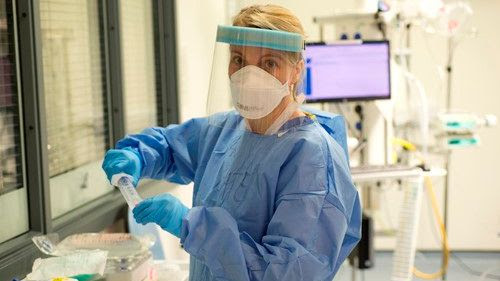
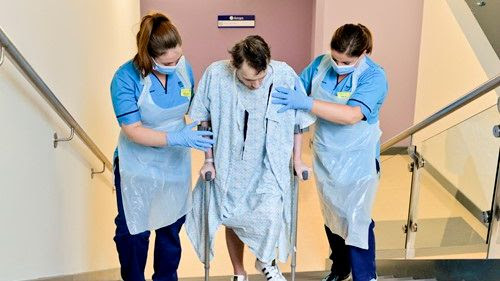
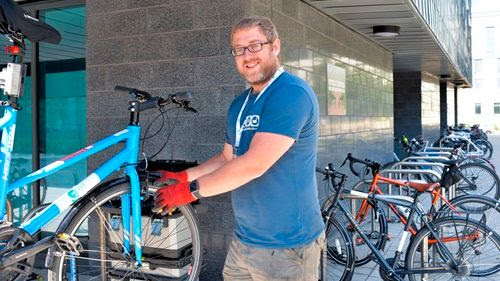
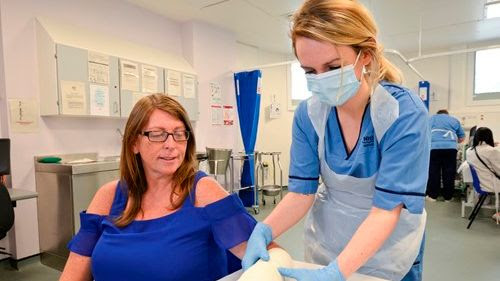
Within the atrium of the Queen Elizabeth University Hospital (QEUH) we have a gallery which pays tribute to the many staff working across the hospital site to look after patients during this difficult time.
Here, we’ve collated some of the images from the ‘Caught in the act of Care’ exhibition alongside some of quotes from staff on what it’s like to work during the pandemic.
Kate Hill, Acute Services Practice Development Nurse “It is a really challenging and difficult situation for all staff in NHS, however, they have worked collaboratively to provide excellent care for patients.”
Anne Watson, Specialist Physiotherapist, Orthopaedics and Emma Brough, Physiotherapist Anne Watson quoted: “It’s been a really tough time but our team has worked extremely well together to support not only our patients but each other.”
Scott Boardman, Domestic services “I feel the patients are like a second family as I am the only visitor some get on daily basis due to no visitors in current climate. I have a lot of long term patients who I enjoy having a bit of banter to pass the time of day and to put a smile on their faces.”
Rachael Matthews, Speech and Language Therapist “It’s been a challenging time but hopefully there’s light at the end of the tunnel now. Keep following the rules as we want you to be able to visit your loved ones as soon as possible.”
Graeme Condie, Travel Plan officer, Travel plan office “Despite the additional pressures and workload during the pandemic, a real positive for our department has been the increase in appetite from a wide range of staff to move towards a more sustainable form of regular travel to their work.”
Amy Wood, Staff Nurse, Orthopaedics (now moved to community) “The uncertainty was difficult, especially at the start when everything changed so quickly. Everyone pulled together and supported each other though, which was great to be a part of.”
Coalition of Care and Support Providers welcome Independent Review of Adult Social Care in Scotland
CCPS(Coalition of Care and Support Providers) has welcomed the publication of the Independent Review of Adult Social Care in Scotland and its call for a renewed purpose for social care with human rights at its heart.
CCPS are delighted by the commitment to a new narrative which replaces crisis with prevention and wellbeing, burden with investment, competition with collaboration and variation with fairness and equity.
We strongly endorse the call to put people front and centre of social care delivery – people who are supported by social care, their families and carers, and people who work in social care services.
We agree that Scotland already has strong foundations on which to build a National Care Service. We want to work with the Scottish Government, national and local stakeholders – including those who support people and people who are supported – to redesign the system to make the ambitions set out in the Review happen.
We wholeheartedly back the Review’s assertion of a duty to co-produce a new system with people who it is designed to support.
Over the coming weeks we will be working closely with our members to explore the Review’s recommendations in detail. As the membership body for third sector providers, we are especially interested in participating in the conversation about the Review’s recommendations on commissioning and procurement.
In 2020, we published our own contribution to that conversation, a series of Big Ideas about changing the way social care is planned, purchased, and paid for. We are grateful to the Review team for citing those ideas. In particular, we thank them for including as one of their recommendations, our suggestion to press pause on all current procurement in the context of a National Care Service, with a view to rapid, carefully planned implementation.
We agree with the Review team that implementation is the most significant challenge. Now is the moment for whole system change, hand in hand with the implementation of The Promise and the recommendations of the Social Renewal Advisory Board.
We would echo the Review Team’s own words – ‘If not now, when? If not this way, how? And if not us – who?’
Annie Gunner Logan, Chief Executive of CCPS said:“CCPS congratulates Derek Feeley and the Review team on completing a mammoth task in record time and their willingness to listen to many voices including those of providers and the people we support.
“Reform of social care in Scotland is long overdue. The COVID-19 pandemic has exposed fault lines which require radical overhaul and long-term change. It has also revealed what can be achieved when obstacles are removed in a crisis.
“We are heartened by the direction of travel set out in the Review. The challenge now must be to turn aspiration into implementation. Change is needed urgently but how it is achieved matters too.
“The debate about a National Care Service must not become a bunfight at the expense of those who provide social care and the people they support.
“The upcoming election period provides an opportunity to discuss the Review’s recommendations openly and widely. But when the votes have been counted, and Scotland gets down to the series business of design and implementation, their voices must be in every room, every step of the way.”
Responding to the publication of the Independent Review of Adult Social Care in Scotland Report yesterday, GMB Scotland’s Women’s Campaign Unit Organiser Rhea Wolfson said:“Scotland has a once in a generation opportunity to transform social care, if the recommendations of this report are underpinned by proper value for the workers who will deliver it.
“We are pleased the report acknowledges our campaign for a £15 an hour minimum wage in social care and we would stress to the government and the industry this is very achievable with collaboration and political will.
“The report is clear that if government and the industry invest properly in the sector and its people, the economic multiplier effects of social care spending could have transformative effects not just for workers’ pay and the quality of care, but for the equalities agenda and the wider economy.
“The COVID-19 pandemic ruthlessly exposed the long-standing crises in social care which everyone well understood, and for a workforce of mainly low-paid and often exploited women this has meant a chronic struggle for proper value and respect.
“After the crises and tragedy of the last eleven months, and with tough times still ahead of us, there is hope in these recommendations.
“If we are serious about what we really value as a society, then we have a chance to finally get the social care agenda right.”
Scottish Ensemble starts 2021 as it means to go on with the appointment of three new board members by chair Samantha Barber.
Scotland’s award-winning ensemble has been treating audiences both old and new to an array of digital content and collaborations since the global pandemic began and the appointment of three new board members carries their commitment to reaching new audiences and promoting mental wellbeing well into the future.
Together, the new appointments draw on expertise from the fields of digital/ technology, mental health, young people, tackling social disadvantage, strategy and governance and will help the ensemble continue to innovate at a time of ongoing uncertainty and change.
James McAulay, the CEO & Co-Founder of Encore – one of the world’s largest online booking platforms helping musicians earn money playing at events, concerts, weddings and recording sessions – joined the board in December 2020, as its youngest member to date.
Before starting Encore, James studied the cello at the Music School of Douglas Academy in Glasgow and led the NYOS cello section at their BBC Proms performance with Nicola Benedetti in 2012. James brings extensive digital expertise and a passion for strings and composition to the table.
Morag Burnett began her career in arts management and has since worked with international NGOs and foundations for over 20 years in Honduras, the Dominican Republic, New York, London, Mexico City and most recently Tbilisi, Georgia.
Morag is deputy chair of the innovative, London-based Lankelly Chase foundation, working to change systems that perpetuate disadvantage and she hopes to bring this experience into her new role.
Amy Woodhouse, currently Head of Policy, Projects and Participation for Children in Scotland, the national network organisation improving children’s lives, has a particular interest in how music, and the arts more widely, can be used to promote mental health and wellbeing and will join the board in March 2021.
She brings an understanding of mental health improvement and participatory approaches to the board.
Chair of Scottish Ensemble, Samantha Barber said:“We are truly delighted to welcome Amy, Morag and James to the Scottish Ensemble board. Together they bring skills and experience that we know to be of utmost importance as we enter 2021.
“These new appointments and all that they represent in terms of knowledge and know-how will enable us to remain resilient and continue innovating in the way for which we have become known. I know that all of my colleagues on the board and across the organisation will join me in wishing them a warm welcome; we look forward to their input and to exploring new ideas and perspectives over the coming year.”
In addition to the new board members, SE also announce that after over 14 years in various roles throughout the organisation, Lesley Paterson retires in 2021 having completed her full term as a board member.
And finally, Chief Executive Jenny Jamison will be heading off on maternity leave in March and William Norris of William Norris Arts Management will be stepping into her role, supported by the wider SE team.
Having previously held the post, among others, of Managing Director for Southbank Sinfonia and Tafelmusik Baroque Orchestra (Toronto) William’s past work has explored innovative concert formats and looked at ways to reach new audiences and SE are delighted to welcome him to the team.
The British Dental Association has urged the Scottish Government to provide a clear safety net to protect students, universities and the future of patient care, as questions emerge of whether Scotland’s dental schools will graduate classes in 2021.
The COVID pandemic has limited the clinical experience of many dental undergraduates. In an open letter to Cabinet Secretary for Health and Sport Jeane Freeman, and Deputy First Minister and Cabinet Secretary for Education and Skills John Swinney the BDA has warned action is needed to minimise wide-ranging impacts on the future of education, training and the sustainability of the NHS workforce.
The union has warned against saddling undergraduates with unmanageable debt. Scottish dental students can already expect to graduate with over £34,000 debt. An additional year of study could push it to over £40,000.
Dentist leaders have stressed that any changes will have an impact not just on this year’s graduating class, but on the shape and size of the 2021 intake.
The BDA is now calling on the Scottish Government to support any undergraduates who are required to take additional periods of study via an emergency bursary, to offer appropriate support for dental schools covering tuition fees where appropriate, teaching grant and clinical placement funding, and ongoing support for the network of NHS trainers who take on trainees following graduation.
Any disruption will have a significant impact on patient access. Graduate dentists are typically given higher needs patients to maximise their clinical experience during their vocational training. Longer-term this disruption may also translate into fewer qualified dentists entering the NHS workforce in years to come. The BDA has stressed any inaction will make the huge backlog facing Scotland’s dental services even more difficult to clear.
David McColl, Chair, British Dental Association’s Scottish Dental Practice Committee said: “What dental students across Scotland really need now is certainty. The Scottish Government must offer a safety net, which protects the next generation, supports our universities, and secures the future of patient care.
“Should these students be unable to graduate in 2021 it will have a serious impact on both the workforce and patients’ ability to access NHS services.
“The pipeline of health professionals should not be left at risk. We need to see a plan that guarantees graduates aren’t saddled with unmanageable debt, keeps schools viable, and ensures Scotland has the dentists it needs.”
– Accreditation and challenges available to help employers focus on health and wellbeing –
SCOTLAND’s walking charity and public health minister have jointly called on employers to empower staff to take daily walks within guidelines to boost physical and mental wellbeing.
With lockdown rules tightening and fewer reasons to leave the house, Paths for All believe regular exercise has never been more important to maintain both physical and mental wellbeing, especially for those working from home.
A study conducted by University College London has reported two-fifths of people say they are doing less exercise now than during the first lockdown back in March, with individuals stating they have found this period tougher than ever before.1
Now, the charity and new Public Health Minister Mairi Gougeon are asking employers to look at ways to enable their staff to take screen breaks, be more active and enjoy getting outdoors more during the working day.
The charity offers bespoke accreditation and challenges tailored to an organisations requirement to help get their workforce moving. The Walk at Work Award and Step Count Challenge both look to make walking fun and interactive by virtually connecting colleagues.
Under current restrictions, outdoor exercise is permitted, but individuals must walk alone, with their household, or can meet one other person from another household while distancing. Exercise should be planned to avoid busy areas.
Minister for Public Health and Sport Mairi Gougeon said: “The current restrictions, on top of shorter days and poor weather are all having an impact on our wellbeing at the moment. But taking a break from work to get some fresh air and get moving is one of the best ways to boost your mood, and keep fit.
“Right now it’s more important than ever to find time to focus on your health and wellbeing, and I’d encourage all employers to get involved and do what they can to support people. There are lots of creative ways to encourage home workers to stay physically active, such as introducing fun challenges or sharing resources.”
Firms are being encouraged to look into dedicated screen-free time initiatives such as a fake commute, whereby teams are encouraged to take exercise in the middle of the day in order to get their steps up throughout the working day.
Research has shown that physical activity helps to reduce anxiety and depression, and alleviate negative moods whilst improving self-esteem and cognitive function, with those who are active during their working day deemed as more productive.
Ian Findlay CBE, Chief Officer at Paths for All, said: “We must do what we can to keep Scotland moving, safely and responsibly, throughout this lockdown, to ward off potential mental and physical health crises.
“Walking helps boosts our mood, our fitness, our productivity and our relationships. At this moment in time, it’s a chance to take stock and appreciate our local communities’ walking routes.
“With most of the country working from home and exercise being one of the few essential reasons for leaving your home, it is the perfect time to get into walking to look after our physical, mental and social health.”
The Walk At Work Award is aimed to reverse the trend of inactive workplaces and the accreditation supports businesses in tackling issues of staff wellbeing and corporate carbon footprint, while enhancing productivity.
Employers receive one-to-one support on how to create a walking culture at work as well as examples of best practice and where to find extra help and resources
The Step Count Challenge is made up of teams of five and has one simple aim of encouraging people to walk more to feel happier and healthier, with participants having access to leader boards, goal setting and team chat to keep them motivated and connected.
Businesses can register a team of five for just £30 – and can customise their own challenges with tailored branding and personalised messaging.
Paths for All believes regular walking is key to leading a happy and healthy life, and it’s even more important for people to continue enjoying short, local walks where it is safe and appropriate to do so with to the huge array of associated benefits.
Paths for All’s focus is clear: it wants to get Scotland walking: everyone, every day, everywhere.
Age Scotland is seeking the views of older people in the first comprehensive survey of what it is like to grow older in Scotland.
The Big Survey explores all areas of life for older people including health and wellbeing, housing, media representation and the impact of Covid-19.
The national charity hopes to gain a better insight into what older people think, experience and care about. Survey responses will help prioritise its future campaigns and shape policy.
The Big Survey launches after an exceptionally challenging year for older people. This was the age group most severely affected by Covid. Older people were asked to shield, the overwhelming majority of deaths took place among the over 75s and care home residents faced months of separation from family and friends.
Lockdown has contributed to soaring levels of loneliness and the absence of regular exercise activities and sports has had an impact on physical fitness.
Age Scotland wants to hear from as many older people across Scotland as possible to find out what their lives are like now, what issues are important to them and their expectations of later life.
Brian Sloan, chief executive of Age Scotland, said: “We are pleased to be launching The Big Survey at such an opportune time. This has been a tumultuous time for older people and undoubtedly the past 12 months have had a profound impact across society.
“We want to hear how older people’s lives have been affected by Covid, what their expectations are now, how they want to live and what their requirements are for enjoying a fulfilling and happy later life.
“I would urge as many older people as possible to take part. Each and every response will be considered and they will help shape our policies and our work in the coming years.
“So please take the time to share your views and help us be there to support older people throughout Scotland in ways that make a real difference. We look forward to hearing from you.”
New stop smoking campaign urges people to quit now
NHS Greater Glasgow and Clyde, NHS Lanarkshire and NHS Lothian, have partnered together to support those who wish to quit smoking, by launching a new campaign; ‘Don’t Wait’.
Smoking remains a leading cause of preventable disease and premature death in Scotland, and this joint campaign between Scotland’s three largest health boards focuses on the harms smoking can cause and the range of free NHS stop smoking services available to help stub out the addiction.
The campaign features NHS respiratory consultant, Dr Colin Church, emphasising it’s never too late to see the benefits that come from quitting smoking. Watch the video here.
Robbie Preece, Tobacco Control Programme Manager, NHS Lothian, added: “Working across the three largest boards in Scotland allows us to share resources and we’re aiming to have a larger impact with this campaign.
“We are offering telephone and video support, and relaying the key message that quitting smoking is the single most important thing you can do to improve your health.”
Geraldine Lucas, Tobacco Control Lead, NHS Greater Glasgow and Clyde, said: “Working in partnership with colleagues across the central belt will allow us to raise the profile of our Quit Your Way stop smoking services which have continued to offer information, advice and support, including nicotine replacement therapy or Champix to people who smoke throughout the pandemic.
“Smoking tobacco damages the lungs and airways causing a range of severe respiratory problems and right now, more than ever, we want to encourage all people who smoke to give quitting a go.”
Shirley Mitchell, Tobacco Control Programme Manager, NHS Lanarkshire commented: “It’s inspiring to see that people are still looking to quit smoking, during such challenging times.
“We have adapted our services, in line within coronavirus restrictions, to be able to continue to support not only those looking to quit, but also their family members and anyone who has queries in regards to stopping smoking.
“Through partnership working, we will be in a much stronger position to raise awareness of this free NHS service available.”
Smoking is linked to many illnesses and long-term conditions, substantially increasing the risk of heart disease, diabetes, emphysema, chronic bronchitis, stroke and cancer.
Quit Your Way is a free NHS stop smoking service. To find out more about the stop smoking services and to access the best support to quit in your area, call the Quit Your Way helpline service on 0800 84 84 84 or visit QuitYourWay.scot.
Quit Your Way can be contacted Monday – Friday from 9am until 5pm.
You can also visit your local Community Pharmacy for FREE stop smoking support.
Throughout February all households will a receive a leaflet explaining the change in the law around organ and tissue donation in Scotland.
From 26 March 2021 the law will change to an opt out system.
This means that most adults who die in circumstances where they are able to donate will be considered as having agreed to be a donor unless they record a decision not to – what’s known as ‘opt out’.
People will still have a choice. If you don’t want to be a donor you can choose to opt out on the NHS Organ Donor Register at any time, before or after the law changes.
If you support donation, you can still choose to actively record your decision to be a donor on the NHS Organ Donor Register. You can also choose which organs or tissue you would want to donate on the register.
The leaflet contains detailed information about law change and it clearly explains the choices people have. Everyone aged 16 or over in the household should read it in order to understand why it’s important to make their donation decision, record it and share it with family and friends.
The new law will add to the package of measures already in place which have led to significant increases in donation and transplantation over the last decade.
Public Health Minister Mairi Gougeon said: “In Scotland there are an average of more than 500 people waiting for an organ transplant at any one time. The law is changing to help save and improve more of the lives of those on the waiting list.
“Only 1% of people die in circumstances where they might become an organ donor. This means every opportunity for donation is very precious.
“We want everyone in Scotland to understand what this change means for them and to have the right information so that they can make their choice and I would urge all members of the household aged 16 or over to take the time to read the leaflet. Donation remains a personal decision and we’re encouraging people to make the choice that’s right for them – whether that’s to be a donor or not.
“Under the opt out system, families of potential donors will always be consulted to check what their loved one’s latest views on donation were. So, whatever you decide, as well as recording it on the NHS Organ Donor Register you should also tell those close to you about your donation decision to help ensure that it is honoured.”
The Human Tissue (Authorisation) (Scotland) Act 2019 was passed in July 2019 and will come into effect on 26 March 2021.
Heart Research UK Healthy Heart Tip, written by Dr Helen Flaherty, Head of Health Promotion and Education at Heart Research UK
Make a plan to stop smoking
Although rates of smoking have decreased in the UK in recent years, approximately 6.9 million people over the age of 18 are smokers. Smoking harms almost all organs in the body and it is a leading cause of preventable death.
Smoking can damage your heart and blood vessels, which increases your risk of having a heart attack. Quitting smoking can be difficult, but it is an important step for reducing your risk of heart disease. We provide some tips to help you stop smoking.
List the reasons to stop smoking
If you want to stop smoking, an effective and simple thing you can do to stay on track is to write a list of the reasons why you wish to quit smoking. Whenever you feel the urge to smoke, you can read this list and it should inspire you to keep going.
Decide when to stop
As soon as you stop smoking, your risk of heart disease will reduce. The sooner you decide to quit the better. Choose a date within the next two weeks. If you leave it too long, you will give yourself time to change your mind.
Make a plan
Make a plan to quit smoking and ask your friends, family and co-workers for their support. Identify triggers that make you want to smoke and work out how you will overcome them in advance. For example, if you usually smoke during your break at work, plan to go for a walk instead.
Manage your cravings
Cigarette cravings are intense urges to smoke and they can last for 5 minutes. Quitting smoking requires a huge amount of willpower. When you get a craving, try to distract yourself for 5-10 minutes until it passes. You could try planning a healthy dinner or plan a route for a cycle ride or a walk. Once the craving has passed, you can give yourself a pat on the back.
Get support
Getting support to stop smoking can increase your chances of success. You could try contacting your local Stop Smoking Services or chatting to your GP. You could also seek advice from a friend or family member who has successfully stopped smoking or someone who is also trying to quit. You could also consider using a stop smoking aid, such as nicotine patches, gums, lozenges or nazal sprays to help stop the cravings.
You can get further support with stopping smoking from the NHS:
With children and young people’s mental health so badly effected by lockdown and prolonged absence from school, this year’sChildren’s Mental Health Weekhas a particular resonance.
Former primary school teacher Laura Steele of education expertsPlanBeehas gathered a week’s worth of fantastic FREE resources inone downloadable pack.
Parents can use them to help their children explore their mental health and give them the tools to express their thoughts and feelings.
These posters aim to help your child understand some of the physical sensations that accompany different feelings. Explore and discuss the vocabulary on each poster. You could ask children: Do you know what this word means? Have you ever felt like this? What made you feel this way? Could you add any more words to either of the posters?
Older children may find the Synonym Booklet of Emotions useful to expand their vocabulary and help them to better express themselves.
Use these 16 feelings and emotions cards to develop discussion around a range of different feelings, using the questions below each emoji. If your children cannot think of an example, you could describe and explain a time when you felt this way. They could also be asked whether each of the cards represent a ‘warm fuzzy’ or a ‘cold prickly’ feeling, picking up on yesterday’s discussions.
You could then challenge your child to use the Design your own Emotion Emojissheet to create their own versions. Encourage them to think about their personal experience of each emotion, and think carefully about the shape, colour, size and facial expression they choose.
Today’s resource focuses on a specific feeling: worry, or anxiety. Tell your child that everyone experiences this feeling sometimes, and more often than not, acknowledging and talking about the reasons why you are worried or anxious can help you to feel better. These Worry Monster Activity Sheets can help your children to voice, and then deal with, any anxieties they may have.
Anger and frustration can be difficult emotions for anyone to deal with, not least children. These posters offer a range of techniques that can be used almost anywhere, in any situation. The first four posters (The Calm Down Cake, The Slow Down Star, The Slow Down Square and the Helping Hand) direct children to focus on their breathing, using an image to help them do this. Discuss and practise the techniques together, first with and then without the posters in front of them, so children realise that these strategies can be successful using only their imagination if needed.
The final poster in the pack (5…4…3…2…1), may be more suitable for older children. They are directed to use all of their senses to focus and calm the mind. They can do this for the actual environment they are in, or an imagined one, such as a park, a beach or a forest.
The mental benefits of meditation are now widely recognised – for children as well as adults. Research has shown that short, regular meditation sessions can have a positive effect on children’s attention, focus, self-awareness, and their management of thoughts and feelings. This Guide Sheet is a simple, easy introduction to meditation, with step-by-step instructions to follow. Try a short session with your child. Ask them how they feel afterwards. You could try to add a session like this into your daily routine, and see what effect it has over time on your child’s emotional well-being.
A person with a fixed mindset feels that they have no control over their abilities, or problems they may face. But someone with a growth mindset knows that they can improve their abilities and overcome difficulties if they persevere and are patient with themselves. Discuss these differences with your child, and look at the poster for examples of each type of mindset. What type of mindset does your child think they have, and why? Why might it be better to have a growth mindset?
Children could use the blank poster provided to write their own personal examples of statements they made when they felt they had a fixed mindset, and how they could turn this around into a growth mindset statement.
End the week on a positive note with this activity, where children are encouraged to think about all the different aspects of their life that they are thankful for. A blank template is included for children to record these thoughts.
The I am Lucky Because…activity sheet may be more suitable for younger children, where they are encouraged to think about and complete the sentences, ‘I am lucky because I can…’, ‘I am lucky because I am’… and ‘I am lucky because I have…’.