Gallery showcases Queen Elizabeth staff at the heart of delivering care during pandemic
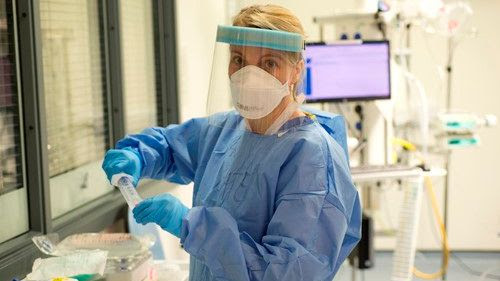
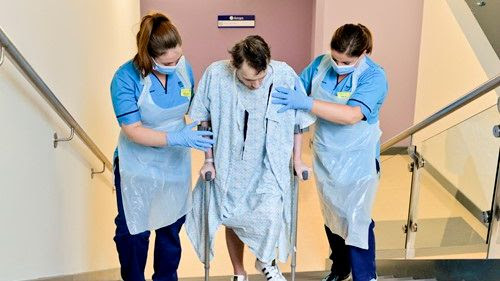
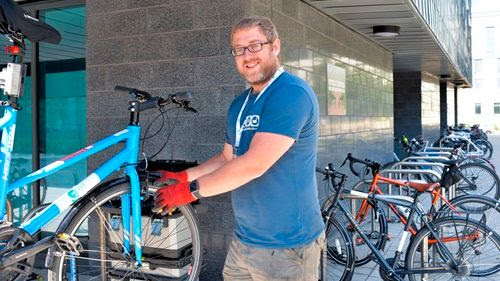
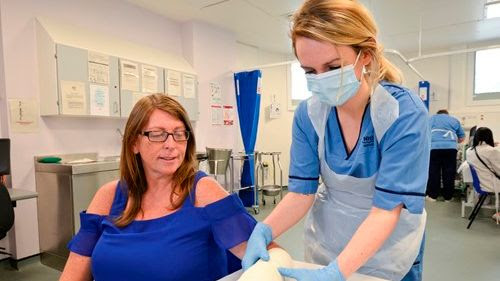
Within the atrium of the Queen Elizabeth University Hospital (QEUH) we have a gallery which pays tribute to the many staff working across the hospital site to look after patients during this difficult time.
Here, we’ve collated some of the images from the ‘Caught in the act of Care’ exhibition alongside some of quotes from staff on what it’s like to work during the pandemic.
Kate Hill, Acute Services Practice Development Nurse “It is a really challenging and difficult situation for all staff in NHS, however, they have worked collaboratively to provide excellent care for patients.”
Anne Watson, Specialist Physiotherapist, Orthopaedics and Emma Brough, Physiotherapist Anne Watson quoted: “It’s been a really tough time but our team has worked extremely well together to support not only our patients but each other.”
Scott Boardman, Domestic services “I feel the patients are like a second family as I am the only visitor some get on daily basis due to no visitors in current climate. I have a lot of long term patients who I enjoy having a bit of banter to pass the time of day and to put a smile on their faces.”
Rachael Matthews, Speech and Language Therapist “It’s been a challenging time but hopefully there’s light at the end of the tunnel now. Keep following the rules as we want you to be able to visit your loved ones as soon as possible.”
Graeme Condie, Travel Plan officer, Travel plan office “Despite the additional pressures and workload during the pandemic, a real positive for our department has been the increase in appetite from a wide range of staff to move towards a more sustainable form of regular travel to their work.”
Amy Wood, Staff Nurse, Orthopaedics (now moved to community) “The uncertainty was difficult, especially at the start when everything changed so quickly. Everyone pulled together and supported each other though, which was great to be a part of.”
More than 10 million people receive first dose of COVID-19 vaccine in UK
More than 10 million people in the UK have received their first dose of a COVID-19 vaccine, marking a significant milestone for the largest vaccination programme in British history.
Figures out yesterday show the NHS vaccinated a total of 10,021,471 million people between 8 December 2020 and 2 February 2021, including 9 in 10 people aged 75 and over in England.
This is equivalent to vaccinating the total capacity of 111 Wembley stadiums in just 8 weeks and is an important step towards hitting the Prime Minister’s target of offering vaccines to the top 4 priority groups by the middle of February.
These top 4 groups account for 88% of COVID deaths, which is why the vaccines will play such a crucial role in saving lives and reducing the demand on the NHS.
Health Secretary Matt Hancock said: “This terrific achievement is testament to the monumental effort of NHS workers, volunteers and the armed forces who have been working tirelessly in every corner of the UK to deliver the largest vaccination programme in our history. Every jab makes us all a bit safer – I want to thank everyone for playing their part.
“Vaccines are the way out of this pandemic. The unprecedented national effort we have seen right across the United Kingdom means the majority of our most vulnerable people are now inoculated against this awful disease.
“The UK government has worked rapidly to secure and deliver doses to all of the UK, demonstrating the strength of our union and what we can achieve together.”
Vaccines have been offered to all elderly care home residents and staff in England and Wales, with staff returning to homes where residents may have been unable to get a vaccine due to medical conditions, or because of a local outbreak.
It is also the first study to show the vaccine may substantially reduce transmission, suggesting those who have already been immunised with this vaccine cannot infect others.
All vaccines being used in the UK have undergone robust clinical trials and have met the Medicines and Healthcare products Regulatory Agency’s strict standards of safety, effectiveness and quality.
The vaccination programme continues to expand, with thousands of vaccination centres open – ranging from GP and pharmacy-led services to hospitals and large-scale vaccination centres – to provide easy access to those eligible, regardless of where they live.
Vaccines Minister Nadhim Zahawi said: “The UK’s vaccination programme is in full swing and almost 1 in 6 people across the UK are already protected from serious illness.
“The NHS is doing everything it can to protect the most vulnerable and will continue to expand the vaccination programme ever further in the coming weeks to save as many lives as possible.”
The public has a vital part to play in the rollout of COVID-19 vaccines and the government has called on people to:
help out: help those eligible for the vaccine by supporting friends, family and loved ones with their appointments, as well as volunteering to help those in the community
join up: sign up to clinical trials for COVID-19 vaccines, as well as treatments
stay informed: keep up to date with accurate and trusted NHS advice and make sure to share the facts with friends and family
Prime Minister Boris Johnson said: “There are many people and groups responsible for the UK’s vaccination programme, and we owe our thanks to our brilliant scientists, to Kate Bingham and the Vaccine Task Force which has procured over 400 million doses of seven different types of vaccine, to the manufacturers and the delivery drivers, the pharmacists, the military medics, countless volunteers.
“But to get this life-saving medicine into the arms of the nation at the kind of speed that we’re seeing, we are relying on the doctors, nurses and all the staff of our NHS.
“It is thanks to their effort – the most colossal in the history of our National Health Service – that we have today passed the milestone of 10 million vaccinations in the United Kingdom, including almost 90% of those aged 75 and over in England and every eligible person in a care home.”
A retired legal secretary was among the first in line when the vaccination centre at the Royal Highland Centre opened its doors for the first time yesterday.
Elizabeth Anne Kirk, 68, from Linlithgow, was given the vaccine at the first of the vaccination centres on the site.
She said: “I’m very excited. I haven’t been going out much recently so I feel more relaxed having had the vaccine, although I’ll still be very careful. The whole process has been easy and well organised and the staff are very friendly, which is important. There really is nothing to worry about.”
The newest mass vaccination centre, the third in Lothian, is in the Members’ Pavilion which has nine vaccination stations available. It will be capable of vaccinating more than 1,000 people every day, seven days a week.
It will initially be staffed by vaccinators from NHS Lothian, before the British Armed Forces staff the centre for around two weeks.
It will revert to the NHS vaccinators after more training and inductions are carried out to boost the ranks.
David Small, Director of Primary Care Transformation and executive lead for the vaccination programme, NHS Lothian, said: “It is very exciting to see a new mass vaccination centre open, especially one that is being supported by our colleagues from the British Armed Forces.
“The swift opening of this venue will allow us to increase our capacity across the Lothians and allow us to start vaccinating 65-69-year-olds sooner than we expected.
“I’m incredibly proud of all of the work and effort done by our teams to get this venue up and running. It has taken a lot of work, but we are now seeing the delivery of this lifesaving vaccine to thousands of people across Lothian.”
Teams have been working hard to transform the events venue into a centre capable of vaccinating hundreds and thousands of people each day.
This is the first of two vaccination centres planned for the Royal Highland Centre. A second larger centre is expected to become operational in March.
Alan Laidlaw, Chief Executive of the Royal Highland and Agricultural Society of Scotland, said: “We can think of no greater use for our facilities at the Royal Highland Centre than to support the national vaccine programme.
“As an event venue attracting upwards of one million people each year and home to Scotland’s largest outdoor event, the Royal Highland Show, we are hopeful that the mass roll out of the vaccination will see the safe return of events in 2021.”
People aged between 75-79 and those most clinically vulnerable will continue to be given appointments to be vaccinated by their GP, while those aged between 70-74 and 65 to 69 are being invited into these mass vaccination sites and smaller community venues for their injections.
Smaller community clinics will deliver vaccinations in the local area for people with complex needs or who, for other reasons, absolutely cannot and would not be expected to travel to a mass centre.
Mr Small added: “We have already vaccinated the vast majority of the first groups to be prioritised, including frontline health and social care staff; care home staff and residents and people over the age of 80.
“More than 90,000 people have already had their first dose of the vaccine.
“Our message is clear – for this programme to be successful we need to vaccinate as many people as we possibly can. This will help save lives, provide protection and allow us to get back to normal.
“When you receive an appointment, I really would urge you to keep it, even if it is at a centre which is not closest to your home. Attending your appointment is the most important thing you will do this year.”
Lothian MSP, Miles Briggssaid: “NHS Lothian now have everything in place to really ramp up vaccination efforts.
“I welcome the use of our armed forces to speed up vaccinations and help overcome Covid-19. It is clear that everyone is on board for getting people vaccinated as fast as possible and this bodes very well.”
Advice for attending vaccination centres
Patients are asked to stay safe by following the Scottish Government guidance currently in place, by wearing a mask and maintaining physical distancing as they travel to and from vaccination centres across Lothian.
Parking will be available around some venues and public transport operators are all following Scottish Government transport guidance for safe travel.
Please arrive on time for the allocated time on your appointment letter. Arriving too early can cause unnecessary queues.
When you arrive, make sure to wear a mask and bring your appointment letter with you to avoid any unnecessary delays.
The vaccination programme is one of three critical ways we are all working together to beat this virus, along with the testing programme which helps prevent its spread and the rules in place that we all know to follow. These three planks form our route out of this pandemic.
The British Dental Association has urged the Scottish Government to provide a clear safety net to protect students, universities and the future of patient care, as questions emerge of whether Scotland’s dental schools will graduate classes in 2021.
The COVID pandemic has limited the clinical experience of many dental undergraduates. In an open letter to Cabinet Secretary for Health and Sport Jeane Freeman, and Deputy First Minister and Cabinet Secretary for Education and Skills John Swinney the BDA has warned action is needed to minimise wide-ranging impacts on the future of education, training and the sustainability of the NHS workforce.
The union has warned against saddling undergraduates with unmanageable debt. Scottish dental students can already expect to graduate with over £34,000 debt. An additional year of study could push it to over £40,000.
Dentist leaders have stressed that any changes will have an impact not just on this year’s graduating class, but on the shape and size of the 2021 intake.
The BDA is now calling on the Scottish Government to support any undergraduates who are required to take additional periods of study via an emergency bursary, to offer appropriate support for dental schools covering tuition fees where appropriate, teaching grant and clinical placement funding, and ongoing support for the network of NHS trainers who take on trainees following graduation.
Any disruption will have a significant impact on patient access. Graduate dentists are typically given higher needs patients to maximise their clinical experience during their vocational training. Longer-term this disruption may also translate into fewer qualified dentists entering the NHS workforce in years to come. The BDA has stressed any inaction will make the huge backlog facing Scotland’s dental services even more difficult to clear.
David McColl, Chair, British Dental Association’s Scottish Dental Practice Committee said: “What dental students across Scotland really need now is certainty. The Scottish Government must offer a safety net, which protects the next generation, supports our universities, and secures the future of patient care.
“Should these students be unable to graduate in 2021 it will have a serious impact on both the workforce and patients’ ability to access NHS services.
“The pipeline of health professionals should not be left at risk. We need to see a plan that guarantees graduates aren’t saddled with unmanageable debt, keeps schools viable, and ensures Scotland has the dentists it needs.”
An image representing young people overcoming challenges during the Covid-19 crisis has been released by Barnardo’s to mark Children’s Mental Health Week.
With the theme of this year’s week (February 1 to February 7) being ‘Express Yourself’ the UK’s leading children’s charity asked the artist to explain what inspired the picture.
Artist Louise, who is supported by Barnardo’s, said: “In the image, I chose the cogs to represent the idea that young people are facing many invisible challenges and feelings which I felt were important to acknowledge.
“The blue light in the image represents that despite all these challenges, here was a generation that had come together in all sorts of different ways whether that was working for the NHS or doing a neighbour’s shopping.
“Yes, young people are facing some real challenges at the moment but we are making a difference despite it all which felt powerful to me and was what I wanted to convey through my image.”
The picture was also used as the front cover of a Barnardo’s report entitled In Our Own Words, where young people had their say about how the pandemic has affected them.
Young people who helped produce the report said the pandemic has felt like a lifetime, and Barnardo’s is concerned the effects will last a real lifetime if steps are not taken to help children.
It is holding Government to account and ensuring the voice of the child is not forgotten in its response to the pandemic.
But cannot do it alone and needs the support of the public to help children and young people who are feeling lonely, anxious about the future, disconnected from their peers, with some living in unsafe home environments away from the protective gaze of their teachers and school staff.
This is why the charity is relaunching an urgent Coronavirus Crisis Appeal. It knows that with the right support, children can recover from the trauma resulting from the pandemic.
Barnardo’s Chief Executive Javed Khan said: “With spring still a long way off, the country in another lockdown and the end of the pandemic still uncertain, children and young people are facing a very difficult time.
“Just as Louise expresses so brilliantly in her picture, young people are facing many invisible challenges, but they don’t have to face them alone.
“Barnardo’s is always here for those who need us, and with your support we can reach even more children and young people struggling during the pandemic and beyond. If you are in a position to donate, then please do consider supporting our Crisis Appeal.”
A care provider which operates care homes across the country has completed its Covid-19 inoculation programme – with residents already talking about how their lives are set to be transformed.
Mansfield Care has successfully offered the vaccine to all of its frontline staff and residents, and have carried out the procedure to all those who have requested the vaccine.
Edinburgh homes Haugh House, Craighall House, Eildon House, and Belleville Lodge are among 11 care homes operated by Mansfield Care to have completed the vaccination programme.
Resident and journalist at Haugh House, Michael Fry, found the vaccine to have no physical impairment on him.
Michael said: “The vaccine had no physical effect on me, but made me happy in thinking I’ll be able to get out and about all the sooner. I have been in lockdown since March 2020, so I’m hoping the vaccine will let me get out again so I can see my family.”
85-year-old Craighall House resident, Jean McMillan, opted to take the vaccine to keep the infection rates down.
Jean said: “I received my first dose of vaccine on January 20. I didn’t feel a thing and felt fine afterwards. I decided to have the vaccine to help keep the rates down and because I have missed being able to see my daughter, Caroline and my great grandson Murray.”
Chief Executive Officer, Andrew Hume said: “It’s been a difficult year for everyone, so to have the vaccination programme fully completed with the full support of our staff and residents has been an incredible lift.
“Our philosophy that ‘small is key’ has been integral to keeping our residents and staff safe, while maintaining an optimal level of care throughout the pandemic.
“At this stage we cannot predict how the virus will mutate, and what impact that will have on our community, but we are determined to cover all bases and maintain the safety of everyone in our care homes.
“Again we would like to thank our incredible staff who have worked tirelessly over this turbulent period, and our residents for their continued diligence and patience.”
Mansfield Care has also implemented a regimented and rapid lateral flow testing process which swab tests staff two to three times per week and provides test results within 30 minutes, to ensure the safety of residents and staff alike.
In addition to its rigorous testing, the provider has also focused on creating new activities to combat the boredom and loneliness caused by social distancing and restrictions, including personalised activity boxes for residents and a creative conversation ball game designed specifically for residents with dementia.
Mansfield Care specialises in small, friendly, residential care homes across Edinburgh, Borders and West of Scotland, providing individualised care in state of the art facilities.
The Mansfield Care ethos is inspired by the kind of care many would wish for later in life – positive, empathetic, respectful and homely.
A series of new measures aimed at driving down coronavirus (COVID-19) rates in Scotland have been announced.
Current restrictions, including the ‘stay-at-home’ requirement, are set to remain in place until at least the end of February and schools will continue to be closed to most children for the rest of this month.
Nurseries and Primaries 1 to 3 are, however, now scheduled to return full-time on 22 February, subject to final confirmation two weeks from now that sufficient progress in tackling the virus has been achieved.
In an update to Parliament the First Minister confirmed that a managed quarantine system for anyone who arrives directly into Scotland regardless of which country they have come from will be introduced as soon as practicably possible.
In addition to guarding against the increased importation of new cases, access to testing to find cases and interrupt transmission already taking place in Scotland will be stepped up:
from the middle of February, routine testing of healthcare workers will be expanded to cover patient-facing primary care workers such as GPs, dentists, optometrists and pharmacists, as will testing for all patient-facing staff who work in hospices
from later this month, regular testing will be offered to support the return to schools and nurseries. Senior phase secondary school students, and all staff in primary, secondary and special schools, including school-based ELC staff, will be able to benefit from routine at-home testing two times a week
certain workplaces where the risk of transmission is greater and which provide essential or critical services, such as those within the food processing and distribution sectors and staff within emergency service control rooms, will also be supported to introduce routine workforce testing
targeted community testing will continue to be expanded – so that testing is available to people locally, regardless of whether or not they have symptoms
from mid-February tests will also be offered to all close contacts of people who have tested positive for COVID-enabling Test and Protect teams to identify their contacts and track, and break further, chains of transmission
In order to promote people’s ability to self-isolate when necessary, financial support will be significantly expanded to include all workers earning the Real Living Wage or less, as well as those in receipt of a council tax reduction because of low income.
The £500 Self-Isolation Support Grant will also be extended to people who cannot work because someone they have caring responsibilities for is asked to self-isolate.
First Minister Nicola Sturgeon said: “As levels of the virus continue to fall in Scotland, it becomes ever more important that we stop the virus from being imported again. The threat of new variants is real and we must be ever-more vigilant.
“That is why we intend to introduce a managed quarantine requirement for anyone who arrives directly into Scotland, regardless of which country they have come from.
“We want to work with the UK Government to avoid travellers sidestepping restrictions and arriving in other parts of the UK before travelling to Scotland, however the most effective approach to prevent this and to stop new variants being imported is for the UK Government to introduce a compulsory quarantine for anyone travelling into the UK from overseas.
“Since we still have work to do these measures will not be introduced this week and more detail will follow shortly.
“We believe that targeted community testing can play a particularly valuable role in communities where prevalence is starting to rise rapidly which is why we have expanded our testing programme to identify cases and break chains of transmission.
“Lockdown is starting to slow down the virus. But we also need to pick up the pace in our vaccination programme. We are doing that and will accelerate the programme further over the next fortnight – providing that we have sufficient supplies of the vaccine – as we work towards being able to vaccinate 400,000 people a week by the end of the month. We are making rapid progress in protecting those who are most at risk from COVID-19.”
On schooling, the First Minister added: “I am acutely aware of the pressure school closures is putting on working parents and on family life more generally.
“Our room for manoeuvre, given the current state of the pandemic, is limited. But the government is determined to use every inch of headroom we have to get children back to school.
“Based on the advice of our expert advisers, if we all agree to abide with the lockdown restrictions for a bit longer so that our progress in suppressing the virus continues, we can begin a phased, albeit gradual, return to school from 22 February.”
The EIS has responded to the First Minister’s statement on a planned phased return for schools, welcoming the planned roll-out of regular testing for staff and students – but warning that virus levels must fall ‘substantially’ before the plans for a phased return for pupils can be confirmed.
Commenting, EIS General Secretary Larry Flanagan said, “Clearly, any school return remains contingent upon continued progress on community suppression of the virus and that is not a given so we need to see infection levels coming down substantially before the return date can be confirmed.”
Mr Flanagan continued, “Whilst a phased return is a more cautious approach, we are surprised that the First Minister did not discuss the need for physical distancing amongst P1-P3 pupils, given that she clearly stated the new variant impacts on all age groups, whereas previously younger children seemed to be less directly involved in transmission than adults.
“The EIS believes that a blended learning model, i.e. implementing physical distancing, would be a safer strategy to deploy and we would need to see strong scientific evidence to justify the Government’s approach. Frankly, in the absence of such evidence this model creates unnecessary risk for staff and pupils.”
On the planned rollout of testing for school staff and some secondary pupils, Mr Flanagan added, “The availability of regular testing for staff is something the EIS has called for, so that is welcome, as is its extension to senior phase pupils which will offer some reassurance to their families.”
“The EIS also notes the limited number of senior pupils able to return at any one time, but this must be organised in a way which explicitly enables physical distancing amongst pupils.”
Responding to the First Minister’s COVID-19 update concerning a phased return to schools in Scotland, GMB Scotland Senior Organiser for Public Services Drew Duffy said: “Yet again the Scottish Government failed to acknowledge the role of school support staff in the response to COVID-19.
“This morning over 1,000 of our members in support staff jobs, including cleaners, caterers, and pupil support staff, wrote to the First Minister asking her to strengthen school safety guidelines and the implementation of them across our thirty-two councils.
“This afternoon’s statement said little to these workers, despite the fact support staff are most at risk against the backdrop of more virulent strains of COVID-19 because many continue to work in our schools throughout this lockdown.
“We need full consultation with Ministers on a consistent approach to worker safety in the phased return of schools. That’s the only way we are going to give these forgotten key workers some badly needed confidence their safety is a priority for this government.”
Education leaders in Edinburgh have welcomed the phased return of school pupils announced by the Scottish Government.
Cllr Ian Perry, Education, Children and Families Convener for the City of Edinburgh Council, said: “I know many families across the city will be pleased to hear that a phased return to schooling will be in place by the end of the month.
“Our teaching staff are doing a tremendous amount of great work with home learning but we all know there’s no better place for our children than being back in school with their peers and learning face to face.
“Our schools will now work really hard to put plans in place so P1 to P3 pupils and some senior phase pupils can return on February 22 which will hopefully be confirmed by the Scottish Government in two weeks time.
“In the meantime home learning will continue and we hope to be to welcome more pupils back to school in the coming months as long as the virus continues to be suppressed.”
Cllr Alison Dickie, Education, Children and Families Vice Convener for the City of Edinburgh Council, said: “These are extremely challenging times for families and no one can underestimate the impact the pandemic has had especially for those struggling at home.
“Everyone’s mental health and wellbeing is really important so it’s welcome that early years, childcare and P1 to P3 pupils will be back in school where they belong in a few weeks time.
“Supporting the children who need it most is vital and I’m glad they will continue to attend their schools as we all work together to get through this. With the number of positive cases coming down in Edinburgh and the rollout of the vaccination programme we hope even more pupils will be able to come back to school when it is safe to do so.
“We will continue to follow the latest Scottish Government and health advice in ensuring our schools continue to be safe learning and teaching environments for all our young people and teaching staff.”
Deputy First Minister John Swinney said: “I appreciate only too well the burden being placed on many families as they navigate this COVID pandemic. I am also acutely aware of the need to maintain teaching and learning wherever possible. In doing so, the health and wellbeing of our children, young people and staff is paramount.
“My priority has been to ensure a safe return for children and young people to school and nursery as quickly as possible. That is why the steps that have been announced today are guided by the advice of the Chief Medical Officer and public health experts.
“Children and young people will begin a gradual, phased return to classrooms supported by a testing regime and enhanced guidance. A sense of caution underpins the plans unveiled today, but this is essential as we work to return to full time teaching in schools.”
A door-to-door testing blitz is under way this morning in a bid to find and eliminate every case of the South African coronavirus variant in England.
On-the-spot doorstep tests, home testing kits and mobile testing units are being deployed to reach 80,000 people in eight specific neighbourhoods in an urgent effort to stop the spread of the South African strain.
Health Minister Matt Hancock told last night’s Coronavirus media briefing:
Good afternoon and welcome to Downing Street for today’s coronavirus briefing. And I’m joined by Professor Steve Powis, the Medical Director of NHS England. And Dr Susan Hopkins, who is the Chief Medical Advisor to Public Health England and to NHS Test and Trace.
I’ve got quite a lot of news to bring you up to speed on. Right at the start, I wanted to tell you where we are with our vaccine programme.
I’m so proud of the team, who’ve now vaccinated 9.2 million people across the UK, that includes 931,204 vaccinations just this weekend.
And to put that into context – that’s one in every 60 adults in the whole United Kingdom vaccinated in one single weekend. It’s a mammoth effort.
I know how much these jabs mean to people. And I’m so grateful for all the messages that we get, and all the pictures that I’m sent of people being vaccinated.
It fills me with pride that so many people are doing so much to help for this roll out to happen so smoothly and I want to say thanks to you all.
Care homes
Getting vaccinated is an emotional moment for so many people and that’s because it is about protecting those who are most vulnerable to COVID.
We’ve now vaccinated almost 9 in 10 of all over 80s in the UK and now, as of today, we’ve vaccinated over half of all people in their 70s.
And, I’m delighted that I can tell you we’ve visited every eligible care home with older residents in England, and offered vaccinations to all their residents and staff.
This has been an incredible example of health and social care working together, working side-by-side to protect people most in need.
As Professor Martin Green, the Chief Executive of Care England said today, this is a “wonderful achievement and one that is testament to the hard work of care home staff and our colleagues in the NHS and local authorities.”
And, I want to thank every single person who’s helped us to get this far.
Vaccine supply
I also want to let you know some good news on vaccine supply. Today we’ve ordered another 40 million vaccine doses from Valneva.
As we have all along, we’ve invested early and at risk, before we know for sure if it will come good because from the start, we’ve taken a no regrets attitude to backing vaccines. We’ve tried to leave nothing on the table.
If this gets regulatory approval, the Valneva vaccine, like many others, will be made right here in the UK.
The Oxford/AstraZeneca vaccine is made in Oxford, and Staffordshire, and Wrexham. The Novovax vaccine is being manufactured on Teesside. And if approved, this Valneva vaccine will be manufactured in Livingston, in Scotland.
We didn’t start this pandemic with a large-scale on-shore vaccine manufacturing capability, so we’re building one, all across the United Kingdom.
The vaccine programme just goes to show how important it is to have the UK working as one, together.
International
We now have over 400 million doses of vaccines on order. This is obviously more than the UK population needs. And my attitude has always been we protect every UK citizen as fast as we can. And at the same time, we’re generous around the world.
I want to say this to our international partners. Of course, I’m delighted about how well this is going at home. But I believe fundamentally that the vaccine roll out is a global effort.
One of the many reasons that I’m so happy with the AstraZenenca contract is that it not just that it gives us a strong supply here but because it is the only vaccine being deployed that’s available to the whole world at cost.
And because it’s logistically straightforward, it can be practically deployed in the poorest parts of the world too.
So, we will protect UK supply and we’ll play our part to ensure the whole world can get the jab.
New variants
Another area where we’re helping around the world is in spotting new variants.
Our global leadership in genomic sequencing has helped us to spot new variants here in the UK, and quickly alert the rest of the world. But there are other countries that don’t have the capacity they need.
Last week, we offered our capacity and expertise to other nations through our New Variant Assessment Platform, because a mutation in one part of the world is a threat to people everywhere.
For example, our South African colleagues spotted a new variant through their high quality genomic sequencing and rightly notified the world, as we did with the variant that we discovered here in the UK.
We’ve now identified 105 cases of this variant here. Eleven of those cases don’t appear to have any links to international travel.
There’s currently no evidence to suggest this variant is any more severe, but we need to come down on it hard and we will. We’ve already made sure that all these cases are isolating and that we’ve done enhanced contact tracing of all of their close contacts.
Working with local authorities, we are going door-to-door to test people in the local area. These cases have been identified in the following postcodes:
W7, N17, CR4, WS2, ME15, EN10, GU21, and PR9
If you live in one of these postcodes where we’re sending in enhanced testing, then it’s imperative that you stay at home. And that you get a test, even if you don’t have symptoms.
This is so important so that we can break the chains of transmission of this new variant. And we’ve got to bring this virus to heel.
So there’s lots of good news, but this is a stark reminder that the fight against this virus isn’t over yet.
Every day, we’re protecting more people and getting ourselves one step closer to normal life. But this is no time to let things slip. So let’s, all of us, do what we must to get this virus under control.
Anti-poverty campaigners have called for increased action from the Scottish Government to tackle the educational attainment gap, after new analysis (which can be read in full here) found stark gaps in attainment between young people from Scotland’s least and most deprived areas.
The analysis, undertaken by the Poverty Alliance on behalf of The Robertson Trust, examined the evidence on the links between poverty, education and work pathways for young people in Scotland and across the UK.
It found evidence that the poverty-attainment gap – already identified by the Scottish Government as a key priority – shows signs of increasing and risks being further compounded by the impact of the Covid-19 pandemic.
The review reveals that as of 2018-19:
Infants living in deprived areas, aged 27-30 months, are 16% more likely to display development concerns
Just over 2 in 5 young people living in the most deprived areas achieve one or more Higher when leaving school (43.5%) compared to almost 4 in 5 young people living in the least deprived areas (79.3%)
Inequalities continue into post-16 education and work pathways with one in ten school leavers living in the most deprived areas in Scotland unemployed nine months after the end of the school year, compared to 2.6% of young people in the least deprived areas.
Despite a range of policies, strategies and initiatives having reformed the Scottish educational and employment landscape over the last six years, most notably the expansion of early learning and childcare and the Scottish Attainment Challenge, the review highlighted Covid-19’s disproportionate impact on single parents and low-income households.
Emerging evidence has also shown the negative impacts of the pandemic on the educational outcomes for children and young people from deprived areas due to the digital divide and lack of access to educational related resources.
Income inadequacy prevents children from low-income households being able to fully participate in education and initiatives seeking to reduce the attainment gap should put reducing financial barriers at the centre.
The review also highlights the importance of initiatives like one-to-one tutoring, mentoring and careers education targeted at young people living in more deprived areas; initiatives that, the review concludes, are currently lacking in Scotland.
Poverty Alliance Director, Peter Kelly, commented:“Scotland is a country that believes that every child should have every chance. However this review makes clear that too many of our young people are seeing their life chances restricted by poverty. The educational attainment gap is stark in Scotland, and is an injustice that we cannot allow to continue.
“We know that the pandemic is compounding the gap. But we also know the action that we have to take to loosen the grip of poverty on the lives of families across Scotland, and to ensure that every young person in Scotland has access to the same opportunities.
“That means using every lever at our disposal to boost family incomes, as well as increasing support for interventions like one-to-one tutoring and mentoring for young people from low-income backgrounds.”
Chief Executive of the Robertson Trust, Jim McCormick, added:“At The Robertson Trust, we are keen to understand how best we can maximise the contribution of education and fair work in reducing poverty.
“This report not only highlights the stark differences in educational experiences that children and young people from different backgrounds face across Scotland but also where some of the evidence gaps currently exist when it comes to what works and why.
“Although many of the findings will be familiar to those working tirelessly to narrow the attainment gap, this analysis shines a bright light on the disproportionate impact Covid-19 has had on those already most affected. This is particularly concerning given the clear link between childhood disadvantage, low educational attainment and future poverty.
“We will use the findings to help us shape our own role as an independent funder in this area and it is our hope that the review will stimulate renewed commitment to act across Scotland.”
Deal means the UK has now secured early access to over 400 million total doses of vaccines for 2021 and 2022
100 million doses of Valneva vaccine have now been secured
UK Government boosts Scotland vaccine production powerhouse at Valneva’s site in West Lothian, supporting 100 highly-skilled jobs
The UK Government has today signed a deal for a further 40 million doses of Valneva’s promising vaccine candidate.The latest deal will bolster long-term vaccine production in Scotland and brings the total UK vaccine portfolio to 407 million doses over the next two years.
The decision to purchase 40 million extra doses is based on the UK’s strategy to take a wide approach, using different technologies and viral targets to ensure the UK has the best chance of securing access to successful vaccines as quickly as possible. It will also give the UK future flexibility should we need to revaccinate any of the population.
The UK Government has invested a multi-million sum in Valneva’s manufacturing facility in West Lothian, which began manufacturing vaccine doses last week and is already raising Scotland’s profile in the international fight against Covid-19.
The site is already supporting 100 new highly-skilled local jobs for scientists and technicians.
Valneva’s coronavirus vaccine candidate is currently in phase I/II trials and will still need to meet the necessary safety and effectiveness standards and receive regulatory approval from the UK Medicines and Healthcare products Regulatory Agency (MHRA) before it is rolled out at the end of the year.
However, if it is approved, manufacturing at risk now will mean that the UK can roll the vaccine out across the country quicker.
Business Secretary Kwasi Kwarteng said: This latest deal is yet another weapon in our national arsenal against this terrible disease, and will ensure we have sufficient supplies to protect the British public in 2021 and beyond.
“Backed with major investment from the UK Government, Valneva’s site in Scotland will be a vaccine production powerhouse, working flat out to ensure we can quickly deploy jabs across the UK if their candidate is approved, while supporting top quality, local jobs.
Thanks to our incredible UK Vaccine Taskforce, we have now secured a bumper portfolio of over 400 million vaccines, putting our country in an exceptionally strong position to defeat this virus once and for all.”
Vaccines Minister Nadhim Zahawi said: “This deal provides a further boost to the UK’s already-strong vaccine portfolio, and I am enormously proud of all the work which has gone in to securing a vaccine for the UK as soon as possible.
“If approved, Valneva’s vaccine will not only help tackle Covid-19 here in the UK, but aid our mission to ensure there is a fair supply of vaccines across the globe.
“No one is safe till the whole world is safe.”
The Secretary of State for Scotland Alister Jack said: “This deal is an endorsement of the UK Government’s strategy of investing in vaccine development and in the skills of the Scottish life sciences sector.
“I pay tribute to the team in Valneva’s new Livingston manufacturing plant. If the vaccine is authorised by the health regulator, their expertise will play an important role in making the world safer from this virus.”
Health Secretary Matt Hancock said: The UK has developed and invested in some of the world’s most promising vaccines – supporting global efforts to fight this virus.
“The Valneva vaccine showcases the best of Scottish expertise right at the heart of our UK vaccine endeavour, demonstrating the strength of our union and what the UK can achieve when it works together. If the vaccine is authorised by the health regulator, it will be rolled out across the four nations as quickly as possible.”
Interim Chair of the UK government’s Vaccines Taskforce Clive Dix said: “Valneva’s manufacturing site in Scotland is already up and running, ready to supply their promising vaccine as soon as it has proven to be safe, and effective and is approved by the MHRA.
“To best ensure we have enough successful candidates to ensure maximum coverage of the UK population, the Vaccines Taskforce has invested in seven of the most promising vaccines. The further 40 million doses secured through today’s deal significantly bolsters our portfolio and gives us future flexibility should we need to revaccinate any of the UK population.
“I want to thank everyone involved in the development of this vaccine for the hard work that has helped us reach this point and also to pay tribute to those UK citizens who have volunteered to take part in the important clinical trials of this vaccine.”
If it is approved, 60 million doses could start to be delivered to the UK by the second half of 2021, with the remaining 40 million being delivered in 2022.
Valneva’s Livingston site will have the capacity to produce up to 250 million doses annually for shipment across the UK and around the world.
The UK Government is committed to supporting equitable access to vaccines worldwide. The UK is the largest donor to the COVAX facility, the global mechanism to help developing countries access a coronavirus vaccine, and has committed £548 million in UK aid to help distribute 1.3 billion doses of coronavirus vaccines to 92 developing countries this year.
To date, the UK government has invested over £300 million into manufacturing a successful vaccine.