Hundreds of people report being victims of stalking each year in Scotland
Police Scotland recorded 744 stalking offences between 1 April to 31 December 2025, up from 686 in the same period the year before, with detection rates of 78.13% and 80.88%, respectively. Almost half of these crimes were related to domestic offending.
National Stalking Awareness Week runs between 20 and 26 April and Police Scotland is joining forces with partner Action Against Stalking to highlight the impact of stalking and harassment and call out the importance of supporting victims.
Detective Chief Inspector Gary Sergeant, lead for domestic abuse, stalking and harassment, Police Scotland, said: “The impact of stalking and harassment on victims cannot be underestimated.
“As well as causing fear and alarm, it impacts on how they live their lives, how safe they feel, how they act and how they react. Police Scotland will continue to collaborate with partner agencies to protect and support victims of stalking and actively pursue perpetrators to prevent further harm.
“Every stalking situation is unique, but most stalkers demonstrate FOUR distinct types of behaviours: fixated, obsessive, unwanted and repeated.
“Victims can be subjected to unwanted calls, texts, or messages. It can include hacking into devices and installing tracking apps, taking control of someone’s social media profile, or sharing or threatening to share photos, videos, or personal information.
“If you or anyone you know is a victim of stalking, then please contact the police. We will listen.
“Information people share with us is vital in helping us put together that jigsaw of incidents and behaviours that taken together allows us to evidence stalking.
“Action Against Stalking advises keeping a log of incidents, and this can be extremely helpful for our investigations.
“We will assess the risk, put in place a safety plan and work with partners to ensure support is available.
“National Stalking Awareness Week is a reminder to us all of the impact of stalking and harassment and the importance of partnership in tackling this insidious abuse.”
Hayley Tennant, Action Against Stalking CEO said: “Stalking can have a devastating and long lasting impact on victims, affecting their sense of safety, wellbeing, and everyday freedom. It is not a series of minor incidents but a pattern of behaviour that can escalate and cause serious harm.
“National Stalking Awareness Week is an opportunity to remind victims that they are not alone, that support is available, and that early reporting and documenting incidents can be crucial in helping them regain control and stay safe. We always encourage individuals who are experiencing stalking to contact and report to Police Scotland.”
“If you or anyone you know is a victim of stalking and harassment then please contact Police Scotland on 101, or 999 in an emergency. People can also report online, or via a third party like Action Against Stalking.”
Police Scotland’s national roll out of body worn video to frontline officers concludes today (Tuesday 21 April), with officers on duty with the cameras in Renfrewshire & Inverclyde (K Division) and Argyll and West Dunbartonshire (L Division).
Around 900 officers including road policing officers, dog handlers and custody staff, will be provided with devices over the coming weeks.
The equipment can help to de-escalate incidents, improve public trust in policing and reduce complaints, as well as support officer and staff safety, and bring wider benefits to the criminal justice system.
Since its introduction in March 2025, over 864,000 recordings have been captured by the devices with almost 174,000 hours of footage uploaded of which over 55,000 media files have been exported to our digital evidence sharing system, DESC.
Since taking command in October 2023, Chief Constable Jo Farrell has prioritised the introduction of body worn video.
Chief Superintendent Conrad Trickett said: “The national roll out of body worn video cameras to our frontline officers is a key priority for us and is one of the ways that we can work towards our vision of safer communities and less crime.
“The cameras and technology will improve the quality of evidence presented in court to deliver faster justice for victims by increasing early guilty pleas and reduce the time spent at court for victims, witnesses and police officers.
“Body worn video can significantly enhance public confidence and support officer and public safety by providing effective and transparent evidence of police and public interactions.
“There is strong public and partner support for body worn video and we will continue to explain our use of this important technology including assurance around data privacy and human rights considerations.”
Every frontline uniformed police officer, including Special Constables, will be expected to wear a video camera on their uniform while on duty and to activate it when using police powers – including stop and search, an arrest of a suspect or executing a search warrant.
Police staff in custody suites will also use cameras when interacting with people in custody.
The footage may be used as evidence, but it will not replace existing procedures and requirements when gathering all available information. It will remain a matter for the Crown Office and Procurator Fiscal Service (COPFS) to review and determine competence on a case-by-case basis.
Video footage will be uploaded to secure police systems and the evidence will be shared with the COPFS using the new Digital Evidence Sharing Capability (DESC) system.
The introduction of body worn video is not intended to encourage the greater use of single police officer deployments or alter current deployment model.
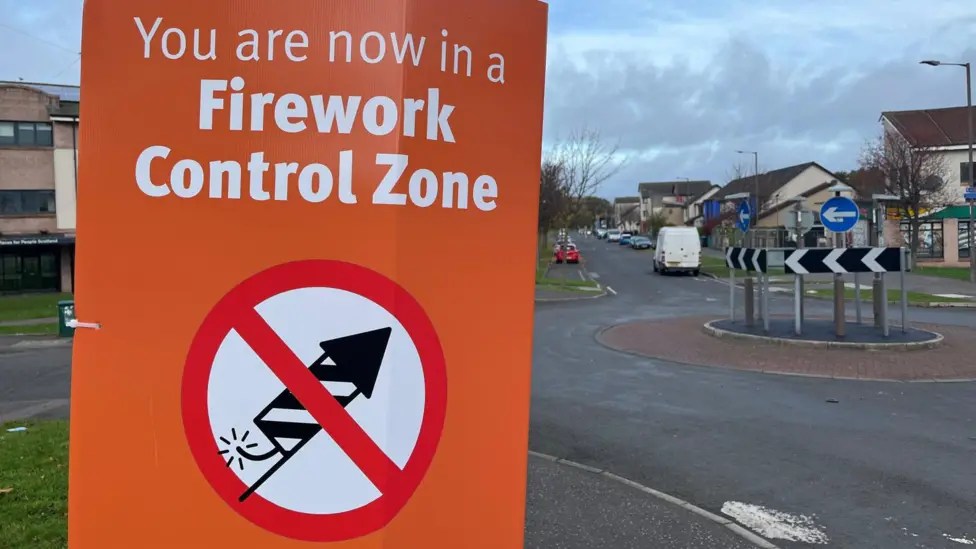
THE City Council wants to hear from communities across the city about neighbourhoods they would like to be considered for firework control zones next November. FCZs are for private spaces such as gardens. These zones help reduce noise, stress and littering caused by fireworks.
Of the nine zones in place in 2025, four continue this year as the application was for two years – Balerno, Calton Hill, Niddrie and Seafield.
Resident groups, community councils and other community groups – apply by 24 April if you wish your neighbourhood to be a firework control zone.
Apply for a firework control zone in your community:
More young people will benefit from a project providing a safe space, trusted adults and safeguarding support in Glasgow city centre as a result of Scottish Government funding.
Common Ground is being backed to continue its front line services and ensure more young people can access support when and where they need it most. Since launching as a pilot in March 2025, the project has supported more than 2,000 young people from half (16) of Scotland’s council areas who had come to the city.
The project, which will receive more than £37,000 in 2025-26, offers a safe and welcoming Hub space, support from street‑based youth workers and trained staff and helps to reduce risks facing young people, including homelessness, exploitation, violence, substance misuse and unsafe situations.
Led by Barnardo’s Scotland, working in partnership with the Scottish Violence Reduction Unit, Aberlour, Action for Children, Right There, Glasgow Girls Club, One Community Scotland and G20, the project has a reach beyond Glasgow.
Two-thirds of young people accessing the service come from outside the city through encounters with the ‘street guardians’, self-referrals or referrals through police and social work.
Community Safety Minister Siobhian Brown said: “Early intervention is key to keeping young people safe and creating safer communities for everyone. Youth workers are often the first trusted adults that young people turn to, and their role in promoting safety and preventing harm cannot be overstated.
“Common Ground is already making a significant difference to the wellbeing of young people in Glasgow and beyond, and our additional funding will strengthen its vital work to reduce exploitation and harm.”
Barnardo’s Scotland Director Martin Crewe said: “It was great to welcome the Minister for Victims and Community Safety to Common Ground recently and share more about how we work with delivery partners and key stakeholders across Glasgow and Scotland to support young people to feel safer in Glasgow City Centre.
“Since March 2025, we have engaged with more than 2,000 young people from around 16 different local authorities on the streets and in our safe space at the Common Ground Hub, meeting needs ranging from travel and friendship issues to more complex safeguarding needs, including homelessness and different forms of exploitation.
“Overwhelmingly, young people have welcomed the support and safety offered by Common Ground as they navigate the often-challenging environment of a busy city centre. The ongoing support and contribution from the Scottish Government – and other funding and delivery partners – allows us to continue providing a much-needed safety net for all our young people as and when they need it.”
Deputy Head of the Scottish Violence Reduction Unit Will Linden said: “The SVRU welcomes the Scottish Government’s investment in the Common Ground and Street Guardian initiative.
“Glasgow city centre is a primary destination for Scotland’s youth, and we believe a collaborative approach is the most effective way to keep them free from all forms of harm including violence.
“By providing trusted adults into the city centre the goal is simple: to create a safer environment where young people can enjoy the city’s atmosphere and return home safely at the end of the night.”
Common Ground Glasgow is a project led by Barnardo’s Scotland, working in partnership with Scottish Violence Reduction Unit, Aberlour, Action for Children, Right There, Glasgow Girls Club, One Community Scotland and G20.
We are part of a community organisation, and we are deeply concerned by the recent revelations involving former council leader Cammy Day. An apology is not sufficient given the seriousness of these matters.
From our experience working within communities, we understand how powerful individuals in public office can be, and how frightening it is when that power is misused. The admission that a false name was used to make a complaint raises serious ethical and safeguarding concerns.
Cammy Day should be asked directly how many people he has damaged by using fake names or false identities, and what safeguards are now in place to ensure that no one else is targeted next. These are questions of public interest, accountability, and community safety.
We believe his position is no longer tenable and are therefore calling on Cammy Day to resign from immediate effect. Apologies alone do not restore public trust.
We also call for a full and independent inquiry to establish whether this behaviour was an isolated incident or part of a wider pattern.
We believe that individuals who engage in this kind of behaviour cannot be trusted and should not hold positions of public office. The public deserves transparency, accountability, and safeguarding from those who hold or seek power.
This is a matter of public interest and must be treated with the seriousness it demands.
Police Scotland joined British Transport Police, CEC Trading Standards, Scottish Fire and Rescue Service, and Neighbourhood Watch Scotland at Waverley Railway Station today for a Community Safety stall.
We provided commuters and Christmas shoppers with advice on staying safe on the train network, crime prevention during the festive period, fire safety and how to sign up for Neighbourhood Watch.
Upcoming Events:
– The Gyle Shopping Centre – Wednesday 10 December, 10:00–13:00 (Police Scotland & Neighbourhood Watch)
Views are being sought on whether the law on Football Banning Orders (FBOs) should be updated to crack down on pyrotechnics use and other forms of football-related disorder.
Community Safety Minister Siobhian Brown has launched a public consultation seeking views and evidence on the legislation around FBOs and whether it needs to be improved so it meets current needs.
FBOs are court orders that prevent individuals from attending all regulated matches in the UK, and they can be imposed for engaging in violence or disorder.
The consultation will explore whether extending the reach of FBOs could be an effective deterrent against disorder such as pyrotechnics misuse, online abuse and other emerging challenges associated with the game.
The consultation was informed by an expert group including football authorities and justice agencies, set up by the Scottish Government last year.
Ms Brown said: “Football fans are passionate about the sport, supporting their club and of course our national team.
“The vast majority of supporters are well-behaved and want to enjoy football safely. However, the behaviour of a small minority can put others at risk and spoil their enjoyment of the game and have consequences for the football club.
“Whilst we have significantly strengthened the law to tackle pyrotechnic misuse in recent years, so that those who carry fireworks and flares into football stadia can face fines and up to six months in prison, pyrotechnic misuse at games remains an issue.
“The legislation governing Football Banning Orders in Scotland was introduced in 2006, when the use of flares at matches and harmful social media behaviour associated with the game were much less common.
“While FBOs can already be imposed on conviction for pyrotechnics offences that involve violence or disorder, we want to hear from people whether the law needs to change so these orders could be used more widely for pyrotechnics possession and misuse – ultimately to become a more effective deterrent and keep people safe.
“We have worked with football authorities, fans’ groups and justice partners on this consultation and I would encourage anyone with an interest to give their views.”
Alan Marshall, Chair of the Football Safety Officers Association Scotland, said: ““The Football Safety Officers Association Scotland welcomes the launch of this consultation.
“Safety officers across the country see first-hand the evolving challenges in ensuring a safe environment at football matches, including the increased misuse of pyrotechnics, which are illegal and becoming a bigger issue at football matches across Europe.
“Football Banning Orders are an important tool in helping prevent disorder, and to help stop the actions of a small number of supporters negatively impacting the experience of law-abiding football fans. It is appropriate that the legislation is reviewed to reflect modern realities.”
The Royal Hospital for Children (RHC), Glasgow and Police Scotland have joined forces to warn parents about the dangers of eScooters and eBikes for children, as injuries rise sharply.
Over the past 12 months, the number of children attending Accident & Emergency in NHS Greater Glasgow and Clyde due to eScooter or eBike incidents has increased by more than 600%.
Between May and October 2025 alone, over 30 children required emergency care at the RHC – some admitted to intensive care. Injuries included major head trauma, broken femurs, chest injuries, and severe lacerations.
Children affected ranged in age from seven to 15 years old. This compares to just four cases during the same period in 2024.
Police Scotland officers visited the RHC to stand alongside the hospital’s Major Trauma Coordinators in urging parents to think twice before buying these vehicles as Christmas gifts for their children.
Mark Lilley, Major Trauma Coordinator at the RHC, said: “The rise in injuries this year is alarming. We know eScooters are popular and may feature on many Christmas wish lists, but the risks are significant.
“A fall at speed can cause life-changing head or brain injuries. We’ve seen the trauma these accidents bring to families, and we strongly urge parents to reconsider before buying one for their child.”
Privately owned eScooters cannot be used legally on public roads, pavements, cycle lanes, or other public spaces in Scotland. They are classed as Personal Light Electric Vehicles (PLEVs) and would require DVLA registration, insurance, a driving licence, and compliance with strict regulations – requirements most eScooters do not meet.
Sergeant Paul Mellis from Road Policing said: “We’re grateful to the Royal Hospital for Children for helping us share this vital message as we head into the festive period.
“We have seen a rise in the number of e-bikes and e-scooters being used illegally on roads across Scotland, including in Glasgow, and with that has come serious injuries to children from either falling off or being involved in a crash with another vehicle.
“These vehicles are not permitted on public roads, pavements or other spaces and anyone found riding a non-compliant e-bike or e-scooter on a public road will likely have it seized by officers.
“I’d urge parents and carers to consider the dangers e-scooters and e-bikes present before purchasing one for a child this Christmas.”
The Royal Hospital for Children and Police Scotland’s messages to parents this Christmas are:
Think twice before buying eScooters or eBikes for children.
eScooters are illegal to use in public spaces in Scotland. It is illegal for under 14s to ride on eBikes in Scotland.