Crimestoppers is launching a campaign ahead of the World Cup, urging the public to help tackle domestic abuse by recognising the signs and sharing information anonymously.
While major football tournaments bring excitement and celebration for many, evidence shows they can also coincide with a rise in domestic abuse. The charity’s campaign highlights the hidden harms that can escalate behind closed doors during high-profile matches.
For some, match day is not about football, but fear. It’s well documented that incidents of domestic abuse increase when big sporting events take place.
The heightened emotions linked to wins and losses can contribute to abusive behaviour, leaving victims feeling unsafe in their own homes.
Crimestoppers is encouraging people to look out for signs that someone may be experiencing abuse. These can include a partner putting them down in front of others, controlling or jealous behaviour, visible injuries, withdrawal from friends and family or noticeable changes in mood such as anxiety or depression.
The charity is also reminding the public that sharing concerns anonymously can make a real difference, particularly for those who feel unable to speak out for themselves.
Annabelle Goodenough, Domestic Abuse lead for the charity Crimestoppers, said:“Football should bring people together, but for some, major tournaments can be a time of increased fear and harm.
“The rise in domestic abuse linked to match results is deeply concerning, and it highlights the need for greater awareness and action.
“We know that many victims find it difficult to seek help. That is why information from friends, neighbours, or members of the public can be so important. If something doesn’t feel right, trust your instincts.
“Crimestoppers is independent and guarantees anonymity. We do not ask for your name, and your details cannot be traced. By speaking up anonymously, you could help protect someone from harm, support efforts to prevent abuse and may even save a life.”
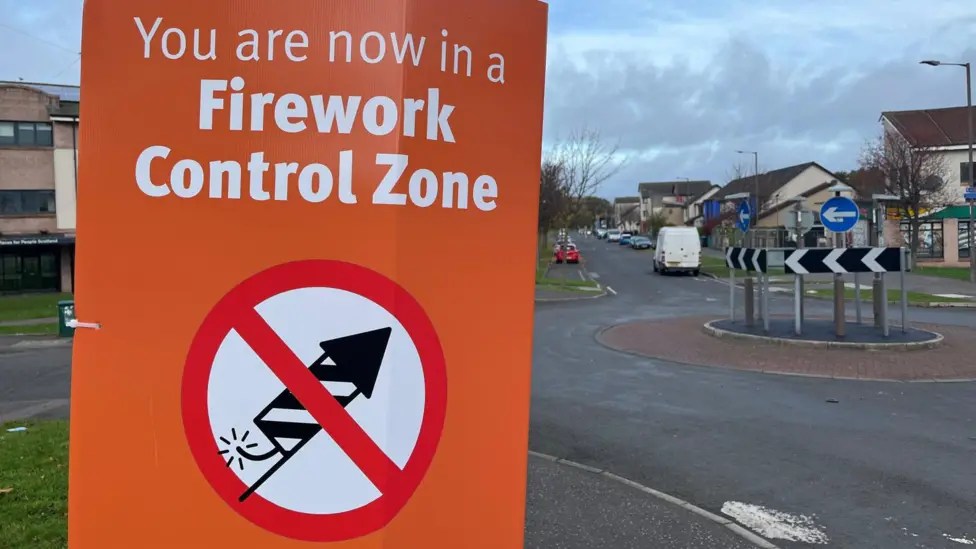
Fourteen Firework Control Zones (FCZs) in total will be in place across Edinburgh this autumn as part of ongoing efforts to reduce the negative impacts of fireworks around Bonfire Night.
Following a successful introduction in 2024, Firework Control Zones will return to several areas of the city between 30 October and 8 November 2026 following a decision by Councillors at yesterday’s (Monday 8 June) meeting of the Culture and Communities Committee.
Councillors agreed to consult on Firework Control Zones in Corstorphine, Longstone, Sighthill/Broomhouse and The Murrays, alongside new zones in Liberton Grange, Lochend, Stenhouse/Gaskell Street, West Pilton, Wester Hailes, and Moredun.
FCZs prohibit the use of fireworks within designated areas for a limited period of time, forming part of a wider package of measures aimed at improving public safety and reducing anti-social behaviour.
Earlier this year, communities were invited to apply for Firework Control Zone status in their local area, with community groups highlighting concerns including the misuse of fireworks, anti-social behaviour, and the need to protect animals, older people, and other vulnerable residents.
The decision builds on the positive impact of previous years’ measures, with Edinburgh experiencing significantly lower levels of firework-related anti-social behaviour compared with earlier years.
Work between the Council and Police Scotland also led to a substantial reduction in the number of retailers selling fireworks within the city. In 2024, 33 traders sold fireworks in Edinburgh and by 2025, that number had fallen to just two.
Culture and Communities Convener Margaret Graham said: We know that fireworks can have a significant impact on vulnerable people and pets, which is why it’s important that we use every tool available to support safer celebrations.
“Firework Control Zones are an important part of our wider approach to keeping communities safe during Bonfire Night and reduce the disruption that fireworks can cause.
“Feedback from residents, community groups and partner organisations shows that the zones have been effective in helping to reduce anti-social behaviour and improve the experience of local communities during firework season.
“We will continue to work closely with Police Scotland and local communities to ensure Bonfire Night is as safe and enjoyable as possible for everyone.”
Delegates from across the world will unite in Scotland from 15 – 19 June for a weeklong celebration of the role of arts in improving health and wellbeing.
The second iteration of Healing Arts Scotland will include flagship days in Shetland, Lewis & Harris, Dumfries & Galloway, Glasgow and a National Conference in Edinburgh, alongside creative health community activities across the country.
Tickets are on sale now, find your nearest event and book here.
Building on the success of 2024, which included 376 events across Scotland and influenced national policy, Healing Arts Scotland 2026 will include an international conference, artist commissions, exhibitions, concerts, workshops, and an artist-led communications campaign promoting the arts as a ‘health behavior’, much like exercise, sleep and good nutrition.
Speakers and delegates from across the globe including Singapore, Japan, USA, Spain, Denmark, Norway, and Ukraine will gather to share their research and findings of the lasting health benefits the arts, with a focus on three key themes:
1. Arts, Health and Environment: the role of the arts to support community engagement with nature and address the health impacts of climate change.
2. Innovation in Arts & Health: Arts-based health interventions created using innovation and technology to improve lives and build communities
3. Arts & Health Across the Life Stages: National programs featuring intergenerational activities, prevention & youth led initiatives
This national event coincides with the 2026 release of Professor Daisy Fancourt’s best-selling book Art Cure: The Science of How the Arts Transforms our Health; the publication in May of a landmark report from University College London linking engagement in arts with a slower pace of ageing; and the pre-launch of a UK Arts & Health: The Time is Now policy brief by the Jameel Arts & Health Lab and National Centre for Creative Health.
Speakers at the event will include Assistant Vice President of NYC Health + Hospitals Arts in Medicine Program, Larissa Trinder; inaugural People’s Artist of New York City, Yazmany Arboleda; Chief Officer, Public Health Scotland, Manira Ahmed; Director of Research initiatives for the Center for Arts in Medicine at the University of Florida, Dr. Jill Sonke; Edinburgh International Festival Director, Nicola Benedetti; Jameel Arts & Health Lab Co-Directors, Dr. Nils Fietje (WHO Europe), Dr. Nisha Sajnani (NYU Steinhardt) and Stephen Stapleton (CULTRUNNERS); and Scotland’s Chief Medical Officer, Prof. Sir Gregor Smith, whose annual Realistic Medicine Conference will close the week with a focus on the impact of arts in healthcare settings.
Performers from Oi Musica, Karaback, Samba Y Bamba, Scottish Ballet, TRYST and the Youth Pipe Band gather outside the Scottish Parliament for a public performance to mark the start of Healing Arts Scotland, a country-wide celebration of arts and health.
Nicola Benedetti, who was recently appointed the first Global Ambassador for Healing Arts, commented: “Through my work with the Edinburgh International Festival, I see every day the profound role that artistic experiences can play in bringing people together, opening space for reflection and fostering a sense of belonging.
“To contribute to this global “Healing Arts” conversation is a responsibility we all share, to ensure that creativity in all its forms, is recognised as an essential part of a healthier, more connected society.”
Healing Arts Scotland is part of the Jameel Arts & Health Lab’s global Healing Arts campaign, in collaboration with the World Health Organization, and spearheaded by a coalition of organizations bridging culture, healthcare, education and policy, including Scottish Government, Public Health Scotland, Creative Scotland, National Galleries Scotland, Scottish Ballet, Arts Culture Health & Wellbeing Scotland, International Teaching Artists Collaborative (ITAC) and NHS Scotland. Core funding has been provided by Creative Scotland and the Jameel Arts & Health Lab, with in-kind support from partners across Scotland.
Dr. Nils Fietje fromWHO Regional Office for Europe commented: “It is wonderful to see colleagues from across the Scottish Government and the health and culture sectors uniting to bring the healing power of the arts to wider communities than ever before.
“Scotland is a vibrant place for arts and health that is constantly inspiring new initiatives across the world.”
Globally recognised woodworking school, the Chippendale International School of Furniture, is opening its doors for the annual Graduate Exhibition and Fine Furniture Sale, taking place from 18–20 June.
Now in its 41st year, the exhibition will showcase exceptional handcrafted furniture from this year’s graduating cohort, featuring students from Ghana, India, Turkey, Canada, the US, France and Scotland.
The public is invited to explore the collection and acquire one-of-a-kind pieces at the school’s East Lothian campus. North Berwick’s Steampunk Coffee and The Big Blu Artisan Pizza from Dunbar will be on-site throughout the three-day event for visitors to enjoy.
Founded in 1985 by Anselm Fraser, the school has become a centre for both traditional and contemporary woodworking.
Now led by his son, Tom Fraser, the school is evolving to offer a diverse curriculum, from weekend workshops to its flagship nine-month Professional Course, which equips students with the skills to launch their own furniture-making businesses.
More recently, a 10-week course — running from October to December this year — has been introduced, designed for those who are unable to commit to the full nine-month programme.
Tom Fraser, Principal of the Chippendale School, said: “This is one of the most diverse groups we’ve welcomed, with students hailing from across several continents.
“The breadth of influences and ideas is incredibly exciting, and this year’s exhibition promises to be one of our best yet.”
Dates: 18–20 June 2026
Location: Chippendale International School of Furniture, East Lothian
Admission: Free entry. Visitors must book a timed ticket in advance via Eventbrite.
For those unable to attend in person, the exhibition will also be showcased online via the school’s website, Facebook and Instagram channels.
HMRC doubles funding for customers who need extra support
More than £11 million in funding available for organisations to help customers with their tax affairs.
Voluntary and Community sector organisations invited to bid for funding from today.
Successful organisations will receive three-year funding grants from April 2027.
HM Revenue and Customs (HMRC) has pledged more than £11 million to support customers who need extra help, as it launches the latest round of its Voluntary and Community Sector Grant Funding Scheme.
Bids can be submitted from today for the funding, which is available for voluntary and community sector organisations to provide specialist advice and support to HMRC customers who may need extra help with their tax affairs, interacting with its digital services, which continue to expand, or claiming entitlements.
HMRC has more than doubled the three-year grant funding allocation to £11.18 million starting April 2027. Applications can be submitted on GOV.UK until 3 July.
Organisations applying for the funding must show they can provide independent tailored support to customers who may experience barriers including those who:
may face difficulties in understanding their tax obligations
may have complex needs
are digitally excluded from accessing HMRC services
Dan Tomlinson, Exchequer Secretary to the Treasury said: “I’m delighted to build on our commitment to customers who need the most support and make this latest round of funding available for our partners in the voluntary sector who provide invaluable assistance to them.
“This funding means customers, who may be struggling with their tax affairs, are able to get the help they need to make a real difference to their situation.”
Successful organisations will work alongside HMRC’s Extra Support Team to ensure customers get straightforward advice and support in dealing with their tax affairs and ensuring they get the benefits they are entitled to receive.
Between April 2025 and April 2026, more than 43,000 customers, helped by grant-funded organisations working closely with HMRC’s Extra Support Team, were able to engage with HMRC in a way that works for them and access the information they need.
Myrtle Lloyd, HMRC’s Chief Customer Officer said: “We are all about making it easier for people to get their tax right and by working closely with our Voluntary and Community sector partners we can ensure our customers who need extra support have access to help when they need it most.”
The grants, worth £3.73 million a year, will be awarded quarterly over the 3 years between April 2027 and April 2030. Successful organisations will be announced later this year.
For more information on the Voluntary and Community Sector Grant Funding Scheme, eligibility and to apply, go to GOV.UK.
CASE STUDY
Elena*, who is from the South East of England, works as a self-employed hairdresser, partly at home and partly in a salon where she rents a chair.
When she contacted a Voluntary and Community Sector grant-funded organisation in September 2024, she was struggling with depression following the loss of a family member and divorce. In her mid-forties, she had no sustainable income, was receiving Universal Credit, and struggling just to afford the basics.
She was behind with her rent and Council Tax as well as a tax debt of £1,093, including Late Filing Penalties and interest.
Elena got in touch about her tax debt and three years of outstanding tax returns. As someone who had always struggled with maths, she found it difficult to manage her tax.
One of the volunteer advisers worked with Elena to help her complete her outstanding tax returns which resulted in an increase in her tax liability to £1,824.34.
After the grant-funded organisation contacted HMRC, they waived the Late Filing Penalties and associated interest leaving only the tax balancing payments and a small amount of interest, totalling £503 to pay.
Elena emailed the volunteer who had supported her to express the real difference our support had made to her future.
Major upgrade to protect and enhance athletics facilities
A major improvement project at Saughton Sports Complex will help safeguard athletics provision in west Edinburgh and create a stronger future for local clubs, schools and community users.
Work to resurface the athletics track and upgrade key field facilities, ensuring the venue meets UK Athletics standards,was scheduled to begin yesterday (Monday 8 June). Funded by the City of Edinburgh Council, the investment will support the long-term future of a site that plays a vital role in the city’s athletics network.
Scottish Athletics has identified Edinburgh as one of eight priority regions in its national facilities strategy, underlining the importance of protecting and improving provision in this part of the city.
Culture and Communities Convener Margaret Graham said: “I am delighted that we are committing major investment into transforming the athletics track and field facilities.Providing these spaces for sport and physical activity is essential for communities in the west of the city.
These upgrades will create lasting benefits for local athletes, athletics clubs, schools, and residents who rely on the venue. The project will also encourage wider participation and give more residents an opportunity to enjoy the physical, social and wellbeing benefits that being active can bring.”
Cathy Findlay, Edinburgh Leisure Sports Pitch Manager, said:“This project is vital for athletics in west Edinburgh. By improving the track and key field facilities, we are protecting an important base for local clubs, supporting athlete development at all levels, and creating more inclusive opportunities to take part.
“These improvements will help ensure Saughton continues to serve local people well for years to come.”
For Saughton’s two core athletics clubs, Corstorphine AAC and Harmeny AC, the project will secure access to a high-quality local training and competition base. Supporting around 775 athletes and delivering approximately 50 hours of activity each week, the clubs make Saughton a key part of the development pathway for athletes of all ages and abilities.
The improvements will also help clubs retain members, support growth and strengthen the venue’s ability to host accredited regional competitions.
David Arnott, President of Corstorphine AAC, said: “Saughton is entering a really positive new phase.
“Edinburgh Leisure has a clear commitment to improving the track and facilities in ways that will make a real difference to the people who use them. It feels like we are now moving forward together, and that gives us real confidence for the future.”
Craig Stewart, Board Member at Harmeny AC, said: “This investment in athletics facilities gives Harmeny AC the certainty to move forward with plans to upgrade our own equipment and facilities, as well as invest in our coaching team.
“In turn, this will allow us to welcome more young athletes to training and help reduce our waiting list.”
The project will also strengthen the inclusive reach of athletics, supporting the ongoing work of both clubs to widen participation and create welcoming environments for people from a broad range of backgrounds and abilities.
Through initiatives such as Scottish Athletics’ Club Together programme, the clubs support underrepresented groups, including people moving from inactivity into sport, disabled athletes, refugees and those living in areas of socio-economic disadvantage—helping to create accessible pathways into athletics.
Saughton’s location further enhances its role as a community hub, with strong transport links making it easily accessible to a large and diverse local population.
Overall, the project will help protect a valued athletics venue, strengthen local clubs and widen opportunities for people across Edinburgh to take part in the sport.
Edinburgh Leisure is a charity dedicated to helping people lead more active, healthy lives. With 75 sport, leisure and school venues across the city, it creates opportunities for everyone to get active and stay active.
Britain will become the first country in the world where it is impossible for children to take, share or view naked pictures on their devices
Under the new plans, Big Tech companies like Apple and Google must activate built-in features or implement technical solutions on smartphones and tablets to detect and block nude images for children, the Prime Minister announced in a speech at London Tech Week yesterday (Monday 8 June).
This will prevent predators from being able to exploit and abuse victims through their devices, as well as stopping children from being able to access pornography. Adults will still be able to take, share or view nude content through an age verification process.
Now is the time for tech companies to step up and work with government to solve this horrific issue. If companies do not act within 3 months, the government will bring forward legislation to force them to activate the technology. This will include fines for companies. Nothing is off the table, and as a last resort we are exploring criminal liability for tech bosses who fail to comply.
Prime Minister Keir Starmer said: “When it comes to the safety of our children, standing by is not an option. Nobody gets a free pass. That is why I’m making sure Britain is the first country in the world to make it impossible for children to take, share or view nude images.
“And I expect tech firms to make that happen. This is not an impossible challenge – these are some of the most innovative companies in the world. But if they choose not to, then we will act and change the law.”
The changes will apply to UK devices, including both existing and newly sold smartphones and tablets. Legislation could cover operating system providers and others in the supply chain, such as retailers, and will not affect the use of devices owned and used by adults who verify their age.
Home Secretary Shabana Mahmood said: “As a society, we have not kept pace with the changing threats that children face. Abuse online is far too common, and we will not tolerate it.
“Tech companies have a moral duty to act, by making it impossible for children to take, share or view nude images. If they don’t, we will legislate.”
These measures build on progress already made in the UK. Since the publication of the Violence Against Women and Girls Strategy, Apple has already taken significant steps to combat this harm and shown the art of the possible, launching world-first features in the UK.
Apple recently introduced age checks for iPhone users, making it the first company to activate safety features by default for those who are not verified as over 18. This is a significant step forward following the government’s commitments to work with industry, and one this announcement builds on.
Despite this, the nudity detection is not applied to the camera or broader apps, third-party messaging services, or search functions, meaning children can still take, view, share and save nude images. The government therefore wants Apple and Google to block nudity across the whole device by default, so they can only be deactivated via age assurance.
Alongside the changes announced today, the consultation on children’s use of social media has now closed, with more than 100,000 responses received from parents, young people and experts. The government will publish its response soon and will continue working with international partners to tackle this shared global challenge to drive better protections for children online.
Technology Secretary Liz Kendall said: “No parent should have to worry that giving their child a smartphone opens the door to abuse and exploitation.
“We are holding social media platforms to account and will soon announce our next steps to keep children safe online. But this doesn’t stop with platforms; the devices themselves are part of the problem – and they can be part of the solution.
“Companies should switch these protections on by default, for every child, on every device. We are giving them 3 months to show us that they will do the right thing.”
91% of online child sexual abuse reports recorded in 2024 contained self-generated content from children themselves and the average child now views pornography by age 13. The effects of this can have long lasting impacts on young people’s lives and contributes to abuse in younger relationships, with 39% of teenagers aged 13–17 experiencing emotional or physical abuse from a partner.
Child sexual abuse material and pornography are also increasing misogyny and the normalisation of harmful sexual behaviour. 52% of all child sexual abuse and exploitation cases involve children aged 10–17 offending against other children.
Chief Executive Officer of Internet Watch Foundation, Kerry Smith, said: “On-device protections are a pivotal part of coordinated, multi-layered approach to safeguarding children online.
“An alarming amount of child sexual abuse material, which our analysts see every day, is self-generated by children as a result of grooming, coercion or manipulation. We need device-level detection and blocking alongside platform-level protections.
“That is why we warmly welcome the government’s announcement and see these protections as playing a powerful role in a whole-system response to the threats children face in digital spaces.
“With nudity blocking in place, it will make it much harder to create new images and videos of child sexual abuse and better protect children from harms on the internet.”
Measures to protect children already exist within smartphones and tablets, but are applied inconsistently, often switched off by default and only blurring content rather than blocking it. But the government is working closely with technology companies – some of whom, like Apple, have already taken steps to implement protective features – to make this goal a reality.
Companies must introduce these measures without threatening privacy or collecting any data. The device should simply block harmful content across all apps and services. Over-18s will still be able to view adult content by providing proof of age.
British safety tech firm SafeToNet has shown this change is already achievable, with software that blocks nude content and prevents images being taken if the camera detects a child.
Richard Pursey, Chairman of SafeTo Net, said: “The government is right to act. Children have been failed for too long. This news will be welcomed by parents across the UK and hopefully, will inspire other countries to follow the UK’s lead.
“We can put an end to so much online misery with this approach. SafeToNet’s HarmBlock technology is a proven example that it is possible to make the device safe by default and not as some optional add-on.
“We have proven that with HarmBlock, on-device, tamperproof, embedded safeguards can prevent children from seeing, filming and broadcasting explicit content. It works in real-time including livestream and crucially also protects the privacy rights of the child as no data enters or leaves the application.
“Let’s be blunt: manufacturers have built devices capable of facilitating illegal, explicit, image-based harm to children. That’s the reality. But with this world-leading announcement we are finally shifting the battle ground of a child’s online safety to the device.”
The Online Safety Act was a landmark step forward in holding companies to account, but the government is clear that more must be done. Big Tech has the money and capability to put a stop to this. Online harms must be confronted with the same urgency as offline abuse.
This announcement makes clear that, in the modern world, the technology industry is central to this mission. Protecting children from sexual abuse should not be optional – it is a moral duty.
Roxy Longworth, author and founder of Behind Our Screens, said: “I told myself, back in 2021, that if I went public with what happened to me and it stopped one life from being ruined, then it was worth it, but the more I campaigned the angrier I became.
“Every child needs to be protected from platforms who for far too long have been allowed to turn a blind eye to the damage being done to them. This announcement makes me hopeful that there won’t be kids sat in their room feeling the same pressure and shame that consumed my teenage years.”
Sara Kirkpatrick CEO of Welsh Women’s Aid, said: “We are delighted to see proposals which require tech companies to design in safety rather than leaving the responsibility solely on parents and young people to ‘keep themselves safe’.
“We would call on the government to ensure that expectation, and regulation is coupled with monitoring and effective sanctions for non compliance.”
Chief Executive of the NSPCC, Chris Sherwood, said: “Online grooming, sexual exploitation and the proliferation of child sexual abuse material could be prevented if tech companies did the right thing and introduced nudity blocking technology on children’s phones.
“Every day these protections are not in place, more children will continue to face devastating harm in the online world. That’s why we strongly support the government’s decision to make it mandatory for these companies to block inappropriate material at device level. This marks a major step forward in our fight against online child sexual abuse.
“Time is up for Big Tech. Now government must focus on holding them to account to ensure this transformational change for young people’s safety is quickly delivered.”
Dr Elly Hanson, Strategy Director for CEASE, said: “Device level tech to prevent all children seeing, sending or receiving explicit imagery will be a total game changer in the battle against online child abuse and the harms of pornography.
“We wholeheartedly support the government’s demand on tech companies to roll this out, and see legislation that mandates it as the critical and necessary next step.
“For far too long, many thousands of people have sexually abused and extorted children online because tech companies have let them – giving them all the access and tools they need.
“In tandem pornography has further fuelled abuse and violated young people’s right to author a sexuality rooted in respect and connection. This tech will tackle both problems, bringing us a major step closer in ending this appalling profit-driven experiment on our children.”
Dame Rachel de Souza, Children’s Commissioner for England, said: “One child seeing porn is one too many – but my research shows more than a quarter (27%) of young people who had seen porn said they had seen it online by 11.
“Tech firms have the power to turn it off but have dragged their feet. I fully support requiring devices to have Highly Effective Age Assurance and content-screening technology in place.
“This will create an additional layer of protection for children against the harmful content that we know is causing them harm. There are no silver bullets to making the online world safe, that’s why I also want to see platforms and services banned from accessing under 18s until they can prove they are safe. But device level protections are one thing that will meaningfully limit children’s access to harmful content.”
Lynn Perry, chief executive of Barnardo’s, said: “Far too many children are exposed to harmful sexual content online or are pressured into sharing sexual images.
“Barnardo’s research found that a quarter of all young people have seen a nude photo which was originally sent privately and then shared further – while around one in seven 13- to 15-year-old girls have been asked to share a nude photo of themselves. The impact of this can last a lifetime.
“This is a strong step from the government towards keeping children safe and we look forward to seeing how these proposals will work in practice. Good intentions are not enough, however, so they need to be backed up by strong regulation and enforcement – as well as keeping pace with how quickly online harms evolve.
“It is absolutely vital that the focus also remains on protecting children, not criminalising them. Any system must make sure that children who share images are supported, not shamed, and that strong reporting and safeguarding mechanisms are in place.
“Online or offline, child safety must come first. Technology companies need to build it in from the start.”
Lawrence Jordan, Marie Collins Foundation CEO, said: “At the Marie Collins Foundation, we see first-hand the devastating and lasting impact that online grooming, sexual extortion and image-based abuse can have on children, young people and their families.
“For many victims and survivors, the harm does not end when the abuse itself ends – whether through the fear that images may continue to circulate, or the lasting impact abuse can have on mental health, relationships and a person’s sense of safety and trust.
“We strongly welcome the government’s focus on device-level protections. For too long, much of our response to online harm has come after abuse has already occurred.
“Technology companies have repeatedly shown they can solve complex challenges when they choose to prioritise them. Protecting children should be one of those priorities. Companies now have an opportunity – and a moral responsibility – to ensure the digital environments children use every day are safe for them to participate in.”
David Wright CBE, CEO of SWGfL and UK Safer Internet Centre Director, said: “This is an important and ambitious step in recognising the scale of harm children face online, particularly as sexual abuse and exploitation are increasingly linked to self-generated imagery.
“We have seen positive progress from parts of the technology sector in recent years, but more must be done to ensure a consistent and high standard of protection for all children across devices and services. Raising the baseline of safety across the digital ecosystem is essential.
“As these proposals develop, it will be important to ensure they are effective in practice, proportionate, and implemented in ways that maintain trust, particularly in relation to privacy and the needs of victims.
“At SWGfL, we look forward to continuing to work with government and industry to ensure protections are victim-focused and genuinely reduce harm.”
Dr Alexandra Bailey, Head of Psychology at child protection charity Lucy Faithfull Foundation and Associate Professor at the University of Roehampton, says: “Our work with both adults and young people tells us how damaging exposure to sexual content online can be at a young age, and therefore we welcome the government’s announcement [today] on stronger online protections for children.
“We see firsthand how sending and receiving nudes, and early exposure to pornography, can cause real harm in young people’s lives, leaving them vulnerable to grooming, exploitation or viewing illegal, harmful content themselves. Through our anonymous Shore live chat service, we support young people navigating these issues every day.
“In our work with adults whose pornography use has become problematic and escalated into harmful or illegal behaviour, many tell us this developed over time and often began with exposure at a young age.
“What begins as curiosity can shift over time. People can become desensitised to mainstream content and seek out more extreme material, sometimes crossing into illegal territory without fully realising the consequences. This is one of the most common pathways to online child sexual abuse we see on our anonymous Stop It Now helpline.
“If you’re concerned about what you or someone else has seen or done online, contact Shore or Stop It Now for anonymous and confidential support.”
Soma Sara, CEO of Everyone’s Invited, said: “At Everyone’s Invited, we welcome this announcement. Over the past 5 years, through our education programmes in schools across the UK, we have witnessed a significant increase in the sharing and creation of child sexual abuse material online, alongside rapidly evolving technologies that are amplifying harm.
“For too long, the responsibility has fallen disproportionately on children and young people to protect themselves from the non-consensual sharing of images and other forms of online abuse. The burden must now shift to the platforms and services that enable and profit from digital engagement.
“With the continued rise in child sexual abuse material, the time to act is now. We urge technology companies, platform providers, and those who work with them to treat this announcement as a foundation rather than a finish line and to proactively go further in strengthening safeguards for children.
“The emergence of AI-enabled harms and increasing access to violent pornography are accelerating risks and normalising harmful behaviours. Addressing these challenges requires sustained action, stronger accountability, and a clear commitment from all of us to put children’s safety first.”
Farah Nazeer, Chief Executive of Women’s Aid, comments: “Despite it being a criminal offence to create or share explicit images of a child, the reality is that sharing nude images is still prevalent among children and young people, with many feeling coerced into doing so.
“Under no circumstances should coercive control and pressure be applied to a child to share intimate images of themselves and we welcome any measures that will make the taking and sharing of such images more difficult.
“This form of abuse is just as real, and just as damaging to the wellbeing of children and young people as other forms of violence against women and children – it is high time that technology companies are held to account and do more to ensure that the most vulnerable of their users are safe.”
Sara Kirkpatrick, CEO of Welsh Women’s Aid, said: “We are delighted to see proposals which require tech companies to design in safety rather than leaving the responsibility solely on parents and young people to ‘keep themselves safe’.
“We would call on the government to ensure that expectation, and regulation is coupled with monitoring and effective sanctions for non compliance.”
Young people from disadvantaged and under-represented backgrounds will be helped to start innovative businesses through the First Minister’s Start Up Challenge, which is now open for applications.
Delivered in partnership with the King’s Trust and Dechomai, the programme will select 20 participants for a six-month accelerated entrepreneurial apprenticeship, providing tailored support, grant funding, workshops and hands-on experience. One winning participant will be awarded £30,000 funding helping them to dedicate time to developing their business.
First Minister John Swinney announced the opening of applications on a visit to Juicy Health Club in Glasgow’s West End, where he met young entrepreneurs who have successfully turned their ideas into thriving businesses.
Mr Swinney said: “Young people should be supported to make the most of their talents and ambitions, helping create a better future. Supporting young people to take the first steps in business is an important way to help them realise their potential, while also boosting the economy.
“The First Minister’s Start Up Challenge will support a new generation of entrepreneurs across the country. I would encourage anyone with an innovative business idea to apply now for the chance to join the first cohort and benefit from the tailored support and grant funding this programme will offer.
“Juicy Health Club is a brilliant business that is thriving in Glasgow, and it sets a strong example of how to maximise market opportunities. It was great to meet entrepreneurs and hear how they have brought their different business ideas to life.”
The King’s Trust in Scotland Director of Delivery Lou Goodlad said: “With applications now open for the First Minister’s Start Up Challenge, we’re calling on those with ambition, talent and a great business idea to take the next step on their entrepreneurship journey.
“Through this partnership, The King’s Trust is backing young people who have the potential but may lack the opportunity and support they need to get their businesses off the ground.
“By offering tailored support and access to funding, this programme will help remove barriers to entrepreneurship, helping young people build successful businesses for the future in Scotland.”
Dechomai Managing Director Bayile Adeoti said: “We are delighted that applications are now open for the First Minister’s Challenge. This is a fantastic opportunity for young people across Scotland to share ideas, tackle challenges, and build confidence for the future.
“At Dechomai, we are passionate about creating opportunities and have developed an Entrepreneurial Apprenticeship Accreditation as part of the programme focused on mindset, resilience, creativity, and leadership.
“We encourage everyone aged 18–30 to apply and urge educators, youth workers, and partner organisations to help spread the word so no one is left behind.”




 ? Stomach bugs can be very unpleasant but usually clear up by themselves within a couple of days.
 stay off work or school until at least 48 hours after symptoms have stopped.