We are delighted to announce our participation in Doors Open Day 2026 on Saturday 26 September, between 11am and 3.30pm.
Our main exhibition will focus on the industrial heritage throughout the 18th, 19th and 20th century, keeping Granton’s heritage alive and highlighting what was once a hive of activity. We are pleased to confirm that local historian Kenneth Williamson will be providing more insights and stories of his own experiences.
The Granton Archive Project (GAP) will offer informal drop-in sessions between 11:00am-2:00pm. We have photographs, films, newspapers and much more that will bring the past alive, and we’d like to invite you to come and explore, guided by our local volunteers.
Also on display will be a selection of the Quiet Heroes photo exhibition. These striking portraits celebrate these individuals and invite us all to reflect on the hidden contributions that keep a community strong.
Our collaboration with Edinburgh College of Art entitled ‘Cultural Heritage in the Metropolitan Peripheries’ records and celebrates Granton’s shifting heritage and the creative work by students from Craigroyston Academy and Edinburgh University.
The project will be launching HOPE, a new digital resource for people seeking to learn about how these urban peripheries mark and celebrate their cultural heritage and contemporary identity.
A family friendly walk (1:45-3pm) will start and end at the Granton Hub and free spaces are limited. PLEASE BOOK. Check the link for further details.
Business Minister Tom Arthur has published proposals for a visa system that supports Scotland’s distinct needs.
This includes existing proposals for a Scottish Visa, Rural Visa and Scottish Graduate Visa and making the current immigration system more accessible to the needs of different sectors.
The Scottish Government has highlighted the UK Government’s closure of the Adult Social Care visa route as an example of creating an increased risk of workforce shortages and service pressures, particularly in rural and island communities.
This newly-published Scottish Government policy paper highlights the economic and social challenges the country may face if the UK Government does not take action.
While migration remains a reserved policy area, the Scottish Government has taken forward several initiatives, including the development of Scotland’s Migration Service and delivery of the Addressing Depopulation Action Plan, funding for which was increased by almost 50% this year.
Mr Arthur said: “Mirroring a trend in many countries throughout the world, Scotland has an ageing population and areas where the population is falling. This makes immigration ever-more critical in ensuring we have working-age people to fill skills gaps, sustain public services, support communities and grow the economy.
“A migration system designed around UK-wide averages – which is what we have now – cannot adequately respond to Scotland’s demographic and geographic circumstances.
“In the spirit of the Prime Minister’s public commitment to reset relationships with devolved governments, I have invited the UK Migration Minister to engage with me in constructive discussions to ensure that the immigration system is tailored to Scotland’s needs.”
EH, KY, FK and G postcode residents can enjoy more than 200 Edinburgh Fringe performances for just £6
Gilded Balloon is inviting its neighbours to experience this year’s Edinburgh Festival Fringe for less with an extension of Postcode Pals – a special ticket initiative offering £6 tickets to local audiences.
Running from 00.01 am on Sunday 30th August until 23.59pm on Monday 31 August, the limited-time offer is available exclusively to residents with EH, KY, FK and G postcodes, giving them access to more than 200 performances taking place between 30-31 August, while availability lasts.
ensuring local communities can continue to enjoy the last performances of the Fringe on their doorstep.
Karen and Katy Koren, Artistic Directors of Gilded Balloon, said:“We have decided to extend Postcode Pals for our final two days of our fantastic Fringe programme.
“We want to say thank you to our local audiences and the communities that support us year-round and give them a chance to enjoy our last shows of the 2026 Fringe”
The offer covers an exciting cross-section of Gilded Balloon’s 2026 programme, including Gilded Balloon co-productions and visiting companies with more than 200 comedy, theatre, music, family and spoken word performances taking part in the promotion.
How to claim the offer:
Residents with EH, KY, FK or G postcodes can:
Log in to their Gilded Balloon account.
Ensure the billing address on their account includes a valid eligible postcode.
Màiri McAllan Cabinet Secretary for Education, Culture and Gaelic has announced that a new initiative for the global media and creative industries will be developed for Edinburgh’s August festivals.
The new initiative will build upon Edinburgh’s unique position as a global shop window for talent, content, and creative ideas, bringing together the city’s creative ecosystem with international media industries and audiences.
Thursday’s launch event was also attended by Baby Reindeer and Half Man creator and star Richard Gadd who spoke on the importance of Edinburgh during August, as a place for new talent discovery, for ambitious work, and to progress careers.
Initial development work towards the new event was funded by Screen Scotland and completed in early summer 2026.
This work was undertaken to consider, with fresh eyes, how Edinburgh’s August festivals partner to present a new offer to the global content industries, in response to the increasingly blurred boundaries between the different creative artforms and the way creative talent, IP and ideas move fluidly between them.
Independent consultant Rowan Woods has now been appointed to lead the next stage of development, which will again be funded by Screen Scotland and delivered through The Fringe Society.
Working with the Fringe Society, Screen Scotland and a broader advisory group, Woods will consult widely across the August festivals and with producing venues, broadcasters, platforms, content creators, publishers and other potential participants and audiences to establish the shape of the new initiative and how it can best support the connection of new talent and IP to content commissioners worldwide.
The consultation will inform the shape and intent of the new initiative, including audience, dates, venues, programme and participants. This consultation phase is expected to conclude in early Spring 2027, with an initial pilot planned for August 2027.
The new initiative will build on the strong relationships that already exist between the screen industry and Edinburgh’s August Festivals, including the work of Screen Fringe, an ongoing collaboration between Screen Scotland and the Fringe Society, which supports hundreds of television and film executives to make the most of their time in the city each year.
Screen Fringe is expected to remain part of the August festivals offer to the global screen industry.
Separately, Screen Scotland has confirmed that it will establish the Lynda Myles Debate as a keynote element of the August festivals from 2027.
The debate will honour the contribution of Lynda Myles, formerly Director of the Edinburgh International Film Festival and co-creator of the Edinburgh TV Festival, and her long-standing belief in Edinburgh as a place for ambitious and rigorous debate about the future of the screen industries and wider media landscape.
The Scottish Government is providing funding support for the new event’s development via Screen Scotland, and more details will be announced in 2027.
Culture Secretary Màiri McAllan said: “We are so proud of Scotland’s screen sector and this exciting addition to the August festivals line-up will provide a new way to embrace the creativity and cultural innovation which makes our capital unique.
“As a global hotbed of emerging talent, where new voices are heard and fresh stories are told, Edinburgh will continue its world-leading offer for the television industry with the support of the Scottish Government – and will do so alongside our other Edinburgh festivals, showcasing brilliance across artforms.”
David Smith, Director of Screen Scotland said: “Edinburgh has a unique role to play in bringing together the people, ideas and creative work that will shape the future of the screen and wider creative industries.
“Every August, the city becomes a remarkable meeting place for talent from around the world, alongside audiences, producers, commissioners, artists and creative thinkers. We have an opportunity to build on that extraordinary concentration of talent and energy and create something new, ambitious and genuinely distinctive for the global industry.”
Tony Lankester, Chief Executive at the Edinburgh Festival Fringe Society said: “Edinburgh’s August festivals create an unparalleled environment for discovering new talent, ideas and creative work.
“We know there is a strong appetite from people working across the global screen and creative industries to connect with that ecosystem, and we are excited by the opportunity to explore what a new offer could look like, particularly in a rapidly evolving media landscape. The development of this initiative gives us a chance to think afresh about how Edinburgh can serve the sector in August and to create something compelling for the future.”
On the announcement of the Lynda Myles debate, Lynda Myles said: “I’m deeply touched and honoured to have the debate named after me.
“It’s exciting to see the importance of ideas and discussion being recognised in the plans for the new event, especially as this was the initial intention of the creation of the Edinburgh Television Festival in 1976.”
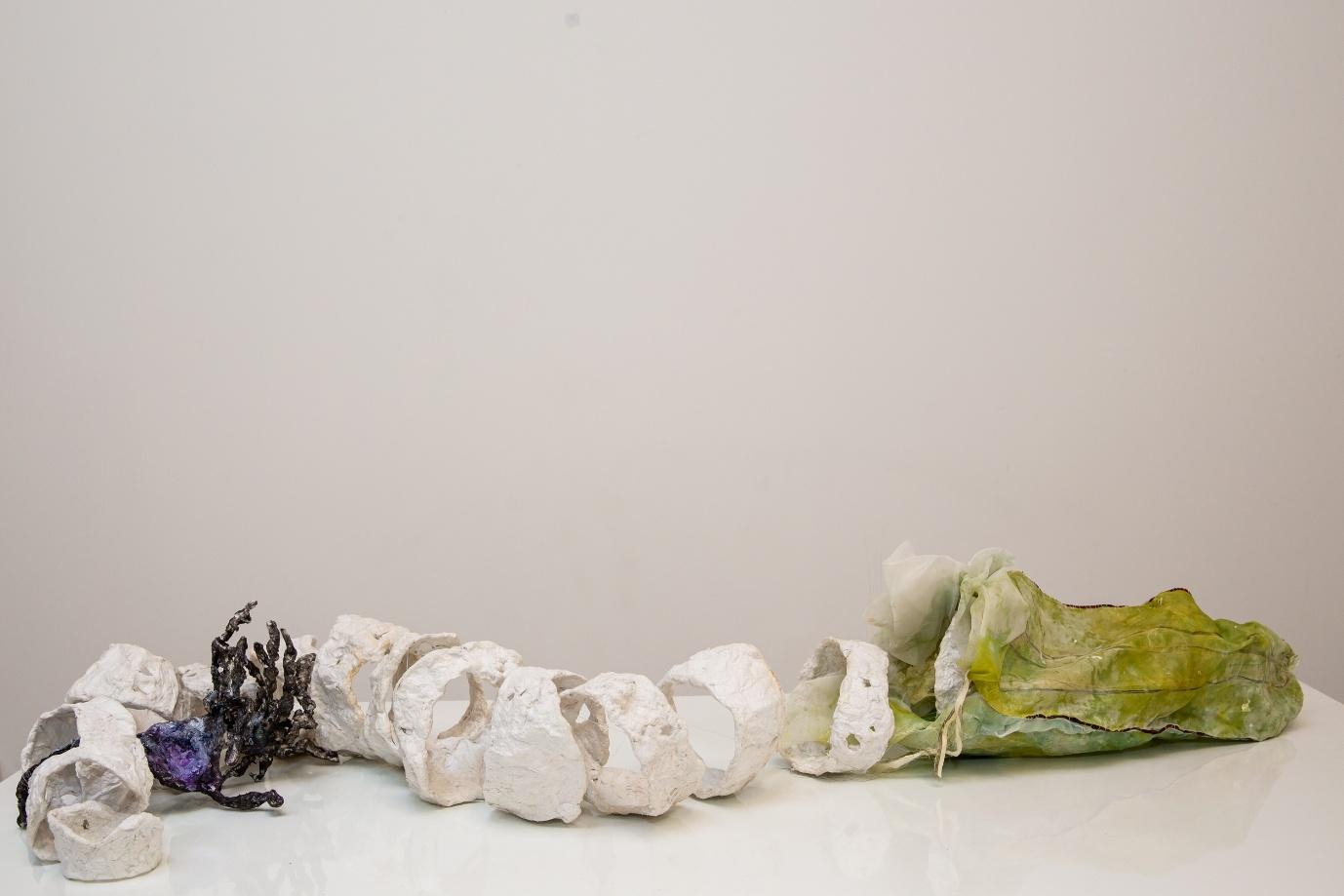
Polly Thelwall is a British painter and sculptor whose practice centres on small-scale casting, modelling, stitching, papier-mâché, found natural objects and paint.
She grew up on the Atlantic North Coast of Northern Ireland, an environment where raw landscape and weather formed an early sensibility for the meeting point between the human body and the natural world. Alongside her sculptural work, she maintains an active practice of drawing, sketching and painting.
Over the last 55 years she has been growing and developing her artistic career from childhood drawing and plasticine modelling through studying sculpture at Edinburgh college of Art in the 90s, and on, now, to her current broad and mature practice.
During that time, she sketched, drew, painted and sculpted, honing her practice in the landscapes of Scotland, especially the waters of the landscape: sea, streams, lochs and rivers.
The artist was invited by the owners of 197 Portobello High Street basement to consider putting in a proposal to Artwalk Weekends. This exhibition is on the theme ‘shift and flow’.
This installation represents a first site specific sculptural work of a large piece involving many smaller elements. It is also the first time the artist has used sound she recorded as part of the work.
The basement happens to be well supplied with excellent audio equipment strengthening the collaboration between the venue owners and the artist
Thelwall works intuitively and experimentally, navigating the threshold where human experience and the more-than-human world intersect. Her process invites the soft, scarred animal of the body to speak alongside the mind, often inclined to assume its own perfection. Through an internal and external alchemical process, she allows these dualities to interact, transform and reconfigure. Opening herself to the unknown, she creates conditions for unexpected forms, ideas and emotional registers to emerge.
Thelwall’s practice is ultimately an exploration of transformation: material, emotional and perceptual. Through making, she seeks to articulate the subtle, shifting relationship between body, landscape and imagination, allowing new forms of understanding to surface.
Polly Thelwall said: “This has been an opportunity to sit with the ephemeral. Each time in rising and lower tides, the creatures will be different, the beach will be different, the specific drops of water will be different, the conditions will be different etc.”’
This Art Walk Weekend, centred around the shift and flow of the intertidal zone, comes at a moment when we have been grappling with forest fires and warming seas.
It is a time that needs space to evolve new ways like the one created by this artist who works in transformation, opening a gap for us to find our own answers.
Polly Thelwall’s relationship with the sea began as a baby living by the sea on the Atlantic coast of Northern Ireland. A childhood in and out of the water grew into a long-term love of waters and wild swimming.
The artist also volunteers in Marine conservancy, helping by cleaning oysters for repopulating the Forth and as a litter picker. As a means of exploring this passion Polly Thelwall participated in a SailBritain Sailing residency in Scotland in 2019. This led to a first cast in the landscape of a water pattern on a beach, which was later used to create part of a sculpture.
The Skinny and Fest team commented: “With a line-up that changes every day, Comedy Club 4 Kids does exactly what the name suggests – it’s an introduction to live comedy for a new generation which rewards repeat visits.
You never quite know what you’ll get, and with some of the acts enjoying their first experience trying to make a bunch of kids laugh, they don’t know what they’re in for either.
It’s the Fringe in microcosm, a space to grow comedy audiences of the future as well as an opportunity for comics to experiment with adapting their act for the most terrifying critics of all.”
This award is selected by Gig Buddies. Gig Buddies enables adults with a learning disability and autistic adults to live an active social life. They do this by pairing members to like-minded volunteers to enjoy their shared passion together. Each year at the Besties they choose the winner of the Accessibility Award and this year we are delighted to announce it goes to The Festival Fringe Society.
Neil, Gig Buddies Member said: ‘It’s great knowing I can approach the front of house team, have them scan my ticket and all of my access requirements show up.I don’t have to divulge any personal information in front of anyone. No one asks me any questions.
“It’s meant that I’ve not had an awkward experience at the festival in years.’
Sam Maggs, Gig Buddies Project Manager said: ‘Gig Buddies with Thera Trust believes that the Fringe Society embody the ethos that the festival is for everyone.
“From the systems they’ve put in place that enable people to easily make their access requirements known, to their openness in asking for feedback from access customers in creating resources, to the incredible implementation of ‘no questions asked’ +1 tickets for people in supporting roles.
“What’s more, their Fringe Days Out initiative works with over 30 local charities ensuring cultural, financial, and accessibility barriers can be broken down, and more people can access the festival who otherwise would not. Our experience of the Fringe Society’s attitude towards access and inclusion is that they are world leading.’
Molly Tavella, Gig Buddies Project Coordinator said: ‘Their policy of not requiring documentation to give people access accommodations is great.
“It saves people hassle and cultivates a positive, trusting culture.’
Joseph, Gig Buddies Member, added: ‘The Fringe team are accommodating, understanding and really listen to people.’
The Skinny and Fest team commented: “We can’t think of a show that sums up what the Fringe should be about more than this year’s Palestinian Circus: Step and a Half.
“There is immense talent and technical skill on display, incredible innovation of circus arts through the fusion of dabke music, and a throughline of resilience and joy that is simply breathtaking to watch.
“We talk a lot about what it means to create resistance out of joy and this is the best example of it we have seen: it is a call to keep moving, to keep dancing, to keep connecting to people across the world.”
The Skinny and Fest team commented: “Trans Masc Studies is a rare and heartening space for trans people to reclaim their own histories and futures beyond the distorting media narratives peddled by Scotland’s anti-trans movement.
“It also demonstrates EAF’s long-term engagement with queer art and LGBTQ+ communities/issues, as well as their commitment to platforming work which seeks to shift the discourse in their home city.”
The Skinny and Fest team commented: “This carefully considered, highly detailed display offers necessary perspective on the reality of the transatlantic slave trade, its enduring manifestations and Scotland’s complicity in it.
The Legacy of Slavery provides a factual basis which underpins much of this year’s Edinburgh Interantional Festival programming. Situated within the gilded surrounds of the University of Edinburgh’s Playfair Library, the exhibition is unflinching in its representation of the evolution of oppression. It’s just around the corner – if you haven’t been yet, go.”
The Skinny team praised Dane Buckley’s incredibly strong writing and consistent performance from the start to the very end. Comedy editor Phoebe Crawford said “I didn’t stop laughing and also crying – equal parts moving and hilarious! I haven’t stopped thinking about it since I saw it.”
The Skinny and Fest team commented: “For people (us) who have seen many a Fringe festival, the solo show can become an old and dreaded form. Pink Rabbitjolts us back to its potential. The moment Farah Ashraf speaks as Amna, an 18-year-old OnlyFans creator hiding a double life, we are gripped by this skilled solo performer with something fresh and exciting to say. Exploring faith, desire and the intoxicating power of attention, Ashraf makes an indelible impression with a debut that lands its laughs and emotional punches in equal measure.
“Ashraf…navigates the raw naiveté, humour, charisma and spirit of Amna with sensitivity. Her Amna is gutsy, vibrant, naughty and vulnerable…bouncing back and forth between Amna’s character and those around her with command and fluidity.”
The Skinny and Fest team commented: “One day very soon, this proverbial (and literal) circus will leave town, and Scotland’s artists will go back to the hard task of creating, producing and developing exciting new work.
“Craig Manson’s Bunny! is a clever, ambitious and extremely funny satire of life as an artist in Scotland. It’s a tale of the scramble for funding and opportunity, but it’s also a shining example of the joyful and energetic arts scenes that exist across Scotland.
The Skinny praised Manson’s performance for its “passion and vigour”, while Fest said that Bunny!offers “arch reflections on the meaning of fame and art”. It’s cheeky, it’s funny, and it has a surprisingly high body count for a one-person show – Bunny! captures the invigorating, disheartening, beautiful and tragic nature of creativity, and of working as hard as you can to make the art you want to make.”
Reflecting the broad and diverse coverage both magazines produce every summer and celebrating the breadth of Edinburgh’s Festivals, The Besties span all the festival activity taking place in the city over the month of August, including the Edinburgh Festival Fringe and Edinburgh International Festival, Edinburgh Art Festival, Edinburgh International Book Festival and the Edinburgh International Film Festival.
Winners of The Besties are chosen each week by the editorial teams of The Skinny and Fest, drawing on their cross-festival expertise to celebrate the best work happening anywhere in the festivals. 2026 winners were announced at weekly ceremonies taking place at Festival Theatre in Edinburgh on 15, 22 and 29 August.
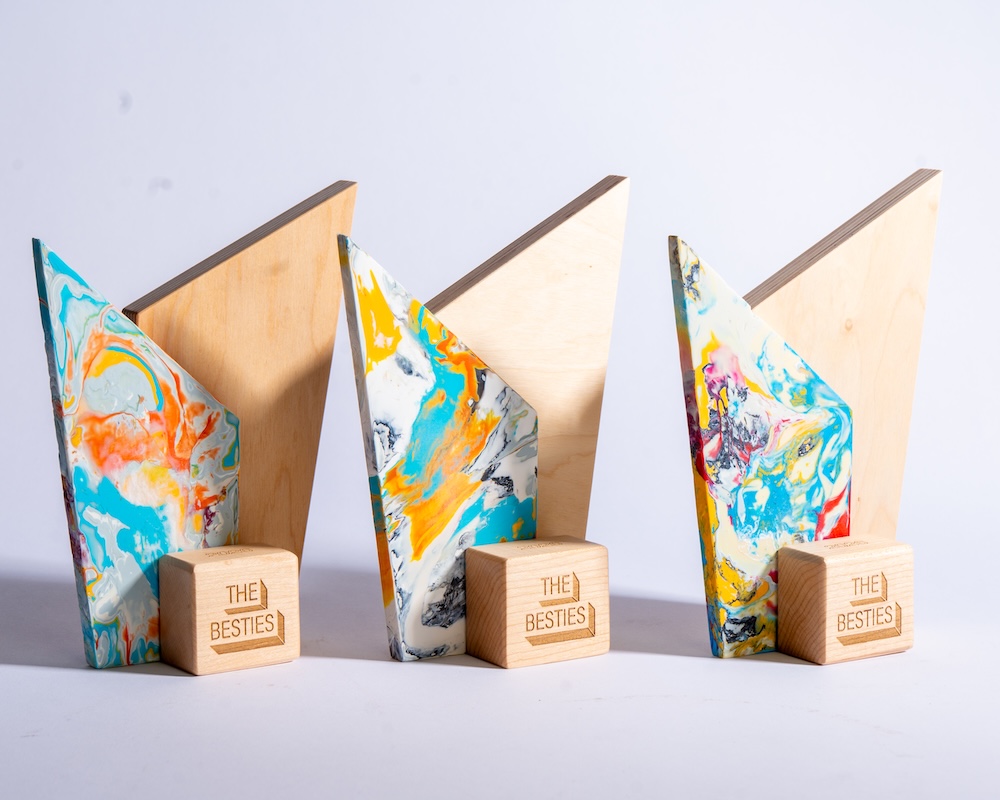
The Besties awards, designed by artist Camillo Feuchter a graduate of Interior & Environmental Design at Duncan of Jordanstone College of Art and Design in Dundee, use recyclable plastics gathered by the partners and leftover wood sourced locally.
The Besties awards celebrating the best across Edinburgh’s August Festivals are now in their third year. The Award is a partnership between Radge Media, Capital Theatres and Premier Scotland.
WE (Granton& District Community Council) are aware of community concerns around the continuing occupation of Scottish Government land at Waterfront Avenue / Granton Park Avenue, which is earmarked for The Art Works development.
The Community Council acknowledges the frustration felt by local residents about the length of time it is taking for this complex issue to be resolved.
An appeal hearing in relation to the eviction order took place in early August, and the judgement was issued at the Court of Session on Thursday (27 August). It found in the Scottish Government’s favour, upholding the eviction order. However, it is worth noting that a further appeal is possible.
As a Community Council, we hope to receive further updates on next steps once available, and will do our best to communicate this to residents in good time.
Children and young people aged three to 26 will be able to take part in a range of free and low-cost activities thanks to funding from the Summer of Sport initiative in partnership with sportscotland.
Inspired by the 2026 FIFA World Cup and the Glasgow 2026 Commonwealth Games, the programme aims to encourage more children and young people to get active, try new sports and enjoy the physical, social, and mental wellbeing benefits of participation.
Delivered by the Council, Edinburgh Leisure, the University of Edinburgh, local sports clubs and community organisations, the funding supports free and subsidised holiday and regular activities that began during the summer holidays and are taking place until the end of March 2027.
This includes swimming, tennis, football, rugby and opportunities for children and young people with additional support needs. It will also expand community sport programmes, provide more opportunities in areas experiencing higher levels of poverty, and support young people who are care experienced, unaccompanied, or learning English.
Investment will also help develop the city’s sport and physical activity workforce through new coaching opportunities, qualifications, and training. The investment includes a £170,000 grant for local sports clubs and community organisations to deliver activities for young people at greater risk of poverty.
Cllr Margaret Graham, Culture and Communities Convener, said: “This is a great opportunity for children and young people to get active, try something new like lawn bowling or cricket and enjoy the benefits of taking part in sport.
“Through the Summer of Sport programme, we’re working with partners across Edinburgh to provide more free and affordable opportunities that are inclusive, accessible, and shaped around the needs of local communities.
“This investment will help more young people take part in sport, while also strengthening local partnerships, developing skills and creating a lasting legacy beyond the summer.”
Cllr James Dalgleish, Education, Children and Families Convener, said: “Every young person deserves the opportunity to be active, build confidence and develop new skills, and cost shouldn’t be a barrier to that.
“By working with schools, community organisations, and sports clubs across Edinburgh, we’re creating more opportunities for children and young people to stay active, make new friends and discover sports they can continue to enjoy for years to come.”
Perrotine Orr, Operations Director of Edinburgh Leisure, said: “This investment is helping us create more opportunities for children and young people across Edinburgh to take part in sport and physical activity, regardless of their background or circumstances.
“We have already seen strong engagement throughout the summer, and the real opportunity now is to build on that momentum over the coming months.
“By continuing to provide free and affordable activities until March 2027, we can help more young people develop confidence, make connections, improve their wellbeing and establish healthy habits that last a lifetime.”