For over 2 years now, LifeCare have been proud to host a The Chatty Cafe Scheme UK table in our community café. Due to such high demand for our Monday sessions, we are excited to be launching a new day of Chatty Cafe starting next week on Wednesdays!
Everyone is welcome to join us on Wednesday 9th of September 10am – 11.30am for our official opening party! Enjoy tea, coffee and cake and good company, all completely free
Every Monday 11am – 1pm
Every Wednesday 10am – 11.30am
At the LifeCare hub, 2 Cheyne St, Stockbridge
Stay for as long as you like – it can be 5 minutes or an hour or so – the choice is always yours.
Miliband summons Israeli Chargé d’Affaires – but Britain continues to aid Israeli aggression
Foreign Secretary Ed Miliband said: “This Israeli Government’s publication of a tender for the E1 settlement project is an unacceptable and destructive act.
“E1 would cut across the heart of Palestine and risks separating the West Bank from East Jerusalem, which would endanger the viability of a two-state solution.
“The UK has been clear privately and publicly in our opposition to E1 and our support for a two-state solution as the only way to ensure long-term security and peace for both Palestinians and Israelis. All settlements damage that prospect and are a flagrant breach of international law.
“Today, I made clear to the Israeli Foreign Minister Gideon Sa’ar that the Israeli Government must halt E1 plans immediately, retract the tender and stop all settlement expansion.
“In addition, the Israeli Chargé d’Affaires has been summoned to the Foreign, Commonwealth and Development Office, where we set out the UK’s profound objection to this move by the Netanyahu government and demanded an immediate reversal.
“The impact of settler violence and terrorism has been catastrophic for Palestinian communities. Settlement expansion and attempts to create irreversible divisions on the ground threaten peace, security and the prospects for a viable Palestinian state.
“Britain will not stand back and accept the destruction of the Two-State Solution.
“In the coming weeks we will set out a comprehensive set of measures to respond to Israeli government policies, protect the viability of the Palestinian state, target sanctions at those who participate in illegal settlement expansion and support a just and lasting peace for Israelis and Palestinians.”
FINE WORDS AND MUCH HAND-WRINGING ONCE AGAIN – BUT BRITISH COMPANIES CONTINUE TO SUPPLY ISRAEL WITH MILITARY AID.
Hundreds of Palestinian people have been slaughtered during the current ‘ceasefire’ – and our country is complicit in this genocide.SHAMEFUL. – Ed.
Last year, the NSPCC Helpline made 276 referrals to agencies in Scotland where the main concern was domestic abuse – 73% higher than when the charity began recording this data.
The NSPCC is appealing to the public to reach out to its Helpline if they have any concern, no matter how small, about a child experiencing domestic abuse.
Referrals about a child experiencing domestic abuse made by the NSPCC Helpline to agencies in Scotland increased by more than a quarter last year.
Between 1 April 2025 and 31 March 2026, the charity’s Helpline made 276 referrals to local agencies in Scotland, including the police and children’s social work, where the main concern was domestic abuse. This is an increase of 27% from the previous year when there were 217 referrals, and 73% from 2021/22 when the NSPCC began recording this data*.
The NSPCC Helpline has specially trained advisors who can speak to the public if they are worried about a child who may be experiencing or witnessing domestic abuse – whether that is physical violence or coercive and controlling behaviour.
The charity makes a referral when concerns about a child reported to the Helpline are considered to be serious enough to warrant further investigation or if it is felt a family needs support.
An adult in Scotland who contacted the NSPCC Helpline said:
“I’m worried about my little brother and my mother. I believe my mother’s boyfriend is subjecting her to ongoing domestic abuse. He restricts access to her car and regularly monitors her phone to see who’s she’s been speaking to. I’ve witnessed him being verbally aggressive, shouting, swearing, and throwing objects around the flat.
“He has also threatened to report mum to children’s services, even though he’s the one who should be reported. Mum is too frightened to ask for help which is why I’m reaching out on her behalf.”
Domestic abuse can include coercive control, and emotional, verbal, physical and financial abuse. Although the majority of domestic abuse victims are women, men can also be affected, and it is vital support is made available to each person according to their needs.
It can have a lasting, harmful effect on a child’s wellbeing, with the repercussions extending well into the future.
Signs that a child has experienced domestic abuse can include aggression, anti-social behaviour, bed wetting, attention seeking, tantrums, withdrawal and problems in school.
Margaret ** who suffered years of abuse by her ex-husband spoke about the impact this had on her children and is urging victims ask for help:
She said: “I had always known Tony* was controlling, but after our wedding he became emotionally and psychologically abusive, threatening me and belittling me all the time. Then he started being physically abusive.
“We had two children and he became abusive towards them too, shouting and beating them with belts and shoes when I wasn’t there. I could see that they were really affected. They were subdued, sullen and didn’t really behave like children at all.
“One day, I finally snapped and called the police. They helped get us to a safe house.
“I was really worried about whether my children would be able to get over the abuse they had witnessed and endured. They took part in the NSPCC’s domestic abuse programme, and the light has come back into their eyes. They changed from quiet and subdued children to boisterous and playful – like they’ve released whatever they’d been holding on to.
“If there are any parents reading this and going through something like us, or you know someone who is, help is out there. I know my children will be OK, but without help, they may not have been.”
Paddi Vint, NSPCC Helpline Service Head, says: “It’s worrying that referrals made by the NSPCC Helpline to agencies in Scotland increased by more than a quarter last year.
“Domestic abuse is often hidden, with stigma and shame making it harder to ask for help. Children and young people might also feel frightened and confused, keeping the abuse to themselves.
“If you’re worried about a child, you can speak to our free NSPCC Helpline in complete confidence. Reaching out can be the first step to help families begin to move forward.”
Anyone with any concerns about the welfare of a child can call the NSPCC Helpline free on 0808 800 5000 or email help@nspcc.org.uk. Children can contact Childline on 0800 1111 or visit childline.org.uk. If an adult or child is in immediate danger, call 999.
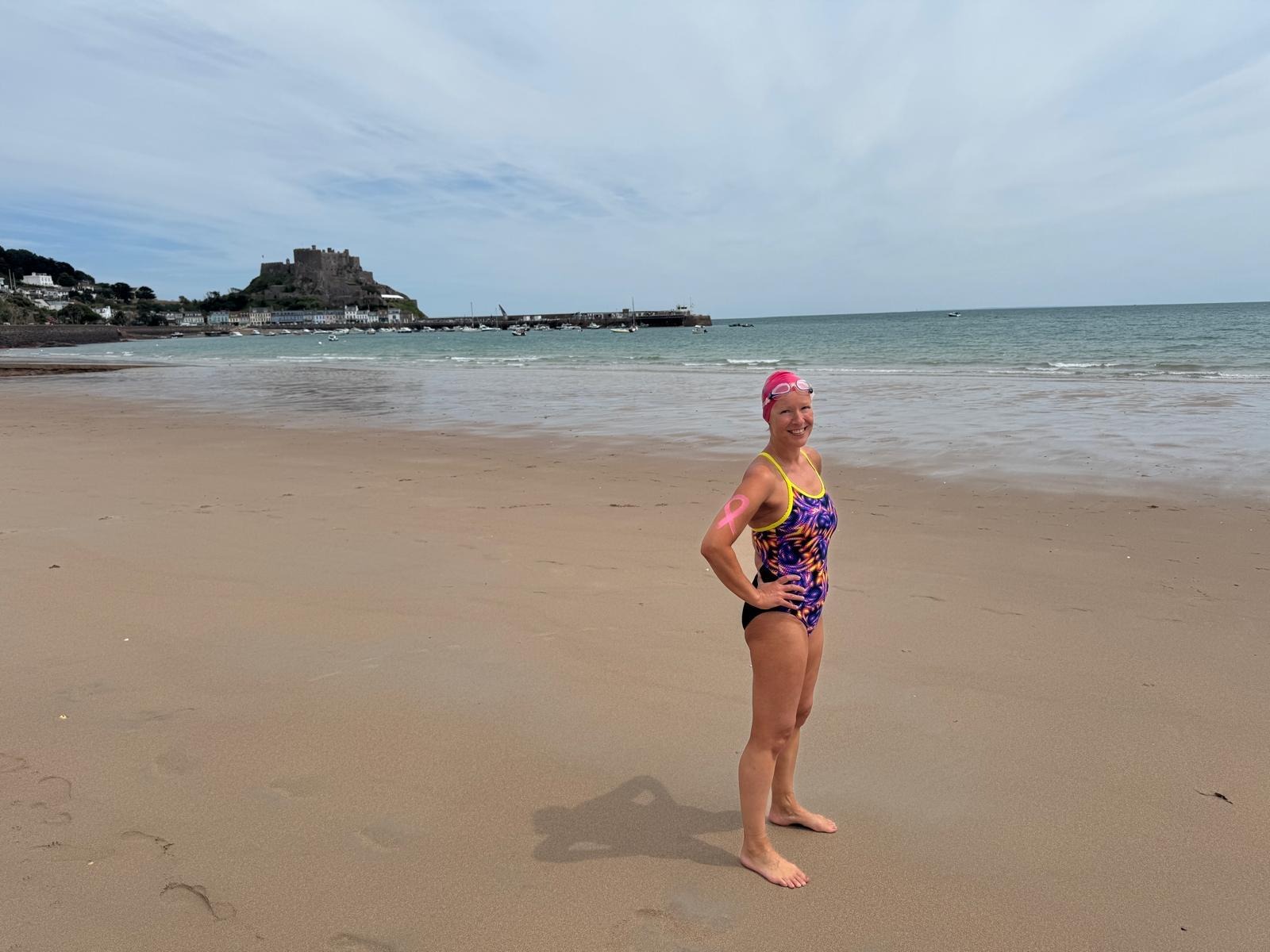
An Edinburgh woman whose breast cancer was discovered after a jellyfish sting has completed a gruelling 58km (36 miles) non-stop sea swim around Jersey to raise money for the NHS team that treated her.
Nicky Mather signed up for this 58km non-stop, non-wetsuited sea swim around Jersey challenge in 2021.
On a training swim in 2022 Nicky swam over a lion’s mane jelly fish at her local Portobello beach in Edinburgh and was stung all over the chest.
In the process of inspecting the sting she discovered a lump that was not the work of a jelly fish. Three weeks later she had been diagnosed with breast cancer, booked in for surgery and started on hormone therapy. After two rounds of surgery, 16 weeks of chemotherapy, intensive radiotherapy and further preventative treatment and medication she has gradually re-built her life.
It was important to Nicky to return to things that were not possible during treatment – including this swimming challenge. It has taken two years to carefully build back her swim fitness and cold-water acclimatisation to be ready whilst also balancing her recovery needs.
The swim
This swim requires a large helping hand from the formidable Jersey tides and currents and very little wind.
Nicky had been allocated a 5-day slot in which she could complete the swim, so really needed some luck for the right conditions to align! It didn’t look like she would get the low-wind forecast needed at all.
On Thursday morning just as she had resigned herself to not swimming and was preparing to go to work, she received a message from the pilot saying ‘Come to Jersey now – we’re swimming Saturday, meet at the boat 7.30am‘! So then a scramble to get herself and crew from Edinburgh to Jersey, supplies organised and to prepare herself mentally for swimming again.
When Nicky finally stepped off the boat and swam to the wall at Elizabeth Castle signalling the swim start, she felt so grateful to be able to do the swim at last.
The first two hours of the swim involved navigating around jaggy rocks so Nicky had to be separated from the main support boat and escorted by a very small boat until they reached deeper waters. She was very glad to be reunited with her support boat and ready for her first feed!
During the swim it is forbidden to be helped in any way: use of buoyancy or thermal aids and sports watches are banned, no one can touch the swimmer and the swimmer cannot touch the boat.
Fuelling has to happen whilst treading water. Nicky’s husband fed her liquid carbohydrate drink from the boat every 45 mins via a rope and bottle. Nicky also likes peaches in syrup as a treat to soothe the mouth and throat from ingesting too much salt water! It’s important to feed fast and keep swimming to avoid losing the tidal advantage so each pit-stop was no more than 15 seconds.
During the first 6 hours of the swim conditions were smooth and Nicky enjoyed swimming past the different places where she had trained for this swim over the past few years.
Jersey is a bit like a rectangle and every time she turned a “corner” she noticed the water became suddenly confused and could feel the currents pulling her in different ways. The second half of the swim the wind picked up and it became much more ‘wavey and choppy’. It was hard to see much other than the very large barrel jellyfish wizzing past underneath Nicky on the currents.
Nicky did however notice the large ferry gliding past at one point and a speeding RIB that came a bit too close to the boat for the pilot’s liking!!! Nicky was very grateful to have a very experienced, alert pilot and crew to keep her safe in very busy waters.
The final 45 mins were really tough, swimming very tired into a headwind. Nicky was very relieved and delighted to touch the walls of Elizabeth Castle again 11 hours 41 mins after starting!
Nicky says: “Overall it was a beautiful and special swim. Touching the finishing wall was not just about completing the swim – it was about celebrating what is possible and making the most of each day.
“This swim is dedicated to the amazing NHS staff at the Western General Hospital and my local Colinton GP surgery. Their swift interventions, expertise and support are the reason I am here and was able to finally complete this swim.”
Nicky is hoping to raise £4000 for the Breast Cancer Institute of Edinburgh at the Western General Hospital Fund S03181.
This Fund is held within and managed by NHS Lothian Charity and is locally administered by stewards with strong links to the Edinburgh Breast Unit.
Every pound raised will support breast cancer research, specialist equipment, education and enhancements to the patient experience:
Edinburgh’s pubs, bars, restaurants and hospitality heroes are celebrating after a host of the capital’s best businesses and individuals were named finalists in the Scottish Bar & Pub Awards 2026.
Now in its 31st year, the Scottish Bar & Pub Awards are Scotland’s longest running celebration of pubs, bars, restaurants and the people who make them great. The awards have become one of the biggest nights on the licensed trade calendar, recognising the businesses, teams and individuals who go above and beyond across Scotland.
This year, the awards are taking a walk on the wild side, with a spectacular Glam Rock theme set to bring some serious rock ‘n’ roll glamour to the celebrations on Tuesday 1 September.
Edinburgh is strongly represented among this year’s finalists, with local pubs, bars, restaurants, hospitality teams and individuals making their mark across a wide range of categories.
Among the capital’s finalists are The Bowlers Rest, Black Ivy, Bittersweet Leith, Barry Fish, The Dome, Boston Bar New Town, Boston Bar Old Town, Nectar, Seamus’s Pub, Bonnie & Wild, Teuchters Landing, The Pear Tree and The Tynecastle Arms, alongside a host of talented Edinburgh hospitality professionals.
The city’s individual talent is also making its mark, with Cullen Hutchison of The Mother Superior and Chris Sloan of The Black Bull shortlisted for the Deanston Whisky Guru Rising Star Award, while Daniel Cutting of Brewhemia and Mirin McLintock of Why Not are both in contention for HOSPO Manager of the Year.
Edinburgh’s cocktail and restaurant scene is also well represented, with Bittersweet Leith competing for the Hendrick’s Gin and Monkey Shoulder Cocktail Bar of the Year title, while Barry Fish and The Dome are finalists for Lightspeed Restaurant of the Year.
There is plenty of recognition for the capital’s pub scene too, with Edinburgh venues competing across categories including Community Pub of the Year, DRAM Dog Friendly Pub of the Year, Jameson Best Irish Bar, Kopparberg Best Outdoor Area, New Bar of the Year and Sunday Mail Pub of the Year.
Publisher, Susan Young, said: “It is fantastic to see such a strong showing from Edinburgh’s hospitality businesses and individuals this year.
“What I love about these nominations is the sheer variety. We have brilliant bar teams, cocktail destinations, late night venues, community pubs, restaurants, emerging talent and established Edinburgh favourites. It really demonstrates just how diverse and vibrant the city’s hospitality scene is.
“The people working in hospitality are the real stars of these awards, and it is wonderful to see so many from Edinburgh getting the recognition they deserve.”
More than 600 of Scotland’s hospitality stars will gather on 1 September for the Scottish Bar & Pub Awards, with the industry embracing this year’s Glam Rock theme and finding out who will take home Scotland’s highest hospitality honours.
Here’s the full roll call of Edinburgh contenders vying for glory:
Community Pub of the Year
The Bowlers Rest
Deanston Whisky Guru Rising Star Award
Cullen Hutchison – The Mother Superior Chris Sloan – The Black Bull
DRAM Dog Friendly Pub of the Year
Black Ivy
Hendrick’s Gin and Monkey Shoulder Cocktail Bar of the Year
Mattel launches nationwide prize draw for nurseries, primary schools and secondary schools that sign up to Save the Children’s Christmas Jumper Day
Thomas the Tank Engine becomes first-ever locomotive to choo-choose to support Save the Children’s Christmas Jumper Day
Mattel’s Thomas & Friends launches nationwide prize draw for nurseries, primary schools and secondary schools that sign up to Save the Children’s Christmas Jumper Day
This year, Mattel’s Thomas & Friends have come on-board to support Save the Children’s Christmas Jumper Day campaign.
Thomas the Tank Engine will be appointed as Save the Children’s Chief Delivery Officer for Christmas Jumper Day and will be the first-ever locomotive to choo-choose to support the annual festive fundraiser and help keep it on track.
Together, Thomas and Save the Children will help deliver festive joy to children in the UK and around the world who need it most.
Save the Children’s annual Christmas Jumper Day is taking place on Thursday 10th December 2026 and to help encourage more children than ever to sign up and take part, Mattel is launching a nationwide prize draw for nurseries, primary schools and secondary schools.
Schools and nurseries that register by Tuesday 1st December at: ChristmasJumperDay.org will be in with the chance of winning:
Nursery – A Day Out With Thomas adventure, where one nursery class of up to 30 children, plus up to 4 teachers/chaperones can enjoy a ride on a full-sized Thomas engine and child-friendly activities. Subject to availability.
Primary – An unforgettable full-day visit for one winning primary school class to Drayton Manor Resort, home of Thomas Land, with access to over 50 rides and attractions throughout the park. Includes admission to Thomas Land, reasonable return group/coach travel, lunch for all attendees and parking where applicable.
Secondary – One exclusive interactive STEM-focused workshop with a Mattel designer at your school, where students can discover the creative process behind some of their favourite toys and bring ideas to life.
Get your jumper out. You don’t have to buy a new one, upcycle an old jumper with tinsel and baubles.
Donate to Save the Children. By having fun and raising money, you’re supporting children in the UK and around the world.
When you sign up to Save the Children’s Christmas Jumper Day, you’ll receive a free fundraising pack with lesson plans, festive activities and all the information you need to plan the merriest day ever.
Kristina Arora, Head of Christmas Jumper Day, from Save the Children said: “With Thomas the Tank Engine coming on-board for the 2026 campaign we hope that more children than ever will sign up and take part.
“By launching an exclusive prize draw for anyone who signs up to Christmas Jumper Day this year, our incredible partner Mattel is helping us to bring communities together for the festive season. The more money we raise this Christmas, the more impact we can have on the lives of children who need it most.
“For generations, Thomas & Friends has inspired children through stories of friendship, teamwork and helping others, so we’re incredibly proud to support Save the Children’s Christmas Jumper Day this year,” saidNancy Molenda, Vice President of Global Corporate Events and Philanthropy at Mattel.
“As Thomas takes on his new role as Chief Delivery Officer, we’re excited to help bring even more schools, nurseries and families together for a day of festive fun that can make a real difference to children who need it most, helping keep this year’s campaign on track.”
Tickets on sale for new Oasis film documenting the band’s record breaking 2025 tour – arriving at Vue Edinburgh next month
A new film charting Liam and Noel Gallagher’s triumphant reunion tour, Oasis Live ’25, is heading to the big screen next month – with tickets on sale from now.
Showing exclusively at cinemas from 9 – 17 September, Don’t Look Back in Anger documents one of the biggest musical events in recent years.
The 41-date world tour saw the brothers performing across five continents – with an impressive 17 shows taking place in the UK alone.
The film offers unprecedented access and never-before-seen footage, alongside the first joint interviews with Noel and Liam in over 20 years. It also explores the profound emotional impact of the tour and what the band’s music means to audiences and generations worldwide.
Fans will be able to watch Don’t Look Back in Anger on Vue’s biggest screen: EPIC by Vue – the ultimate way to experience the most anticipated releases.
Ian Chester, General Manager at Vue Edinburgh, said: “After decades of waiting, last year Oasis fans got the reunion they were hoping for.Now audiences can relive the iconic comeback on the big screen, with unprecedented access, behind-the-scenes footage and a joint interview – two decades in the making.
“What better way to enjoy this fly on the wall documentary than from the comfort of Vue, offering the ultimate seat, screen and sound experience.”
Following its Fringe First Award win last week, critically acclaimed one-man show ‘The Bridge’ will extend its Edinburgh Fringe run with a limited series of three additional performances from 28-30 August at 8pm.
Written and performed by Palestinian artist Alaa Shehada, who also secured the prestigious accolade last year for ‘The Horse of Jenin’, and produced by the Palestine Comedy Club, ‘The Bridge’tells the extraordinary story of the only route Palestinians in the West Bank have to the outside world.
It originally opened for a limited run at Assembly Roxy. Following its major award win and strong audience response, the production will now move to Assembly George Square Studios, Studio Two, for three additional performances.
The Fringe First Award recognises outstanding new work at the Edinburgh Festival Fringe. The additional performances give audiences another opportunity to catch one of this year’s award-winning productions before its Fringe run comes to an end.
● The Scottish Government and Road Safety Scotland have launched their Fitness to Drive campaign to encourage drivers aged 60 and over to reflect on their driving and take simple, practical steps to stay safe and confident on the road.
● The Fitness to Drive national roadshow will be stopping off in Edinburgh from 19 – 23 August appearing at local spots including IKEA Straiton, Cameron Toll Shopping Centre, and Dobbies Garden Centre Edinburgh.
● Older drivers will be able to drop in for a free ‘Driver MOT’ – a session to help them recognise any changes in the way they drive and explore practical steps they can take to continue driving safely for longer.
A road safety campaign by the Scottish Government and Road Safety Scotland is coming to Edinburgh as part of a nationwide tour to support mature drivers to stay safe and confident on the road.
With more than 850,000 drivers over 60 in Scotland, the Fitness to Drive roadshow will be appearing at IKEA Straiton on 19 August, before heading to Cameron Toll Shopping Centre on 20 August, before finally rolling into Dobbies Garden Centre Edinburgh from 21 to 23 August.
The purpose of the roadshow is to highlight the importance of recognising how ageing may impact driving, as well as understanding the steps that can be taken to mitigate that.
Transport Scotland statistics show an increasing trend in the number of road casualties involving drivers aged 60 and over. The Driver MOT roadshow aims to help people understand ways they can overcome age-related challenges, such as changes to eyesight, hearing and reaction times.
The roadshow will share tips for addressing these changes, which may include booking regular eye examinations, reducing night-time driving, avoiding busy junctions at peak hours, and/or refreshing skills with a driving review.
Fear of having to give up driving can often stop people from addressing these changes, but the Fitness to Drive initiative looks to equip older drivers with the knowledge and understanding they need to help stay safe behind the wheel for longer. Friends and family members of drivers aged 60 or over are also encouraged to attend for advice on opening up supportive and sensitive conversations about driving.
Cabinet Secretary for Economy, Tourism and Transport, Stephen Flynn, said: “The Fitness to Drive campaign is designed to support older drivers to recognise any changes that come with age – whether that’s to eyesight or hearing – and encouraging them to take action to ensure they continue driving safely and confidently.
“Change doesn’t always have to mean hanging up the keys and, by helping older drivers and their families ensure their driving fitness, we can help make people more confident and safer when they travel which, in turn, can help stop collisions and save lives.”
The Fitness to Drive national roadshow will be at the following locations:
ALMOST FIFTY KNIFE INCIDENTS IN EDINBURGH SCHOOLS IN FIVE YEARS
Scottish Liberal Democrat MSP for Edinburgh Northern Sanne Dijkstra-Downie MSP has today urged the SNP government to step up efforts to tackle youth knife crime as she revealed that there have been almost 50 such crimes in Edinburgh schools since 2021.
New figures uncovered by the party show that since 2021 there have been:
37 crimes of possession of an article with a blade or point in Edinburgh schools.
10 crimes of these articles being used in some other kind of criminal activity in Edinburgh schools.
Scottish Liberal Democrats previously revealed that the police have recorded almost 700 crimes of possessing an article with a blade or point in schools across Scotland over the last five years.
Sanne Dijkstra-Downie MSP said:“Each one of these crimes will have been hugely distressing for the staff and pupils involved.
“These figures do not sit in isolation, and we need to understand the part played by events like the pandemic, which had a severe and longer-lasting impact on young people.
“That impact hasn’t been helped by the Scottish Government’s failure to recognise the importance of interventions like youth work.
“Youth work can stop this kind of violence from happening in the first place by offering young people valuable support and guidance, often from someone who is neither a parent nor a teacher.
“Scottish Liberal Democrats will fight for a proper investment in youth work so that we can give young people the choices and the futures they deserve.”