As part of its famous Polar Gallery exhibition, Dynamic Earth has launched a new exhibit in conjunction with Edinburgh start-up Earthwave, who have recently come on board as a Gallery Engagement Partner.
The exhibit, entitled ‘Goodbye Glaciers!?’, gives visitors, for the first time in the UK, real-time information on the sad reality of how quickly many glaciers are disappearing across the world.
The United Nations declared 2025 as the International Year of Glaciers’ Preservation and marked the 21st March as World Day for Glaciers. ‘Goodbye Glaciers!?’ is part of a global campaign to raise awareness about the critical role of glaciers, snow and ice in the climate system and the economic, social and environmental impacts if they disappear completely.
The ‘Goodbye Glaciers!?’ signpost represents a real glacier and shows the year scientists expect it could mostly disappear if the world continues with its 2026 climate policies.
Earthwave is a key provider of glacial data structures and satellite tracking of glaciers. Their high-resolution satellite observational data and mass balance calculations are required to accurately predict and visualise when these glaciers will disappear.
Dynamic Earth’s ‘Goodbye Glaciers?’ signpost includes a QR code linking to the global Signposts – Goodbye Glaciers!? website, featuring photos and three-dimensional projections that predict the future under 1.5°C and 2.7°C global warming.
“We are very proud to partner with Dynamic Earth. The message is clear, we must remain on target with ambitious emissions reductions if we are going to preserve glacier volume globally,” said Dr Livia Jakob, Co-Founder and Chief Scientific Officer at Earthwave.
Helen Chomczuk, Marketing and Fundraising Director, added: “Our data mapping shows how global warming affects glaciers and that they will vanish in the coming decades. We’re delighted to be able to showcase this important work to Dynamic Earth visitors.
“The Signposts – Goodbye Glaciers!? exhibit is also produced in partnership with a range of academic institutions, including the University of Innsbruck, further strengthening Dynamic Earth’s close relationship with science and bringing the latest information to Edinburgh.
“Developing partnerships with the scientific community is a vital part of how we keep Dynamic Earth’s finger on the pulse of the latest global developments. As a world-class science centre and planetarium, we are committed to ensuring that everyone leaves us feeling better informed and inspired, and showing how scientists play a crucial role in helping us protect the natural world.
“Our Polar Gallery has always been a focal point at Dynamic Earth, featuring a real, touchable iceberg and an immersive sensory experience of the Earth’s extreme polar regions – and Earthwave’s work is a perfect example of the vital role that scientists play in helping us better understand these environments.
Pic Greg Macvean 22/09/2026
WWF – It’s In Our Nature campaign handover to the First Minister at Bute House
A selection of thousands of messages from people across Scotland sharing their hopes for the future of nature have been handed over to the First Minister inside a giant papier-mâché oyster.
WWF Scotland with a group of young nature supporters used the sculpture of the European flat oyster to handover the messages gathered from members of the public during the organisation’s recent ‘It’s in Our Nature’ campaign.
The messages call for stronger leadership and investment in nature recovery.
Among the wishes were calls for:
More safe havens for wildlife
Healthier rivers and seas
Planting of more native trees
Greater protection for endangered species
A greener, healthier future for children and communities
Pic Greg Macvean 22/09/2026
WWF – It’s In Our Nature campaign handover to the First Minister at Bute House
Lang Banks, director of WWF Scotland, said: “These messages are proof of the growing desire for our government to take more seriously the need to invest in Scotland’s natural world. They show that people across the country care deeply about nature, how nature helps their mental wellbeing and that they want to see it flourish once again.
“Whether it’s seeing more wildlife in local communities, protecting our rivers and seas, or ensuring future generations can experience the wonders of Scotland’s natural heritage, the message is clear: people want to see action.”
First Minister John Swinney said: “Scotland’s young climate and nature champions are at the forefront of calling for global climate and nature action, so it was great to see their passion firsthand and hear about the important work done by WWF Scotland to preserve and protect our natural environment.
“The climate emergency is already causing significant damage to nature and habitats, and tackling it is a Scottish Government priority. We will continue to do all we can to address the biodiversity crisis and help create a more sustainable world.”
The handover comes at a critical time for Scotland’s nature following a summer of extreme weather and wildfires, and 1 in 9 species already at risk of extinction.
Scotland’s natural ecosystems – including its peatlands, native woodlands, rivers, and coastal habitats – also play a vital role in capturing carbon, reducing flood risks, and building resilience against extreme weather.
Pic Greg Macvean 22/09/2026
WWF – It’s In Our Nature campaign handover to the First Minister at Bute House
Catherine from Central Scotland and Lothian’s West wrote:
“Nature is about all life on this planet and we must protect it. Scotland is well placed to do more from planting trees in the right environment to cleaning up our rivers and reducing pollution. The clock is ticking, we can’t delay.”
Stuart from Glasgow added:
“I have always felt that the Scots have a long history of stewardship of the land, and that is even more important today. If we do not take care of Scotland’s nature in a sustainable and regenerative way we risk losing that which is most important to future generations, the enjoyment of nature.”
Marion from the Highlands said:
“We all need and depend on nature for our mental and physical health. It underlies food production, clean water and clean air. Our future and that of our children depends on our protecting nature now.”
Bespoke artwork celebrates life and surroundings at Morningside residency
AN EDINBURGH care home has been captured in a striking new piece of artwork created to give residents and visitors a unique view of the place they call home.
Cluny Lodge Care Home, owned by Elder Homes Ltd, commissioned local artist Clare Bevis to create the bespoke piece for its reception area.
The artwork depicts the Morningside home and its surroundings, bringing together architectural details from across the large building which cannot easily be seen from a single viewpoint.
Clare, who had previously created artwork for Elder Homes Director Stephen Dodds, spent time walking around Cluny Lodge before starting the piece to identify the details and features which were important to capture.
Clare said: “Cluny Lodge was a perfect subject for my art style. I wanted to keep the quintessential feel of the home and its surroundings through the use of soft pastel colours.
“You can see that the piece moves from day to night, which was a little detail I included to show life around the clock at the home.”
The artwork, which took around eight hours to complete, is Clare’s largest piece to date and combines a range of different materials and techniques.
Fine liner and super-fine pens were used for the main drawing, alongside digital techniques and giclée ink to introduce additional colour and detail.
Now installed in the reception area, the finished work gives residents, families and visitors a complete view of the home as they arrive at the main entrance.
Clare added: “It’s such a big building and hard to see from one viewpoint, so I think the artwork gives guests and residents a full picture of where they are as they come through the main door.
“To see the final piece in the home brings a smile to my face. I’m so happy I was asked to create this for the residents to admire as they pass through reception.
“I spoke to a few residents who told me they once loved to draw and paint and were enjoying viewing my piece when it was installed. It was lovely to hear that it had already got people talking.”
Cluny Lodge Care Home, Edinburgh.
Stephen Dodds, Director of Elder Homes, said: “We wanted to create something that reflected the character of Cluny Lodge and would become a real feature for residents, families and visitors to enjoy.
“Clare has captured the home in a way that simply isn’t possible from any single viewpoint, while including the details that make it so recognisable to the people who know it best.
“Creating an engaging environment is an important part of life at Cluny Lodge, so it has been great to see residents stopping to look at the artwork, talk about it and, in some cases, share their own memories of drawing and painting.”
The commission is part of a wider focus on creating a stimulating and engaging environment for residents at Cluny Lodge, with activities and experiences tailored around individual interests and needs.
Cluny Lodge recently retained the highest possible rating for supporting people’s wellbeing following an unannounced inspection by the Care Inspectorate.
The home was awarded a score of 6 – Excellent for “How well do we support people’s wellbeing?”, alongside scores of 5 – Very Good for leadership, setting, quality assurance and the quality of its facilities.
The home follows a holistic approach to residents’ health and wellbeing, with its team including in-house physiotherapists, social and leisure staff and nutritional support workers alongside its wider care team.
Residents have access to a wide range of activities, outings, concert and events aimed at providing social, mental and physical stimulation.
Founded by Loren and Julie Hufstetler in 1984, the family-owned Elder Homes has spent over 40 years providing individualised support and compassionate service to seniors requiring assistance with daily living.
Earlier and better support for people with health conditions or disabilities in the workplace is key to driving growth and productivity, says a new report published by the co-chair of Keep Britain Working today
In his latest update, Sir Charlie Mayfield sets out the work being done with employers, providers and those with lived experience to deliver Britain’s first Workplace Health System.
Around 300,000 people with a health condition leave work every year.
But much of this is preventable. Someone absent for four to six weeks has a 96 percent chance of returning. After a year, fewer than half do.
Since 2019, the number of working-age people out of work due to ill health has risen by 800,000, with a total cost to the economy of around £212 billion a year.
The new plan aims to build better, more inclusive workplaces and better workplace health provision to prevent ill health conditions from escalating and to support people in work with health conditions or disabilities, to achieve more successful returns after absences from work.
It brings together employers, the NHS, local authorities and other support services to ensure people don’t fall out of work unnecessarily and companies have better data on workplace health and inclusion to drive change.
Eleven regional Vanguards, including nine Mayoral Strategic Authorities, Cornwall Council, Hull City Council and Worcestershire City Council, and more than 200 Vanguard organisations are already building and testing the new system with employers, unions and disabled people across all four nations of the UK.
Examples include:
Liverpool City Region testing draft return-to-work plans developed with employers.
Hull City Council, in partnership with provider Latus, creating the Hull Resilience Hub, a buyer’s pool letting local SMEs access occupational health services at the same prices as large corporates.
South Yorkshire Mayoral Combined Authority will be trialling independent case workers sitting part-time within businesses to support employees with health concerns.
Sir Charlie Mayfield, author of the Keep Britain Working Review and Co-Chair of the Keep Britain Working programme, said: “Britain has spent too long treating economic inactivity as a welfare problem. It is not.
!Instead, it’s one of the largest and most attainable growth opportunities this country has.
“We’ve had a National Health Service for almost 80 years. We’ve never had a Workplace Health System. That is why the same people appear on the welfare bill, on NHS waiting lists and in the productivity figures without anyone being able to join them up.
“It’s also why we are missing the best moments to help people. The new Workplace Health System would change that.
“Ten months of building and testing with employers, mayors, providers, unions and disabled people have made us even clearer about what needs to change and more confident that a new system that helps to drive economic growth is within reach.
“The task now is to build it.”
An employer standard is being developed with the British Standards Institution, alongside affordable support for smaller firms through pooled buying and insurance routes, so good workplace health support is not just available to big companies.
Sir Charlie’s work sits within a £3.5 billion employment support package. WorkWell, backed by £259 million will support up to 250,000 people to stay in or return to work. Connect to Work will reach 300,000 sick or disabled people with tailored support. Over 1,000 full-time Pathways to Work advisers are already in place across Britain.
Work and Pensions Secretary Pat McFadden said: “Too many people fall out of work because of a health problem that could have been caught earlier, and too many employers have no way of knowing whether they are getting this right.
“This programme is working hand in hand with employers, mayors and local leaders to change that, so that good workplace health support is not just for big companies and it delivers growth across every postcode.”
Alongside this, the programme is also focusing on intelligence. Few employers can currently tell how well they keep staff with health conditions in work, or whether people are still in work six months on. Fewer still have the insights that could fuel their prevention efforts. A new employer data project and work and health prototype are being developed this autumn aims to address these gaps.
Over the next year the programme will continue to work with BSI to develop a standard and test and refine employer commitments with the Vanguard to build the evidence on what works.
Minister of State for Work and Health Ally McGovern, said: “Anyone can find themself with an illness that could stop them working. Getting help quickly rather than waiting for the problem to get worse is the right way to support good health and a strong economy.“
The Westminster government is also committed to further steps to bring about effective and sustainable welfare reform, and this will be guided by the Milburn and Timms reviews, which are due to conclude later this year.
Tracy Brabin, Mayor of West Yorkshire, said: “Too many people are being written off from good work when the right support could help them thrive.
“Through our Healthy Working Life programme, we’re bringing together health services, employment support and employers, so people can get the help they need at the right time rather than being bounced between disconnected services.
“Supporting people with health conditions and disabilities to access good work isn’t just the right thing to do – it’s key to unlocking talent and building a healthier, wealthier West Yorkshire.”
Oliver Coppard, Mayor of South Yorkshire, said: “I want South Yorkshire to become the healthiest region in the country, a place where everyone has the chance to work, support their families and pursue their dreams. At the moment, all too many people don’t have that chance because of poor health.
Our trial will help us work alongside employers, employees and health experts to find practical ways of supporting people to stay well, stay in work, or return to work when they’re ready.
By testing new ideas and listening to the voices of both working people and employers, we can help create healthier workplaces where people and businesses can get on, contribute to our communities and our economy, and help us build the South Yorkshire we all want to see.”
Bev Craig, Mayor of Greater Manchester, said: “Greater Manchester has long championed the link between good work, good health and economic prosperity. Through our Live Well approach, Good Employment Charter and Get Greater Manchester Working plan, we’re focused on helping more people stay in work, particularly when they’re facing health or other challenges.
“We welcome the focus on prevention and look forward to working with partners to put effective solutions into practice.”
Helen Godwin, Mayor of the West of England, said: “Creating a Workplace Health System approach will bring organisations together to work better to provide the right support, at the right time, to help keep more people in work.
“We know that the longer people are off work, the harder it can be to return. This is why early personalised support is so important, particularly for long-term sickness and poor mental health. In partnership with local councils, Integrated Care Boards, the government, and community organisations, in the West we’ll build a more joined‑up, preventative system that helps people sooner.
“The West of England is already the country’s fastest-growing regional economy. Through our new Skills Strategy, our ambition is to also have the highest employment rate in the UK.
“We’re working with employers to enable them to find and retain the talent and workforce they need to thrive, while making it easier for residents of all ages to access training, advice and pathways into work.”
Richard Parker, Mayor of the West Midlands, said: “Too many people across the West Midlands want to work and get on in life, but are being held back by barriers that they should be getting help to overcome.
“Good work is about more than a pay packet. It brings security, independence, and pride, and when people are locked out of work, we’re also missing out on their skills and talent.
“West Midlands Works is about changing that. By working alongside the Keep Britain Working programme and employers, we can give people the right support to get into work, stay in work and build a better future for themselves and their families.”
Steve Rotheram, Mayor of the Liverpool City Region, said: “People shouldn’t be written off because they develop a health condition – and businesses shouldn’t have to lose good, experienced workers because the right support wasn’t there soon enough.
“In the Liverpool City Region, we’re proud to be playing our part in helping to test practical ways of changing that; stepping in earlier, working directly with employers and making it easier for people to stay in work or return when they’re ready. That matters just as much for a small business employing ten people as it does for a company employing thousands.
“If we can get this right, the prize is huge: more people able to keep the security and independence that comes with work, businesses holding on to the skills they need, and a stronger, more productive economy as a result. It’s the kind of common sense reform that can make a real difference to people’s lives.”
Alistair Cochrane, Chief Executive of Royal Mail, said: “Royal Mail is proud to support Keep Britain Working to help more people stay in and return to work.
“We are already applying learnings from the programme to strengthen support for our employees’ wellbeing, particularly those at risk of musculoskeletal and mental health conditions, which are the leading causes of sick absence in our business.
“We are introducing practical measures such as upskilling managers on mental health, removing barriers for employees seeking help with their health, and making it as easy as possible to return after long-term sick leave.”
Anne Hayes, Director of Standards Development, BSI, said: “We support the KBW review’s conclusion that supporting more people into work represents an economic opportunity for the UK.
“Our research has found that employers play a critical role in this, with nearly half of staff who are not confident raising health concerns with their employer having left a role or taken extended leave as a result.
“The standard we are developing with KBW will be a vital tool to help employers work effectively to build workplace cultures rooted in trust so that individuals and organisations alike can flourish.”
John Foster, Chief Policy and Campaigns Officer, CBI: “The progress of the Keep Britain Working Review shows what can be achieved when government and business work together to turn ambition into practical action.
“Making affordability a key test is particularly important at a time when cost pressures are constraining firms’ ability to hire and invest.
“Bringing down the wider cost of doing business will help give employers the confidence and headroom to create jobs, invest in their people and play their full part in delivering this shared ambition.”
Jack Latus, CEO of Latus Group, said: “Every person who leaves work because of ill health is a loss to their employer, their local economy and the public finances.
“Too often, someone develops a health condition and slowly drifts away from their job with isolation and long silent periods on a fit note making things worse.
“Prevention has to happen where people spend their working lives.
“Good workplace health support means acting early, staying in touch, and working together on a return before a health problem becomes a lost job.
“In Hull, the Resilience Hub is giving local SMEs that support and Latus are delighted to be part of the Keep Britain Working movement, working to explore how earlier insights from employees can better support them, and at the right time.”
Kate Thompson, executive director of people and organisational development at Northumbria Healthcare NHS Foundation Trust, said: “We want to be a leading employer for staff health and wellbeing and are delighted to be part of the Keep Britain Working movement.
“Our staff health needs assessment, which brings together demographic information and survey questions, provides real insights into our varied workforce.
“It has already helped focus our preventative and proactive work where it’s most needed, including projects on musculoskeletal conditions and financial wellbeing. The next stage is to make the data readily available to the right people, so they can identify health and wellbeing priorities for their teams.
“Staff health and wellbeing is part of our overall focus on staff satisfaction, as we know that happy, healthy staff provide better patient care. It also helps us to reduce sickness absence, improve productivity and drive value for public money.”
Keep Britain Working is an independent review turned delivery programme tackling health-related economic inactivity and promoting healthy, inclusive workplaces.
It is co-chaired by Sir Charlie Mayfield, alongside the three Secretaries of State.
The latest Debate Not Hate survey, undertaken by the Local Government Association (LGA) since 2022, has this year been extended to councillors in Scotland and Northern Ireland, reflecting the four UK nations joint commitment to promoting and defencing civility in public life as expressed in the joint statement of October 2025.
A total of 1503 councillors across England, Wales, Scotland and Northern Ireland responded to the survey, which found that:
78 per cent of councillors reported feeling some level of personal risk while fulfilling their role as a councillor, with over 85 percent of female, ethnic minority, LGBT+ or disabled councillors reporting feeling at risk. In Scotland, the overall figure was 81%.
52 percent of councillors reported that abuse and intimidation had increased sharply or slightly over the past 12 months, with 25 percent reporting it had increased sharply.
74 percent of councillors in England reported experiencing some level of abuse or intimidation during the 2026 local election campaign, with over two-thirds of Welsh and Scottish councillors doing so during the Senedd and Scottish Parliament campaigns.
Over a quarter of councillors (26 percent) reported having received threats of violence and 7 per cent a threat of death. In Scotland, 13% of councillors reported receiving a threat of damage to property, and 2% experiences actual violence.
Among councillors who have decided not to re-stand at the next elections or are undecided on whether or not to do so, 30 percent said their decision was influenced by abuse or intimidation (40% in Scotland); over one in three (35 percent) said they had made security modifications to their home due to safety concerns.
There have been important steps forward in improving councillor safety in recent years, including the introduction of Force Elected Official Advisers (FEOA).
There is growing awareness of the FOEA (or equivalents) that now exist in each police force to oversee elected member safety. 56 percent of councillors in England and Wales are aware of the FEOAs, increasing from 40 percent in the previous year, with even higher awareness in Scotland (76 percent). Nearly three quarters (74 percent) of councillors who had engaged with Force Elected Official Advisers or Operation Ford had found it very or fairly useful.
However, the Debate Not Hate Survey results suggest much more needs to be done by government, police forces, social media platforms and others to tackle the high and growing levels of abuse and intimidation. It is clear from the survey that many people are being put off standing or running again for local elected office due to an environment in which abuse and threats are increasingly common.
While a quarter of councillors had reported an incident of abuse or intimidation to the police, they were evenly divided as to whether they felt the issue had been addressed to some extent (34 percent) or hadn’t been addressed at all (33 percent).
While legitimate scrutiny and robust debate are essential in a healthy democracy, abuse, intimidation, threats and harassment have no place in public life.
The LGA, COSLA, NILGA and WLGA are therefore calling on the UK Government to work with devolved and local governments, local government associations and policing partners to establish formal arrangements to tackle these behaviours.
Any new arrangements should aim to bring together and coordinate existing initiatives, facilitate information sharing between agencies and invest in new solutions and security measures to better safeguard democratic participation at every level.
Cllr Shona Morrison, President of COSLA, said:“The results of the survey evidence what many elected members know to be true – that abuse and harassment is far too common an experience for councillors.
“Councillors and Councils are a vital part of democracy, and it is unacceptable that 81 percent of Scottish councillors have felt some level of risk whilst carrying out their role. With local government elections taking place next year, there is a real concern that we will lose talented, experienced and committed councillors due to this environment.
“COSLA is grateful to the councillors in Scotland who took part in the survey for the first time that have helped to draw attention to this important issue.
“We are committed to working with the Scottish and UK Governments, Police and partners to tackle the systemic challenges that have contributed to this culture of abuse and harassment.
“Protecting elected members is essential to protecting local democracy, and urgent action is needed to ensure councillors can represent their communities safely, confidently and effectively.”
Cllr Hannah Dalton, LGA Civility in Public Life Ambassador, said:“The findings of the 2026 Debate Not Hate survey are a stark reminder that abuse, threats and intimidation have become an all too common reality for those who step forward to serve their communities.
“We must never accept a situation where harassment and personal attacks are simply regarded as part of public service.
“It is deeply alarming that most councillors believe the problem is getting worse, with more than three-quarters having experienced abuse during the May 2026 local elections. This toxic culture is not only affecting those currently in office, it is deterring talented and committed people from standing for election in the first place. That is a direct threat to the strength, diversity and health of our democracy.
“We urgently call on the Government, police forces and social media companies to work with us to tackle this crisis head on. Concerted action is needed now to confront the growing hostility councillors face and ensure that those who represent their residents can do so without fear of abuse, intimidation or harassment.”
Alderman Hazel Legge, President of the NILGA, said:“The findings are concerning and highlight the very real challenges many councillors face.
“As Northern Ireland looks ahead to the next local government elections, we must ensure that no one is discouraged from standing for office because of abuse or intimidation.
“NILGA has been working closely with the PSNI to improve awareness and support for elected representatives, but there is more to do.
“Everyone should be able to serve their community without fear, and respectful debate must remain at the heart of our democracy.”
Cllr Mary Ann Brocklesby, WLGA Llywydd, and Cllr Jason McLellan, WLGA Social Justice and Equality Spokesperson, said:“The first-ever four nations Debate Not Hate survey marks an important milestone in our shared efforts to understand and tackle abuse and intimidation in public life.
“While the findings demonstrate that too many councillors continue to face unacceptable levels of abuse, they also provide a strong evidence base for collective action across the UK.
“We are committed to working together to support councillors, promote respectful democratic engagement and ensure local democracy remains open, representative and resilient.”
Edinburgh Airport has unveiled the first phase of the largest capital investment programme in its history, with more than £500 million to be invested over the next five years.
The multi-year programme will deliver significant improvements across terminal expansion, airport infrastructure, passenger facilities and operational operations, helping prepare Scotland’s busiest airport for future growth.
First Minister John Swinney visited Edinburgh Airport’s South East Pier expansion site with Edinburgh Airport Chief Executive Gordon Dewar, the first phase development, part of the airport’s £500 million investment programme, is due to fully open in summer 2027.
The landmark programme highlights VINCI Airports’ and GIP’s commitment to Scotland’s busiest airport and the next phase of its strategic ambition to strengthen Edinburgh’s role as a global connectivity hub.
The five-year programme is the first phase of a wider multi-year investment vision for Edinburgh Airport and its campus, with projects including:
New gates to support route growth.
New aircraft stands to handle more aircraft movements.
An expanded check-in hall and departure lounge to improve passenger flow and comfort.
A terminal footprint increase of 60%.
New and improved retail, food, and beverage areas, offering more choice for passengers.
New international arrival facilities and baggage make-up and reclaim areas.
Terminal transformation is at the heart of this first phase, with the wider programme ensuring Edinburgh Airport meets future demand sustainably and efficiently by enhancing capacity and the overall passenger experience.
The investment will support new long-haul and short-haul routes, growing connectivity between Scotland and key markets across Europe, North America, the Middle East, Asia and beyond.
The investment also aligns with the airport’s Greater Good sustainability strategy through modernised infrastructure and opportunities to introduce further low carbon enhancements and improvements.
Beyond the terminal, the first phase of investment will include improvements across the wider airport campus, including additional electric vehicle infrastructure, a new access road and other initiatives.
First Minister John Swinney said: “This significant investment will enable Edinburgh Airport to compete with airports around the world. Alongside delivering real benefits to passengers, this boost will support Scotland’s international connections and help drive economic growth.
“Scotland is open for business and we want to maintain and strengthen Scotland’s position as the most attractive place in the UK for inward investment outside of London and the South East. Opportunities like this airport expansion will help make that happen.”
Gordon Dewar, Chief Executive of Edinburgh Airport said: “This is the biggest investment in Edinburgh Airport’s history and comes at one of the most exciting points in its development, adding another important chapter to its story.
“Our growth has cemented our position as Scotland’s busiest and best connected airport, and we know the important role we play in supporting economic growth in Scotland and the UK. This investment will strengthen our international competitiveness by growing Scotland’s connectivity.
“This is the first phase of a multi-year plan that ensures we are building for Our Future, creating the capacity, capability and customer experience we need and want. It’s part of a wider vision that will see us invest in infrastructure, operations and sustainability, ensuring Edinburgh Airport continues to deliver for passengers, airlines, communities and the Scottish economy for decades to come.”
A spokesperson for Edinburgh Airport’s owners, VINCI Airports and GIP said: “This £500 million investment underscores our confidence in the airport’s growth prospects and our long-term commitment to supporting its development.
“It will enable us to increase its capacity while delivering an ever higher quality experience for passengers, thereby consolidating Edinburgh’s role as Scotland’s leading international gateway.”
Nick Rowan, Managing Director of Balfour Beatty’s business in Scotland, said: “As Scotland’s busiest airport, Edinburgh Airport plays a vital role in supporting the country’s economy, international connectivity and future growth, and we are proud to be helping deliver the infrastructure needed for its next chapter.
“Operating within highly regulated live airport environments requires specialist expertise, and our teams’ capability has enabled us to safely deliver complex infrastructure projects while maintaining operational continuity and minimising disruption for airport users.”
The Eric Liddell Community’s 40 year legacy continues with expanded self-funded and subsidised places to combat isolation and promote active living
With dementia diagnoses in Edinburgh projected to jump 26.5% to over 10,000 cases by 2030¹, The Eric Liddell Community is highlighting the critical need for its specialist Day Care Service.
Over 80% of local people living with dementia reside in the community rather than formal care settings, driving an urgent demand for high quality, local day support.
Open Monday to Friday, the service goes beyond traditional care by offering a highly stimulating daily schedule. Attendees can participate in discussion groups, arts and crafts, dance, baking sessions, and access a multisensory room. Recognising the importance of modern connectivity, the charity also provides one-to-one digital support to help users navigate everyday technology.
Caroline Heenan, Day Care Manager at The Eric Liddell Community, explained the importance of the service:“It has been incredible to hear and see firsthand the impact that the Day Care Service has on the lives of those living with dementia in Edinburgh.
“Our staff and volunteers create such a warm, welcoming, and relaxed environment, ensuring that all service users are supported, and providing activities that help to stimulate the brain whilst promoting a more active lifestyle.
“We have been blown away by the demand for the service, with subsidised places constantly being filled, and more self-funded places being opened up to ensure that those who need the support are getting high quality care, consistently.”
An unnamed service user described her feelings towards the impact of the service:“It definitely feels there’s a sense of community here. If others want to find a place to come and meet people and do things, this is the place to come.
I look forward to the breakfast and two course lunch because it’s homemade, and always very nice.”
Another service user added:“I’m always telling people how much I love this place. One of the things I love about it is that there are always things for you to do.
“I’m over the moon. Everything is just perfect.”
This was expanded on by a third service user, who stated:“It is a reminder that we do have company.”
The Day Care Service is at the heart of the charity, offering a warm, structured space for people living with dementia to connect, socialise, and participate in tailored activities alongside dedicated, caring staff.
With both self-funded and subsidised places now open to new service users, The Eric Liddell Community continues to expand its reach, ensuring local families have access to a reliable network of care and support.
To find out more about The Eric Liddell Community and its Dementia Day Care Service, please visit ericliddell.org.
The world’s oldest deaf charity is inviting the public to visit its Albany Street home during International Week of Deaf People and Doors Open Days
Deaf Action is inviting people across Edinburgh to visit its Albany Street home this September, with a community coffee morning and a weekend of free tours offering a chance to learn more about the city’s deaf history.
Founded in Edinburgh in 1835, Deaf Action is the world’s oldest deaf charity.
To mark International Week of Deaf People, the charity will hold a free community coffee morning in its Blackwood Café & Bar on Thursday 24 September, from 10am to 12pm.
The morning is open to everyone, whether deaf or hearing, BSL users or non-signers. People can drop in at any point for free tea, coffee and biscuits, meet Deaf Action staff and members of the deaf community, and find out more about Deaf Action and the deaf community. Visitors are also encouraged to wear blue on the day, although this is optional.
Deaf Action will then take part in Doors Open Days on Saturday 26 and Sunday 27 September, opening the building to the public from 12pm to 5pm.
Free guided tours will run on the hour in BSL and English, giving visitors a look around the Albany Street building before finishing in the Scottish Deaf Archives.
The archive, cared for by Deaf History Scotland, holds over 200 years of documents, photographs and objects recording deaf life and history in Edinburgh and Scotland.
Visitors will be able to see historic robes and hymn books from the Albany Deaf Church Choir, photographs of deaf clubs, groups and community life, and a replica of Deaf Action’s founding constitution, generously shared for this event by the National Library of Scotland, where the original document is held.
Philip Gerrard MBE, Chief Executive of Deaf Action, said: “Deaf people have been part of Edinburgh’s story for generations, and we have a wonderful collection that helps tell some of that history.
“We want people to come in, meet us and have a look around. You don’t need to know BSL or have any previous connection with Deaf Action. Everyone is welcome.”
Doors Open Days visitors will also receive 10% off at Blackwood Café & Bar during their visit.
Coffee Morning: Thursday 24 September, 10am–12pm. Free, no booking required.
Doors Open Days: Saturday 26 and Sunday 27 September, 12pm–5pm. Tours at 12pm, 1pm, 2pm, 3pm and 4pm. Free, no booking required.
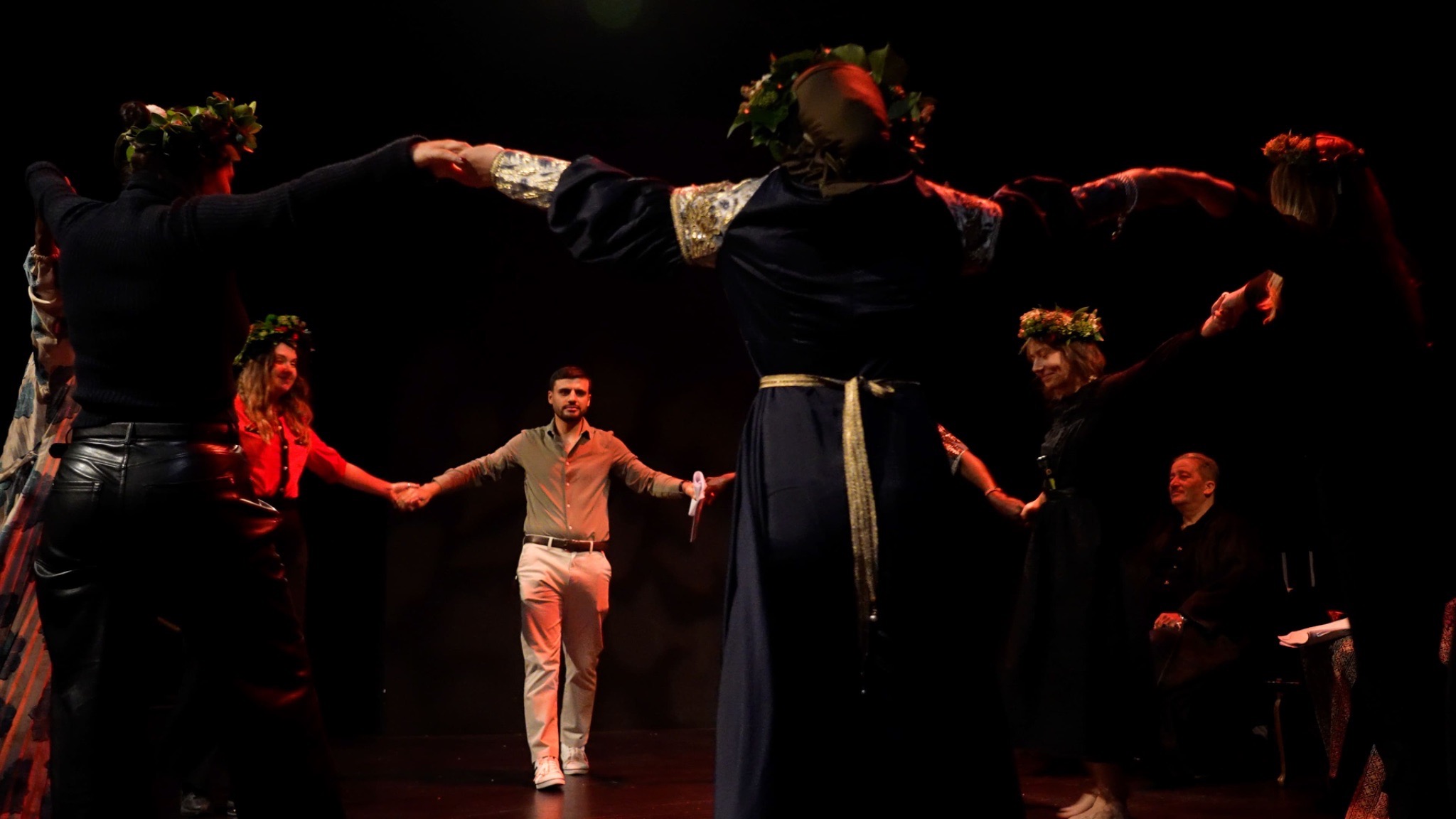
Botanis chior perform a song written by Karine Powart (white top, glasses) to mark the reopening of the Royal Botanic Garden Edinburgh Palm Houses,
Connecting the community to the power of nature was the theme at a special event at the Royal Botanic Garden Edinburgh, as around 800 guests gathered for a Community Celebration at the newly restored Palm Houses, prior to their public reopening.
The event was the joyous finale of the Garden’s 2026 Creative Programme for communities. Supported by The National Lottery Heritage Fund, the scheme brought together community groups from across Edinburgh to explore ways of connecting with nature – empowering individuals to develop their own relationship with the natural world.
The five groups involved this year – Pilton Community Health Project, Headway East Lothian, Score Scotland Women’s Group, ELREC New Scots Group and ELREC Polish Group – took part in a series of 21 creative sessions at the Garden between March and August.
Working alongside artists, musicians and specialists from the Botanics, participants explored the connections between communities across Edinburgh and the Palm Houses, helping to inspire and engage individuals new to the Garden in the beauty and creativity on offer right on their doorstep.
As well as exhibiting textile banners, ceramic vessels and a Palm House tea blend created by the community groups throughout the project, the event also welcomed award-winning musician and songwriter Karine Polwart, whose new composition, Māmāku, was inspired by the black tree fern (Sphaeropteris medullaris) native to New Zealand now growing at the centre of the Palm Houses.
Exploring themes of repair, renewal, healing and resilience, the new composition was performed for the occasion by the Botanics Choir, made up of both members of staff and people from the local community.
Chiormaster Amy Leach (dark blue dress) Karine Polwart and NLHF Diane Gray (light blue dress)
Professor Julia Knights, Regius Keeper of the Royal Botanic Garden Edinburgh said: “The Palm Houses have always been places of wonder, discovery and connection. Now, with the support of The National Lottery Heritage Fund, this project has brought new people, stories, creativity and perspectives into these historic spaces. We are delighted to celebrate that work together.
“At the Royal Botanic Garden Edinburgh, our role goes far beyond science and horticulture. As well as being a global institution tackling biodiversity loss and climate change, we also deliver education and engagement programmes to inspire and engage learners.
“We work with over 120 community groups and welcome visitors from across the world; our Gardens are a place where everyone can come together, share experiences and be inspired.”
The National Lottery Heritage Fund awarded £4.8 million to help save the Palm Houses, helping to support both the renovation of the historic buildings and community engagement work that is already bringing new audiences into the Palm Houses.
Caroline Clark, The National Lottery Heritage Fund Director for Scotland, said: “Thanks to National Lottery players, we have helped support the restoration of these magnificent 19th century Palm Houses, securing the future of the precious plant collection housed within them.
“This has been an extraordinary heritage project, but it’s also brought together people from communities across Edinburgh and beyond. It has given them the opportunity to share new experiences, develop their creative skills and helped shape how this special place will be understood and enjoyed for generations to come.”
The Palm Houses will reopen to the public on Friday 2 October 2026 following a major restoration project which has seen all 5,750 panes of glass replaced, 600m² of ironwork fully restored or replaced and 500m² of sandstone repairs carried out, alongside the return of nearly 600 precious plant specimens to their historic home.
Do you want to win a fun day out in Edinburgh with your family?
If so, please pick up a map made by students from @impactarts Cashback to the Future programme (more details below), which shows off some of our fantastic Doors Open Days venues.
Next, grab a packet of our Cockburn coloured pencils and have your child colour in the map, decorating it with lots of bright colours, showing off their enthusiasm for the beautiful buildings of Edinburgh!
All our family-friendly venues that will hand out maps and pencils are on the Doors Open Days website, indicated by a balloon symbol.
When done, submit your child’s colourful creation using the QR code on the back of the map, and we will choose three winners, whose maps we feel really represent Edinburgh, to win the following prizes:
Prize 1: Tickets to @cameraobscuraedinburgh for the whole family
Prize 2: Gift card to @filmhouse_edinburgh, where you and your family can attend a Wee Filmhouse screening on Sundays
Prize 3: Gift card to the Scottish Cafe and Restaurant at @nationalgalleriesscot – National for afternoon tea
Additionally, all winners are invited to visit the National Galleries of Scotland’s Granton Art Centre with family or friends!
Note about the Impact Arts Cashback to the Future Programme:
Students between the ages of 14-19 visited eight Doors Open Days Venues over five weeks, and as a result, created a selection of artworks that will be exhibited at St Michael’s Parish Church, as well as a booklet to accompany this exhibition.
These talented students also created our Doors Open Days maps, which feature illustrations of several Doors Open Days venues across the city.