
ANNUAL DINNER AT PRESTONFIELD HOUSE NETS MASSIVE TOTAL

Wow  . A truly incredible amount raised at our annual dinner last night
We are bowled over by everyone’s generosity and hard work THANK YOU

ANNUAL DINNER AT PRESTONFIELD HOUSE NETS MASSIVE TOTAL
Wow . A truly incredible amount raised at our annual dinner last night
We are bowled over by everyone’s generosity and hard work THANK YOU
TOUGH NIGHT FOR SNP

The results of the Southside/Newington (Ward 15) and Portobello/Craigmillar (Ward 17) by-elections have been announced at Waverley Court.
Ruth Elliott (Scottish Labour Party) and Lorenzo Martinico (Scottish Greens) have been duly elected to serve in the City of Edinburgh Council for Ward 15 and Ward 17 respectively. Ruth Elliot received 2,153 votes, and Lorenzo Martinico (Scottish Greens) received 1,781 votes.

The new councillors were elected through the Single Transferable Vote system.
The turnout was poor – 6,741 votes (27.3%) in Ward 15 and 6,427 votes (22.9%) in Ward 17.
The declaration was made in the early hours of this morning (Friday 4 September) by Depute Returning Officer for the City of Edinburgh, Chris Highcock.
Depute Returning Officer for the City of Edinburgh, Chris Highcock, said: “I would like to welcome Councillors Elliot and Martinico into their new roles and wish them all the best as they begin serving their wards.
“My thanks goes to everyone who took part in these by-elections, alongside our elections team and council colleagues, who have been working hard behind the scenes over the last few months.”
SCOTTISH GREENS HAIL HISTORIC BY-ELECTION WIN

Portobello housing campaigner Lorenzo Martinico has made history by becoming the first Scottish Green to win a council by-election in the City of Edinburgh.
Lorenzo is a local housing campaigner and was previously a postdoctoral researcher at Edinburgh University, specialising in computer security and digital privacy.
Reacting to the result, Scottish Greens co-leader Ross Greer MSP said: “This is a truly historic day for Edinburgh and the Scottish Greens. For the first time ever our capital has elected a Scottish Green councillor at a by-election, showing the failing Labour administration that Edinburgh demands better.
“By electing Lorenzo, voters in Portobello/Craigmillar have demanded radical change in Scotland’s capital. Just a few months ago, Greens won our first ever Holyrood constituency here in the heart of the city. This result confirms that we are fighting to win next May’s council elections in Edinburgh.”
“I know that Lorenzo will make a huge difference for the people of Portobello/Craigmillar. He will push to deliver urgently needed rent controls, tackle the climate emergency, and build a more affordable Edinburgh.”

Edinburgh Green Group co-convenor and fellow Portobello/Craigmillar councillor, Cllr Alys Mumford said: “Portobello-Craigmillar is now the first ward in Edinburgh to be represented by two Green Councillors, and residents there will benefit hugely from Lorenzo being their new local Councillor.
Alys added: “We’d like to congratulate Lorenzo on his election and also pay tribute to Isabella, who narrowly missed out on securing our second by-election win in Southside/Newington, but whose vote share increase reflects a growing desire for change.
“Green volunteers and activists ran a fantastic campaign across both wards and the results show that our message of hope is resonating with the people of Edinburgh.”

Lorenzo Martinico, the newly-elected Green councillor for Portobello/Craigmillar, said: “I am really honoured that my neighbours in Portobello/Craigmillar have chosen me to represent them as their councillor.
“I would like to thank the hundreds of Scottish Greens volunteers and supporters who have spent the last two months campaigning for us, securing our first by-election wins in the city.
“It’s been an honour to be part of such a positive and energetic campaign. When I first moved to Edinburgh, I could never have imagined I would be elected as a councillor.
“There are thousands of people like me who weren’t born here but have chosen to make Edinburgh their home – I hope my election gives them a bit of hope, at a time when some in our community feel unsafe because of how they sound when they speak, because of the colour of their skin or their religion.
“I am looking forward to working to make a difference for the people of Portobello/Craigmillar.”
The by-elections were initiated by the resignation of two SNP city councillors who were elected as MSPs in May’s Scottish Parliament elections. Another two city councillors – Green Kayleigh Kinross‑O’Neill and Lib-Dem Sanne Dijstra Downie – also became MSPs in the Holyrood elections but both decided to stay on as councillors, carrying out dual roles until next May’s council elections.
Full details of the by-election results are available on the Council website.

Are you, a family member, carer or neighbour looking for somewhere friendly to go during the week?
At PEP, our weekly groups are all about meeting people, having fun, enjoying lunch and taking part in activities in a friendly, welcoming environment.
There’s something happening Monday to Saturday:
 Lunch and activities are provided.
 Sessions are just £4, with an additional £1.50 if transport is required.
If you know someone who would benefit from company, activities, a hot lunch and a reason to get out and about, please share this post or get in touch with us. 
Come along, meet the PEP community and make some new friends!

 PEP Centre
3 West Pilton Park
Edinburgh
EH4 4EL
 0131 315 4466
 hello@pepscot.org
AGM time!

Come and join other parents and carers at the Parent Council AGM on Thurs 17 September in the school staffroom. We’ll have snacks and chatting from 5.30, with the meeting from 6 to 7.30ish.
You’ll hear from Susan Bennett, one of our acting heads, plus a report on attainment and the latest SQA results.
We are looking for new committee members, but very happy to see people who just want to come along occasionally.
If you’ve anything you want to know or add to our agenda, email: intouch@broughtonhighpc.org

The 2026 Edinburgh International Festival has concluded, with the last of 146 performances across music, dance, opera and theatre in a 24-day celebration of the performing arts.
This year’s programme, All Rise, put America in the spotlight, featuring the largest representation of American artists in the Festival’s history. With over 2,000 artists from 46 countries, hand-picked for their cultural resonance, the 2026 Festival was defined by extraordinary artists and thinkers who presented a range of contemporary perspectives, and a vision for the future.
In its inaugural Global Ideas Stage event, the International Festival unveiled a major new poll conducted on culture and hope, the largest of its kind ever undertaken on this subject. Focaldata surveyed 35,000 people across 34 countries and found that 68% say culture gives them hope, with a single cultural moment, whether a live performance, a book, a film or a piece of theatre, helping them feel more hopeful about an uncertain future.
This year’s programme brought together some of the world’s leading thinkers, artists and cultural voices, including: Former Prime Minister Gordon Brown, filmmaker Ken Burns, Pulitzer-Award nominee Zora Howard, trumpeter and educator Wynton Marsalis, Oscar-nominee Wagner Moura, lawyer and social justice activist Bryan Stevenson and journalist Amy Goodman.
The Festival also presented a landmark exhibition The Legacy of Slavery, which gave a comprehensive history of the legacy of racial injustice, from Scotland to America. This Festival commission drew more than 7,500 people during its three-week run at the Playfair Library, in its first ever international outing outside of The Legacy Museum site in Montgomery, Alabama.

Nicola Benedetti, Festival Director, Edinburgh International Festival said:
“These new findings confirm what I have always known, culture gives us hope. This Festival, and the audiences who have been changed by what they saw on our stages, are proof of that.
“This year’s Festival theme, All Rise, was a rallying cry for collaboration and resilience, based on our firm belief that through artistic endeavour we can learn to see one another more truthfully, and more tolerantly.
“The 2,000 artists that joined us in Edinburgh answered our invitation with courage and generosity, grappling with urgent and profound issues – everything from AI and fake news to the opioid crisis and police brutality – holding up a mirror as well as showing us a way forwards.
“We asked audiences to take a leap with us, embracing risks with an exceptional number of bold new commissions by the International Festival. They responded with curiosity and bravery. This is what it looks like when culture gives us hope.”
This year, the International Festival asked for a deeper connection between audiences and artists. Across all artforms, opera, music, theatre and dance, 86% of audiences surveyed rated their performance experience 4 or 5 stars.

The new ‘Lights Down, Phones Off’ initiative encouraged audiences to switch off distractions during all performances: resulting in a significant reduction in phone-related disturbances.
The Festival also rolled out its broad range of industry-leading concessions and initiatives, to ensure that cost isn’t a barrier to cultural discovery. More than 50,000 tickets across the programme were priced at £30 or under, and a record 4,894 £10 tickets were offered across every single performance, a more than 50% increase on last year. Over a third of these were bought by audiences who had never attended the Festival before.
Alongside this, over 8,000 tickets were issued to Deaf, disabled and neurodivergent audience members and their companions, a number of tickets that has grown consistently over the past three years.
A record 3,000 Young Musician Pass tickets were issued this year, giving Scottish young musicians free access to the International Festival and creating pathways into transformative cultural experiences.
Young Musician Pass holders were also given opportunities to meet and ask questions of artists including members of the Berliner Philharmoniker, Colin Currie, Nicola Benedetti and some of the Festival’s Rising Stars.
The Festival’s Discover series also brought over 2,000 opportunities for Edinburgh secondary school pupils to encounter opera, dance, music and theatre at performances and in their own schools, many for the first time.
Taking the Festival experience out of the concert halls, weekly NHS Festival Sessions brought artists into healthcare settings for pop-up performances for staff, patients and visitors. Families also enjoyed Art of Listening workshops introducing them to live classical performance, which took place in Space @ The Broomhouse Hub for the first time.

Francesca Hegyi, Chief Executive, Edinburgh International Festival said:
“This year we have seen the unique role Festival plays in bringing together significant thinkers, political leaders, and some of the best artists in the world to Edinburgh.
“The International Festival hosted artists from 46 countries, taking to stages alongside over 700 artists from across Scotland. We welcomed 23 international delegations and served as a launchpad for the Creative Trade Forum, a new initiative to promote trade and investment for the UK’s creative sector.
“What sets the International Festival apart is the global role it plays, while rooted resolutely in Scotland – more than half of our tickets go to Edinburgh residents.
“We provide a global stage, a meeting place for cultures and ideas, where audiences gather every year.”

Parents and carers will benefit from a new childcare offer aimed at bringing down the cost of living, tackling child poverty and boosting family incomes, First Minister John Swinney has said.
As part of the newly-published Programme for Government, the Scottish Government is transforming its childcare offer to ensure greater childcare support is available to families with children from nine months old through to the end of primary school.
Consultation on the new approach will take place next year, with delivery phased in over time. This will begin with a £44 million annual investment in breakfast clubs in primary schools across Scotland from August 2027, followed by the introduction of after-school and holiday childcare for primary school children from August 2029.
The First Minister also announced the first recipients of the new £15 million Childcare Support Fund, which is expected to help those organisations support an estimated 4,800 low-income families with the cost of childcare at times when they most need it.

Speaking ahead of a visit with Education Secretary Màiri McAllan to Fintry Mains Childcare and Community Hub in Dundee, one of the organisations benefiting from the funding, the First Minister said: “High-quality childcare plays an important role in helping children thrive, easing cost of living pressures and creating opportunities for parents and carers to work, train and study.
“Too many families still face barriers to accessing the childcare they need. By transforming the support available to families from nine months through to the end of primary school we will help more parents and carers into employment, boost household incomes and give children the best possible start in life.
“Alongside our long-term plans to transform childcare, the £15 million Childcare Support Fund announced today will provide practical support to families who need it most.
“This forms part of our wider Programme for Government, which is focused on making tangible improvements to people’s lives by creating jobs, raising living standards and growing Scotland’s economy to help eradicate child poverty.”
Susan McGhee, Chief Executive of Flexible Childcare Services Scotland which runs Fintry Mains Childcare, said: “Receiving a grant from the Scottish Government’s Childcare Support Fund will allow us to support even more families across Scotland.
“We already deliver flexible childcare to over 1,000 parents a year and, according to our research, those families are more than £2 million better off thanks to our book-by-the-hour model.
“We look forward to working alongside Midlothian Sure Start and Renfrewshire Out of School Network to ensure families can access affordable, flexible all-age childcare within their communities.”
Chloe Sinclair, whose three-year-old daughter Lola attends Fintry Mains Childcare, said: “I heard good things about Flexible Childcare Services Scotland from other parents.
“The flexibility has really helped me and my partner as we work shifts and need to know our three-year-old daughter Lola is cared for. Being able to book what we need is ideal for our jobs and it doesn’t cost an arm and a leg.”
First recipients of the Childcare Support Fund
Grant Value
Glasgow Council for the Voluntary Sector – Provides intensive, referral-based childcare support across Glasgow, helping priority families overcome childcare barriers so they can enter, sustain or progress in work, study and training.
£1,000,000
Flexible Childcare Services Scotland SCIO – Delivers flexible childcare across six local authority areas, supporting families in insecure or low-paid work to take up opportunities, increase hours and reduce employment barriers caused by childcare costs.
£878,367
Early Years Scotland – Acts as a national childcare broker, connecting low-income families to childcare that fills specific gaps in provision, including bridging periods, additional hours and support for children not covered by existing entitlements.
£1,000,000
The Scottish Centre for Children with Motor Impairments – known as Craighalbert – Provides specialist childcare for children with complex disabilities and additional support needs, enabling parents to work or study at points of transition while children receive tailored care and developmental support.
£615,326
Scottish Childminding Association – Funds flexible childminding placements with registered childminders, giving families personalised childcare and informal support that enables parents to seek work, remain employed or access training.
£302,948
The Indigo Childcare Group – Offers free childcare places, including a mobile crèche for parents attending employability programmes, with additional support for families experiencing crisis situations or caring for children with additional needs.
£412,045
Scottish Out Of School Care Network – Provides short-term financial support for school-age childcare, protecting families from losing childcare during periods of financial hardship and helping parents stay in work, study or training.
£1,000,000
Family and Community Development West Lothian – Combines flexible after-school and holiday childcare with support to help parents access employment and education.
£421,310
Inspiring Scotland – Provides rapid-response childcare funding through community networks, helping families manage emergencies, attend interviews and sustain income while longer-term childcare arrangements are put in place.
£300,064
Perceptive Action C.I.C – Offers breakfast, after-school and holiday childcare across the Borders and Midlothian, supporting families through key transition periods while helping them access longer-term childcare and financial support.
£263,070
The Lennox Partnership – Removes childcare costs as a barrier to employability programmes, enabling parents to participate in structured pathways into work, skills development and learning opportunities.
£947,250
Third Sector Hebrides – Improves access to childcare across the Western Isles by coordinating support through local childcare providers, helping families access provision that is often difficult to secure in island communities.
£277,500
St Roch’s Childcare Services – Provides flexible childcare alongside one-to-one family support, helping parents access employment, education and wider services while building confidence and family wellbeing.
£286,405
Care and Learning Alliance – Supports families in rural Highland and Island communities by helping them find and access childcare, while addressing additional challenges such as transport costs, limited provision and rural poverty.
£498,521
Total
£8,202,806
The Scottish Government’s Programme for Government is available to read online.

SPECSAVERS Glenrothes has helped a youth football team kick off the new season in style after sponsoring a new set of home shirts for the squad.
The locally owned and run Glenrothes store donated £1,000 to Cramond FC, with the sponsorship covering the cost of new home kits for the team’s 36 young players.
The team are now sporting their new shirts as they prepare for the season ahead, with the sponsorship helping ensure the whole squad is equipped with matching kit.
Cramond FC is a long-established community football club which provides opportunities for children and young people to take part in the sport in a positive and supportive environment.
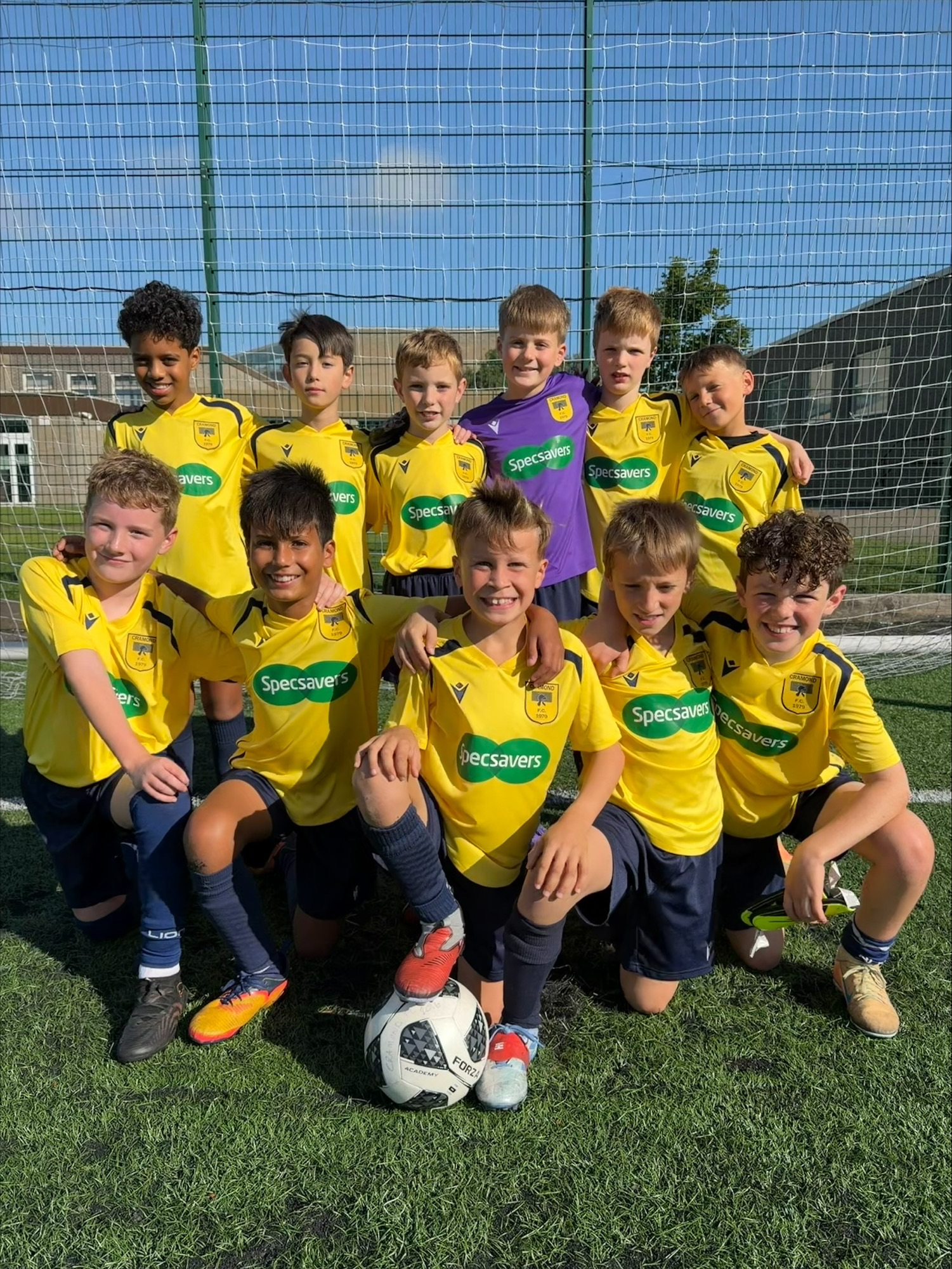
David Platt, store director at Specsavers Glenrothes, says: ‘We’re delighted to be able to support Cramond FC and provide the team with their new home shirts.
‘Grassroots sport plays such an important role in helping young people build confidence, stay active and develop friendships, and we’re really pleased to know our sponsorship has helped all 36 boys start the season with a new kit.
‘Supporting local communities is something that’s important to us at Specsavers, and it’s fantastic to see the players wearing their new shirts and representing their club with pride.’
The sponsorship is part of Specsavers Glenrothes’ commitment to supporting community initiatives and helping young people access opportunities through sport.
To book an appointment at Specsavers Glenrothes for optical or audiology needs, speak to a member of the team on 01592 611044 or visit:
https://www.specsavers.co.uk/stores/glenrothes.
CRAMOND FUNDRAISER

The Cramond FC clubhouse, which is located in Davidson’s Mains Park, is in desperate need of a few repairs and a little refresh.
From toilets needing fixed/replaced, exterior harling and guttering needing work and a full repaint. Any help is appreciated.
See Cramond’s website for info

Three new cross-government taskforces are being launched in the new Office for the Prime Minister & Cabinet, tackling systemic issues like the cost of living and public control of essentials and supporting local communities.
The three taskforces will coordinate departments and ministers, focusing on the priorities set out by the Prime Minister to Cabinet yesterday.
The priorities will be driven forward by First Secretary of State, Louise Haigh, who will work across central and local government – including with regional Mayors as the government continues to pass powers from Westminster.
Immediate action will focus on challenging everyday rip-offs, the visible decline of local town centres and the failure of many privatised utilities to deliver basic services at a fair price.

First Secretary of State Louise Haigh said: “The Prime Minister has been clear that the government’s priorities are the public’s priorities.
“This is about putting people back in control of the things that matter most to them and ensuring that the everyday essentials are more affordable and more accountable.”
Based in the Office for the Prime Minister and Cabinet, the taskforces will be fully integrated with No10 and across government to deliver the change the public rightly expect to see.
Details on the three priorities and taskforces:
Cost of Living
On the cost of living, earning back public trust begins with understanding the pressures facing families at the kitchen table. Action has already been taken in this area, including cuts to bus fares, support with energy bills and cracking down on subscription traps, but we must go further.
The taskforce will look to address the long term issues facing families, many of which have too often fallen through the cracks.
Public Control
For decades, the essential services that underpin daily life – housing, water, energy and transport – have suffered from over-privatisation, leading to high costs for the public. The Government is clear that the public has a right to expect these services to be affordable and accountable.
The public control taskforce will rewire the state, examining how public control across those four sectors can be utilised to return them to public service, and bring down costs for families. Looking at areas including market reform that could support these aims.
Community Renewal
Our communities have been left behind, high streets falling into disrepair, rubbish piling up at the sides of our streets – we will reverse that, improving people’s everyday experience of where they live.
Working with local leaders, we will create a genuine plan to rebuild Britain, not just replicating high street strategies that have gone before, ensuring communities are supported to drive through solutions, and deliver growth in every postcode.

Scottish Book Trust is delighted to announce the distribution of 30,000 The Gruffalo books to children and families across Scotland, made possible by a donation from Julia Donaldson, Axel Scheffler and Macmillan Children’s Books, to mark the publication of Gruffalo Granny.
The donation – including Gruffalo Granny, The Gruffalo, The Gruffalo’s Child and the All About the Gruffalo board book – will reach families most in need of support through flagship programmes.
12,000 books distributed via Bookbug for the Home family kits, targeted school outreach, and early years training initiatives supporting the fight against child poverty.
10,000 copies of Gruffalo Granny to food banks, children’s hospitals and charities via Scottish Book Trust’s Christmas Appeal.

Every young person will have the same opportunity to succeed, no matter their background or where they live in Scotland, Education Secretary Màiri McAllan has pledged, as she set out her priorities for education.
In a statement to Parliament, Ms McAllan confirmed councils would receive up to £2.8 million to help address school meal debt, to ease the cost of living for families that need it most, while work continues to expand Free School Meals.
A new £1 million pilot fund will support teachers taking up posts in rural and island communities with relocation and housing costs, to help attract teachers to hard-to-fill posts and encourage them to remain long-term. This is alongside wider ongoing national work to deliver a teacher job guarantee for a minimum of three years for newly-qualified teachers, and reduce class contact time.
Further plans will be brought forward shortly to help newly-qualified primary teachers gain additional registration, helping them transition into new roles, and to strengthen career opportunities for pupil support assistants.
Ms McAllan also set out plans to improve attainment, attendance, behaviour and curriculum, including streamlining guidance so that councils and schools can deliver more consistently on national policies.
Curriculum reforms, developed following the OECD’s Review of Scotland’s Curriculum, will be delivered in partnership with teachers, to ensure learners fully benefit from ongoing work to improve the curriculum.
Public Service Reform will be central to tackling inconsistencies in how national education policy is applied across the country, with work underway alongside councils to streamline data use, cut unnecessary bureaucracy and free up schools to focus on what matters most to pupils.

Ms McAllan added: “There is already so much to celebrate in our education system – record levels of literacy and numeracy in our schools, increases in exam passes across the board this year and more Scots gaining places at university.
“But I am clear we must raise standards and deliver excellence across Scotland by focusing on the ABCs in our schools – attainment, attendance, behaviour and curriculum. We must ensure every child regardless of where they live or whether they have an additional support need, are supported to learn and thrive at school.
“We must seize the opportunity of Public Service Reform to truly achieve this, by addressing the variability in education outcomes across the country, improving data collection, enhancing performance and accountability and empowering schools to invest and take the decisions they need to support pupils.
“As a Government we must also continue our work to cut the costs of the school day for families – that means more breakfast clubs, expanding free school meals and clearing school meal debt.
“The leadership I will offer as Education Secretary will always be guided by the pursuit of excellence and equity. I commit to working hand in hand with young people, their families, the workforce, trade unions and local government to ensure every child receives the highest standard of education.”