The next EACC video conference will be on 22 April, at 7pm, on Zoom.
It will be a special meeting devoted to: Carbon neutrality Edinburgh 2030: what it means and how we get there!
Speakers:
Dr Sam Gardner, Chair Edinburgh Climate Commission and Head of Climate Change & Sustainability at Scottish Power, on Turning climate ambition to action
Øystein Leonardsen, Senior Advisor to the City of Copenhagen, Lecturer at Roskilde University. Manager of Copenhagen’s Green and Just Transition Program, on Copenhagen carbon neutrality 2025
Paula McLeay, Policy and Insight Senior Manager, City of Edinburgh Council, on Edinburgh: a net zero city by 2030
Professor Sandy Halliday, Director of the Gaia Group, Chartered Engineer and author of Sustainable Construction (2018), on Carbon neutrality for the built environment
Special guest: Karine Hertzberg, Special Adviser on International Climate Cooperation, Department for Environment and Transport, City of Oslo
This meeting is open to the public, but priority will be given to questions from community councillors. The meeting will be recorded and may be published later.
Please note that by joining the meeting you are giving your consent for the meeting to be recorded.
TheEventbritemeeting page for 22 April is now open for registration:
A 22-year-old man has been charged following the recovery of cannabis with a street value of £25,000 in West Pilton.
Reacting to intelligence, officers carried out searches at a number of properties in the north of the city on Thursday, 8 April, including West Pilton Gardens and West Pilton Terrace.
Cannabis with a potential street value of £25,000 was recovered from a property, along with almost £1,000 in cash. A 22-year-old man was arrested and charged in connection with drug supply offences and will appear at Edinburgh Sheriff Court at a later date.
A 26-year-old man will also be reported to the Procurator Fiscal for drug possession offences.
Detective Sergeant Gavin Howat said: “We remain committed to disrupting the illegal supply of drugs in our communities and we will use every tool and tactic at our disposal to remove them from our streets.
“This enforcement action was carried out after receiving intelligence of criminal activity. The public continue to play a vital role in assisting investigations into drug crime and I would encourage anyone who has any concerns about drug-related activity, or has any information about those involved in drugs, to contact police on 101 or make an anonymous report to the independent charity Crimestoppers on 0800 555 111.”
A new web poll on smart motorways from independent road safety charity IAM RoadSmart has revealed that the majority of respondents (85 per cent) want a halt on their construction until the safety case is fully proven.
Furthermore, 84 per cent of the 4,500 respondents surveyed had little faith in the current safety systems’ abilities to detect them if they were to breakdown in a running lane and protect them until help arrived.
Neil Greig, IAM RoadSmart Director of Policy & Research, said: “Our members include many high mileage, experienced and confident motorway users but the results of this survey are clear to see, with the vast majority having very little, or no confidence, in the safety of smart motorways.
“We would urge the Department for Transport and Highways England to listen to what smart motorway users are saying and to consider our findings, along with other in-depth research, to determine the best approach to developing the smart motorway network. Delaying decisions on smart motorways will only lead to more drivers getting stressed.
“Alongside more education for drivers, IAM RoadSmart wants to see strong leadership with clear decisions taken soon on whether the programme should be reversed, or provided with the appropriate funding that will speed up delivery of the promised refuges, CCTV and vehicle detection technology.”
Meanwhile, other hard-hitting results from the IAM RoadSmart study found that 81 per cent of motorists felt less safe travelling on a smart motorway compared to a normal one, and 81 per cent agreed that hard shoulders should be immediately reinstated on smart motorways.
More than 80 per cent also wanted safety refuges on smart motorways to be spaced at 500 metres apart or less.
Finally, 40 per cent of drivers found no noticeable improvement in their journey time, with only 4 per cent finding a very noticeable improvement compared to 6 per cent who actually found it worse than before.
“This survey highlights a potentially very serious unintended consequence in that driver reluctance to use smart motorways could create increased traffic on local A and B roads. This would undoubtedly lead to an increased risk of collision and injury with even more delays and driver frustration resulting.” Greig concluded.
During your trip to Edinburgh you will no doubt be exploring the top attractions that this city has to offer. Edinburgh Castle for the one o’clock gun, the view from the top of Arthur’s Seat, the dark history of the Vaults and the Royal collection at the Queen’s Gallery.
However, these hidden gems are loved by locals and those lucky enough to stumble across them.
If you are planning a visit to Edinburgh, be sure to add our top 10 to your must-see list:
Edinburgh Farmers Market
Situated on Castle Terrace every Saturday with stunning views of the Castle and only a hop, skip and a jump from the Royal Mile you will find an award-winning market showcasing the very best of Scottish produce. If you’ve booked a self-catering apartment it is the perfect place to catch the highest quality, local ingredients to cook up for dinner. You can find fresh scallops, smoked salmon, venison, cheese, seasonal fruit and vegetables from this renowned foodie haven.
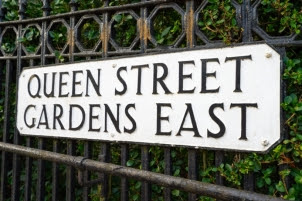
Residents of Edinburgh’s New Town hold the keys to exclusive private gardens hidden amongst the town houses. There is none more desired than the splendid Queen Street Gardens, where Robert Louis Stevenson spent much of his childhood. Most visitors to Edinburgh must wait until the annual Open Door’s Day to venture inside but guests of 34a Abercromby Place, a new luxurious dog friendly self-catering apartment by the Royal Scots Club, receive a key to access this secret garden for the duration of their stay.
This marvellously modern milk bar in Edinburgh’s historic Grassmarket has been producing handmade gelato and chocolates since 2013 and its founder Mary is a graduate from an actual Gelato University in Italy. With weird and wonderful seasonal flavour combinations like Toast & Marmalade and Goats Cheese & Figs mixed with favourite staples like Salted Caramel and Milk, all ages will be pressing their noses against the window checking out the latest flavours.
Reopening in May, check out Mary’s Instagram for updates
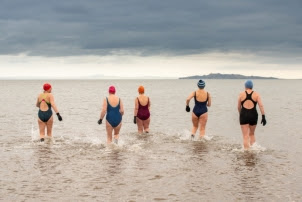
If you are feeling bold, grab your swimming costume and head out for some wild swimming in the Forth. Don’t let the temperature put you off, wild swimming has been proven to boost your energy and happiness. The perfect way to start a day of sightseeing! Wardie Bay is within walking distance of the City Centre so enjoy a swim in this sheltered spot which is well cared for by the community and loved by locals.
Open every day of the year come rain or shine
Dunbar’s Close Gardens
Any Edinburgh visitor will be familiar with the Royal Mile which connects Edinburgh Castle with the Palace of Holyrood House. The network of Closes lead off the Royal Mile through the Old Town and are steeped in history. With over 70 Closes to explore don’t miss Dunbar’s Close, this beautiful garden sanctuary in the very centre of the City. You will find those in the know soaking up the sun or chatting with friends over lunch in this secluded spot.
Open from 07:00am, closing times vary throughout the year
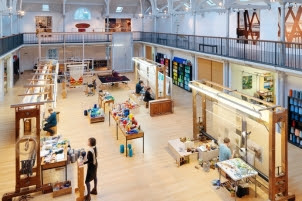
Dovecot is a world-renowned tapestry studio and centre for contemporary art, craft and design in the heart of Edinburgh’s Old Town. The Tapestry Studio is in the former swimming pool that was once the old Infirmary Street Bathhouse and the original viewing gallery is open daily for visitors to observe the weavers create their masterpieces. Dovecot offers a programme of popular exhibitions and events with the likes of Grayson Perry and Mary Quant plus a shop full of beautiful hand-made gifts and a fantastic cafe ‘Pinks at Dovecot’.
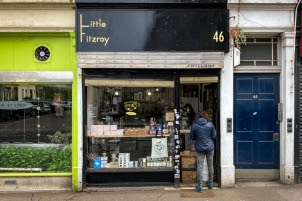
Café Culture is thriving in Edinburgh with independent coffee shops showcasing the best roasters in Scotland and across the UK. If you are looking for exceptional coffee one of the local heroes is Little Fitzroy on Easter Road. Passionate about everything coffee, Little Fitzroy rotate their selection regularly, always making the perfect flat white. Not to mention their wonderful selection of cakes including one of the best vegan Cinnamon Buns in Edinburgh.
Open weekdays from 07:00am – 17:00pm and weekends from 08:00am – 17:00pm
The wonderful beach at Portobello (Porty to locals) is the perfect place to fill your lungs with sea air and go for a bracing walk along the sands or the fine promenade. Once you’ve finished building your sandcastles or taking a paddle, grab lunch at Edinburgh’s Little Chart Room on the Prom or take a stroll to the high street and visit the Montreal inspired Bross Bagel shop.
Open every day of the year come rain or shine
Alby’s
Not your average sandwich shop this is the home of the Big Hot Sandwich in Leith. Alby’s feature a rotating menu of inspired and delicious fillings sandwiched between a large wedge of soft focaccia. This is the perfect pick me up after a packed morning of sightseeing. Run by couple Natasha and Matt these sandwiches have cult status thanks to their strong Instagram following and adorable namesake Alby the Dachshund.
Open Wednesday to Saturday from 12:00pm – 20:00pm and Sunday 12:00pm – 16:00pm
You may have heard of the Festival Theatre, the Playhouse or the Lyceum Theatre but there is another institution tucked away in Leith which was given as a gift to the Burgh from the people of Edinburgh in the 1920’s when Leith was incorporated into the capital city. This lively creative hub caters for all ages so be sure to check out their programme of what’s on during your visit.
Reopening in June, check out their website for more details
A new study conducted at the University of Worcester and published in The Journal of Steroid Biochemistry and Molecular Biology, has found low fat diets decrease men’s testosterone levels by 10 – 15%.
Optimal testosterone levels are critical to men’s health. Low testosterone levels are linked to a higher risk of heart disease, diabetes, and Alzheimer’s disease. Healthy testosterone levels are also key for men’s athletic performance, mental health, and sexual health.
Since the 1970s, there has been a decrease in men’s average testosterone levels and rates of hypogonadism (medically low testosterone) have been increasing. Low risk dietary strategies could be a useful treatment for low testosterone.
The study was a systematic review and meta-analysis, which combined together the results of 6 well-controlled studies with a total of 206 participants. These studies first put men on a high fat diet (40% fat), and then transferred them to a low fat diet (20% fat), and found their testosterone levels decreased by 10-15% on average. Particularly bad were vegetarian low fat diets causing decreases in testosterone up to 26%.
The authors linked their results to similar studies conducted in humans and mice. These studies found high intakes of monounsaturated fats found in olive oil, avocados, and nuts may boost testosterone production.
However, omega 6 polyunsaturated fats predominantly found in vegetable oils, may damage the cells’ ability to produce testosterone. This is because highly unsaturated fats such as polyunsaturated fats are more prone to oxidation, which causes cell damage.
“Low testosterone levels are linked to a higher risk of heart disease, diabetes, and Alzheimer’s disease.”
The authors stated that further research needs to be done in this important area.
The lead researcher Joseph Whittaker said, “Ideally, we would like to see a few more studies to confirm our results. However, these studies may never come, normally researchers want to find new results, not replicate old ones. In the meantime, men with low testosterone would be wise to avoid low fat diets”.
Dietary fat is a controversial topic in nutritional science, with proponents of various diets often in stark disagreement (low fat vs low carbohydrate). The benefits of low fat diets such as reduced cholesterol levels, should be weighed up against the potential downsides, such as decreased testosterone levels.
Traditionally, dietary guidelines have focused on limiting fat intake, with the current UK and US guidelines limiting fat intake to less than 35% of total calories. However, as more research on the benefits of high fat, low carbohydrate diets is done, this traditional view is coming under increasing scrutiny.
In recent years, high fat diets have been shown to decrease triglycerides, decrease blood pressure, increase HDL cholesterol (aka ‘good cholesterol’) – and now, with this latest research, increase testosterone levels.
Details of The Duke of Edinburgh’s Funeral have been announced. The service will take place on Saturday 17 April 2021 at 3pm in St George’s Chapel, Windsor.
The plans for the funeral are in line with The Duke of Edinburgh’s own personal wishes.The occasion will recognise and celebrate The Duke’s life and more than 70 years of service to The Queen, the UK and the Commonwealth.
It will be a Ceremonial Royal Funeral, the same as for Queen Elizabeth The Queen Mother, rather than a State Funeral – something which is generally reserved for Monarchs. The plans have been approved by The Queen and reflect appropriate Government advice.
The Duke of Edinburgh’s coffin, covered with His Royal Highness’s Personal Standard and dressed with a wreath of flowers, will rest initially in the Private Chapel at Windsor Castle, where it will remain until the day of the Funeral.
On Saturday 17th April, The Duke of Edinburgh’s coffin will be moved by a Bearer Party found by The Queen’s Company, 1st Battalion Grenadier Guards. Positioned in the Quadrangle at Windsor Castle will be representative detachments drawn from His Royal Highness’s military special relationships.
His Royal Highness’s coffin will be carried in a purpose-built Land Rover – which The Duke was involved in the design of – flanked by military Pall Bearers, in a small Ceremonial Procession from the State Entrance to St George’s Chapel, for the Funeral Service.
Members of the Royal Family and The Duke of Edinburgh’s Household will walk behind the coffin from the Quadrangle, down Chapel Hill and into Horseshoe Cloister. The Funeral Service will begin with a National Minute’s Silence at 1500hrs.
The Funeral Service will be attended by Her Majesty The Queen and Members of the Royal Family. The coffin, carried by a Bearer Party found by the Royal Marines, will be received at the top of the West Steps of St George’s Chapel by the Dean of Windsor and the Archbishop of Canterbury.
The Duke of Edinburgh’s Naval Cap and Sword will be placed on the coffin ahead of the service and His Royal Highness’s Insignia will be laid on the Altar of the Chapel. At the conclusion of the service, His Royal Highness will be interred in the Royal Vault in St George’s Chapel.
Public mourning
The Queen has approved the Prime Minister’s recommendation that there will be a period of National Mourning beginning on Friday 9 April until Saturday 17 April, the day of the Funeral inclusive.
This means that Union flags are being flown at half-mast on Royal Residences, Government Buildings, establishments of the Armed Forces and UK Posts overseas.
The Royal Standard will remain being flown at full mast.
Additionally, it is The Queen’s wish that the Royal Family will observe two weeks of Royal Mourning starting yesterday. Royal Mourning will be observed by Members of the Royal Family and their Households, together with troops committed to Ceremonial Duties. During this period, Members of the Royal Family will continue undertaking engagements appropriate to the circumstances. Mourning bands will be worn where appropriate.
Details of the ceremonial
Ahead of the Funeral, the coffin, accompanied by the Dean of Windsor and the Lord Chamberlain, will be moved to the State Entrance of Windsor Castle by a Bearer Party found by The Queen’s Company, 1st Battalion Grenadier Guards.
The Dean and the Lord Chamberlain will then make their way to St. George’s Chapel.
The Constable and Governor of Windsor Castle will be present at the State Entrance for the departure of the Coffin.
Positioned on the grass in the Quadrangle will be representative detachments drawn from His Royal Highness’s military special relationships. The Quadrangle will also be lined by the Household Cavalry and The Foot Guards.
The Procession will step off from State Entrance at 1445 hrs.
The Band of the Grenadier Guards, of which The Duke of Edinburgh was Colonel for 42 years, will lead the procession.
They will be followed by the Major General’s Party, and then the Service Chiefs, reflecting His Royal Highness’s close relationship with all areas of Defence.
The Coffin, borne on the Land Rover, will be flanked by Pall Bearers drawn from His Royal Highness’s Special Relationships – the Royal Marines, Regiments, Corps and Air Stations.
The Prince of Wales and Members of the Royal Family will take part in the procession on foot, immediately behind The Duke of Edinburgh’s Coffin, together with staff from His Royal Highness’s Household.
At 1440 hrs, the Coffin will emerge from the State Entrance and all those in the Procession and in the Quadrangle will pay compliments. The Bearer Party will place the Coffin onto the Land Rover and withdraw.
At 1445 hrs, the Procession, will step off from the State Entrance for the West Steps of St. George’s Chapel. The route of the Procession, which will be lined by representatives drawn from the Royal Navy, Royal Marines, The Highlanders, 4th Battalion Royal Regiment of Scotland and the Royal Air Force, is as follows:
• State Entrance, Windsor Castle • Engine Court • Chapel Hill • Parade Ground • Horseshoe Cloister
Minute Guns will be fired by The King’s Troop Royal Horse Artillery from the East Lawn at Windsor Castle for the duration of the Procession. The Curfew Tower Bell will toll.
At 1453 hrs, the Land Rover will arrive at the foot of the West Steps of St. George’s Chapel.
A Guard of Honour and Band from The Rifles will receive the Coffin with the National Anthem as the Coffin enters Horseshoe Cloister and ending as the Land Rover draws to a halt at the West Steps.
Positioned in the Horseshoe Cloister will be the Commonwealth Defence Advisers from Canada, Australia, New Zealand and Trinidad and Tobago.
The West Steps of St. George’s Chapel will be lined by a Dismounted Detachment of the Household Cavalry.
A Royal Navy Piping Party of 1 Chief Petty Officer and 5 Ratings will be in position on the South Side of the West Steps of St. George’s Chapel.
The Piping Party will pipe the ‘Still’ once the Land Rover is stationery at the foot of the West Steps.
The Bearer Party will lift the Coffin and proceed up the West Steps halting on the second landing. The Piping Party will pipe the ‘Side’. The Coffin will pause for the National Minute Silence at 1500 hrs.
At the top of the West Steps, the Dean of Windsor, together with the Archbishop of Canterbury, will receive the Coffin.
All those who have taken part in the procession will not enter St. George’s Chapel except the Members of the Royal Family, and His Royal Highness’s Private Secretary.
As the doors to St. George’s Chapel close, the Royal Navy Piping Party will pipe the ‘Carry On’.
The Land Rover, Service Chiefs, Realm Defence Advisers, Body Guards, Military Knights of Windsor, along with representatives of Special Relationships will disperse in silence during the Funeral Service.
The Funeral Service will begin as the Coffin enters St. George’s Chapel and is carried in Procession to the Catafalque in the Quire.
The Duke of Edinburgh’s “insignia” – the medals and decorations conferred on His Royal Highness by the United Kingdom and Commonwealth countries – together with his Field Marshal’s baton and Royal Air Force Wings, together with insignia from Denmark and Greece, will be pre-positioned on cushions on the altar in St. George’s Chapel.
Further details on the Funeral Service and the Order of Service will be released in due course.
It has been a year like no other. A year when all our services within the Council like everything else had to adapt quickly and decisively. And for many, it completely changed the way they lived and worked (writes Culture and Communities Convener CLLR DONALD WILSON).
You could pick any area of service but I want to highlight the work of our Museum & Galleries service and how the team went virtual, creating online versions of exhibitions, digital lectures, podcasts and coming up with educational programmes that parents and teachers could use at home.
Before Covid-19 our Museums and Galleries had begun to integrate digital platforms, but we’ve seen this evolution accelerated by the pandemic. It’s been a challenging process but our curators and staff have really risen to that challenge.
Of course, we weren’t completely digital for the year and were able to reopen the City Art Centre from mid- September to just before Christmas, and in that time 4 new exhibitions were installed and proved popular with visitors.
Our museums team have engaged really well with schools, with officers running live, weekly art sessions with primary schools to support at home learning. These art sessions are inspired by paintings from the City Art Centre as well as our Edinburgh museum collections such as the Museum of Childhood and encourage children to discuss artworks and objects and to get creative by taking part at home.
The service also delivered an impressive 74 events digitally that would have been run in one of our venues. A series of digital lectures covering topics from Addressing the Legacy of Slavery and Ghosts of Edinburgh Women Who Chose to Challenge for International Women’s Day were watched by over 6000 people.
They were also able to do digital versions of diverse events such as visually impaired tours, BSL signed tours as well as dance, music and choir streams bringing people together from home.
There are also now three City Art Centre digital exhibitions; The City Art Centre is 40 featuring highlights form the collection; Front of House Staff where members of the team selected their favourites form the collection and Edinburgh: Our City featuring paintings of the Capital.
Our online services have been embraced and this is very encouraging as we plan for our service post-pandemic.
When lockdown is lifted and we have access to the ‘real’ and no longer have to make do with the ‘virtual’, I think there is opportunity for a balance between the two. We certainly can’t wait to welcome visitors back but we’ve seen that our digital space can be special in it’s own right and can reach even wider audiences.
Last month it was announced that Museum & Galleries Edinburgh will receive a total of £55,125 from Museums Galleries Scotland’s COVID-19 Development Fund to help create the service’s first Digital Engagement Strategy – supporting and building on the work done during the pandemic to keep connected with local communities and virtual visitors from across the world.
During lockdown, our digital channels have been the primary way we’ve been able to engage with our audiences. Although forced into this situation by the pandemic, we have seen the many benefits and long-term opportunities for this work and are excited to explore what we can do going forward. This has been down to the hard work and dedication of our wonderful Museums and Galleries staff , of whom we are very proud.
This article first appeared in the Edinburgh Evening News
Survey reveals the items & activities Scots couldn’t go longer than a day without
– Wi-fi and mobile phones top the list of items Scottish respondents couldn’t go longer than a day without –
– Scots would rather go without a shower than their mobile phone –
A new survey of 2000 respondents from gadget insurance company Protect Your Bubble reveals which items or activities they couldn’t go longer than a day without.
Wi-Fi tops the list as over 65 percent of Scots revealed they couldn’t go longer than a day without it. This follows on from a record year in 2020 with 96 percent of UK households now having access to the internet.
Top 10 items/activities Scottish respondents couldn’t go longer than a day without
#
Item/Activity
% of respondents
1
Wi-Fi
65
2
Mobile phone
53
3
Showering/Bathing
49
4
Tea/coffee
48
5
Pets
39
6
TV
37
7
Going outside for exercise
25
8
Snacks
24
10=
Reading for leisure
17
10=
Car
17
What’s more, Scottish residence overwhelmingly prioritises their internet connectivity over hygiene – with a staggering 16 percent more people needing it over a quick shower in the day!
With whole host of stricter national restrictions brought on by the COVID-19 pandemic forcing Scottish residents to sit tight and work from home where possible, it’s no wonder that they’re prioritising connectivity. While not relying on it as much as the Welsh (71%), they’re needing it more than the UK average (60%).
The Scots are just as guilty when it comes to mobile phone usage, with 53 percent of respondents saying they couldn’t go a day without their phone. Whether it be for work purposes or trawling through social media, it’s clear the nation is hooked on their devices.
Despite Scots putting their phones and WIFI over hygiene, it turns out they might be the cleanest nation in the UK, as they’re the only country to prioritise having a good scrub over a morning cuppa.
It seems the Scots love affair with tea and coffee isn’t that strong, with less than half (48%) needing a cup daily – a whopping 18 percentage points down on Northern Ireland (66%) and 10 down on the Welsh (58%).
Pets (39%) closes out the top five items/activities that Scots can’t go longer than a day without, showing their devotion to their furry companions.
At the other end of the scale, it may come as no surprise to see ‘retail shopping’ and ‘seeing friends’ as the bottom two activities people can go longer than a day without, with only one percent viewing it as a priority.
With a struggling economy in these unprecedented times, and workers wanting to look after their disposable income, it’s no surprise that these are of low importance to people’s daily lives.
Bottom items/activities Scottish respondents couldn’t go longer than a day without
#
Item/Activity
% of respondents
1=
Retail Shopping
1
1=
Seeing Friends
1
3=
Beer
2
3=
Gambling
2
5=
Video games
3
5=
Wine
3
7
Seeing family
10
8
Microwave
12
It’s surprising to see ‘seeing family’ towards the bottom end of the table. However, this could be due to the national lockdown restricting the number of people you can see outside of your bubble.
That said, the longest period most respondents said they could go without family (27%) is a month – with 26 percent being fed up with just a week.
With Scotland’s First Minister Nicola Sturgeon recently announcing the countries roadmap out of lockdown, it seems residents won’t have to wait much longer until they’re reunited with their loved ones.
James Brown, Director at Protect your bubble commented:“It’s really interesting to see what items or activities the UK public can or cannot go without for longer than a day. The pandemic has shifted peoples the perceptions of what they now view as a priority in their everyday lives.
“With mobile phones ranked highly for something people can’t go a day without, it’s important the public ensure their device is well-covered with the likes of insurance or mechanical breakdown cover should it ever get lost or damaged to minimise any disruption it may cause.”
A traffic light system, which will categorise countries based on risk alongside the restrictions required for travel, will be set up to protect the public and the vaccine rollout from international COVID-19 variants.
Key factors in the assessment will include:
the percentage of their population that have been vaccinated
the rate of infection
the prevalence of variants of concern
the country’s access to reliable scientific data and genomic sequencing
The report, produced by the Global Travel Taskforce, shows how international travel could resume from 17 May 2021 at the earliest, in an accessible and affordable way. This includes the removal of the permission to travel form – meaning passengers would no longer need to prove they have a valid reason to leave the country.
The UK is a global leader in genome sequencing, which in positive cases allows the identification of variants of concern.
The risks posed by these variants remain significant, and restrictions for inbound passengers, such as 10-day managed quarantine, home quarantine, and stringent testing will remain in place – but will apply to people differently depending on whether the destination visited is categorised as ‘green’, ‘amber’ or ‘red’.
Green: arrivals will need to take a pre-departure test as well as a polymerase chain reaction (PCR) test on or before day 2 of their arrival back into the UK – but will not need to quarantine on return (unless they receive a positive result) or take any additional tests, halving the cost of tests on their return from holiday
Amber: arrivals will need to quarantine for a period of 10 days and take a pre-departure test, and a PCR test on day 2 and day 8 with the option for Test to Release on day 5 to end self-isolation early
Testing remains an essential part of protecting public health as restrictions begin to ease – with all arrivals who are not exempt required to book a pre-departure, day 2 and day 8 test before travelling.
Arrivals travelling from ‘red list’ countries should book a quarantine package before departure, and arrivals from ‘amber’ and ‘green’ countries will be required to book test packages before travelling from one of the government’s approved list of providers.
Testing post-arrival remains an important tool in our wider measures to manage the risk of imported cases – allowing us to monitor positive tests and ensure people isolate, as well as identify and genomically sequence variants of concern.
We will also work with the travel industry and private testing providers ahead of international travel reopening, to see how we can further reduce the cost of travel for the British public, while ensuring travel is as safe as possible.
This could include cheaper tests being used when holidaymakers return home, as well as whether the government would be able to provide pre-departure tests.
It is too early to predict which countries will be on which list over the summer, and the government continues to consider a range of factors to inform the restrictions placed on them. We will set out by early May which countries will fall into which category, as well as confirming whether international travel can resume from 17 May 2021.
Transport Secretary Grant Shapps said: “International travel is vital – it boosts businesses and underpins the UK economy – but more than that, it brings people together, connects families who have been kept apart, and allows us to explore new horizons.
“The framework announced today will help allow us to reopen travel safely and sustainably, ensure we protect our hard-won achievements on the vaccine roll out, and offer peace of mind to both passengers and industry as we begin to take trips abroad once again.”
The UK will also play a leading role in the development of international standards around a digital travel certification system.
The Department for Transport (DfT) is working across government to consider the role certification could play in facilitating outbound travel, for those countries which have systems in place. Work also continues to develop a system that would facilitate travel certification for inbound international travel.
To give passengers more certainty when travelling, a ‘green watchlist’ will be introduced to help identify countries most at risk of moving from ‘green’ to ‘amber’. The watchlist will provide greater assurance for those who wish to travel abroad.
While the watchlist will warn travellers of potential changes in advance, the government will not hesitate to act immediately should the data show that countries risk ratings have changed.
The allocation of countries will be kept under review and respond to emerging evidence, with a particular focus on variants of concern.
Restrictions will be formally reviewed on 28 June 2021 to take account of the domestic and international health picture, and to see whether current measures could be rolled back. Further formal reviews will take place at checkpoints no later than 31 July and 1 October 2021.
To ensure the UK’s borders remain safe and efficient when passenger flows increase, the government has also announced plans to digitise the passenger locator form, integrating it into the UK border system and enabling checks to take place at e-gates by autumn 2021.
To further boost consumer confidence, the Civil Aviation Authority (CAA) will be given additional enforcement powers to act on airlines that have breached consumer rights – with a dedicated consultation on how to use additional tools to enforce consumer rights expected later this year.
A COVID-19 charter will also be introduced from 17 May 2021, clearly setting out what is required of passengers and what their rights are while measures remain in place.
Responding to the announcement Rory Boland, Editor of Which? Travel, said:“This is an important step towards resuming international travel. The report correctly identifies some of the key barriers facing travellers, but it falls short in providing solutions.
“Holidaymakers will still face the eye-watering costs of Covid tests, which are currently much more expensive in the UK than in many other European countries, and risk pricing people out of taking a holiday.
“There is also little detail on reassurances that destinations won’t suddenly be moved from green to amber or red, putting travellers at risk of last-minute changes and unaffordable quarantine costs.
“It is encouraging to hear plans to give the CAA greater powers to tackle the consistent lawbreaking we saw on refunds from some airlines in the last year. These must be sufficiently tough, and give the ability to fine airlines directly for past behaviour to ensure they won’t step out of line again.”
The Presiding Officer has announced that the Scottish Parliament is to be recalled on Monday 12 April following the death of His Royal Highness the Duke of Edinburgh. A motion of condolence will be the only item of business.
Announcing the recall, the Rt Hon Ken Macintosh said: “I have decided that the Parliament should be recalled to show our respect to the Duke of Edinburgh following today’s sad announcement.
“His Royal Highness, Prince Philip, lived a life dedicated to duty and public service and his support for this institution was clear.
“This is why I have taken the decision to recall in order that we may take the time to pause, remember and pay tribute to his work.”
The meeting will take place tomorrow – Monday 12 April at 11am.
Further details of the motion and the detailed timings will follow, but te format is likely to see contributions from each of the party leaders.
This will be the sixth time the Scottish Parliament has been recalled.
Most recently it was recalled on 4 January to discuss the ongoing Covid emergency.
The other recalls were as follows:
• 13 October 2000 – Death of Donald Dewar, First Minister • 3 April 2002 – Death of HM Queen Elizabeth the Queen Mother • 24 August 2009 – Ministerial Statement on the release of Abdelbaset Ali Mohmed al-Megrahi • 30 December 2020 – Debate on the trade and co-operation agreement between the United Kingdom and the European Union