Orkney, with its neolithic sites and panoramic views, has been named the best Scottish island, according to a survey from Which?.
While Scotland’s waters are home to approximately 800 islands, Which? Travel readers rated only 14, highlighting how undiscovered and uninhabited many of them still are. And of the 14 that received enough visitors to be ranked in the survey, 10 received an impressive visitor score of 80 per cent or more.
Orkney – with its 70 or so islands off the northeastern coast of the country – took the top spot in the table with visitors awarding it a score of 88 per cent.
The island was the only one in the survey to receive five stars for its tourist attractions, with visitors speaking highly of its many prehistoric sites and archaeology – some of the most frequently cited highlights included the Italian Church, Skara Brae, and the “spectacular” Ring of Brodgar.
Orkney was also praised for its “beautiful” scenery and friendly locals, while others cited its remoteness as its main attraction – one reader was particularly impressed by the “miles and miles of secluded sandy beaches with no-one in sight”.
In second place was Shetland, with a score of 86 per cent. Of its 100 or so islands, only 16 are inhabited, which could go some way to explaining its five-star rating for peace and quiet.
This, combined with the fact it is closer to the Arctic Circle than it is to London, might lead some to think it could be difficult to reach – but the island was given four stars for ease of travel. It also received four stars for scenery, tourist attractions and shopping, meaning most travellers will be well catered to.
Harris, Islay and Mull each received a visitor score of 85 per cent, putting them in joint third place.
Harris received five stars for both its beaches and its scenery, as well as for peace and quiet, making it the perfect destination for anyone looking to escape to the great outdoors. Visitors can also head to Tarbert where they can buy their own Harris tweed, handwoven from local wool and reflecting the colours of the landscape, for a memento to remember the stunning views by.
Islay, known for its distillery tours and whisky tasting, also received five stars for peace and quiet, as well as four stars for its food and drink – not just for its whisky though, with fishing another mainstay of the island, meaning visitors can enjoy fresh seafood or fish and chips from many of the island’s restaurants.
While Mull only scored three stars for tourist attractions, food and drink, and shopping, its main attraction is its five-star scenery, made up of white-sand bays fringed with wildflower-rich grassland, and pink granite skerries scattered across the sea.
Visitors can soak up the view from the top of Ben More, Mull’s only Munro, head to Tobermory with its picturesque painted houses, or visit one of the island’s imposing castles.
Only one island in the survey received a score that dipped below 70 per cent, largely down to it being seen as a stepping stone between North and South Uist. Benbecula received a visitor score of 67 per cent, but still received four stars for its beaches and its peace and quiet.
While it only received three stars for scenery, visitors still spoke warmly of its beaches and landscape, with its wildlife and birdwatching being praised by a number of those in the survey.
Many of Scotland’s islands, including Orkney, are currently under Level 1 coronavirus restrictions. This means visitors can freely travel to the islands (unless they are in a Level 3 area in Scotland, or under other tiered restrictions across the rest of the UK).
Almost all hospitality, shopping, visitor attractions and holiday accommodation are allowed to open and operate under Level 1 restrictions. However, anyone planning to visit one of the islands should check the restrictions in place at the time they are due to travel, and only book with a provider that will allow them to rebook or cancel for a refund if they cannot travel as a result of government restrictions.
The Scottish government is also encouraging anyone planning on travelling to one of Scotland’s islands to take a coronavirus test before they do to reduce the risk of the virus being brought into island communities.
Visitors are recommended to get tested three days before travelling and then again on the day of departure.
Rory Boland, Which? Travel Editor, said:“After more than a year of restrictions that have seen most of us confined to our homes, many of us will be craving a holiday featuring beautiful scenery, grand landscapes, and the peace and quiet to soak it all in. The Scottish islands have all of this in abundance, making many of them a brilliant choice for a UK holiday this summer.
“You’ll need to pack for all seasons, and be prepared for a bit of travelling to get there – but when you do, you’ll be glad you made the effort. Just be sure to book with an accommodation provider that will allow you to freely change or cancel your booking at short notice, should coronavirus restrictions change and prevent you from travelling as planned.”
A Skye beauty spot,Loch Coruisk in the Cuillins, has been named as one of the seven natural wonders of the UK according to the Royal Geographical Society in partnership with outdoor brand Merrell.
Mary-Ann Ochota, TV presenter and Fellow of the Royal Geographical Society (with IBG) said: “One of the few positives to come out of the pandemic is the opportunity many of us have had to explore the natural wonders on our doorsteps. And hopefully this summer will offer even more chances to explore new places in the UK.
“This list will have a couple of sites that might be familiar, but there’s also likely to be some hidden gems that you might never have heard of. These seven locations are really extraordinary – I think most of us would be amazed to learn that they’re right here in our own country.”
The survey found less than half of Scottish adults have heard of the Skye landmark.
The Skye beauty spot was joined on the list by Wastwater (Lake District), Dovedale (Peak District) (above), the Needles (Isle of Wight), the Jurassic Coast (Dorset), Pistyll Rhaeadr (Wales) and the Giant’s Causeway (Northern Ireland).
Concerns as Indian variant gains a foothold across UK
Glasgow and Moray will remain in Level 3 from Monday 17 May and travel to and from these areas will be prohibited other than for permitted purposes, due to a high rate of Coronavirus (COVID-19) cases.
The tougher restrictions mean that fans cannot attend next Saturday’s Scottish Cup Final.
Cases in both Moray and in Glasgow have remained high with the most recent data up to 11 May showing the weekly case rate in Moray was 69 cases per 100,000 people and in Glasgow was 80 per 100,000. This compares to 30 cases per 100,000 across the whole of Scotland.
The Scottish Government will review the position in a week and continue to work closely with Glasgow City and Moray Councils and the local Health Boards to reduce case numbers with measures including enhanced testing and vaccination, and provide targeted support for businesses which have to remain closed or continue to operate under Level 3 restrictions.
Universal testing is now available Scotland-wide. Everyone in Moray and Glasgow is encouraged to get tested to help stop the spread of COVID-19 by finding cases that might be missed, as around 1 in 3 people with COVID-19 don’t have symptoms. Testing is free and results are available in around 30 minutes.
All other council areas will move out of Level 3 on Monday as planned, with most of mainland Scotland moving to Level 2 and some island communities moving straight to Level 1, and changes to restrictions around international travel will go ahead as outlined on Tuesday.
First Minister Nicola Sturgeon said: “There are now grounds for cautious optimism that the situation in Moray is improving as a result of the public health interventions that have been taken.
“However, case numbers remain more than double the Scottish average and so the judgment of the local Incident Management Team – which has informed this decision – is that it is prudent for Moray to remain at Level 3 for a further week so that we can be more confident that the situation is firmly under control.
“We are applying similar reasoning to the situation in Glasgow City, which is causing even more concern at this stage as the latest available data shows that both cases and test positivity have increased.
Both of these measures suggest an increasing level of infection in the City of Glasgow, and accordingly and very reluctantly, we have decided to err on the side of caution and also keep Glasgow City in Level 3 for a further week.
“An additional and very significant factor in Glasgow is evidence suggesting that the outbreak – which is heavily centered at the moment in the Southside of the city – is being driven by the so-called Indian variant.
We do not yet have a full understanding of the impact of this variant, including on the protection afforded by the vaccines, however I do want to stress that nothing at this stage suggests that it is causing severe illness.
“Public health teams are optimistic that enhanced testing and vaccination will be capable of getting this situation under control. However, the advice given to me by the Chief Medical Officer, and which has informed this decision, is that we need a few more days to assess the data and build confidence that the situation can be brought under control.
“To help contain spread and ensure a quick return to a positive track for both areas, we are asking people not to travel to or from Glasgow and Moray for the next week, except for permitted purposes.
“In both Glasgow and Moray, affected businesses will receive additional financial support – Moray and Glasgow Councils will receive an extra £375,000 and £1.05 million per week respectively, to allow businesses in hospitality and leisure to be given up to £750 per week.
“Both situations will be reviewed again at the end of next week, when I hope the news will be more positive.”
The Scottish government’s decision means that no fans will now attend next Saturday’s Scottish Cup Final.
Hibs were due to hold a ballot of season ticket holders to distribute the remainder of their allocation of 300 tickets on Monday, but the imposition of tougher travel restrictions means that there will now be no fans at Hampden.
The club issued a statement last night: ‘Hibernian FC this evening received clarification from the Scottish FA that – owing to the Scottish Government’s decision that Glasgow should remain in Level 3 lockdown for at least the next ten days as a precaution against higher levels of covid 19 infections – the Cup Final on May 22nd must now be played behind closed doors, with no fans present.
‘Consequently, the Club is unable to provide any tickets other than for those essential to the playing of the match.‘
The fast-spreading Indian variant of the virus is also causing concerns in England, but Prime Minister Boris Johnson announced yesterday that Monday’s planned easing of restrictions will going ahead.
London remains one of the hotspots – surge testing is now being deployed in Hackney – but twenty thousand fans will still attend today’s FA Cup Final at Wembley.
Prime Minister told yesterday’s media briefing: “Throughout this pandemic we’ve tried to keep people abreast of the last information as soon as we get it.
And since I spoke to you last Monday, we’ve seen further clusters of the B.1.617.2, the variant first observed in India; we’ve seen it especially in Bolton, Blackburn with Darwen and some other parts of the country.
At this stage there are some important unknowns.
We believe this variant is more transmissible than the previous one – in other words it passes more easily from person to person – but we don’t know by how much.
I am told that if it’s only marginally more transmissible, we can continue more or less as planned. But if the virus is significantly more transmissible, we are likely to face some hard choices.
We are going to be learning a lot more in the coming days and weeks about that.
The good news is that so far we have no evidence to suggest our vaccines will be less effective in protecting people against severe illness and hospitalisation. So that means we are in a different position from the last time we face a new variant before Christmas because of the scale of our vaccine roll-out, which PHE estimates has already saved almost 12,000 lives and prevented over 33,000 people from being hospitalised.
So I believe we should trust in our vaccines to protect the public whilst monitoring the situation very closely.
Because the race between our vaccination programme and the virus may be about to become a great deal tighter.
And it’s more important than ever therefore that people get the additional protection of a second dose.
So following advice from the Joint Committee on Vaccination and Immunisation we will accelerate remaining second doses to the over 50s and those clinically vulnerable right across the country so they are just eight weeks after the first dose, and if you are in this group the NHS will be in touch with you.
We will also prioritise first doses for anyone eligible who has not yet come forward, including the over 40s, and I urge anyone in those groups to come forwards as soon as you can.
At this stage, there is no evidence of increased cases translating into unmanageable pressures on the NHS, even in Bolton – and infections, deaths and hospitalisations nationally remain at their lowest levels since last Summer.
So – and this is a balanced decision – I do not believe on present evidence that we need to delay our roadmap, and we will proceed with our plan to move to step 3 in England from Monday.
But I have to level with you that this could be a serious disruption to our progress and could make it more difficult to move to step 4 in June, and I must again stress we will do whatever it takes to keep the public safe.
Our surveillance and data gathering is now so advanced, that if there was a danger of the NHS coming under unsustainable pressure, we would see the signs in the data very early on and could react in good time, and that gives us the confidence to continue moving forwards for now.
But I urge everyone to exercise the greatest caution because the choices we each make in the coming days will have a material effect on the road ahead.
To those living in Bolton and Blackburn, I am very sorry that you are once again suffering from this virus.
I know how hard it has been for you, having been in a form of national or local lockdown for longer than almost everywhere else.
But now it is more vital than ever that you play your part in stopping the spread.
We will not be preventing businesses from reopening on Monday, but we will be asking you to do your bit. Take the vaccine when you can. Get your free, twice-weekly rapid tests.
If you do test positive, you must self-isolate – and we’ll provide financial support, to help to those on low incomes to help them do so.
And as we move away from living our lives by government rules and as we learn to live with this virus, then, as I said on Monday, we need to make our own decisions about how best to protect ourselves and our loved ones – informed by the risks.
And for those living in Bolton and other affected areas, there is now a greater risk from this new variant so I urge you to be extra cautious.
Our best chance of suppressing this variant is to clamp down on it where it is and we will be throwing everything we can at this task.
Colonel Russ Miller – Commander of the North West Region – will be deployed to support local leaders in managing the response on the ground.
There will be surge testing, with mobile testing units, and the army will be on the streets handing out tests.
And there will targeted new activity in Bolton and Blackburn to accelerate vaccine take-up among eligible cohorts – including longer opening hours at vaccination sites.
And to everyone across the whole country, wherever you live, please get tested twice a week for free, get a jab if you are eligible, remember hands, face, space and fresh air.
Observe social distancing from those you do not know, and if you are seeing loved ones think really carefully about the risk to them especially if they have not had that second dose – or it hasn’t yet had the time to take full effect.
I want us to trust people to be responsible and to do the right thing.
That’s the way to live with this virus, while protecting our NHS and restoring our freedoms.
And it’s very clear now we are going to have to live with this new variant of the virus as well for some time.
So let’s work together – and let’s exercise caution and common sense.
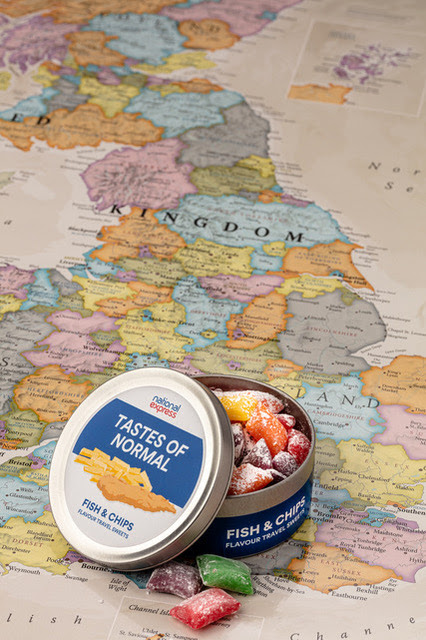
– National Express launch limited-edition travel sweets with fish and chips, pork pie, Wensleydale cheese, curry, Eccles cake and cornish pasty flavours –
In celebration of Britons being able to get back on the road to start visiting friends and family once again or plan a UK break, National Express has today released the first ever range of regionally inspired travel sweets.
The Tastes of Normal limited-edition travel sweets are a homage to the simple pleasures of travel and the staple of many a journey for generations. They have been reinvented with an unexpected range of flavours inspired by favourite dishes associated with British locations, including fish and chips, pork pie, cornish pasty, Wensleydale cheese, Eccles cake and curry*.
That’s right, boiled sweets that actually taste of fish and chips!
The Tastes of Normal travel sweets come packaged in classic round metal tins, just like those that have traditionally been found at service stations and airports for decades. Each sweet tastes of a classic dish that is synonymous with a British city or region that can be visited using National Express.
The six sweet flavours have arguably never been tasted before in boiled sweet form:
● Fish and chips – enjoyed with fresh sea air at ever popular choices for a day trip to the seaside or coastal holiday such as Devon, Brighton, Margate, Scarborough and Blackpool
● Curry – in honour of Birmingham, the home of the Balti triangle and National Express
● Cornish pasty – a must-taste treat for anyone visiting the ever-popular coastal county of Cornwall
● Pork pie – the classic British snack from Leicestershire, home of the Melton Mowbray pork pie
● Wensleydale cheese and cranberry – a nod to Yorkshire and popular destinations such as Leeds, Sheffield and Bradford.
● Eccles cake – the only ‘sweet’ sweet in the tin, representing Greater Manchester.
The National Express full UK timetable with hundreds of destinations is now on sale, allowing Summer bookings when all restrictions are lifted. Customers can also book accommodation and attractions alongside their coach travel, complete with a price guarantee and ABTA protection
Chris Hardy, managing director of National Express UK Coach, said: “We suspended all services for 11 weeks at the beginning of the year so we’re delighted to now be back on the road with full measures in place to ensure passenger comfort and safety.
“As the UK’s largest coach operator, we’ve always been part of seeing friends and family, going to events, on day trips and holidays. We wanted to mark helping make this happen again in a fun way.
“Fish and chips and pork pies might not be the kind of flavours anyone would expect to taste in boiled sweet form, but each confectionary celebrates the wonderful diversity of the UK.
“We hope the tastes will take people to a place they’ve missed and can now happily and safely return to with National Express.”
The limited-edition sweets are not for sale but will be given away to the public via National Express social media channels:
International leisure travel from England no longer illegal from 17 May 2021 but strict border control measures will remain in place
UK government confirms international travel can gradually resume from 17 May, as 12 countries and territories are added to the ‘green list’
strict rules on testing and quarantine will remain in place to protect public health and our vaccination programme, while people should not travel to ‘amber’ and ‘red’ countries for leisure
international travel will be different as passengers are warned to expect additional checks and longer queues at the border
Transport Secretary Grant Shapps has today (7 May 2021) announced that international travel can begin to safely reopen from 17 May, allowing people to go on foreign holidays to green list countries.
The ‘Stay in the UK’ regulation will lift on 17 May, meaning leisure travel from England will no longer be illegal.
However, speaking at a No10 press conference this afternoon, the Transport Secretary outlined how strict border control measures will remain in place as international travel gradually resumes. Different levels of restriction will be applied to individuals returning to England from countries based on the traffic light system set out by the Global Travel Taskforce.
Our priority remains to protect public health, which is why the ‘green’ list is currently very small, with only 12 countries and territories. As the epidemiological situation improves worldwide, it is expected that there will be more opportunities for leisure travel with a greater number of destinations added.
In total, 12 countries and territories have been added to the green list. Some of these include: Portugal including the Azores and Madeira; Australia; New Zealand; Singapore; Brunei; Iceland; Faroe Islands; Gibraltar; Falkland Islands; and Israel and Jerusalem.
However, many ‘green list’ countries will continue to place restrictions on UK travellers, including quarantine measures, so passengers are encouraged to check all requirements and FCDO travel advice before they book any foreign travel.
Given that the virus is still spreading in many parts of the world, people should not be travelling to amber and red countries for leisure. 10-day managed hotel quarantine requirements will remain in place for those permitted to return to England from ‘red’ countries, and quarantine at home alongside stringent testing will be required for those returning from ‘amber’ destinations.
Countries have been allocated by ministers according to the latest scientific data, so quarantine and testing requirements on return from those countries are appropriate to the risk of coronavirus and variants of concern.
The lists will be reviewed every 3 weeks, informed by public health advice, including the Joint Biosecurity Centre’s assessment of the latest data. These regular review points will allow the government to balance helping the public to understand COVID requirements when travelling to England while allowing us to constantly evaluate the risk for different countries.
The government will also be publishing a green watchlist in the future, to provide an indication when a country is identified as a candidate for a changing country. All measures will be kept under review and further action may be taken to protect public health.
Countries will decide whether they require proof of COVID vaccination for entry, and it is the traveller’s responsibility to check individual requirements. If needed, people in England who have both vaccine doses will be able to demonstrate their COVID vaccination status via the NHS app from 17 May.
Those without access to the app can request a letter from the NHS proving their vaccination status by calling 119, from 17 May.
Test results will not be stated in the app and the process for booking and presenting test results for travel remains unchanged. The government is working with the devolved administrations to ensure this facility is available to everyone across the UK.
Transport Secretary Grant Shapps said: “Today marks the first step in our cautious return to international travel, with measures designed above all else to protect public health and ensure we don’t throw away the hard-fought gains we’ve all strived to earn this year.
“This is a new way of doing things, and people should expect travel to be different this summer – with longer checks at the borders, as part of tough measures to prevent new strains of the virus entering the country and putting our fantastic vaccine rollout at risk.”
On top of this, to continue protecting the country against new variants of coronavirus, from 4am Wednesday 12 May, the Maldives, Nepal and Turkey will be added to the red list.
When travel does restart, it will be different, most notably when returning to the UK. Reopening international travel, while maintaining 100% health checks at the border, means longer waits are likely – passengers from any destination will still be required to fill out a Passenger Locator Form (PLF), and show proof of a pre-departure test negative result.
While holidaymakers may notice longer than usual queues, it is vital we maintain our stringent border checks – which are among the toughest in the world – to prevent new strains of the virus entering the country and putting our vaccine roll out at risk.
The government is constantly trying to improve processes to make them as efficient as possible to minimise wait times, and will be committing to increasing Border Force resources to manage increased demand. This includes deploying additional Border Force officers where high volumes of passengers are expected.
Border Force will be checking that arriving passengers have complied with current health measures, and passengers can help reduce delays by completing all necessary requirements before entering the country.
We continue to urge airlines to carry out all necessary checks or risk facing fines of £2,000 for each passenger they carry who does not have a valid Pre-Departure Test Certificate, and £2,000 for each passenger who does not have a completed PLF.
The government will also continue with plans to integrate health measure checks into our border system and enabling checks to take place at e-gates in major ports during Summer 2021. Following the UK exit from the EU and the end of the Transition Period, UK citizens will be subject to additional checks upon entering EU countries.
If travelling abroad, you need to take steps to keep safe and prepare in case things change while you are there. Check and subscribe to FCDO travel advice updates to understand the latest entry requirements and COVID 19 rules.
Rory Boland, Editor of Which? Travel, said:“Thousands of people will now be looking to arrange a long-awaited holiday or visit loved ones overseas. Travellers will have an expectation that these new government rules should protect their health and their money, yet serious issues around lengthy airport queues and a broken testing system remain unresolved.
“Travellers should also be aware that there is still some financial risk involved in booking travel plans, depending on how you book and which company you choose. Several holiday companies and airlines remain under investigation for breaking the law last year, and some have indicated they may do so again.
“In a summer when further disruption can be expected, travel companies must be honest about the risks holidaymakers may be taking on. Crucially, holidaymakers also need to do their research before booking, as choosing the right provider could be the difference between getting hundreds of pounds back or just getting the runaround.”
With hopes of a return to holidays abroad within weeks, some package providers that broke the law last year are still misleading customers over their right to a refund and other financial protections, according to a new investigation from Which?.
Ahead of the government revealing the ‘green’ list of countries that travellers can visit without the requirement for quarantine on their return, Which? mystery shopped six of the UK’s biggest package travel operators to find out if customers making new bookings will get their money back if lockdowns or quarantine prevent them from travelling.
Which? spoke to three agents each from Love Holidays, On the Beach, Teletext Holidays, Trailfinders, TravelUp and Tui.
Of the six companies, only Trailfinders and Tui consistently answered Which?’s questions in line with the law and in line with the company’s official policy.
Agents at all of the others either suggested to the consumer champion’s researchers that they were willing to break the law over refunds, or misled them about how their holiday would or wouldn’t be protected.
Which? asked the travel companies:
Whether customers would get their money back if the government banned international travel before they were due to depart;
Whether they would get a refund for both their flight and accommodation together if the holiday was cancelled by the provider;
Whether customers could cancel for a full refund if they are told they will have to quarantine on arrival at their destination;
And how they would be refunded under the Atol scheme if the company were to collapse.
When asked about the government banning travel before they were due to leave, only Trailfinders, TravelUp and Tui repeatedly gave assurances that they would be entitled to a refund. Love Holidays, On the Beach and Teletext were all inconsistent in their responses.
Legally, customers may not be entitled to a refund if they cannot travel because of a national or regional lockdown. However, Which? only recommends booking with companies that have committed to paying out in this scenario.
While On the Beach officially told the consumer champion it would refund customers in the event of a travel ban, two of its agents said otherwise. Teletext also gave mixed responses and when Which? approached the company for clarification, it refused to comment.
Love Holidays told Which? that customers would only be able to receive a full refund in this scenario if their airline cancelled their flight – and while it agreed this was unfair, it would still deny full refunds on this basis.
By law, customers whose package holiday is cancelled by their provider should be entitled to a full refund within 14 days, regardless of whether the airline cancels the flight or not. However, some companies have been denying full refunds on the basis they have not been able to secure refunds from airlines for the flight portion of the booking.
Airlines require full payment for the flights from the package holiday provider in advance, meaning that when flights booked as part of a package are not cancelled, it can be difficult to recoup the money from the flight carrier.
When Which? investigated, only Trailfinders and Tui committed to reimbursing both flights and hotels within the 14 days legally required.
Trailfinders guarantees customers will receive a full refund if their holiday is cancelled by ‘ring-fencing’ customer payments, meaning when refunds were due, their money would be returned to them in full and without delay – a model not replicated by the other providers. All the other companies suggested that full refunds would depend on whether or not the airline cancelled the flight.
Love Holidays said it would wait to be reimbursed by suppliers before passing the money onto customers, even though it has already faced an intervention from the Competition and Markets Authority (CMA) for withholding refunds from customers while it chased money from airlines.
Similarly, Teletext has also been investigated by the CMA for withholding refunds, and is now facing court action if it fails to refund over £7 million in customer payments.
Despite the company being under investigation at the time, an agent still told Which?’s undercover researcher that customers could expect to wait up to two months for their money back while it chased suppliers for refunds.
While TravelUp said it was refunding within 14 days “wherever possible”, agents told the undercover researcher it relied upon receiving refunds from suppliers, and that it charges customers an admin fee – a minimum of £50 – to chase their refunds for them.
The researcher also asked if customers would be entitled to their money back if they were required to quarantine on their arrival. Denying a refund on this basis is in breach of the Package Travel Regulations, as having to quarantine on arrival should be considered an ‘unavoidable and extraordinary circumstance’ that will significantly affect the performance of a package holiday, meaning customers should be offered the choice between a reasonable alternative or a refund.
Only Tui and Trailfinders said they would provide refunds for customers in this scenario. Agents at all the other companies Which? spoke to said customers would only receive a full refund if the airline cancelled their flight.
However, official responses from Loveholidays, On the Beach and TravelUp all contradicted the advice their agents had given on the phone, insisting that customers would be due a full refund if they cancelled because of instruction to quarantine on their arrival.
The consumer champion also questioned agents about how holidays were protected under the Atol scheme. Atol protection ensures customers will receive the option of a full refund if their provider goes bust before their package holiday takes place or while they are abroad.
Nearly every agent answered correctly when asked if their package holidays were Atol protected. But some agents provided misleading information when asked whether Atol protection applied if a flight and hotel were booked one week apart.
In this situation, while the flight might be covered by Atol if booked through a tour operator, the hotel and transfer would not be. But all three agents for Teletext Holidays incorrectly implied customers booking their flights and accommodation separately would be fully covered.
Which? is urging those considering a package holiday this summer to do their research, and read the terms of a company’s flexible booking policy carefully before booking.
All Which? Recommended Providers have committed to offering full refunds in the event of coronavirus related disruption, and all abide by the Package Travel Regulations. Consumers should avoid companies that cannot guarantee to offer a full refund in the event of further disruption.
The consumer champion is also campaigning for major travel industry reform to ensure greater protection of travellers’ money and enforcement of their existing consumer rights when they book a holiday or a flight.
The CAA has launched a consultation on reforming Atol protections and the protection of customer money which the consumer champion will be submitting evidence to. Meanwhile the CMA is also currently investigating refunds in the package holiday sector, and it should not hesitate to take enforcement action against any companies that continue to break the law on refunds when mass international resumes.
Rory Boland, Editor of Which? Travel, said:“Holiday companies are quick to offer promises that you can book with confidence this summer, but unfortunately many of them won’t be so quick to refund your money if coronavirus prevents you from travelling – and that’s if they refund you at all.
“Whether you can book with confidence ultimately comes down to who you book with. Many of the companies that broke the law last year have suggested they may do so again, so regulators must be ready to take strong action against any operators found to be misleading their customers or breaking the law.
“Travellers considering a holiday this year should only book with companies that guarantee in their flexible booking terms that they will be able to get all of your money back if lockdowns, quarantine and other disruption should strike.”
Teletext Holidays will face legal action unless it repays over £7 million to customers whose package holidays were cancelled due to the coronavirus (COVID-19) pandemic.
On 4 February, the Competition and Markets Authority (CMA) announced that it was opening an investigation into Teletext Holidays after receiving hundreds of complaints.
These showed that people were not receiving refunds they were owed within 14 days, as required by law, for package holidays cancelled by the company due to pandemic restrictions.
The CMA wrote to Truly Holdings Ltd., the company that operates Teletext Holidays and also AlphaRooms.com, in March, setting out in detail its concerns and giving the company an opportunity to address them.
The CMA told the firm it could avoid any potential court action by signing formal commitments – known as ‘undertakings’ – to refund affected consumers and ensure compliance with the Package Travel Regulations going forward.
However, Teletext has not agreed to provide undertakings that are sufficient to address the CMA’s concerns.
The CMA has now informed Teletext Holidays that it is preparing to take court action and will launch proceedings if it does not repay the outstanding refunds, or commit to do so, without unnecessary delay.
Andrea Coscelli, Chief Executive of the CMA, said: There must be no more delays to Teletext refunding customers for holidays they could not take because of the pandemic. It is unacceptable that many have already waited months for the refunds they are legally entitled to.
“We take very seriously the ongoing failure of Teletext Holidays to meet its obligations. The firm must now comply with the law and commit to refunding its customers. If it does not do so, we will not hesitate to pursue this case in court.”
Rory Boland, Which? Travel Editor, said:“We have received countless complaints from Teletext Holidays customers who have been battling for refunds for cancelled holidays for more than a year, so while the regulator’s action is welcome customers will be angry that they still don’t have money they are legally due.
“Teletext is one of many holiday providers that have attempted to shirk their legal responsibilities to refund customers for cancelled trips, highlighting the need for industry-wide reform.
“The government must ensure there are better protections for holidaymakers’ money, while the Civil Aviation Authority – which has been unable to take much meaningful action against airlines holding up the refund process by withholding money from holiday companies – must be given stronger powers.”
The announcement follows ‘significant action’ by the CMA in relation to holiday cancellations during the coronavirus pandemic.
Some passengers arriving in the UK are having to extend their quarantine or pay for additional Covid tests as private labs are failing to deliver results on time, Which? has found, raising concerns about the capacity of the UK’s travel testing system weeks before international travel is set to re-open.
Currently, anyone arriving in the UK (unless exempt) must quarantine for a mandatory 10 days and take a PCR test on day two and day eight of their quarantine. These tests typically cost between £160 and £200, but can cost over £500. Travellers must receive negative results for both tests to leave quarantine after day 10.
However, social media and review sites have been flooded with complaints about test result delays, with a Facebook group for people suffering problems with the system amassing around 1,500 members, and Which? has also heard from travellers who did not receive their test results within 10 days.
Without test results, travellers face having to pay hundreds of pounds for additional tests or stay in quarantine for longer than they need to, potentially causing problems for those who cannot work from home.
The consumer champion also understands that at present, only four private test providers out of more than 500 on the government’s list of providers have been accredited – Nationwide Pathology, Source Bioscience, Oncologica and Eurofins Forensic Services. Of those four, only Nationwide Pathology and Oncologica offer day two and day eight test kits, raising concerns about oversight of the test providers.
With mass travel set to resume next month, Which? is concerned that the travel test system – which is already struggling to handle demand when international travel is restricted – is at risk of being overwhelmed, and potentially collapsing when restrictions are lifted.
Erkal Taskin, who returned from Turkey after visiting his ill father in early April, told Which? that he didn’t receive his day two test kit from Anglia, a government-listed test provider, until he had been in the UK for a week.
Only after he contacted Anglia through Twitter and Which? responded to his tweets did it promise him a refund. It finally gave him his day two result 15 days after he had arrived in the country, and he still has not received his day eight result.
Anglia apologised for the problems, and described the case as “an extreme outlier even in terms of the small number of cases where our client has had some processing or fulfilment issues.”
Erkal added: “I wasn’t sure when I could leave my house and there was no one to ask. I ended up waiting for so long before I could go back to work, which was a huge problem.”
Another person complained on Trustpilot about a different provider, claiming that after they didn’t receive results for their day two test, they paid for a ‘Day Five Test to Release Kit’ – which would have allowed them to end their quarantine early on receipt of a negative result – but said “now on day nine, [we] still have no results, so [it was a] waste of £110 plus £175.”
While some providers have blamed delays with Royal Mail deliveries, Royal Mail told Which? there have been no reported delays in its network related to use of the company’s priority post boxes for managing travellers’ test results.
Oncologica, one of the largest laboratories that has partnered with many government-listed test providers, apologised on its website for delays and said there has been an “unprecedented increase in Covid testing enquiries and kit orders received since government travel rules were introduced”.
Nationwide Pathology also apologised on its site for “large scale disruption to the delivery of both kits and samples”.
Despite travellers failing to receive their Covid test results on time, many have not been offered refunds. Both Oncologia and Nationwide Pathology said they did not guarantee test results within 10 days, with the latter claiming guidance from the Department of Health and Social Care means that it doesn’t have to provide refunds “where there’s no issue with the testing service”.
Under the proposed traffic light system, arrivals from ‘green’ countries must take day two tests, and those from ‘amber’ and ‘red’ countries must take day two and day eight tests, which will mean hundreds of thousands more people rely on the testing system.
Which? is urging the government to urgently address the problems currently affecting the PCR testing market with regard to availability of information, accreditation, pricing and accessibility of tests, as well as the poor quality of service by some providers. It must also ensure there are effective consumer protections in place for travellers in the event of any problems with testing, ahead of reopening travel after 17 May.
Rory Boland, Which? Travel Editor, said: “The UK’s travel testing system can’t cope with demand, even when relatively small numbers of people are travelling. It’s clear the system could buckle under the pressure when mass international travel restarts and hundreds of thousands more people are reliant on it.
“Travellers shouldn’t have to shop around for something as crucial as a test provider – they simply need a service that is accessible, reliable, and delivered on time. It is critical that the Government addresses issues with testing ahead of restarting international travel, and ensure that travellers are not left to the mercy of poor quality providers or unreliable services when trying to do the right thing in following government requirements to travel safely.”
Oncologicatold Which? it can process up to 40,000 Covid-19 tests a day and that it hadn’t yet reached capacity. A spokesperson said: “Postal service quality is outside our control; however, we make customers aware of the possibility of shipment delays arising from postal deliveries.
“This can relate to sample returns indicating they have been returned “delivered” in the Royal Mail tracked postal system, whereas in fact samples may not yet have been delivered to Oncologica and only have arrived at a Royal Mail depot, which can take up to 24 hours to deliver onto us. In the vast majority of cases, our customers experience no delays and our kits and results are supplied in a timely manner.”
It said that it couldn’t comment on claims by third party test providers that they’d received its results late.
Nationwide Pathology said: “We recognise the significant frustrations that UK International Arrivals are currently facing and we all are working extremely hard to make the process as user friendly as possible.
“We also recognise the significant costs involved for families which is why we have consistently, since the start of this process in March 2021, been one of the least expensive providers on the DHSC list.
“Nationwide Pathology is committed to providing the best service possible. We have performed over 80,000 Day 2 and Day 8 covid tests since the end of March 2021. The vast majority of our clients have no issue and are very happy with the service they receive. Our complaints KPI is 0.29%.
“Unfortunately, even though we use Royal Mail, who are a gold standard logistics provider, they have experienced some delays in getting samples to us. We understand how important results are to customers, but we are simply unable to test a sample that we do not have.”
A Royal Mail spokesperson said: “There are no reported delays in our network related to people using Royal Mail’s priority post boxes to manage their test results. In fact we continue to receive praise for the high quality of the service we provide to the nation. Every day we service hundreds of thousands of test kits on behalf of the NHS both speedily and efficiently.
“For overseas travellers, the management of test kits, samples and results is carried out through several private companies. In some instances, some of these companies may use a Royal Mail tracked returns service to deliver test results.
“In such cases, we deliver mail items in line with the service specification agreed with the sending companies. Every item of mail is important to us. We are committed to delivering the highest levels of service for all our customers.
“We have lots of capacity in our network to continue to deliver these mail items to a high level of service even if there is an increase in demand.”
The Department of Health and Social Care said: “We are carefully monitoring issues raised by the public, raising every complaint with private test providers. We also monitor all providers’ performance, including their delivery and test turnaround times.
“We will take rapid action against any company that is providing an inadequate service. In the first instance, they will receive a warning and are given five days to demonstrate they have addressed concerns, and if not, they are removed from the gov.uk list.”
A spokesperson for Anglia DNA Services said: “We unreservedly apologise for any receipt, delivery, and/or processing issues in this case, one of a very small minority of such issues over the last weeks in which we have successfully fulfilled over 10,000 ‘2 and 8’ day tests for our customers.
“The individual you reference is being fully refunded as is our policy, with our apologies again.”
The last year has led consumers to be much more sustainably focused, the public are becoming consistently more engaged and putting their money where their mouth is.
With travel on hold for the best part of the last year, sustainable options are becoming more favourable. Whether that be supporting independent businesses or choosing an environmental option.
Small group tour specialist, Rabbie’s (www.rabbies.com), specialises in sustainable travel and has shared its top tips to consider when booking an eco-friendly holiday.
Consider your mode of transport
While it’s hard to resist the temptation of a self-drive holiday post-pandemic, this convenient way of getting around is not the most eco-friendly. Travelling using communal transport modes, such as by small mini-bus, is a much more fuel-efficient option to reduce your carbon emissions while travelling. Domestic coach tours are a great way to explore the country and visit destinations off-the-beaten track in a sustainable way by lowering the number of independent vehicles on the road.
Visit smaller communities
Steer clear of tourist hot-spots and opt to visit destinations that are typically out of reach. Areas outside of the standard sightseeing trail have been hit especially hard by the pandemic. Tourism spend is worth so much more to these smaller communities and sustainable travellers have an opportunity to really make a difference to the lives of locals. Consider taking a trip to areas such as the Isle of Wight, North Wales and the lesser-known lakes of the Lake District.
Leave no trace
Particularly important when choosing to visit natural beauty locations, travellers should aim to leave places as they found them (or in some circumstances, in a better shape than when they arrived). Travelling on a small group tour allows for groups to avoid making loud noise and let nature’s sound prevail.
A local, knowledgeable guide will help to ensure that travellers respect the communities being visited to ensure an enjoyable journey for those on the tour, as well as those who will visit next. With so many amazing natural beauty locations to visit across the UK such as the woodlands of the Peak District National Park and the beaches of Lewis and Harris, it’s vital to preserve these destinations for years to come.
Choose a responsible operator
Selecting to holiday with a sustainable and morally-sound operator will ensure you’re making the world a better place through travel. Tour companies with substantial green credentials and responsible travel initiatives are a great way to reduce the impact your travels have on the environment in which you are visiting.
Small-group touring company, Rabbie’s, have environmental protection as a core focus of the business. The company even taxes itself £10 for every tonne of CO2 they use, with staff then voting on which community or environmental project this money should go towards each year.
With social distancing measures in place, reduced group sizes and increased cleaning measures, Rabbie’s offers worry-free journeys so you can enjoy a sustainable staycation without concerns.
During your trip to Edinburgh you will no doubt be exploring the top attractions that this city has to offer. Edinburgh Castle for the one o’clock gun, the view from the top of Arthur’s Seat, the dark history of the Vaults and the Royal collection at the Queen’s Gallery.
However, these hidden gems are loved by locals and those lucky enough to stumble across them.
If you are planning a visit to Edinburgh, be sure to add our top 10 to your must-see list:
Edinburgh Farmers Market
Situated on Castle Terrace every Saturday with stunning views of the Castle and only a hop, skip and a jump from the Royal Mile you will find an award-winning market showcasing the very best of Scottish produce. If you’ve booked a self-catering apartment it is the perfect place to catch the highest quality, local ingredients to cook up for dinner. You can find fresh scallops, smoked salmon, venison, cheese, seasonal fruit and vegetables from this renowned foodie haven.
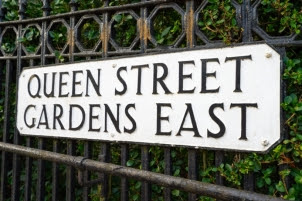
Residents of Edinburgh’s New Town hold the keys to exclusive private gardens hidden amongst the town houses. There is none more desired than the splendid Queen Street Gardens, where Robert Louis Stevenson spent much of his childhood. Most visitors to Edinburgh must wait until the annual Open Door’s Day to venture inside but guests of 34a Abercromby Place, a new luxurious dog friendly self-catering apartment by the Royal Scots Club, receive a key to access this secret garden for the duration of their stay.
This marvellously modern milk bar in Edinburgh’s historic Grassmarket has been producing handmade gelato and chocolates since 2013 and its founder Mary is a graduate from an actual Gelato University in Italy. With weird and wonderful seasonal flavour combinations like Toast & Marmalade and Goats Cheese & Figs mixed with favourite staples like Salted Caramel and Milk, all ages will be pressing their noses against the window checking out the latest flavours.
Reopening in May, check out Mary’s Instagram for updates
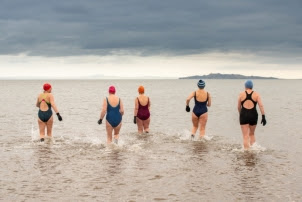
If you are feeling bold, grab your swimming costume and head out for some wild swimming in the Forth. Don’t let the temperature put you off, wild swimming has been proven to boost your energy and happiness. The perfect way to start a day of sightseeing! Wardie Bay is within walking distance of the City Centre so enjoy a swim in this sheltered spot which is well cared for by the community and loved by locals.
Open every day of the year come rain or shine
Dunbar’s Close Gardens
Any Edinburgh visitor will be familiar with the Royal Mile which connects Edinburgh Castle with the Palace of Holyrood House. The network of Closes lead off the Royal Mile through the Old Town and are steeped in history. With over 70 Closes to explore don’t miss Dunbar’s Close, this beautiful garden sanctuary in the very centre of the City. You will find those in the know soaking up the sun or chatting with friends over lunch in this secluded spot.
Open from 07:00am, closing times vary throughout the year
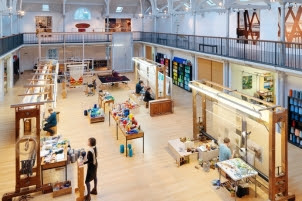
Dovecot is a world-renowned tapestry studio and centre for contemporary art, craft and design in the heart of Edinburgh’s Old Town. The Tapestry Studio is in the former swimming pool that was once the old Infirmary Street Bathhouse and the original viewing gallery is open daily for visitors to observe the weavers create their masterpieces. Dovecot offers a programme of popular exhibitions and events with the likes of Grayson Perry and Mary Quant plus a shop full of beautiful hand-made gifts and a fantastic cafe ‘Pinks at Dovecot’.
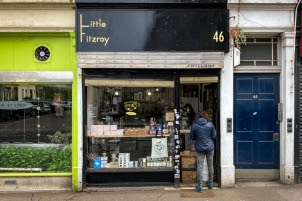
Café Culture is thriving in Edinburgh with independent coffee shops showcasing the best roasters in Scotland and across the UK. If you are looking for exceptional coffee one of the local heroes is Little Fitzroy on Easter Road. Passionate about everything coffee, Little Fitzroy rotate their selection regularly, always making the perfect flat white. Not to mention their wonderful selection of cakes including one of the best vegan Cinnamon Buns in Edinburgh.
Open weekdays from 07:00am – 17:00pm and weekends from 08:00am – 17:00pm
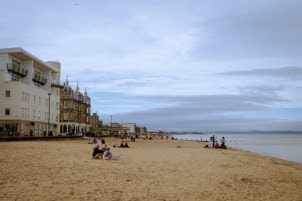
The wonderful beach at Portobello (Porty to locals) is the perfect place to fill your lungs with sea air and go for a bracing walk along the sands or the fine promenade. Once you’ve finished building your sandcastles or taking a paddle, grab lunch at Edinburgh’s Little Chart Room on the Prom or take a stroll to the high street and visit the Montreal inspired Bross Bagel shop.
Open every day of the year come rain or shine
Alby’s
Not your average sandwich shop this is the home of the Big Hot Sandwich in Leith. Alby’s feature a rotating menu of inspired and delicious fillings sandwiched between a large wedge of soft focaccia. This is the perfect pick me up after a packed morning of sightseeing. Run by couple Natasha and Matt these sandwiches have cult status thanks to their strong Instagram following and adorable namesake Alby the Dachshund.
Open Wednesday to Saturday from 12:00pm – 20:00pm and Sunday 12:00pm – 16:00pm
You may have heard of the Festival Theatre, the Playhouse or the Lyceum Theatre but there is another institution tucked away in Leith which was given as a gift to the Burgh from the people of Edinburgh in the 1920’s when Leith was incorporated into the capital city. This lively creative hub caters for all ages so be sure to check out their programme of what’s on during your visit.
Reopening in June, check out their website for more details