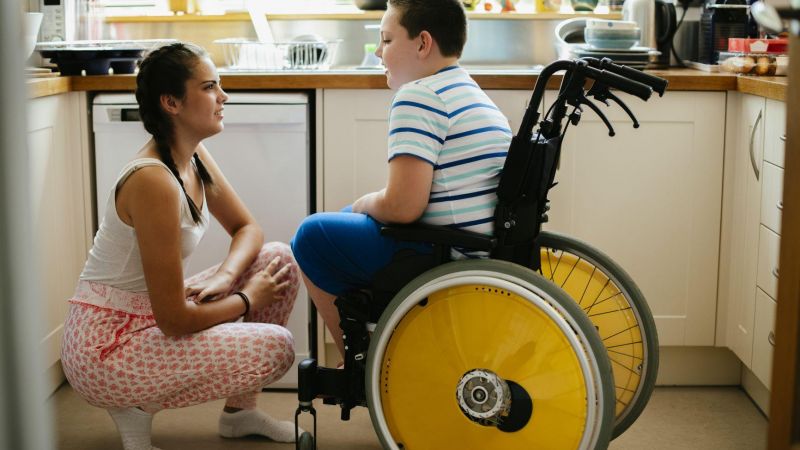
Women, families and children are among those who will benefit from separate funds worth a total of £18 million to improve drugs services.
Four schemes are planned for May with the funds coming from the additional £250 million announced by the First Minister to tackle the drug deaths emergency over the next five years.
The four projects will aim to develop consistent treatment standards around the country and ensure more people can get access to services that can reduce harm, provide treatment and ultimately save their lives.
The four funds are:
a £5 million Communities Fund to provide resources to community and third sector organisations to increase capacity
a £5 million Improvement Fund to support improvements to services for outreach, treatment, rehabilitation and aftercare, with dedicated support for women
a £3 million Families and Children Fund to support the families of those affected by drug misuse during treatment
a £5 million Recovery Fund for additional residential rehabilitation capacity
Minister for Drugs Policy Angela Constance said: “We have said a national mission is needed to tackle the drug deaths emergency and this coming year will see funding for alcohol and drugs support increasing to £140.7 million.
“This latest round of funding sees us build on the £1 million Communities Fund and £1 million Improvement Fund we launched in February. We want to make additional resources available to more community and third sector organisations so that we can support more people into treatment and offer support to their families.
“I am pleased we are also able to direct more funding to develop services specifically for women and children. We want to make it easier for women to access treatment by removing any barriers such as a lack of childcare.
“I have already committed to taking action on the recommendations from the Residential Rehabilitation Working Group and this will be backed by £100 million over the next five years.
“We recognise residential rehabilitation may not be for everyone which is why we are determined, as part of our national mission, to make sure that people can access whatever treatment is right for them in the right place at the right time.”
Scottish Families Affected by Alcohol and Drugs CEO Justina Murray said: “There is an urgent need to improve support for children, young people and adult family members – all of whom are harmed by others’ alcohol and drug use, and all of whom have faced even bigger harms during the COVID pandemic.
“We know most family members remain hidden due to the stigma, shame and secrecy of substance use in the family, along with the lack of visible, high quality family support across Scotland.
“We look forward to working with the Scottish Government and with families to transform this situation, so that every family member in Scotland can reach the support they need, regardless of their situation or location.”
Children in some of the country’s most deprived areas are to benefit from free organised outdoor play activities aimed at improving their health and wellbeing.
A total of £500,000 is being provided to expand the Outdoor Community Play Fund in 2021-22, which is administered by Inspiring Scotland.
In 2020-21 the fund distributed £380,000 to 23 play charities reaching more than 5,000 children in Scotland’s most deprived communities.
Children’s Minister Maree Todd said: “Protecting children’s right to play has been one of the key priorities in our decision making to suppress transmission of the virus. We understand the value of outdoor play for children’s wellbeing and resilience, as well as their physical and mental health.
“Children and families from more deprived areas can often find it more difficult to access organised outdoor activities, so I’m pleased that this additional funding will help even more children play outside in a safe and fun way.”
Karen Shepherd, Play Development Officer of Aberdeen Play Forum, who were recipients of funding in 2020/21, said: “A lot of parents told us that they and their children had been very isolated and had almost forgotten how to play and socialise with others. Many families do not have access to a garden or safe play space so had been deprived.
“The sessions we were able to put on were welcomed as they gave safe and structured opportunities for those involved, as well as giving parents ideas to engage positively with play at home.”
The financial support has been announced as Play Scotland has published an updated progress report on Scotland’s National Play Strategy.
The report highlights the growing body of evidence on the adverse impact of coronavirus (COVID-19) and the associated restrictions on children and young people’s wellbeing, resulting from changes to their daily lives including reduced opportunities for play and social interaction with their peers.
The report makes recommendations across eight broad areas:
• refresh the Play Strategy and ensure national and local leadership support a child’s right to play • renew and develop the national and local commitment to outdoor play • listen to children and young people and act on what they say • ensure inclusion of all children and young people • ensure cross sectoral and inter professional approaches to play are in place • sustain and support play provision through adequate funding • maintain a focus on playful learning and play in schools • strengthen the play sector nationally and locally
Resources are also available on the Parent Club website to support outdoor play for all families.
The Borderlands Inclusive Growth Deal was signed yesterday, confirming millions of pounds of investment into the Scottish Borders.
Ministers of the UK and Scottish Governments and representatives of the five councils of the Borderlands Partnership signed the deal, which aims to drive inclusive growth and deliver significant and lasting benefits for individuals, businesses and communities, including the creation of up to 5,500 jobs.
For the Scottish Borders, investment will include:
· £19m for an ambitious project to create the world’s first Mountain Bike Innovation Centre, integrated adventure Bike Park and Trail Lab in Innerleithen (further details below)
· £11m Destination Tweed tourism project based around the River Tweed
· Funding to further develop the 7Stanes mountain biking network across the Borders and Dumfries and Galloway
· A share of £20m for town and community improvement projects through a Place Programme in the south of Scotland
· Funding for improved business infrastructure in Hawick and Coldstream
· Funds to support rural innovation and skills
· Projects to tackle gaps in digital and mobile infrastructure
· £10m to deliver the feasibility activity around extending the Borders Railway from Tweedbank to Carlisle
· Funding to support the generation of low carbon energy
· Pilot projects covering woodland, upland and agricultural areas to trial new approaches to valuing and protecting our natural capital to capture the benefits of our environment in a sustainable way
Councillor Mark Rowley, Scottish Borders Council’s Executive Member for Economic Regeneration and Finance, said: “The Borderlands Inclusive Growth Deal has been worked on by the various partners for a number of years and this level of investment and joined up partnership working has never been more important than it is today, as we look towards our recovery from the COVID-19 pandemic.
“This deal can transform the Scottish Borders, allowing multiple, large scale projects to be taken forward by the Council and a wide range of partners, delivering new jobs and sustainable growth which will help support the region for decades to come.
“Significant investment into our towns and communities, our tourism infrastructure and our environment means that this deal will see the benefits shared right across the whole of the Scottish Borders.”
Innerleithen Mountain Bike Innovation Centre/Tweed Valley Bike Park and Trail Lab
A key element of the Borderlands Growth Deal for the Scottish Borders is the development of a new mountain bike innovation centre in Innerleithen that will support Scottish, UK and international businesses to develop innovative products and services within mountain biking and across the cycling sector.
In addition, a Tweed Valley Bike Park and Trail Lab will be created in what is thought to be a global first in terms of combining tourism and innovation. An adventure bike park will deliver infrastructure to attract and sustainably manage visitors to the Scottish Borders.
Borderlands Growth Deal will invest £19million in the project, which is predicted to contribute £141m in Gross Value Added (GVA) and over 400 new jobs in the South of Scotland.
The project partnership includes South of Scotland Enterprise as project sponsors Scottish Borders Council, Edinburgh Napier University and Scottish Cycling, through Developing Mountain Biking in Scotland (DMBinS).
Ed Shoote of DMBinS, the Senior Project Manager of the Mountain Bike Project, said: “It is fantastic news that the Borderlands Inclusive Growth Deal, including the Mountain Bike Project, is pushing ahead.
“The vision is for the south of Scotland to be recognised as the European leader in mountain biking and this is an important step forward.
“There is still a lot of work to do to realise this vision and we will continue to work with the project partners and the local community to deliver the best project for the region.”
Councillor Mark Rowley added: “This project is a fantastic example of how projects funded by the Borderlands Inclusive Growth Deal can deliver multiple benefits, in this case attracting new businesses and jobs to the area and also attracting tourists from across the UK, Europe and beyond, building on the already well-established reputation of the Tweed Valley as one of the world’s top mountain biking destinations.”
Professor Nick Antonopoulos, Vice Principal for Research and Innovation at Edinburgh Napier University, said: “Today marks another important milestone for Edinburgh Napier and its partners in our journey towards making the South of Scotland the mountain bike capital of Europe.
“The Borderlands Growth Deal will build on the fantastic groundwork of the Mountain Bike Centre of Scotland, hosted by Edinburgh Napier University who have been supporting cycling innovation since 2012.
“This investment will take the work of Mountain Bike Centre of Scotland to the next level, helping to drive innovation and support product research and development, whilst working with local and international companies.
“Together, these projects will power commercial activity, attract inward investment and deliver positive outcomes in terms of public health and supporting carbon neutral products and processes.
“We are also hugely excited by the potential research opportunities for Edinburgh Napier colleagues across a range of academic disciplines, including exercise science, health and wellbeing, engineering, inclusion, product design, artificial intelligence, big data and tourism.”
South of Scotland Enterprise Chair, Russel Griggs OBE, added: “This is a transformational project which could really put the South of Scotland on the map as a global leader in the mountain biking industry.
“The potential wider economic and community benefits for the local area are significant in terms of inward investment and jobs, as well as bringing further UK and international tourism to the region.
“I am delighted the South of Scotland Enterprise will be working with various partners to realise this ambition.”
Local candidate welcomes Scottish Government taking over Scotrail
Edinburgh Western SNP candidate Sarah Masson has welcomed the announcement that the SNP Scottish Government is taking over the running of the country’s rail franchise.
ScotRail services will move into public sector control when the current franchise with Abellio expires – expected to happen in March 2022.
Transport Secretary Michael Matheson announced that rail services will be run by an arm’s length company owned and controlled by the Scottish Government.
The Scottish Government’s decision to run our railways through what it known as the ‘Operator of Last Resort’ has been shaped by a number of factors, including faults with the current franchising system, uncertainty from a year-long delay in the UK Government’s rail review and the effects of the Covid pandemic.
Commenting on the announcement Sarah Masson, SNP candidate for Edinburgh Western, said: “This bold move by the SNP Scottish Government will bring welcome stability and certainty to those who use our railway for work and leisure, both in Edinburgh and across the country.
“And the news that current ScotRail staff will transfer to the new Scottish Government owned company, with their terms and conditions protected, will also provide much-needed security to those who rely on our railways for their livelihoods.
“The SNP have long argued that the future structure of Scottish railways should be in Scotland’s hands. It’s well beyond time that the Tory UK Government listened and devolved rail powers to Holyrood.
“However, this move is both bold and welcome and will ensure Scotland’s rail users are provided with the well-run, affordable and reliable service we rightly expect.”
A new £70 million Scottish Government fund to improve recycling infrastructure across Scotland has launched today – Global Recycling Day.
Local authorities across Scotland are being urged to apply to the fund, which opens next week, to help drive new innovations and improvements to recycling in their area and across the country.
The five-year £70 million Recycling Improvement Fund, which was part of the Programme for Government, aims to accelerate progress towards Scotland’s ambitious waste and recycling targets and net zero commitment.
It is one of the biggest single investments by the Scottish Government in recycling infrastructure to date. This will give local authorities the opportunity to take forward projects that increase both the quality and quantity of recycling whilst delivering wider environmental benefits.
This could include promoting waste prevention or reuse, improving the consistency of collections, collecting problematic materials such as electrical items, improving sorting and treatment infrastructure, or introducing new low-carbon technologies.
Environment and Climate Change Secretary Roseanna Cunningham said: “Our aim is for Scotland to be a zero waste society with a circular economy based on good, green jobs. We will continue to lead by example as we head towards COP26 in Glasgow.
“While we have made significant long-term improvements on recycling, we need to accelerate progress if we are to meet Scotland’s ambitious recycling and climate change targets. This is vital to our green recovery and to put an end to our contribution to climate change.
“The Recycling Improvement Fund offers an opportunity for national and local government and the waste sector to continue our partnership to reinvigorate improvements in recycling across the country, and make it easier for households to make the right choices.
“The fund will help local authorities to take forward projects that tackle key challenges and increase recycling performance in their area. We’re also keen to see new ideas from local authorities that can ensure our recycling infrastructure keeps pace with the modern economy.
“For example, the growth in waste electrical equipment and the role re-use and repair can play, or broader changes in household behaviours which affect the volume and types of waste managed by local authorities.
“In addition, planned changes, such as the introduction of the Deposit Return Scheme, will mean our recycling infrastructure will need to innovate and modernise in the years ahead, ensuring we continue to be bold world leaders in creating a more circular economy.”
Chief Executive, Zero Waste Scotland Iain Gulland said: “Zero Waste Scotland is proud to be working with the Scottish Government and local authorities to deliver one of the country’s most exciting and ambitious recycling, reuse and waste prevention programmes in our history, which will improve services and infrastructure for people across the country.
“I’m really looking forward to applications from local authorities for ideas to develop their infrastructure.
“This fund will be transformational in helping our communities embrace a circular economy, where materials and products are kept in use for as long as possible, and where new economic opportunities and social benefits flourish.”
COSLA spokesperson for Environment and Economy, Councillor Steven Heddle said: “We welcome this fund and look forward to working in partnership with our member Councils, the Scottish Government and Zero Waste Scotland to facilitate change and bring benefit to communities throughout Scotland.
“Councils across Scotland have set themselves ambitious climate change targets, and tackling our throw-away culture is part of this. Councils know their local communities and understand the specific opportunities and challenges in their areas. The fund offers real opportunity to start addressing some of these at the local level, offers breadth of opportunity and seeks change and innovation.”
Every year on Global Recycling Day The Global Recycling Foundation recognises the achievements of those outstanding individuals and organisations who have gone the extra mile to save the planet – now they want everyone to do more every year to make a collective contribution for the future of our environment.
Ranjit Baxi, Founding President of the Global Recycling Foundation, has issued three challenges as the world faces an unprecedented threat to our planet.
First, he wants everyone to follow the courageous Recycling Heroes we recognise every year on 18 March to go the extra mile to reduce, reuse and recycle more.
Second, he wants manufacturers to move more rapidly to reduceuseofBioandCompositePlastics which are difficult to recycle due to their heterogeneity but increase the use of easy to recycle plastic resins or plastic recyclables in their manufacturing cycles and above all let us promote a global drive to stopusingsingleuseplastic.
And third, on 18 March he is revealing an initiative to show what everyone can do in a global campaign of reforestation. Reforestation plays an important part in the Carbon cycle.
Ranjit Baxi said: “It is not enough to nominate and promote our heroes but to also ask ourselves the question: ‘WhatmorecanIdo?’
“We can all do more individually and corporately to help restore and preserve the environment of our planet. The waste stream continues to grow at a frightening rate which we cannot just ignore or worse, pass on to future generations to handle.
“Let us all act responsibly and save ourselves for the Climate catastrophe!
Mr Arnaud Brunet, Director General of Bureau of International Recycling, said: “Combating Climate crisis is a joint global endeavour with all of us acting together to reduce waste and promote recycling by using the Seventh Resource helping to save millions of tons of CO2 emissions.”
Vaccines delivered to 44% of Scotland’s eligible population
Scotland’s vaccination programme has delivered first doses of the coronavirus vaccine to more than two million people – 44% of the adult population.
The landmark was reached yesterday (Wednesday 17 March). 60 year old Ian Love from Dunipace was among those vaccinated on the day the milestone was reached.
The engineering manager received his first dose at Forth Valley College’s Stirling campus, one of a number of community venues being used to deliver the vaccine locally in NHS Forth Valley.
The national vaccination programme continues to move through groups 6 and 7 on the priority list which includes those with particular underlying health conditions and unpaid carers. A self-referral online service has been launched to enable any eligible unpaid carers who have not received an invitation to register themselves.
As groups 6 and 7 progress, we have begun scheduling appointments for the next priority groups which are group 8 (age 55-59 years) and 9 (age 50-54 years) and vaccinations for these groups began at the start of this week.
Heath Secretary Jeane Freeman said: “More than two million people in Scotland have now received their first dose of the vaccine. That this has been achieved in little more than three months is down to the enormous efforts of our vaccination teams.
“I would like to thank everyone who is working tirelessly to make this a success, and also every individual who has taken up their offer of a vaccine.
“Scotland’s COVID-19 vaccination programme is now in the final stages of vaccinating the first nine priority groups. When you are offered the vaccine please take up the invitation.
“The vaccination programme is one of three key ways we are working to beat this virus, along with our expanded testing programme to identify cases and break chains of transmission and the important lockdown restrictions everyone in Scotland must follow. All these measures work to greatest effect when they work together.”
Chair of the Academy of Medical Royal Colleges and Faculties in Scotland Dr Miles Mack said: “It is remarkable that a year after the first COVID-19 mortality in Scotland, effective vaccines have been developed, and are now being rapidly rolled out across the country.
“It is a testament to the hard working healthcare staff, military personnel and volunteers that we mark the milestone of 2 million first dose vaccinations, since the vaccine rollout programme began in December.
“We know that the vaccines are safe and effective. They are a vital tool in reducing the number of COVID-19 cases and in ensuring that people are protected against this deadly disease. But there is more work to be done. Much of the adult population is yet to receive their first vaccine dose, and I would encourage people to take up the offer of a vaccine when they are called.
“I’d also ask the public to please bear with us while they are waiting their turn to be vaccinated. I know that vaccinators are working through the clinical priority list as quickly as they possibly can.”
Mr Love said: “I am so pleased to have had my first dose of the COVID-19 vaccine. It is such a relief and it really is starting to feel like we can start to think about a return to normal life.
“I want to thank everyone at NHS Forth Valley – the whole procedure has been simple and the local staff were very reassuring and clearly explained the process. I look forward to getting my second dose in around twelve weeks’ time.”
NHS Forth Valley Immunisation Team Coordinator Gillian Bruce said: “We are delighted to be marking the delivery of 2 million Covid-19 vaccinations here in Stirling.
“This achievement is testament to the hard work of local immunisation teams, GP Practice staff and volunteers across the country who are working closely with colleagues in local councils, Health and Social Care Partnerships and the military to deliver this large and complex vaccination programme.”
More than 25 million people in the UK have now received their first dose of a COVID-19 vaccine – but there may be a dark cloud on the horizon.
The UK government is facing questions over coronavirus vaccine supply after he NHS warned of a ‘significant reduction’ in the supply of Covid vaccines in England next month in a letter to local health organisations.
The letter says there has been a ‘reduction in national inbound vaccines supply’ and asks health boards to ‘ensure no further appointments are uploaded’ to booking systems in April.
The BBC has reported that a delivery of millions of doses of the Oxford AstraZeneca vaccine, produced by the Serum Institute of India, has been held up by four weeks.
UK Government health minister Matt Hancock tried to make light of concerns raised at a media breifing yesterday and the Department of Health insists it is still on track to offer a first dose to all adults by the end of July.
A combined total of £1 billion has been allocated to help local communities through the coronavirus (COVID-19) pandemic, and to build resilience in public services in the past year.
Of this, more than £550 million has been committed through the Communities Funding Package – launched a year ago this week. This has been distributed across councils, local services and initiatives supporting those in need.
Key elements include:
more than £140 million on tackling food insecurity, with over £51 million to enable the continued provision of Free School Meals during school closures and holiday periods
help for local councils to meet people’s needs over the winter period, with £40 million of financial insecurity funding and £30 million to help people impacted by COVID restrictions and guidance. In conjunction with the Freephone national assistance helpline, councils have provided support to access and afford essentials, including food and fuel
almost £80 million awarded to third sector and community organisations through the Wellbeing Fund, Supporting Communities Fund and the Third Sector Resilience Fund
the continuing Community and Third Sector Recovery Programme, which is expected to make £44 million of awards by this summer
On top of the £550 million communities funding package, a further £479 million has been awarded to local councils to meet demand for local services, and build resilience across the sector.
Cabinet Secretary for Communities and Local Government Aileen Campbell said: “We know that the impacts of the pandemic have been felt unevenly across Scotland, with many of the most disadvantaged or marginalised bearing the heaviest weight.
“This significant investment has helped protect people and communities during these unprecedented times.
“We have worked hand in hand with councils, third sector partners and communities themselves to direct funding where it was needed most and to ensure that support is there when people need it most.
“I want to thank everyone involved, right across Scotland, in this unprecedented response – demonstrating what a caring country Scotland is and protecting people.”
Michelle Carruthers, Chief Executive of Food Train, which received funding as part of the strategic national investment in order to continue delivering food parcels to older people, said: “There is no doubt in my mind: the support funding we have received from the Scottish Government during the pandemic has driven our ability to respond to the 70% rise in need for our grocery shopping service.
“The pandemic shone a harsh spotlight on food insecurity issues facing older people which Food Train has responded to through increasing our regional coverage of grocery deliveries, increased meals shared via our Meal Makers project and a new service, Food Train Connects, matching volunteers and older people in areas where we don’t have a branch.”
Cities and regions can apply for additional funding to help them recover from the coronavirus (COVID-19) pandemic.
Speaking ahead of the first meeting of the City Centre Recovery taskforce tomorrow (Thursday) Economy Secretary Fiona Hyslop announced two new funds totalling £4 million.
Each city local authority has been invited to submit proposals focused on recovery planning to the £2 million City Centres Recovery Fund.
Proposals received so far include:
plans for more city centre based apprenticeships and training in Edinburgh
property repair, improvement and conversion in Perth City Centre
repurposing of Dundee City Centre properties through collaboration with Creative Industries sector
support for businesses in Glasgow applying for outdoor trading areas as restrictions ease
Meanwhile, a £2 million Regional Recovery Fund is calling for proposals focused on maximising local job creation, as well as accelerating delivery of City Region and Growth Deal investment and developing regional recovery plans.
Ms Hyslop said: “There is no denying the severe impact this pandemic has had, and continues to have, on our cities and regions. We recognise the sacrifices everyone has made to support our collective effort to get the virus under control and for that we are incredibly grateful.
“We know the pandemic has had differing impacts across Scotland, and this targeted support allows each local authority to put forward tailored proposals that meet their unique needs and support economic recovery.
“We have already provided £1.2 billion in economic recovery initiatives over the last year and the recently passed Scottish Budget sets out even more recovery measures to support the economy in the next year.
“Our City Centre Recovery taskforce will develop a shared vision for the future of Scotland’s city centres, with a focus on innovative actions to help them prosper over the next five years, in a way that encourages inclusive and sustainable growth.”
The Daily Mile Foundation, Living Streets Scotland, Paths for All, and the Active Nation Commissioner, in partnership with the Scottish Government, are calling on families to reclaim the joy in everyday movement on the journey to school.
As schools return after months of being closed, the return of primary pupils to schools in Scotland is an opportunity for children and families to start the day active and energised, by choosing to make the journey by walking, wheeling, skipping, scooting or cycling instead of by private car.
The call is supported by a range of sport, health and physical activity organisations and is part is a strategic approach by the Scottish Government to support active journeys to school.
The campaign supports Scotland’s ambition to become the first Daily Mile Nation, and the Scottish Government’s Clear Your Head campaign by encouraging families to connect and chat with others on an active school run.
Over the last year, many families rediscovered the joy of getting outside and walking, cycling and exploring their local areas.
During lockdown the number of adults visiting the outdoors at least once a week had increased to 80% by August 2020.
These increases are also seen on the journey to school: in September 2020 more than half of pupils in Scotland walked, cycled or scooted to school, and the number of pupils walking to school increased by 3.8% on the previous year. With active travel at its highest level for ten years, families have an opportunity to lock in the benefits of an active journey to school.
Mairi Gougeon, Minister for Public Health and Sport said:“I’m a keen runner and walker and even if I can only fit in a quick ten minutes around the block in the morning it has such a positive impact on my day.
“It’s been great to see the increase in walking running, cycling and scooting and we should build on these positive habits so that they become a routine part of the day. Not only do these activities have many benefits for our physical and mental health, they can also improve our environment.”
Lee Craigie, Scotland’s Active Nation Commissioner said:“It’s time for a cultural shift in how we undertake our everyday short journeys, in particular the school run.
“Instead of this daily journey continuing to be a stressful chore that clogs our streets and lungs with vehicles and their emissions, we must all play our part in creating the sort of environments where children (and their parents and teachers) can start their day with fresh air and exercise.
“When walking, cycling, scooting and wheeling to school becomes the norm for everyone, we embed healthy, sustainable, fair travelling behaviours in our communities.”
Families should adhere to social distancing rules and wear face coverings at the school gates.
To create more space for safe interactions and social distancing, schools and local authorities can consider implementing traffic-free school streets during the busiest times.
Incorporation of the United Nations Convention on the Rights of the Child (UNCRC) into Scots law finally gives children real power to hold the government to account, says the Children and Young People’s Commissioner Scotland.
The country became the first part of the UK to vote to enshrine the UNCRC into domestic law after the Scottish Parliament passed the United Nations Convention on the Rights of the Child (Incorporation) (Scotland) Bill last night.
Bruce Adamson, the Commissioner, warned the government and decision-makers that there is now no hiding place when it comes to upholding children’s rights.
He said: “Incorporating the UNCRC into Scots law is the most important thing we can do to protect and promote the rights of children and young people.
“People in power can no longer ignore or conveniently forget about children’s rights. If they do, children and young people can challenge and will have a meaningful system of redress when things go wrong.
“There’s no question this will improve life for all children, but those who will feel the biggest impact are children whose rights are most at risk – children living in poverty, disabled children, young carers, those who have experience of the care system, children from black and minority ethnic backgrounds.
“Their rights will be at the centre of every policy, law, or budgetary decision from now on. This will lead to significant change in things like addressing poverty and supporting mental health which children themselves have identified as priorities. It will also mean better support for families.
“This law gives children power – they will be consulted and listened to. Children and young people, as well as other campaigners, have fought tirelessly for incorporation for many decades, and today is testament to their determination. The government and decision-makers should know that all eyes are on them and children won’t hesitate to hold them to account.”
MSPs voted unanimously for the United Nations Convention on the Rights of the Child (Incorporation) (Scotland) Bill to become law, meaning public authorities will have to comply with children’s rights. The Bill will commence six months from Royal Assent, signalling a culture shift that has the potential to transform children’s lives in Scotland.
A £2.1 million programme over three years will help public authorities implement the legislation. This will include funding for guidance and training to help public authorities prepare for implementation. Work will also be done to empower children to claim their rights.
Deputy First Minister John Swinney said: “This is a landmark Bill which is the most significant piece of legislation since devolution, delivering a revolution in children’s rights. That is a major cause for celebration.
“The Bill will deliver the highest protection possible for children’s rights across Scotland within the powers of this Parliament and ensure that a rights-respecting approach is at the heart of our recovery from the pandemic.
“Parliament passing this Bill means that Scotland stands amongst a small number of nations like Norway, Belgium and Finland, and I hope our action today will encourage other countries to follow suit.
“But it does not represent the end of the journey in making children’s rights real. It is now incumbent upon us all to ensure the Bill’s ambitions are translated into real-life improvements which transform the lives and life chances of our children and young people.”
Young human rights defenders have also praised the passing of incorporation of the UNCRC.
Jonathan, a young adviser to the Commissioner, said: “Until now, if a young person had felt their rights were not being respected, it was quite difficult for them to complain and there was no legal obligation to respect their rights.
“But by putting it into law, it shows children that the government and local authorities and other public bodies will take them seriously and do care about their rights.”
Fellow young adviser Abigail said: “Incorporation of the UNCRC will give young people a sense of security. They’ll now feel safe in the knowledge that their rights are in law. Incorporation is a way of children having their voices heard, they know that they will be listened to, and they know that they matter.”
Since it was created by the Scottish Parliament 18 years ago, the office of the Children and Young People’s Commissioner has campaigned for incorporation of children’s rights.
Scotland’s first Commissioner, Professor Kathleen Marshall, said: “There is still a job to be done in keeping governments to their promises.
“With the incorporation, we have been given a fantastic new tool – bright, shining, and wanting to be used. Everyone has a part to play.”
Director of Together (Scottish Alliance for Children’s Rights) Juliet Harris said: “In passing this Bill, the Scottish Parliament is making a promise to children and young people that their human rights will be at the heart of every decision impacting children that Scotland makes.
“This historic moment will be celebrated by the countless children, young people and charities across Together’s membership who have worked so hard over the past decade to make this happen. This Bill is a significant step forward in ensuring Scotland is a great place to grow up – for today’s children and young people and for future generations.”