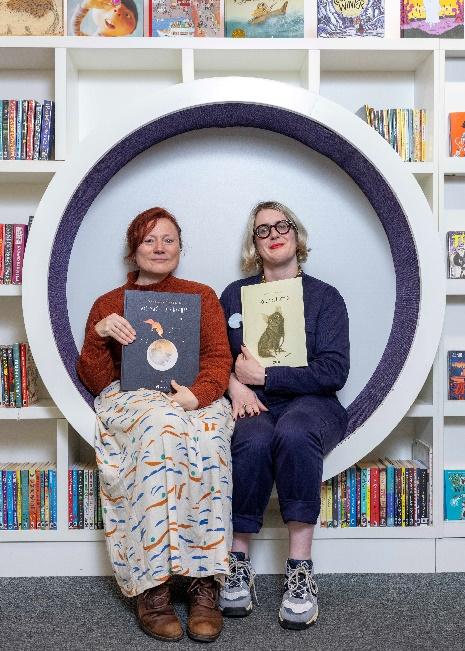
Libraries across Scotland can apply to the Public Library Improvement Fund to help finance creative projects and sustainable services.
Projects that could be supported under the £450,000 Scottish Government fund include tackling the cost of living crisis, bridging the digital divide, tackling the attainment gap for children and young people, or addressing sustainable development goals.
The Scottish Library and Information Council, administrators of the fund, will make awards in line with the aims and ambitions of its current strategy.
Culture Minister Christina McKelvie said: “Libraries provide much more than just access to reading material, resources and information. They play a crucial role in empowering our communities, including offering access to IT, supporting children in their early years and running programmes for older people.
“The funding awards will enable libraries to expand and improve on the services they provide with many of the projects helping to reduce inequalities, tackle social isolation and address mental health problems. Our libraries are demonstrating tremendous strength and resilience and as community hubs they have a key role to play in Scotland’s economic, social and cultural life.”
Pamela Tulloch, chief executive of the Scottish Library and Information Council, said: “Focusing on the themes of People, Place and Partnership, the Public Library Improvement Fund allows us to support those leading the way in mapping out a positive and inspiring future for our public libraries.
“A key part of the grant criteria is ensuring that the impact of these projects is sustained beyond the one-year period of the funding. At a time when Scotland’s communities are experiencing economic and environmental challenges, leaving behind a valuable legacy of skills, experience, resources and partnerships that will benefit the community for years to come has never been more important.”
School libraries across Scotland will receive a £200,000 funding boost for projects supporting anti-racism and promoting equality, diversity and inclusion to recognise the issues that matter to our children and young people.
The School Library Improvement Fund (SLIF) is the Scottish Government-supported national funding programme which supports creative and innovative projects within the school library sector.
Available to all state-run nurseries, primary schools and secondary schools, the 2023-24 fund once again puts a priority focus on project applications which support anti-racism and racial equality. The scheme officially opens for applications on Wednesday (23 August).
The 2023/24 fund will build on the anti-discrimination work undertaken in schools last year – including Ross High School in Tranent’s ‘Stand Up and Be Counted’ project, which developed a racial equality digital resource to recognise, represent and celebrate diversity in school libraries and communities across East Lothian.
Last year’s funding also supported the collaborative Academy programme in Clackmannanshire, which saw a series of progressive diversity and equality workshops launched with the Empathy Lab as part of the ‘Building Empathy Through Books’ initiative.
Apportioning funding to initiatives which help school library services achieve the key aims of ‘Vibrant Libraries, Thriving Schools: A National Strategy for School Libraries in Scotland 2018-2023’ – the strategic document for the development of school libraries, the announcement of this year’s fund brings the total investment from the Scottish Government to £1.7m over the lifetime of the School Library Strategy strategy.
Education Secretary Jenny Gilruth said: “School libraries play a vital role in the learning experiences of children and young people across the country. They are also places where positive values can be celebrated and developed, which is why I am delighted to continue our support for them through this fund.
“I am determined that inclusion, diversity and representation will be at the heart of our education system. This fund’s focus on developing anti-racism resources will help ensure that children and young people understand the harmful consequences of racism and discrimination, and encourage them to actively challenge it wherever it occurs.”
Pamela Tulloch, Chief Executive of the Scottish Library and Information Council (SLIC) which administers the fund on behalf of the Scottish Government, added: “School libraries play a central role in helping children and young people gain the knowledge, skills and attributes needed for learning, life and work.
“They ensure every young person has the chance to fulfil their full potential, so it’s great to see this level of Scottish Government funding pledged to support the aims of ‘Vibrant Libraries, Thriving Schools’ once again.
“From physical and digital resources to collaborative workshops and initiatives, SLIF grants can help school libraries improve and expand the services they offer for their pupils, staff and the community around them.
“As we continue to put a focus on projects advocating for anti-racism and anti-discrimination, we would encourage every nursery, primary and secondary school to consider how they can help lead the way in developing our services and apply for funding today.”
Schools can apply via individual application or collaborative application with SLIC accepting up to two individual applications per local authority and an unlimited number of collaborative applications to ensure equal opportunities across Scotland.
The School Library Improvement Fund 2023-24 is now open to applications and will close at 12pm on Wednesday 20 September 2023.
Building brighter futures through confidence with numbers. That was the message today for children and young people from across the Capital as they celebrated National Numeracy Day.
The national scheme, run by charity National Numeracy, aims to promote confidence through numbers and how we use them in our everyday lives.
Here in Edinburgh at Piershill Library, Great British Bake-Off Winner, and National Numeracy Ambassador Peter Sawkins, led a reading group for local children.
A singing session then took place, led by library colleagues, before finishing with refreshments.
The aim of the event was to show local children the variety of situations where maths and numeracy were important.
Also in attendance were Depute Lord Provost, Councillor Lezley Marion-Cameron and Culture and Communities Convener Val Walker, alongside library colleagues, representatives from National Numeracy, Education Scotland, and the Scottish Book Trust.
Culture and Communities Convener Councillor Val Walker said: “I was delighted to attend the event today at Piershill Library to celebrate National Numeracy Day. It was fantastic to hear from National Numeracy Ambassador Peter Sawkins and all the children who attended enjoyed it tremendously.
“I am proud that our libraries can host such diverse and fun events for our residents to enjoy.”
JOIN McDonald Road Library this Saturday 1 April 2023 for their Big #BookSale and Family Fun Day!
There’ll be #Bookbug sessions, an extended Lego Club, a sensory storytelling for toddlers and their grown-ups from Once Upon A Raindrop, competitions, crafts and more!
Wester Hailes Library has been selected as one of the first in Scotland to host a ‘Lend and Mend Hub’, as part of a trailblazing pilot project helping to tackle the cost-of-living crisis.
Managed by the Scottish Library and Information Council (SLIC), Wester Hailes Library will build on its current offering to introduce a ‘Lend and Mend Hub’, giving the community free access to repair, reuse, rent and upcycle everyday items, to help keep items in use for longer, rather than them being thrown away.
Funded by The John Lewis Partnership’s £1m Circular Future Fund, the Edinburgh library will join eight other services across Scotland in developing the country’s first circular community hubs, forming a ‘network’ of sustainable ‘Lend and Mend Hubs’ across Scotland:
Aberdeen Central Library, Aberdeen
Wester Hailes Library, Edinburgh
Forfar Library, Forfar
South West Library, Inverclyde
Kilbirnie Library, Kilbirnie
Gorebridge Library, Midlothian
Orkney Library & Archive, Orkney
A K Bell Library, Perth
Girvan Library, South Ayrshire
Five of the services selected to take part in the pilot scheme were announced late last year, and work to source equipment, upgrade the space and train staff to deliver this promising project in these areas is well underway.
It is expected these public libraries – in Aberdeen, Inverclyde, Midlothian, Perth and South Ayrshire – will open their ‘Lend and Mend Hubs’ for public use early this year, with the other four services expected to open later in 2023.
Pamela Tulloch, chief executive of SLIC, said: “The ‘Lend and Mend Hub’ library project has the potential to create a real impact – especially at a time when all of Scotland’s communities are experiencing economic and environmental challenges.
“The introduction of this network will build on the important role our public libraries play, giving people access to resources they might not otherwise have to support responsible consumption and learning – with the added benefit of it being local and free.
“With all nine public library partners now selected, we can’t wait to see these local library services transform and thrive for the long-term benefit of the communities around them. And with such wide geographical spread and diverse community reach, we believe this pilot project will provide valuable learnings in promoting the urgent need to adopt a more circular way of living and help develop a long-term model for libraries to be a hub of circular economy activities.”
The projects, led by SLIC, follow a co-design approach with all service teams bringing local knowledge and expertise to the delivery to ensure each hub is tailored to community needs.
Upon completion, each hub will also introduce an education programme to support new skills development, helping to reduce inequality through equitable access to resources.
Culture and Communities Convener, Councillor Val Walker said: “I am delighted that Wester Hailes Library will be leading the way on the ‘Lend and Mend Hub’ pilot scheme. I am confident that this scheme will bring great benefits to the local community as we continue to grapple with an unprecedented cost-of-living crisis.
“This scheme also does excellent work on reinforcing the circular economy and sustainability in our communities by emphasising the importance of repairing, reusing and upcycling. One of our strategic approaches and principles within our 2030 Climate Strategy is supporting a circular economy across the city.
“I look forward to seeing how this scheme progresses here in Edinburgh and across Scotland.”
Scottish Book Trust, the national charity working to change lives with reading and writing, has launched a series of free workshops, available online and in local libraries, designed to help those who support and care for people living with dementia.
The charity runs Reading is Caring, a programme which provides personalised training on creating shared, sensory reading experiences to those caring for someone living with dementia – whether that’s a partner, relative, friend or professional carer. Reading is Caring is designed to ease daily challenges by creating special moments of connection, sparking positive memories and relieving stress.
A Reading is Caring participant, caring for her mother who lives with dementia, said: ‘Reading is Caring was fantastic. The stories bring mum into the here and now. She laughs, she’s interested and engaged. I get a glimpse of her personality again, which is lovely for both of us.’
Now in its third year, Reading is Caring has been proven to provide a consistent, connective activity for family, friends, and professional carers to use at every stage of the dementia journey.
People in Edinburgh and the Lothians who support someone living with dementia can attend a two-part workshop series online, or head along to one of the drop-in sessions at Craigmillar Library and Musselburgh Library.
These free workshops provide the knowledge and tools needed to share reading with someone living with dementia. Scottish Book Trust provide personal support throughout and after the training to help tailor the experience to the unique needs of each person, removing barriers to participation at every stage of their dementia journey.
Musselburgh Library workshops:
Monday 27 February: 3–4pm
Monday 6 March: 3–4pm
Monday 13 March: 3–4pm
Monday 20 March: 3–4pm
Monday 27 March: 3–4pm
Monday 3 April: 3–4pm
Craigmillar Library workshops:
Thursday 2 March: 10.30–11.30am
Thursday 9 March: 10.30–11.30am
Thursday 16 March: 10.30–11.30am
Thursday 23 March: 10.30–11.30am
Thursday 30 March: 10.30–11.30am
Thursday 6 April: 10.30–11.30am
Online workshops take place regularly and can be found on Scottish Book Trust’s website.
While reading was the only core subject which saw attainment levels improve in 2022, (at Key Stage 2, 75% of pupils met the expected standard in reading, up from 73% in 2019. 28% of pupils reached the higher standard in reading, up from 27% in 2019[2]), the National Literacy Trust’s Annual Literacy Survey shows that the number of children who say they enjoy it is in serious decline.
Reading for pleasure is not just a ‘nice to have’, it is the single biggest indicator of a child’s future success – more than their family circumstances, their parents’ educational background or their income.
However, reading for pleasure is at its lowest levels in 18 years; fewer than one in two (47.8%) children aged 8 to 18 said they enjoyed reading in 2022, the lowest level since 2005. This is even lower for children growing up in poverty; fewer children and young people who receive Free School Meals (FSMs) said they enjoyed reading compared with their peers who do not receive FSMs (43.8% vs. 48.8%). The percentage-point-gap between these groups has more than doubled from 2.1pp to 5pp, between 2020 and 2022.
The cost of living is putting the biggest squeeze on family budgets in years and creating further barriers to reading for pleasure, with almost two thirds (64%) of parents saying they currently have less money to spend on books for their children than before. 500,000 (1 in 15; 6.5%) children in England aged 8 – 18 say they don’t own a single book, which rises to one in 10 (9.7%) for those eligible for Free School Meals. Over one in five (22.4%) pupils receiving free school meals said that the book they ‘bought’ with their World Book Day book token was the first book of their own.
This year, the charity World Book Day has focused on a large number of initiatives and provided guidance to ensure anyone can take part and experience the joy and inspiration of reading, regardless of household income.
This includes ideas for no or low-cost costumes or costume swaps, book swaps or other free activities in school or community groups. There is also advice on how to fundraise more inclusively, focusing more on reading over other aspects such as dressing up.
Fewer boys than girls said they enjoyed reading (45.6% vs. 54.9%) and fewer than 3 in 10 (28.0%) children and young people aged 8 to 18 said that they read daily, the second-lowest level since the National Literacy Trust survey began. Boys who receive Free School Meals had the lowest levels of reading enjoyment, with just 2 in 5 (39.8%) enjoying reading; a drop of 6.5 per cent since 2020.
Children and young people who take part in World Book Day activities enjoy reading more compared with their peers who don’t take part – 63.8% vs 48.4%, while 54.7% read more books as a result of World Book Day.
Parents surveyed by the charity said that 50% of children find reading more fun because of World Book Day, 48% make more time to read and 49% feel they have more choice in what they read because of it. Children who are the most engaged with literacy are also three times more likely to have higher levels of mental wellbeing than those who are the least engaged (39.4% vs 11.8%.)
In its 25th year in 2022, World Book Day distributed 50 million £1 book tokens through schools, nurseries, magazines and partnerships, to enable children to get a book of their own, for free.
Cassie Chadderton, CEO of World Book Day comments:“World Book Day exists to encourage more children, particularly those from disadvantaged backgrounds, to benefit from a life-long habit of reading for pleasure. Many families are facing financial challenges so we want all children, families, schools and communities to feel welcome to celebrate the joy of reading in ways that work for them.
“There are lots of affordable, inclusive and of course, enjoyable ways to create joy and excitement around reading. Dressing up is a great way to encourage children to read, and we’ve shared ideas for other fun activities and resources to help schools, nurseries and families to work together to create a World Book Day where everyone feels included. The joy of reading cannot be underestimated in terms of improved wellbeing and the improved life chances it can lead to.”
Jonathan Douglas CBE, Chief Executive of the National Literacy Trust, said: “World Book Day is an important moment to inspire and delight children with the wonder of books and a powerful platform to reinforce the importance of building literacy skills for life – this is even more essential during times of economic hardship.
“Economic studies have shown that reading for pleasure can result in children getting better GCSEs, in turn boosting their lifetime earnings and raising the UK’s GDP. In the future, my hope is that more children will grow up to be adults who read and that reading and books are part of their world.”
Edinburgh’s school libraries have been awarded funding for a progressive anti-racism project, as part of the 2022/23 School Library Improvement Fund (SLIF).
Administered by the Scottish Library and Information Council (SLIC), on behalf of the Scottish Government, the Fund supports creative and innovative projects within the school library sector in Scotland.
Available to all state-run nurseries, primary schools and secondary schools with a library, this year’s funding priority was given to applications which focused on supporting anti-racism and racial equality.
The £200,000 2022/23 SLIF has been allocated to a total of 18 initiatives across Scotland, including the ‘The Library is Anti-Racist’ project in Edinburgh.
The funding will support the creation of an anti-racism toolkit and collection of travelling resources for Edinburgh’s school libraries to ensure the service is diverse, inclusive and reflective of the school and its wider community.
This brings the total investment from the Scottish Government to £1.5m over the lifetime of SLIF, playing an important role in helping school library services achieve the key aims of ‘Vibrant Libraries, Thriving Schools: A National Strategy for School Libraries in Scotland 2018-2023’ – the strategic document for the development of school libraries in Scotland.
Congratulating the successful applicants, Education Secretary Shirley-Anne Somerville said: “School libraries play a key role for young people by providing access to educational resources, supporting learning and helping to close the poverty-related attainment gap.
“The School Library Improvement Fund continues to support creative and innovative projects in school libraries.
“The anti-racism focus of the projects will allow school libraries to engage with pupils on the importance of belonging, inclusion and social justice.”
Schools can apply via individual or collaborative applications with SLIC accepting up to two individual approaches per local authority and an unlimited number of collaborative applications to ensure equal opportunities across Scotland.
Pamela Tulloch, Chief Executive of SLIC, said: “School libraries play a valuable role in education and learning, and ensuring every young person has the chance to fulfil their full potential.
“Projects funded through programmes like SLIF help to improve and expand the services school libraries can provide, so it’s great to see such strong applications coming in from schools eager to further develop these resources.
“We’re particularly proud to award support to those advocating for anti-racism and anti-discrimination through this year’s Fund and we can’t wait to see these initiatives come to fruition.”
For more information on The School Library Improvement Fund, visit:
With the colder months of the year now upon us the city council has announced the official launch of a network of Warm and Welcoming Spaces across the capital.
Council Leader Cammy Day formally launched the initiative yesterday during a visit to Royston Wardieburn Community Centre.
Council venues such as libraries, community centres, museums and galleries, alongside partner and community spaces, will put on free activities for a variety of age groups and provide a space where people feel safe, warm, and at ease.
In certain spaces residents will be able to access information to help alleviate food/fuel poverty and other support available to them.
At this stage, there are more than 60 Warm and Welcoming Spaces across the city. The council ia also working with a network of partners to provide and promote further spaces.
Residents will be able to find out more about the initiative and find their nearest ‘Warm and Welcoming Spaces’ via an interactive map on a dedicated webpage.
Please also visit our dedicated home energy page for advice on how to keep your homes warmer, save money or if you’re worried about your bills.
If you are an organisation and want to get involved in Warm and Welcoming, please email us on warm.welcoming@edinburgh.gov.uk
Council Leader Cammy Day said: “We are now in the midst of one of the most challenging winters in recent times with the cost-of-living crisis, rising energy prices, and inflation. Many of our residents will rightly be concerned about heating their homes in the months ahead.
“The Warm and Welcoming Spaces initiative brings together a host of spaces across the city where people can connect with others, learn new skills, and relax.
“These spaces are also key in combatting social isolation, boosting mental health and welling, and allowing people to access services and support in a respectful and friendly manner.
Biddy Kelly, Managing Director at Fresh Start, said: “As we head into what we know will be a difficult winter the need on our communities is ever growing. That is why it has been so important that we work collectively to ensure that we have community spaces, both statutory and in the third sector open and that people are aware of where they can go and when.
“Working in this collaborative manner ensures that we have places open that people feel supported in a dignified manner and where they can access a wide breadth of services and support. The co-ordinated Warm and Welcoming website will allow both staff and people access on site to find vital information.”
Ian Brooke, Deputy Chief Executive of Edinburgh Voluntary Organisations Council (EVOC), said:“The voluntary sector always plays a part in supporting communities during difficult times and will have a key role to play in the Warm and Welcoming Spaces programme.
“Our shared priority is to offer meaningful opportunities for people to gather together within their own community, activities that can also help combat issues of social isolation, loneliness and mental health.
“Our priority to Edinburgh’s voluntary sector is getting cash into people’s pockets, as the primary solution to combatting the issues of poverty that have been worsened so much by the current cost of living crisis.
“The Warm and Welcoming spaces programme is and must continue to be supplementary to that.”