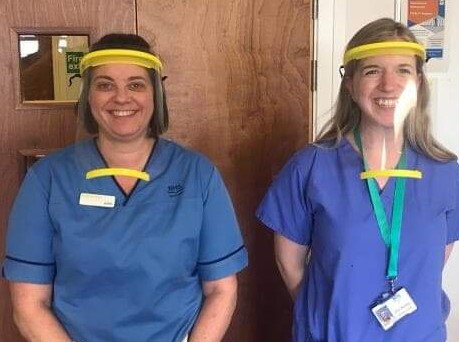
Immediate pay rise for social care staff

Social care staff are to receive an immediate 3.3% pay increase backdated from 1 April.

The move, agreed between the Scottish Government and COSLA, means staff will not need to wait for the pay to be backdated at a point later in the year following negotiations, as has happened in previous years.

It is part of a package of measures to support social care workers in recognition of the vital role they are playing during the coronavirus (COVID-19) pandemic.

Social care support workers providing direct adult support will have their pay increased to at least the Real Living Wage rate of £9.30 an hour for all hours worked, including sleep-overs and hours worked by personal assistants.

The Scottish Government will also provide funding to third sector and independent providers specifically to ensure staff receive sick pay if they are off work ill or because they are self-isolating.

In addition, the agreed funding increase to these providers will give them the financial flexibility to increase wages across their organisations, and not just to frontline staff.

Health Secretary Jeane Freeman said: “Scotland’s dedicated social care workers are on the frontline of our national pandemic response. Their work is always hugely valued, and never more so than now.

“The measures we are announcing in partnership with COSLA today will ensure all people providing adult social care receive the Real Living Wage for every hour worked with immediate effect, rather than having to wait until later in the year.

“As well as providing an uplift in pay for all social care workers, this package ensures social care providers have both flexibility to increase wages across their organisations and the necessary funding for sick pay if their employees are off ill or are self-isolating.”

Cllr Stuart Currie, COSLA spokesperson for Health and Social Care, said: “Local Government recognise and value the vital contribution of Scotland’s social care workforce and have made great efforts together to achieve an agreement that confirms the living wage as well as supporting providers where they are experiencing additional cost associated with COVID-19.

“Today’s announcement reflects the key worker status of social care support staff and confirms support for those off sick or self-isolating.”

Andy Kerr, Chair of the Fair Work in Social Care Group, said: “This announcement will provide social care providers the confidence, in these very challenging times, to ensure a very welcome and deserved pay uplift for social care staff working in Scotland.

As well as recognising the importance of their work, today’s announcement also gives reassurance that financial support is available for those who are sick or self-isolating during this unprecedented situation. It also reflects the work we are doing as part of the overall reform of adult social care to build a framework for fair work across the sector.”

A joint letter from Ms Freeman and Cllr Currie was issued to all local authorities setting out details of the package.

This follows their previous letter to local authorities and integrated joint boards to confirm the key worker status of social care workers, and their access to childcare and support where required.

1000 free nights booked for medical staff at Edinburgh hotel

MEDICAL and clinical staff battling COVID-19 in Edinburgh have booked 1,000 nights of free rooms and meals at the largest independent hotel in the city.

Ten Hill Place, owned by The Royal College of Surgeons of Edinburgh (RSCEd), opened its doors to the city’s hospital staff on Friday 27 March and has since accommodated more than 200 key workers, with bookings increasing daily.

Located three miles from the Royal Infirmary of Edinburgh and less than a mile from the Royal Hospital for Sick Children, the hotel is providing much-needed nearby accommodation and meals for key workers tackling the pandemic.

This has proven invaluable to guests facing tiring commutes between expanding shifts or to help workers isolating from vulnerable family members.

Scott Mitchell, Managing Director at Surgeons Quarter, said: “The response to our decision to accommodate medical and clinical workers has been astounding, and we want to encourage more staff who are working at the city’s hospitals to get in touch with us to find out how we can help support them.

It’s a privilege to play our part in helping make the lives of medical workers a little easier during one of the most difficult times the country has faced.”

Ten Hill Place has 129 bedrooms available for hospital staff, as well as packed continental breakfasts and complementary evening meals courtesy of its award-winning catering team.

Frontline workers have praised the hotel for its continued support during the pandemic.

A Tripadvisor user, “renaissanced”, posted: “I cannot explain how grateful I am to them. All social distancing respected and we are well looked after – not to have worries about cooking or cleaning plus a calm comfortable night’s sleep is great. This will be my top hotel in Edinburgh forever.”

Another user of the travel review site, “Richard G”, said: “My fiance and I stayed here while she has been working as an intensive care nurse which has cut out travel and time during this stressful period. I cannot praise the staff and ownership of this hotel enough – it is a wonderful facility and the help they are providing the NHS is amazing. I will always try to stay here in the future.”

Professor Michael Griffin, President of the RSCEd and one of the UK’s leading surgeons, said: “We’ve heard and seen directly from our colleagues how severe the impact COVID-19 is on our health service.

Having accommodation near hospitals to rest and recover from allows our colleagues to be looked after, at a time when they need the most support. We’re incredibly proud of the team at Surgeons Quarter and their invaluable efforts to help the health service.”

Scott added: “We look forward to welcoming and accommodating as many workers as possible over the coming weeks, please contact the hotel on 0131 662 2080 or by email at reservations@tenhillplace.com to make your booking.”

As well as the commitment to accommodate staff, the RCSEd has been engaging with interim Chief Medical Officer Dr. Gregor Smith to declare its willingness to temporarily convert the hotel, should hospitals overflow.

Surgeons Quarter promotes, sells and manages all commercial activities held within the RCSEd campus. All profits support the charitable aims of the College which are education, assessment and advancement in surgical standards worldwide.

Ten Hill Place Hotel can be contacted on 0131 662 2080 or reservations@tenhillplace.com

Maternity services are open for business – help us keep them that way, says RCM

The Royal College of Midwives (RCM) has called on every pregnant woman to support them in keeping services open and available.

With maternity services across the country working to maintain as broad a range of services – including antenatal appointments and scans – as they can, the RCM has urged pregnant women and their families to do their bit to keep themselves healthy and protect midwives and maternity support workers (MSWs) too.

The RCM is calling on pregnant women to let their midwife know if they or anyone in their home starts to have symptoms of Covid-19 and they must also continue to attend routine appointments for antenatal care and scans.

Gill Walton, Chief Executive of the RCM, said: “It’s really important to remember that maternity services are open. Every day, up and down the country, babies are being born and new families are created. Coronavirus isn’t putting a stop to that.

“Yes, some things may be slightly different – you may see your midwife via a video screen for some appointments, for example – but you will still receive the care and support you need throughout your pregnancy.

“We want you to have a happy and healthy pregnancy and birth, and our members will support you every step of the way. What we’re asking in return is that you support them too, by reducing their exposure to coronavirus. If you or your partner has coronavirus symptoms, it’s vital that you let your midwife know before you attend an appointment.

“You’ll still get the care you need, but your midwife will be able to take the precautions they need to keep themselves as safe as possible. The same applies when you go into labour. Let the maternity unit know so they can be ready for you and help you welcome your new baby into the world.”

The RCM has applauded the maternity units that are embracing innovation to replace some face to face consultations with phone or by video calls. They have stressed the need for pregnant women to continue to attend all appointments for scans, blood pressure, urine checks and blood tests as planned.

It is also vital to contact their midwife if they have any concerns, particularly around the movement of their baby, without delay.

Gill added: “I am so proud of the work Heads and Directors of Midwifery are doing to keep services open and to make sure pregnant women still receive the care they need.

“Please support them this Easter weekend, by not taking a break from the important measures that are in place to keep you safe. Stay at home as much as you can, and if you can’t continue to observe social distancing; wash your hands regularly and avoid touching your face; and if you cough or sneeze, do it into the crook of your elbow or into a tissue.”

Artificial intelligence aimed at improving diagnosis and treatment of coronavirus

With limited knowledge of COVID-19 worldwide, NHS Greater Glasgow and Clyde is using its artificial intelligence resources to improve understanding of the virus. This information will be used as it becomes available to frontline clinicians to help diagnose and treat COVID-19.   

The team at the Industrial Centre for Artificial Intelligence Research in Digital Diagnostics (iCAIRD) develops artificial intelligence solutions in the NHS.

They are now developing algorithms that will analyse all available datasets on COVID-19 within NHS Greater Glasgow and Clyde, working with iCAIRD industrial partners Bering Research Limited and Canon Medical Research Europe.

This includes clinical information that is already collected like virology tests, diagnostic tests and chest x-rays and patient data such as health records, GP referral letters, discharge notes when available.

The data will then be made available to NHS staff treating people with COVID-19 on the frontline to assist their decision making.

Dr Jennifer Armstrong, Medical Director of NHS Greater Glasgow and Clyde, welcomed the move and said: “We are mobilising all of our resources in order to respond as best we can to COVID-19. This initiative shows real teamwork across our organisation as we link together real-time research to the frontline. 

“I want to thank all of our staff for their efforts in an incredibly challenging time.”

Julie Brittenden, Director of Research and Development, NHS Greater Glasgow and Clyde, said:  “We are using artificial intelligence at scale to look at all of our available data on COVID-19. The power in our approach is that the data will become more and more accurate as time goes on as we identify patterns and trends about COVID-19.

“Our research, development and innovation teams continue to work tirelessly on clinical trials related to diagnosis and treatment of COVID-19.”

Dr. Ignat Drozdov, Managing Director of Bering Limited said: “Since the beginning of March, we’ve been working with doctors on the frontline to develop new defences against the COVID-19 pandemic.

“Our experience in interpreting medical images has allowed us to rapidly adapt our tools to help spot the signs of this disease.”

Alongside collecting data on diagnosis and care, the research also aims to predict hospital admissions, days spent in hospital and resources required for each patient.

Work at iCAIRD and NHS Greater Glasgow and Clyde is underway to analyse available data with the aim of information getting to frontline staff in the coming months.

iCAIRD is primarily funded by Innovate UK.

A hundred days on: looking for a silver lining

Six months ago this virus didn’t exist. There was no such thing as Coronavirus Covid -19. The first known case dates back to 17 November in Hubei, China and we’ll probably never know if Case Zero was indeed the first person to contact the disease.

This first case was first brought to the attention of the World Health Organisation on 31 December and today, one hundred days on, there have been 1.8 million cases worlwide and more than 110,000 people have died.

Our world has changed out of all recognition from the place we knew as we brought in the New Year what seems an age ago.

Coronavirus has brought out the best in some people, the worst in others. The unsung community heroes, the supermarkets, the care workers and the NHS staff on the frontline. And then there are the stockpilers, the profiteers, the guidance floughters and the fraudsters.

We worry about family and friends. We miss the simple things: the cinema trips, a pint in the pub, a football match, a family meal.

Just a few short weeks ago, we worried ourselves over other things that don’t seem quite so important now, but they will resurface again when coronavirus is under control.

Brexit will become an issue again and we can be pretty sure that politics will return to the pre-Covid Punch and Judy Show it was before the virus took hold.

And we’ll talk again about our Edinburgh – we’ll debate Air BnB, we’ll seethe over ‘student flats’ planning development applications, the dire state of our public services and we’ll discuss the commercialisation of Edinburgh’s city centre at festival times.

The virus is a cruel, terrible thing but it does have one blessing: it gives each of us valuable time to think. To think about what is important. To think about what we as a society need, not want. To think about how we can do things differently to ensure that all are included and none are left behind.

We CAN do things differently if we choose to. We must use this precious time wisely.

A happy Easter to everyone – please stay safe at home


Letter: Scandalous

Dear Editor,

It looks like our so-called leaders are making a right fool of themselves and our country at a time when they should be dealing with this pandemic effectively. 

Matt Hancock the Health Secretary stated that the public doesnt need to wear masks and should leave them for the NHS staff.

Firstly, its absolutely appalling how this government has failed to respond to this pandemic and are now busy showcasing themselves and pointing the finger at the public who are just trying to keep themselves safe.

Secondly, most of the masks the public are wearing aren’t even fit for purpose for our health workers as they are purchased online on Ebay etc so are you saying this is what our frontline staff should be wearing? If so, this is s shameful suggestion.

The British government has proven itself to be one of the least well prepared of all global governments in dealing with this disease and protecting its people.

This government’s inaction and austerity policy have caused a shortage of face masks and protective for the NHS, so stop blaming the public and get your acts together before its too late.

And the Home Secretary Priti Patel finds it hard to apologise for these failings and thinks this is ok and can be ‘expected because of the situation’.

Stop the deception and do something for the people who are dying instead of bluffing your way through the questions as this is real life and real lives being lost.

These so called “low skilled” migrants who are fighting for this country: whats your contribution?

We want action that works.


Foysol Choudhury MBE

ChairmanEdinburgh & Lothians Regional Equality Council


Shedders show the way

Kinross & District Men’s Shed (KDMS) is producing face shields to protect key workers on the front line during the Coronavirus pandemic.

This vital piece of kit provides a barrier to stop workers from touching their face and also protection from the patient if they cough or sneeze.

KDMS is using 3D printers to make the Polylactic Acid (PLA) face shields and requests are coming in at a tremendous rate from the community.  KDMS Chairman, David Connor, said: “KDMS wanted to help and one of our Shedders, Jim Forbes, started working in his shed at home to come up with a solution to meet the demand for this life-saving protective equipment.

The Shedders have really stepped up and there is a team of around 12-15 of us involved in taking and recording orders, administration, printing, assembly, quality checks and delivery.  More and more Shedders are becoming involved each day to lend a helping hand to this cause.

“Orders are coming in thick and fast from NHS workers, carers, testing hubs, postal workers and shop workers across Ayrshire, Perthshire, Fife, Forth Valley and Clackmannanshire.  We had to set up a business model quickly and efficiently to get this right.  Everything is done safely from our homes and we communicate through phone and video calls.

“We have fulfilled over 100 orders so far and now have an order for 100 more.  We have been receiving photographs and video calls from the key workers when they have received their face shields and it makes everything that we are doing worthwhile.”

Jim Forbes, 81, said: “I had a vision to do this and researched face shields online and came up with a quality product – quick to produce, washable/reusable and light –  consisting of four simple parts: the shield’s top frame; standard A4 acetate sheet protector screen; bottom support; and elastic to keep the shield firmly on the face.  An advantage of the design is the bridge between the forehead and the face plate which greatly reduces breath aerosol mist (possibly infected) from entering the users’ eyes.

“This 3D printed version needs no tools to assemble except for a pair of scissors to trim the face plate.  For Shedders with no access to a 3D printer, we also developed a second product where no tools are required other than scissors.

“Every single item is checked and the shield comes with an instruction leaflet for the end user.  We initially had our one Shed 3D printer and my machine but now Culture Perth & Kinross has dedicated their five printers bringing us up to seven solely dedicated to this task.

“A local lady in Powmill who has been printing hundreds of shields has also bought herself another one and offered that second printer to help us if she has any free space.  We are now able to produce an output of 40-50 shields per day.

“When it comes to delivery, there is obviously no contact.  The order is simply placed in our gardens when we are notified that the person is on their way to collect.”

Shedders have been creating the products at home but are running low on supplies and have set up a Go Fund Me page to pay for much-needed supplies.  The Shed has already raised over £2,000 towards materials to date.

KDMS has created assembly instructions, spreadsheets, instruction leaflet and 3D Printer files (STL files and G-codes) that it is happy to share with other Sheds interested in becoming involved to help with their orders or wishing to replicate the model in their local area.

Shedders of Scotland – it’s over to you!

UK leads global fight to prevent second wave of coronavirus

UK aid will protect the British public and help prevent a second wave of coronavirus coming to the UK by slowing its spread in the most vulnerable countries, International Development Secretary Anne-Marie Trevelyan announced yesterday.

A package of £200 million will back UK charities and international organisations to help reduce mass infections in developing countries which often lack the healthcare systems to track and halt the virus. Today’s announcement brings the total amount of UK aid committed to the global fight against coronavirus to £744 million, making the UK one of the biggest donors to the international response.

Health experts have identified the weakness of developing countries’ healthcare systems as one of the biggest risks to the global spread of the virus. They have also warned that if coronavirus is left to spread in developing countries, this could lead to the virus re-emerging in the UK later in the year and put further pressure on our NHS.

The new UK aid announced today includes £130 million for UN agencies in response to their urgent appeal for support. Of this, £65 million will go to the World Health Organization (WHO) which is coordinating international efforts to end the pandemic sooner.

UK funding for the WHO will help provide more accurate assessments of how the pandemic is progressing around the world, allowing support to be targeted where it will save the most lives and stop the outbreak sooner, and helping countries respond to the virus.

The pandemic is particularly dangerous for countries with weak health systems who are already struggling to fight preventable diseases. In Yemen, 80 per cent of the population are already in need of humanitarian assistance and only about 50 per cent of health facilities are operational. In Asia, Bangladesh hosts 850,000 Rohingya refugees, many in crowded and unsanitary camps where disease could take hold rapidly.

These countries will be hard hit by lockdowns and disruptions to the supply of goods and services. UK aid will help to mitigate these conditions and support those already living in desperate situations.

The funding will also help developing countries to rapidly identify and care for patients with symptoms in order to limit human-to-human transmission. Our investment will help install new hand-washing stations and isolation and treatment centres in refugee camps, and increase access to clean water for those living in areas of armed conflict.

International Development Secretary Anne-Marie Trevelyan said: “While our brilliant doctors and nurses fight coronavirus at home, we’re deploying British expertise and funding around the world to prevent a second deadly wave reaching the UK.

“Coronavirus does not respect country borders so our ability to protect the British public will only be effective if we strengthen the healthcare systems of vulnerable developing countries too.

Our new UK aid support will help stop the virus from infecting millions of people in the poorest countries, meaning we can end this global pandemic sooner and prevent future waves of infection coming to the UK.”

A further £50 million of the £200 million package will support the Red Cross in difficult to reach areas such as those suffering from armed conflict.

A final £20 million will go to NGOs, including UK charities which are using British expertise and experience to deal with coronavirus.

Pioneering British scientists and researchers like those at Oxford University and at Mologic, based in Bedford, are already at the forefront of the global race to find a coronavirus vaccine and stop its spread, including within the UK.

The UK has already committed £250 million of aid to the Coalition for Epidemic Preparedness Innovations (CEPI) to rapidly develop a coronavirus vaccine, the biggest donation of any country. Thanks to this investment, future vaccines will be made available at the lowest possible price to the NHS and other countries’ healthcare systems.

The announcement follows the Prime Minister’s call to world leaders to work together to create a vaccine as quickly as possible and make it available to anyone who needs it.

Dr Tedros Adhanom Ghebreyesus, Director-General of the World Health Organization said: “COVID-19 has demonstrated it has no regard for borders, ethnicities, ideologies or the size of a country’s economy.

“The United Kingdom’s generous contribution is a strong statement that this is a global threat that demands a global response. WHO is deeply grateful to the government and people of the United Kingdom for their generous contribution.

“We are all in this together, which means protecting health around the world will help to protect the health of people in the UK.”

UK aid support for the WHO will not only help developing countries but will also benefit the UK through further research into the virus and improved international coordination.

Alexander Mattheou, Executive Director of International for the British Red Cross, said: “The scale of this grant to the International Red Cross Red Crescent Movement (including the IFRC and ICRC) shows the gravity of the challenge ahead of us. The virus may not discriminate, but it hits vulnerable communities – those lacking healthcare, sanitation and food – the hardest.

“The British Red Cross, part of the global Red Cross Movement, is responding right now here in the UK, including supporting our NHS. However at the end of the day, the global response will only be as effective as the weakest health system. We must support the most vulnerable countries now as a part of an effort to keep us all safe.

“The pandemic also creates other challenges – from women and girls who become more vulnerable to abuse, to people experiencing chronic hunger who lose access to food support, to camps and hospitals who have critical supplies cut off.

“The COVID-19 response must include the immediate and the secondary impacts of the pandemic.”

Edinburgh doctor raises funds for PPE Equipment

An Edinburgh doctor has started a campaign to raise £50,000 to help provide much needed PPE equipment for his fellow healthcare workers risking their lives across the city.

Dr Nestor Demosthenous, who has his own medical and cosmetic centre on Dundas Street, has started a Just Giving page to raise funds to supply healthcare workers across Edinburgh and the Lothians with the necessary protective equipment such as masks, visors, gowns and gloves.

With the eventual scale of the pandemic in Scotland still unknown, Dr Nestor has started the campaign in the hope that it will go someway in preparing for what other countries are currently experiencing such as Spain and Italy, with healthcare workers significantly affected across the board.

Dr Nestor said: “Having spent many years in surgical training with the NHS, I fully understand the sacrifices that my colleagues are making every day for the safety of others.

“There’s been so many amazing examples of people in the community supporting our local health workers and we were keen to do our part to help protect them.

“The rate of PPE use is at an all time high. Supply is an increasing concern. This makes it harder to get out to healthcare workers fast enough. We’ve seen these issue in other countries. We hope that this campaign can at least help make a difference at a local level.

“We have so far managed to raise just over £6000 thanks to our clients and friends, however there is still a lot of work to do to reach the target. We know the people of Edinburgh and the Lothians will do their best to support this campaign and we urge anyone who wants to help protect these amazing workers to donate something, however small it is, as it will make such a difference.”

As well as starting the fundraising campaign, Dr Nestor has himself applied to support the NHS on the frontline and is currently waiting to be deployed.

To donate to the campaign please visit https://www.justgiving.com/crowdfunding/ppelothians

Creative activities for older people during lockdown

Luminate has launched Luminate@home sessions every Tuesday and Friday at 2pm on their facebookyoutube & vimeo channels.

It is a new programme of short online films demonstrating creative activities for you to do wherever you are. The activities are presented by professional artists and feature different arts forms including crafts, poetry, music and dance.

Luminate has developed the films in partnership with Scottish Care, and they are aimed at people living in their own homes, as well as care home staff who are looking for ideas of activities for residents.

Scottish Ballet Health are streaming health classes every day at 11.30am. The classes will remain accessible on Facebook so they can also be enjoyed at a later time. More info and the full schedule of classes can be found here.

Sporting memories are making their Sporting Pink a weekly printed publication that they use at their clubs to introduce fun activities and help stimulate sporting memories available to everyone.  It contains articles, quizzes, a sports diary and more.  To find out more and to register visit their website.

Luminate@Home is a programme of online creative activities for older people who are isolated in the current COVID-19 outbreak.

Every Tuesday and Friday, a new short film will be posted online at 2pm to inspire and guide older people through a creative activity that can be done at home or in a care home.

Luminate’s new programme is designed to help people stay engaged and active until the crisis has passed. The activities are presented by professional artists who work regularly with older people in community and care settings, and will feature different arts forms including crafts, poetry, music and dance.

In recent years there has been growing understanding of the positive impact of taking part in creative activities, especially as we get older. An important aspect of this is the ability of arts engagement to help address loneliness and isolation, something which is of concern for older people who are socially distanced or self-isolated in the current situation.

The Luminate team has worked quickly to set up Luminate@Home, offering creative opportunities designed specifically for older people at a time when they may be particularly welcomed.

All the artists involved are missing the regular contact they normally have with the older people they work with and are excited to find new ways to continue to share their creativity. At a time when everyone is socially distanced, each artist will make their film in their own home using whatever equipment is available, ranging from phones to professional cameras.

Filmmaker Graeme Roger is giving advice on the filming process and the artists  send their completed films to him to edit and upload to Luminate’s website and social media channels.

Anne Gallacher, Director of Luminate, said: “Luminate has seen at first-hand the power of creativity to impact on loneliness and isolation. The effect of the COVID-19 outbreak on our older people is huge, and I sincerely hope that our Luminate@Home programme will in some way brighten the days of older people who find themselves secluded at home.

“I also hope that our social care colleagues – who are working so hard to support residents in care homes across Scotland – find the films a valuable and enjoyable resource to share. I am very grateful to the artists who are collaborating with us, and who have responded with such enthusiasm and imagination to the challenge of creating these films at a distance.”

Scottish Care Chief Executive, Dr Donald Macaskill said: “I am absolutely delighted to support Luminate@Home. The ‘shielding’ which has been necessary to protect some of our most vulnerable citizens in care homes and in the community inevitably means that people are going to feel isolated and shut off from family, friends and their communities.

“Anything which helps to reduce the fear and anxiety of isolation, to create a bridge to the outside world; anything which helps people to remain active and creative is to be hugely welcomed.

“Luminate have immense experience of bringing the best of the creative arts to Scotland’s older population. This venture is evidence not only of their organisational commitment but of the dedication of the individual artists and performers who are taking part.

“We owe them a huge debt of gratitude in helping to keep us all connected, and I hope entertained over the next few challenging and difficult weeks and months.”