A consultation on how the Council should shape our communities, and the wider city, to meet the needs of local people and a growing population, is open from today until 30 September.
‘Call for Ideas’ is an opportunity for those living and working in the city to give their ideas and proposals at this early stage in the process to help set the direction of the next local development plan – City Plan 2040. The consultation is asking residents including young people, community councils and groups, businesses, social enterprises, the public and private sector, developers and landowners to share their vision, proposals and every idea will be considered.
Anyone passionate about how their community will look in the future and how City Plan 2040 can help to protect it should get involved. Ideas need to relate to a specific area but can be any size covering a whole district, neighbourhood, a single plot of land or building.
Planning Convener, Councillor Joan Griffiths said:“Your idea could cover proposals for new buildings and homes, improving how you get around, additional spaces for playing, sports or growing food or ideas to reuse important buildings.
“It would be good to know why you think it’s important for your area and why it would a make a difference. Your local knowledge will help us focus on making change where it is needed.
“I’d encourage you to find out what others think by reaching out to your community to find out what is most important to them. You could ask about the changes you’d like to make, what you’d like to protect, what they think is missing in the community and you can point out planning policies you think could be changed.
You could do this through surveys and questionnaires, drop in events, exhibitions and by attending planned local events.
“My vision is that you can help us create City Plan 2040 to strengthen communities and make sure that they look after the wellbeing of their residents.
“We want to build attractive places where people can afford to buy or rent their homes, walk to educational and healthcare facilities, enjoy cultural and sporting activities and easily access sustainable transport to visit other parts of Edinburgh.”
Further information:
The Evidence Report outlining the critical information which should be considered to create City Plan 2040, compiled following engagement with residents including young people, government agencies, politicians, and other stakeholders over the last couple of years, was agreed by Council on Thursday 24 June.
The document, which also sets out the implications of the evidence examined, will now be considered by the Scottish Government for ‘Gate Check’.
When the Scottish Government decides there is sufficient evidence, the next step is for the Council to prepare a proposed plan and consult on it.
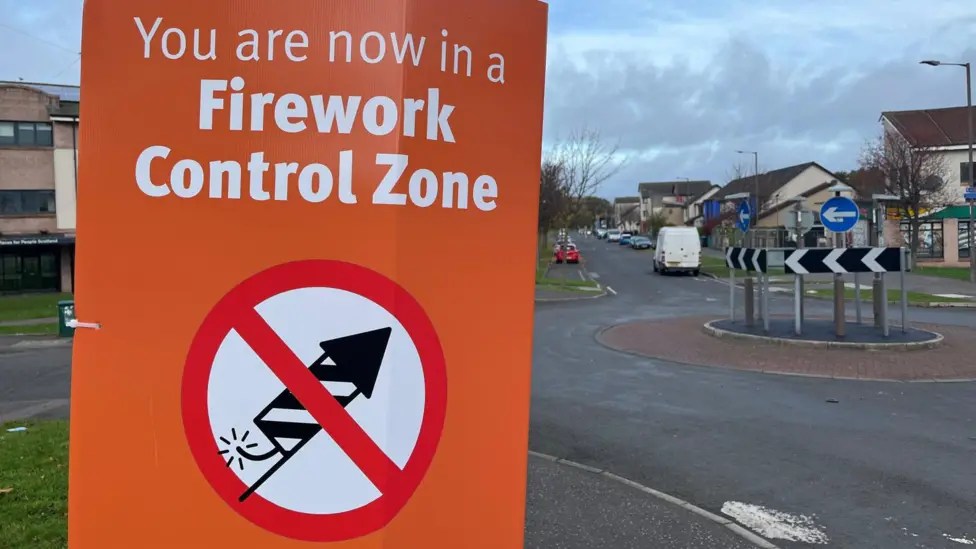
Residents are being encouraged to have their say on proposed Firework Control Zones (FCZs) for autumn 2026 as a public consultation gets underway across Edinburgh.
The consultation is seeking views on continuing Firework Control Zones in Corstorphine, Longstone, Sighthill/Broomhouse, Mordeun and The Murrays, as well as introducing new zones in Liberton Grange, Lochend, Stenhouse/Gaskell Street, West Pilton and Wester Hailes.
Firework Control Zones prohibit the use of fireworks within designated areas for a limited period and form part of a wider package of measures designed to improve public safety, reduce anti-social behaviour and support local communities during the fireworks season.
Earlier this year, community groups were invited to apply for Firework Control Zone status in their neighbourhoods. Applications highlighted concerns about the misuse of fireworks, anti-social behaviour, and the impact on animals, older people and other vulnerable residents.
The proposals build on the positive results seen in recent years, with Edinburgh experiencing significantly lower levels of firework-related anti-social behaviour compared with previous years.
Councillor Margaret Graham, Convener of Culture and Communities, said: “We want to hear directly from residents and communities about the areas being considered for Firework Control Zones again this year.
“They are just one of the measures we’re using to improve safety and reduce firework-related anti-social behaviours to make sure our communities can enjoy Bonfire Night in a safe and responsible way.
“I’d encourage everyone to take part in the consultation and help shape our approach for the 2026 fireworks season.”
The consultation will run from Wednesday 24 June until Wednesday 5 August on the Council website.
Granton Primary School children using the 30th anniversary of the Old and News Towns World Heritage Site in Edinburgh as inspiration to create an exhibition to help mark this important milestone.
The children’s artwork will be displayed in a special exhibition for residents and visitors to view in the Museum of Edinburgh later this year to celebrate three decades since the Site was inscribed by UNESCO in 1995.
The class of primary four pupils are working with local artist Stephanie Walker on their ‘Imagine if…’ project to help the children put together artwork using the Old Town to help spark excitement and curiosity for the world around us. The aim of the project is to create a connection and a sense of wonder for the valuable heritage Edinburgh is so famous for.
Local artist Stepanie Walker said:“The project has been designed to guide the children through a series of art sessions to help them imagine and create their final piece to display on canvas.
“Before our visit to the World Heritage Site we explored what we know about Edinburgh. The children brainstormed and shared ideas about famous buildings and drew them to create a class exhibition.
“We visited the Museum of Edinburgh on the Royal Mile and learnt about why the city has a World Heritage Site, explored artefacts in the museum and shared what we had discovered.
“We visited the Site twice walking around the cobbled streets and narrow closes in and around the Royal Mile. The children looked carefully at the old buildings, monuments and skylines as well as all the nature we found in the historic area. We visited the Canongate Kirk, and I encouraged the children to imagine what the people who lived there long ago were like.
“The pupils then made sketches and used water colours to create paintings of their favourite scenes, buildings and objects to use as reference material for the final piece they will put together back in the classroom.”
Cllr Joan Griffiths Planning Convener said: “This project is both creative and educational as it allows pupils from a different area of the city to use art to help bring to life different aspects of the World Heritage Site such as the buildings and skylines that they find inspirational.
“It’s wonderful to see the work they have produced and I’m very much looking forward to the final exhibition in the Museum of Edinburgh later this year. It’s important that we teach children the value of preserving our World Heritage Site for future generations to come.
“I’m hoping this class of primary four pupils will remember the project in years to come holding onto what they’ve learned about what’s special about the history of their city and will pass this on.”
Entries will be grouped into twelve categories, each celebrating a particular value of Scotland’s capital city. The winning photograph in each category will become part of a year-long calendar, which will be sold on Historic Scotland sites and at Edinburgh World Heritage events to raise money for the Trust.
The over-all winner will take pride of place on the front cover of the calendar and will receive a one-year membership for Historic Scotland, who run top-rated visitor attractions all over the country.
ELREC are working on a school volunteering scheme together with the City of Edinburgh to increase diversity in the Education workforce. Volunteers will join a placement school and will receive guidance and support from their mentor in order to get the most out of the experience.
So, if you want become a parent helper, see how schools work and build out your CV to apply for education jobs, apply for this opportunity here:
YESTERDAY (Friday, 19 June, 2026), police received multiple calls from members of the public about violent attacks including, threats, robbery and vandalism across Edinburgh, with five people injured.
Five men, two aged 22, and others aged 24, 27, and 39, sustained a range of injuries and three required hospital treatment, however none of the injuries are life threatening.
A 36-year-old white Scottish man was arrested and there is no further threat to the public.
Counter Terrorism Policing Scotland is investigating, supported by other specialist colleagues and local policing officers.
The first report originated from around 8.50pm in the Sighthill area, where two men were injured. They were taken to Edinburgh Royal Infirmary by ambulance.
Over the following period, reports were received about incidents around retailers across the West and North of the city.
During this period, three other men were attacked in the Telford Road and Leith Walk areas, suffering differing injuries.
Around 9.30pm, local police officers equipped with Taser confronted a suspect and, although Taser was not discharged, the man was detained.
The individual remains in custody and enquiries continue. Local policing patrols will continue across the area and our communities will see a visible policing presence over coming days.
Assistant Chief Constable Catriona Paton said: “This was a shocking attack and my first thoughts are with those who were injured and most directly affected.
“I want to send a clear message of support to all our communities that there is no place for racism or faith-based hate in a Scotland which is at its best when we stand together.
“Officers responded to multiple reports of a fast-moving sequence of events across Edinburgh before arresting a man and public safety was our priority.
“Extensive work is ongoing to establish all the circumstances. We are being supported by Counter Terrorism Policing and working under the direction of the Crown Office and Procurator Fiscal Service.
“I want to thank our officers who responded with bravery and professionalism, and with a focus on protecting the public.
“I’m hugely grateful for the support and assistance of our communities and would appeal for anyone with any information to share it with police. We have established a major incident police portal.”
The Major Incident Public Portal (MIPP) has been set up to encourage members of the public to submit information directly to officers.
We would appeal to anyone with information that could assist with enquiries to upload it using the online form here:
First Minister John Swinney said: “I am deeply concerned by these incidents. There is no place for violence, racism or intolerance in our country.
“I met community groups last week to assure them of the strong support of the Government.”
Prime Minister (at time of writing! – Ed.) Sir Keir Starmer tweeted: “Absolutely appalling.No one should face violence on our streets.
“The suspect appears to be motivated by anti-Muslim hatred. I will not tolerate this – he will face the full force of the law.
‘My thoughts are with those who are injured and I thank the police and the emergency services for their response.’
Home Secretary Shabana Mahmood added: “I am horrified by news of the attack in Edinburgh.
“I am grateful to the police and emergency services for their bravery in apprehending the suspect and for their speedy response in attending to the victims.
“The suspect appears to be motivated by anti-Muslim hatred.
“There is no place for hatred and violence against Muslims. I know it is not who we are as a country.”
Conservative Party Leader Kemi Badenoch said: “People should be free to worship, work and walk our streets without fear. The attack in Edinburgh is disturbing.
Violence in our streets is bad enough but reports indicate some of the victims were targeted because they were Muslim. This is abhorrent.
“I am glad police acted swiftly. The victims and their families deserve justice, and the public must have confidence that the law applies equally to everyone.”
Council Leader responds to attacks in Edinburgh
Following a series of incidents across the city yesterday (Friday 19 June), Council Leader Jane Meagher has condemned the attacks and has paid tribute to the response of emergency services.
Councillor Meagher said: “I was shocked and outraged to hear about the appalling incidents that took place across the city on Friday.
“I, and fellow Councillors, stand in solidarity with those affected by what must have been a deeply traumatic experience. My thoughts are with those injured in the attacks and I wish them a quick recovery.
“I want to pay tribute to Police Scotland, including counter terrorism officers, and other emergency services for their quick action.
“I absolutely echo the words of Police Scotland that there is no place for racism or faith-based hate. I condemn all acts of racist violence and disorder – there is simply no place for it in our city.
“Those in our Muslim communities may understandably be feeling worried and concerned. I want to reassure that we will be working closely with Police colleagues and other partners to do all we can to make sure that communities across the city are safe and supported.
“Edinburgh is a proud diverse and welcoming city – strengthened by those from all backgrounds, cultures, faiths and walks of life that live here. Incidents like this remind us of the need to stand together against racism and prejudice.”
THE EDINBURGH INTERFAITH ASSOCIATION HAS ISSUED A STATEMENT:
MUSLIM COUNCIL OF SCOTLAND CALLS FOR REASSURANCE AND COMMUNITY VIGILANCE
The Muslim Council of Scotland remains deeply concerned by the violent incidents reported across Edinburgh yesterday, including the stabbing of two young Muslim students in Broomhouse and attacks on individuals perceived to be Muslim.
We welcome Police Scotland’s update confirming that a man has been arrested, there is no further threat to the public, and enquiries remain ongoing.
We have sought reassurance from Police Scotland, particularly as mosques and community organisations host family events this weekend and members of the Shia community prepare to mark Muharram in the coming days.
We encourage communities to remain calm, vigilant and mindful of their personal safety, and for organisers to review security arrangements where appropriate.
Our thoughts are with all those injured and affected. We thank Police Scotland and emergency services for their swift response and continued engagement.
MUSLIM ENGAGEMENT AND DEVELOPMENT STATEMENT
Four people were attacked and hospitalised across West Edinburgh and Leith last night. Several are Muslims. Our prayers are with them – may Allah grant them healing and protection.
Police Scotland must treat this as what the evidence indicates: Islamophobic, far right terror. To investigate these attacks while ignoring a motive shouted aloud at the point of arrest would tell every Muslim in Scotland the law does not see the hatred aimed at them. We expect a hate crime investigation and prosecution, and we stand ready to support the families.
To our community: stay vigilant, look out for one another, report what you see. You are not alone.
Aly Bain, one of Scotland’s most celebrated and influential musicians, has been selected to receive the prestigious Edinburgh Award in its 20th year.
The Edinburgh Award was established in 2007 to honour outstanding individuals who have made a positive impact on the city and gained national and international recognition for Edinburgh. Nominations are invited annually from Edinburgh citizens and the recipient is selected by the Civic Awards Committee. Previous recipients include bestselling authors, human rights activists and world-famous sportspeople.
Born in Lerwick, Shetland, Aly began playing the fiddle at the age of 11, inspired by his neighbour the renowned fiddler and teacher Tom Anderson. Under Anderson’s guidance, Aly developed an exceptional talent that would go on to shape traditional music in Scotland.
As Aly Bain celebrates his 80th birthday this year, his contribution to Scottish culture and music remains unparalleled. Widely recognised as a Scottish icon, he has proudly called Edinburgh home since his early twenties, establishing the city as the base for a outstanding international career.
His deep connection to Scotland has been reflected throughout his life and work, including performances at the opening of the Scottish Parliament in 1999 and at the funeral of Scotland’s First Minister, Donald Dewar, in 2000.
In his early years he performed with The Humblebums which included two then-emerging talents, Gerry Rafferty and Billy Connolly. He later became a founding member of the influential folk group Boys of the Lough, touring extensively across the world and recording more than 20 albums.
Alongside these achievements, he developed a distinguished solo career through collaborations, recordings, and acclaimed television projects including the creation of the internationally renowned Transatlantic Sessions.
Aly will be presented with an engraved Loving Cup from the Lord Provost and have his handprints set in stone at the City Chambers later this year.
The Lord Provost of the City of Edinburgh, and Chair of the Civic Award Committee, Robert Aldridge said: “Aly Bain is a most deserved recipient of the Edinburgh Award, and I’m really pleased that he has accepted.
“Aly’s contribution to Scottish music and culture is simply immeasurable. For more than six decades, he has carried the traditions of Scotland to audiences around the world while remaining deeply connected to the communities and heritage that shaped him.
“Through his extraordinary musicianship, generosity of spirit, and commitment to nurturing traditional music, Aly has inspired generations of performers and music lovers alike. As he celebrates his 80th year, it is fitting that we recognise not only a remarkable artist, but a true cultural ambassador whose legacy will endure for many years to come.”
Aly Bain, said: “I’m honoured indeed to accept the Edinburgh Award.
“Edinburgh has been my home for the last sixty years. The city where I have raised my family and where my professional musical journey began.
“From small beginnings in places like Sandy Bells pub Scottish traditional music has spread and is now respected worldwide.
“My life has been spent performing in cities all over the world but after every tour I have been lucky enough to return home to the most beautiful city of them all.
“My heartfelt thanks to everyone who made this award possible.”
The winners of the fourth annual Saroj Lal Awards were announced at an awards ceremony last week (Thursday 11 June) at the Edinburgh International Festival Hub.
Primary and secondary school pupils from across Edinburgh were acknowledged in three award categories: Proud to be me, How prejudice makes me feel and Artivism. This year over 250 pupils got involved in submitting a creative entry.
The awards invite nominations from schools highlighting work in any art form, from the written word to film or animation, inspired by the themes of equality, inclusion and diversity. Head teachers were also encouraged to nominate a staff team from their school for their creative and collaborative work around equalities.
The winners are:
Proud to be me – primary schools’ category: Nika Roi – P5 Bruntsfield Primary School
Proud to be me – secondary schools’ category: “This is Me!” and Choir – Pilrig Park School – a whole school project
How prejudice makes me feel – primary schools’ category: Lexi Armstrong – P7 Star of the Sea RC Primary School
How Prejudice makes me feel – secondary schools’ category: “Nothing About Us Without Us” – Kaimes School – Kaimes Media Class.
Artivism – primary schools’ category: “Roots to Rhythm” – Prestonfield Primary School – a whole school project
Artivism : secondary schools’ category: Salma Hassan – S2 Boroughmuir High School
Staff Awards
Currie Primary School – Emma Boag McGlynn and Frances Jack
Prestonfield Primary School – The Equalities Leadership Team
Bruntsfield Primary School – Donna English and Gillian Knust
Boroughmuir Secondary School – Erin Cowan
Saroj Lal was one of the first Asian women to teach in a Scottish primary school when she began her role at South Morningside Primary School in 1970.
Her many successes included being at the forefront of race relations during a period of immense political and social change, delivering anti-racism training and starting the first local authority interpreting and translating service in Edinburgh. Following her death in 2020, Saroj’s achievements in equality, women’s rights, education, and community work are being formally recognised.
Entries were judged by a panel of esteemed judges including: Saroj Lal’s son, Vineet Lal; Ethelinda Lashley-Scott, CEO of the Multi-Cultural Family Base (MCFB); Carol Tuzan, Wider Achievement & Lifelong Learning Manager (CLD youth and children’s work); and former Saroj Lal Award winner and student judge Jesudarasimi Omaoya, an S4 pupil at Castlebrae Community Campus.
Councillor James Dalgleish, Education, Children and Families Convener, hosted the awards and said: “Saroj Lal was a true inspiration, both in her trailblazing role at South Morningside Primary School and as a renowned campaigner for race relations and equality, and I’m delighted that her legacy lives on.
“Entries to this year’s awards demonstrate real creativity and feeling around the themes of equality, inclusion and diversity, and the calibre was extremely high. Well done to the winners and all those who submitted an entry.”
Vineet Lal said:“Once again, the calibre and creativity of entries has been incredible, with so much thought and consideration put into submissions. My thanks to all those who have got involved this year in creating artwork that challenges inequality.
“Saroj would be proud to see that the awards are now in their fourth year with even more children and young people getting involved. She was a pioneer in so many ways and we can all learn from how she stood up for what is right and championed inclusion, equality and anti-racism.”
As dozens of brightly decorated taxis made their way through the Capital’s streets in the annual Edinburgh Taxi Outing yesterday, the Lord Provost and Council Leader reflect on another unforgettable day:
City of Edinburgh Council Leader Jane Meagher said: “I am absolutely delighted that the annual Edinburgh Taxi Outing has gone ahead as planned.
“Once again, our cabbies have raised the bar with their fantastic taxi decorations and my thanks to them, and all those who volunteer to make this such a special day for Edinburgh children.
“It was such a wonderful sight to see the parade of taxis making its way through our streets – they were clearly enjoying soaking all of the bystanders with water balloons and pistols! As ever, it was fun, hilarious, uplifting and wet! I am sure lasting memories have been made for everyone involved.
“This very special event has been a firm fixture in Edinburgh’s calendar since the 40s. It means so much to many people and seeing the smiles, excitement and community spirit on display reinforced just how special it is.
“Personally, I have fond memories of the event over many years and attending with my own daughter. We will do everything we can to ensure this cherished tradition continues for many years to come.”
City of Edinburgh Lord Provost Robert Aldridge added: “The annual Taxi Outing Parade is one of my personal highlights of the year – even if I do get soaked! It is a real pleasure to take part in the parade and present rosettes to the best decorated taxi and best fancy-dress costume.
“I’m sure all those children and drivers taking part had a fantastic day, but it’s also a brilliant sight for the many spectators who line the streets to cheer it on.
“The recent outpouring of support has shown just how much this wonderful event means to people, and I’m sure it will continue long into the future.”
Edinburgh will become one of the first local authorities in the country to introduce widespread restrictions on mobile phone use in schools at the start of the new school year in August.
Councillors at Education, Children and Families Committee agreed a ‘bell to bell’ ban of mobile phones, with lockable pouches to be introduced in every secondary school in the city. Learners at secondary schools will have to place mobile phones in lockable pouches for the duration of the school day. Primary school aged pupils will have to lock mobile phones away in cabinets.
It was also agreed that secondary school senior leadership teams will have the opportunity to develop their own guidance regarding senior phase (S5-S6) pupils’ access to their mobile phones during break, lunchtime and independent study time.
Mobile phone restrictions are already in place at two Edinburgh secondary schools, Portobello and Queensferry High Schools, where trials of lockable pouches have been underway since last year. Anecdotal feedback from staff and young people at both schools is positive.
A six-week citywide consultation on mobile phone restrictions earlier this year received almost 14,000 responses from parents/carers, pupils and school staff. Results were overwhelming in support of a ban, with 97% of secondary school staff and 94% of parents/carers favouring a ban, and 53% of young people supporting restrictions during teaching time.
Alongside the consultation, separate and targeted engagement has taken place with groups of secondary school pupils, head teachers, unions, members of the Scottish Youth Parliament and Edinburgh Youth Action.
A £400,000 one-off budget for purchase of lockable pouches and storage cabinets was agreed at the Council’s annual budget setting meeting in February this year. A strategy for the current and future procurement of pouches will also be developed.
In bringing in mobile phone restrictions, special consideration will be given for pupils with health needs or caring responsibilities who may need access to their mobile phone during the school day. The council will develop guidance for schools, including how exemptions will work in practice.
Councillor James Dalgleish, Education, Children and Families Convenor said: “This is a monumental step for Edinburgh’s children and young people and I am proud that we are one of the first local authorities in the country to introduce widespread restrictions on mobile phones in schools.
“I’ve been clear from the start that we wanted to be bold in our ambition to make our schools phone free environments that enable our teachers to teach and pupils to learn without the distraction of devices in the classroom.
“The uniform introduction of lockable pouches in all our secondary schools will level the playing field for all learners in Edinburgh, streamlining a phone free schools policy and guaranteeing that every single young person can get the most out of their time in the classroom.
“We know from the two pilots already underway that keeping phones out of the classroom is positive and alongside our consultation showing broad support from teachers, school staff and parents/carers, I am confident that these restrictions will be warmly welcomed and hugely impactful.”
Fourteen Firework Control Zones (FCZs) in total will be in place across Edinburgh this autumn as part of ongoing efforts to reduce the negative impacts of fireworks around Bonfire Night.
Following a successful introduction in 2024, Firework Control Zones will return to several areas of the city between 30 October and 8 November 2026 following a decision by Councillors at yesterday’s (Monday 8 June) meeting of the Culture and Communities Committee.
Councillors agreed to consult on Firework Control Zones in Corstorphine, Longstone, Sighthill/Broomhouse and The Murrays, alongside new zones in Liberton Grange, Lochend, Stenhouse/Gaskell Street, West Pilton, Wester Hailes, and Moredun.
FCZs prohibit the use of fireworks within designated areas for a limited period of time, forming part of a wider package of measures aimed at improving public safety and reducing anti-social behaviour.
Earlier this year, communities were invited to apply for Firework Control Zone status in their local area, with community groups highlighting concerns including the misuse of fireworks, anti-social behaviour, and the need to protect animals, older people, and other vulnerable residents.
The decision builds on the positive impact of previous years’ measures, with Edinburgh experiencing significantly lower levels of firework-related anti-social behaviour compared with earlier years.
Work between the Council and Police Scotland also led to a substantial reduction in the number of retailers selling fireworks within the city. In 2024, 33 traders sold fireworks in Edinburgh and by 2025, that number had fallen to just two.
Culture and Communities Convener Margaret Graham said: We know that fireworks can have a significant impact on vulnerable people and pets, which is why it’s important that we use every tool available to support safer celebrations.
“Firework Control Zones are an important part of our wider approach to keeping communities safe during Bonfire Night and reduce the disruption that fireworks can cause.
“Feedback from residents, community groups and partner organisations shows that the zones have been effective in helping to reduce anti-social behaviour and improve the experience of local communities during firework season.
“We will continue to work closely with Police Scotland and local communities to ensure Bonfire Night is as safe and enjoyable as possible for everyone.”