Don’t let car thieves steal Christmas

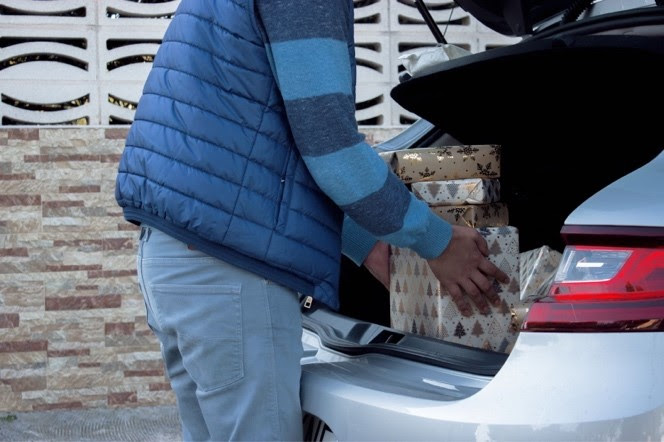
Motorists have been warned not to leave Christmas presents on display in parked vehicles after almost a third admitted to being a victim of car crime.    

Experts at  Quotezone.co.uk have revealed that more than one in ten Brits leave their precious presents in the car during the festive season, presenting an ideal opportunity for heartless thieves to ruin Christmas.    

New data from Quotezone.co.uk reveals that 11% of us admit to leaving gifts we have purchased for loved ones in our cars while we continue our Christmas shopping or enjoy a night out.  

A person standing next to a carDescription automatically generated with low confidence
A picture containing control panelDescription automatically generated

The car insurance comparison experts also asked 1,000 drivers if they had experienced a vehicle break-in, with almost `a third, 31%, confirming they had.    

Now they are warning car owners to be more careful this year and ensure presents are kept in the safety of the home, or at least well hidden from view in vehicles. 

Better still, take presents straight home from the shops and get them wrapped and placed under the tree.    

Greg Wilson, Founder of Quotezone.co.uk said: “It must be a terrible feeling to have carefully chosen or sentimental Christmas presents stolen from a car just before the big day.    

“Our data shows that almost one third of drivers have experienced a car break in, yet 11% of us still leave presents in a parked car.  Christmas is a time of goodwill but sadly for some thieves it’s a time of opportunity.   

“It’s also an incredibly busy time of year, drivers need to remember to be careful and always keep presents hidden out of sight under the boot cover or in the glove box, ideally parked next to a streetlight on a busy street.  If the car is left unlocked or the stolen items are in full view, it may invalidate an insurance claim.    

“Fully comprehensive car insurance usually includes cover for some possessions damaged or stolen from a car but there’s usually a cap on this amount.  If drivers know they’ll be travelling to see family this Christmas and have a large sack of expensive gifts in the car, it would be worth informing their insurer to double check they’re covered and potentially increase the price cap temporarily.  Also don’t forget to keep all receipts, they may be needed if they have to make a claim.”    

To further prevent car break ins, drivers should park in a well-lit, populated area, ensure that all windows are rolled up, and consider installing a steering-wheel lock, car tracker and immobiliser – if the car doesn’t have one as standard.    

Car security is really important any time of the year, but especially during the festive period with expensive and sentimental presents in danger of being stolen and ruining Christmas.   

If cars are broken into, drivers should take photos, identify the damage and inform the police – obtaining a crime reference number, also inform the car insurance company as soon as possible.   

Quotezone.co.uk helps around 3 million users every year find savings on everyday household bills and essentials, such as fully comprehensive car insurance. 

Foods to freeze to help spread the cost of Christmas

Cash strapped Brits are being advised to freeze certain foods ahead of Christmas to help spread the cost of the festive holiday.  

The penny-pinching pros at NetVoucherCodes.co.uk are advising Brits on eight of the lesser-known food items that can be safely stored in a freezer, to help households save money and prep ahead.

Storing food below zero degrees preserves the conditions of food by freezing potentially harmful molecules, so they die or enter a dormant state.  

Most foods will last at least three to four months in the freezer, giving cooks a much wider timescale to add items to a meal.

Consumer expert Rebecca Bebbington from NetVoucherCodes.co.uk said: “Christmas has always been an expensive time and this year a lot of families will be feeling the pinch more than usual due to the cost of living crisis.

“The Christmas dinner shop can be an expensive one which is why we’re encouraging people to spread the costs by buying certain foods now and freezing them until they’re needed.

“Meat and veggies are just some of the items you can freeze to help you save money and if you’re worried about storage space, take the items out of their original packaging and pop them into some freezable food bags.”

NetVoucherCodes.co.uk’s list of festive food items you can freeze:

  1. Meat

Many stores are already speaking up over concerns over Christmas stock levels. To guarantee a prize turkey or a joint of roast beef, buying and freezing these staples ahead of time might be the way to go. Before making any big purchases, make sure that the food will still be in date and good to defrost by December the 25th.

  1. Brussel sprouts

Some people love them, others hate this festive member of the cabbage family. These can be easily grown at home to really save on money, or shop bought ahead of the Christmas price hike. To really capture them in full flavour, blanche or roast them before freezing.

  1. Parsnips

This honey covered Christmas staple will stay good to eat for around nine months. You can freeze them in small cubes, or chunks. Blanching parsnips before freezing them will lock in their flavour and texture. They will be right at home in the same draw as frozen carrots, peas and all of the other festive vegetable staples.

  1. Cheese

Wanting to get prepped for the perfect cheeseboard or stock up This can be frozen as a full block, or if you mainly use it grated, you can grate the block and freeze it, meaning you can grab handfuls of cheese as and when you need it. Anything from mozzarella to parmesan can cope with being put in the freezer, but be warned, cottage cheese may react badly. 

  1. Milk

With more people in the house or more time spent having a cuppa, milk is a must-have around the home over the festive period. Frozen milk must be fully thawed before use and give the carton a big shake before pouring, to ensure all the solids and liquids have been fully mixed. Milk expands when frozen, so don’t put it in a tight container. 

  1. Bread

This should be frozen when fresh otherwise it will be slightly stale once defrosted. You can freeze it as a full loaf, or in individual slices if this is easier. You can then leave your bread to thaw naturally or pop it straight into the toaster.

  1. Eggs

The shell of eggs can’t be frozen, but everything else can. Crack the eggs into a muffin tray, then place these into the freezer. Once fully frozen they can be transferred into a plastic container, creating even more space.

  1. Chocolate

Chocolate doesn’t contain much water, meaning it won’t change as much as other items when frozen or defrosted. Put the chocolate in the fridge for a few hours before placing it into the freezer, as this will help bring the temperature down slowly, reducing the risk of the flavour or appearance changing.

For more information on foods you can freeze visit NetVoucherCodes’ blog here:- 

https://www.netvouchercodes.co.uk/blog/foods-you-can-freeze

Deck the halls without the folly!

ELECTRICAL BODY ISSUES ‘THE 12 SAFETY TIPS OF CHRISTMAS’

As we move through the festive period and the echoes of Christmas cheer begin to spread, it’s that time when homeowners dust off their Christmas decorations and set themselves to untangling dazzling arrays of fairy lights. Yet many householders fail to recognise the lurking dangers that can stem from seasonal décor.

Whilst the 2022 Yuletide may be less elaborate than recent years, there is sound advice at hand for those still decking out their homes to brighten the December nights.

NICEIC, the UK’s leading body for certified electrical businesses, provides here its 12 tips for keeping safe this Christmas.

  1. After months of being stored away, Christmas lights can easily get damaged. Check your Christmas lights thoroughly to ensure they are not broken or damaged before use
  2. Use only replacement bulbs (lamps) of the same type and rating as those originally supplied
  3. Always switch lights off before you go to bed or go out
  4. Do not be tempted to keep them on too long as they can overheat
  5. Keep lights away from flammable decorations and materials that can burn easily
  6. Avoid using extension leads or adapters wherever possible
  7. Never attempt to repair lights by using tape
  8. Avoid tampering with lights to string sets together
  9. Check the wiring of the plug and make sure no bare wires are visible
  10. Only use outdoor lights that have been specifically designed to be used outdoors. If you are unsure, check the manufacturers’ instructions
  11. All outside sockets must be RCD protected for safety. An RCD (residual current device) works by switching off the flow of electricity when a cable or flex is damaged
  12. We would advise that any fixed or permanent outside lighting should be installed by a certified electrical installer to ensure it complies with the appropriate safety standards

Paul Collins, Head of Technical Services for NICEIC, comments: “Faced with soaring energy prices, 54% of Brits unsurprisingly have admitted to playing down their illuminations this year and some local authorities have opted for dimming municipal lights, or culling them entirely.

“But as the countdown to Christmas begins, we will still no doubt enter that prime time for electrical catastrophes when wiring has degraded while in storage, socket outlets get overloaded, or homeowners riskily explore creative ways to illuminate their outdoor areas.

“Our message is simple: deck the halls without the folly. Carry out our basic safety checks and be sensible when using electricity around the home; but always call in the professionals if you need any new socket-outlets installed or rewiring carried out.”

To find your nearest NICEIC certified business, visit NICEIC.com. Or for more advice on keeping safe at home over the festive season, take a look at these Christmas Safety Tips from the UK’s electrical safety charity, Electrical Safety First.

Experiences, quality time and managing expectations: advice on navigating the holiday season

As the holiday season approaches, for many families their celebrations could be looking very different this year due to the cost of living crisis, increasing fuel bills and squeezes on household budgets.

Educational and Child Psychologists from the British Psychological Society (BPS) have offered their expert advice to manage children’s expectations this festive season, and how to focus on the smaller things that can mean a lot.

“Families might be having to cut back not just on presents and gifts this year, but visiting family and friends, and it may not feel the same as previous years.

“This can cause anxiety and stress for both parents/carers and children and young people when anxiety is already high about paying bills and everyday costs during the winter” says Dr Abigail Wright from the BPS’s Division of Educational and Child Psychology (DECP).

“The festive season can often bring a whole range of different emotions for people, including joy and happiness, but also sadness and worry. These are likely to be heightened given the incredibly difficult times we are living in, and also following the disrupted Christmases of the last two years due to Covid,” adds Dr Denise Miller from the DECP.

However despite these challenges, BPS experts say there are ways to make sure children and the whole family enjoy the festive season, and find the joy in the little things:

Preparation is key. If you are worried about your children being disappointed with gifts, or not seeing as many friends and relatives, gently explain this to them early on, but also explain that it will still be a very special time for everybody.

Explain to children that the most important part of the festive season is spending time with family and friends. When they look back, children’s memories of the happy experiences of the time spent with loved ones will be far more important to them than the number of presents they receive.

In this vein, there may be opportunities to spend time with family and friends which create happy memories and experiences, but cost very little, such as going for a walk, visiting lights, watching a movie on television or playing games, going to a carol service or free musical performance, or borrowing books from the library.

Both children and adults may also enjoy creative activities including making things, drawing, and writing stories and poems. Acts of kindness in the community can also provide a sense of purpose. Perhaps you could set up a Christmas treasure hunt activity for your children and your friends.

If children do become upset because things are not as they expect and show ‘big’ emotions, a good approach to use is ‘emotion coaching’. This is an approach which acknowledges how the child may be feeling while naming the emotion and showing empathy before looking to simply ‘fix’ the problem. This might be discussing an activity which may support them feeling calmer and less upset, or simply having a hug!

Finally, Alison Greenwood of the DECP emphasises the need for parents and carers to look out for themselves, as well as their children at this time of year.

“As parents and carers, do make sure you also take care of yourselves and practice some self-care,” she adds. “Take part in activities you also enjoy, and that promote your emotional wellbeing. Connect with yourself and what is around you – and if you can, use the support of friends and family.”

Pet owners urged to pet proof your Christmas and stay off Santa Paw’s naughty list

Animal lovers in Scotland are being encouraged to keep their pets safe this festive season by pet proofing their Christmas, ensuring anything which may be mistaken for a tasty treat is out of paw’s reach. 

The warning comes as new research from the British Veterinary Association (BVA) reveals nearly four in five companion animal vets in Scotland saw at least one case of toxic ingestion over the 2021 Christmas period.  

The festive season brings with it presents, decorations and yummy festive food. But these seemingly innocent pleasures can be deadly if eaten by animals. Chocolate, raisins and other dried fruit – such as that in mince pies or Christmas puddings – onion, garlic, xylitol in sugar-free products and seasonal decorations like mistletoe and holly can all be dangerous, and even fatal, to dogs and cats if eaten.

New Voice of the Veterinary Profession research shows that thousands of vets across the UK treated dogs for toxic ingestion last Christmas season, with 76% seeing cases of chocolate poisoning and 69% seeing dogs taken unwell after easing raisins or sultanas. Around a fifth (19%) reported seeing cases caused by the artificial sweetener Xylitol.

Foreign body ingestion in dogs was also common over the 2021 festive period, with gifts for humans, including small parts of children’s toys, being the most common cause (14%) while consumption of Christmas decorations and gifts for pets (12%) and wrapping (five per cent) were also highlighted by vets as causing issues.

But it’s not just dogs who should be on Santa’s naughty list: more than a quarter of vets (27%) also saw cases of toxic ingestion in cats, who were most likely to have ingested non-food items such as seasonal plants like holly or mistletoe (reported by 18% of vets) or antifreeze (seven per cent). Thirteen per cent of vets saw cats with foreign body ingestion, including seven per cent seeing cases caused by Christmas decorations and three per cent by wrapping.

British Veterinary Association President Malcolm Morley said: “Christmas can be the most wonderful time of the year but not if you end up with a poorly pet. Being vigilant and taking a few key precautions is all that is needed to keep your pets happy and healthy over the festive period.  

“Keep all edible items, decorations and anything else a pet may mistake for a tasty treat out of their reach to help prevent avoidable emergency visits to the vet. We also advise keeping pets to their normal diets and avoiding feeding them any human food. If you are concerned your pet has eaten something they shouldn’t have, do contact your vet as soon as possible.”

Top tips for keeping Christmas hazard-free for pets

  1. Protect your pet from poisons: A range of festive treats and traditions, such as chocolate in advent calendars and sweets, raisins, xylitol (found in sugar-free treats), nuts, grapes, liquorice, poinsettia, holly and mistletoe are toxic to cats and dogs. 
  2. Keep decorations out of reach: Ribbons, wrapping paper, baubles, tinsel and tree lights can seem like appealing playthings to cats and dogs but can be very dangerous if broken, chewed or swallowed. Batteries for Christmas gifts also need to be kept safe as, if ingested, they may cause severe chemical burns to the mouth, throat and stomach.
  3. Forget festive food for pets: We all enjoy a richer diet over Christmas, but fatty foods and Christmas dinners shouldn’t be shared with the animals of the household. They can trigger sickness and diarrhoea or other conditions from gastroenteritis to pancreatitis, so try to stick to your pet’s regular diet and routine. Too many treats can also lead to pet obesity.
  4. Keep away the bones: Cooked bones, including turkey bones, should not be given to pets as they can splinter and puncture the digestive tract.
  5. Know where to go: Even with all the care in the world, animal accidents and emergencies can still happen. Make sure you’re prepared by checking your vet’s emergency cover provision and holiday opening hours or, if you are away from home, use the Royal College of Veterinary Surgeons’ Find a Vet facility.

For more information on pets and poisons, download Animal Welfare Foundation’s free Pets and Poisons leaflet.

‘Tis the season to be deaf aware

Five ways to be deaf aware this Christmas 

‘Tis the season to be deaf aware 

With less than two weeks to go until Christmas day, there is a lot to get ready – from buying last minute gifts and wrapping presents, to picking up a turkey. 

If you will be spending time over Christmas with family or friends who are deaf or have hearing loss, it’s important to consider how to make sure the seasonal celebrations are enjoyable for them too. 

RNID, the national charity for deaf people and people with hearing loss, asked their supporters for their top tips of how family and friends can make communication easier at Christmas.  

They are: 

1.         Ask how you can help 

Everyone is different, so ask the person who is deaf or has hearing loss what you can do to make communication easier. For example, they might need to see your face when you’re talking, or they might need the subtitles on if you’re watching a film together. 

2.        Make lipreading easier 

Make sure the room you are in for your Christmas get together is well lit – candles and fairy lights alone won’t be much use to people who lipread. Don’t cover your mouth when you’re speaking, and face the person who is lipreading. Try not to speak with your mouth full as this will make it harder for them to lipread you. 

3.        Take it in turns to speak 

Try not to speak over each other – it’s impossible to lipread more than one person at a time and your family member will quickly get lost in the conversation. Speak clearly and not too slowly, and don’t shout as this can be uncomfortable for hearing aid users. If someone doesn’t understand what you said, try repeating or explaining it a different way. 

4.       Keep background noise low 

If you’re playing festive music or if there is background noise, keep the volume low. This will make it much easier for people to hear, and it will help anyone who lipreads to focus on what you are saying.   

5.        Help people follow the conversation 

If the topic of conversation suddenly changes, make sure everyone is aware – maybe ask them a question to check. 

And crucially, if someone who is deaf or has hearing loss asks you to repeat something, never say “it doesn’t matter”. If you do that, you’re taking away their opportunity to be part of the conversation, and you might make them feel like they don’t matter.  

Harriet Oppenheimer, Deputy Chief Executive at RNID, said: “For lots of us, Christmas is a time of big family get togethers, noisy work Christmas dos and catching up with old friends. But we also know that Christmas can be an isolating time if you are deaf or have hearing loss or tinnitus, and our supporters have told us that they can feel left out of the festive fun going on around them.  

“Being deaf aware at Christmas doesn’t have to mean making big changes; there are small things you can do which will make the day a lot more enjoyable for your deaf family member or friend and allow them to be part of the celebrations.”  

The 12 Signs of Christmas  

RNID have made a video to help everyone learn some festive phrases in British Sign Language (BSL). 

From learning how to sign ‘Happy Christmas’ to asking someone to ‘meet me under the mistletoe’ or ‘pass the chocolates’, the charity’s 12 signs of Christmas will help to get everyone in the family signing and having fun together, whilst taking an important step to be more deaf aware. 

For more information on how you can be deaf aware at Christmas, visit RNID’s website.

I’m a pet expert – here are five things to avoid this Christmas

The party season is nearly upon us, but before you dust off your decorations and defrost the turkey, it’s important to be aware of potential dangers that could be putting your pet at risk this Christmas.

PDSA Vet Nurse, Nina Downing, shares the toxic treats and decorative dangers to watch out for this festive season:

“Every Christmas we treat poorly pets at our PDSA Pet Hospitals who are suffering from illness and injuries that their owners just didn’t know could be caused by some of their yuletide traditions. I’d urge owners to be aware of the potential dangers that some of our festive favourites present to our furry family members.” 

Here are Nina’s top tips for making sure your pet stays safe this Christmas:

  1. Deck the halls

Twinkly lights, glittery baubles, and tinsel are what give our homes a touch of festive magic, but they’re also tantalisingly tempting to curious paws. Should your furry family member get hold of a shiny adornment, they may smash it and cut themselves, or even mistake it for a tasty treat – potentially causing life-threatening blockages which require emergency treatment.

Keep fairy lights well away from small furry friends’ enclosures too, to avoid them nibbling through the wires and giving themselves a shock. Many festive plants are also toxic to pets, so make sure they’re well out of paws’ reach.

  1. A tree-mendous occasion

Whether real or artificial, your cat may see your Christmas tree as the purr-fect climbing challenge. This could result in broken baubles and lots of mess at best, or an injured puss at worst, so always supervise them to avoid any mishaps.

Chocolate baubles are also a festive favourite but, if you own a pet, this is one tradition to leave out of your celebrations. Chocolate is toxic to our furry friends and hanging it on the tree makes it all too easy for them to have a little snack.

  1. Santa Paws is coming to town

The thrill of opening presents may distract you from keeping a close eye on your furry friends, but there are several things to watch out for among the mountains of wrapping paper. Sticky tape, bows, ribbons, and string can be a choking hazard and cause internal blockages if swallowed by our precious pets. Take care to pick up any leftover wrapping or toy batteries and watch out for the beady eyes of soft toys, as these can cause serious problems for our pets if chewed up and swallowed.

  1. Festive food

Christmas dinner may be a highlight of the day for us but no matter how tempting, don’t give in to any purr-suasion. Not only can a sudden change in diet cause an upset stomach, some parts of our festive feast can also be highly toxic to pets, including onions, garlic, and mince pies.

It’s also important to bear in mind potion sizes – a small dog breed, such as a Border Terrier, eating 4 pigs in blankets is the equivalent of a human eating an entire Christmas dinner with all the trimmings! So, sticking to healthy treats will prevent our pets from piling on the pounds.

  1. A jolly Christmas

The hustle and bustle of Christmas can become particularly overwhelming for furry family members, so it’s important to offer a safe space for them to escape the festivities. This could be a den you have built or even their regular bed in a quieter room. For smaller pets, moving their enclosure to a quiet space will give them some peace during busier periods.

It’s also easy to forget what day it is over the festive period, but remember that four-legged family members benefit from the consistency of a routine – whether that’s sticking to the usual time they go for a walk, or when you feed them.

For more information on how to safely enjoy the festive season with pets, you can visit: www.pdsa.org.uk/xmas-guide

Children offer to donate pocket money to help pay for Christmas

ONE IN SIX WORKING PARENTS SURVEYED IN SCOTLAND WORRY THEY WON’T BE ABLE TO AFFORD ANY PRESENTS

  • New Action for Children research finds one in five children of working parents (22%) surveyed in Scotland will offer to donate their gift or pocket money to help their parents cover costs of festive season.
  • One sixth (15%) of working parents polled in Scotland worry they won’t be able to afford any Christmas presents.
  • Almost all (98%) working parents in Scotland said they had worried about money in past six months, more than half (52%) having worried often – resulting in trouble sleeping, worse mental health, getting upset and losing temper with kids.
  • One mum said: ‘“There are some days we won’t put the fire on and just have blankets around us. I don’t eat much anyway but some days I just have some beans on toast once or twice a day so my kids can have a proper meal.”

New Action for Children research released today uncovers the cost-of-living turmoil facing millions of working families in the run-up to Christmas.

To launch its annual Secret Santa campaign to help the country’s most vulnerable children, the charity commissioned a unique Savanta ComRes poll of 2,700 UK working parents and their children (nearly 5,500 in total), as well as a nationwide survey of its frontline staff. The research shows how the financial burden families are facing is taking an emotional toll on relationships, mental health and Christmas celebrations.

With the highest inflation rate in over 40 years, nearly all (98%) working parents the charity surveyed in Scotland said they have worried about money over the past six months, with more than half (52%) of those having worried often. Of those:

  • Almost six in 10(59%) have had trouble sleeping
  • more than two-fifths (44%) have tried to hide their money worries
  • more than two-fifths (44%) have noticed their mental health worsen
  • almost a quarter (22%) have become upset or stressed in front of their children, and
  • Just under a fifth (19%) have lost their temper with their children. 

The research also shows one in six (15%) of working parents surveyed in Scotland worry they won’t be able to afford any presents this Christmas. And despite their money worries, more than two in five (41%) said they will put on a brave face and try to act happy, with many children also thinking their mum and dad will be faking their festive cheer (37%).

The polling also recognises the severity of the situation and emotional pressures felt by the children and teenagers of the parents surveyed with:

  • Over a quarter (28%) of those who’d seen their parents worry in the last six months had also seen their parents become upset or stressed in front of them due to money worries and under a quarter (24%) experienced their parents losing their temper with them.
  • Almost a third (32%) thinking their parents will be worried about not having enough money to pay the bills over the festive period, and
  • One in five (22%) saying they will offer their pocket or gift money to help their parents cover costs this Christmas.

As a charity that delivers children’s services, Action for Children is instead increasingly having to provide emergency relief to families as the cost-of-living crisis deepens.

In a nationwide survey of nearly 200 of its frontline staff during November, it found over two-thirds of those surveyed (69%) are currently supporting a child, young person or family that is experiencing poverty or extreme financial hardship.

Nearly half (45%) reported they were extremely worried about the health and wellbeing of the children, young people and families they support due to their financial situation, and one in ten (10%) had even donated their own household items or clothing to families, such is the urgent need.

Three quarters (75%) of children in poverty are in working families¹ with rates expected to worsen² as the cost-of-living crisis continues.

Some of the issues highlighted by the charity’s frontline workers included:

  • a family having to pawn all their electricals to buy food for their children
  • a child who sleeps on a pile of blankets as its parents can’t afford a bed, and
  • a single parent to several children with additional needs working seven days a week trying to balance support for their children and earning enough money to make ends meet.

One worker asked a young girl if there was anything she would like from Santa this year, to which she replied: ‘I’m not asking for anything and I’m not writing it down on paper (then nodded towards her mum) because she would get too sad.’

Paul Carberry, National Director for Scotland at Action for Children, said: “For most of us the festive season is a happy time, yet as our shocking research shows there will be children across Scotland who face a very different Christmas this year.

“Instead of enjoying a safe and happy time, many children will wake up on Christmas morning to no presents, food or warmth. Every day our frontline workers are helping families keep their heads above water, making sure they have the basics like hot meals and proper winter clothes, as well as offering emergency support to keep homes warm and help families pay the bills.

“In yet another year when children and families have been pushed deeper into crisis, supporting them is more important than ever.

“Poverty is not inevitable, it is about political choices. The Scottish government has made a big step in the journey to end child poverty via their Scottish Child Payment, which we supported and called for, but families now require urgent giant leaps from both the UK and Scottish Government to make child poverty consigned to the past.

“Until every family can keep their child warm and well fed, we’ll be there to help them – that’s why we’re asking people to donate to help us make a life-changing difference to vulnerable children this Christmas and beyond. With your help we can be a vital lifeline for even more children across Scotland.”

Case study

Tina Buchan, 43, lives in Inverness and has five children with her partner Moni Buchan, 52. Tina works full-time as a Deputy Store Manager B&M store and her husband is a chef. He has struggled to find work near home and is currently working in London, leaving him apart from his family. Like so many families in Scotland, they are struggling to make ends meet this Christmas.

Tina was already struggling to make ends meet before household bills increased and, despite a recent promotion in work, is still being forced to take drastic measures to feed her children.

“There are some days we won’t put the fire on and just have blankets around us,” said Tina. “I don’t eat much anyway but some days I just have some beans on toast once or twice a day so my kids can have a proper meal.

“I’m pay as you go for my electric and I’m paying around £50 more a month just now. For heating, we have a coal fire and the price of coal has gone up a lot. The coal used to be £10 per bag and now it’s gone up to £15 a bag so it’s having a big impact on our budget.

“I’m good at budgeting which is a godsend because if I wasn’t the stress would overwhelm me. I’m on a salary so my pay is the same each month which helps me know what I’m working with. Once I’ve paid my bills and bought some food for the house I’m hardly left with anything.

With five children, Christmas is a particularly difficult period for Tina. Her children are aware of the family’s financial struggles and do not have any expectations for Christmas presents.

“I’m lucky in that my kids don’t expect much and don’t ask for a lot because they know how expensive things can be,” she said. “They’re quite happy to have things like socks, pyjamas, and maybe a couple of wee toys. I speak to them properly about it. The youngest still believes in Santa Clause so he gets a couple of extra things but the others all know roughly what I’ll be giving them.

I’m not one to ask for help, I’m too proud but last Christmas our support worker from Action for Children, Sarah Sproul, brought food hampers and some presents for all the kids. Having five kids is expensive so that made a big difference.”

The pressure of making ends meet is not only affecting Tina but the children as well. Her 16-year-old son Aiden has suffered from anxiety which led the family to initially coming into contact with Action for Children for support around two years ago.

Thankfully Aiden has come a long way since then and hascome out of his shell completely to the point that he’s a completely different person now”, according to his mother.

Unfortunately, Tina is now seeing her 10-year-old son Amir’s mental health impacted by the stress of the cost of living crisis and is arranging for him to receive support from Action for Children.

“I told the school two years ago that he was struggling to deal with his anxiety and I was told by the doctors that there’s nothing they could do at the moment because the children’s mental health waiting lists are so long.

“I’ve spoken to Sarah and she’s going to make sure Amir receives the support he needs through Action for Children. She has been amazing for this family and I can’t possibly thank her enough for everything she’s done to help us all. If it wasn’t for Action for Children, I don’t know where we’d be.”

To become a Secret Santa for Action for Children visit iamsanta.org.uk

Bank of Scotland – Christmas business barometer

A THIRD OF SCOTTISH BUSINESSES IN BETTER “ELF” THIS CHRISTMAS ! 

Bank of Scotland survey shows: 

  • 33% of businesses expect higher revenues this Christmas compared to last year 
    • 23% of businesses expect to see increased demand this seasonal period
    • Only one in ten (10%) of retailers say they are completely ready for Christmas trading
  • However, a fifth (20%) of firms said they do not feel fully prepared for the festive trading period 

Despite high inflation, rising energy prices and a tighter labour market, 33% of firms in Scotland expect this Christmas trading period to be merry and bright compared to last year, according to the latest insight from the Lloyds Bank Business Barometer.

Those predicting a bumper festive period cited having more time to prepare (25%), while increasing customer demand was cited by 22% of firms as they felt less affected by Covid restrictions due to the Omicron variant last year. Those expecting a worse Christmas trading period said they were struggling with increased costs of doing business (10%). 

Almost three-quarters of businesses surveyed said that Christmas was important for their future prospects (74%), but only one in ten (10%) said they felt completely prepared for Christmas. Meanwhile, a fifth (20%) said they are not yet fully prepared for the festive period. 

When asked what could help firms prepare more effectively, 30% said they wanted more support with rising costs, with 23% saying that better access to their supply networks would help. Skilled workers were also high on businesses’ wish lists, with 25% saying access to more skilled staff would boost Christmas trading.  

Chris Lawrie, area director for Bank of Scotland, said: “This year has been marked by highs and lows but it’s encouraging to see many firms are in good spirits about trade over the festive period.  

“With no restrictions in place, the opportunities for businesses are clear but we know that some aren’t fully prepared for this Christmas trading period.  It’s essential that businesses put plans in place now to carefully manage cashflow and make the most of what will be a busy end of the year.”