New parents in Lothian could be missing out on free support to help with the cost of everyday baby essentials.
Britain’s biggest discounter is continuing to give away a £100 Aldi voucher to one family every week as part of its Mamia New Parent Fund, to be used on everything from nappies and wipes to toiletries.
It comes as new Aldi analysis reveals parents who choose Mamia nappies, baby wipes and formula could save over £550 during their baby’s first year compared with leading branded equivalents*.
Since the initiative launched earlier this year, Aldi has already gifted thousands of pounds in vouchers to parents across the UK.
Julie Ashfield, Chief Commercial Officer at Aldi UK, said:“The reality is that the costs don’t stop once you’ve bought the pram and decorated the nursery – it’s the everyday essentials that really add up week after week for parents.
“When you’re suddenly buying supplies like nappies and baby wipes alongside your normal shop, even small savings can make a meaningful difference over the course of a year.
“That’s exactly why we continue to invest in keeping everyday baby essentials affordable through our Mamia range, while our New Parent Fund is another way we’re helping families during those early years.”
New parents in Scotland who want to apply for Aldi’s Mamia New Parent Fund should email mamiaparentfund@aldi.co.uk with a receipt showing their latest Mamia purchase. One family will be chosen each week throughout 2026 to receive a £100 voucher to spend in any UK Aldi store.
Don’t miss these 30 minute shows as part of your Dynamic Earth admission, or as a standalone experience.
What’s Up: Summer Skies | Presenter-led Show
In the latest version of our flagship live Planetarium show ‘What’s Up?’ we’ll go stargazing in the summer sky, and take a look at the incredible Artemis II mission! In our Planetarium, we’re going to (temporarily!) delete the Sun so we can stargaze in summer skies of perfect darkness to spot stars, planets and galaxies.
Under Pressure | Presenter-led Show
Come with us as we take a deep dive into the global ocean; we’ll explore dark, hidden ecosystems and see the collective efforts of hundreds of marine scientists and engineers. We’ll also ponder on our ability to shape the future of this global ocean we all depend on.
We Are Guardians | Dome Film
Explore the ecosystems of our world that are intrinsically connected. Discover how, with the help of satellites, we can examine the links between human activities and climate change.
Experience our We are Guardians show with BSL interpretation as part of our daily schedule, with additional BSL interpreted screenings available upon request.
Find out more about our Planetarium, and explore the full schedule of shows here:
Applications have opened for nationwide breakfast club awards, giving schools across Scotland the chance to win £1,000 for their breakfast club and be recognised at a special ceremony at the Houses of Parliament.
The Kellogg’s Breakfast Club Awards celebrate breakfast clubs up and down the country, recognising best practice and innovation among the thousands of breakfast clubs that take place at schools across the UK.
Applications are now open and close at midnight on Friday 29th June 2026. Schools are invited to share the work of their breakfast club and the teachers, support staff, volunteers and pupils who help children start the school day fuelled and ready to learn.
Andrew Ridge, Social Impact Manager at Kellogg’s, said:“We’ve been supporting breakfast clubs for nearly 30 years, so we understand the important role they play for children and families across the UK.
“Every morning, schools are creating safe, welcoming spaces where children can enjoy breakfast, build friendships and start the day ready to learn. The positive impact these clubs have is made possible by the passion and commitment of the teachers, support staff and volunteers behind them.
“That is why, over the last fifteen years, Kellogg’s has been proud to celebrate the amazing work that goes into breakfast clubs across the country through our awards. We are looking forward to hearing from schools again this year and recognising the people and pupils who help make these clubs so special.”
This year, Kellogg’s will recognise winners across eight award categories, including six regional awards for Scotland, Wales, Northern Ireland, South England, Central England and North England.
New for 2026, the Breakfast Club Star Award will recognise an extraordinary pupil who consistently shows enthusiasm, kindness and commitment at their breakfast club, helping to create a positive, welcoming and supportive start to the day for others.
As part of the application process, schools will be asked to put forward a pupil they feel deserves to be named a Breakfast Club Star. The winning pupil will be named at the awards and invited to share their personal thoughts on what breakfast clubs mean to them.
Each category winner will receive a £1,000 cash grant to spend on their school breakfast club, helping them to enhance their provision, invest in new equipment, activities or resources, and continue creating a welcoming space for children at the start of the day.
The Kellogg’s Breakfast Club Awards typically receive more than 500 applications from schools across every corner of the UK, with entries highlighting the important role breakfast clubs play in supporting children’s wellbeing, attendance, learning and social development.
Winners will be revealed at a ceremony at the Houses of Parliament on Wednesday 18th November 2026, where schools will have the opportunity to share their stories in front of MPs and leading industry figures.
Kellogg’s has been supporting breakfast clubs for 28 years and since 1998, has donated more than £7 million to schools across the UK as part of its efforts to alleviate hunger and help provide children with the start they need to be fuelled and ready to learn.
Previous winners include Southbury Primary School in Enfield, which was named Kellogg’s Breakfast Club of the Year 2025, and Stranraer Academy in Scotland, which was recognised for the outstanding impact of its breakfast club on pupils and families.
Last year’s judging panel included Andrew Ranger, MP for Wrexham, Helen Hayes, MP for Dulwich and West Norwood, Professor Greta Defeyter OBE and Greggs CEO, Roisin Currie.
Nine in 10 children and young people begin mental health treatment within 18 weeks of referral
The latest figures, published today, show that 91.2% of children and young people referred to Child and Adolescent Mental Health Services (CAMHS) began treatment within 18 weeks — meeting the national standard for a sustained period.
One in two children referred to CAMHS is now starting treatment within six weeks — compared to one in two starting within 12 weeks before the pandemic.
Waits of over 18 weeks are at their lowest level since 2013, down nearly 20% in the past year.
The longest waits have fallen to their lowest level since 2015, with 12 out of 14 Boards now reporting zero patients waiting over a year.
Mental Wellbeing Minister Maree Todd said: “These figures reflect the dedication and hard work of CAMHS teams right across Scotland, and I am truly pleased to see these sustained and significant improvements in waiting times.
“We have increased CAMHS staffing by 51.6% over the last decade, and exceeded our commitment to fund 320 additional posts by 2026 — increasing capacity for cases by over 10,000. This investment is making a real difference to children and young people across the country.
“While there is still more to do, and we will not be complacent, today’s figures are genuinely encouraging. Long waits remain unacceptable and we will continue to support every Board to meet the standard.”
A spokesperson for the Scottish Children’s Services Coalition responded:“While we welcome the fact that one in two children referred to CAMHS is now starting treatment within six weeks — compared to one in two starting within 12 weeks before the pandemic, this is still in itself too long and there is much work to do to tackle the current mental health emergency.
“We still have just under 300 children and young people who have been waiting for more than nine months for treatment and 23 more than a year.
“Many children and young people are still waiting years for help, which worsens their mental health and is a sure-fire way to add to their pain.
“What we need is not just parity of esteem between mental health and physical health, it’s parity of action and parity of spend.
“Each one of these statistics is an individual, and we would urge the new Scottish Government to ensure the adequate resourcing of mental health services for our children and young people so that they can get the care and support they need, without lengthy waits.”
Autistic people and their families across Scotland continue to face significant barriers, including long waiting times for diagnosis, a lack of support in schools and low employment rates.
Too often, children are missing out on education or are excluded from the classroom, while many people are left without support until they reach crisis point.
We and others have long campaigned for the Learning Disabilities, Autism and Neurodivergence (LDAN) Bill – a Bill which the SNP committed to as far back as 2021. This would provide an opportunity to address the challenges facing autistic people and deliver real change.
Legally binding national and local strategies would improve support and accountability, while mandatory training across public services such as health, education and criminal justice would ensure autistic people’s needs are recognised and supported earlier.
Years of consultation have shaped these proposals, with many in the autistic community sharing difficult and traumatic experiences in the hope of having their voices heard.
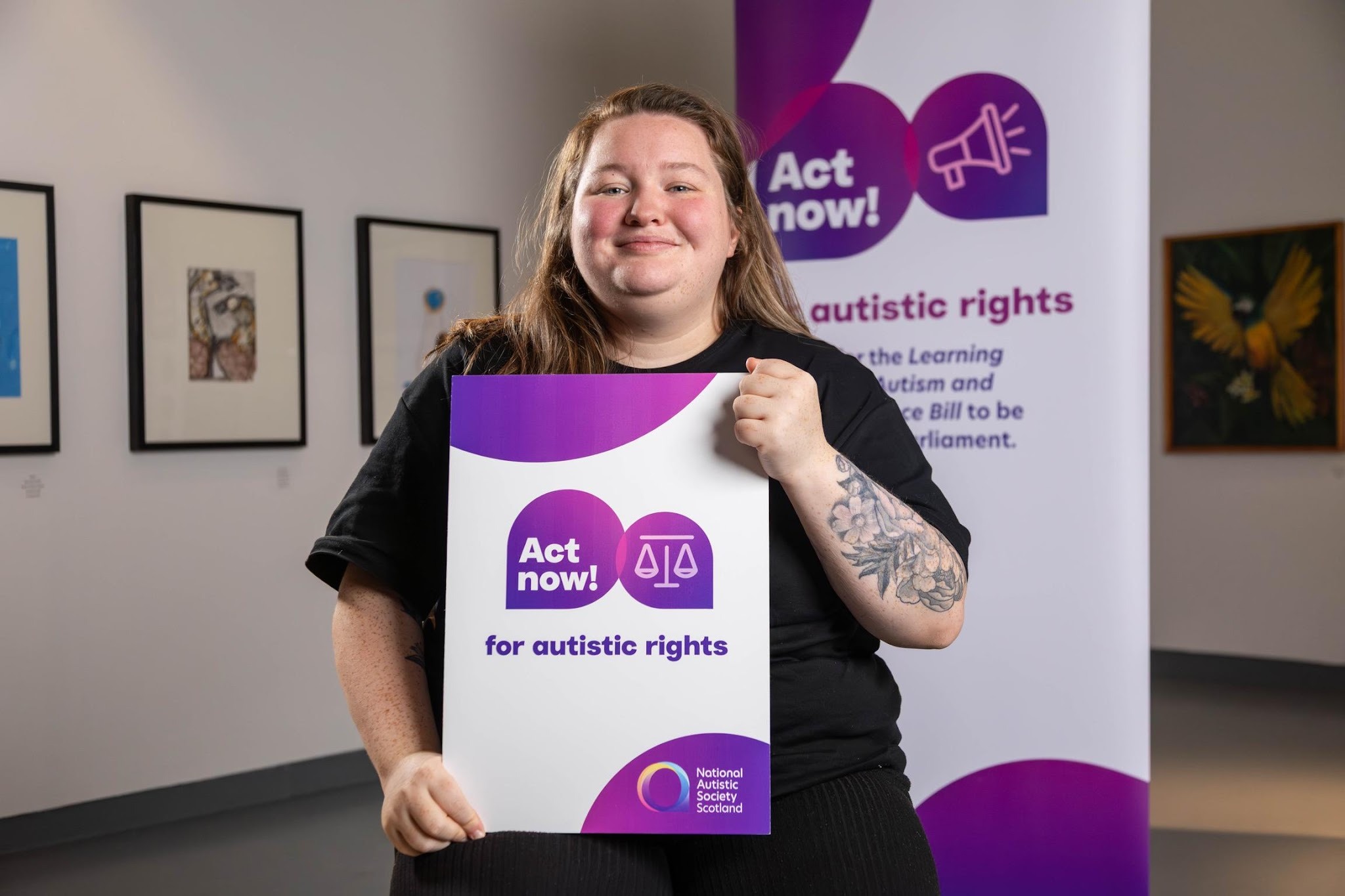
As part of the Act Now for Autistic Rights campaign, our charity has launched a petition urging the First Minister, John Swinney, to include the LDAN Bill in September’s Programme for Government, which will set out the Scottish Government’s key priorities and legislative programme for the coming year.
In the lead up to the recent election in Scotland, more than 5,500 letters were sent by supporters urging party leaders to commit to this legislation. This momentum must now be matched with action. Without a clear commitment from the First Minister, autistic people risk being left behind.
Rob Holland, Director of the National Autistic Society Scotland, said: “Our campaign had a fantastic response during the election period. Thousands of letters were sent urging all parties to commit to the Learning Disabilities, Autism and Neurodivergence (LDAN) Bill, demonstrating a significant level of support for legislation long overdue in helping secure the rights of autistic people and their families.
The importance of the LDAN Bill in tackling the inequalities faced by autistic people and their families cannot be underestimated and this legislation is a vital opportunity to improve outcomes and recognise the rights of some of our most marginalised communities.
“With the election behind us and attention now turning to the first Programme for Government, we need everyone who wants to see urgent change to sign our petition and ensure this vital piece of legislation is introduced as early as possible in the new term.”
Becca, NAS Scotland Campaigner, said: “The LDAN bill is vital for the wellbeing, safety and equality of autistic and neurodivergent people in Scotland.
“Access must be granted, training must be given and voices must be heard to ensure that autistic and neurodivergent people have equal access and opportunity as anybody else.
“The LDAN bill must be included in the Programme for Government to ensure this change happens and lives are improved.
“As an autistic person, it is a struggle to ensure my voice is heard and my opinions are taken into account, so by committing to the inclusion of the LDAN Bill in the Programme for Government, I matter.
“My voice and many others across the country matter.“
You can call on the First Minister to Act Now for Autistic Rights by signing the petition here.
Applications open for Best Start Grant School Age Payment
Families across Scotland can now apply for over £330 to help with the costs of preparing for primary school, as applications for Best Start Grant School Age Payment open today (1 June 2026).
The payment, unique to Scotland, is available to eligible families with children born between 1 March 2021 and 28 February 2022. It is designed to ease the financial pressures that come with a child starting primary one and can be spent on anything families need – from clothes and stationery to school trips.
Whether a family can receive the payment depends on the child’s age and when they are first old enough to start primary school, typically between 4 and 5 years.
Importantly, families do not need to wait until their child starts school to apply. Those who are deferring their child’s start date, or whose child will not be attending school, are still eligible and must apply before applications close on 28 February 2027.
Families receiving Scottish Child Payment who are eligible for School Age Payment should get an automated payment and do not need to apply.
Social Justice Secretary Shirley-Anne Somerville, said: “Starting school is a landmark moment in a child’s life, but sadly it can also put real financial pressure on families. That’s why we introduced the Best Start Grant School Age Payment – to help ensure that every child in Scotland can begin their school journey with what they need, regardless of their family’s circumstances.
“This support is a vital part of our wider commitment to eradicating child poverty, making sure help reaches families at key moments in a child’s life.”
Sara Spencer, Cost of the School Day Project Manager said: “We know from our work with children and families that starting school adds real pressure to already stretched family finances. That’s why it’s really important that families apply for the financial support, like the School Age Payment, that they are entitled to.”
School Age Payment is a payment of £331.95 per child. Applications for children born between 1 March 2021 and 28 February 2022 are open from 1 June 2026 to 28 February 2027.
To get Best Start Grant School Age Payment the person applying will normally need to be receiving one of the following payments: Universal Credit, Housing Benefit, Income Support, Pension Credit, income-based Jobseekers Allowance (JSA) or income-related Employment and Support Allowance (ESA).
Families have until 28 February 2027 to submit their application. The payment is also open to kinship carers and adoptive parents who meet the eligibility criteria.
Parents and carers can apply for multiple children, provided each child falls within the eligible age range at the time of application. Social Security Scotland will usually make the payment once per child, although additional payments may be made in certain circumstances — for example, if a child moves to live with a different kinship carer or adoptive parent within the same application window.
As we kick off a new month, we’re delighted to welcome everyone from our local community back to our Chat & Chill Café for three relaxed get-togethers this June:
Thursday 4th June
Thursday 11th June
Thursday 18th June
12:00 – 1:30pm
Come along, grab some free lunch, enjoy a cuppa and have a good old catch-up with neighbours or even meet some new friends!
You don’t have to have children coming to PYCP.
Whether you fancy a chat, a laugh, or just a warm, welcoming space, you’ll find it here. Everyone is welcome!
A wee note for families:
We don’t have a crèche available so children under 5 are very welcome but must be supervised by a parent or carer at all times.
More than 30% of new parents are missing out on payments by not claiming in their baby’s first year.
Parents urged to claim via the HMRC app to ensure they get their payment as quickly as possible.
One in three new parents are missing out on Child Benefit payments in their baby’s first year, new figures reveal.
HM Revenue and Customs (HMRC) is urging parents who welcomed a baby this Spring to claim now via the HMRC app or online at GOV.UK.
While more than 6.8 million parents received Child Benefit in the year to August 2025, only 68.8% of them claimed the crucial government support before their baby’s first birthday.
More than 140,000 babies were born between April and June last year and while many parents are enjoying new beginnings this Spring, the latest statistics show thousands of families could be missing out on much-needed cash by delaying their claim.
Child Benefit is worth £27.05 per week – or £1,406.60 a year – for the eldest or only child and £17.90 per week – or £930.80 a year – for each additional child, with no limit as to how many children parents can claim for.
Myrtle Lloyd, HMRC’s Chief Customer Officer, said: “Spring is a wonderful time to welcome a baby and claiming Child Benefit as soon as possible means your family can benefit from much-needed financial support.
“It is quick and easy to claim Child Benefit via the HMRC app at a time that suits you.”
Child Benefit can be claimed 48 hours after the baby’s birth is registered but can only be backdated for up to 3 months from the date HMRC receives the claim, meaning thousands of families are not getting what they’re entitled to receive.
Parents can access their Child Benefit account quickly and easily via the HMRC app.
In a recent survey, half of parents with children under the age of 18 said that they would like to be able to conduct all of their tax matters digitally.
To make a new claim for Child Benefit, parents can create an online HMRC account and will need:
child’s birth or adoption certificate
bank details
National Insurance number for themselves and their partner, if they have one
child’s original birth or adoption certificate and passport or travel document, for children born outside the UK.
HMRC has released a YouTube video explaining how parents can make a claim, with payments usually paid every 4 weeks automatically into a bank account.
If a claimant or their partner has an income of more than £60,000 a year, they will be liable to pay the High-Income Child Benefit Charge (HICBC), with more information including about how to pay on the HICBC PAYE digital service on GOV.UK.
AN £18 million Scottish Government investment will give young people the chance to get involved in different sporting activities on their doorstep.
The Council, working in partnership with sportscotland, has secured funding from the national initiative to provide free and low-cost opportunities for young people locally as part of the national agency’s 2026 Summer of Sport.
The £18 million initiative, funded by the Scottish Government and facilitated by sportscotland, will offer young people aged three to 26 the opportunity to get active and maybe try something new.
This summer, it’s game on, and the 2026 Summer of Sport is a unique opportunity for communities across Scotland to embrace the excitement of sport, inspired by the 2026 FIFA World Cup and the Glasgow 2026 Commonwealth Games, both of which will showcase Scotland on the global stage and inspire young people to take part, get active and begin their own journey in sport and activity.
With activities running throughout the summer and beyond, young people in Edinburgh will have access to a range of free and low-cost sport and physical activity opportunities, helping remove barriers to participation and ensure more young people have the chance to get involved.
The Council will work with colleagues and a network of partners, including Edinburgh Leisure, The University of Edinburgh, Scottish Student Sport, NHS, local sports clubs and local community organisations to ensure these opportunities are available to young people, regardless of background.
The funding will enable the delivery of activities designed to help young people develop healthy habits, build stronger social connections, and foster a lifelong love of movement.
Culture and Communities Convener Margaret Graham said:“We’re proud to support the 2026 Summer of Sport and are excited for the accessible activity opportunities it will create for young people in Edinburgh.
“This is a fantastic opportunity for children and young people to try something new, get active, and experience the joy of physical activity and sport. We will work with colleagues and partners to make these opportunities available to young people across Edinburgh, regardless of background.”
Education, Children and Families Convenor James Dalgleish said: “With the school summer holidays fast approaching, this funding will make it possible for even more children across the city to take part in, and maybe even have a go, at a new sport for the first time.
“We are committed to levelling the playing field for all children and young people in Edinburgh and we know that sport can play a crucial role in supporting that.
“The benefits of being active are widely known and the range of activities on offer will hopefully encourage young people to get out, get active and as a result benefit from better social connection, camaraderie, alongside health benefits.
Chief Executive of sportscotland, Forbes Dunlop, said:“At sportscotland, we believe that sport has the power to strengthen communities and change lives.
“The 2026 Summer of Sport campaign, made possible by Scottish Government investment, is a great example of what can be achieved when partners come together with a shared ambition to make sport more inclusive and accessible.
“We’re proud to play our part in helping more young people enjoy the benefits of being active as we celebrate a fantastic summer of sport.”
Through these investments, the Council is working to ensure that the 2026 Summer of Sport positively influences as many young people as possible, fostering engagement in sport and outdoor activities across all communities.
To find out more about the 2026 Summer of Sport, visit:


 What’s Up: Summer Skies | Presenter-led Show
 Under Pressure | Presenter-led Show
 We Are Guardians | Dome Film
 Experience our We are Guardians show with BSL interpretation as part of our daily schedule, with additional BSL interpreted screenings available upon request.




 Thursday 4th June
 12:00 – 1:30pm


