Pet Fostering Service Scotland calls for ban on restrictive housing policies 

Call comes as the charity struggles to find homes for all animal companions after record number of people look to put their pet up for fostering after being made homeless 

Animal care charity Pet Fostering Service Scotland is calling for an end to restrictive housing policies after its service has seen a record number of people looking to put their pets up for fostering.  

The charity has seen over 1,000 enquiries to use Pet Fostering Service Scotland’s aid this year, a rise in over 20% compared to last year, and is now unable to find a foster home for all pets of owners in need, which could result in pets not having a safe place to stay.  

With pets often abandoned by the people they depend on for care and support, Pet Fostering Service Scotland helps those in emergency situations who are eager to keep their furry companions. 

Due to a multitude of reasons, pet owners can experience serious disruption to their home lives, often resulting in the dilemma of how to survive whilst also keeping their beloved pet.  

Pet Fostering Service Scotland is a charity which has been supporting pet owners for 40 years. Now, the charity is calling for a ban on restrictive housing policies.

Those who have been evicted and made homeless can often feel there is no option other than to abandon their pets. According to the charity implementing less restrictive housing policies could avoid situations like these taking place. 

Often accommodation for those who have either been made homeless or require refuge has a no pet policy. There has also been a rise in pet owners looking for new accommodation that accepts pets, currently having to wait one year for suitable housing to become available.

As a result, Pet Fostering Service Scotland has had to put pets into fostering for a year or longer, which is detrimental to the animal’s health as it is too long a period. This can also be distressing for owners due to the loss of consistent and familiar companionship provided by pets.   

The cost-of-living increase has had a significant impact on finding temporary accommodation for those who have been made homeless, as most housing options exclude the homing of pets. 

Pet Fostering Service Scotland has processed over 1,000 enquiries for pet care across Scotland this year. 37% of those were from people in a homeless or re-housing situation and as a result could not care for their pets in the short term.  

Bob Sinclair Chair at Pet Fostering Service Scotland said: “For those who have been made homeless or are facing an emergency situation, being housed alongside their beloved pet is so important.

“The significance of the companionship between a pet and owner is important for wellbeing for both sides. Changing restrictive housing policies and allowing pets into temporary accommodation could be life changing for these individuals and result in far fewer abandonment scenarios.” 

The Pet Fostering Service is non-chargeable and relies solely on donations for the work they provide, and volunteers can apply to become pet fosterers.

Pet fostering gives volunteers the companionship of a pet without the long-term responsibility and can bring a sense of reward from helping those in need, both human and animal.  

The charity currently has over 300 volunteers. 

If you are interested in fostering a pet or want to hear more about the charity, please visit https://www.pfss.org.uk/

Charities welcome new hunting legislation but warn hunts will be under more scrutiny than ever before

Hunting with Dogs (Scotland) Act 2023 comes into force today

Leading animal welfare charities have welcomed the commencement of the Hunting with Dogs (Scotland) Act but warn hunts will be scrutinised like never before. 

The legislation was voted through the Scottish Parliament in January this year and has come into force just ahead of what was traditionally the full hunting season, which gets underway at the start of November.  

The new Act brings into force a number of measures which significantly curtail mounted hunting activity, including reducing the number of dogs which can be used to search for, stalk or flush a wild mammal to just two, instead of a full pack, and reducing the number of dogs which can be used below ground to just one, as well as a preemptive ban on trail hunting.

The League Against Cruel Sports and OneKind say hunts will be monitored more closely than ever to ensure compliance with the law.

Director of the League Against Cruel Sports Robbie Marsland said: “Scotland now has the most robust law on hunting with dogs in the UK but this does not mean our job is done, far from it.

“We will be scrutinising the activity of hunts more closely than ever before to see who is complying with the law and who is looking for new loopholes to exploit. 

“Throughout the passing of the new legislation there has been a determined and persistent campaign from those desperate to keep the cruelty of hunting alive in our countryside, even now pro-hunters are trying to delay commencement of the law. But we are sending a stark warning to hunters that we will be monitoring every hunt in Scotland for as long as it takes until we are satisfied the law is being adhered to.” 

Since the law was passed in January at least one hunt – the Fife Hunt – has officially closed and is now registered as a drag hunt, and it is believed the Lanarkshire and Renfrewshire Hunt has also ceased hunting. 

Bob Elliot, Director of OneKind added: “Today is a monumental day in Scotland.

“We are thankful to the Scottish Government for listening to the people of Scotland, who have been calling for a real fox hunting ban for more than 20 years, when it became clear that loopholes in the previous law had allowed fox hunting as ‘sport’ to continue.

“Ministers have been clear that chasing and killing wild mammals with packs of dogs has no place in a modern Scotland. So, we are sure that they, like us, will be watching closely to ensure that it never occurs again.  

“We believe that a complete shift in mindset in how we consider wild animals – as sentient beings rather than ‘pests’ or ‘targets’ – is desperately needed and that this should be reflected in the legislation.

“Today proves that we’re heading in the right direction.”

Pet first aid becomes lifesaver for seriously injured dog

Two-year-old Labrador Reggie was out enjoying a Sunday evening walk with his loving owner when disaster struck, and PDSA’s pet first aid advice had to be put into practice.

While running through the woods with his canine brother, Ronnie; Reggie sliced his paw open on some broken glass that had been discarded on the ground.

With blood pouring from his cut paw, over a mile from the car and unfortunately no supplies on hand, Reggie’s owner, Jess, utilised her recently learnt pet first aid knowledge to wrap the serious wound with a makeshift bandage.

To help stem the bleeding, Jess ripped off a piece of her clothing and applied pressure to the cut. She then covered it with a poo bag, tied loosely round Reggie’s ankle, to keep it clean while they made their way back to the car.

Once home, Jess unwrapped the bandage to clean Reggie’s paw and realised it was still bleeding heavily. She immediately called the vet, who directed them to head straight to their out of hours service.

After being examined, the vet informed Jess that the deep cut had damaged a major blood vessel and would need stitches under general anaesthetic. Luckily the procedure went smoothly and just a few hours later, Reggie was discharged and able to go home for some well-needed rest and recuperation, while his paw heeled.

PDSA Vet Lynne James said: “It can be extremely worrying when your pet has an accident or gets injured, especially if you’re far from home and you haven’t got your pet first aid kit with you.

“In Reggie’s case, his owner did exactly the right thing and helped stem a potentially life-threatening bleed, preventing further contamination and infection to the wound – thanks to the lifesaving advice learnt from our pet first aid leaflet.

“Our guide covers everything from what to do if your pet is having a seizure, to how to cool your pet down safely if they develop life-threatening heatstroke.

You never know when disaster might strike so it’s very useful to be clued up on pet first aid – it could save a life in an emergency.”

Jess said: “After reading through all of PDSA’s pet first aid advice in the guide, we made sure we had a complete pet first aid kit for the dogs, but I didn’t have it with me on our walk. Despite that, the advice in the guide ended up really being a ‘lifesaver’ when Reggie cut his paw.

PDSA’s pet first aid guide is available for FREE, you can download your own copy from PDSA’s website: https://www.pdsa.org.uk/pet-first-aid  

PDSA relies on donations to deliver life-saving treatment to hundreds of thousands of pets through its 48 Pet Hospitals across the UK. To help keep people and their pets together in times of need, the charity is urgently calling on the public’s support.

To find out more about PDSA’s vital work, or to donate, visit www.pdsa.org.uk

Walk for pets in need this October

48 miles for PDSA’s 48 Pet Hospitals

The vet charity for pets in need is calling on dogs and their owners across Edinburgh to get their walking gear on this month and take part in its virtual walkathon.

Taking place throughout the whole of October, PDSA is asking dog owners to walk their pooches 48 miles to raise vital funds for the charity’s 48 Pet Hospitals across the country – including its Edinburgh PDSA Pet Hospital.

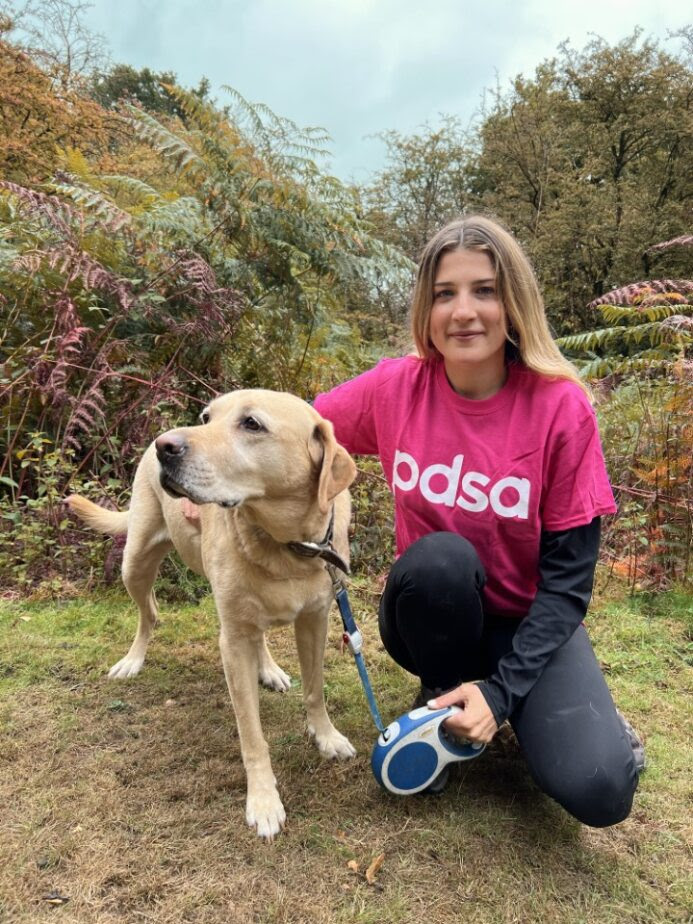
Anna and Bella

All dogs who join #TeamPDSA and take part in the challenge will receive a limited-edition dog bandana and those who raise over £100 will receive a well-earned medal for completing the Walkathon.

“Whether it’s 1.5 miles a day or a longer walk once a week, this is a great chance to set yourself and your furry family member a challenge,” explains PDSA Fundraising Manager Anna Hawkins.

“We all know the importance of walking our dogs, and autumn is a beautiful time to appreciate the great outdoors with your four-legged friends!

“Not only that, but every step you take, and every mile you tick off, you’ll be helping PDSA treat hundreds of thousands of pets in need whose owners who have nowhere else to turn.”

The team at Edinburgh PDSA Pet Hospital saw more than 8,600 pets in 2022, carrying out over 900 surgical operations, 2,300+ x-rays and 1,000+ ultrasounds.

This is the charity’s second annual October Walkathon. Last year, participants raised more than £20,000 for PDSA.

“If you are looking for more of a challenge for your fit, healthy and energetic pooch, you can always test yourself and walk 100 miles for PDSA,” adds Anna.

“And you don’t need to be a dog owner to get involved. Whether you are an animal-lover, pet owner or want to do something in memory of your pet, all ages and abilities are encouraged to get involved!”

Registrations close Sunday 8 October. 

To find out more and secure your place, visit pdsa.org.uk/oct-walkathon 

Three-legged cheetah bounds back to health with the support of West Lothian Zoo

FIVE SISTERS ZOO CELEBRATES THE FELINE MAKING A FULL RECOVERY AFTER ADOPTING THE UNWANTED INJURED CHEETAH

West-Lothian-based Five Sisters Zoo, has announced that Ashanti the three-legged-cheetah has made a full recovery after her life-changing amputation surgery.

As the fastest land animal on earth, the cheetah reaches speeds of more than 100 kmph. So, when the crippling and complicated ankle break rendered four-year-old Ashanti lame, it was devastating for the beautiful big cat and her keepers.

When Ashanti’s previous zoo found itself having to close, it struggled to find another zoo to take her on as a result of her complicated leg fracture and its failure to heal despite surgery by the zoo’s vet. Despite this and knowing she would need significant care and treatment, the family-owned Five Sisters Zoo – renowned for its work and care for endangered animals – welcomed Ashanti into their care in March 2022.

Despite a further two surgeries to try return her leg to normal function, the specialist vet team reluctantly had to make the difficult decision to amputate her right hind leg. Now, six months on, the extraordinary cheetah has fully recovered and is now bounding around her habitat at the West Calder Zoo.

Brian Curran, owner of Five Sisters Zoo, said: It was an incredibly difficult decision; it gave us all sleepless nights.

“When she first arrived at Five Sisters Zoo, Ashanti would cope with running around with the other cheetahs and didn’t appear to let the old injury slow her down too much. However, after lots of playing and running in their new large enclosure, Ashanti would periodically become quite lame and tired and would need a course of pain relief medication.

“Despite two further specialist surgical operations at the zoo to try to improve matters, we knew this wasn’t going to be sustainable or fair long-term, so our specialist veterinary team made the difficult decision to amputate her leg.

“After a successful operation and within just a few weeks of the surgery, Ashanti was clearly happier and much more contented which made us feel like we made the correct decision.”

Romain Pizzi FRCVS, Head of Veterinary Services for Five Sisters and President of the British Veterinary Association’s Scottish branch, said: “Ashanti’s injury was a complicated one, with a difficult break in her right hind ankle that had not healed when she arrived at the zoo.

“Despite our performing a further two operations at Five Sisters Zoo to try and return her leg back to a more normal function, she was not coping well, and was prone to injuring the leg easily.  After much deliberation, we decided to amputate her leg and are so pleased with her recovery.

Ashanti actually translates to ‘gratitude’, and while she might run away when she sees me now as I’m the one who operated on her, I hope she is, in fact, grateful and happy to be back on her (three healthy) feet!

“We can’t wait to see Ashanti continue to thrive and put a smile on everyone’s face for many more years to come at Five Sisters Zoo.”

Ashanti’s carers welcome guests and visitors to Five Sisters Zoo to view her full recovery for themselves.

For more information or to plan your visit, please go to: https://fivesisterszoo.co.uk.

Expert dog welfare group shares advice for helping to keep flat-faced dogs safer in the heat

‘WHEN IN DOUBT DON’T GO OUT’

During summer last year, when the UK faced record-breaking high temperatures of over 40C in July, over 50% of dogs treated for ‘heatstroke’ by PDSA* were those with flat faces (brachycephalic breeds) such as Pugs, British & French Bulldogs and Shih Tzus.

With the summer season underway, a group of UK dog welfare experts is urging owners of flat-faced dog breeds to take extra care to protect these dogs in the warm weather. 

The poor ability of these types of dogs to keep themselves cool by panting because of their abnormally flattened faces means that they are at huge risk of heatstroke in hot weather.

A survey by the British Veterinary Association (BVA) showed that over half of vets surveyed had treated flat-faced dogs for heatstroke in the past year.

In a separate BVA survey, following last year’s record-breaking heatwave, many vets also reported being especially concerned about the impact of hot weather on flat-faced dogs, with some vets worried that owners often did not recognise visible or audible signs of heat stress in their dogs.

The Brachycephalic Working Group (BWG), a national group of the UK’s leading dog health and welfare organisations and vets, has issued advice specifically aimed at owners of flat-faced breeds, to help protect these dogs in the hotter temperatures and summer sunshine:

  • Help them stay cool in hot weather – Dogs don’t sweat like humans do; instead the main way they cool themselves down is by panting. The limited breathing abilities of some flat-faced dogs means they often struggle to cool themselves down and ineffective panting in these dogs only further exacerbates their breathing difficulties.

Encourage your dog to stay in shaded areas, avoid exertion (such as outdoor walks or a game of fetch) and stay indoors through the heat of the day. Never leave flat-faced dogs in a car or conservatory, where they can overheat rapidly even on a relatively mild or overcast day.

  • Plan your walks – Always avoid the warmest parts of the day to head out with your dog. Plan your walks for dawn and dusk. If this isn’t possible, it’s far better to skip a walk rather than risk a flat-faced dog going outside – a dog can develop heatstroke in as little as 15 minutes in warm conditions.
  • Keep cool with fresh drinks – Ensure your dog stays well hydrated by placing bowls of fresh water around the house. And for an extra cool drink, you can add in some ice-cubes.
  • Spot the early signs your dog is struggling with the heat – Being aware of physical changes to your dog from over-heating can enable owners to intervene earlier, hopefully before heatstroke sets in. Look out for the following changes in your dog: breathing more heavily than usual, having less energy, less playful than normal, panting more, stumbling or laying down.
  • Recognising the signs of heatstroke – Being able to spot the signs of heatstroke and knowing when to act can save your pet’s life. Signs can vary from excessive panting, confusion, bright red gums, foaming at the mouth, vomiting, diarrhoea, collapse or even seizures.
  • Cool your dog down quickly – if your dog shows any of the above signs, it’s essential to cool them down as quickly as possible. Move them into a cool area, pour cool water from the cold tap and offer them small amounts of water to drink. Be sure to contact your vet as soon as possible so they can offer the best advice for your situation. Always remember to ‘cool first, transport second’1 when taking your dog for veterinary care for heatstroke.
  • Knowing Pet First Aid could save your pet’s life – Being comfortable and able to perform Pet First Aid before you get to a vet could be vital for your dog in an emergency, especially in cases of heatstroke. PDSA has a free Pet First Aid guide, full of tips and tricks for pet owners, should the worst happen.

Due to their flattened skull shapes, flat-faced (brachycephalic) dogs do not have the naturally longer nose that helps other types of dogs to lose heat during panting, meaning flat-faced breeds often struggle more than other types of dogs to lose heat effectively.

These problems are exacerbated in hot weather and especially if the dogs are exercised. Owners of flat-faced breeds should be extra vigilant in the summer months when it’s likely to be warmer than usual. Warm weather can be fatal for all breeds of dogs, so it is important all owners are aware of the severe dangers.

Dr Dan O’Neill, Chair of the BWG, said: “Flat-faced dogs are currently hugely popular in the UK but owners of these breeds need to especially vigilant to protect their dogs from heatstroke.

“Avoid exercise during hot parts of the day and wet these dogs liberally as soon as they show are any signs of overheating.

If you are concerned, contact your vet as soon as possible. The core message is ‘when in doubt, don’t go out – Dogs Die on Hot Walks’.”

The BWG, which is made up of veterinary associations, welfare organisations, universities, the government, breeders and dog owners, has more information about heat-related illness in brachycephalic dogs, and an infographic with advice, on the Group’s website.

Vets welcome commitment from leading UK online marketplaces to new pet advertising standards

The British Veterinary Association (BVA) has welcomed commitments made this week by the UK’s leading online marketplaces, including Gumtree, Preloved and Pets4Homes, to sign up to new best-practice advertising standards for pets advertised for sale online.

Alongside the minimum legal requirements for pets advertised online, the 26 voluntary standards will help classified websites crack down on misleading, illegal or unethical adverts. This will improve animal welfare and help prevent unsuspecting buyers from getting ‘petfished’, where unscrupulous sellers pretend the pet they are selling is from a happy home, when in reality they have been bred or kept in poor conditions.

The new Advertising Standards were launched last week (30 June) by the Pet Advertising Advisory Group (PAAG), a leading group of animal welfare organisations, trade associations and veterinary bodies including BVA. The group has been engaging with popular UK pet classifieds websites for over two decades to help websites better moderate the online pet marketplace.

Responding to the new standards, British Veterinary Association Senior Vice President Justine Shotton said: “Online marketplaces are extremely popular and so the commitment of these websites to the new advertising standards is hugely positive, and we hope other websites follow suit.

“Together, we can continue our work to rein in the Wild West nature of buying and selling pets online and make sure that animal welfare and buyer safety are front and centre.

“With these standards, websites will now block sellers from advertising animals with illegal mutilations like docked tails and cropped ears, banned breeds and prohibited species, underage kittens and puppies, or even postal deliveries for live vertebrates. They will also crack down on sellers advertising animals frequently without a local authority licence.

“Anyone thinking of buying a pet should always take the extra time to consider if they will be able to look after the animal’s health and welfare requirements. If an ad does not share basic information such as a photo, age, country of origin and relevant health tests, you should flag it to the website and be prepared to walk away to avoid dodgy sellers and animals that might have a poor quality of life because of how they have been bred.”

BVA has been actively involved in drafting the new advertising standards and will continue to support PAAG’s important work. The websites currently engaging with PAAG and who have committed to meet the Advertising Standards are:

  • Gumtree
  • Pets4Homes
  • Preloved
  • Puppy Choices
  • Friday Media Group
  • Freeads
  • Forever Puppy
  • Wightbay

For more information on the new PAAG Advertising Standards and advice on buying a pet responsibly, see: https://paag.org.uk/

PDSA: Vet’s top three things you need to know when taking your dog swimming this summer

PDSA Vet Nurse Shauna Walsh says: “As we approach the summer months, many of us may consider taking our dogs with us to the beach or letting them cool off in lakes and ponds. Swimming can be great exercise for dogs, but there are a few water safety tips every pet owner should be aware of.

“Before you think about heading out, make sure to check how hot it’s going to be. Even with the opportunity to swim, days out in the sun could put your dog at risk of heatstroke, so consider whether it might be safer to leave them at home.

“Remember that if it is too hot, even getting your dog to the water might be a problem as hot sand or tarmac can burn their paws. Once you and your dog are by the water, there are many things to keep in mind to help keep them safe.”

  1. Make sure they can swim

“First, it’s essential to remember that not every dog is a natural swimmer. Dogs with shorter legs such as Corgis and dogs with flat faces such as Pugs may find swimming hard work. Some dogs won’t enjoy being in the water at all, so don’t force them. Watch out for signs that your dog is getting tired and encourage them back to you to rest.

“If your dog seems keen to enter the water, it is important to make sure they know how to swim first. If there is dog friendly or hydrotherapy pool nearby, they are great, safe places for them to practice swimming and get the hang of things.

“Taking it slowly and splashing in the shallows can help build their confidence before they venture deeper in. Use your arms to support them under their stomach as they get the hang of kicking with all four legs. Encourage them back to shore frequently, so they know where the exit point is and can return to dry land if they feel tired.

  1. Choosing the right spot

“Picking the right swimming spot is a big step in ensuring your pet’s safety. If swimming in nature, make sure your pet is up to date with their vaccinations, and carefully select the location.

“Lakes are often calm and have plenty of shallow spots for your dog to rest. Make sure to scan the area for any hazards, such as fallen branches, boats, windsurfers, or fishermen as they could potentially present a danger to your dog.

“Also be on the lookout for blue-green algae – this grows in stagnant water and is toxic to dogs even in small amounts. Dog friendly beaches can also make perfect spots for a dip – but remember to check the tide times, look out for warning flags, and make sure the waves are small.

“It is important you never let your dog enter the canals as the water is often stagnant, which can be a health hazard as they may catch an infection and there’s increased chance of blue-green algae growth. There are also often dangers under the water and not many places for your pooch to climb out. Fast flowing rivers or flood waters are also unsuitable as the currents can quickly cause your dog to struggle and get into trouble.

  1. What to do in an emergency

“Never leave your dog unattended around water, even if they are a strong swimmer. If your or someone else’s dog gets in trouble in the water, it’s best to avoid going in after them as this can put you in danger as well. If you can, remain on the shore, calling your dog to give them a target to swim towards. If there is an inflatable ring available, you can throw this into the water to help keep your dog afloat.

On a beach, lifeguards may be able to assist helping your dog to shore, otherwise ring 999 and ask for the coastguard to get help from professionals.

“If a pet becomes unresponsive after swimming or has drowned, it is important to know how to perform CPR to give them the best chance. While you begin CPR, have a second person ring your vet who will be able to offer support.

“If you do not feel confident in performing CPR or dealing with emergency situations with your pets, PDSA has a free pet first aid guide which offers both lifesaving and practical tips.”

For more information on water safety, you can visit https:\\www.pdsa.org.uk\\pet-help-and-advice\\looking-after-your-pet\\puppies-dogs\\water-safety

Letters: Pawsome Tea

This summer at Cats Protection we’re inviting cat lovers to hold a Pawsome Tea anytime, anywhere. Whether you choose to hold a casual coffee morning or a yummy bake sale at work, any funds raise will then be put towards our vital cat welfare work.

By taking part you’ll be truly ‘baking a difference’ for cats in need and you can choose whether to donate to your local branch or centre or to the charity as a whole.

With every pot of tea poured, biscuit dunked and cake cut you will help give our feline friends a chance at finding their furever home. A £10 donation could feed a cat in care for 50 days, while £50 would cover neutering a cat or kitten.

At Cats Protection we help an average of 157,000 cats and kittens a year through our national network which includes around 210 volunteer-run branches and 34 centres. Our vision is to help people see the world through cats’ eyes and your cat-themed tea will help us achieve that goal.

Anyone wishing to take part can sign up by visiting: 

catsprotection-pawsometea.blackbaud-sites.com 

where you will also find plenty of resources to make planning your event a piece of cake – from DIY bunting and invitations to recipe ideas and advertising posters. We can’t wait to have a cuppa with you!

Yours faithfully,  

Hannah Ashwell

Digital Community Fundraising Manager

New firework laws come into force

Councils have new powers to reduce the negative impact of fireworks

From today (Thursday June 22), councils can designate Firework Control Zones that would make it a criminal offence to ignite a firework, or knowingly throw a lit firework in a zone which can include private properties or gardens.

The maximum penalties are a fine of up to £5,000 or up to six months in prison.

Organised public firework displays will still be permitted within Zones to allow people to enjoy fireworks safely.

The provisions are one of the key measures from the Fireworks and Pyrotechnics Articles (Scotland) Act 2022.

Minister for Victims and Community Safety, Siobhian Brown said: “Evidence and engagement with communities shows strong public support for tougher action on fireworks, which along with other pyrotechnic articles can cause harm, serious injury and distress to people, pets and the wider community.

“Giving local authorities additional powers to create Firework Control Zones, with input from the local community, marks a significant step in tackling the issues caused by fireworks, which are dangerous when used inappropriately.

“This change to the law demonstrates our absolute commitment to further improve public safety and wellbeing for our communities.”

Police Scotland Chief Inspector Nicola Robison said: “Fireworks Control Zones allow local authorities the power to designate areas where fireworks cannot be possessed or set off and ultimately restricts the improper use of such items in Scotland.

“It is a criminal offence to be in possession of, or setting off, fireworks within a Fireworks Control Zone and I would urge all members of the public to be aware of designated zones within your local area to ensure you are not in breach of the legislation.

“Police Scotland is committed to keeping the public safe from the risk of harm associated with the reckless and criminal use of fireworks and we welcome the addition of Fireworks Control Zones within Scotland.”

Review Group member, and Director of Innovation and Strategic Relations at the Scottish SPCA, Gilly Mendes Ferreira said: “We warmly welcome introduction of Firework Control Zones.

“The restrictions are much needed to prevent unnecessary suffering among pets, farm animals and wildlife.

“They will help to alleviate distress caused by fireworks and also prevent any firework debris that can be harmful to, or ingested by, animals.”