Detectives are continuing enquiries following three incidents in the Kilmarnock area last night.
The first incident occurred around 7.45pm outside Crosshouse Hospital, when a 39-year-old woman was found injured in the car park. She received medical care but she died at the scene.
The second incident occurred twenty minutes later on Portland Street, where a 24-year-old woman had been stabbed. Emergency services attended and she was taken to Crosshouse hospital where she later died.
A further incident, a fatal road crash, occurred on the C50, a road between the B7036 and the A76. Emergency services attended but the 40-year-old male driver of the car was pronounced dead at the scene.
Family relatives have been made aware.
Enquiries carried out so far have indicated that the incidents were linked and an investigation is under way to establish the exact circumstances of what happened.
Officers are not looking for anyone else as part of their investigation and there is no ongoing threat to the public.
Chief Superintendent Faroque Hussain said: “A number of locations remain cordoned off as officers continue to conduct enquiries. We are working to confirm the full circumstances of what has happened. If anyone has any information which could assist our enquiries, please do contact us.
“Understandably, people will be shocked by what has happened. We are still in the process of establishing the full circumstances, however, I would like to reassure people that there is no wider threat to the community. Officers will be on patrol and anyone with any concerns can approach these officers.
Local diversions are in place as a number of areas remain cordoned off in the town centre and ear on the road between the B7036 and A76.
If anyone has any information which could assist this investigation, please do contact police on 101.
A LEADING figure in the development of care homes and hospitals in Scotland is to take the reins as a dedicated Managing Director of Edinburgh’s finest care home.
Graeme Kelly, who is currently a Director at Walker Healthcare, will move across to the newly created role at its newest development, Cramond Residence, as it looks to build on growing demand as consumer confidence recovers within aspects of the sector that can demonstrate a positive track record over the past 12 months.
The home, which enjoys a leafy location, was purpose-built in 2018 by Walker Healthcare as a boundary-pushing advancement in both comprehensive luxury and clinical care for older people.
The latest technology and awareness of the importance of infection-control were factored into the design and specification from the outset, with small-group living in nine self-contained living pods as a cornerstone of the design alongside awareness of the benefits of the latest technology in everything from laundry systems to ventilation.
Graeme, 62, from Fife, has been astonished at the lengths that the care home’s teams have gone to provide rich and stimulating care, while managing to keep Covid-19 at bay, with very few cases recorded at the home to date.
Graeme said: “From day one we set out to create a new upper tier in the care home sector. Infection control was of utmost priority at this development long before the pandemic – and you can see how the design of the home is shaped around it.
“The Cramond Residence team, like so many key workers, have been truly inspirational throughout the last year. They’ve given the residents here the best possible care, hospitality and experiences and have provided families with reassurance
“We’re starting to see confidence returning and new enquiries are increasing month on month. Those that have put off a relative’s stay in a home are now ready to commit, if they can be reassured by the track record of the home, over the past year.
“All of our staff and residents have now had the vaccine too – and while we can’t for one second become complacent – we are grateful for our record so far in the pandemic.”
Graeme’s move over from Walker Healthcare, where he has worked since 1989 and which built and owns the home, coincides with the phased retirement of Eileen Gray.
The home offers nurse-led care, as well as offering a varied lifestyle programme. During this pandemic this has seen residents embark on a “Grand Tour of Scotland”, with distilleries, museums and attraction providing virtual tours and experiences.
Cramond Residence is a purpose-built care combining unparalleled luxury; true five-star accommodation with outstanding clinical standards – with places available from £1850 per week.
The home offers high quality person centred care for up to 74 residents offering a small-group living concept in nine houses, with all residents enjoying an exceptional range of amenities and activities, delicious food and bespoke care from our highly-trained team.
The nine small bubble group living facilities have up to eight bedrooms, a private lounge, dining and snug facilities.
As Scottish families adjust to a third national lockdown and the challenges of homeschooling again, Uswitch surveyed parents to find out how the nation’s homeschooling parents and children are coping this time around.
Lack of homeschooling resources for Edinburgh kids
More than half of Scottish children don’t have full-time access to a laptop for school work.
A third of Edinburgh pupils are having to share a laptop with siblings.
A third of Edinburgh parents have had to supply homeschool tech for their kids.
1 in 10 Scottish families have sought out tutor support to fill knowledge gaps, while a quarter of parents have had to spend on a homeschool set up.
On average Scottish parents have paid £158 on homeschooling costs, £61 less than the UK average.
In total, the UK’s struggling parents have been left with a £3.7 billion bill due to homeschooling costs.
Scottish homeschooling families failing to connect online
A quarter of Scottish parents are struggling to homeschool due to broadband problems.
The biggest broadband concern is slow speeds disrupting the school day.
Despite this, only 10% of Scottish families have switched or upgraded their broadband provider.
Scottish kids falling behind due to homeschooling
A quarter of Scottish kids don’t get all their school work finished during the school day.
1 in 10 Edinburgh children are having to work longer hours to keep up with their workload, while another 1 in 10 pupils’ work goes regularly unfinished.
68% of Scottish kids are supported by school for less than half a day leaving parents to fill in the gaps despite working.
More than a third of Scottish children don’t have any live video call lessons, with just 1% of children receiving a full school day of live video teacher support.
Mental health concerns for Scottish children
1 in 3 Scottish parents surveyed stated homeschooling has had a negative impact on their child.
Of these parents, 53% said their child is more isolated and detached socially
More than half think their child’s motivation to learn and concentrate has worsened.
A third said homeschooling has negatively impacted their child’s mental health, stress and learning.
More than 1 in 4 parents expressed concern about their child’s fitness and while a third are stressed their child’s anxiety has suffered at home.
While 22% of parents said poor sleep such as bad dreams and sleeping later are an issue for their child because of remote learning.
A fifth of Scottish parents are concerned about their child’s happiness overall.
Meanwhile Scottish parents are experiencing increased guilt, with over a quarter of Edinburgh parents identifying feelings of guilt due to the challenges of remote learning.
Nick Baker, broadband expert at Uswitch.com, comments:“As UK families adjust to a third national lockdown, many parents are feeling increased pressure to successfully navigate homeschooling while working remotely.
“To take off some of the pressure, take advantage of helpful learning tools available online, such as the BBC education programming available daily. Additionally, if you’re concerned your child is falling behind due to a lack of resources, speak with their school to find out if you qualify for extra help and the Government Get Help With Technology Scheme.
“With children logging on to learn online, you’ll likely have more devices than usual connected to your broadband during the day. Ensuring your internet is up to speed will help elevate connection stress and keep the school day running smoothly.
“If you are having trouble with your broadband, try these top tips and check out our homeschooling Wi-Fi issues guide to solve your most common home Wi-Fi problems:
Reboot your router – the classic ‘unplug it, leave it 30 seconds and plug it back in’.
Location, location, location – if your router is located further away than it needs to be, try moving it to the room you’re most active in or the center of your home.
Disconnect unnecessary devices – turn the Wi-Fi off on gadgets you’re not using, even if they’re in a drawer. They may be using bandwidth in the background.
Run a speed test – this will determine whether your router is running at the speeds you signed up for.
Purchase a Wi-Fi extender or ‘booster’ – this will optimise your broadband for faster and stronger connections.
Sainsbury’s Local and Tesco Express customers are paying up to £320 and £280 respectively more a year than those who shop at larger stores for the same items, new Which? analysis has revealed.
The coronavirus pandemic has had a significant impact on consumers’ shopping habits, with many people avoiding large supermarkets in favour of shopping online or using convenience stores near their homes.
But while convenience stores have been a lifeline for many people during the pandemic, they are not the most economical way for consumers to shop as prices tend to be higher.
More than half (51%) of Which? members surveyed who used convenience stores said cost was one of their biggest bugbears.
To determine how much more customers could be spending at supermarket convenience stores compared to their larger stores, the consumer champion analysed the average weekly price of 48 own-label and branded groceries for five months in 2020 across the two largest convenience chains – Sainsbury’s Local and Tesco Express – and compared it with the cost of the same items at their supermarket counterparts.
Which? found customers could be paying 9.5 per cent more a year (£322) at Sainsbury’s Local than they would at a regular Sainsbury’s supermarket.
On average, the shopping list of 48 items, which included Napolina Chopped Tomatoes and McVities Ginger Nut biscuits, cost £71.26 a week at Sainsbury’s Local compared to £65.08 at a Sainsbury’s supermarket – an average weekly difference of £6.18 and £322 annually.
Which? also found Tesco Express customers could be paying 8.4 per cent (£279) more a year compared to those that shop at a larger Tesco supermarket. The shopping basket of 48 items would cost £69.12 at Tesco Express compared to £63.75 at a Tesco supermarket – a difference of £5.37 a week and £279 annually, on average.
At Sainsbury’s the products with the biggest price difference were a 400g can of Napolina Chopped Tomatoes, which was a third more expensive at Sainsbury’s Local, and a 250g packet of McVitie’s Ginger Nut Biscuits, which was just over a quarter pricier at a Sainsbury’s Local store compared to a larger supermarket.
A number of Tesco own-label products were a quarter (23%) more expensive in Express stores than in supermarkets, including Tesco 0% Fat Greek Style Yogurt (500g) and Tesco Orange Juice With Bits, Not From Concentrate (1lt).
In some cases, however, products were the same cost or even a fraction cheaper in the convenience store. For example, a 500ml bottle of Flash spray with bleach was the same price (£1) at Sainsbury’s Local, Tesco Express and the supermarkets, while McVities Digestives were on average 1p cheaper in the smaller stores.
Which? shared its findings with Sainsbury’s and Tesco. Sainsbury’s said that product price is influenced by a variety of factors including special offers, while Tesco said that rents, rates and operating costs are higher in built-up areas.
The use of convenience stores increased during the first lockdown, offering an alternative for those who preferred not to travel or queue for supermarkets and – particularly in the case of local stores that launched delivery services – a lifeline to vulnerable and shielding people.
A Which? members survey found three in five (61%) had shopped at Costcutter between one and three times a month in the eight months after the first nationwide lockdown began in March, compared to less than one in 10 (7%) before the pandemic.
Similarly, one in five (20%) had shopped at a Co-op four to six times a month since spring 2020, compared to just 12 per cent before lockdown.
Natalie Hitchins, Head of Home Products and Services at Which?, said: “Convenience stores have been a huge help to many of us during the pandemic. However, our research shows that shoppers who rely solely on supermarket convenience stores, rather than their larger stores for their groceries, are paying a premium.
“Customers will generally get more for their money at larger supermarket stores, but for some products, the price difference may not be significant, so it is always worth checking prices to make sure you are getting the best deal.”
Average week
Week with greatest difference
Average annual cost and difference
Sainsbury’s
Main store
£65.08
£62.85
£3,384
Local store
£71.26
£73.05
£3,706
Difference
£6.18
£10.20
£322
Tesco
Main store
£63.75
£61.96
£3,315
Express store
£69.12
£70.81
£3,594
Difference
£5.37
£8.85
£279
A Sainsbury’s spokesperson responded: “We’re committed to offering our customers the best possible value.
“The price of our products is influenced by a range of factors, including promotions which can vary between Sainsbury’s supermarkets and convenience stores.”
A Tesco spokesperson said:“Our Tesco Express stores are mainly in built-up areas where unfortunately rents, rates and the operating costs for these stores are higher.
“The difference in prices of some products reflect these increased costs, but our prices remain competitive as we strive to offer great value to our customers.”
The city council’s Powderhall regeneration project has reached another major milestone with the submission this week of a planning application by Collective Architecture for the first phase of a new development.
Following extensive public consultation this phase will include a new Early Learning and Childcare Centre with places for 128 children with 27 accessible council homes, designed for older persons, situated above. This intergenerational facility will be one of the first of its kind in Scotland and will offer health and wellbeing benefits for the older residents and new learning and social opportunities for children attending the nursery.
This new intergenerational building will also be one of the first Passivhaus-standard buildings built by the Council, meaning that it will use little energy. All the properties will be fully wheelchair-adapted, accessible via two lifts and will have storage for mobility scooters and bikes.
The new Early Learning and Childcare Centre, which will be managed by Broughton Primary School, will allow for the existing nursery provision to relocate to the new centre. This will provide more childcare places for the local community and open up more space for the primary school. It will also have a multi-purpose room, which will be available for public use via the school lets system.
The development also proposes to create a new civic space as an entrance to Powderhall and make improvements to St Mark’s Path, together with a new outdoor educational space for Broughton Primary School, again available for community use via school lets.
Councillor Kate Campbell, Convenor for Housing, Homelessness and Fair Work, said:“The community have absolutely shaped the development plans for this site, so I’d like to thank everyone who gave up their time to share their thoughts with us. The plans are better because of their contributions and will have community facilities that work for local people.
“These new homes will be accessible and energy efficient. They will all be fully wheelchair adapted and built to the internationally recognised Passivhaus-standard, with renewable power generation on site. So they are both contributing to our Net Zero Carbon by 2030 target and our commitment to building 20,000 affordable homes by 2027.
“We’ll start by restoring the stable block and work will begin imminently. This will create affordable, flexible workspace for small businesses – supporting dozens of local jobs. The function space can be used for community events, such as art classes or exhibitions.
“I’m looking forward to seeing the development start to take shape over the course of next year, restoring the lovely stable blocks, bringing them back into use and giving local residents back this area that has been unused for so long.”
Councillor Ian Perry, Convenor for Education, Children and Families, said: “This entire Powderhall development will bring fantastic benefits to the local community, creating great spaces to live, work and play – while being safe and carbon neutral.
“It’s great to see that through the new Early Learning and Childcare Centre more children in the area will be able to access nursery spaces. This will allow us to meet our commitments to making early years provision more flexible, to fit family needs, and deliver 1,140 hours a year of free early learning and childcare for all three- and four-year olds and eligible two-year olds.
“This phase of development forms part of the wider regeneration of the former Powderhall Waste Transfer Station and the adjacent former Stables building. In total, the development will deliver more than 200 homes – over a third of them affordable.”
Nicola McLachlan, Project Architect, Collective Architecture said:“The recent pandemic has reinforced the significant and detrimental impact that unsustainable living and social conditions can have on the quality of our lives, heightening our sense of accountability.
“The Powderhall mixed-use masterplan is reflective of an ambitious client and a participatory place-based design approach that has developed innovative and ethical living possibilities, taking visionary steps towards ensuring future communities are both socially and environmentally sustainable and successfully rooted with their surrounding neighbours.
“Phase 2 of the masterplan focuses on sharing, agency, and autonomy in the context of increasing age demographics, rising levels of loneliness and takes cognition of the significant shortage of older persons homes – particularly within urban areas.
“The proposals create a purpose-built intergeneration building where residents and nursery children can seamlessly co-exist, creating a variety of spaces where people can enjoy interaction and sharing space and time together. A project that marks a significant step towards designing with an agenda where wellbeing and high quality of life for all generations is our measure.”
Carl Baker, Architect and Passivhaus Designer, Collective Architecture said: “The project contributes to The City of Edinburgh Council’s target of becoming a net zero carbon local authority, and the adoption of the Passivhaus Standard ensures this is a tangible aspiration.
“In addition to Passivhaus and the proposed renewable technologies, sustainability has been considered throughout the project from the co-location of services and the shared building elements, to the reduction of embodied carbon by incorporating a circular strategy.
“Furthermore, there are many benefits for the client and end users of this project which are provided by the intergenerational approach and in striving to achieve the Passivhaus Standard. Some of these will be felt immediately, while others such as long-term health improvements and access to a high-quality learning environment will be experienced for generations to come.”
A coalition of major health organisations have joined forces in a joint letter to urge the government to keep the £20 uplift to universal credit and extend the same support to those on legacy benefits.
The group, which includes leading royal colleges and health bodies, says that without the £20 uplift, millions of families will be swept into poverty with the result being a reduction in the health, wellbeing, and life chances of children and young people for decades to come.
The letter stresses that we must view the investment in the social security system as an investment in the nation’s health, and cutting the uplift will result in deepening health inequalities, hitting the most vulnerable.
Commenting on the publication of the letter, Dr Hazel McLaughlin, President of the British Psychological Society, which coordinated the letter, said: “Today’s letter is the first time a coalition of health bodies and organisations have joined forces to urge the government to keep the £20 uplift to universal credit, a lifeline for so many families during this pandemic.
“As organisations working across health and care, we know the links between poverty and poor physical and mental health. Without investment in the health and wellbeing of our nation, particularly those on the lowest incomes, the pandemic threatens to entrench health inequalities for generations to come.
“In this challenging time, together we call for the government to extend the uplift to bring security to the most vulnerable when they need it most.”
The letter reads:
Dear Prime Minister
Ahead of the Spring Budget we are writing to collective collectively to urge you to make the temporary £20/week increase to the standard allowance of Universal Credit and Working Tax Credit permanent from April, and address the inequality that currently exists by providing the same uplift to Employment and Support Allowance, Income Support and Jobseeker’s Allowance.
As organisations working across health and care, we see the irrefutable evidence that poverty has significant negative impacts on individuals, their families and society more widely. This uplift in Universal Credit has been a lifeline for many people in supporting them through the pandemic, it is crucial that this is maintained as the country seeks to recover from its impacts.
This investment in our social security system is also an investment in our nation’s health, ensuring many of those on the lowest incomes have access to essentials like food or heating. In a year marked by worry and uncertainty, the uplift has been a preventative lifeline keeping many afloat, protecting them from financial instability, debt and worsening mental health.
By April 2021, if the uplift is discontinued, this good work risks being immediately undermined. Overnight, 6.2 million families will face a £1,040 a year cut to their income. Based on modelling by Joseph Rowntree Foundation, this will result in 700,000 more people being pulled into poverty, including 300,000 children. There is an established link between poverty and poor health, which is worsening in the face of Covid-19. The excess mortality rates in the most socioeconomically deprived areas due to the virus is proof of this. We are therefore urging you to make the uplift permanent and to continue to support a recovery that puts health and flourishing at its heart.
The Government’s commitment to invest in jobs, skills and infrastructure is a welcome and a necessary part of boosting opportunity. But without an equal emphasis on the health of those on the lowest incomes, this threatens to exacerbate and entrench health inequalities across the UK. Removing the £20 uplift will cut families adrift, forcing them to confront mounting bills and reducing participation in rebuilding their communities.
We cannot plan for the UK’s economic recovery only to face another escalating health crisis for those on the lowest incomes. The impact of millions of families being swept into poverty will be a reduction in the health, wellbeing, and life chances of children and young people for decades to come.
Meanwhile, more than two million people on legacy benefits, most of whom are disabled people and people with long-term mental and physical health conditions, have not been offered the same lifeline. Many of these people are at greater risk from Covid-19, and are taking more extreme and prolonged measures, to protect themselves. This not only increases their living costs, but intensifies their mental and physical strain which in turn worsens health. We urge you to ensure that the full support of this lifeline is extended to those on legacy benefits.
We have recently welcomed what seems to be strong consensus against cutting this lifeline in the middle of a recession. However, we have been concerned of rumours of short-term extensions or one-off payments which would be insufficient and ineffective. We believe making the uplift permanent would be a worthwhile and sensible investment, and strongly urge the Government to keep doing the right thing, keep families afloat and keep the lifeline.
Signed,
Association of Directors of Public Health
British Association of Social Workers
British Psychological Society
Faculty of Public Health
Institute of Health Equity
Mind
Royal College of General Practitioners
Royal College of Nursing
Royal College of Paediatrics and Child Health
Royal College of Psychiatrists
Royal Society of Public Health
The Association of Mental Health Providers
The Mental Health Network of the NHS Confederation
Police in Edinburgh are appealing for the public’s help to trace a van which was stolen from the Portobello area.
The silver VW Transporter van, registration number VX66SYU, was stolen at about 11pm on Saturday 30 January 2021 while stored within a business address on Portobello Road.
The van is distinctive, with black wheel rims, tinted windows, black VW badge on front and rear, a black front grill, and a black roof box and a solar panel on roof.
Anyone who may have seen the van since it was stolen, or has information on its current whereabouts, is urged to contact Police Scotland on 101 quoting incident number 4425 of 30 January 2021 or anonymously via Crimestoppers on 0800 555 111.
More than 150,000 jobseekers across Great Britain will benefit from new employment support, helping them build their interview skills, find local vacancies and quickly get back into work.
New Job Finding Support service launched to benefit 160,000 people over the next year
Support ranges from job searches and interview practice to advice on how to switch careers
Service to run in parallel to existing support available in jobcentres and by work coaches, as part of UK Government’s Plan for Jobs
A new team of 325 Job Search Advisers are now available online or over the phone, to support those recently unemployed who already have the skills and experience needed to move into a new career, but might not be sure where to start.
Over the next 12 months, an expected 160,000 jobseekers will receive digital support and advice, as part of a new Job Finding Support (JFS) service in a further boost to the Government’s Plan for Jobs.
The ‘quick-fire support’, which takes place across four one-to-one sessions and aims to be completed in a matter of weeks, offers mock interviews, help to identify transferable skills and advice on how to switch industries, as well as online group sessions to improve job search techniques.
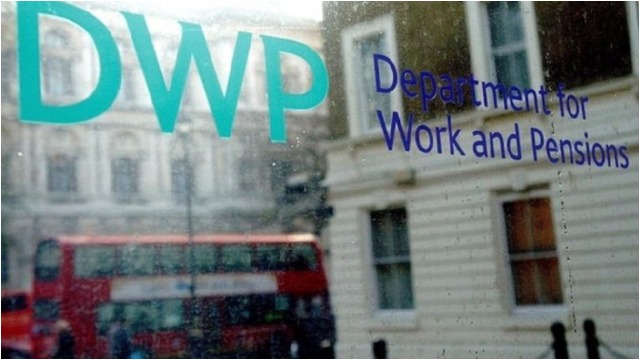
Secretary of State for Work and Pensions Therese Coffey (above) said: “Job Finding Support will help jobseekers brush up on interview skills and advice, giving them a helping hand to move back into work quickly.
“Our Plan for Jobs is helping us build back better and fairer, getting job support to people who need it right across Britain and levelling up opportunity.”
The service is completely voluntary to all jobseekers who have been unemployed for less than 13 weeks and are claiming benefits. Participants are referred to the scheme through their Work Coach.
As the Department for Work and Pensions drives forward the Plan for Jobs, it has supported over 40,000 people to retrain and upskill on the Sector-based Work Academy Programme; and recruited 8,500 new Work Coaches to spearhead efforts to get Britain working again.
Chief Executive of ERSA, Elizabeth Taylor, said: “The government’s Plan for Jobs package of labour market initiatives is helping people to provide for their families throughout the pandemic, and Job Finding Support is another important step in helping jobseekers in these difficult times.”
Job Finding Support will run in parallel to existing support that is available in jobcentres, and will complement the role of Work Coaches who provide more intensive support for jobseekers, including anyone facing specific difficulties returning to work.
This service will also free up frontline staff as they continue to help people access the financial support they need through the welfare safety net.
Local vaccination figures show that 80,066 people have been vaccinated in NHS Lothian, equivalent to 10.6% of the population over the age of 16.
Last week NHS Lothian said the Scottish Government vaccination figures were invalid, because they did not include vaccinations that had happened at GP practices in NHS Lothian.
At the Scottish Parliament on Tuesday Health Secretary Jeane Freeman admitted that “we do need to vaccinate faster in Scotland than we have been doing.”
Scotland is lagging behind the rest of the UK in the number of people vaccinated so far, with SNP Ministers rearranging their target for all over 70s to receive a letter to be vaccinated by the end of last week, to end of this week.
The delivery of vaccines to GP practices has been highlighted as a crucial area where the delivery of the vaccines is being held up, with GP practices limited to 100 vaccines doses a week.
Lothian MSP, Miles Briggs, said:“It is worrying that SNP Ministers are lagging behind other parts of the United Kingdom in the Covid-19 vaccine rollout.
“An efficient vaccination rollout is vital for protecting elderly and at risk people from Covid-19, but also so that our schools can fully reopen and businesses get going again.
“Every day that the vaccinations rollout is delayed is another day where pupils aren’t able to get back to school and businesses won’t be making any income.
“In NHS Lothian it is not clear whether GP practice vaccination numbers have been included in the total, and it is very concerning that SNP Ministers don’t know how many people have been vaccinated.”
The Conservative Lothians list MSP also expressed concern over Accident and Emergency waiting times figures released on Tuesday.
They revealed that 83.4% of patients were seen within the 4 hour waiting time target at A&E departments in Lothian, for the December 2020, the latest figures available.
The figure seen within 4 hours is comparable to December 2019, when 80.4% of patients were seen within the 4 hour standard in NHS Lothian, despite attendance dropping from 23,724 to 16,916.
The Royal College of Emergency Medicine warned that staff had been working relentlessly for 11 months and “Studies have shown many have face psychological distress, stress and even PTSD as a result of the pandemic.
Lothian MSP has called on SNP Ministers to step up their efforts to support NHS Lothian frontline staff, and said they that SNP Ministers have not done enough, despite unprecedented funding from the UK government to overcome Covid-19.
Mr Briggs said that members of the public also have a role to play in alleviating pressure on NHS services.
Lothian MSP, Miles Briggs, said:“NHS Lothian frontline staff have been working flat out to overcome Covid-19 for almost a year and we must all do everything we can to alleviate pressure on them as the Covid-19 vaccines is rolled out.
“It is important that people still go to A&E if they have an emergency, and not be put off by Covid-19, but people must make an appointment with their GP if they have a condition which doesn’t need immediate medical attention.”
“SNP Ministers have not done enough to support NHS Lothian frontline staff, despite record funding from the UK Government, with waiting times growing for A&E despite fewer people attending.
“Keeping socially distanced and following Covid-19 rules is crucial for a bit longer, as the vaccines is rolled out, so that our NHS doesn’t get overwhelmed.”
The highest number of vaccinations in one day was recorded on Wednesday: 45,085 people had a jab, taking the total of those who have had a first injection to 694,347.
Potholes overtake texting and drink driving in problem ratings
Potholes are perceived by motorists to be a much more significant concern on the road than they were three years ago, overtaking texting and drink driving as a worsening problem according to the findings of a new report from the UK’s largest road safety charity.
IAM RoadSmart’s annual Safety Culture Report, which tracks drivers’ changing attitudes to key road safety issues over time, discovered that three in four motorists (75 per cent) now perceive potholes to be a bigger issue for road users than they were three years ago. This was followed by driver distraction (68 per cent) – such as texting or talking on a mobile phone – and traffic congestion (65 per cent).
Further findings from the report, now in its sixth year and which involves surveying more than 2,000 motorists, also discovered that around nine in ten (89 per cent) drivers have been affected by potholes over the last year.
Meanwhile, just over one in three (31 per cent) drivers had changed their route to avoid a pothole with, more worryingly, more than half (54 per cent) having had to steer away or brake hard to avoid impact and damage.
Neil Greig, IAM RoadSmart Director of Policy & Research, said: “The pothole situation on UK roads has now become much more than just irritating, it’s a significant threat to personal safety.
“We simply can’t have vehicles swerving into oncoming traffic or slamming on their brakes without warning to avoid them. Deteriorating roads also put pedestrians and cyclists at greater risk.
“It is clearly a sign of the times when motorists perceive potholes to be a bigger growing concern to them than drink driving and texting. And while the statistics show that the devastating impacts of using a motor vehicle under the influence of alcohol or using a mobile phone when driving still remain, it does highlight that it is time for government to take potholes seriously and fix the UK’s road network.”
Regionally, eight in ten (81 per cent) motorists in the South East considered potholes to be a bigger road safety issue than three years ago, compared with around six in ten in London (61 per cent) and the North East (64 per cent).
It is currently estimated that there are some 42,675 miles of UK roads classed as being in POOR structural condition, costing an estimated £11.14 billion to bring them up to a level which they could be maintained cost effectively going forward, according to Asphalt Industry Alliance*.
However, IAM RoadSmart’s research found of those motorists who had experienced a pothole only around one in ten (12 per cent) had enough damage to their car caused by the pothole to require a repair and only around one in six (16 per cent) had reported a pothole to the authorities.
Less than one in ten (7 per cent) made a claim for the damage.