Morven MacKinnon was inspired by loved ones to develop her Degree Show project
An Edinburgh Napier University (ENU) student has drawn inspiration from her gran to design a space for people experiencing hair loss.
Morven MacKinnon’s project, The Wellness Factory, is the concept of a treatment centre based in the Biscuit Factory in Leith.
Her work is on display alongside fellow Interior & Spatial Design students as part of ENU’s 2026 Degree Show – which is currently being held at its Merchiston campus.
A combination of sketches, visual renderings and a scale model, The Wellness Factory imagines a treatment centre specialising in hair loss and regrowth, with a strong focus on nutrition and overall wellbeing of an individual.
It is designed as an inviting, stress-free environment, with an open plan food hall and breakout areas to promote connection and recovery.
The 22-year-old from Laurencekirk in Aberdeenshire was inspired by loved ones who have experienced hair loss. She said: “A lot of people close to me have been affected by hair loss – my gran being one of them.
“She went through chemotherapy twice and lost her hair. I understand how difficult it can be, so I wanted to do something which would help people in that situation.
“My gran was a massive help in putting it all together. I interviewed her to ask how she felt about it at the time.
“It is an understandably touchy subject for anyone who has gone through it. I think she was quite moved that I chose this as a project.
“I focussed on three case studies in particular, alopecia, eating disorders and chemotherapy patients.
“It formed a big part of my concept – which is bringing people together. People I interviewed told me how it is such a lonely and daunting prospect.”
For Morven the Degree Show marks a full-circle moment, as it was where she made the decision to study at Edinburgh Napier University.
She added: “I always wanted to do something arty and creative, so I spent time looking at different degree shows around the country.
“The work at Edinburgh Napier stood out as being very impressive. It looked so professional and clean, it really stuck with me.
“I’ve had sleepless nights putting my final project together, but I’m so excited to show it off.
“The lecturers have been amazing. You can tell how passionate they are. I can’t wait to start my career now.”
Showcasing work from across ENU’s School of Arts & Creative Industries, the 2026 Degree Show is being held at the University’s Merchiston campus between 29 May and 5 June.
The Rt Rev Dr Dagmar Winter was installed as the new Bishop of Edinburgh at a joyous service in St Mary’s Episcopal Cathedral.
Guests from all over Scotland and from as far as Ghana and New Zealand packed the cathedral, including church leaders the Most Rev Dr Leo Cushley, Roman Catholic Archbishop of St Andrews and Edinburgh, the Rt Rev Gordon Kennedy, Moderator of the General Assembly of the Church of Scotland, and the Most Rev Rt Hon Stephen Cottrell, Archbishop of York.
Bishop Dagmar, who becomes the 27th Bishop of Edinburgh, described the service of installation and translation (from Bishop of Huntingdon in the Diocese of Ely) as “an amazing and uplifting, hugely encouraging experience”.
After celebrating the Eucharist, she said: “Thank you to everyone who contributed to such a wonderful launch into my new episcopal role.
“In the following weeks and months there will be many to meet and I have much to learn and absorb. I can’t wait to get started! The Synod of the Scottish Episcopal Church next week comes early in my time and will be a further opportunity for important encounters.
“The joy of the Lord is our strength! In this spirit I look forward to working with all the charges in the Diocese of Edinburgh and the wider communities and their leaders beyond as we seek the kingdom Jesus proclaimed.”
The installation of Bishop Dagmar takes the College of Bishops to a full complement of seven bishops once more.
The newly re-elected Scottish Government must show that it is serious about tackling overcrowding in Emergency Departments – as A&E waiting time records continue to be broken.
New figures on ED performance from Public Health Scotland covering the month of April 2026 were published today (2 June).
In April, fewer than two thirds (64.2%) of major ED attendances were admitted, discharged or transferred within four hours. The government-mandated target is 95%.
Meanwhile, almost one in eight (12.4%, or 14,846) patients waited more than eight hours.
This made that month the worst April since records began for eight and four-hour waiting time metrics in ED.
A total of 6,196 – or 5.1% of patients – waited more than 12 hours – constituting the second worst April on record.
Dr Fiona Hunter, RCEM Scotland Vice President, said: “Emergency Department clinicians are working tirelessly to try to provide safe and good care to our patients – but the pressure is overwhelming and relentless.
“We are out of winter. This time of year is supposed to see a break in the clouds. Instead, we are as busy as ever.”
Today’s data also showed that, in April 2026, there were an average of 1,902 beds occupied by patients medically fit to leave each day – also known as delayed discharges.
This constitutes a serious problem and is a driver of ED overcrowding because it means patients in need of admission from A&E cannot get a bed. This can result in extremely long waits for these extremely sick patients.
As RCEM revealed last year, these waits can be deadly: in 2025, there 871 excess deaths associated with long waits for admission in ED.
Dr Hunter said: “At last month’s elections, the incumbent SNP-run Scottish Government retained power. We must see votes repaid with real, concrete action on A&E overcrowding.
“The new Cabinet Secretary for Health and Social Care Angela Constance has an uphill battle ahead of her. As today’s numbers show, waiting times are among the worst they’ve ever been for this time of year.
“Enduring such waits in an ED is stressful, undignified and we know it can cause harm to patients.
“Meanwhile, there has been no significant or meaningful improvement in the number of delayed discharges – a key metric of patient flow.
“We call on the government to make tackling hospital overcrowding a priority and refuse to allow the current situation to continue. Just because our waits are better than other UK nations does not mean they should be accepted.”
Discover powerful photographic portraits by groundbreaking American artist Catherine Opie in the National Galleries of Scotland’s showstopping summer exhibition.
Curated in collaboration with the artist, Catherine Opie: To Be Seen is Opie’s first ever solo exhibition in Scotland.
Specially adapted for presentation at the Royal Scottish Academy in Edinburgh, To Be Seen presents a unique experience of the people, communities and stories in the art of Catherine Opie.
The exhibition comes to Edinburgh from the National Portrait Gallery in London, having already received rave reviews from the likes of The Guardian and the Independent, with Time Out calling it ‘something worth celebrating’.
Tickets are on sale now and for the first time, under 18s can visit the National Galleries of Scotland summer exhibition for free.
Explore nearly 80 vibrant portraits by Opie alongside her selection of works from Scotland’s national art collection. Displayed across seven rooms in the Royal Scottish Academy building, come face to face with Opie’s mentors and collaborators, Queer communities, children, surfers, high school footballers and political crowds as well as self-portraits of the artist.
See Opie’s work alongside a selection of 13 paintings from the national collection in arrangements prompting new narratives around ideas of identity. Join Opie as she questions ‘what is identity right now, and how do we look at it?
Where and how do we belong’. Documenting people brought together by common experiences or a shared sense of identity, Opie celebrates these communities by making them visible and offers us a platform to recognise ourselves in her exquisite and colourful images.
Thought-provoking and visually powerful, her striking work challenges who is represented in art and who remains unseen. Depicting a world made meaningful through connection, the artist says: ‘If you can walk away having a little better understanding about being human, that’s what I care about the most.’
One of the most influential artists of our time, Opie’s work is driven by the urgency to examine the ebb and flow of human culture and communities. Journey through 35 years of the artist’s work as she questions representations of home, intimacy and family, and explores politics, identity and power structures.
At the basis of her practice is her ongoing questioning of evolving ideas of community, identity and belonging. For Opie, portraiture is a radical act of representation – a desire to make the invisible visible and a gesture of belonging and resistance. Opie’s art attests to a great sense of humanity and care.
Whether as a university professor, a mother, a member of the Queer community, an American, or a world citizen, her portraits of fellow artists, friends, children and protestors draw attention to the power of visibility.
From photographs covering Barack Obama’s presidential inauguration, Tea Party rallies, and LGBTQ+ rights protests, to tender family moments and vulnerable self-portraits, Opie’s photographs collapse divisions between the personal and the political.
Experience Opie’s portraits alongside works such as Benedetto Gennari’s Elizabeth Murray, Duchess of Lauderdale and Pablo Picasso’s Mère et enfant and consider how history is recorded through portraiture.
Opie says, ‘What first drew me to photography was the idea that history was being made and language was being made through images.’
The artist has long been influenced by historic portraits, taking early inspiration from Hans Holbein the Younger. Inspired by Holbein’s precise renderings of nobility, Opie sought to give stature to her friends and challenge notions of ‘normality’.
Opie’s first major work, Being and Having (1991) is her own representation of identity challenging gender norms. Comprised of 13 closely cropped portraits of Opie and her friends enacting their masculine personas, Opie considers these her ‘own royal portraits,’ and affirms that ‘without representation, there is no visibility’.
To Be Seen will span the artist’s most famous works, with Opie’s own identity also threaded through the exhibition. Works range from ennobling portraits of the artist’s LGBTQ+ friends, Baroque inspired portraits of artists, images chronicling the likes of 1990s West-Coast leather dyke scene alongside her own experiences of family life and community.
Opie says, ‘I like to think that portraiture literally creates a history of one’s community’. The exhibition’s wide-ranging portraits span intimate studio shots capturing moments of vulnerability, pride and resilience to socially engaged documentary narratives.
Born 1961 in Sandusky, Ohio— the American Midwest—Opie got her first Kodak camera at the age of 9 and remembers, ‘I photographed everything around me’.
Her fascination with photography continued throughout her childhood after she moved to California at the age of 13. She fashioned her teenage years, through friendships forged by taking photographs of school plays. Opie was later encouraged to study photography at the San Francisco Art Institute.
Moving to the city she worked and lodged at the Kenmore Residence Club, coming out as a lesbian and having her first significant relationship.
Later, Opie studied for a master’s at the California Institute of the Arts, where she developed her critical approach and secured her technical knowledge.
Rising to prominence in the early 1990s, Opie has since been at the cutting edge of documentary and portrait photography. She taught at UCLA for 25 years and was the Endowed Chair, Department of Art at UCLA (2021–23), retiring in 2023. Opie currently lives and works in Los Angeles.
Domestic 40×50
Catherine Opie said: ‘After my first visit to Edinburgh it is a deep privilege and honour in bringing To Be Seen to a place that immediately felt like home.
“I’m looking forward to getting to know Scotland in the exchange of ideas and humanity when I return in August.“
Anne Lyden, Director General of National Galleries of Scotland, said: ‘One of the most significant artists of our time, Catherine Opie is really not to be missed this summer!
“We are so excited to be working with the National Portrait Gallery, London, to host the artist’s first ever solo exhibition in Scotland. We cannot wait to share these incredibly powerful and human portraits with the people of Edinburgh and beyond.
“Opie’s life’s work resonates with our values to offer our audiences a feeling of community, connection and fun! We hope that our visitors find these moments while they explore this wonderful exhibition by a truly groundbreaking artist.’
Catherine Opie: To Be Seen is a National Galleries Scotland exhibition taking place in the Royal Scottish Academy building, opening on 8 August 2026.
The exhibition also forms part of the Edinburgh Art Festival, the UK’s largest annual festival of visual art, from 14 – 30 August, presenting alternative perspectives across the breadth of the city.
Catherine Opie: To Be Seen is kindly supported by the players of Postcode Lottery and Friends of the National Galleries of Scotland.
Nine in 10 children and young people begin mental health treatment within 18 weeks of referral
The latest figures, published today, show that 91.2% of children and young people referred to Child and Adolescent Mental Health Services (CAMHS) began treatment within 18 weeks — meeting the national standard for a sustained period.
One in two children referred to CAMHS is now starting treatment within six weeks — compared to one in two starting within 12 weeks before the pandemic.
Waits of over 18 weeks are at their lowest level since 2013, down nearly 20% in the past year.
The longest waits have fallen to their lowest level since 2015, with 12 out of 14 Boards now reporting zero patients waiting over a year.
Mental Wellbeing Minister Maree Todd said: “These figures reflect the dedication and hard work of CAMHS teams right across Scotland, and I am truly pleased to see these sustained and significant improvements in waiting times.
“We have increased CAMHS staffing by 51.6% over the last decade, and exceeded our commitment to fund 320 additional posts by 2026 — increasing capacity for cases by over 10,000. This investment is making a real difference to children and young people across the country.
“While there is still more to do, and we will not be complacent, today’s figures are genuinely encouraging. Long waits remain unacceptable and we will continue to support every Board to meet the standard.”
A spokesperson for the Scottish Children’s Services Coalition responded:“While we welcome the fact that one in two children referred to CAMHS is now starting treatment within six weeks — compared to one in two starting within 12 weeks before the pandemic, this is still in itself too long and there is much work to do to tackle the current mental health emergency.
“We still have just under 300 children and young people who have been waiting for more than nine months for treatment and 23 more than a year.
“Many children and young people are still waiting years for help, which worsens their mental health and is a sure-fire way to add to their pain.
“What we need is not just parity of esteem between mental health and physical health, it’s parity of action and parity of spend.
“Each one of these statistics is an individual, and we would urge the new Scottish Government to ensure the adequate resourcing of mental health services for our children and young people so that they can get the care and support they need, without lengthy waits.”
The highly anticipated Made in Scotland 2026 showcase has officially gone live, unveiling a world-class selection of performances scheduled for the Edinburgh Festival Fringe this August.
For 18 years, Made in Scotland has provided vital support to Scottish artists, enabling them to forge international partnerships, reach new audiences, and connect with global creative professionals.
Supported by the Scottish Government’s Edinburgh Festivals Expo Fund, Creative Scotland and the Scottish Music Centre, this year’s talented lineup features work across dance, theatre, interdisciplinary and music. The selected productions demonstrate the remarkable range of Scotland’s performing arts scene, offering work that engages with urgent contemporary issues, caters to audiences of all ages, and draws deeply upon a rich artistic heritage.
Tony Lankester, Chief Executive of the Edinburgh Festival Fringe Society, said: “The Made in Scotland 2026 showcase marks another exciting chapter for celebrating Scotland’s rich and vibrant arts sector.
“The Edinburgh Festival Fringe is one of the world’s most recognised cultural marketplaces, and it offers artists and creative professionals a unique opportunity to build lasting international careers.
“This year’s Made in Scotland selection brings together a mix of artists across dance, theatre, music, and interdisciplinary practice highlighting the talents of Scotland’s artistic industry. We are delighted to support these artists as they connect with audiences and industry from across the world.”
Dance
40/40 is ‘an inspiring and moving celebration of Katherina Radeva’s 40 years as a woman, a migrant and an artist. Claiming space on a dance floor, she dances with joyous abundance and presents stories of her past, present and future’ (DB3 at Assembly @ Dance Base)
‘A poignant dance theatre show by acclaimed disabled artist Marc Brew, reflecting on his lifelong journey defying societal expectations to embrace his love for dance’ is in Boys Don’t Dance (DB1 atAssembly @ Dance Base) ‘combining movement with BMX and wheels, storytelling, lighting and an uplifting 80s soundtrack – alongside visual projections and animation, creating an immersive experience for audiences.’
Brrr at Great Hall at Nicolson Squareis ‘a multi-sensory installation and dance performance for young audiences with complex needs aged 10-18. Set within an inflatable dome, Brrr is an immersive exploration of winter featuring dance, sound, video and lots and lots of snow!’
If I Can’t Dance I’m Not Coming reframes Fritz Lang’s 1927 masterpiece Metropolis, translating silent cinema into a rigorous choreographic score. Performed by an eclectic ensemble of eight, the work rejects virtuosity in favour of dignity, threading humour, rebellion and flashes of tenderness through a democratic creative process’ (DB1 at Assembly @ Dance Base)
Theatre
‘The third child of Gaelic-speaking crofters, William McTaggart became one of Scotland’s most celebrated artists through sheer determination and hard work’ in Elsa McTaggart: Capturing the Light. ‘What is his legacy a century on, for his country and family?’ (Big at theSpaceTriplex)
Mayflies is ‘a site-specific adaptation of Andrew O’Hagan’s best-selling novel (Brown’s of Leith, Rear Warehouse). Everyone has a Tully Dawson: the friend that defines your life. This tale of 80s youth and facing mortality in middle age is a joyous and heart-breaking elegy to the young people we still carry within us.’
Equal parts hilarious and heartbreaking, Matt Anderson’s Shotgunned is a relatable and intimate piece of theatre about how the people we lose can shape who we become. Described by The Stage as ‘a cleverly composed, superbly performed, achingly moving two-hander’ (Studio Five at Assembly George Square Studios)
In Transmission, ‘Big Jimmy, is here to tell you how to keep yur grannies safe and Make Scotland Cis Again! Hilarious, curious and deeply human, Transmission (Anatomy Lecture Theatre at Summerhall) is a darkly comedic, tender-hearted performance by playwright and drag artist Nelly Kelly, exploring Scotland’s shift from world-leading on LGBT+ rights, to fertile ground for the anti-trans movement.’
‘1760: Scottish poet James Macpherson sets the world ablaze with stories of the third-century Scottish bard, Ossian – but is it built on deceit? 2026: Martin O’Connor questions his own relationship with Scottish culture. Sporrans, stags, and shortbread; do these gift-shop images hold us back or bring us forward?’ in Through the Shortbread Tin(Netherbow Theatre at Scottish Storytelling Centre)
Tongue Twister is ‘One man’s attempt to say tongue twisters in as many different languages as possible. Whilst also trying to dance. And make music. And do all the costume changes without leaving the stage. A delight for the eyes and ears, created and performed by award-winning performance artist and musician Greg Sinclair, and featuring dazzling costumes and innovative visual design’ (Cromdale Theatre at Pleasance at EICC)
Music
Explore ‘how a 2cm wildflower changed an artist’s life’ in FLOWERCORE by Siobhan Wilson. ‘Through live music and immersive imagery, songwriter Siobhan Wilson celebrates Scotland’s often overlooked wildflowers, exploring themes of preservation, belonging and resilience through music and immersive imagery featuring flower videography and flower art by Scottish artists (Basement at The Gilded Saloon)
‘Scottish Soul: From the Outer Hebrides to the Deep South, Brian Molley Quartet explore the Celtic roots of jazz. Glasgow’s multi award-winning group perform a ground-breaking suite revealing the deep, often-overlooked influence of Scottish music on the evolution of jazz’ in Tùs/Origin… and Jazz Was Born in Scotland’ (The Jazz Bar)
Interdisciplinary
Arcana is ‘a poetic, music-led journey about finding your voice and the courage to truly listen to yourself. We follow Arcana, an apprentice court composer trapped in a world of fear and obligation, as her search for “music for all” becomes a deeper quest for identity and freedom’ (Central at Assembly Roxy)
Float is ‘a beautiful, calm, immersive world designed especially for babies from birth to 12 months old and their grown-ups. Float invites you to relax with your baby and enjoy a gently interactive performance inspired by the healing powers of water. You and your baby are free to explore, engage with the performers or unwind in Float’s tranquil space.’ (Cromdale Theatre at Pleasance at EICC)
‘A mischievous masquerade lives in Jj’s stomach, uncovering dreams and destinies too affirming to be contained. DJ ladé pulses live from the heart, sending out Afrobeat, revolutionary poetry and future beats. Everything uncovered demands to be seen’ in The Masquerade (Cafe at Fruitmarket.) ‘Club ritual merges with mythic storytelling to explore how indigenous spirituality can be practised in the modern day.’
‘When a crustacean gatecrashes your birthday party and drags you into an odyssey of the mind, recovery becomes anything but ordinary. This striking true story from Ninon Noiret explores her experience with cancer and her journey to recovery. Told through “nasty” puppetry, contemporary dance and gravity-defying stunts on a five-metre Chinese Pole, The Raft of the Crab is a powerful exploration of the individual nature of physical illness and what it really takes to recover’ (Central at Assembly Roxy)
‘Myth and moving image converge in a mesmeric performance reframing Scotland’s darker ballads and folklore’. Sand, Silt, Flint ‘charts an intoxicating journey through place and memory. Unfolding as an invocation of land and lineage, experimental electronica fuses with archive material and traditional instrumentation as live vocals mesh with evocative visuals, drawing audiences into a cinematic landscape of myth, memory and song’ at (Jade Studio at Greenside @ George St)
‘Two timelines collide in this bold fusion of dance and circus, offering a fresh perspective on HIV’. In Tell Me, ‘when Grace receives a diagnosis, she is transported back to the 80s alongside Michael, a gay man navigating a very different reality. Their journeys unfold through striking choreography, Chinese pole and aerial artistry. Sadiq Ali Company, makers of five-star, award-winning The Chosen Haram, return to the Fringe with their new show’ at (Dissection Room at Summerhall)
Alongside the main theatre, dance, and music programme, the highly anticipated Made in Scotland Gigs will also return this year.
Hosted in partnership with Wide Days, this dedicated music strand will take over Edinburgh’s Cowgate on Monday 17 August, spanning three iconic multi-venue spaces: Bannerman’s, La Belle Angele, and Sneaky Pete’s. Offering an essential snapshot of the country’s diverse music scene to a public and international industry audience, this year’s line-up features eight exceptional Scotland-based acts: Azamiah, Bikini Body, Cathal Murphy, Dara Dubh, Fright Years, Haiver, Helicon, and the Tom Campbell Trio.
Music Venue transformed by The National Lottery as Part of Everywhere At Once Festival
The National Lottery has transformed Carnegie Hall with a striking projection of Katie Tunstall’s iconic song lyrics – Suddenly I See – onto the side of the building where she performed early in her career, celebrating hometown pride as many venues face closure due to growing financial pressures.
This projection joins a nationwide activation that marks the launch of Everywhere At Once, shining a spotlight on the vital role independent venues play in nurturing emerging talent and shaping local cultural identity.
National Lottery players have been the biggest supporters of grassroots music, with over £1 billion raised for music related projects.
Full listings and ticket details for Everywhere at Once can be found here: www.everywherefest.com
Lyrics from KT Tunstall’s anthem ‘Suddenly I See’ were illuminated onto Carnegie Hall in Fife, close to where she grew up, and recipient of £77,000 in funding from The National Lottery. Members of the public were stopped in their tracks upon seeing the iconic song lyrics projected onto this iconic music venue to mark the Everywhere At Once festival.
Taking place on what would have been the Glastonbury Festival weekend of June 26 to 28, 2026, more than 400 grassroots music venues will stage hundreds of live music events under the banner of Everywhere At Once, making it the UK’s biggest festival.
The initiative, brought to life by a partnership between Music Venue Trust and The National Lottery, will create a national moment to celebrate the grassroots music ecosystem.
More than £1 billion has been raised for music related projects across the UK, helping support venues, festivals, emerging artists and community organisations – all made possible because of National Lottery players. This funding continues to play a vital role in protecting grassroots venues at a time when many face increasing financial pressure despite their enormous cultural importance.
Additional projections across the UK, include lyrics lighting up venues including 229 in London where Tinie Tempah performed the night his breakout single ‘Pass Out’ went to number 1 in the charts; Worcester’s The Marrs Bar, an early-stage venue for Becky Hill; and Empire Music Hall in Belfast where The Divine Comedy performed in their early days.
People feel a strong sense of pride and connection to artists from their local area, with hometown success stories becoming an important source of identity and celebration across the UK.
Music has long played a central role in shaping this cultural pride, including the connection of Katie Tunstall to Carnegie Hall in Fife. Grassroots venues are at the heart of these stories, providing essential spaces where emerging talent can develop while bringing communities together through shared live music experiences.
The projections capture this spirit, transforming the venues that helped launch careers into glowing symbols of local pride.
Alastair Ruxton, Chief Impact Office at Allwyn, operator of The National Lottery, said: “Across the UK, people feel a strong sense of connection to artists from their local area, with hometown success stories becoming an important source of identity and celebration.
“Grassroots venues are at the heart of these stories, providing essential spaces where emerging talent can develop while bringing communities together through shared live music experiences.
“These projections capture that spirit, they celebrate not just iconic artists and lyrics, but the grassroots venues and local communities that supported them from the very beginning. Because of National Lottery players, more than £1 billion has been raised for music related projects across the UK, helping these vital venues continue to nurture the next generation of talent.”
Everywhere At Once will take place across hundreds of venues nationwide, with more than 2,000 artists performing across a diverse range of genres.
As one of the biggest supporters of grassroots music, The National Lottery is helping power this unprecedented weekend championing independent venues, supporting emerging talent, and shining a light on the foundations of the UK music scene.
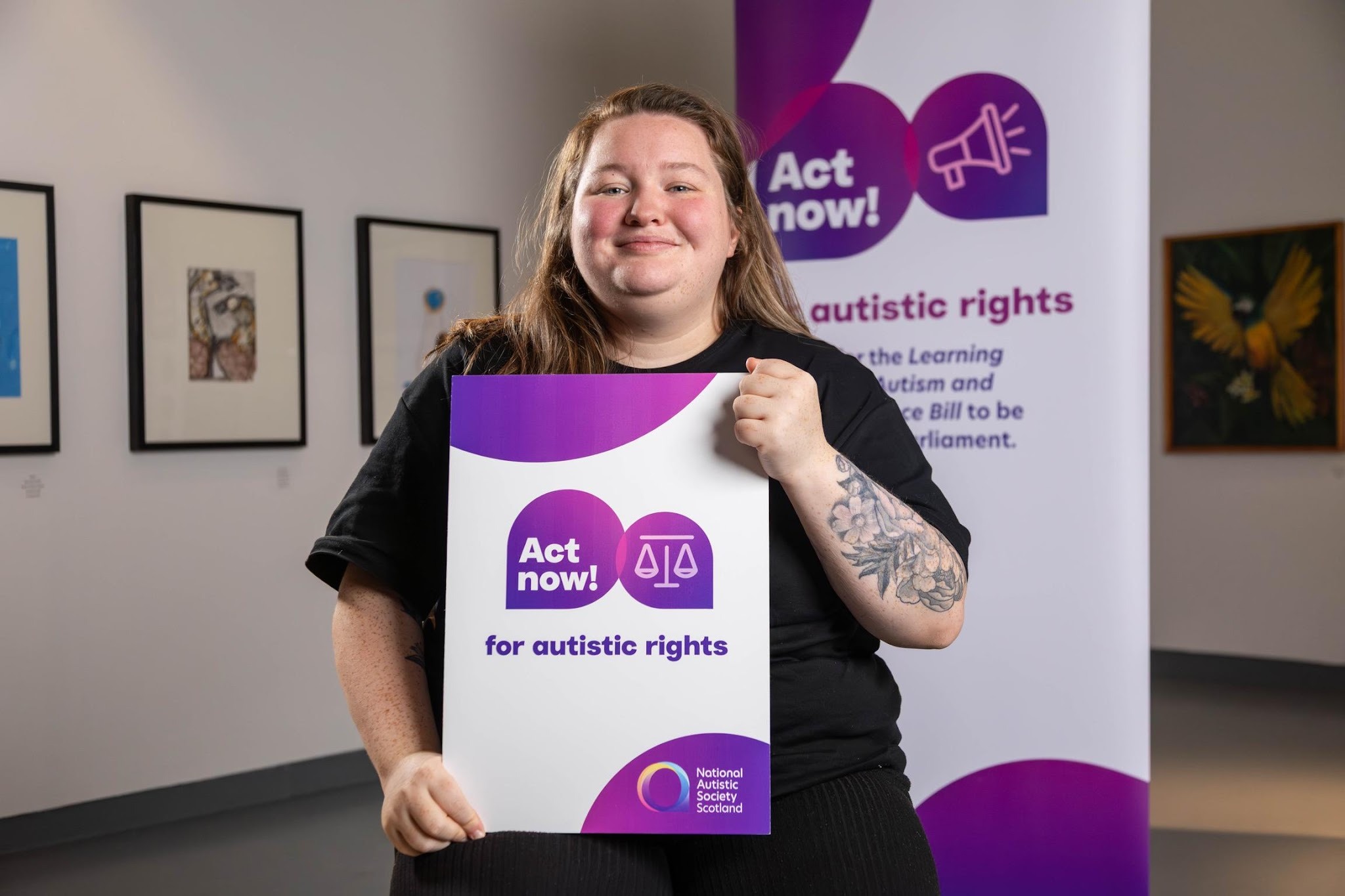
Autistic people and their families across Scotland continue to face significant barriers, including long waiting times for diagnosis, a lack of support in schools and low employment rates.
Too often, children are missing out on education or are excluded from the classroom, while many people are left without support until they reach crisis point.
We and others have long campaigned for the Learning Disabilities, Autism and Neurodivergence (LDAN) Bill – a Bill which the SNP committed to as far back as 2021. This would provide an opportunity to address the challenges facing autistic people and deliver real change.
Legally binding national and local strategies would improve support and accountability, while mandatory training across public services such as health, education and criminal justice would ensure autistic people’s needs are recognised and supported earlier.
Years of consultation have shaped these proposals, with many in the autistic community sharing difficult and traumatic experiences in the hope of having their voices heard.
As part of the Act Now for Autistic Rights campaign, our charity has launched a petition urging the First Minister, John Swinney, to include the LDAN Bill in September’s Programme for Government, which will set out the Scottish Government’s key priorities and legislative programme for the coming year.
In the lead up to the recent election in Scotland, more than 5,500 letters were sent by supporters urging party leaders to commit to this legislation. This momentum must now be matched with action. Without a clear commitment from the First Minister, autistic people risk being left behind.
Rob Holland, Director of the National Autistic Society Scotland, said: “Our campaign had a fantastic response during the election period. Thousands of letters were sent urging all parties to commit to the Learning Disabilities, Autism and Neurodivergence (LDAN) Bill, demonstrating a significant level of support for legislation long overdue in helping secure the rights of autistic people and their families.
The importance of the LDAN Bill in tackling the inequalities faced by autistic people and their families cannot be underestimated and this legislation is a vital opportunity to improve outcomes and recognise the rights of some of our most marginalised communities.
“With the election behind us and attention now turning to the first Programme for Government, we need everyone who wants to see urgent change to sign our petition and ensure this vital piece of legislation is introduced as early as possible in the new term.”
Becca, NAS Scotland Campaigner, said: “The LDAN bill is vital for the wellbeing, safety and equality of autistic and neurodivergent people in Scotland.
“Access must be granted, training must be given and voices must be heard to ensure that autistic and neurodivergent people have equal access and opportunity as anybody else.
“The LDAN bill must be included in the Programme for Government to ensure this change happens and lives are improved.
“As an autistic person, it is a struggle to ensure my voice is heard and my opinions are taken into account, so by committing to the inclusion of the LDAN Bill in the Programme for Government, I matter.
“My voice and many others across the country matter.“
You can call on the First Minister to Act Now for Autistic Rights by signing the petition here.
Ahead of Open Farm Sunday’s 20 anniversary, new research by organisers, LEAF (Linking Environment And Farming), reveals deep-rooted public support for farmers who produce food while protecting nature.
Families across the country have the chance to visit one of over 250 farms taking part in Open Farm Sunday on 7 June, to discover the world of farming, make new connections and explore the vital links between food production, farming and nature.
The survey of more than 2,000 people found that 93% believe it is important for the UK to maintain a strong level of food production capacity in an increasingly uncertain world.
At the same time, 89% agreed that protecting nature on farms, including healthy soils, flood defences and biodiversity, is essential for long-term food production, while 71% said farmers should focus on producing food while also protecting nature.
The findings highlight the importance of helping people see, first-hand, what sustainable farming looks like beyond the supermarket shelf. On Open Farm Sunday, farms of different sizes and sectors open their gates, giving visitors the chance to ask questions and discover how wildlife, soils, water, technology and food production are all connected.
Annabel Shackleton, Open Farm Sunday Event Manager, said: “Open Farm Sunday is a wonderful day of discovery. Families can immerse themselves in a world they don’t usually see.
“It’s an opportunity to see sustainable farming in action, not as an idea on a label, but as something real, practical and happening every day. This research shows people care deeply about food security and about nature, and farmers are working hard to deliver both.
“For 20 years, Open Farm Sunday has helped build trust and connection between the public and farming. This anniversary year is a wonderful opportunity for children and adults alike to engage with farming in an interactive, fun and inspiring way while seeing how their everyday food choices can help support a more sustainable future.”
Open Farm Sunday is one of the farming industry’s leading public engagement programmes. It offers a unique opportunity for visitors to meet farmers face-to-face, get up close to machinery, livestock and crops, and learn how farmers care for the land, take pride in their work, and use bright ideas to grow good food.
This year’s campaign encourages people to turn food labels into lived experiences by visiting a farm, meeting farming champions and discovering how nature and innovation work together.
Applications open for Best Start Grant School Age Payment
Families across Scotland can now apply for over £330 to help with the costs of preparing for primary school, as applications for Best Start Grant School Age Payment open today (1 June 2026).
The payment, unique to Scotland, is available to eligible families with children born between 1 March 2021 and 28 February 2022. It is designed to ease the financial pressures that come with a child starting primary one and can be spent on anything families need – from clothes and stationery to school trips.
Whether a family can receive the payment depends on the child’s age and when they are first old enough to start primary school, typically between 4 and 5 years.
Importantly, families do not need to wait until their child starts school to apply. Those who are deferring their child’s start date, or whose child will not be attending school, are still eligible and must apply before applications close on 28 February 2027.
Families receiving Scottish Child Payment who are eligible for School Age Payment should get an automated payment and do not need to apply.
Social Justice Secretary Shirley-Anne Somerville, said: “Starting school is a landmark moment in a child’s life, but sadly it can also put real financial pressure on families. That’s why we introduced the Best Start Grant School Age Payment – to help ensure that every child in Scotland can begin their school journey with what they need, regardless of their family’s circumstances.
“This support is a vital part of our wider commitment to eradicating child poverty, making sure help reaches families at key moments in a child’s life.”
Sara Spencer, Cost of the School Day Project Manager said: “We know from our work with children and families that starting school adds real pressure to already stretched family finances. That’s why it’s really important that families apply for the financial support, like the School Age Payment, that they are entitled to.”
School Age Payment is a payment of £331.95 per child. Applications for children born between 1 March 2021 and 28 February 2022 are open from 1 June 2026 to 28 February 2027.
To get Best Start Grant School Age Payment the person applying will normally need to be receiving one of the following payments: Universal Credit, Housing Benefit, Income Support, Pension Credit, income-based Jobseekers Allowance (JSA) or income-related Employment and Support Allowance (ESA).
Families have until 28 February 2027 to submit their application. The payment is also open to kinship carers and adoptive parents who meet the eligibility criteria.
Parents and carers can apply for multiple children, provided each child falls within the eligible age range at the time of application. Social Security Scotland will usually make the payment once per child, although additional payments may be made in certain circumstances — for example, if a child moves to live with a different kinship carer or adoptive parent within the same application window.