Responding to yesterday’s attack on the right to strike to defend workers’ pay and conditions, the TUC has said that the Prime Minister should concentrate on fixing our public services, not attacking public sector staff.
The union body says that the proposed legislation would make it harder for disputes to be resolved.
TUC General Secretary Paul Nowak said: “This is an attack on the right to strike. It’s an attack on working people. And it’s an attack on one of our longstanding British liberties.
“It means that when workers democratically vote to strike, they can be forced to work and sacked if they don’t. That’s wrong, unworkable, and almost certainly illegal.
“The announcement offers nothing more to help with this year’s pay and the cost of living crisis.
“The only offer of talks is for next year. But we need to resolve the current disputes and boost the pay of public sector workers now.
“The Prime Minister said yesterday his door is always open – if he’s serious, he should prove it. He should take up my offer to get around the table to improve this year’s pay and end the current disputes.
“There is a world of difference between promises of jam tomorrow with technical discussions about pay review bodies, and proper negotiations on pay in the here and now.
“Our public services are already deep in a staffing crisis. But this government has gone from clapping key workers to threatening them with the sack if they take lawful action for a pay rise. It will only push more people away from essential jobs in public services, harming the whole nation.”
On the trade union campaigning to defend the right to strike, Paul added: “Trade unions will fight this every step of the way. We’re inviting every worker – public and private sector, and everyone who wants to protect British liberties -to be a part of our campaign to defend the right to strike.”
Survey shows public backing for senior tech managers to be held legally responsible for safety and liable if products cause serious harm to children
MPs, bereaved parents, and 2,192 campaigners in Scotland back calls to strengthen Online Safety Bill’s response to protecting children on social media
NSPCC estimates over 21,000 online child sexual offences recorded by police since legislation was delayed last summer
Four out of five (84%) adults in Scotland want senior tech managers to be appointed and held legally responsible for stopping children being harmed by social media, according to new polling of UK adults, of which 200 live in Scotland.
The survey by YouGov also found that 72% of those with an opinion in Scotland would want senior managers prosecuted for failures that resulted in serious harm to children.
The NSPCC, who commissioned the research, said the findings show overwhelming public support for tougher enforcement measures in the UK Government’s Online Safety Bill.
Currently, the legislation would only hold tech bosses responsible for failing to give information to the regulator Ofcom, and not for corporate decisions that result in preventable harm or sexual abuse.
The move is being supported by Ruth Moss, whose 13-year-old daughter Sophie died by suicide after viewing suicidal and self-harm posts and being groomed on social media.
The Edinburgh nurse has been campaigning with the NSPCC for several years for robust new legislation that would force tech bosses to make their sites safe for children.
Ruth Mosssaid: “As far as I’m concerned, where companies wilfully break the law and put the lives of children like my daughter at risk, of course senior managers should be criminally accountable. The consequences of non- compliance are life changing for children like Sophie.
“Criminal liability drives the right behaviours in those with the most responsibility. It works in other industries and there is no reason in my mind as to why big tech executives should be treated any differently.”
The Online Safety Bill has been subject to delays amid intense scrutiny in recent months as the UK Government amended elements relating to adult safety.
The Culture Secretary Michelle Donelan has repeatedly said protections for children would be strengthened and campaigners argue holding tech bosses liable for the safety of young users would send a signal of intent to Big Tech.
2,192 people in Scotland signed an open letter to Ms Donelan calling for the legislation to properly hold senior managers to account for the safety of sites children use.
Rachel Talbot, 15, from Angus in Scotland, who handed the letter into the Culture Secretary with other members of the NSPCC’s Young People’s Board for Change, said: “Far too much pressure is put on young people from such a young age to keep themselves safe online.
“Too many children are exposed to content promoting self-harm and eating disorders. It’s become a norm in our everyday lives.
“We need a Bill that is going to hold big tech firms accountable. Without it, young people are on their own. We’ve been on our own for so long online – and it’s not working.”
Some Conservative MPs are also calling on the Government to amend the Bill to hold senior managers liable for children’s safety when it returns to UK Parliament this month (January 16th).
Senior MPs including former Home Secretary Priti Patel, Sir William Cash and Miriam Cates are backing the amendment which would mean tech bosses would finally be held to account if their platforms contributed to the serious harm, abuse, or death of a child.
Campaigners say the UK risks being out of step as Irish laws passed last month will hold senior tech bosses liable for online safety changes.
But they argued that making the suggested changes would cement the UK as a global authority for children’s safety online.
Miriam Cates MP said: “It’s clear to most people that the big global tech companies are not going to wake up one day and suddenly decide to start protect children from harmful online content.
“We have seen repeated failures of Big tech to protect children from the horrors of sexual exploitation, pornography and content that draws them into self-harm and suicide, and sadly the Online Safety Bill as it stands will not stop this.
“The only way to secure the change we desperately need is to make senior directors personally responsible for failures to protect children and that’s why I urge all MPs to support this amendment to include senior manager liability in the Online Safety Bill.”
The amendment has cross-party support including from the Labour frontbench.
Shadow Culture Secretary Lucy Powell MP said: “Labour has long called for the online safety bill to be strengthened especially when it comes to the liability – including criminal liability – of social media bosses. Without these sanctions there’s a real risk that a UK regulator will be toothless.
“Yet instead of strengthening the laws, the Government has recently gutted and watered down the bill, letting social media companies off the hook and allowing harms, abuse and hate to continue.
“I welcome the campaigning work of the NSPCC to toughen this Bill.”
The NSPCC said senior managers must also be liable for preventing child sexual abuse that is taking place at a record scale online.
The charity estimates that 600 online child sexual abuse crimes will have been recorded by Police Scotland in the time the legislation was delayed in July until it is likely to pass through Parliament on January 16th.
Sir Peter Wanless, NSPCC Chief Executive, said:“2022 was the year the Online Safety Bill faced delay after delay while children faced sexual abuse on an industrial scale and tech bosses sat on their hands as their algorithms continued to bombard young users with hugely dangerous material.
“This year must be the year legislation delivers the systemic change for children online that our polling shows families up and down the UK want.
“The Government can do this by delivering bold, world-leading regulation that ensures the buck stops with senior management for the safety of our children.”
Millions of the lowest-income households across the UK will get up to £1,350 from the Government in 2023/4 to help with the cost of living
Millions will receive new cost of living support from Spring 2023, following up to £1,200 in support for over eight million low-income households in 2022
£900 Cost of Living Payment for means-tested benefit claimants will go direct to bank accounts in three payments over the financial year
Extra cash support for disabled people and pensioners will see some households receive extra cash
The Department for Work and Pensions (DWP) has announced more detail on the payment schedule for the next round of cost of living support unveiled in the Chancellor’s Autumn Statement, building on payments made to over eight million people in 2022.
The new £900 cash boost for over eight million eligible means-tested benefits claimants, including those on Universal Credit, Pension Credit and tax credits, starts in Spring and will go direct to bank accounts in three payments over the course of the financial year. There will also be a separate £150 for over six million disabled people and £300 for over eight million pensioners on top of their Winter Fuel Payments.
Exact payment windows will be announced closer to the time, but are spread across a longer period to ensure a consistent support offering throughout the year. They will be broadly as follows:
£301 – First Cost of Living Payment – during Spring 2023
£150 – Disability Payment – during Summer 2023
£300 – Second Cost of Living Payment – during Autumn 2023
£300 – Pensioner Payment – during Winter 2023/4
£299 – Third Cost of Living Payment – during Spring 2024
Work and Pensions Secretary, Mel Stride said: “We are sticking by our promise to protect the most vulnerable and these payments, worth hundreds of pounds, will provide vital support next year for those on the lowest incomes.
“The government’s wider support package has already helped more than eight million families as we continue to deal with the global consequences of Putin’s illegal war and the aftershocks of the pandemic.
Chancellor of the Exchequer, Jeremy Hunt added: “I know these are tough times for families across the UK who are struggling to meet rising food and energy costs, driven by the aftershocks of Covid and Putin’s war in Ukraine.
“That’s why we’re putting a further £900 into the pockets of over 8 million low income households next year. These payments are on top of above inflation increases to working-age benefits and the Energy Price Guarantee, which is insulating millions from even higher global gas prices.
“Tackling inflation is this government’s number one priority and is the only way to ease the strain of high prices, drive long term economic growth and improve living standards for everyone.”
If individuals are eligible they will be paid automatically, and there will be no need to apply. Claimants who are eligible for any of the Cost of Living Payments and receive tax credits, and no other means-tested benefits, will receive payment from HMRC shortly after DWP payments are issued.
These payments build on the Government’s extensive support package to help households tackle the globally rising cost of living stemming from the pandemic and the war in Ukraine.
The Government’s Energy Price Guarantee continues to cap energy costs, saving the average household around £900 this winter and a further £500 in 2023/24.
Benefits, including working age benefits and the State Pension, will also rise in line with inflation from April 2023, ensuring they increase by over 10%. April will also see the biggest ever cash rise to the National Living Wage, bringing it to £10.42 an hour, and a further year-long extension of the Household Support Fund in England and associated devolved nation funding worth £1 billion in total.
This comes on top of the 2022 support package, which included:
A £650 Cost of Living payment for means-tested benefit claimants, split into two payments, each of which supported over eight million households
Further £300 and £150 payments, which reached over eight million pensioners and over six million disabled people respectively
A £150 Council Tax rebate for all households in Council Tax bands A-D
A £400 energy bill discount for all households, which will continue to run through March
The founder of Fair Fuel UK has called for a new consumer price regulatory body to ensure fairness for motorists at the petrol pumps.
Howard Cox says his Pump Watch initiative has “huge backing” and that he will be sending a letter to Jeremy Hunt signed by 25 MPs.
Speaking to GB News, transport campaigner Mr Cox said: “I’ve been saying for the last four or five years that we’ve been ripped off in the fuel supply chain. “There’s definitely opportunistic profiteering going on. It’s further up the fuel supply chain where it’s happening.
“It’s not the independent retailers, as most of them are actually tied to very, very strict contracts with wholesalers. It’s the wholesalers and oil refineries and the big oil companies. I’m afraid they are basically fleecing every driver.
On whether supermarkets were “missing a trick” by not reducing their prices at the pumps, he continued: “Yes, they are. Around 50% of fuel dispensed comes through supermarkets. Yet for some reason we are not seeing any reductions, and I think it must be because they’re not making so much profit on their other core areas of their business.
We used to see supermarkets give you something off per litre if you put say 50 quids worth of shopping through their outlets, but that sort of a deal seems to have disappeared.
“Now you’re seeing how independent retailers are actually cheaper than supermarkets at the moment. And it’s even worse because supermarkets buy direct from the refinery. They don’t buy through the wholesalers. So they’re making huge profits on drivers.”
Issuing a direct plea to the Government he added: “We’re still the highest taxed drivers in the world. That’s why we’re calling for a body called Pump Watch. There’ll be a letter going to Jeremy Hunt signed by 25 MPs asking for a body to actually get some transparency and fairness at the pumps.
“And the other thing we’re calling on is for the Chancellor and for Rishi Sunak to come clean and say there’s no planned increase in fuel duty in March. Because at the moment, they’re just playing these ‘will they, won’t they’ games. They seem to be enjoying upsetting drivers and upsetting businesses that need to plan for the next three to four months.”
Hourglass have delivered an open letter to PM Rishi Sunak calling on the Government to urgently provide funding parity for older victim survivors and fund their unique 24/7 helpline
Hourglass have submitted an open letter to Prime Minister Rishi Sunak signed by politicians from across the political spectrum. The letter calls for the government to provide urgent financial support for the Hourglass helpline which provides 24/7 support and casework for older victim-survivors of abuse.
The open letter has been signed by MPs, Peers, MLAs, MSPs, MSs, academics, third sector leaders and other community supporters. Members of every major political party in the UK have supported this campaign, either by signing this letter or by contacting the Prime Minister directly asking the Government to support the Hourglass helpline.
Hourglass not only provides a 24/7 helpline, the only one of its kind in England, Scotland, Wales and Northern Ireland but also creates tailored care plans for older victim survivors using caseworkers across the UK. The charity income plummeted in 2022 whilst cases have dramatically risen.
In 2022 the Hourglass helpline has seen a 96% increase in calls. Many of these calls are referrals from government and third sector agencies who rely on Hourglass as specialists in supporting older victims.
Despite this, government support for the helpline and casework service provided by Hourglass has declined. The charity is now bidding for funds from a Violence Against Women and Girls tender, which misses a significant swathe of its work.
Richard Robinson, Chief Executive of Hourglass, said:“The Hourglass helpline and case work service plays a critical role in supporting older people who have experienced abuse. This is a truly unique service and ensures older people can have hope during their darkest times.
“During the Conservative Party leadership campaign, the Ready for Rishi campaign promised that if elected a Rishi-led government would engage with organisations supporting victims, such as Hourglass. There has been no engagement, a string of cancelled meetings and limited understanding of challenge older people face, especially now during this financial crisis.
“The Prime Minister now needs to honour his campaign promise by working with Hourglass to ensure the only UK helpline supporting older victims of abuse can continue to provide a 24/7 service and doesn’t downsize drastically.”
Baroness Ritchie, Hourglass Patron, said:“The Government need to support older victims of abuse. In an ageing society, services like the Hourglass Helpline play a vital role.
“I urge the Prime Minister to answer the call of this open letter and provide adequate funding for the Hourglass Helpline.”
A special one-off addition to the annual Queen’s Award for Voluntary Service (QAVS) has been awarded to 20 national charities for their exceptional work to empower young people.
20 charities across the UK recognised for a unique one-off addition to the annual Queen’s Award for Voluntary Service, created in honour of Her Late Majesty The Queen’s Platinum Jubilee
The Duke of Edinburgh’s Award, The Social Mobility Foundation and The National Deaf Children’s Society among those awarded for their exceptional work empowering young people
The Queen Elizabeth II Platinum Jubilee Volunteering Award, a special one-off addition to the annual Queen’s Award for Voluntary Service (QAVS), has been awarded to 20 national charities for their exceptional work to empower young people.
From large household names to those operating on a smaller scale, the work of each awardee is vital in providing young people aged 16-25 with new opportunities, challenges, activities and skills.
The awardees include The Duke of Edinburgh’s Award, widely recognised as the world’s leading youth achievement award that helps young people develop new skills and build self-belief and resilience, and the Jewish Lads’ and Girls’ Brigade, which helps to develop essential life skills and offers experiences to help young Jewish people reach their potential.
Her Late Majesty The Queen displayed a life-long dedication to public service throughout her 70-year reign, so it is fitting that this one-off edition of the Queen’s Award for Voluntary Service recognises the thousands of volunteers who have showcased a similar longstanding commitment to their work.
Culture Secretary Michelle Donelan said: “From Action Tutoring to StreetGames, these 20 charities deliver outstanding work to help give young people the skills they need to grow and succeed. I’m delighted that their contribution is being recognised with a Queen Elizabeth II Platinum Jubilee Volunteering Award.
“Ensuring young people get the best possible start in life is a priority for me and the Government, and there is no more fitting way to celebrate these brilliant charities than a unique edition of the highest award for voluntary service.
“The Queen’s Award for Voluntary Service is the highest award given to local volunteer groups. It was established 20 years ago to commemorate The Queen’s Golden Jubilee, and has recognised around 250 outstanding local volunteer groups across the UK each year to date”.
Sir Martyn Lewis CBE, the QAVS Chair said: “These awards are a timely acknowledgement of the wide-ranging support and encouragement that is available to young people across the UK.
They highlight the indispensable role that the voluntary sector plays in targeting help, advice and guidance where it is needed most.
These awards should also be seen as a tribute to the millions of volunteers and donors who, in difficult times, provide the resources of time and money which contribute so powerfully to the social fabric of our country.
Judging panel member Baroness Tanni Grey-Thompson said: “I was delighted to be part of the judging panel for the Queen Elizabeth II Platinum Jubilee Volunteering Award.
“The process highlighted the amazing amount of work that is being done across a wide range of organisations and how it truly transforms the lives of so many people.”
Lucie Vickers, StreetGames Head of Volunteering and Youth Voice said: “We are thrilled to have been awarded the Queen Elizabeth II Platinum Jubilee Volunteering Award.
“Creating opportunities for young people from low-income, underserved communities to become volunteers and future community leaders is at the heart of our Doorstep Sport approach, and we are delighted that the impact of this work has been recognised through this prestigious award.”
Kevin Munday, Chief Executive at City Year UK said: “The journey towards receiving the Platinum Jubilee Volunteering Award is the success of hundreds of talented and dedicated volunteers taking the right small steps towards social change for over a decade.
“This Award represents a joyful and proud giant leap forward into the kind of future our volunteers have all aspired to.”
Additional recipients of this one-off award include:
British Youth Council – with 700 volunteers, this charity empowers young people to create political and social change through a number of programmes. The Make Your Mark consultation, led by UK Youth Parliament is an annual ballot allowing young people from across the UK to vote on the issues that matter to them, whilst the Youth Steering Group invites young people to participate in 26 round table discussions on issues such as gambling, climate change, youth violence and mental health.
Ethnic Minorities and Youth Support Team – supports young BME people, refugees and asylum seekers in Wales. It provides specific support to 16-25 year olds through three projects: BME Youth Invest project, The Think Project and the Young, Migrant and Welsh project, which aimed to engage ethnic minority people aged 16-25 to explore and document their experiences by creating films to increase public awareness and appreciation of Wales’ diverse history and heritage.
LGBT Youth Scotland – works to create safer spaces where LGBTI young people aged 13-25 can explore their identities in an affirming environment, learn new skills, gain confidence, develop resilience and find community. With 133 volunteers, they provide specific support via youth groups; one-to-one support; youth commissions; an LGBT Charter Programme and award-winning online community, Pride & Pixels.
YMCA England & Wales with The Scottish National Council YMCA – provides young people with the critical foundations for a better quality of life by offering support with housing, education and welfare. They provide a home to more than 20,000 people experiencing homelessness each year, making them the largest voluntary sector provider of supported housing for young people in England and Wales.
Brook Young People – delivers clinical and education support around sexual health, wellbeing and relationships to young people aged 16-25 through providing information, education and outreach, counselling, confidential clinical and medical services, professional advice and training. They also work in partnership with Youth Offending Services to deliver targeted education support to reintegrate youth offenders back into education and the community.
The National Young Advocacy Service (NYAS) – 600 volunteers work to support children in care, care-leavers and care-experienced young people through a variety of services including advocacy, mentoring, mental health projects, and a free national helpline. Their Independent Visitor Service is a befriending service for children in care up to the age 18, offering long-lasting friendship and support, and the opportunity to take part in new and fun activities.
The Queen’s Award for Voluntary Service is awarded annually, with the date for the 2023 awardees soon to be confirmed. In June 2022, 244 local voluntary organisations across the UK received this prestigious award, all of which enhanced the lives of others through their work. Awardees of the 2022 award can be found here.
To celebrate their achievements, the awardees of the Queen Elizabeth II Platinum Jubilee Volunteering Award will be invited to a unique presentation event in 2023.
Alcohol duty freeze extended six months from 1 February to 1 August 2023
Part of government’s responsible management of UK economy, plan aims to reassure and provide certainty to pubs, breweries and distilleries facing tough challenges ahead
End date aligns with new simpler alcohol tax system taking effect, with Chancellor reserving decision on future duty rates for Spring Budget 2023
The freeze to UK alcohol duty rates has been extended six months to 1 August 2023, the government announced yesterday (19 December 2022).
In a statement to the House of Commons, Exchequer Secretary to the Treasury James Cartlidge laid out a plan designed to provide certainty and reassure pubs, distilleries, and breweries as they face a challenging period ahead.
While new duty rates usually come in on the 1 February each year, Mr Cartlidge set out that this year the duty rates decision will be held until the Chancellor Jeremy Hunt delivers his Spring Budget on the 15 March 2023.
Further, the Minister made clear that if any changes to duty are announced then, they will not take effect until 1 August 2023. This is to align with the date historic reforms for the alcohol duty system come in, and amounts to an effective six month extension to the current duty freeze.
As part of the government’s commitment to responsible management of the UK economy, these changes will provide pubs, breweries, distilleries and other alcohol-related businesses with increased certainty to plan and make investment decisions more effectively.
Exchequer Secretary to the Treasury James Cartlidge said: “Today’s announcement reflects this government’s commitment to responsible management of the UK economy and supporting hospitality through a challenging winter.
“The alcohol sector is vital to our country’s social fabric and supports thousands of jobs – we have listened to pubs, breweries and industry reps concerned about their future as they get ready for the new, simpler, alcohol tax system taking effect from August.
“That’s why we have acted now to give maximum certainty to industry and confirmed there will be just one set of industry-wide changes next summer.”
The current alcohol duty freeze was announced at Autumn Budget 2021, saving consumers over £3 billion over five years. It was expected to come to an end on 1 February 2023, following the Chancellor’s reversal of most of September’s Growth Plan to restore trust in the economy and strengthen public finances.
At Autumn Budget 2021 the government announced the biggest reforms to alcohol duty in 140 years. The changes overhaul the UK’s outdates rules following exiting the EU by radically simplifying the entire system and slashing red-tape. To give industry more time to prepare, September’s Growth Plan set out that the reforms would take effect from 1 August 2023.
The new alcohol tax system will adopt a common-sense approach, where the higher a drink’s strength the higher the duty, whilst new reliefs will be made available to help pubs and small producers thrive.
New Draught Relief will be worth £100 million a year and will ensure smaller craft producers can benefit, the threshold for qualifying containers will be 20 litres.
Small Brewers Relief will be renamed Small Producer Relief, reformed and expanded. Until the revamp, a cliff-edge existed when relief is withdrawn for brewers who make more than 5,000 hectolitres a year.
This will be addressed, there will instead be a gradual taper to the removal of relief, which will empower small breweries to grow, after they had made clear through consultation that the current design was acting as a barrier. Further, the expansion of the relief means that all producers that make drinks below 8.5% – mostly craft brewers and cidermakers – will be able to get relief on their products.
The alcohol duty reforms will help create a simpler, fairer and healthier duty system. Higher rate for sparkling wines will come to an end, meaning they will pay the same rate as still wine. Liqueurs will be put on the same footing as fortified wine, meaning a sherry and Irish Cream will now pay the same duty, and super-strength ‘white cider’ will rise to address public health concerns.
The wine industry will also be supported as they adapt to the new system. All wine between 11.5-14.5% alcohol by volume (ABV) to calculate duty as if it were 12.5% ABV for 18 months from the implementation of the new system.
A UK Spirits Alliance spokesperson said:“Today’s decision by HM Treasury comes as extremely welcome news to distillers across the country. We know that previous duty freezes have enabled distillers across the UK to invest in supply chains, tourism centres and local communities.
“The announcement today is a major boost to the industry at such a crucial time. We look forward to working with the Chancellor over the coming months as he makes a decision on the future of alcohol duty at the Spring Budget.”
Miles Beale, Chief Executive, the Wine and Spirit Trade Association, said:“We are extremely pleased to hear that the Chancellor has listened to our calls not to deliver a double whammy tax hike next year.
“History has shown that freezing alcohol duty delivers increased revenue to the Exchequer. If duty rates went up by RPI on February 1st, this would have been a crippling blow to the UK alcohol industry and consumers who would have to pay the price for tax rises.
“Delaying any increase until 1 August means businesses will not have to manage two duty rises in the space of 6 months. We hope that any duty increases applied in August take into account the damage suffered by wine and spirit businesses and the hospitality sector during the pandemic as businesses continue to fightback.
“We are calling on Jeremy Hunt to cancel double digit tax rises to help cash-strapped consumers and to support the UK’s world-class drinks industry.”
Emma McClarkin, Chief Executive, the British Beer and Pub Association said:“The decision to extend the freeze on beer duty will be welcomed by pubs and brewers alike.
“In 2022 our industry has faced pressures and challenges like never before. This freeze will allow £180million to be reinvested into our sector at a critical moment and inject a much-needed flurry of festive cheer for pubs and breweries. It shows the Government understands just how much our pubs and brewers mean to communities across the UK.
“Investment in our sector now will pay dividends in villages, towns and cities across the country for generations to come. Pubs and brewers are a crucial thread in the social fabric of our society and contribute not only economically but socially, connecting people in communities up and down the country.
“We look forward to working with the Government to implement the promised duty reforms in 2023 ensuring a fair and modernised rates system in the UK that support lower-strength products and our country’s pubs.”
Richard Naisby, National Chairman, Society of Independent Brewers said:“Independent breweries play a vital role in the British hospitality industry and are embedded in their local communities, providing jobs and adding greatly to local economies across the UK.
“The extension of the beer duty freeze comes as welcome news to these vital independent businesses, providing some certainty until the summer.
“We look forward to working with Treasury on delivering further positive changes for the hospitality and independent brewing industry.”
UK Government launches ‘It All Adds Up’ campaign with simple actions to cut bills by bringing down the amount of energy needed to keep homes warm and stay safe
‘It All Adds Up’ energy saving campaign launched today by government with advice that could help UK households cut hundreds of pounds off their bills this winter
Campaign features tips on simple, low or no-cost actions that households can take to immediately cut energy use and save money while ensuring people are able to stay safe and warm this winter
Advice also available on longer-term measures to improve the energy efficiency of homes that can bring down bills not just this winter but in years to come
Simple advice, with no or very low-cost actions that households can take to reduce their energy use and bills this winter, is now available to the public under a new government information campaign being launched today.
The £18 million ‘It All Adds Up’ energy saving campaign will raise public awareness of straightforward actions that people can take to cut their bills by bringing down the amount of energy needed to keep their homes warm and stay safe this winter.
The guidance focuses on simple measures which are not already adopted by the majority of households in the UK. How energy use can be reduced may be different for each individual household, but simple measures in the campaign can offer significant financial savings this winter without reducing comfort or putting people’s health at risk.
The ‘It All Adds Up’ campaign has been launched on a new website and promotes some of the government’s top recommended actions to help households save money on their energy bills at no or little cost, including:
reducing the temperature a boiler heats water to before it is sent to radiators (known as the boiler flow temperature) from 75⁰C to 60⁰C, which will not reduce the temperature of your home but could save around £100 annually
turning appliances off at the plug, which could save approximately £70 per year
reducing heating loss from the property such as putting draught excluders around doors or by adding clear film across windows, which could save around £60 a year
Business and Energy Secretary Grant Shapps said: “No-one is immune to rising energy bills this winter, so it’s in everyone’s interest to use every trick in the book to use less energy while keeping homes warm and staying safe.
“For very little or no cost, you can save pounds. It all adds up, so I urge people to take note of the advice in this new campaign and follow the easy steps to cut your fuel bills.”
Information on the ‘It All Adds Up’ campaign can be found at a new GOV.UK website, which will run alongside the government’s wider ‘Help for Households’ campaign. The new energy saving campaign will feature adverts across TV, radio, digital platforms and on digital billboards, with a television advert rolled out in the coming weeks.
In addition to these simple tips, there is also advice on other actions that households can take to improve the energy efficiency of their homes, as well as further details of government funding schemes to improve the energy efficiency of households across the country.
The ‘It All Adds Up’ campaign highlights longer-term energy efficiency upgrades, including installing loft and wall insulation or fitting double glazing, that people can make to their homes to save their energy use and bring down bills.
Richard Neudegg, director of regulation and policy at Uswitch.com said: “We know many households are actively looking to find safe ways to reduce their energy use to save on bills, and there are straightforward steps to take by making small changes at home. So we welcome renewed efforts to highlight practical tips that can make a real difference.
“Keeping track of energy usage can help people understand what’s most driving their bills and help identify where to make changes. To support households, Uswitch has developed Utrack, a free app which can help people see exactly what they are using and highlight ways to save money.”
Juliette Sanders, Director of Strategic Communications at Energy UK, said: “Energy UK welcomes the Government’s efforts in helping people to improve their energy efficiency.
“Many people are struggling to pay their energy bills and whilst additional support is available from both Government and energy suppliers, taking steps to cut down wasted energy will enable people to lower their bills immediately. We’re also pleased that advice on long-term energy efficiency measures is part of the campaign.
“It’s essential that this goes hand in hand with policies that will enable delivery to as many homes as possible, and with the roll out of smart meters so people can manage their energy use, and use it at times it is cheapest.”
Jonathan Brearley, the CEO of Ofgem, said: “I very much welcome the launch of the ‘It All Adds Up’ campaign. We know from the analysis we’ve seen that even small things, such as turning off radiators in rooms that are not in use and adapting boiler flow, can have a big impact, not only on customer bills, but in boosting our wider security of supply.
“This will complement Ofgem’s Energy Aware campaign, which provides information on ways to reduce energy use, cut costs, and points consumers towards financial schemes and other avenues of support that can help them through this difficult winter.”
Dame Clare Moriarty, Chief Executive of Citizens Advice, said: “This winter, many people will be worried about how much they might have to spend to heat their homes. These tips should help cut down the cost of staying warm.
“However, we know lots of people are living in cold, dark homes because they’re stretched to their limit and simply have nothing left to cut back on. If you’re in this situation, speak to your energy supplier or contact Citizens Advice for support. We’re here to help you find a way forward.”
Making homes and businesses more energy efficient and so bringing down fuel bills is part of the Government’s wider long-term commitment, announced as part of the Autumn Statement, to reduce the UK’s final energy consumption from buildings and industry by 15% by 2030 against 2021 levels.
Improving the energy efficiency of homes is the best long-term method of cutting household energy use and bringing down bills. That is why the government is accelerating the pace of upgrading the energy efficiency of housing with £6 billion of funding committed to 2028 in addition to £6.6 billion in this parliament.
A further £4 billion has been committed through ECO4 scheme, which is delivering home insulation measures to low income and more vulnerable households, and the £1 billion ECO+ scheme, which will install measures in households who have previously not been able to access support through the Energy Company Obligation scheme.
The ‘It All Adds Up’ campaign comes in addition to an unprecedented package of government support that is helping households meet their energy costs this winter, including the Energy Price Guarantee, saving a typical household over £900, the Energy Bills Support Scheme providing a £400 discount to millions and the most vulnerable receiving £1,200 each this year.
To publicise the launch of the new energy saving campaign website further, Business and Energy Minister Lord Callanan held a roundtable meeting on Friday 16 December with energy suppliers and consumer groups.
Following the tragic incident that happened at Babbs Mill Lake in Solihull over the weekend, there has been an outcry of support to increase education and knowledge related to water safety.
The team at the Royal Life Saving Society UK (RLSS UK) has picked up a long list of national, regional and local media engagements and there has been a consistent question that has come from journalists – Why are so many school children lacking essential water safety knowledge?
This has been supported with reminiscing about former approaches through public information films and broadcasts. The reality is that the technology and media landscape has changed so much. Whilst at one time posting some content, on TV, at 4pm in the afternoon would reach a large proportion of children there is now so much choice for children and young people, and it has become extremely difficult to guarantee maximum reach.
The question though is not a question for RLSS UK but a question that needs to be posed to government and this blog explains more …
Lee Heard, Charity Director at RLSS UK, praises the work of the emergency services, who the charity works closely with to share crucial messaging around water safety, but asks what more can be done to keep children safe:
“What is guaranteed is that the majority of children can be reached through the education system. The answer on keeping children safe around water is simple. Education. Only with class-based education and removing insurmountable barriers for some schools to travel to pool spaces will we be able to give every child the opportunity to learn crucial knowledge and skills to make informed decisions and be safe around water.
For many years, we at RLSS UK have been working tirelessly to raise awareness of barriers and lobby to try and push forwards with getting class-based water safety education on the national curriculum. It should not take yet another tragedy, and even more innocent young lives lost, to have to put the case forwards once again.
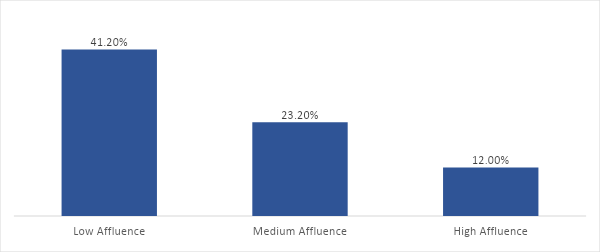
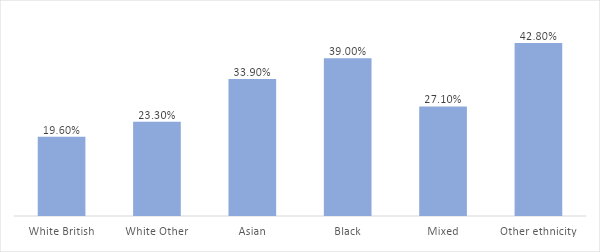
If you speak to Government about this subject they will provide rhetoric and spin. It is positive that in the national curriculum for England that swimming and water safety are included on the PE curriculum but for too many years now this has been used to mask inherent inadequacies and inequalities in their policy position on water safety. Pre-COVID, almost 1 in 4 children (24% of) were not hitting the statutory ‘can self-rescue’ standard. Worryingly there is huge disparity between high and low affluence households, as well as between different ethnic backgrounds, with those from the lowest affluence and those from ethnic minorities most likely to fail to reach the statutory standards.
Fig 1: The proportion (%) of UK children (years 3-11) who do not meet statutory ‘self-rescue’ standards by family affluence (2017/18).
Fig 2: The proportion (%) of UK children (years 3-11) who do not meet statutory ‘self-rescue’ standards by ethnicity (2017/18).
This uneven playing field is well known and RLSS UK has been asking questions of Government since 2017 about reviewing its approach to ensure equal access. This has been followed up by a petition by water safety campaigner and bereaved parent Becky Ramsey who sadly lost her son Dylan Ramsey to drowning in 2011. The petition received over 108,000 signatures. The Government responses indicated no desire to change its approach, instead included a list of approaches and highlighting the hard work of other organisations who have no statutory responsibility. It is worth reiterating that even pre-COVID those from white, affluent families were much more likely to have access to this lifesaving education, proof that the approaches were not working.
The fact is that charities, individuals, organisations and schools who believe in increasing water safety knowledge have been working tirelessly to fill this gap. RLSS UK is not alone, there are incredible organisations doing great work locally and nationally and work is supported by the National Water Safety Forum. We personally have produced resources year after year for our Drowning Prevention Week (DPW) campaigns during the summer months, and these are always widely used by many schools across the UK and Ireland, but this is not enough and we cannot, even across partners, educate everyone alone.
In 2022 during DPW, over 1.2m million children were educated using our free water safety resources but there are over 10.6 million school aged children in the UK. So ,what about those 9.4 million children? Would they know how to stay safe around water? Would they know what to do if they got into difficulty or saw someone in trouble? Or will we see even more sad news in the years that follow? We have the resources, and we have the knowledge to share but only 1 in 5 children have had water safety education in school in the last year. We have to ask why there is resistance to make this small change to include a short class-based water safety lesson on the curriculum?
The current situation is much worse, there has been an obvious decline in attainment since COVID. Of course, a global pandemic has presented it challenges but the worrying fact is that in many cases, this decline was seen in 20/21 and is not showing signs of recovery. The most recent data shared through the 2022 Active Lives Survey shows that only 34.7% of children from low affluence families are able swim 25m unaided. This means that children from low affluence families are half as likely (34.7%) to be able to swim 25m unaided than those from high income families (76.4%).
Fig 3: The proportion (%) of UK children (years 1-11) who can swim 25m unaided standards by family affluence (2021/22).
Fig 4: The proportion (%) of UK children (years 1-11) who can swim 25m unaided standards by ethnicity (2021/22).
The Government seems content that 80% of schools surveyed are currently offering school swimming, the detail shows a very different picture and says a lot about the acceptance of achievements against pre-set outcomes and standards.
The barriers for some schools are simply insurmountable for a number of reasons. The further backdrop is that there are real and perceived barriers for schools to access swimming spaces. The future landscape is due to make this more challenging, we already know that in 2022 there has been a 5.1% decrease in swimming facilities and UK Active has recently reported that 40% of council areas are at risk of losing their leisure centre(s) or seeing reduced services at their leisure centre(s) before 31 March 2023.
We know that swimming and water safety is already on the national curriculum, but we also know that unfortunately this isn’t a successful policy to meet the Government’s own stated outcomes. Water safety goes hand-in-hand with swimming. We will always advocate for swimming as a life and water skill but our research shows that swimming is quite simply not enough. In our analysis of 83 accidental drownings of 8–18-year-olds in the UK, 3 in 5 (61%) were described as swimmers by their friends and family. This data suggests that being able to swim alone isn’t a guarantee of staying safe in, on and around water.
We have lesson plans which can be incorporated into existing lessons such as English, Maths, Science and more, for all age groups from early years to primary, to secondary school students. We want to be proactive when educating children on water safety, not reactive when we hear of a tragedy like we saw in Solihull at the weekend.
For this to change we need support from the very top. We need the Government to accept and acknowledge that:
Its approach isn’t working for all of our communities and to acknowledge
One drowning or water related death is one too many, and
Each accidental drowning can be avoided by education that doesn’t require huge investment in time or finances to take pupils to a pool.
We are calling on the government to make a change; to finally put water safety education on the class-based curriculum, to give every single child the chance to know how to stay safe in and around water, to ensure that families don’t have to go through the heartache that so many have already endured and to simply care for our children and their futures.