Pressure on UK Government to deliver more financial support as Omicron cases surge
First Minister Nicola Sturgeon has announced the breakdown of a lifeline £100 million financial package to support businesses experiencing cancellations due to the rapid spread of the new Omicron variant.
The £100 million support package is broken down into:
£66 million for eligible hospitality businesses
£20 million for the culture sector
£8 million for food and drink supply chain businesses including wholesalers
£3 million for the wedding sector
£3 million for the worst affected businesses in the tourism sector, including international inbound tour operators
Final details of the funding available and how to apply is being determined in discussion with business organisations and will be published next week.
Eligible hospitality businesses will be contacted directly by their local authorities and will not need to apply for support.
Food and Drink wholesalers can apply for funding through a re-run of the Scottish Wholesale Food and Drink Resilience Fund in January 2022.
Guidance has also been published to enable businesses to take reasonable measures to limit the rapid spread of the Omicron variant.
First Minister Nicola Sturgeon said: “The steps we are asking people to take are already having a severe economic impact, particularly for sectors like hospitality and culture, which have been badly affected by previous waves of Covid and were hoping for a better Christmas period this year. This is why we have found £100 million to help businesses in those sectors.
“The support we’re providing is significant – but we know it won’t fully compensate for the impact of Omicron. Business now needs the type and scale of financial support that was available earlier in the pandemic and that can only come from the UK Government – which has borrowing powers that the Scottish, Welsh and Northern Irish governments do not.
“The best way to support business sustainably, is to get the virus back under control. Please get your boosters and stay at home as much as possible just now.”
Downing Street confirmed that The First Minister spoke with Prime Minister Boris Johnson later in the afternoon.
In a statement, the PM’s office said:
‘The Prime Minister has spoken to First Minister Nicola Sturgeon this afternoon to discuss the ongoing response to the Omicron variant.
The Prime Minister and the First Minister agreed on the importance of close collaboration for the benefit of citizens across the UK.
They discussed the shared challenges including the economic disruption caused by Covid and will continue to work together.
The Prime Minister confirmed UK Government will be convening a COBR meeting over the weekend with counterparts from the devolved administrations to continue discussions.
Prime Minister Boris Johnson held a COVID-19 press conference last night following news that the UK had just recorded the highest ever daily number of Covid cases:
Good afternoon everybody.
As of today, every eligible adult in England can use the national booking service to Get Boosted Now.
If you’re over 18 and had your second jab at least three months ago, then you can get jabbed right now. And it’s absolutely vital that you do.
Because the wave of Omicron continues to roll in across the whole of our United Kingdom, with over 78,000 Covid cases today, the highest ever daily number reported, and the doubling rate of Omicron in some regions is now down to less than two days.
And I’m afraid we are also seeing the inevitable increase in hospitalisations, up by 10 per cent nationally week on week and up by almost a third in London.
But we are also seeing signs of hope, because since we launched our Emergency Omicron appeal on Sunday night a great national fight back has begun and people have responded with an amazing spirit of duty and obligation to others.
And I want to say that each and every one of you who rolls up your sleeve to get jabbed is helping this national effort.
And I want to thank everyone who has come forwards, whether you’ve had to queue around the block at a walk-in centre, or whether you’ve booked online.
And, of course, on behalf of the whole country, I want to thank our NHS, our GPs our pharmacists, who with barely a day’s notice – 48 hours’ notice, have so accelerated the programme that we began this week with the biggest Vaccination Monday ever in England and yesterday the biggest booster day yet, with more than 650,000 boosters delivered across the whole UK.
And across the country, after all they have been through, those teams are going to keep going through Christmas and beyond.
Jab heroes like Kim Kirk, leading the King’s Mill hospital vaccination hub in Mansfield, who was asked a year ago to do it for four weeks and has been doing it ever since, with 180,000 jabs and counting.
Dr Laura Mount and the team at Central and West Warrington PCN, who have been organising pop-up vaccination clinics for the homeless.
Or the team at Home Park in Plymouth who have been regularly jabbing until 2am, because they just carry on for as long as there are people there wanting a booster.
And I want to thank those from every walk of life who are stepping forward to support them.
The military personnel deployed across every region of the country, including an additional 100 in Scotland from yesterday – as well as 2,500 firefighters.
And since Sunday night, we’ve seen more than 20,000 new volunteers signing up to help with the booster effort as stewards, taking the total number to almost 33,000.
With every day we’re expanding the ranks of these healthcare auxiliaries, an emerging Territorial Army of the NHS – in a race against time to get those jabs in arms and save lives.
And if you’re watching this and you want to get involved, just visit the website nhsvolunteerresponders.org.uk and do something this Christmas that you can tell your grandchildren about many Christmases from now.
In total, we’ve now boosted more than 45 per cent of all adults in England, including more than 88 per cent of those aged 70 and over,
And while hospital admissions are going up, nationwide we are starting to see admissions coming down among some of the more vulnerable older age groups where we have already got those boosters in arms.
From tomorrow, we’re speeding things up even further by removing the 15 minute post-vaccination waiting time.
And while we’re at it, from Monday, 12 to 15 year olds can book in for a second jab.
And we know how crucial it is to keep children in school, so let’s all make sure our children and young people are vaccinated before they go back next term.
As we take forward our national mission, we are of course supporting similar efforts by the Devolved Administrations, which are also rapidly increasing vaccination rates across Scotland, Wales and Northern Ireland.
A COBR meeting with Edinburgh, Cardiff and Belfast is taking place this evening.
But already the pace of rollout across the four nations is such that the UK as a whole now has twice as many boosters per head as the EU and more than twice as many as the United States.
So let’s keep going.
Let’s carry on giving Omicron both barrels.
Let’s slow its spread and give the vaccines more time:
Wear face masks indoors
Use ventilation
Get tested if you’re going to an event where you’re likely to meet lots of people
And get tested if you’re going to meet elderly and vulnerable relatives.
And we’re helping to get you the tests that you need. I want to thank the Royal Mail who are doubling home deliveries of testing kits to 900,000 a day from Saturday.
So let’s slow down Omicron’s spread – and at the same let’s reduce the harm Omicron can do to us by building up our vaccine defences.
We’re jabbing in hospitals, we’re jabbing in surgeries, We’re jabbing in pharmacies and in pop-up centres, We’re jabbing in shopping centres and on high streets and in football stadiums – with mass events planned at Stamford Bridge and Wembley this weekend and daily “jabbathons” at Elland Road in Leeds.
We’re throwing everything at it.
Wherever you are, we’ll be there with a jab for you.
The UK Government must urgently reintroduce the furlough scheme so that Scotland can take protective measures against the omicron variant whilst protecting jobs, according to Scottish Greens MSP Lorna Slater.
The funding is needed to support workers and businesses already suffering due to a significant loss in trade and closures caused by local outbreaks, as well as allowing devolved governments to take public safety measures to stop the spread of the new strain of the virus.
Without economic support, the options available to the Scottish and Welsh governments and Northern Irish Executive are more limited.
Scottish Greens Lothian MSP Lorna Slater said:“The UK Government has taken an utterly chaotic approach to COVID, with confusing messages undermined by the Prime Minister himself failing to follow the rules. Omicron is spreading fast and the UK Government must recognise the clear risks to vulnerable people and act decisively.
“The festive period is already disrupted, with many people cancelling plans for gatherings, and hospitality businesses and communities across Lothian are struggling. People need to be supported.
“In Scotland we are taking the steps to reduce the impact of the virus. Now it’s time for the UK Government to act responsibly and do the right thing by reintroducing furlough where it is needed.”
“Self-employed people could be particularly impacted this Christmas, so it’s vital those who missed out last time are included in the scheme, and that sick pay is enhanced to make it easier for people to self-isolate.”
New advert shows Chief Medical Officer Professor Chris Whitty urging public to get COVID-19 booster jab
Part of new multimedia marketing blitz as booster rollout accelerates to offer all adults in England a jab by end of the year
This comes as new milestone hit with 24 million boosters given in UK and 75% of over 50s boosted
Data shows booster is needed to protect against the Omicron variant
Chief Medical Officer for England Professor Chris Whitty is calling on the public to get a booster vaccination, in a nationwide advertising campaign launched yesterday (Tuesday 14 December) to further galvanise the booster programme.
This comes as a total of 24 million boosters and third doses have now been administered in the UK.
75% of over 50 year-olds across the UK have had their booster or third dose and over 1 million people have booked a booster vaccination appointment since the National Booking Service opened yesterday to people aged over 30 in England. The booking service will expand to all adults in England tomorrow.
The NHS in England experienced its busiest Monday ever for vaccinations this week since the rollout began in December last year when 418,000 boosters were delivered, with 185,000 of these delivered by community pharmacies.
The latest preliminary data has shown vaccine efficacy against symptomatic infection is substantially reduced against Omicron with just two doses, but a booster pushes protection back up to over 70%, showing how vital the top up jab is to bolster immunity.
In the advert, Professor Whitty says: “There is a new variant of COVID-19 – Omicron – which is highly infectious and spreading fast.
“Every adult in the country needs to get a COVID-19 booster vaccine.
“Boosters give you the best possible protection against the virus and should significantly reduce your risk of serious illness and hospitalisation.
“Get your COVID-19 booster vaccine to strengthen your protection. Please, get boosted now.”
Health and Social Care Secretary, Sajid Javid, said: “We know a booster jab increases protection against the Omicron variant and in our race against the virus it’s crucial everyone gets their top-up jab.
“Our heroic NHS staff and volunteers are working around the clock to speed up our vaccination programme, helping millions of people to get boosted now – so play your part, roll up your sleeves and get protected.”
Data suggests Omicron is extremely transmissible and is rapidly becoming the dominant variant as cases double every 2 to 3 days. The Chief Medical Officer is encouraging “every adult in the country” to get a booster vaccine and strengthen their protection.
The UK has the fastest booster rollout in Europe, with over 23 million people having received their boost so far, but to stay ahead in this race against the virus the booster programme is opening up to give every adult the chance to get their booster before the New Year.
To boost the booster programme the UK government and the NHS are:
Opening new vaccination sites across the country, including pop up and mobile sites
Increasing opening times of vaccination sites to 7 days a week
Asking GPs and pharmacies to do more vaccinations
Bringing in 750 Armed Forces Personnel and 41 military planners in every region to help coordinate the national effort
Treasury figures published today show breakdown of the record £41 billion per year settlement for the Scottish Government
Scottish Government receives £126 per person of Barnett-based funding for every £100 per person of equivalent UK Government spending in England and Wales
Figures reaffirm UK Government’s commitment to levelling up across the whole of the UK
Figures released today by the Treasury set out how the UK Government will provide a record level of funding to the Scottish Government over the next three years – worth £41 billion a year.
The Block Grant Transparency publication provides a detailed breakdown of the funding settlements announced for Scotland, Wales and Northern Ireland at Spending Review 2021.
The £41 billion annual funding settlement is the largest, in real terms, since devolution more than 20 years ago. It ensures that the Scottish Government are well-funded to improve public services such as education, housing, health and social care, and will support the UK Government’s mission to level up the UK and build back better and greener from the pandemic.
In addition to Block Grant funding, the UK Government is also making direct investments in Scotland, such as committing more than £170 million through the Levelling Up Fund and the Community Ownership Fund, which will help to improve local infrastructure, regenerate town centres, and could even help to buy your local pub or community sports club.
Scotland will also benefit from cuts to Air Passenger Duty to improve connectivity and support jobs at Scottish airports.
UK Chief Secretary to the Treasury, Simon Clarke said:“We’re committed to ensuring Scotland receives its fair share, and the latest Spending Review has provided a record £41 billion a year to the Scottish Government.
“This is funding substantial additional spending on key public services – as set out in last week’s Scottish Budget.
“We’ve also ensured people in Scotland have been supported throughout the pandemic, and the UK Government’s schemes have supported around one in three Scottish jobs. Now we’ll continue to work with the Scottish Government as we progress our recovery.”
Scottish Secretary Alister Jack said:“Funding for the Scottish Government is the highest it has ever been, at a record £41 billion a year.
“The block grant settlement comes on top of significant direct UK Government investment in Scotland. We are committed to levelling up right across the UK, and are working with the Scottish Government and local councils to improve communities the length and breadth of Scotland.
“We recently announced a £191 million boost for Scottish community projects, on top of the £1.5 billion we are investing in City Deals in Scotland.
“For almost two years, the UK Government has been focused on protecting people’s lives, livelihoods and jobs. We will continue to tackle the pandemic while building a brighter future with a strong economy for people in every part of the UK.”
At Budget 2017, the Treasury committed to publish an annual Block Grant Transparency publication after each UK Government Budget to show a breakdown of changes to the devolved administrations’ block grant funding.
This report is intended to support greater transparency and accessibility to the people of Scotland as to how the UK Government provides funding to the Scottish Government
Additional funding from the UK reserve will be made available to the governments in Scotland, Wales and Northern Ireland to progress their vaccine rollout and wider health response, the UK Government has confirmed today.
While the devolved administrations are well-funded to continue their response to Covid-19, and have their own reserves and contingency funds, any additional in-year Barnett funding will not be confirmed until early 2022 through the Supplementary Estimates process.
HM Treasury has therefore announced that additional funding will be made available to the devolved administrations to provide greater certainty and allow them to plan as they tackle Covid-19 during the crucial weeks ahead.
HM Treasury will set this amount of additional funding in the coming days and will keep it under review in the following weeks.
The UK Government has already provided the devolved administrations with an extra £12.6 billion through the Barnett formula this year – this includes £1.3 billion confirmed at the recent Autumn Budget and takes their total funding this year to £77.6 billion.
This is on top of UK Government spending on vaccines and tests for the whole of the UK and UK-wide support for businesses and jobs.
Chancellor Rishi Sunak said:“Throughout this pandemic, the United Kingdom has stood together as one family, and we will continue to do so.
“We are working with the governments in Scotland, Wales and Northern Ireland to drive the vaccine rollout to all corners of the United Kingdom and ensure people and businesses all across the country are supported.”
If the amount of funding provided up front to each devolved administration is more than the Barnett consequentials confirmed at Supplementary Estimates then any extra amount will be repaid in 2022-23, or over the Spending Review period if necessary.
If the Barnett consequentials are higher than the amount provided up front the devolved administrations will keep the extra funding.
The news was released as First Minister Nicola Sturgeon was updating MSPs on the latest coronavirus restrictions.
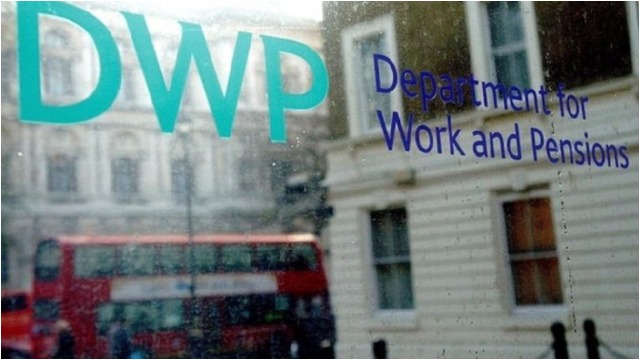
A £510 million funding boost targeted at fraudsters lying to the DWP about their benefit claims has been announced by the UK Government.
The money will be used to improve the department’s capability and capacity to detect and deter benefit fraud and catch fraudsters, recovering more taxpayer money that funds essential public services.
This crackdown will include 2,000 trained specialists to review claims by carrying out property checks, following up earning declarations of self-employed claimants and cross-checking bank details.
It builds on the department’s highly skilled and agile counter-fraud team and investigators in cyber security and serious and organised crime.
They led government action to tackle organised crime groups seeking to exploit support during the pandemic, shutting down systematic attacks on the benefit system and preventing at least £1.9 billion in benefits from being paid to people trying to scam the system.
Thérèse Coffey, Secretary of State at the Department for Work and Pensions, said: “Investing in measures to fight fraud protects honest taxpayers’ money and stops criminals funding their illicit activities off the back of our welfare system.
“We know the characteristics of a suspicious claim. This half a billion-pound cash injection is a clear message to fraudsters and criminal gangs. Anyone trying to con us will get caught out.”
A recent case handled by the counter-fraud team supported a high value fraud bust with police in Stratford-upon-Avon. Operation Iggy was a sting on a woman who had made 14 Universal Credit claims using false identity documents for a total of £270,000.
She was arrested, with the false documents found in her house, and sentenced to 30 months in prison, with DWP now recovering the money.
UK Government and NHS announce ambition to recruit tens of thousands of volunteers to help get jabs into arms
All eligible adults will be offered the chance to get their jab before the New Year
PM: “We need you to come forward again, to work alongside our brilliant GPs, doctors, nurses and pharmacists, to deliver jabs and save lives.”
Prime Minister Boris Johnson and NHS Chief Executive Amanda Pritchard have joined forces to issue a rallying cry for thousands of volunteers to come forward and support the NHS booster campaign.
The public will be urged to play a crucial role in the UK’s fight against Omicron by helping the NHS to get as many jabs into arms as quickly as possible. No task will be too small to contribute towards this national effort.
Yesterday the Prime Minister announced a new ambition for every eligible adult to have the chance to get their jab by the end of the year.
This follows new evidence that suggest the Omicron variant is extremely transmissible and two jabs are not enough to protect against infection.
The new target means the NHS will be massively ramping up its vaccine operations in the next few days, and it needs as many people as possible to play their part by volunteering their time to help.
Urging volunteers to sign up to the booster drive, Prime Minister Boris Johnson said: “As part of our Get Boosted Now vaccination drive we need to increase our jabbing capacity to unprecedented levels.
“But to achieve something on this scale, we need your help. So today I’m issuing a call for volunteers to join our national mission to get jabs in arms.
“We need tens of thousands of people to help out – everyone from trained vaccinators to stewards.
“Many thousands have already given their time – but we need you to come forward again, to work alongside our brilliant GPs, doctors, nurses and pharmacists, to deliver jabs and save lives.
“So please come forward if you can.”
There are now almost 3,000 vaccine sites across the country, staffed by over 90,000 volunteers who have given up 1.1 million hours of time so far.
In the next week hundreds more sites, mobile units and pop ups will be springing up across the country. These will be in a range of locations that will make it as easy as possible for people to get boosted – such as at football stadia, shopping centres and racecourses.
This means volunteers are needed to perform tasks such as registering patients, managing queues and giving jabs.
Last week the NHS announced a recruitment drive for 10,000 paid vaccinators and support staff and that it will also work with the Royal Voluntary Service and St. John Ambulance to recruit a further 40,000 volunteers for roles such as admin and stewarding queues.
In the last week, 13,000 people have come forward as steward volunteers, and a further 4,500 people have registered their interest to take up one of the 10,000 paid vaccinator roles. The government and NHS now want to go even further.
NHS England Chief Executive Amanda Pritchard said: “In the face of the grave threat posed by the new Omicron strain of Covid, the NHS is seeking to offer vaccine booster protection to all eligible adults by the end of the month, a new national mission in which everyone can play their part.
“There is no doubt that our incredible NHS staff will rise to the challenge but we cannot do this alone – we need the support of the public and volunteers to once again support the Covid vaccination programme.
“Since we first issued a call to arms we have had an outstanding response but Omicron has shifted the goalposts and we are now renewing our plea to the nation – I would urge anyone who has volunteered in the past, or considered it but not taken up the opportunity, to come forward now – search ‘NHS vaccine team’ today and find out more about how you can help us save lives.”
Health and Social Care Secretary Sajid Javid said: “To help us turbocharge our COVID-19 booster programme we need people across the country to join our national mission to get boosted now.
“We are so grateful to the volunteer vaccinators from organisations such as St John Ambulance and Royal Voluntary Service who have made an enormous contribution by administering millions of vaccinations since the start of this year.”
People interested in either a voluntary or paid role are urged to visit the Join Vaccine Team page or search ‘NHS vaccine team’. People who volunteered or were trained for paid roles previously are also being contacted to help out again.
Scotland’s First Minister will make a statement on the situation in Scotland this afternoon. It’s expected that restrictions will be strengthened here as Omicron variant cases continue to rise sharply across the UK.
Armed forces step up to support vaccination drive across UK
Over 100 personnel are currently supporting the vaccine rollout in Scotland. 600 Armed Forces personnel have been made available to NHS England to administer vaccines, working in small teams across the country.
In addition, around 50 personnel will provide planning support to NHS England. 41 planners will deploy to NHS trusts across England and 10 logistics experts will be based at NHS England’s headquarters in London.
Defence Secretary Ben Wallace said: “We have rapidly mobilised Service personnel to work alongside our dedicated health services to accelerate the vaccine booster programme.
“Our Armed Forces will help to get vaccines into arms as quickly as possible as we continue our efforts to support the UK’s response to the pandemic.”
Health and Social Care Secretary Sajid Javid said: “We are turbocharging our COVID-19 booster programme to offer every adult in England a vaccine by the end of the year to protect people from the Omicron variant.
“Building our defences through boosters is a hugely important national mission and it’s brilliant to see the military supporting our NHS staff in our race against the virus.
“Please get boosted now to top-up your immunity and keep yourself and your loved ones safe this winter.”
Chief of the Defence Staff Admiral Sir Tony Radakin said: “I’m proud of our Armed Forces who are once again stepping up to help protect people and communities.
“We have a long history of working hand in hand with the NHS as two organisations with a common goal – to help keep our people safe.”
Planners based at NHS England headquarters will be led by Brigadier Phil Prosser who was previously deployed to support the delivery of the vaccine programme which began in December 2020. They will work alongside NHS England to maximise existing capacity and ensure the vaccine programme can be delivered at pace.
Since March 2020, Defence has supported over 430 tasks as part of Operation Rescript – Defence’s support to the UK’s response to the pandemic.
Defence is currently supporting ambulance services in Wales and Scotland and the vaccine rollout in Scotland among other tasks including testing.
Personnel supporting on Operation Rescript tasks have deployed from across the three services – Royal Navy, British Army and Royal Air Force – and are a mixture of regulars and reservists.
Prime Minister and NHS turbocharge booster programme against Omicron and launch an urgent national appeal calling for people to get jabbed
Latest data shows booster is needed to protect ourselves and the NHS against the variant
Prime Minister: “A tidal wave of Omicron is coming. Get Boosted Now.”
UK Chief Medical Officers raise UK Covid Alert Level from Level 3 to Level 4
All adults in England to be offered a booster jab by the end of the year. Devolved administrations also agree to accelerate vaccinations.
The Prime Minister, together with the NHS, last night launched an urgent national appeal calling for people to get jabbed, as he outlined plans to significantly increase NHS vaccination capacity.
It comes as the UK Chief Medical Officers increased the UK Covid Alert Level from Level 3 to Level 4 due to a rapid increase in cases of the Omicron variant.
The latest data suggests Omicron is extremely transmissible and will become the dominant variant by mid-December. Cases are now doubling every 2 to 3 days.
Data published on Friday suggests that vaccine efficacy against symptomatic infection is substantially reduced against Omicron with just two doses, but a third dose boosts protection back up to over 70%.
It is too early to draw firm conclusions about whether the Omicron variant is as virulent as Delta but even if it is more mild, a slight fall in vaccine efficacy can lead to a substantial increase in hospitalisations. Hospitalisations in South Africa have doubled in a week and are expected to rise in the UK over the next 2 weeks.
The extent of transmissibility, coupled with reduced protection after two doses and the raising of the alert level by the UK CMOs, means the Prime Minister and NHS England are today launching an urgent national Omicron appeal for the public to Get Boosted Now.
The government and NHS will rise to the challenge, working flat out to deliver jabs, save lives and ensure the NHS is not overwhelmed this winter with an influx of Omicron cases.
The vaccination programme is already delivering hundreds of thousands of boosters every day, with over 530,000 jabs in arms on Saturday alone, while catching up on elective surgeries and appointments and delivering all urgent care.
All adults will now be offered a booster jab by the New Year, bringing the target forward by one month.
Bookings through the National Booking System will be prioritised at most sites unless it is a pop up or walk-in only site. The National Booking System will now be stood up for over 18s and will take a short time to operationalise. From tomorrow adults over 30 will be able to book online, and all over 18s from Wednesday.
Some walk-in appointments will be available from tomorrow for over 18s, dependent on location. If there are long queues or all slots have been booked, people are encouraged to be patient and keep trying, or book online.
To deliver the ramped-up vaccination programme, NHS staff will need to be redeployed away from non-urgent services. This means that all primary care services will now focus on urgent clinical need and vaccines, and some non-urgent appointments and elective surgeries may be postponed until the New Year while every adult in the country is jabbed.
Without the added protection from this third dose, NHS beds will quickly fill up and the long term damage to the economy and the NHS efforts to bring down the backlog will be even greater.
The NHS will be given everything it needs to get jabs in arms as the UK responds to the Omicron variant.
The Prime Minister yesterday set out that the NHS will be given everything it needs to boost jabbing capacity, which will include:
New vaccination sites set up across the country, including mobile pop up sites
Increasing opening times for vaccination sites, to 7 days a week with more appointments early in the morning, in the evening and at weekends
50 military planning experts will help coordinate the national effort by supporting the NHS with logistics of the rollout
Reprioritising the NHS workforce to deliver as many jabs as possible
A national call for thousands more NHS volunteers
If Omicron is left unchecked the NHS is at risk of being quickly overwhelmed. Last week the Prime Minister confirmed the move to Plan B for England following its rapid spread.
Face coverings are now compulsory in most public indoor venues in England – this is already in place in Scotland – people are asked to work from home if they can from today, and from Wednesday 15 December negative lateral flow tests will be needed to enter nightclubs and large events, except for those who are double vaccinated and subject to approval from Parliament.
Every adult in the country is now being urged to book their jab as soon as possible. The vaccination programme is open to everyone, and first and second doses remain available.
The government will continue to work closely with the devolved administrations on the booster rollout, and there will be Barnett consequentials for any new funding.
Yesterday, on global Human Rights Day, as the UK attends the international Summit for Democracy and the Justice Secretary vows to “overhaul” our protections, over 150 groups across the UK challenged the Prime Minister to secure our Human Rights Act.
As the Prime Minister, Boris Johnson, attended President Biden’s Summit for Democracy, over 150 groups issued an open letter challenging him to secure our Human Rights Act and safeguard human rights and democratic accountability here at home.
The organisations include those working with children, carers, people with learning disabilities and mental ill-health, women experiencing violence, migrants, older people, and groups campaigning for LGBTQ+ rights, fair trials, access to justice, decent housing and against racial discrimination and to increase the UK’s democratic accountability.
In our work up and down the country, we see the everyday ways our Human Rights Act helps people across the UK to live more dignified and equal lives; ordinary people whose voices are rarely considered by those in power.
The loud calls to tamper with our Human Rights Act, often by those in government with the responsibility to uphold our protections, does little to reassure civil society groups, and the many people we each support and represent.
As parliamentarians quizzed the Justice Secretary Dominic Raab on the government’s human rights priorities, the Minister doubled down on his intention to publish plans to change our law imminently, despite not yet having published the report of the Independent Review of the Human Rights Act.
This atmosphere of hostility towards human rights and legal accountability in the UK cannot continue. The organisations are calling on the Prime Minister, and leaders of all political parties to “move from the romanticisation of being human rights pioneers in 1948 and commit to our Human Rights Act protections being a part of everyone’s life, every day, today and tomorrow.”
Sanchita Hosali, Director of the British Institute of Human Rights, the organisation coordinating the letter, said: “As the UK enthusiastically participates in President Biden’s Summit for Democracy, it is time for our Prime Minister to also turn the lens inwards. The hostile environment towards human rights and accountability cannot continue; if we are a nation that values democracy, we must also value the checks on power.”
“At BIHR whether we are working with doctors and nurses, children and parents, teachers or prison officers, women surviving abuse, people with learning disabilities and many others; what we see every single day is the real value and meaning of our Human Rights Act for people across the UK.”
“Rather than hyperbole and rhetoric bordering on dog whistle politicking, we need a government that is willing to stand up for Our Human Rights Act, our way to hold them to account. As we all work hard to mitigate the impact of the pandemic – a crisis in which our Human Rights Act has provided vital protections – we stand with over 150 other organisations calling for a world in which our political leaders move from the romanticisation of being human rights pioneers in 1948 and commit to our rights being a part of everyone’s life, every day, today and tomorrow. It is a challenge we urge Mr Johnson to take on.”
The letter reads:
“Dear Prime Minister and Political Leaders
Every year on 10 December, the world marks Human Rights Day, commemorating the day when, in 1948, the United Nations adopted the Universal Declaration of Human Rights, recognising the dignity and equal rights of all members of the human family as the foundation of freedom, justice and peace in the world.
This is the foundation of our Human Rights Act; this is why it matters. Our law here at home, setting out each person’s protections, and the responsibilities of government and those with public power to realise that vision of the UDHR; for us all to live in equal dignity.
Our politicians often proudly recall the UK’s role in setting down human rights law in the aftermath of World War II, standing shoulder to shoulder with nations to affirm our commitment to ensuring that human rights should be protected by the rule of law, that a common understanding of these rights should be shared by every person and part of society.
Now, in the midst of this modern era global crisis, human rights must inform both our responses to the pandemic and our recovery from it. No one has escaped the impact of this virus. And sadly, we have witnessed the disproportionate and discriminatory effects of Covid-19 and government measures among too many, including among black and minoritized communities, for disabled people, and people who live in care homes, alongside significant educational impacts for children and young people, deepening poverty, increased reporting of domestic abuse, and even more difficulty accessing justice.
There is much more than we cannot do justice to in such a short space, but which has been documented by parliamentary committee inquiries and research from our national human rights institutions, academics and across civil society. If recovery is to be resilient and just it must be focused on upholding our human rights.
And yet, here in the UK, rather than renewed commitment to upholding rights we face a hostile environment for human rights. Rather than addressing the inequalities fuelled and exacerbated by the pandemic, we are facing a political climate filled with threats to “overhaul” the very protections we all need upheld. The loud calls to tamper with our Human Rights Act, by those with the very responsibility to uphold them, does little to reassure us, and the many people we support and represent.
Human Rights Day should be an opportunity to reaffirm the importance of human rights in rebuilding the world we want. We call on the UK Government, and all political leaders, to share our commitment to universal human rights, as set out in our Human Rights Act.
As civil society groups working hard to mitigate the impact of the pandemic, we want a world in which our political leaders move from the romanticisation of being human rights pioneers in 1948 and commit to our Human Rights Act protections being a part of everyone’s life, every day, today and tomorrow.”