Shaping healthier food environments for the next decade

In collaboration with Public Health Scotland, Nesta, an innovation agency for social good, has today published two key publications which explore how Scotland’s planning system can be used to create healthier food environments and support efforts to reduce obesity and health inequalities.

The two publications are:

  • ‘Planning for Healthier Communities – Opportunities in the Scottish Planning System’ (research report)
  • ‘The role of Local Development Plans (LDPs) in shaping healthier food environments across Scotland’ (supporting briefing)

These resources draw on research, stakeholder engagement, and lessons learned to recommend practical steps for integrating food environment policies into the local planning system.

Around two thirds of adults in Scotland are living with overweight or obesity, and one in three children starting primary 1 are at risk of overweight or obesity, with rates significantly higher in more deprived areas.

Recent modelling also projects substantial increases in overweight by 2040. The need for change is evident and reducing overweight and obesity is a key priority in Scotland’s Population Health Framework.

Historically, planning policies in Scotland have rarely addressed food environments or obesity directly.  But now, the Scottish Government’s National Planning Framework 4 (NPF4) and Local Development Plans (LDPs) provide an opportunity to change that. LDPs are currently in preparation stage, with decisions taken over the next two to three years shaping Scotland’s food environment for the next decade.

Many organisations, including local authorities and health boards, play a key role in the planning process. These new publications outline key stages and priority areas where public health professionals can contribute and influence the development of plans, such as:

  • providing local health data and expertise to support the case for food environment policies
  • focussing on health inequalities and areas where unhealthy food environments and obesity rates are highest
  • building stronger collaborations between planning and public health to gather evidence and advocate for change

Claire Hislop RNutr (Public Health), Organisational Lead – Food and Physical Activity, Public Health Scotland, said: “Scotland’s current food environment often fails to support healthy eating. This is particularly evident in communities with higher deprivation and where access to affordable, nutritious food can be limited.

“Improving Scotland’s food environment requires a package of measures; utilising the planning process as part of this is both necessary and possible.

“In particular, Local Development Plan preparation offers a unique, but time limited, opportunity to contribute to creating communities that enable and promote healthier food options – for years to come.”

Frances Bain, Mission Manager, Nesta, added: “Nesta were delighted to partner with Public Health Scotland on this research which was carried out through a residency placement and explored the potential to use the planning system to influence healthier food environments.

“Thanks to all the local and national stakeholders who participated in the research and in particular Dr Meadhbh Maguire for leading the work.

“We have been able to outline the opportunities and challenges that exist when considering new planning policies relating to the food environment and highlight the role that local development plans can play in supporting public health.”

Find out more about Nesta

Read the research report and briefing

Summer support for children from low-income families

Thousands of children from low-income families will benefit from free childcare, activities and healthy food as part of a £10 million summer programme.

Available to children and young people aged five to 14 years old who need it most, the funding has been allocated to local authorities to supplement existing holiday programmes or to develop new ones.

Education Secretary Shirley-Anne Somerville said: “School holidays can be expensive for families, especially when household bills are soaring. This funding means children and young people who really need it will be able to access coordinated childcare, activities and nutritious food over the summer.

“They will have opportunities to play, socialise and access a range of activities that broaden their experiences and supplement their learning.

“Support will be targeted at the six priority family types at greatest risk of poverty, including lone parent families and families with a disabled adult or child. We have a national mission to tackle child poverty and, along with £21.75 million in funding for alternative holiday food provision for families eligible for free school meals, this offer will provide much-needed support over the summer.”

COSLA Children and Young People’s Spokesperson Councillor Tony Buchanan said: “The rising cost of living is exacerbating the already stark and unacceptable reality of poverty in the lives of children, young people, families and communities.

“We are pleased that this additional funding will enable local authorities to build on their regular summer programmes to enhance opportunities and support for priority groups of children and young people.

“Councils and their local delivery partners will provide varied programmes, incorporating activities, childcare, and food provision, in line with local needs and guided by what children, young people, and families themselves say will make a difference.” 

Grow Strong: Edinburgh Community Food launches schools project

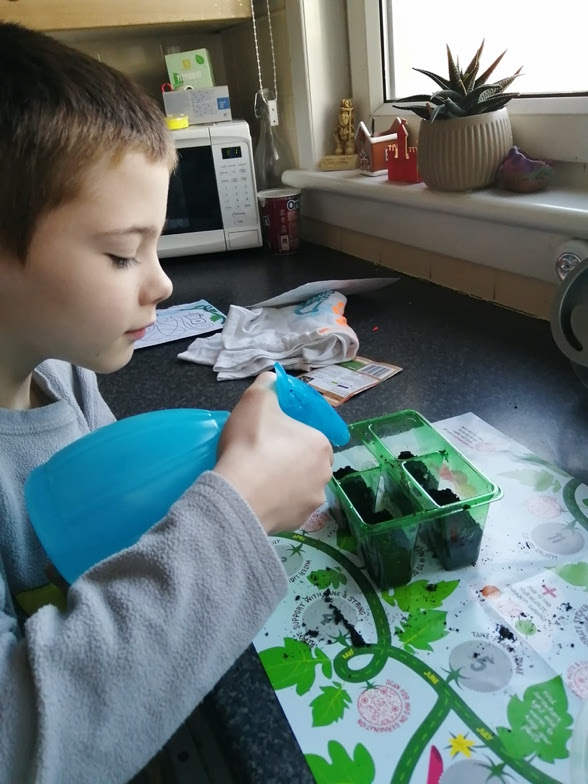
Edinburgh Community Food, a social enterprise and charity which uses food to tackle health inequalities, have teamed up with Veg Power, a not-for-profit to increase veg consumption across the UK, to deliver ‘Grow Strong’, a pilot project across Edinburgh, encouraging children to grow food.

38 Edinburgh primary schools and local families have started to receive their Grow Packs which include everything they need to raise Cherry Tomatoes.

The packs include propagators, seeds and compost kindly donated by Unwins Seeds, as well as a Grow Strong wall chart bursting with information to help them grow their tomato plants.

Former Blue Peter gardener, Chris Collins, will be joining Edinburgh’s children by growing his own tomato plant.

He has plenty of tips and vlogs to help guide the little growers and their helpers: “There is nothing like seeing the miracle of a tiny seed emerge from the soil, grow, bloom and produce fresh food. 

“When you have grown once, you will want to grow for a lifetime. Knowing how to grow food is not just amazing fun, it’s also a life skill and one our children should not be without.”

Once the cherry tomatoes are ready to harvest the little growers will head to the kitchen to turn their tomatoes into a delicious pasta sauce.

According to the National Diet and Nutrition Survey (NDNS), 80% of children are not eating enough vegetables. Learning about where food comes from is not just good for healthy eating, it’s important to develop children’s understanding of the food chain, sustainability and the environment.

Veg Power’s Chief Executive Dan Parker said, “Veg Power is committed to increasing the UK’s veg consumption and the Grow Strong project in which children will grow tomatoes from seed is a fun initiative that not only teaches them about food systems and healthy eating but brings together an alliance of local government, business, community and schools.”

The learning will continue throughout the Summer with a number of exciting events for children taking place in Edinburgh’s Community Gardens, which will help them on their Grow Strong journey and ensure the cherry tomatoes make a tasty pasta sauce.

With the rising cost of living, the Grow Strong project is all about helping children and families enjoy delicious, fresh, healthy food working towards making sure everyone in Edinburgh has access to an affordable, healthy diet.

People across Edinburgh are invited to join in the fun by growing their own cherry tomato plants. Share your Tomato Adventure using #TOMTASTIC.