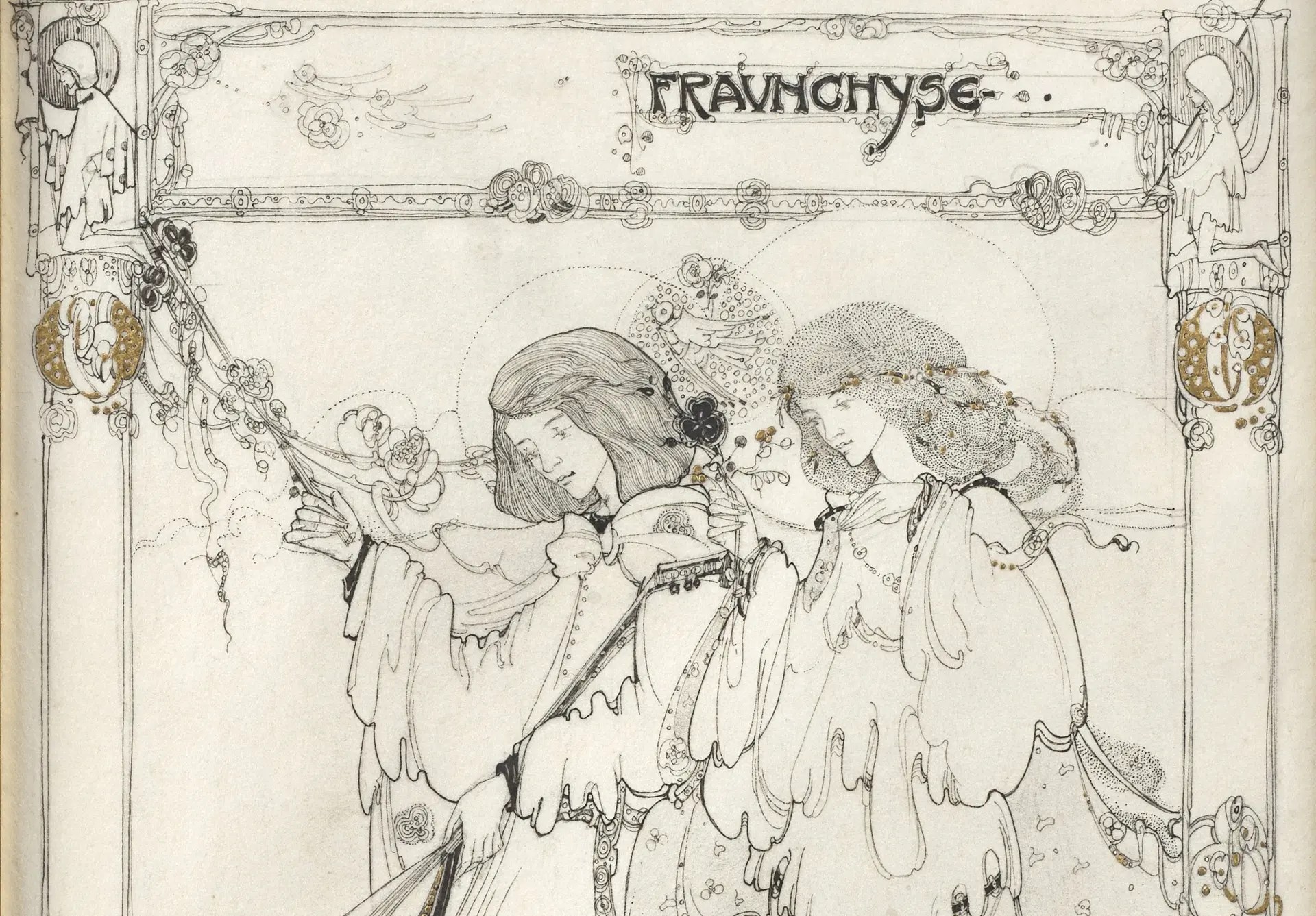
Gifted: New Acquisitions at the City Art Centre presents a selection of historical and contemporary Scottish artworks recently received as donations and bequests.
The City of Edinburgh’s Fine Art collection charts the history of the visual arts in Scotland from the 17th century to the present day.
Containing more than 5,000 individual artworks, the collection continues to grow every year, with new acquisitions filling historical gaps and introducing contemporary talents. Many of these artworks are generously donated by artists, cultural organisations and members of the public.
Gifted reveals over 50 recent gifts and bequests, ranging from 19th century oil paintings to modern-day artists’ prints. The exhibition explores the stories behind each acquisition, celebrating donors and their important role in developing the Fine Art collection.
Over 40 different artists feature in the new exhibition, including: Victoria Crowe, Agnes Miller Parker, Wilhelmina Barns-Graham, John Bellany, Jessie M. King, Robert Blomfield, David Cass, Gareth Fisher, Tess Glen, Bet Low, Will Maclean, Caroline McNairn, Robin Philipson and Willie Rodger.
Among the highlights are Jessie M. King’s exquisite Art Nouveau drawing Fraunchyse (c.1907), Robin Philipson’s colourful still life Poppies on a Gold Ground (1984), and a group of miniature scenes painted on found objects by contemporary artist David Cass.
Cllr Margaret Graham, Culture and Communities Convener, said:Edinburgh’s art collection tells a remarkable story of Scotland’s creative talent, made possible in large part through the generosity of those who have gifted works to the city.
“From drawing and painting to photography and sculpture, the collection reflects the richness and diversity of Scottish art.
“This exhibition gives residents and visitors the chance to experience works by artists such as Victoria Crowe up close, and to enjoy them completely free of charge.”
Curator Dr Helen Scott (pictured top) said:“Over the last few years, we’ve been really fortunate to receive so many wonderful artworks as donations and bequests to the Fine Art collection.
“Some pieces have been gifted by artists themselves, while others have been offered by cultural organisations and members of the public. Such generosity allows us to increase the breadth and depth of the collection, sharing artworks in the public domain that might otherwise never be seen.
“Many of these artworks are being displayed here for the first time since their arrival. I’m really looking forward to visitors discovering them, and perhaps even finding a new personal favourite.“
Exhibition will run from 18 November 2026 – 11 April 2027
Free Admission
Over 180 artists from Orkney to Dumfries and Galloway and beyond, including some who have never publicly shown their work before, have been shortlisted for the Scottish Portrait Awards 2026.
The selected works will go on display alongside the nation’s magnificent collection of art at National Galleries Scotland: Portrait from 18 November 2026.
A total of 187 works were chosen from nearly 2,500 entries across three categories including Fine Art, Photography and the free to enter, Scotland Now! Phone Portrait Awards. These include nine nominations for the Young Fine Artist Award and nine nominations for the Young Photographer Award.
Judges were wowed by the vibrance and creativity of this year’s submissions, championing the incredible talent of Scottish artists. Now in its ninth year, the Scottish Portrait Awards, Scotland’s largest awards in portraiture will be bigger than ever, as the National Galleries of Scotland partner with the Scottish Arts Trust for the first time.
Robyn Jenkins, an animation student at Edinburgh College of Art, who at 18 is one of the youngest artists to be selected, said, ‘To walk into the Great Hall and know my work is hanging in the National Galleries Scotland: Portrait is an absolute dream.
“After visiting the galleries so many times, it feels surreal to have my work share the space of the incredible art I’ve admired for so long.”
Shortlisted artists captured the imagination and in collaboration with their sitters, have shone a spotlight on diverse stories and experiences in today’s society.
The exhibition at National Galleries Scotland: Portrait will feature dynamic works from vibrant paintings of family members, to moving photographs of athletes, uplifting moments of celebration, unique fashion portraits and LGBTQ+ communities.
Capturing a snapshot of what it means to live in Scotland today, the exhibition will celebrate the artists who capture these moments in time.
Each shortlisted artist will have the opportunity to win the John Clark Motor Group Scottish Portrait Awards in Fine Art or the MPB Scottish Portrait Awards in Photography plus £5,000 and a commission from the National Galleries of Scotland to make a portrait for Scotland’s national collection.
Open to anyone over 16 years, born, living or studying in Scotland, regardless of experience, the Scottish Portrait Awards brings together well-established artists as well as newcomers working in many different styles – not only in painting and sculpture but also, for the first time, animated portraits will feature in the exhibition.
The prize-winners will be announced on the opening week of the exhibition in November during the awards events at the National Galleries Scotland: Portrait before opening to the public from 18 November 2026 – 11 April 2027.
From over 600 works submitted, 64 portraits have been shortlisted by the judging panel for the John Clark Motor Group Scottish Portrait Awards in Fine Art.
The range of fine art media – painting, drawing, printmaking, collage, sculpture, animation and film – and materials used reflect the many approaches to making a portrait. Self-portraits, together with depictions of family, friends and admired figures, capture moments in time.
Visitors to the exhibition will discover works exploring the passing of time, identity, relationships, vulnerability, play, the natural world and human nature.
Judges selected 63 pictures from more than 800 entries submitted for the MPB Scottish Portrait Awards in Photography.
More than just pictures of people, these images exemplify a broad range of approaches to photography and portraiture today. They challenge us, spark joy, create conversation, tell stories and share different points of view.
The portraits demonstrate different photographic methods and techniques, from the documentary to the surreal, and from older analogue processes to digital photography. Indicative of the scope covered by this year’s awards, the subjects represented in the exhibition range in age from a newborn baby to a centenarian.
The awards also encouraged everyone across Scotland, aged over 16 years, to send photos taken on a phone to its free to enter competition. 60 works shortlisted for the Scotland Now! Phone Portrait Awards, will go on display on a screen in the gallery, championing the art of photography at all levels.
Throughout the exhibition, visitors will explore themes of care, kinship and interconnectedness through the eyes of others.
Gordon Mitchell RSW RSA RGI, Director, Scottish Portrait Awards and Fine Art Chair, said: ‘We’re bringing the country’s biggest and most prestigious portrait awards to a world-class national stage.
“Nothing compares to standing in a major gallery and experiencing the breadth and intimacy of the artworks firsthand.”
Simon Murphy, Chair of Photography, said: ‘Showcasing established and emerging artists together in a single exhibition isn’t just about sharing gallery space, it creates a powerful dialogue and democratic opportunity.
“Add a major national collection as a backdrop and you create an electric energy that is rarely experienced.”
Anne Lyden, Director General of the National Galleries of Scotland, said: ‘Portraiture shows us what it is to be human – to connect and foster empathetic relationships. This year’s entries embody this and more, capturing life in Scotland in the most beautiful way.
“It has been inspiring and moving to experience the work of artists who have previously entered and to see how participating has furthered their practice.
“The judges were enthralled by the range of submissions and captivated by the artists skill, storytelling and personal statements. We are delighted to have the opportunity to share this with our visitors in November and hope everyone can join us in celebrating the incredible artistic talent Scotland has to offer.’
Since its inception, the awards have discovered and recognised almost 500 artists whose work features in the Scottish Portrait Awards online archive.
Many of the artists have continued to advance their careers with exhibitions and commissions. Previous award winners include Helen Wilson, Robin Gillanders and Graeme Wilcox.
The Maltings Exhibition Centre in Cramond opens its doors this weekend, offering visitors a window into one of the most remarkable stretches of history in Scotland, stretching from 8,500 BC to the present day.
Located in the historic heart of Cramond, the Maltings Exhibition Centre opens this weekend for its summer season, until the end of September. Admission is free, with a suggested donation of £3.50, and is open to visitors of all ages. Opening times are 2–5pm each Saturday, Sunday, and on public holidays.
Cramond is one of the oldest continuously occupied areas in Scotland, and the centre’s permanent exhibition brings that story to life. Displays trace human activity in the area from the earliest known evidence of settlement in 8,500 BC, through the Roman era, the medieval period, and on into more recent centuries.
Visitors can explore the story of Cramond’s Kirk and village, the lives of those who lived and worked on the local estates, and the area’s industrial heritage, including its association with one of Scotland’s earliest iron works, which once drove activity along the River Almond.
The Maltings is a brilliant destination for families and younger visitors. Children can come face to face with genuine Roman artefacts recovered from nearby archaeological digs, and step back in time to experience what a local Victorian school classroom would have looked like.
This summer’s programme also includes a series of guided walks along the River Almond and to Cramond Island. Volunteers from the Cramond Heritage Trust will be on hand throughout the season to bring the stories of the site to life.
Ian Rodger, Chair of Cramond Heritage Trust, said: “We are absolutely delighted to be opening the Maltings Exhibition Centre for another summer season.
“Cramond has a history that stretches back thousands of years, quite possibly making it one of the oldest continuously occupied places in Scotland, and this exhibition centre is where that story is told.
“We can’t wait to share it with visitors, whether they’re coming back for the first time in years or discovering Cramond for the very first time.”
The Maltings Exhibition Centre is run entirely by volunteers from the Cramond Heritage Trust and relies on the generosity of visitors and supporters to preserve and share the heritage of this extraordinary place. Donations are warmly welcomed.
This autumn at the Portrait gallery in Edinburgh, take to the skies and see the world from above the clouds through the remarkable work of Alfred Buckham: Daredevil Photographer.
From 18 October 2025 – 19 April 2026, meet the man behind some of the most iconic aerial photographs ever taken, marvel at the death-defying lengths he took to capture the perfect image and explore how his innovative techniques in the darkroom paved the way for modern technologies such as Photoshop and AI.
Free to visit at the National Galleries Scotland: Portrait, this will be the first major exhibition dedicated to Alfred Buckham and can only be seen in Scotland.
This exhibition will bring together over 100 photographs and objects including popular works from the Scottish national collection, alongside extensive archival material generously loaned by Alfred Buckham’s grandsons, Richard and John Buckham. Thanks to the support of the Buckham family, personal objects including letters, photographs and even the passport Alfred Buckham used will be put on public display for the first time.
A maverick of early aviation, Alfred Buckham (1879-1956) created his own unique style of photography by combining daring exploits in the air with innovation in the darkroom. Born in London, Buckham learned his craft by teaching photography before joining the Royal Naval Air Service in 1916, a predecessor to the Royal Air Force.
Hailed as an exceptionally skilled flyer, he combined his talent for aviation with his passion for photography, resulting in remarkable endeavours and trailblazing images. Based for most of his military career at RAF Turnhouse, now Edinburgh Airport, central Scotland became a natural playground for Buckham to refine his photographic techniques and let his imagination soar.
Daredevil Photographer will chart his phenomenal story from his early photographic experiments in Scotland to exciting adventures in South America and look closer at the skilled and inventive ways he created his work.
Explore Scotland from the air and get a new perspective of well-known sights, just as Buckham himself would have. Daredevil Photographer celebrates the impact Scotland had on Buckham’s work through his images of recognisable landmarks including St Andrews Golf Links, Linlithgow Palace and the Wallace Monument in Stirling.
The exhibition will also feature several images of the Forth Rail Bridge, Buckham’s most photographed landmark. The iconic bridge was the subject of one of his first composite photographs and appeared on the 1918 RAF Turnhouse Christmas card, which will go on display alongside the original photography.
Daredevil Photographer will delve into the darkroom and uncover more about the creative processes used to bring Buckham’s unique images to life. After the First World War, Buckham began experimenting with composite photography; a technique where several negatives are used to create one photographic print.
While this wasn’t a new concept, composite photography added a layer of creative freedom to Buckham’s work, much like a very early form of Photoshop.
From his vast collection of glass negatives – he had over 2000 cloud images alone in his ‘cloud library’ – Buckham had the means to create images which became immersive, giving a unique sense of flying alongside these incredible aircraft while viewing the world below.
It was through the technique of composite photography that some of Buckham’s most famous works were born, including the iconic aerial view of Edinburgh (about 1920). This striking photograph shows a bi-plane hovering amongst wispy clouds above Edinburgh Castle, with Arthur’s Seat visible through the mist in the background, and the bustling city below.
For the first time, Edinburgh will be displayed alongside the camera and original glass negatives Buckham used to capture and create this much-loved image. Visitors will also be encouraged to get inspired and try their hand at creating their own composite creations through interactive exhibits.
Telling Buckham’s story through his own wordsand memories, Daredevil Photographer allows visitors to meet the courageous and humorous man behind the camera. Firsthand accounts of his incredible exploits in the air and ingenious creative methods on the ground will enhance his story and highlight his adventurous spirit:Ah! One was a rare daredevil in those days! (Alfred Buckham, The New York Times, 1930).
A free and unique immersive audio experience will bring Buckham’s world of flight and imagination to life through his own words. Hear Buckham’s grandson Richard give a voice to his grandfather’s memories and reflections on his daredevil persona.
Daredevil in every sense of the word, Buckham went to incredible feats to capture the perfect shot, which the exhibition will explore. His preferred methods included standing in an open cockpit while mid-air, with his leg tied to the seat as a nod to safety. As a result, he experienced no less than nine crashes in his lifetime, one ending in a serious throat injury that cut his military career short.
However, he would not be deterred, describing his eccentric photography methods in a surprisingly relaxed way:
“It is not easy to tumble out of an aeroplane, unless you really want to, and on considerably more than a thousand flights I have used a safety belt only once, and then it was thrust upon me.
“I always stand up to make an exposure and, taking the precaution to tie my right leg to the seat, I am free to move rapidly, and easily, in any desired direction; and loop the loop; and indulge in other such delights, with perfect safety” – Alfred Buckham, The Camera, January 1927.
Daredevil Photographer will celebrate Buckham’s skill in the air through a range of his mesmerising photographs. Encounter stunning images of the leading aircraft of the day, such as the Bristol Fighter, a two seated bi-plane designed for aerial reconnaissance, and the bizarre airships of the 1920s.
See them soaring through the skies in all weathers, amongst an array of remarkable landscapes. The exhibition will include one of his most well-known works, The Heart of the Empire (1923), on loan from the V&A Museum in London and displayed in Edinburgh for the first time.
The photograph follows a bi-plane as it glides across the London skyline, with landmarks such as Tower Bridge and the River Thames in view. Exhibited by the Royal Photographic Society in 1925, The Heart of the Empire secured Buckham’s position as one of Britain’s leading aerial photographers.
Experience the golden age of travel through Buckham’s portfolio of images spanning across the globe. In 1931, a commission from Fortune Magazine took Buckham on an epic fifteen-week trip across the Americas, covering 19,000 miles and setting a world record. Starting in New York City and taking the opportunity to capture the newly built Empire State Building, Buckham photographed his intrepid journey from the United States to the tip of South America to share with the world.
Daredevil Photographer will chart Buckham’s incredible journey, from expansive views of Christ the Redeemer in Rio De Janeiro and the snowy caps of the Andes Mountains to perilous scenes of smoking volcanic creators in Guatemala and Mexico. Through his death-defying adventures and stunning photographs, Buckham expanded public understanding of the world, creating an exciting legacy which continues to capture imaginations today.
Louise Pearson, curator of photography at the National Galleries of Scotland says: “Alfred Buckham’s eye-catching photograph of Edinburgh is one of the most popular artworks in the National Galleries of Scotland collection.
“This enthralling image becomes even more intriguing when you learn that it is a darkroom jigsaw – a composite photograph made through a combination of technical skill and creative vision. Alfred Buckham: Daredevil Photographer tells the remarkable story of this maverick of early aviation whose adventures took him from aerial reconnaissance photographer to intrepid explorer via numerous loop the loops.”
Alfred Buckham: Daredevil Photographer isa free exhibition at National Galleries Scotland: Portrait, opening on 18 October 2025.
Friday 15 August 2025 marks the 80th anniversary of Victory over Japan Day, and commemorates the ending of the Second World War.
The Royal Scots Museum Outreach Team will hold a VJ Day 80 event in the George Washington Browne Room at Central Library.
The Family Research Area will be staffed by Museum research volunteers, National Records Scotland, Scottish Genealogical Society, and Commonwealth War Graves Commission who will have access to • Regimental War Diaries • Regimental Journal, “The Thistle” • Royal Scots World War Two Attestation Books • documents and photographs from the Royal Scots Museum Archive • and much more…
There will also be a small display of Royal Scots-related items and memorabilia and display boards telling the stories of • 2nd Battalion The Royal Scots who at the outbreak of World War Two were serving on Garrison Duty in Hong Kong • the sinking of the Lisbon Maru • 1st Battalion The Royal Scots, who after the evacuation of Dunkirk in 1940, were reconstituted at Bradford and were responsible for a stretch of the Yorkshire coastal defences. The Battalion was then sent to India in 1942. • officers and soldiers from the Royal Scots who served with specialist units in the Far East.
You will also be able to view the Museum’s new 12 minute VJ 80th film, which includes interviews with those Royal Scots who served in the Far East and their families.
The Family Research Area will run from 12 to 15 August, from 10am to 4.30pm each day, and is free to attend.
More than 180 artists featured in Scotland’s biggest contemporary art and craft market
Scotland’s biggest contemporary art and craft market is set to debut this August at Dalkeith Palace and Country Park.
With 110 stalls and over 180 artists and makers, spanning both the grounds of Dalkeith Country Park and interior of Dalkeith Palace, Visual Arts Scotland (VAS) will showcase a wide range of exciting pieces across from across Scotland.
Part of VAS’s expansion into large-scale art fairs and market events, this landmark event marks the first time VAS has ventured beyond its renowned programme of exhibitions, residencies and awards since launching over 100 years ago.
In addition to maker stalls, the event includes Inches Carr Craft Award interim show, 30×30 affordable art show, VAS graduate showcase and micro exhibitions.
Highlights include:
110 contemporary maker stalls across two floors and the grounds of Dalkeith Palace.
Craft graduate exhibition featuring current work by Rosina Payan Pecorelli (ECA), Isabel Honey Coles (ECA), Duoduo Lin (GCA), Tina Avery (GSA), Morven Aird (DJCAD), Ella Hamilton (DJCAD) and Katie Buchanan (DJCAD).
Inches Carr Craft Award Finalists exhibition featuring Felicity Bristow, Scott Smith, Erin McQuarrie, Richard Goldsworthy, Jennifer Alford, Charles Young, Lynne Hocking, Hannah Keddie and Carol Sinclair.
30x30cm affordable artwork exhibition (under £250) from 100 Visual Arts Scotland members including Jack Conkie, Laura Gressani, Yasmeen Kahn, Judith Shaylor and Genevieve Draper.
Work from across the visual art and contemporary craft spectrum including jewellery, silverware, ceramics, contemporary art, painting, printmaking, cards, sculpture, furniture, photography, homewares, stained glass and textiles.
Tavienne Bridgwater, VAS President said: “We are thrilled to bring Scotland’s biggest artist and maker market to Dalkeith Palace and Country Park next month.
“Having championed craftspeople, makers, designers and contemporary arts practitioners for more than 100 years, this event comes at an exciting time in VAS’s evolution, enabling us to showcase even more innovative work from across Scotland.”
If you are looking to escape the Edinburgh Festivals for a day, why not head to Dalkeith Palace and Country Park where you can explore and buy art, meet makers and enjoy curated exhibitions just seven miles from Edinburgh!
National Museum of Scotland, Chambers Street, Edinburgh 25 January – 27 April 2025 Free admission
An exhibition telling the story of the global effort to develop a COVID-19 vaccine will open at the National Museum of Scotland in January.
Injecting Hope: The Race for a COVID-19 Vaccine explores the scientific principles and adaptation of innovative research behind this extraordinary endeavour. It looks at the UK-wide, behind-the-scenes work that accompanied the vaccines’ rapid development, production, transport and delivery and examines the sheer logistical challenges behind the worldwide rollout.
Revealing the inspiring stories of scientists and innovators collaborating around the globe to find solutions and save lives, the exhibition will show how these people have shaped the world we live in today.
Showcasing more than 100 objects and stories that were collected during the peak of the pandemic, it features artworks, interactives, and personal objects examining everything from the virus itself to the work done behind the scenes by volunteers and researchers to make huge innovations possible.
Highlights include the vial of the first COVID-19 vaccine to be administered worldwide, notebooks used by June Almeida, the Scottish scientist who discovered coronavirus in 1966 and artworks interpreting the story of the pandemic by artists including Luke Jerram, Angela Palmer and Junko Mori.
New content created for the exhibition’s Scottish run will explore some of the uniquely Scottish experiences of the pandemic.
Sophie Goggins, Senior Curator of Biomedical Science at National Museums Scotland said: “The development and rollout of the COVID-19 vaccine in record time is one of the greatest collaborative human achievements in recent memory.
“This exhibition tells the story of just how this extraordinary feat came to be; from the scientific breakthroughs which led to the creation of the vaccine to the countless individuals who helped to roll it out around the globe.”
Injecting Hope is presented by the Science Museum Group (SMG). It comes to the National Museum of Scotland as part of a national and international tour following its inaugural run at the Science Museum in London.
It forms part of a project with the National Council of Science Museums in India and the Guangdong Science Center in China, which, alongside the Science Museum, opened exhibitions in November 2022.
Injecting Hope builds on the work SMG has undertaken in response to the COVID-19 pandemic, including its COVID-19 collecting project, hosting NHS vaccination centres within its museums and public engagement events and materials.
The Injecting Hope project, including the international tour and UK national tour, has been generously supported by Wellcome. The Huo Family Foundation is kindly supporting the national tour of the exhibition.
National Museums Scotland has announced the acquisition of an ornate early 18th-century sundial of exceptional precision and design. The Ilay Glynne dial, which is now on display at the National Museum of Scotland in Edinburgh, is a masterpiece of both art and science.
The Ilay Glynne dial, made around 1715, was used to measure local time from the Sun, providing the most accurate means of setting clocks available at the time. It could be used at any latitude, and its form models the celestial sphere, showing the Sun’s apparent motion around the Earth.
The acquisition of the dial, which has important connections to post-Union Scotland, has been supported by the National Heritage Memorial Fund and Art Fund.
The dial was commissioned by and belonged to Archibald Campbell, Earl of Ilay and later 3rd Duke of Argyll (1682-1761).
Ilay was hugely influential figure in post-Union Scotland. He had control over royal patronage in Scotland, and managed Scottish affairs, making him the most politically powerful figure in the first half of the 18th century.
He was a founder and the first governor of the Royal Bank of Scotland. His likeness used to appear on all RBS banknotes, and still appears on the £100 note today. Through his patronage, including at Scottish universities, he became an important sponsor and promoter of the culture of the Scottish Enlightenment
It is signed by Richard Glynne (1681-1755), a successful and well-regarded maker of mathematical instruments and a member of the Clockmakers’ Company. In his business, skills and innovations, Glynne was closely integrated with a growing community of British instrument makers and produced instruments of outstanding quality, of which this dial is the most important surviving example.
The dial is of a type first made for figures such as Peter I of Russia and Queen Anne’s consort, Prince George of Denmark, suggesting Ilay commissioned it from Glynne as a projection of his reputation as a nobleman of wealth and status.
Of imposing size, in brass and silvered brass, it is surmounted with the Ilay coat of arms, with leopard supporters, coronet and motto, and the central plate is decorated with the monogram ‘AC’, for Archibald Campbell, beneath an earl’s coronet.
Dr Rebekah Higgitt, Principal Curator of Science at National Museums Scotland, said: “We’re delighted to be able to acquire the spectacular Ilay Glynne dial and hugely grateful to the funders who have made it possible.
“It is an addition which reflects the breadth of our collections, being at once a significant scientific instrument, an object of great beauty and one with strong connections to key developments in Scotland’s history.”
Dr Simon Thurley, Chair of the National Heritage Memorial Fund, said: ”The Ilay-Glynne dial is a magnificent example of scientific endeavour, and we are delighted to have supported National Museums Scotland to acquire it for a UK public collection.
“Not only is it an exquisite instrument, but its provenance offers an opportunity to explore important stories about scientific, intellectual and cultural currents that saw the birth of the Scottish Enlightenment.”
Jenny Waldman, Director, Art Fund said: “This stunning sundial offers a unique insight into scientific innovations in 18th century Scotland. The precision and detail of the craftsmanship is exquisite, a true work of art.
“I’m so pleased that Art Fund has been able to support National Museums Scotland to acquire this remarkable object for their permanent collection, ensuring it will continue to enlighten visitors from Scotland and beyond on public display in the Spirit of the Age gallery.”
The Ilay Glynne dial reveals the Earl of Ilay not just as the politically powerful and wealthy figure he is best known as, but also as a patron of arts, science and learning. It is through this patronage that Ilay is widely believed to have contributed to the Scottish Enlightenment.
Those he supported include philosopher Francis Hutcheson, chemist Joseph Black, astronomer Alexander Wilson, poet Allan Ramsay and other ingenious individuals who created emblematic works of 18th-century Scottish culture.
In Scotland, Ilay pursued agricultural and infrastructure projects, the development of fisheries and promotion of the linen trade. As founder and governor of the Royal Bank of Scotland and the British Linen Company he aimed to encourage others to invest and improve.
Some of these investments were in overseas trading companies, such as the African Company, East India Company and South Seas Company, which profited from colonisation and the exploitation of enslaved people, an important reminder of a key source of wealth that underlay economic and cultural change in 18th-century Scotland.
The dial has undergone extensive cleaning and conservation work, and is now on permanent display in the Spirit of the Age gallery in the National Museum of Scotland. Admission is free.
The Royal Scots Exhibition at Tynecastle Park 5 – 10 July
Exhibition focusing on the importance of teamworking and sport in the military as part of the Heart of Midlothian FC’s 150th Celebrations
The Royal Scots Regimental Museum is reaching out from Edinburgh Castle to deliver an exhibition, with particular focus on the importance of teamworking and sport in the military, hosted by Heart of Midlothian FC in the European Suite at Tynecastle Park as part of the Club’s 150th Anniversary Celebrations, from Friday 05 to Wednesday 10 July 2024 (10:00 to 16:30 daily – free admission).
The Museum’s Outreach Exhibition has been curated to engage and connect with people of all ages from throughout Edinburgh and the Lothians, a major part of the Regiment’s former recruiting area, to promote the Regiment’s enduring legacy and commemorate those who never came back, giving their lives for peace.
The exhibition provides a particularly poignant reminder of the supreme sacrifice made by the 1914 Hearts team with their footballers being the first in the UK to enlist to fight for their country at the outbreak of World War 1. Many of them volunteered to join the 16th Battalion of The Royal Scots, famously known as McCrae’s Battalion.
The exhibition also covers significant events in Regimental history such as the Gretna rail disaster (1915), the Gallipoli campaign (1915), the Battle of the Somme (where 454 Royal Scots were killed on the 1st of July 1916 alone), the Battle of Kohima (part of the Burma campaign in 1944) and the First Gulf War (1991).
Through the telling of Soldiers’ Stories from 1914 onwards visitors will learn of Royal Scots’ experiences in conflict, fighting for peace. Inspired by Hearts’ continuing dedication never to forget those of their Club who were killed or wounded, the importance of teamwork and sport in the military will be explained. Some of the items on display have never been seen publicly before.
A Research Area has been included in the exhibition to enable families to find out more about their relatives who served with The Royal Scots.
The exhibition hosts and guides are volunteers who served in The Royal Scots and who want to give something back through comradeship, promoting the unique heritage of the Regiment. They are fondly named Pontius Pilate’s Bodyguard.
Lianne Parry, Hearts Head of Heritage, said: “We very much look forward to hosting The Royal Scots Museum. It is wholly appropriate in our Sesquicentennial Year that we should highlight one of the most historically important episodes in Hearts’ long and rich history.
“We hope that visitors will take advantage of their visit to the stadium, to call in at the Club’s own Museum which will be open throughout.”
Colonel Martin Gibson, representing the Royal Scots Museum’s Outreach Team, commented: “We are determined to reach out and engage with the people of Edinburgh, to tell the story of The Royal Scots from 1914 onwards, and to highlight the very close enduring connection between the Regiment and Hearts FC which began at outbreak of WW1.
“So many men from our capital City served in our Regiment which saw 373 years of unbroken service; it is so important that their achievements and sacrifices are never forgotten.”
Susie Hamilton, Scottish Veterans Commissioner, opened the exhibition yesterday and guests at the launch included Hearts legend John Robertson with club representatives Ann Park, (Director, Community & Partnerships), Lianne Parry (Head of Heritage), Julia McKenzie, (Museums & Collections Specialist) and Mia Weintraub (International Intern).
The Royal Scots were representatived by Colonel Martin Gibson of the Royal Scots Museum’s Outreach Team and former soldiers Apolosi Vanowale (former Fijian rugby international), Andy Stewart (Scotland Water Polo), Andy Gilmour and Tony Reid (Scotland boxer and referee).
The exhibition runs from Friday 5th – Wednesday 10th July 2024 from 10:00 – 16:30 daily in the European Suite at Tynecastle Park. Free admission.