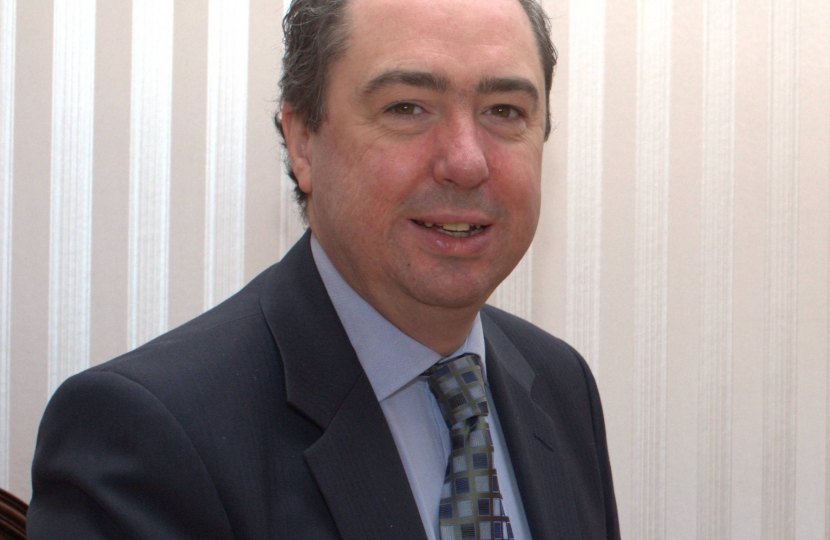
MACPHERSON, Ben – Scottish National Party (SNP): 13,630
NEVENS, Kate – Scottish Green Party: 10,559
OWEN, Liss – Scottish Liberal Democrats: 1,895
THOMAS, Oliver Philip – Scottish Labour Party: 7,894
YOUNG, Haris – Scottish Conservative and Unionist Party: 1,297.
Ben Macpherson (SNP) has been duly elected as Member of the Scottish Parliament for the Edinburgh North Eastern and Leith constituency with 13,630 votes.
MOWAT, Jo – Scottish Conservative and Unionist Party: 2,262
MURRAY, Craig John – Alliance to Liberate Scotland: 150
NEILL, Gary – Reform UK: 1,876
POWNALL, Robert Neil – Independent: 41
ROBERTSON, Angus – Scottish National Party (SNP): 7,702
SLATER, Lorna – Scottish Green Party: 12,680
Lorna Jane Slater (Scottish Green Party) has been duly elected as Member of the Scottish Parliament for the Edinburgh Central constituency with 12,680 votes
ALLISTON PICKARD, Jane Patricia – Scottish Liberal Democrats: 3,334
BROCK, Deidre Leanne – Scottish National Party (SNP): 12,000
JOHNSON, Daniel Guy – Scottish Labour Party: 16,963
MUNRO, Marie-Clair – Scottish Conservative and Unionist Party: 3,421
TURNER, Charles – Reform UK: 3,317
WILKINSON, Marc – Edinburgh & East Lothian People: 524
Daniel Guy Johnson (Scottish Labour Party) has been duly elected as Member of the Scottish Parliament for the Edinburgh Southern constituency with 16,963 votes
COWDY, Christopher – Scottish Conservative and Unionist Party: 1,900
DIJKSTRA-DOWNIE, Sanne – Scottish Liberal Democrats: 12,972
HYSLOP, Euan – Scottish National Party (SNP): 10,479
KINROSS-O’NEILL, Kayleigh Ferguson – Scottish Green Party: 5,289
MCLAUGHLIN, Andrew – Reform UK: 2,867
MERON, Abu – Scottish Workers Party of Britain: 258
RYAN-SAHA, Eleanor – Scottish Labour Party: 3,744
Sanne Dijkstra-Downie (Scottish Liberal Democrats) has been duly elected as Member of the Scottish Parliament for the Edinburgh Northern constituency with 12,972 votes.
TODAY – Thursday 7 May – the people of Scotland will decide which MSPs will represent them in the Scottish Parliament, and which party will form a new Scottish Government.
But how does the voting system work in Scotland?
Everyone gets two votes
73 constituency MSPs are chosen by First Past the Post
56 regional MSPs, representing Scotland’s eight regions, are chosen by the share of the regional vote (Additional Member System)
Each constituency has one MSP and seven MSPs are chosen to represent each region
It’s REALLY important that you use your vote, so that our elected politicians best reflect the views of the people of Scotland.
Watch this video to find out how the system works in more detail:
On Thursday 7 May, the people of Scotland will decide which MSPs will represent them in the Scottish Parliament, and which party will form a new Scottish Government.
Scottish voters will be going to the poll to elect a new parliament on 7 May – but, as someone with sight loss, I know from experience that doing so independently and in secret is far from guaranteed.
Voting is still an overwhelmingly visual process of reviewing a list and marking a cross in a box. Without the right equipment, many blind and partially sighted people are forced to rely on others to mark our ballot in the way we wish, compromising our privacy and dignity. That simply isn’t good enough in a modern democracy.
After a number of years of RNIB Scotland working with election authorities, voters across Scotland who are blind or partially sighted will have the option to use a new card ballot paper overlay at this year’s Scottish Parliament election.
The new overlays are designed to fit the ballot paper for each constituency and region and have embossed and braille numbers with cut-out boxes that align with each box on the ballot paper. The accompanying audio allows voters to listen to an audio recording of the candidate list as many times as is necessary to make their mark confidently in the right box.
We welcome the introduction of this after so many years, with the ballot card and audio having been tried and tested by people with sight loss. This is a unique offering to voters in Scotland and will enable people with sight loss to cast their vote more independently and in secret.
The overlays will be available at every polling station in Scotland. We strongly urge anyone wanting to use the overlay to listen to their audio ballot paper before going to vote on 7 May. These can be accessed by visiting your local council website, ringing their election office, or via the RNIB Scotland elections webpage.
A truly fair election is one where everyone can vote independently and with confidence. On 7 May, blind and partially sighted voters deserve nothing less.
Sincerely,
Anna Tylor
Chair of Trustees at the Royal National Institute of Blind People (RNIB)
An act of violence has been used to justify a dangerous narrative. We reject the weaponisation of fear and the targeting of communities and civil liberties.
The final total of voters registered for the Scottish Parliament election is 4,320,981 – a record number for a Scottish Parliament election.
Those planning to vote in person on Thursday 7 May are being encouraged to check their polling place location and to exercise patience if queues form.
Voting should only take a few minutes and there is no requirement to bring photo ID.
Polling stations will be open from 7am to 10pm and anyone in the queue at their polling station at 10pm will be able to vote.
Malcolm Burr, Convener of the Electoral Management Board for Scotland said:“A significant amount of work has gone into preparing for this election and we are confident that polling day arrangements are robust and ready for this record number of voters.
“If anyone needs additional support on the day, polling staff are there to help. Please be patient and respectful as they carry out their jobs.
“As always, we are keeping the voter at the heart of all that we do and look forward to producing results in which everyone can have full confidence.”
Cahir Hughes, Acting Head of the Electoral Commission Scotland, said: “If you become unwell or have an emergency which prevents you from attending a polling place in person next Thursday, you don’t need to miss out on your vote.
“You can apply for an emergency proxy up until 5pm on polling day, so someone you trust can vote on your behalf. You can do this by contacting your local electoral registration office.”
Ahead of Scotland’s Parliament elections on 7 May, Sight Scotland and Sight Scotland Veterans partner with the Electoral Management Board for Scotland to deliver accessible voting training to all Returning Officers and more than 900 polling staff, ensuring visually impaired voters can cast their vote independently and in secret.
Visually impaired voters face a range of barriers at polling stations, with a lack of staff training and confidence consistently highlighted as a major issue. Voters report that polling station staff do not always know how best to support blind and partially sighted people, leading to inconsistent use of accessible voting aids and uncertainty about the support available.
This is compounded by physical barriers such as poor lighting, unclear signage and challenging layouts, as well as information about candidates and voting procedures not always being provided in accessible formats. Many visually impaired voters are also reluctant to ask for help if it risks compromising the secrecy or independence of their vote.
Working in partnership with the Electoral Management Board for Scotland, Sight Scotland has helped develop a training video for polling station staff, setting out the support they are required to provide to visually impaired voters. Members of Sight Scotland’s Policy Group and rehabilitation team played a central role in shaping the content, ensuring it reflects both lived experience and professional expertise.
Colette Walker, co-chair of Sight Scotland Policy Group, who is visually impaired and took part in the training video, comments: “As the election approaches in two weeks, Sight Scotland and the Electoral Commission are highlighting a major push to ensure every blind and partially sighted person can exercise their democratic right to a private, independent vote.
“Every adult has a democratic right to cast their vote in privacy. By breaking down these long-standing barriers, we are ensuring that visually impaired voters in our communities finally have the same say as everyone else. We hope to see a record turnout of blind and partially sighted voters in two weeks’ time, casting their vote, having their say in politics.”
Sight Scotland Policy Group member, Hussein Patwa, adds: “I was delighted to be involved in producing training videos that will be shown to polling station staff across Scotland before the parliamentary elections on 07 May.
“Featuring myself and other visually impaired people, they demonstrate, in real life, practical examples of the correct sighted guiding technique, how to assist with navigating around the polling station, providing clear explanations to aid with orientation and the procedure to be followed for those who wish the presiding officer to help mark the ballot paper on their behalf.
“I am positive this will make a real difference to visually impaired people’s experience at polling stations, encourage those who haven’t done so before to try voting in person and increase confidence for both voters and polling staff alike.”
Malcolm Burr, Convener of the Electoral Management Board and Returning Officer for Comhairle nan Eilean Siar, comments: “Returning Officers and Electoral Registration Officers put in place a range of measures to support voters with visual impairment.
“We want everyone to be able to vote independently and in secret. We have large print ballot papers, magnifiers, additional lighting, tactile voting devices, audio versions of the ballot paper and can help the voter fill in the paper if necessary.
“Members of the visually impaired community told us that a fundamental problem was staff at polling stations did not know how best to support blind and partially sighted voters. The video we have filmed with the help of Sight Scotland and Sight Scotland Veterans is being used by Returning Officers across Scotland to train their hundreds of polling staff showing how to greet, guide and offer suitable assistance.
“Our polling staff are the public face of the election and the lessons in this video will help them as they prepare to welcome voters with visual impairment into the polling places on 7 May.”
Local residents are welcome to join us to find out more about the community council, or to raise an issue for discussion!
This is a hybrid meeting – if you’d like to attend online, please get in touch for the MS Teams link. Alternatively, we can raise any issues for discussion on your behalf.