COVID VACCINE BREAKTHROUGH

Today is a great day for science and humanity’

The first effective vaccine against coronavirus vaccine can prevent more than 90% of people from getting Covid-19, a preliminary analysis shows. The vaccine developers, Pfizer and BioNTech – have described it as a “great day for science and humanity”.

  • Vaccine candidate was found to be more than 90% effective in preventing COVID-19 in participants without evidence of prior SARS-CoV-2 infection in the first interim efficacy analysis
  • Analysis evaluated 94 confirmed cases of COVID-19 in trial participants
  • Study enrolled 43,538 participants, with 42% having diverse backgrounds, and no serious safety concerns have been observed; Safety and additional efficacy data continue to be collected
  • Submission for Emergency Use Authorization (EUA) to the U.S. Food and Drug Administration (FDA) planned for soon after the required safety milestone is achieved, which is currently expected to occur in the third week of November
  • Clinical trial to continue through to final analysis at 164 confirmed cases in order to collect further data and characterize the vaccine candidate’s performance against other study endpoints

Pfizer Inc. and BioNTech SE today announced their mRNA-based vaccine candidate, BNT162b2, against SARS-CoV-2 has demonstrated evidence of efficacy against COVID-19 in participants without prior evidence of SARS-CoV-2 infection, based on the first interim efficacy analysis conducted on November 8, 2020 by an external, independent Data Monitoring Committee (DMC) from the Phase 3 clinical study.


“Today is a great day for science and humanity. The first set of results from our Phase 3 COVID-19 vaccine trial provides the initial evidence of our vaccine’s ability to prevent COVID-19,” said Dr. Albert Bourla, Pfizer Chairman and CEO.

“We are reaching this critical milestone in our vaccine development program at a time when the world needs it most with infection rates setting new records, hospitals nearing over-capacity and economies struggling to reopen.

“With today’s news, we are a significant step closer to providing people around the world with a much-needed breakthrough to help bring an end to this global health crisis. We look forward to sharing additional efficacy and safety data generated from thousands of participants in the coming weeks.”

After discussion with the FDA, the companies recently elected to drop the 32-case interim analysis and conduct the first interim analysis at a minimum of 62 cases. Upon the conclusion of those discussions, the evaluable case count reached 94 and the DMC performed its first analysis on all cases.

The case split between vaccinated individuals and those who received the placebo indicates a vaccine efficacy rate above 90%, at 7 days after the second dose. This means that protection is achieved 28 days after the initiation of the vaccination, which consists of a 2-dose schedule.

As the study continues, the final vaccine efficacy percentage may vary. The DMC has not reported any serious safety concerns and recommends that the study continue to collect additional safety and efficacy data as planned. The data will be discussed with regulatory authorities worldwide.

“I want to thank the thousands of people who volunteered to participate in the clinical trial, our academic collaborators and investigators at the study sites, and our colleagues and collaborators around the world who are dedicating their time to this crucial endeavor,” added Bourla. “We could not have come this far without the tremendous commitment of everyone involved.”

“The first interim analysis of our global Phase 3 study provides evidence that a vaccine may effectively prevent COVID-19. This is a victory for innovation, science and a global collaborative effort,” said Prof. Ugur Sahin, BioNTech co-founder and CEO.

“When we embarked on this journey 10 months ago this is what we aspired to achieve. Especially today, while we are all in the midst of a second wave and many of us in lockdown, we appreciate even more how important this milestone is on our path towards ending this pandemic and for all of us to regain a sense of normality.

“We will continue to collect further data as the trial continues to enroll for a final analysis planned when a total of 164 confirmed COVID-19 cases have accrued. I would like to thank everyone who has contributed to make this important achievement possible.”

The Phase 3 clinical trial of BNT162b2 began on July 27 and has enrolled 43,538 participants to date, 38,955 of whom have received a second dose of the vaccine candidate as of November 8, 2020.

Approximately 42% of global participants and 30% of U.S. participants have racially and ethnically diverse backgrounds. The trial is continuing to enroll and is expected to continue through the final analysis when a total of 164 confirmed COVID-19 cases have accrued.

The study also will evaluate the potential for the vaccine candidate to provide protection against COVID-19 in those who have had prior exposure to SARS-CoV-2, as well as vaccine prevention against severe COVID-19 disease.

In addition to the primary efficacy endpoints evaluating confirmed COVID-19 cases accruing from 7 days after the second dose, the final analysis now will include, with the approval of the FDA, new secondary endpoints evaluating efficacy based on cases accruing 14 days after the second dose as well.

The companies believe that the addition of these secondary endpoints will help align data across all COVID-19 vaccine studies and allow for cross-trial learnings and comparisons between these novel vaccine platforms. The companies have posted an updated version of the study protocol at https://www.pfizer.com/science/coronavirus.

Pfizer and BioNTech are continuing to accumulate safety data and currently estimate that a median of two months of safety data following the second (and final) dose of the vaccine candidate – the amount of safety data specified by the FDA in its guidance for potential Emergency Use Authorization – will be available by the third week of November. Additionally, participants will continue to be monitored for long-term protection and safety for an additional two years after their second dose.

Along with the efficacy data generated from the clinical trial, Pfizer and BioNTech are working to prepare the necessary safety and manufacturing data to submit to the FDA to demonstrate the safety and quality of the vaccine product produced.

Based on current projections the companies expect to produce globally up to 50 million vaccine doses in 2020 and up to 1.3 billion doses in 2021.

Pfizer and BioNTech now plan to submit data from the full Phase 3 trial for scientific peer-review publication.

Prime Minister Boris Johnson is to hold a press conference at 5pm and Scotland’s First Minister Nicola Sturgeon says the vaccine announcement is welcome news.

The First Minister ended today’s lunchtime media briefing by saying: “It might not be all that visible at the moment but there is light at the end of this tunnel.

The news we’ve heard this morning – that early indications show a vaccine being developed by the pharmaceutical company Pfizer, which has been trialled in other countries across the world, is 90% effective – is good news.  Perhaps amongst the best news we have had in recent weeks. 

“It’s not going to provide us with the way out of this today, or tomorrow, or next week, or perhaps not even in this calendar year. But this development, along with all of the work that is going into the development of other vaccines, does give us real hope that in the not too distant future, science is going to find us the way out of this terrible time. 

“So hold onto that hope today, and also use it as a motivation. What we are living through right now, and all the restrictions that are so difficult for all of us, will not last forever. But it is really important we stick with them so that we get out of the other side of this with as few people as possible becoming ill, with as few people as possible losing their lives.

“That means all of us sticking with these tough restrictions that we are all fed up with but which we know will reduce the impact of this virus. 

“So please stick with it for now and keep hold of the hope we have today that there is an end, and that we will see it in the not too distant future.” 

Foundation Scotland’s crisis support surpasses £6 Million

Over 1.3 million people reached to date and essential ‘winter-ready’ funding available

Foundation Scotland, Scotland’s community foundation, has announced the total amount distributed through their dedicated crisis fund now exceeds £6 million to date. 

This significant level of funding breaks all its previous records and illustrates the continued and growing needs coming from groups supporting those most vulnerable throughout the country.

The community foundation is today stressing that the Response, Recovery and Resilience fund remains open. 

Foundation Scotland is now particularly eager to support groups to get ‘winter-ready’, so they’re better equipped to deliver essential services through the darker, colder, winter months ahead.

For example, to enable groups to extend counselling and wellbeing services remotely, to purchase all-weather protective clothing, to create virtual energising activities through the cold dark months or to offer phone-based companionship for the isolated.

Helen Wray, Head of Programmes at Foundation Scotland, said: “It’s been a long seven months since the crisis began, we hoped we’d be able to get back to a little more normality by now.  However, it looks unlikely that restrictions will ease any time soon and we’re painfully aware the next few months will bring even more significant challenges as the nights get longer, darker and colder.

“The emotional, physical and financial impacts of lockdown are becoming increasingly problematic, lives have been turned upside down.  Sadly, there are even more people in Scotland experiencing extreme hardship, isolation, loneliness and fear.  

“However, we’re always encouraged by the resilience and strength we see in our communities.  Groups across the country are coming together to urgently deliver essential and critical services to those most in need.  

“We understand our support is needed more than ever. Crisis grants enable dedicated groups to offer vital services in protecting the most vulnerable from long-term impacts.  Therefore, our fund will remain open to applications for support where it is needed most.   

“For example, wellbeing services like virtual counselling and befriending will be even more important. Volunteers might need all-weather protective clothing to support those in need safely and awnings and heaters to provide services outside.  We are, however encouraging groups to apply as soon as they can.” 

The community foundation’s Response, Recovery and Resilience fund, delivered in partnership with the National Emergencies Trust, has to date supported over 1.3 million people across Scotland. 

A total of £4.6 million in small grants have been distributed to 1,188 dedicated organisations delivering vital support to some of the most isolated and vulnerable people across the country.  A further £1.4 Million has been invested in strategic grants to national charities such as Cruse Bereavement Care Scotland, Shelter Scotland and the Scottish Association for Mental Health (SAMH) to deliver higher-level strategic support throughout the pandemic.

With the pandemic likely to impact on services well into 2021, the Foundation is now preparing to enter the Resilience phase of the fund. 

From 1st December the fund’s renewed focus will be on providing support to organisations to look even further ahead, to future proof their services more long term.

The continued restrictions will undoubtedly increase demand for many services delivered by small organisations, so it’s vital they’re equipped to continue meeting the needs of their local communities. More details on the Resilience phase will be available on the Foundation’s website in the coming weeks.

Since launching the dedicated Response, Recovery & Resilience Fund in March, the Foundation Scotland team have worked hard to assess an overwhelming level of applications ensuring vital support reaches those most in need as quickly as possible. 

Recent figures revealed that since the start of the crisis the Scottish funder has received almost the same number of applications in the last six months as it received in the whole of the previous financial year.

The Foundation Scotland Response, Recovery & Resilience Fund continues to welcome applications between £1,000-£5,000 from constituted community groups and registered charities. 

The funder is eager to distribute funds quickly and is appealing to eligible groups to apply as soon as they can.  Unlikely many other funding streams previous applicants are eligible to reapply to access further support needed. 

For more details, eligibility criteria and to apply online visit https://www.foundationscotland.org.uk/

Games for Christmas

Games have been on the rise this year, since families are spending more time at home. So what better gift to give this Christmas than games that can be enjoyed by everyone, of all ages?

Here are some favourites …

PASS THE PUGS

The infamous game ‘Pass the Pigs’ launches PUGS! Who will be first to 100 points?

The infamous game Pass the Pigs has launched their first ever variation (that isn’t a pig), PUGS! Be the first to get to 100 points by throwing the pugs in the air and seeing how they land.

Will your pugs ‘play dead’, ‘faceplant’ or will it be ‘puppy love’?

  • LAUNCHING NOVEMBER 2020
  • Pass the Pigs has been an iconic brand for over 50 years
  • Includes pencil and score pad, that all pack into a plastic carry case, great for on-the-go!
  • Available on Amazon.co.uk / Age 8+ / RRP £9.99

Lex-GO! Word Game

The Super-Fast Word Game from Waddingtons No1. of London

Race against other players to get rid of your word tiles by swapping letters and even stealing your opponents’ tiles. There are two versions; Harry Potter and Disney (launches November) and both include special tiles that help you win the game

  • Harry Potter version has 4 special spell tiles incl. Revelio and Depulso that help you win the game
  • Disney Classic (LAUNCHING NOVEMBER 2020) version has 4 magic tiles incl. Genie and Wreck it Ralph, that help you win the game
  • Waddingtons No1 has been an iconic British Heritage Brand over 130 years
  • Game for all ages, but helps children with spelling and vocabulary
  • All tiles pack into a neat canvas pouch, great for storing and on-the-go.
  • Available on Amazon.co.uk / Age 8+ / RRP £14.99

TOP TRUMPS

The UK’s favourite card game for over 40 years

  • Top Trumps is the game packed full of stats and facts on all your favourite topics including films, TV shows, animals and more! With hundreds of topics to chose from, there is a Top Trumps pack for everyone, no matter your age.

Titles include: Marvel, Harry Potter, Road Dahl, World Football Stars, Frozen II, Baby Animals, Dogs, Bugs, Trolls, DC Comics, Cats, Volcanoes, Snakes, Friends, Cars, Creatures of the Deep and MANY MORE!

  • Top Trumps is the UK’s #1 card game (iGen research)
  • Over 100m packs sold across the world
  • Fun, but educational (camouflaged learning)
  • Includes 30 cards
  • Plastic case is great for storing and on-the-go
  • Available on Amazon.co.uk / Age 6+ / RRP £4.99

TOP TRUMPS QUIZ

500 quiz questions on hot topics

Top Trumps Quiz with a twist! 500 questions on loads of different topics, films and TV shows.

  • 500 questions on 100 cards
  • Plastic case opens on both sides, ready for battle and also great for storing and on-the-go
  • Available on Amazon.co.uk / Age 8+ / RRP £9.99

TOP TRUMPS MATCH

The crazy cube game

Be the first to match 5 of your favourite characters in a row by pushing the through cubes

  • 15 characters to chose from
  • No set-up required, the game is ready to play!
  • Introduction to strategy for kids
  • All cubes pack into a neat plastic tablet, so no need to keep the box – great for storing and on-the-go
  • Available on Amazon.co.uk / Age 4+ / RRP £15.99

Leith Library opens as the latest walk-through Covid-19 test centre

Leith Library has opened as Edinburgh’s newest Covid-19 testing centre as part of the UK Government’s drive to make testing more accessible to local people.

This will be the third City of Edinburgh Council building to operate as a test centre following the Usher Hall and Gate 55 Community Hub in Wester Hailes.

The building, also home to the Registrar’s Office, will provide an additional and safe centre for anyone showing symptoms.

Residents living close to the venue can now pre-book a test by visiting www.nhsinform.scot/test-and-protect or by calling 0800 028 2816.

Anyone attending an appointment will be provided with guidance on getting to and from the centre safely, with additional support for vulnerable groups and people with disabilities.

Adam McVey, Council Leader, said: “Our top priority is keeping Edinburgh’s residents safe and the best way to do that is by encouraging people to follow the latest guidance and get tested if they have any Covid-19 symptoms.

“Our two other sites in the city centre and west Edinburgh have been helping hundreds of people every week to get tested so it’s really welcome that we now have a third site open in the north of the city.

“We’ll keep the use of Leith Library under review and if we’re in a position to safely reopen the library in the New Year we’ll work with the government to find alternatives.”

Cammy Day, Depute Leader, said: “It’s important we play our part by providing the government with buildings to carry out the testing which has been going really well. We now have three centres open in different parts of the city and I urge anyone with symptoms to follow the guidance and make sure they get checked out.”

The Leith Library testing site is open now between 8am and 8pm and can be found at 28 – 30 Ferry Road.

Those being tested will be required to follow public health measures, including social distancing, not travelling by taxi or public transport, practising good personal hygiene and wearing a face covering throughout, including while travelling to and from the testing centre.

Anyone who tests positive will be contacted by contact tracers to help people to identify who they may have been in close contact with and protect others from further transmission.

Close contacts of those testing positive will also hear from contact tracers, asking them to stay at home for 14 days to prevent them from unknowingly spreading the virus. They will be advised to also book at test if they develop symptoms.

Social Distancing Measures ‘encourages cyberbullying among children’

Anti-Bullying Awareness Week runs from the 11-15 November 2020. In this article Need2Know Books looks at the effects that social distancing and lockdown measures have had on children as social media dependency and online screen time increases, creating more opportunities for cyberbullying. 

For further information the Essential Guide to Bullying by Jennifer Thomson is a great resource.

Enhanced anxiety and stress are not the only conditions parents and caregivers need to be careful of in this world of ‘new normal.’  A recent multidisciplinary research report found that the consequences of quarantine and social distancing measures are themselves key risk factors for mental health issues which includes cyberbullying among children.

There is no question that bullying numbers will rise in 2020 as many school’s moved classes online during the Spring and Summer months. 

This Increase in online screen time has created more opportunities for cyberbullying and harassment. Unfortunately, one of the darker sides of COVID-19 is the rise of racial issues and cyberbullying among children. 

Recent research has found that because the virus originated from Wuhan, China and has largely been referred to as the “Chinese virus”, this has increased bullying among children of Asian descent who are at a greater risk of racial bullying than their classmates. Bullying has largely been done through private and text messaging in a ‘virtual’ environment.

More than 1.5 billion children worldwide have been affected by school closures. As a result, children have been forced to go online for learning as well as for hobbies and social activities.

  • It has been reported that 82% of parents said that their children’s screen time has increased during lockdown
  • 30% said that their children were having an extra four hours or more of non-school related screen time per day
  • Children, especially adolescents and teens, are spending a greater amount of time on apps such as such as Zoom, Snapchat, Instagram and Facebook.

Prior to the pandemic parents have been extremely concerned about their children’s screen time and have struggled to limit this. The problem that has always faced parents is that they cannot always protect their children from cyberbullying, grooming and inappropriate messages online.

Cyberbullying in the virtual world

Despite some of the positive benefits of online learning research has found that the darker elements of school life transitioned online.

  • Cyberbullying has been on the rise before lockdown – some reports suggest that just 20% of bullying takes place at school now.
  • Cyberbullying incidents increased by 70% between March and April this year when lock down was at its peak.
  • The strain placed on mental health caused by being confined to the home for weeks at a time could be making matters worse.

The UK government has published guidelines online titled “Coronavirus (Covid-19): support for parents and carers to keep children safe online” which is available to view.

Tips and Advice

  • Have the ‘talk’ open the lines of communication between yourself and your child. Discuss what cyberbullying is and what to do when it happens.
  • Don’t be afraid to set guidelines and take control of what your children see and do online.
  • The applications used by schools all have tools for reporting abuse. Show your kids where to find the abuse reporting tools and how to fill in the forms. 
  • Keep any evidence of inappropriate messages and report it to a school official ie. teacher, headteacher or school nurse.
  • Use your parental controls. Androids, Apple and Windows all have built in parental controls These allow parents to block inappropriate content, control access to apps, and limit screen time.

We enter an uncertain future with lockdown restrictions continuing into the winter months. It is important that parents find positive ways to curtail the ‘pandemic effect’ and find a balance with online screen time to help avoid cyberbullying. If you are concerned about a child’s mental welfare or notice worrying behaviour, please seek professional advice.

For more information and advice on cyberbullying visit:  

bullying.co.uk and childline.org.uk

To learn more about Need2Know Books visit: www.need2knowbooks.co.uk.

Police warning over house gatherings

Police Scotland officers dealt with more than 300 house gatherings over last weekend, the vast majority of which were small groups of people in houses.

More than 300 Fixed Penalty Notices (FPNs) were issued and 24 people were arrested between Friday, 30 October, and Sunday, 1 November.

The majority of FPNs issued were to small groups from different households meeting in homes in clear breach of the regulations in place to tackle the spread of coronavirus.

Assistant Chief Constable Alan Speirs said:“Officers dealt with a significant number of calls to house gatherings over the weekend and we have been quite clear that we will enforce the law where necessary, as the public would expect us to do.

“We are not just talking about large parties. The vast majority were smaller groups of different households meeting indoors.

“House gatherings of any size cause the virus to spread and we are asking people to do the right thing and take personal responsibility.

“I fully understand the implications the current restrictions have on our daily lives, but we cannot have people twisting the rules and disregarding the law which is there to stop the spread of coronavirus and help save lives.

“Anyone clearly breaking the law should be in no doubt that they will be met with a robust response from Police Scotland.”

Furlough extended until March

Chancellor statement to the house – Furlough extension

Statement, as delivered by Chancellor Rishi Sunak in Westminter on 5 November 2020:

Mr Speaker,

On Monday, the Prime Minister set out the action we need to take between now and the start of December to control the spread of coronavirus.

In response, we’re providing significant extra support to protect jobs and livelihoods in every region and nation of the United Kingdom:

An extension to the Coronavirus Job Retention Scheme;

More generous support to the self-employed and paying that support more quickly;

Cash grants of up to £3,000 per month for businesses which are closed, worth over £1 billion every month;

£1.6 billion for English councils to support their local economy and local healthcare response;

Longer to apply for our loan schemes and the Future Fund;

The chance to top-up Bounce Back Loans;

And an extension to the mortgage payment holidays.

All on top of more than £200 billion of fiscal support since March.

This statement follows the Bank of England’s monetary policy decisions earlier today, meaning all economic and monetary institutions are playing their part.

As you would expect, the Governor and I are in constant communication as the situation evolves.

Our responses are carefully designed to complement each other and provide certainty and support to people and businesses across the UK. The Bank’s forecasts this morning show economic activity is supported by our substantial fiscal and monetary policy action.

And the IMF just last week described the UK’s economic plan as “aggressive”, “unprecedented”, successful in “holding down” unemployment and business failures and “one of the best examples of coordinated action globally”.

Mr Speaker,

Our highest priority remains the same: to protect jobs and livelihoods.

That’s why we’ve already decided to extend the Job Retention Scheme to December.

But people and businesses will want to know what comes next; how long we plan to keep the scheme open, and on what terms.

They want certainty.

The government’s intention is for the new health restrictions to remain only until the start of December.

But, as we saw from the first lockdown, the economic effects are much longer lasting for businesses and areas than the duration of any restrictions.

And as the Bank of England have said this morning, “the economic recovery has slowed”, and the economic risks are “skewed to the downside”.

Given this significant uncertainty, a worsening economic backdrop, and the need to give people and businesses security through the winter, I believe it is right to go further.

So we can announce today that the furlough scheme will not be extended for one month – it will be extended until the end of March. The government will continue to help pay people’s wages, up to 80% of the normal amount.

All employers will have to pay for hours not worked is the cost of Employer NICs and pension contributions.

We’ll review the policy in January to decide whether economic circumstances are improving enough to ask employers to contribute more.

Of course, as the furlough itself is now being extended to the end of March, the original purpose of the Job Retention Bonus to incentivise employers to keep people in work until the end of January – obviously falls away.

Instead, we will redeploy a retention incentive at the appropriate time.

And for self-employed people, I can confirm the next income support grant which covers the period November to January, will now increase to 80% of average profits, up to £7,500.

Mr Speaker,

I also want to reassure the people of Scotland, Wales and Northern Ireland. The furlough scheme was designed and delivered by the Government of the United Kingdom on behalf of all the people of the United Kingdom – wherever they live.

That has been the case since March; it is the case now; and will remain the case until next March.

It is a demonstration of the strength of the Union – and an undeniable truth of this crisis – we have only been able to provide this level of economic support because we are a United Kingdom.

And I can announce today that the upfront guaranteed funding for the devolved administrations is increasing from £14 billion to £16 billion. This Treasury is, has been, and will always be, the Treasury for the whole of the United Kingdom.

Mr Speaker,

I know that people watching at home will have been frustrated by the changes the government has brought in during the past few weeks. I have had to make rapid adjustments to our economic plans as the spread of the virus has accelerated.

So I’d like to take this opportunity to explain how and why this has happened.

During the summer, as we began slowly unlocking it was our hope the country would continue to be economically open, albeit with local restrictions being put in place as and when needed.

We knew there would likely be a resurgence in the spread of the virus, but with increased NHS capacity and Test and Trace, our belief was we would be able to stay ahead of the virus.

On this basis we designed an economic approach which continued providing wage support to people, incentivised businesses to retain staff beyond the end of the furlough scheme and created new job creation and training schemes, such as Kickstart.

All built to support an economy that was broadly open but operating with restrictions and overall lower demand.

At the time this approach was not Government acting alone. Our proposals secured wide ranging support, from the TUC to the CBI.

It was their hope, as it was ours, that the public health situation would allow us to keep businesses and workplaces open.

The virus however, continued to spread. Localised restrictions were having an impact, and so we intensified this approach and added further areas.

As these restrictions intensified, the economic impact, particularly on industries such as the hospitality sector, was significant.

So in response, we altered our approach to wage support, making it much more generous to employers and in turn protecting jobs.

We also introduced a range of grants to businesses, whether open or closed, to help them meet their fixed costs.

And additional funding for local authorities to respond to specific local economic challenges.

But again, the virus continued to spread, but more quickly.

And so we arrive at last week, when the government’s scientific and medical advisers presented data which showed that R is greater than 1 in all parts of the UK, that the NHS was at risk of being overwhelmed in a matter of weeks and the likely resultant loss of life that would accompany such an event.

The only viable solution left to protect our NHS was the re-imposition of temporary significant enhanced restrictions in England, in addition to those in Wales, Northern Ireland and Scotland.

And so, given these changed public health restrictions and the economic trauma they would cause in job losses and business closures I felt it best to extend the furlough scheme, rather than transition at that precise moment to the new Job Support Scheme.

Now political opponents have chosen to attack the government for trying to keep the economy functioning and to make sure the support we provide encourages people to keep working.

And they will now, no doubt, criticise the government on the basis we have had to change our approach.

But to anyone in the real world, that’s just the thing that you have to do when circumstances change.

We all hope for the best, but make sure we plan for any eventuality.

We can reintroduce the furlough now only because we kept the system on which it is based operational, because there was always the possibility that we would be back in this situation.

I’ll leave it to the people of this country to decide whether they believe the Government is trying its best to support people through an unprecedented crisis.

To decide whether it is a good or bad thing to alter our economic plans as the health restrictions we face change.

What I know is that the support we are providing will protect millions of jobs.

What I know is that it is never wrong to convey confidence in this country and our economy through our words and action.

And what I know is today’s announcement will give people and businesses up and down our country immense comfort over what will be a difficult winter.

And I commend this Statement to the House.

PM Boris Johnson later gave a statement at the coronavirus press conference:

Good evening everyone,

Across the whole United Kingdom, people are engaged in a huge joint effort to put the coronavirus back in its box. Throughout the pandemic, this government has done whatever it takes to protect lives and livelihoods – in England, Scotland, Wales and Northern Ireland.

We have put in place an unprecedented package of economic support, protecting the wages and jobs of millions of people.

We have built the largest testing capacity in Europe, with 32 million tests conducted so far and over half a million tests now available every day across the UK.

We have ensured that, as we head into winter, the NHS has at its disposal over 30,000 ventilators and billions of items of Personal Protective Equipment, most of it now manufactured here in the UK.

Across the whole of the UK, we have a shared goal – to suppress the virus, ensure the NHS is not overwhelmed, and in doing so to save lives.

The UK Government and the devolved administrations are working together on a joint approach to the Christmas period, because all of us want to ensure families can come together wherever they live.

The challenges we face are significant across the U.K.

The average number of new cases each day is now 22,398, that’s up from 9,716 a month earlier.

There are now 12,320 patients in hospital, up from 2,602 a month earlier.

1,142 patients are now in mechanical ventilation beds, up from 369 a month earlier.

Sadly 492 deaths were reported yesterday. The weekly average number of deaths each day is now 295, up from 53 a month earlier.

That’s why new restrictions are in place in each part of the UK.

In England, from today, we are once again asking you to stay at home.

As I explained on Saturday you can only leave home for specific reasons: for work if you can’t work from home, for education, and for essential activities and emergencies.

The full rules, all of the details, are available at gov.uk/coronavirus and on the NHS Covid-19 app – please log on to see what you can and can’t do.

I know how tough this is:

For staff in the NHS and care homes, who are facing a tough winter on the frontline.

For families, who can’t meet in the way they would want to.

For businesses, forced to shut just as you are getting back on their feet.

I know many of you are anxious, weary and quite frankly fed up with the very mention of this virus

But I want to assure you this is not a repeat of the spring.

Schools, universities and nurseries are all staying open.

And these measures though they are tough are time-limited.

The advice I have received suggests that four weeks is enough for these measures to make a real impact.

So these rules will expire, and on 2 December we plan to move back to a tiered approach.

There is light at the end of the tunnel.

We have better treatments and techniques to take care of those in hospital, thanks largely to the ingenuity of British scientists.

Rapid testing is being rolled out on a massive scale – with city-wide testing starting tomorrow in Liverpool.

I am hugely grateful to the people of Liverpool for their participation in this pilot. I hope that by working together, we can get that great city on top of the virus.

More broadly, there is also the very real chance of safe and effective vaccines.

So taking those things together, these scientific advances can show us the way ahead.

And in the meantime, the government will continue to support people affected by these new restrictions.

As you know, we have protected almost 10 million jobs through furlough, and as the Chancellor announced earlier today, we are now extending the scheme through to March.

We are also extending our support for the self-employed, so that the next payment increases to 80 per cent of average profits.

We’re providing cash grants for businesses who are closed, worth more than £1 billion every month.

We are giving £1.1 billion to Local Authorities in England to support businesses.

And a further £2 billion of funding is guaranteed for Scotland, Wales and Northern Ireland.

As we face these challenges together, we must look after those in most need.

As of September we have helped over 29,000 rough sleepers off the streets, two thirds of whom are now in settled accommodation.

Today we’re announcing a further £15 million to help councils offer safe accommodation for people who are sleeping rough or at risk of becoming homeless. This programme will help areas that need additional support most during the restrictions and throughout the winter.

These are difficult times.

And while it pains me to have to ask once again for so many to give up so much, I know that, together, we can get through this.

So please, for the next four weeks, stay at home, protect the NHS and save lives.

Cramond care home scrubs up with decontamination laundrette service

HYGIENE-conscious staff at a top care home will never wear their uniforms or work shoes outside of their workplace thanks to a stringent decontamination laundry service.

Cramond Residence has made a substantial investment into a state-of-the-art uniform cleaning service where each employee receives three sets of work clothes, which get professionally washed after each shift, along with a pair of Sketchers trainers kept and cleaned on the premises.

Staff at the Edinburgh home must arrive in non-work clothes and have a designated locker for every shift, which is sanitised and thoroughly cleaned between shifts. Every staff member’s uniform is stored freshly cleaned and ready to be utilised.

After every shift, the dedicated team leave their uniforms within a designated area so be professionally laundered, with name labels stitched into every garment to avoid any confusion.

Alison Newton, Operations Manager at Cramond Residence, said: “We want to do everything we can to minimise contamination or risk to our residents, visitors and staff.

“While Covid-19 has sharpened the world’s focus to infection control, from day one we’ve put measures in place to reduce the chances of infection entering and spreading.

“Our staff are incredible and diligently stick to what are stringent rules. They all want to do their best to reduce the likelihoods of viruses or bugs of any description entering the home.”

Since opening in 2018, specialist Miele appliances have been used to accommodate eco-friendly elements for washing, drying and ironing from water reduction to shorter cycles.

The care home was purpose built and when it was being designed, infection control was a top priority and bosses worked with architects at every stage to include the most up-to-date best practice.

Small group living means that the home is made up of nine distinct “houses” each with their own private lounge, dining and snug areas, rather than large communal areas.

Cramond Residence provides a combination of luxury accommodation and the highest quality of care.

It offers care for up to 74 residents following the small-group living concept in nine beautifully appointed houses, with all residents enjoying an exceptional range of amenities and activities, delicious food and bespoke care from our highly-trained team. Each resident enjoys a luxury room with en-suite bathroom facilities. It maintains a minimum ratio of 1:4 of care staff to residents during the day.

To find out more, call 0131 341 4037 or visit https://cramondresidence.co.uk/

Emergency funding to secure the immediate future of Independent Cinemas in Edinburgh

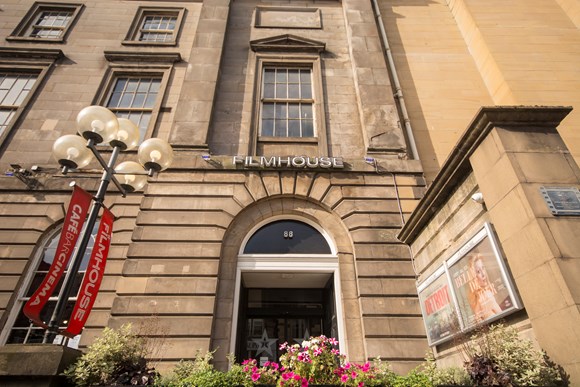
The Dominion, Filmhouse Edinburgh and Edinburgh-based touring cinema operators Regional Screen Scotland and the INDY Cinema Group are among 30 independent cinemas and two touring operators to receive £3.55 million from the Scottish Government’s Independent Cinema Recovery and Resilience Fund and The National Lottery, through Screen Scotland. 

The Fund, which aims to bridge the immediate financial gap faced by independently owned cinemas as a result of COVID-19, will now support these cinemas who can operate in the short-term, within Scottish Government guidelines, and help others towards reopening, when it is safe to do so. 

Fiona HyslopCabinet Secretary for Culture said: “We understand the severe impact this pandemic has had on businesses across Scotland, including our independent cinemas which play such an important role in communities across the country.  

“We have had to make some really difficult decisions recently that will impact on cinemas which have worked so hard to re-open safely, but we have to put health considerations above everything else and I hope this funding, along with the business support that will be available, will help independent cinemas cope with all the challenges they face.    

“Culture is vitally important to all of our lives, and we are determined to do everything within our powers to see the sector through this crisis. This fund is part of the ongoing financial support the Scottish Government is making available to the sector.” 

Empty Cinema 1 (c) Abbie Dobson

Sambrooke ScottHead of Audience Development at Screen Scotland said: “Independent cinemas have always played a vital role in communities across Scotland, bringing people together to immerse themselves in great film experiences from filmmakers around the world, and around the corner.  

“It’s been the most challenging of times for these hard-working venues but, with the help of this Scottish Government and National Lottery support, they will continue to open and operate safely as local restrictions allow.

“By putting stringent measures in place to protect staff and audiences alike they will open where able and bring the magic and escapism of cinema back, which is something we need now more than ever.” 

The Dominion

The Dominion Cinema said: “We are very fortunate to be in a position to benefit from the Recovery and Resilience Fund for Independent Cinema.

“This will allow us to maintain our position in the industry and help enable us to welcome our loyal patrons back when the time is right.”

Indy Cinema Group Stirling Castle Screening

Ian BrownGroup CEO and Founder of Edinburgh-based touring cinema operator the INDY Cinema Group said: “This support from Screen Scotland has been crucial in ensuring that INDY Cinema Group and its team are here both now and for the future to support our cinemas and communities across Scotland.

“Without the support all our work over the past 10 years to assist in building community cinemas, commercial independents and ever growing cinema support services for our industry was at risk of being lost.

“Now we are in a position to not just survive but ensure that we are ready for the challenge to come and helping all of our communities and cinemas grow again”

Filmhouse External (c) Abbie Dobson

Ken HayCEO of Centre for the Moving Image (Filmhouse Edinburgh) said: “Cinemas are the heart of many communities and Filmhouse and Belmont Filmhouse are no different.  

“Our communities want us to be open so that we can dim the lights and help people escape everything else for a couple of hours with the magic of cinema – and they’ve already donated over £100,000 so that we can do just that.  

“And this funding from Screen Scotland will be integral in keeping both cinemas open over the next 5 months – when we’re allowed to be.”

Christmas photo In Glencoe the mountain is Buachaille Etive Mor

Robert Livingstone of Edinburgh-based Regional Screen Scotland, operator of the touring cinema The Screen Machine said: “The Independent Cinema Recovery Fund is a crucial measure to help to sustain cinemas across Scotland. 

“At Regional Screen Scotland we’re very grateful for this support, as it will allow us to begin touring again with the Screen Machine, by compensating for the box office income lost through the need to maintain 2m physical distancing.

“This means we can bring at least some Christmas cheer to many smaller communities in the Highlands.”

Recipients of the Fund are: 

Organisation Cinema Name Funding Amount 
An Lanntair An Lanntair (Stornoway) £44,200 
Caledonian Cinemas Limited Moray Playhouse (Elgin) £149,583 
Campbeltown Community Business Campbeltown Picture House (Campbeltown) £65,000 
Centre for the Moving Image Filmhouse (Edinburgh), Belmont Filmhouse (Aberdeen) £627,849 
D&G Council Robert Burns Centre (Dumfries) £24,896 
Dundee Contemporary Arts Dundee Contemporary Arts £143,588 
Eden Court Highlands Eden Court (Inverness) £158,814 
Falkirk Community Trust Bo’ness Hippodrome (Falkirk) £51,552 
G1 Group Perth Playhouse  £128,622 
Glasgow Film Theatre Glasgow Film Theatre £415,171 
Granada Cinemas (Edinburgh) Ltd. Dominion Cinema (Edinburgh) £224,846 
INDY Cinema Group Ltd INDY Cinema Group (Various) £216,035 
Kino Entertainment Ltd The Kino Leven, The Kino Glenrothes £106,313 
Lonsdale Cinema Annan Lonsdale Cinema £43,842 
Macrobert Macrobert (Stirling) £111,244 
Newton Stewart Cinema Newton Stewart Cinema (Newton Stewart) £32,878 
NPH Cinema New Picture House (St Andrews) £87,723 
Oban Phoenix Cinema Oban Phoenix Cinema (Oban) £61,818 
Pavilion (Galashiels) Ltd Pavilion (Galashiels) £207,362 
Premier Leisure Premier Leisure (Saltcoats) £71,259 
Regional Screen Scotland Screen Machine (Various) £24,521 
Shetland Arts Development Agency Mareel (Lerwick) £40,860 
The Birks Cinema Trust Ltd The Birks Cinema (Aberfeldy) £68,500 
The Pickaquoy Centre Trust The Phoenix Cinema (Kirkwall) £21,244 
The Tower Digital Art Centre The Tower Digital Arts Centre (Helensburgh) £81,328 
Universal Sounds (Arbroath) Limited Bathgate Cinema, Alloa Cinema, Arbroath Cinema £96,875 
West Coast Cinemas LLP Studio Cinema (Dunoon), Waterfront Cinema (Greenock) £244,441 

First Minister: ‘A very fragile and volatile situation’

Statement given by the First Minister Nicola Sturgeon at a media briefing in St Andrew’s House, on Wednesday 4th November:

Thanks for joining us today again. Let me give you the daily updates on the COVID statistics.

The total number of positive cases reported yesterday was 1433.

That represents 7.9% of the total number of tests, and the total number of confirmed cases is therefore now to 68,444.

602 of today’s new cases were in Greater Glasgow and Clyde, 318 in Lanarkshire, 163 in Lothian and 88 in Ayrshire and Arran.

The remaining 262 cases were spread across 8 other health board areas.

I can also confirm that 1257 people are currently in hospital – that is an increase of 3 from yesterday. And 94 people are in intensive care, which is 2 more than yesterday.

And finally, I deeply regret to say that 50 deaths have been registered in the past 24 hours of patients who first tested positive over the previous 28 days.

That means that the total number of deaths, under our daily measurement, is now 2,927.

National Records of Scotland has also just published its weekly update, that of course includes cases where COVID is a suspected or contributory cause of death.

Today’s update shows that by Sunday just past, the total number of registered deaths linked to COVID, either confirmed or presumed was 4,649.

167 of those deaths were registered last week, which is 61 more than in the week previous.

Of last week’s deaths 127 occurred in hospital, 31 were in care homes, and 9 were at home or in another non-institutional setting.

Now I report all of that as statistics but particularly when we have numbers such as those that I reported today, it’s always really important to remind ourselves that these deaths are not, and should never simply be, seen as statistics.

Every single one of them represents an individual who was cherished and loved and whose loss has been mourned by family and friends across the country.

So again, I want to send my deepest condolences to all those who have been bereaved as a result of this virus.

I am joined today by Jason Leitch, the National Clinical Director. I am also joined by Martin Blunden, Scotland’s Chief Fire Officer, who will say a few words about fire safety – as we look ahead to what of course will be a very different 5th of November from the ones we have been used to.

The Scottish Parliament yesterday discussed longer term measures to prevent the misuse of fireworks. But there is also an immediate need to ensure that this year’s bonfire night passes safely, and the Chief Fire Officer will talk more about that shortly.

Before then, I want to cover two points and I will do so reasonably briefly.

Firstly, a quick return to the situation in relation to furlough payments. As you know, the Scottish Government welcomes the fact that the current furlough scheme has been extended until the 2nd December.

That will help employees and businesses across Scotland and the UK who need to use it over that period.

However we continue to make the case – as do our counterparts in Wales and Northern Ireland – that the same level of furlough support must also be available after November. The same level of help for the self-employed should also be made available.

We cannot have a situation where businesses are fully supported, rightly fully supported, when England enters a lockdown, but comparable support isn’t made available, if all or part of Scotland, or Wales or Northern Ireland face similar restrictions.

So I very much welcome the apparent commitment of the Prime Minister to equal treatment, that he gave in the House of Commons on Monday afternoon.

As a result of that commitment, we hope and expect that the furlough scheme will be available at its current levels, those levels that will apply through November if we need to impose stronger restrictions in any part of the country in the future.

But we still have not seen any detailed written commitments on this from the Treasury. And we need to do that, as a matter of urgency. The current confusion and lack of clarity is, and I think this is an obvious point, is not helpful for our decision-making, but it is not helpful for businesses and employees who of course are anxious about jobs and wages at this time.

So I hope, although I’m mindful that I said the same thing at this point yesterday, that we will get that clarity over the course of today. (NOTE: UK Chancellor is finally expected to confirm this in a statement today – Ed.)

The second point I want to highlight also relates to support for businesses.

Back in July, we announced a £38 million package of support for new companies, in emerging sectors of the economy as well as supporting existing businesses through this crisis, we want to support the sustainable recovery of the economy in ways that help us meet our challenges of the future, not least climate change.

That support included a £25 million fund for recent start-ups, that’s being shared today between 90 businesses. They will receive a combination of grant and investment funding worth up to £300k.

These companies operate are operating in areas which are likely to grow in importance in the years to come – such as software development, space engineering and sustainable packaging.

And so we hope that this support will help them to innovate and grow, despite the crisis currently being caused by COVID.

Today’s funding also shows the mix of measures we are looking at as we try to support economic growth, both throughout and in the future, as we emerge from this crisis.

It is vital for businesses across the country that we work with the UK Government, and agree the details of furlough support.

The Scottish Government is also responsible for deciding funding for some major economic interventions – whether that is business rates relief, and the support grants available for companies which are hit by COVID restrictions.

But alongside that help, we are also responsible for more targeted measures. So today’s support is an example of that and we hope it will help a relatively small number of companies, but companies that have significance for the future, innovate, build and grow.

These are the two main points I wanted to cover today. However before I hand over to the Chief Fire Officer, I just want to emphasise again the current rules and guidance.

And I want to repeat that although we continue to see some positive signs in our data just now, and that’s all down to the sacrifices that people across the country are making. We are still dealing with a very fragile and volatile situation and therefore it is the case that we have a lot of work to do.

As I set out yesterday, given the nature of what we are dealing with right now, it’s not enough and we cannot take sufficient comfort from a situation where we stop the spread of the virus deteriorating. We also need to be seeing a significant and sustained improvement.

Otherwise the risk we would bear is going deeper into winter with a high baseline of infection – that would mean any increase in the R number could quickly see the virus overwhelm us and overwhelm our hospitals.

So we will be monitoring the situation closely ahead of the first review of our new levels system next Tuesday.

In the meantime though, I ask everyone to remember that we all have a part to play in this. The more all of us abide by the rules, the more chance we have of making the progress we need to see.

And it’s another opportunity to remind everybody that though this virus makes us all feel a little bit powerless and at times bewildered, no of us are powerless in the face of this if we all stick to the rules, we make an individual and a collective impact on the spread of it.

So let me just briefly in conclusion remind you of what these rules are.

If you are living in one of the areas categorised as level three at the moment – most parts of the central belt, and now also Dundee – do not travel outside your own local authority area unless it is essential. You can find more detail of what we mean by ‘essential’ on the Scottish Government website. But it includes, for example, work that you cannot do at home, or caring responsibilities.

And people in other parts of Scotland should not travel into level three areas except for the same essential purposes.

We are also asking you now not to travel outside of Scotland – to other parts of the UK, or overseas – again unless there is an essential reason for you to do so.

This is, I know, very restrictive but it is essential to avoid us taking the virus from areas of high prevalence to areas of low prevalence and that point is important to stress.

In addition to the travel restrictions across the country right now, none of us should be visiting each other’s homes – again except for specific purposes, such as childcare, or looking after a frail or vulnerable person.

When we do meet people from other households, outdoors or indoor public places, please stick to the limits. No more than six people from no more than two households.

Avoid car-sharing if you can.

Work from home if you can.

Download the Protect Scotland app.

And remember the five rules that everybody needs to abide by to minimise the risk of transmission:

· wear face coverings when you’re out and about
· avoid places with crowds of people
· clean your hands regularly and clean surfaces regularly
· keep two metres distance from people from other households
· and self-isolate, and get tested, if you have any of the symptoms of COVID.

I set this out in some detail yesterday, and you hear me say in regularly over the course of the days to come, we have taken early action in Scotland.

Your sacrifices are adding to that, to put us in, not a strong position because no country in the face of a global pandemic can claim its position is strong, but put us in a position that is less severe than many other countries across the world.

But it is a fragile position and we must continue to see progress, that obviously will guide decisions government takes but right now, that need to continue to suppress the virus if we are to avoid tougher restrictions that last for longer, is something all of us need to remember in complying with all of this advice and with all of the rules.

So my thanks again to everybody for joining us today and for all the sacrifices that you continue to make.