Edinburgh’s Transport and Environment Committee has pledged to implement a dedicated platform which will allow residents to flag necessary dropped kerbs kerbs at their Meeting on 28January following a deputation from PR company Tartan Silk.
Working with Disability Advocates and Edinburgh resident Keith Falconer, Tartan Silk submitted the request based on the experiences faced by wheelchair users as they make their way around the City.
Mr Falconer’s experience of living in Edinburgh changed when he became an amputee. He said: “I was appalled to find I could not get from my home to my GP’s surgery because of missing dropped kerbs in the centre of Edinburgh.
“Access to services such as health, education and leisure is a basic human right and should be non-negotiable. We hoped to suggest a solution which could be implemented quickly to improve accessibility in the City Centre after discussions with Councillors about the issues facing residents and visitors with disabilities”.
Whizz-Kidz, a National charity who support young wheelchair users and their families, Keith Falconer and Tartan Silk collected lived experiences from both residents and visitors to the City.
Missing dropped kerbs, lack of accessible toilets and disabled parking bays were common issues for those trying to navigate Edinburgh.
Councillor Lezley Marion Cameron, Chair of the city council’s cross-party Equalities Working Group, welcomed the pledge.
Cllr. Cameron said: “I’m delighted that the Committee backed my call to support the deputation’s request to Council to introduce this new online portal. This will make our City more safely accessible for all.”
Gareth Barwell, the Council’s Head of Place Management confirmed that work is commencing on provision of this new portal and that an update including a proposed date for its introduction would be reported to the Transport and Environment Committee.
Councillor George Gordon, Disability’s Champion for the City of Edinburgh Council said: “I am pleased the Committee heard the presentation and took on board the lived experience of wheelchair users.
“This commitment shows the Council really is listening and taking actions, ensuring that the issues disabled people face are high on the agenda. I look forward to seeing many more decisions like this coming forward to make Edinburgh a truly disability friendly City.”
A dropped kerb is one aspect of the improvements necessary for pedestrian crossings. Similarly pushing the button without assistance allows a greater independence.
Neatebox have developed a cost-effective solution to activate the crossing using a smart phone without the need to reach for the button which has been successful implemented in several locations around Scotland.
Gavin Neate, who developed this technology, said: “Upgrading what is, to all intents and purposes, a grade one listed city is never easy. However, the need to be inclusive to all members of our society and remain the destination of choice means we must make the necessary improvements.
“Edinburgh’s streets and the safety of its pedestrians must be of upmost importance. With the Council using technology to improve access through dropped kerbs it is hoped that other technological solutions such as “ButtonApp” by Neatebox can be implemented throughout Edinburgh.”
The new online portal will be designed for residents to notify the Council of necessary dropped kerbs in their area.
Disability Advocates welcome the commitment which will allow people to move safely and ensure Edinburgh is more accessible to all.
Transport & Environment Convener Cllr Lesley Macinnes
The city council has today published it’s ten-year plan to deliver a ‘better connected, net zero carbon transport system, a healthier environment and a thriving, inclusive Capital’.
Edinburgh’s City Mobility Plan has been inspired by forward-thinking cities around the world embracing challenges posed by climate change, poverty and inequality.
Subject to approval at a special meeting of Transport and Environment Committee next Friday (19 February), the Plan will replace Edinburgh’s Local Transport Strategy, setting out a strategic approach to the sustainable and effective movement of people and goods to and around the city over the next decade.
Amongst measures included in the Plan are the commitment to encourage a change in public behaviour towards the use of sustainable transport, the expansion of the tram and mass rapid transit network, improvements to bus routes, creating ‘mobility hubs’ in existing communities and new developments and introducing a city operations centre to monitor traffic.
Additionally, the Plan pledges to create more liveable places less dominated by motor traffic and to build on the city’s network of walking, wheeling and cycling routes.
The final Plan follows several years of engagement with the public, stakeholders and partners. Most recently, a consultation in 2020 gathered more than 1800 comments on draft proposals with support demonstrated for all policy measures.
The council says that, thanks to feedback, ‘we have been able to strengthen and expand upon these policy measures, which centre around three themes: People, Movement and Place’.
The updated Plan acknowledges the impact the COVID pandemic has had on transport demands and mobility patterns, and how a green recovery can harness the associated effects of lower traffic levels.
Alongside the adopted Local Development Plan and emerging City Plan 2030, the City Mobility Plan also champions 20-minute neighbourhoods, an internationally recognised concept where local services are within a 20-minute walk of your front door.
It goes even further to envision neighbourhoods where people’s daily needs can be met within a 10-minute walk or wheel from their house.
Transport and Environment Convener Councillor Lesley Macinnes said: “Edinburgh is a truly unique city in terms of its heritage, architecture and striking landscape, home to some of history’s greatest innovators. Now we want to push the boundaries as we look to the future of transport and mobility here.
“The finalised City Mobility Plan recognises the need to revolutionise the way we move around the Capital if we are to tackle the host of challenges we face, both locally and on a global scale.
“Transport is the biggest generator of carbon emissions in Edinburgh and our commitment to be net zero carbon by 2030 depends on a step-change in the way we travel, a change which would also significantly impact on air quality, congestion and road safety.
“More than that, our approach to transport addresses poverty and the cost of travel, the barriers facing those with mobility difficulties and the economic benefits of a better-connected, liveable environment.
“This is a bold, forward-looking strategy, befitting of this pioneering city, which will transform our streets, neighbourhoods and connections with the rest of the world for generations to come.”
Transport and Environment Vice Convener Councillor Karen Doran said: “This comprehensive vision of transport and mobility in Edinburgh has been years in the making and takes into account the needs and views of lots of different members of society, from individuals to families, businesses to freight drivers.
“We want you to be able to make sustainable transport choices easily, whether that’s leaving the car at home and travelling to work by tram or spending more time in your local neighbourhood on foot, wheelchair or bike.
“By providing the options for clean, green and healthy travel, we’re helping the public to help all of us achieve an inclusive, accessible and net zero carbon future for Edinburgh.”
Having collaborated closely with residents, local groups and businesses in the development of the Plan, the council says it wants to continue to involve them as we move towards a greener, fairer and more inclusive future.
The council adds: ‘By placing people at the heart of the Plan, we aim to offer everyone sustainable choices for moving around the city, helping Edinburgh meet its target of net zero emissions by 2030 and providing safer, cheaper and healthier options for every member of society.
‘In order to achieve this, we have set out a ‘Path to 2030’ and an implementation plan for policy measures which can be delivered in the short, medium and long term. Actions include –
2023 – Delivering now, planning for the future: Construction of tram route to Newhaven will be complete and operational; a comprehensive review of bus routes in the city will have taken place; a Low Emission Zone will be in operation; we will have introduced a Workplace Parking Levy, subject to consultation and approval; Council-owned public transport companies will have been reformed to offer better integration and value for money.
2025 – Bolder actions: A comprehensive mass rapid transit plan for the city and region will be completed, including new bus and tram systems; the business case for a north-south tram line will be agreed, linking Granton to the BioQuarter and beyond; a new bus route network will be in place; iconic streets will become increasingly traffic free; George Street will be transformed; the development of a strategic network of walking/wheeling and cycle routes will open up active travel for all; the 20-minute neighbourhoods concept will be starting to deliver local benefits.
2030 – A city transformed: The mass transit network, including tram, will have been extended west; the city’s seven park and ride facilities will have been upgraded; some arterial routes will be used for mass commuting by bike; the city centre will be largely car-free; a comprehensive city freight and servicing operations system will be in place; the implementation of the Waverley Station Masterplan will be underway.
Once in place, the implementation plan will be monitored and regularly updated. Its success will be measured against several objectives, including an increase in the number of trips made by active and sustainable modes of travel, ensuring transport options in the city are inclusive and affordable and the reduction of harmful emissions from road transport.’
Council staff have been working around the clock to minimise disruption after this week’s heavy snowfall in the city – and now bin collections have resumed too.
Roads service teams have been out day and night to clear snow from priority pavements, cycle paths and roads, as well as outside COVID vaccination centres. Due to the volume of snowfall they often need to treat and re-treat the the network to keep it passable.
As a result of the severe weather and lying snow the council took the decision to suspend all waste and cleansing services and close recycling centres. During this time, waste and cleansing staff will help gritting teams to clear snow as quickly as possible.
Transport and Environment Convener Councillor Lesley Macinnes said on Tuesday: “We had our full fleet of gritters and mini-tractors out yesterday and throughout the night, treating roads, pavements and cycle lanes and clearing priority routes of snow.
“The team have been focusing on COVID vaccination centres and key arterial routes to make sure anyone needing to make an essential journey or to receive a COVID vaccination is able to.
Frontline staff in both roads and waste and cleansing services have been working tirelessly in the face of heavy snowfall, which can at times pose a safety risk. For this reason, we have decided to suspend waste collections, close recycling centres and cancel special uplifts, due to lying snow, for the safety of staff and the public. In the meantime, waste and cleansing staff will be assisting with snow-clearing efforts to help keep the city moving.
“We hope that everyone will understand that these are exceptional circumstances and that, while it may produce a temporary inconvenience for some residents, it is a sensible decision to prioritise safety for our crews and residents alike. We will resume waste collections as quickly as possible and thank the public for their patience – we will keep our website and social media updated with the latest information.”
Transport and Environment Vice Convener Councillor Karen Doran said: “Roads services teams have been working extremely hard overnight and will continue treating the city throughout the day. They will often need to revisit key routes multiple times to make sure they are passable when poor weather persists.
“With further snow and bitterly cold weather forecast we’ll need to concentrate on priority routes, revisiting these where necessary when further snow falls and ice forms. Squads will benefit from the assistance of waste and cleansing staff during this severe weather.
“I would encourage residents only to travel if it’s absolutely necessary and to take extra care if they do.”
Anyone with a booking for a recycling centre or a special uplift will receive an email about rebooking their appointment.
Today will be largely dry with a maximum temperature of 2 – 3%; but there will be a few snow showers in eastern areas lingering through the day. Cloud will be patchy allowing for plenty of sunny spells. A little breezy.
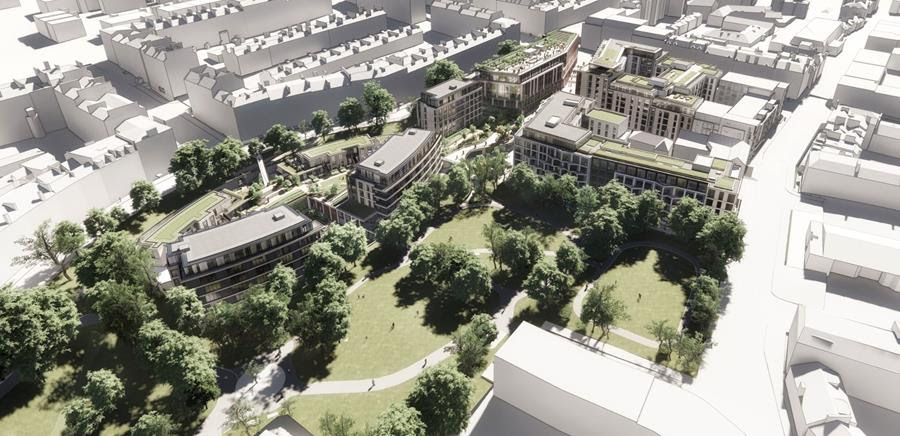
Ediston and Orion Capital Managers are working together to deliver one of the most complex city-centre developments in the UK. New Town Quarter is a £250 million development that has involved extensive local community consultation during the last 18-months.
Planning proposals have involved complex negotiations over major infrastructure matters as well as providing sensitive consideration to environmental concerns given the proximity of the much-loved King George V Park.
Plans include creating 350 new homes as well as office accommodation that will support 700 jobs and add £35 million per annum to the city’s GDP. The construction work alone will generate nearly £27 million of economic development value and support 600 jobs.
The final proposals are expected to go before the City of Edinburgh Council Planning Committee in the near future.
Ross McNulty, Development Director of Ediston, said: “We’ve gone the extra mile to take the local community with us. We’re determined that this major development becomes a positive driver of significant economic activity for Edinburgh city centre.”
Clarification on Trees and Building Heights
We are aware that some of the information currently presented on a Fettes Row and Royal Crescent Association backed-website is inaccurate and we welcome this opportunity to provide clarification.
It is not correct to state that our three planning applications are a threat to many trees being removed, as part of the development. The largest single number of trees being removed is in Eyre Place which is covered by a previous Planning Consent already agreed by the Council.
Some other trees are being removed due to the development, but the information on the website is inaccurate. In Dundas Street, trees are being removed for two important reasons. Firstly, they will not survive the demolition of the existing buildings, and secondly to restore Dundas Street’s original building line.
In King George V Park there will be a small number of trees removed to create a new entrance to link the new route from Dundas Street to the park. The Council has confirmed these trees have a limited lifespan and would need to be removed in due course but we are also providing replacements for these trees within the same area of the park.
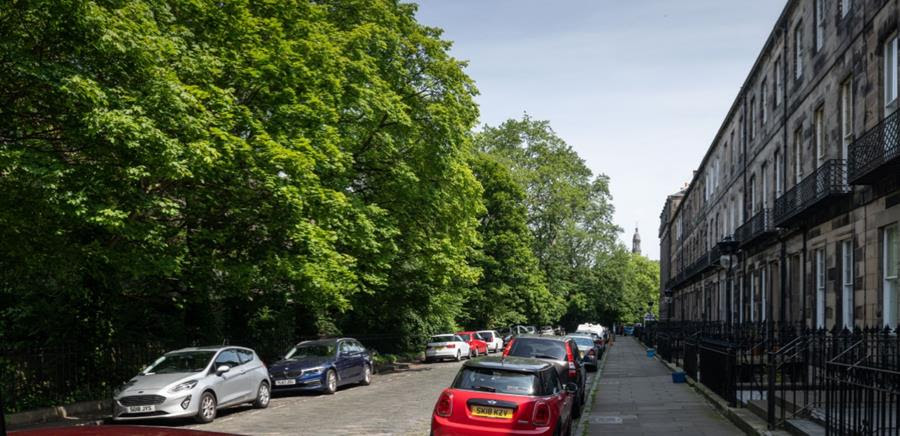
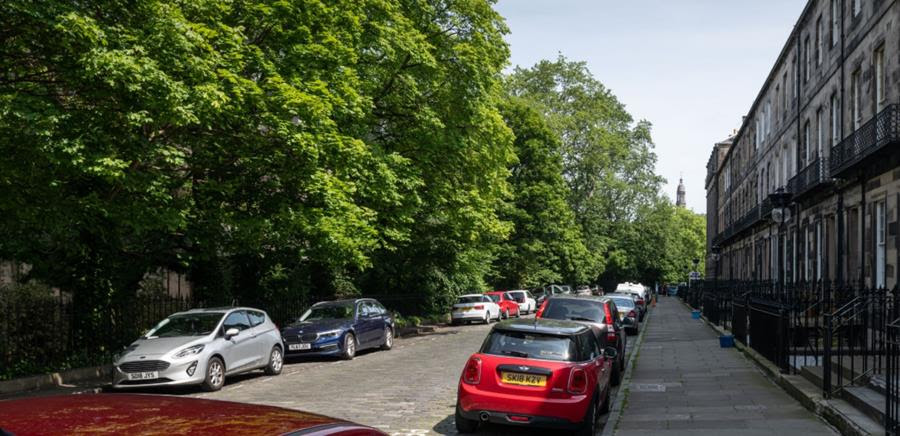
Our team has also sought to protect the trees at Fettes Row and Royal Crescent as much as possible to protect the outlook in this location, and the continuous screen of tree cover will be retained.
We have also made a commitment to a 25-year Tree Management Plan throughout our site, as well as helping the Council deliver improved tree management within King George V Park. The number of trees to be removed in the park is entirely a Council matter.
However, along with other investment in the park, we hope to carry out works that will improve both tree cover and the park itself. It should be noted that any additional tree planting and park improvements are not being done to facilitate our development.
In total, 68 new trees are being planted – plus however many are needed for King George V Park. We have stated before that a number of the trees need to be removed on health and safety grounds, and some are internal within the site and have no impact on the local community. We expect the development to either have a neutral impact on tree removal – or potentially a positive one.
The other matter we would like to address is that great efforts have been made to minimise the impact of the development for residents in Fettes Row and Royal Crescent. This includes keeping the buildings at the same height or lower than the adjacent buildings.
With regards to the impact on the park, we have conducted detailed and independent overshadowing studies that show the buildings closest to the park are not only fully compliant with Council guidelines but actually improve some aspects of existing overshadowing.
We appreciate that with any development there is change and we are acutely aware of the difficulties encountered with previous proposals and we respect residents’ right to comment on the proposals. All we are seeking is a fair hearing and a decision taken on the basis of Council and Scottish Government planning policies.
We have extensively consulted with the local community and interest groups and we would like all residents to consider the facts regarding the proposals and view them in the context of the Council and Scottish Government planning policies. The information set out in the Fettes Row and Royal Crescent Association-backed website does not accurately reflect our proposals.
Tree Cover on Fettes Row and Royal Crescent
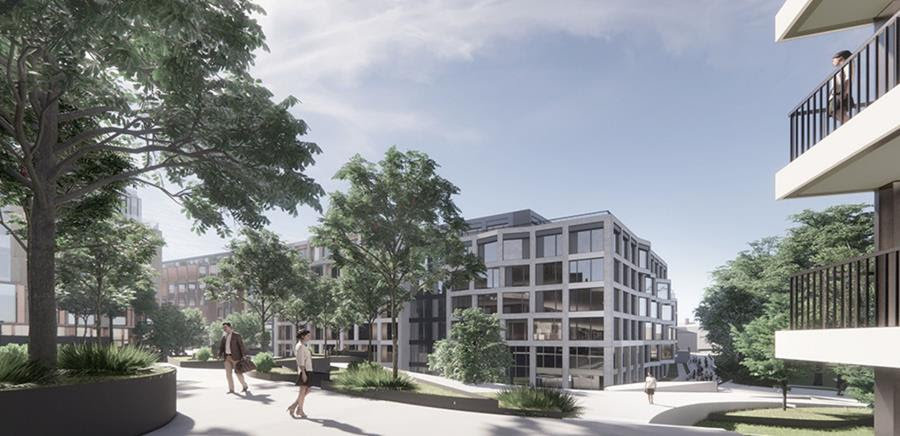
One of the main priorities for the development team was protecting the tree cover in Fettes Row and Royal Crescent. New Town Quarter is well screened by trees to the south of the development and these are much appreciated by residents. The development team has worked hard to ensure that the tree screen is protected and maintained. Existing trees are largely being retained to ensure that views enjoyed by local residents can be enjoyed for a long time to come.
New and replacement trees are being provided on the street and in King George V Park. Wherever possible the development team has sought to ensure that existing trees are protected. Ross McNulty said: “Preserving the character of Fettes Row and Royal Crescent has always been one of the key objectives for the development team and we’re confident that will be achieved with our proposals.”
Current View
Proposed View
King George V Park
King George V Park is a much-loved local park. Since the early stages of the public consultation, elements of the proposals for pathways and cycling have been scaled back following feedback. We have also had further consultation with the Council to highlight the need to manage pedestrians and cyclists at the interface with the park.
The development team is also working closely with the Council to finalise additional investment in the park to help take account of the new development, as well as helping safeguard its future quality and longevity. The proposals for park investment will be finalised through a Section 75 agreement, which is currently being negotiated with the Council. Once signed, this will be a legally binding agreement.
Ross McNulty added: “We would like to thank the Friends of the Park group for engaging with us throughout the consultation process. The discussions have been thorough and complicated at times but hopefully, everyone will see the results – including replacement trees, improved pathways and investment in the park for the long-term benefit of the local community.”
Eyre Place Update
There is a separate planning application to change the site area initially proposed as a hotel to housing. The timing of this application will run behind the main application. Being aware that Eyre Place residents had concerns about overlooking from the proposed new homes, the development team has been looking at ways to address the concerns, and we believe a solution has been agreed.
Even though the current proposals would have been entirely within planning guidelines, the proposed solution has been shared with interested residents.
Ross McNulty said: “We were left in no doubt how concerned residents were regarding this aspect of the proposals and we wanted to help if we could. The housing proposals, as with the hotel, will result in improved daylighting for Eyre Place, which should also help reassure residents that we are sensitive to their interests.”
Business Benefits For the City Centre
If the New Town Quarter development progresses, it will be the first major project in Edinburgh to move forward since the start of the pandemic. As such, it has a critical role to play in boosting the regeneration of the city centre as it recovers from the crippling effects of economic lockdown.
The local area around Dundas Street brings together an interesting mix of mainly independent traders – including cafes, restaurants, bars, hairdressers and guest houses – and a recent survey of 32 local businesses which surround the New Town Quarter area showed overwhelming support for the development plans.
Many of them were hit hard when RBS vacated their premises in 2017 and are now suffering further following the ongoing trading restrictions imposed by the pandemic. The New Town Quarter will bring much-needed investment to the city centre – and most importantly, bring people back to the local area to create a vibrant and exciting new destination.
Here are some of the comments posted by local businesses who support our planning application:
“The RBS site was always a highly visible focal point for visitors and activity and all the businesses in this area benefited from it. Now, more than ever, as we recover from lockdown, we all need the site to once again be an attractive destination for both living and visiting, to both help recovery in the immediate future and over the longer-term.” – Guest House, Eyre Place
“I have gradually built up my business following the RBS relocation, but have also now been hit hard by the coronavirus lockdown. We are all desperate to stay trading in the area but need a commitment that something significant is going to be happening to transform an ugly empty building and gap site right opposite us into a thriving and busy neighbourhood that will bring people back to the area.” – Barber, Dundas Street
Feedback & Contact
For more information on New Town Quarter, contact: Ross McNulty, Development Director, Ediston.
We are asking Edinburgh pupils from 5 to 18 years to take part in our local Greenpeace competition to show Edinburgh councillors how much they love green accessible spaces and what they think the future of active travel should look like.
The Greenpeace Art and Photography Competition runs until 13th February. Posters and photographs should be emailed to greenpeace-edinburgh@live.co.uk.
This competition gives younger generations the chance to have their voices heard and celebrate what they like about the changes made so far.
Categories are age appropriate and entries will be judged by Councillors on the Transport and Environment Committee alongside local artists and representatives from cycling and wheeling organisations in Edinburgh. The winning pictures will be used in future Greenpeace campaigns to highlight local transport improvements.
Why – Transport is the UK’s single largest source of greenhouse gas emissions. Greenpeace Edinburgh Local Group is calling on the local council and the Government to invest more money into walking, cycling and green public transport, rather than building new roads.
The pandemic has helped us to appreciate our city with less cars on the streets and the corresponding reduction in noise, air pollution, or danger to cyclists and pedestrians. We want children to engage with this important topic as it will shape their future living spaces.
During February half-term, we are hosting an art competition to celebrate our existing low traffic neighbourhoods, cycling paths and other active travel infrastructure. Pupils are asked to submit their ideas, solutions, or simply their favourite active-travel locations as a photo or in form of a poster.
Community engagement to help develop proposals for Low Traffic Neighbourhoods (LTNs) in three parts of the city has begun. The city council is proposing measures to make it safer and more comfortable to walk, cycle, wheel and spend time in Leith, Corstorphine and East Craigs.
Following public engagement and subject to committee approval the schemes would be introduced under an Experimental Traffic Regulation Order. The council says this provides further opportunities for public involvement in refining measures, even once they’re in place:
‘We’re now seeking residents’ views on travel choices and spaces for movement and relaxation in the relevant areas. Feedback will be used to inform design proposals for each of the schemes, which are the first in a potential programme of low traffic neighbourhoods being considered across the city.
‘In Leith, we’re also developing a protected cycle lane between the Foot of the Walk and Ocean Terminal, which will complement the adjacent Trams to Newhaven project, as well as pedestrianizing Sandport Place Bridge and creating a bus-only section at the Shore. We’re seeking people’s views on concept designs as part of the engagement.’
Transport and Environment Convener Councillor Lesley Macinnes said: “As we look to make a green recovery from the pandemic, it’s important that we get back to work on our long-term plans to support sustainable, active travel and healthy communities, where children can play safely and air pollution is reduced.
“There’s a range of research to show the positive impact LTNs can have on reducing ‘through’ traffic and encouraging people to walk, cycle, wheel and spend time in local areas. We want to bring these benefits to neighbourhoods across Edinburgh and to make sure the changes work for everyone, which is why we want to hear from as many people as possible.”
Transport and Environment Vice Convener Councillor Karen Doran said: “We envision a much safer, more relaxing and ‘people-friendly’ Capital, which is why we’re developing LTNs for different communities.
“By introducing them on an experimental basis we want to involve the people that live here in their evolution, and their participation begins now, as we start to develop designs.”
LTNs are initiatives where motor vehicle traffic is significantly reduced in residential streets, limiting the volume of ‘through traffic’ while maintaining vehicle access for people who live there. This creates a safer, more pleasant and inclusive environment for walking, cycling, wheeling and playing, reducing air pollution, encouraging healthy, active travel and opening up space for improvements like pocket parks, seating areas and planting.
Various studies have demonstrated the positive impacts similar schemes introduced elsewhere in the UK have had on communities. In London, research has shown the ‘mini-Holland programme’, introduced in boroughs across the city, saw a trend toward reduced car use and an increase in active travel.
Each of the schemes being put forward for Edinburgh responds to needs and issues specific to the neighbourhoods, including –
Corstorphine: Creating safer routes to school, addressing issues with speed and volume of traffic in residential streets, creating new public spaces and improving cycle routes, including links to the future West Edinburgh Link
East Craigs: Protecting streets from the impact of new developments in the west of Edinburgh, creating safer routes to school, addressing issues with speed and volume of traffic in residential streets and improving cycle routes, including links to the future West Edinburgh Link
Leith: Enhancing and promoting access to public transport, improving cycling provision in the area, addressing issues with traffic volume and speed in residential streets.
The city council says proposals being developed are ‘entirely separate and distinct from any temporary measures being implemented as part of the Spaces for People programme‘.
As part of the engagement process ‘community reference groups’ are being formed of representatives from community and interest groups in each of the areas, offering additional opportunities for residents to feed back. However, this will not supersede the responses gathered as part of the consultation process.
Following community engagement, design proposals will be developed for the three LTNs, which will then be shared for further public engagement.
Designs will then be refined and brought to Transport and Environment Committee in June for approval and permission to start the Experimental Traffic Regulation Order (ETRO).
Subject to committee approval, following ETRO consultation, changes would be implemented on a trial basis in October.
For the Foot of the Walk to Ocean Terminal active travel improvements, further development of existing designs will follow feedback, with the aim of publishing Traffic Regulation Orders later this year and beginning construction in 2022.
Since January this year, Pilton Equalities Project (PEP) have been using our minibuses to deliver PPE to vaccination centres.
Last week PEP took on an important new role – transporting nurses to administer the vaccine to homebound individuals. We will continue working with the NHS over the coming months to ensure hundreds of vulnerable people are vaccinated against COVID-19.
The City of Edinburgh Council have also been working with us to coordinate the transportation of nurses. We’re really proud of this role.
Thank you and well done to all of our drivers and to our community transport partners at ECTOG who are also providing this valuable service across the city.
Edinburgh’s ‘pioneering approach’ to delivering sustainable, accessible transport connections has been recognised under national plans for investment.
Accelerating economic recovery and laying the groundwork for an inclusive, greener transport network will be at the heart of future transport investment in Scotland.
The second Strategic Transport Projects Review (STPR2) will help to deliver the vision, priorities and outcomes for transport set out in the National Transport Strategy (NTS2). Phase One has been published which, together with conclusion of Phase Two in autumn this year, will set out Scottish Government’s investment priorities for the next 20 years.
Phase One recommendations for national investment priorities in the short-term include:
Supporting smart and sustainable travel across Scotland, with development of active freeways and expansion of 20mph zones
Improving public transport, with reallocation of road space for buses and improved accessibility at train stations
Supporting the transition to low carbon transport, with investment in alternative fuels and progression of decarbonisation of rail
Enabling larger loads to be carried by our railway network, encouraging freight to shift from road to rail transport.
Cabinet Secretary for Transport, Infrastructure and Connectivity, Michael Matheson said: “As we continue to navigate our way through an unprecedented global health emergency, the investment decisions we make have never been so important.
“We want to lock in the changes to the healthy, green travel options we’ve seen during the pandemic, while supporting interventions that will aid and help accelerate economic recovery.
“We are conducting a thorough, evidence-based review of the performance of Scotland’s strategic transport network across active travel, bus, ferry, rail and the trunk road network and my thanks go to everyone who is engaged in that process, particularly our Regional Transport Working Groups.
“Phase One sets out some of our transport investment priorities for the next few years, which will support a fair and sustainable economic recovery from the pandemic, while working towards our longer term goals of making Scotland more accessible for residents, visitors and businesses; improving connectivity and highlighting the vital contribution that transport investment can play in enabling and sustaining Scotland’s economic growth.
“STPR2 will help us to deliver the vision, priorities and outcomes set out in our National Transport Strategy as well as aligning with other important national plans such as the Climate Change Plan, Infrastructure Investment Plan and National Planning Framework.”
Recommendations for national investment priorities in phase one of Transport Scotland’s second Strategic Transport Projects Review (STPR2) focus on the country’s economic recovery and providing an inclusive, green transport network.
Amongst priorities for spending are the extension of Edinburgh’s Mass Rapid Transit system, including the tram network, and its potential to support the region’s economic growth and carbon-neutral ambitions by providing an attractive travel choice between the city and satellite locations.
Under recommendations, spending on public transport prioritisation measures, reallocating more road space to cycling and walking and the redevelopment of Waverley Rail Station would also be progressed.
The review also highlights the success of Edinburgh’s 20mph roll-out, following which road traffic collisions have been seen to fall in the Capital, and commits to supporting other local authorities to follow suit.
Transport and Environment Convener Councillor Lesley Macinnes said: “The need to invest in sustainable and accessible transport is essential for our city’s green recovery from the COVID crisis, and to meet our long term goal of carbon neutrality by 2030.
“This report acknowledges the central role clean, integrated transport will play in the city and region’s economic development, improving the environment and progressing social equality amongst the people who live here.
“Amongst the schemes highlighted, the progress of mass rapid transit is key to our forthcoming City Mobility Plan, supporting people to make convenient, sustainable transport choices as well as connecting to areas of future growth.
“Support in this Scottish Government report for reallocation of road space for walking and cycling, expanding on work through our Spaces for People project, City Centre Transformation and our ongoing, ambitious active travel programme, will help us create a truly people-friendly city.
“I’m very pleased that STPR2 recognises and builds on the importance of these strategic projects, as well as highlighting the effectiveness of our 20mph roll-out, and will be of great support as we work towards a greener, fairer future.”
Transport Vice Convener Councillor Karen Doran said: “We’re already focusing on a great many schemes to support sustainable transport, from measures to prioritise public transport and investing in Trams to Newhaven to major cycling and walking improvements around the Capital.
“The themes and recommendations within this report very much reflect and bolster our own aspirations to encourage modal shift away from private car journeys, responding to the climate emergency, minimising air pollution and supporting healthy lifestyles.
“We look forward to working with Transport Scotland to progress the recommendations, to the benefit of the city.”
Cllr Sue Webber is the Edinburgh Conservatives’ Transport Spokesman in Edinburgh Council and candidate for Edinburgh Western in the Scottish Parliamentary elections:
In May 2020, the SNP-Labour Council used emergency Covid-19 powers to rush through several road closures, an unnecessary Low Traffic Neighbourhood in East Craigs and the widespread introduction of segregated cycleways along Comiston Road and Duddingston Road.
These schemes were first introduced as a temporary measure during the pandemic. But the SNP-Labour Council now intends to make these changes permanent.
Local opposition has been substantial but the SNP-Labour Council have continued to ignore residents. One group, Get Edinburgh Moving (GEM), had to resort to threats of Legal Action against the Council to stop the introduction of the LTN in East Craigs.
I have led opposition on the Council, consistently voicing the public’s concerns about the negative impact these immensely unpopular measures are having on livelihoods and local businesses.
From the outset, I demanded greater community involvement and political scrutiny on the schemes. I too have been ignored.
If you oppose the SNP-Labour Council’s undemocratic and reckless changes to our city then please sign below to fight back against the permanent imposition of these measures.
The city council’s Powderhall regeneration project has reached another major milestone with the submission this week of a planning application by Collective Architecture for the first phase of a new development.
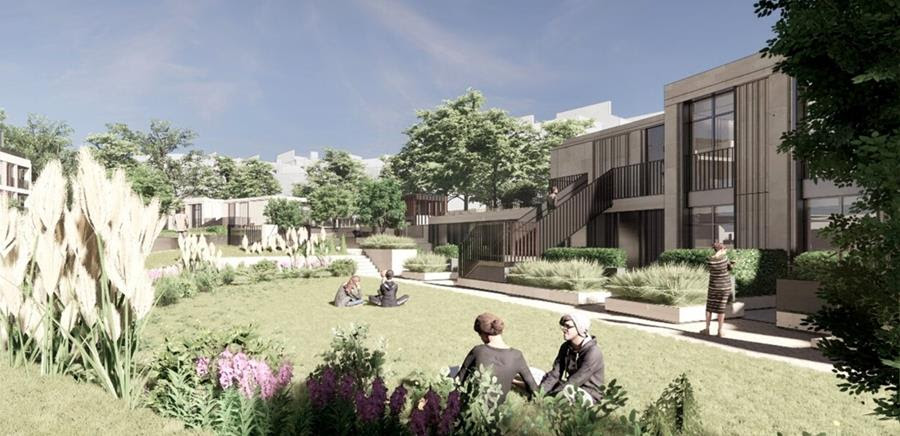
Following extensive public consultation this phase will include a new Early Learning and Childcare Centre with places for 128 children with 27 accessible council homes, designed for older persons, situated above. This intergenerational facility will be one of the first of its kind in Scotland and will offer health and wellbeing benefits for the older residents and new learning and social opportunities for children attending the nursery.
This new intergenerational building will also be one of the first Passivhaus-standard buildings built by the Council, meaning that it will use little energy. All the properties will be fully wheelchair-adapted, accessible via two lifts and will have storage for mobility scooters and bikes.
The new Early Learning and Childcare Centre, which will be managed by Broughton Primary School, will allow for the existing nursery provision to relocate to the new centre. This will provide more childcare places for the local community and open up more space for the primary school. It will also have a multi-purpose room, which will be available for public use via the school lets system.
The development also proposes to create a new civic space as an entrance to Powderhall and make improvements to St Mark’s Path, together with a new outdoor educational space for Broughton Primary School, again available for community use via school lets.
Councillor Kate Campbell, Convenor for Housing, Homelessness and Fair Work, said:“The community have absolutely shaped the development plans for this site, so I’d like to thank everyone who gave up their time to share their thoughts with us. The plans are better because of their contributions and will have community facilities that work for local people.
“These new homes will be accessible and energy efficient. They will all be fully wheelchair adapted and built to the internationally recognised Passivhaus-standard, with renewable power generation on site. So they are both contributing to our Net Zero Carbon by 2030 target and our commitment to building 20,000 affordable homes by 2027.
“We’ll start by restoring the stable block and work will begin imminently. This will create affordable, flexible workspace for small businesses – supporting dozens of local jobs. The function space can be used for community events, such as art classes or exhibitions.
“I’m looking forward to seeing the development start to take shape over the course of next year, restoring the lovely stable blocks, bringing them back into use and giving local residents back this area that has been unused for so long.”
Councillor Ian Perry, Convenor for Education, Children and Families, said: “This entire Powderhall development will bring fantastic benefits to the local community, creating great spaces to live, work and play – while being safe and carbon neutral.
“It’s great to see that through the new Early Learning and Childcare Centre more children in the area will be able to access nursery spaces. This will allow us to meet our commitments to making early years provision more flexible, to fit family needs, and deliver 1,140 hours a year of free early learning and childcare for all three- and four-year olds and eligible two-year olds.
“This phase of development forms part of the wider regeneration of the former Powderhall Waste Transfer Station and the adjacent former Stables building. In total, the development will deliver more than 200 homes – over a third of them affordable.”
Nicola McLachlan, Project Architect, Collective Architecture said:“The recent pandemic has reinforced the significant and detrimental impact that unsustainable living and social conditions can have on the quality of our lives, heightening our sense of accountability.
“The Powderhall mixed-use masterplan is reflective of an ambitious client and a participatory place-based design approach that has developed innovative and ethical living possibilities, taking visionary steps towards ensuring future communities are both socially and environmentally sustainable and successfully rooted with their surrounding neighbours.
“Phase 2 of the masterplan focuses on sharing, agency, and autonomy in the context of increasing age demographics, rising levels of loneliness and takes cognition of the significant shortage of older persons homes – particularly within urban areas.
“The proposals create a purpose-built intergeneration building where residents and nursery children can seamlessly co-exist, creating a variety of spaces where people can enjoy interaction and sharing space and time together. A project that marks a significant step towards designing with an agenda where wellbeing and high quality of life for all generations is our measure.”
Carl Baker, Architect and Passivhaus Designer, Collective Architecture said: “The project contributes to The City of Edinburgh Council’s target of becoming a net zero carbon local authority, and the adoption of the Passivhaus Standard ensures this is a tangible aspiration.
“In addition to Passivhaus and the proposed renewable technologies, sustainability has been considered throughout the project from the co-location of services and the shared building elements, to the reduction of embodied carbon by incorporating a circular strategy.
“Furthermore, there are many benefits for the client and end users of this project which are provided by the intergenerational approach and in striving to achieve the Passivhaus Standard. Some of these will be felt immediately, while others such as long-term health improvements and access to a high-quality learning environment will be experienced for generations to come.”