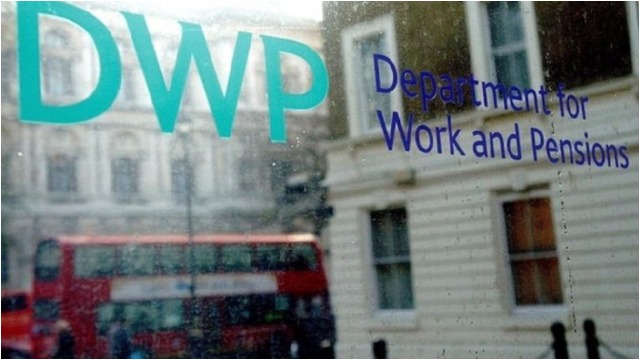
Impact of UK welfare cuts revealed

Thousands of families are being pushed into poverty – with UK Government welfare changes set to reduce spending on social security in Scotland by £500 million a year, Social Security Secretary Shirley-Anne Somerville said.

The 2019 Annual Report on Welfare Reform shows the largest welfare cuts since 2015 are as a result of the benefit freeze, two-child cap, and changes to the work allowance. Continue reading Impact of UK welfare cuts revealed

Holyrood Committee to investigate why millions of pounds of benefits remain unclaimed

An inquiry has been launched by Holyrood’s Social Security Committee as estimates suggest a huge number of benefits remain unclaimed by those eligible for them. The inquiry aims to explore the extent of the issue and what can be done to tackle it.

Statistics from HMRC and DWP estimated that in 2016/17 only 31% of families without children eligible for Working Tax Credit claimed, while only 60% of those eligible for Pension Credit claimed.

However, the full extent of benefit non-take-up in the UK is unknown because of difficulties in estimating eligibility.

The Committee is now looking for information on issues related to benefit uptake including why estimates of take-up are available for some benefits but not for others, and the impact of awareness raising campaigns in improving benefit uptake.

The Committee is also investigating how technology could help automate some benefits to improve take-up and how take-up rates for the new Scottish social security benefits will be impacted by their link to the take-up rates for UK benefits.

 Bob Doris MSP, Convener of the Social Security Committee, (above) , said: “There can be any number of reasons for low benefit uptake rates, but it is absolutely essential that we learn the scale of this challenge and take every possible action to improve uptake.

“There is no doubt the stigma of claiming benefits hinders uptake while too often people are simply not aware of the benefits they are entitled to. Administration processes are also often too complex, and our inquiry is determined to identify any barriers to benefit uptake and how we can remove these.

“The Committee will consider the Scottish Government strategy on benefit uptake which will be published in October, but what is clear is that everything possible must be done to ensure those in need receive the full benefits they are entitled to.”

Other issues the Committee is keen to explore include if different approaches are required for different benefits, and the impact of various eligibility criteria upon take-up rates.

The call for views is open until Monday 21 October.

You can let the Committee know your views here: 

http://www.parliament.scot/benefit-take-up

Change of heart? Parents and guardians given extra time to claim back childcare costs with Universal Credit

Have the Tories got a heart after all? An extra month to claim back childcare costs could mean parents avoid missing out on up to £1,100 per month … Continue reading Change of heart? Parents and guardians given extra time to claim back childcare costs with Universal Credit

Best Start Grant: greater support for low income families

poverty family JRF

The new Best Start Grant package is putting more money in the pockets of low income families than the DWP system it replaced.

Since it started making Best Start Grant payments last December, Social Security Scotland has made more than 42,000 payments to families in Scotland, totalling £12.9 million. Continue reading Best Start Grant: greater support for low income families

Money Talk Team benefits thousands of families

Free advice service helps low income households save more than £6 million.

Low-income families who seek free financial advice from the Money Talk Team are on average now £1,850 better off.

The service offers one-stop, personalised advice on dealing with debt and ways to reduce household bills.

With around 450,000 cases of unclaimed benefits in Scotland, it also helps low-income families identify what financial support might be available. The service is supported by Scottish Government funding of £3.3 million over two years.

In the last nine months, the Money Talk Team has helped a total of 3,198 people be better off by more than £6 million – meaning households benefit by more than £1,850 on average. A total of nearly 8,000 people have accessed the service.

Launching a national advertising campaign to raise awareness of the Money Talk Team, Communities Secretary Aileen Campbell said: “The Money Talk Team is making a huge difference to the thousands of families that have already taken advantage of this free service.

“The friendly, experienced advisers talk callers through the options available, letting them know exactly what they are entitled to and helping them save money.

“But there are still too many families out there not getting what they should be.

“If you’re a parent struggling to pay the bills at the end of the month, you’re not alone. It doesn’t matter if you’re in or out of work, one call to the free phoneline is all it takes to get some advice that could be a massive help to your household.”

Money Talk Team is the new name for Financial Health Check, which started in 2018 and is delivered by Citizens Advice Scotland. It can be accessed through their free helpline on 0800 085 7145 or by visiting a local Citizens Advice Bureau.

Best Start Foods payment launched

Payment card replaces paper vouchers

Pregnant women and families with babies and children receiving certain benefits are to be offered increased access to healthy foods. The new Best Start Foods payment replaces the UK Government’s Healthy Start paper vouchers with a new payment card, and it’s now open for applications. Continue reading Best Start Foods payment launched

Crisis? What crisis?: More than 336,000 households aided through Scottish Welfare Fund

Scottish Welfare Fund annual spend hits £35 million.

poverty family JRF

People in crisis made more than 165,000 successful applications to the Scottish Welfare Fund in the last financial year, according to the latest statistics.

The Fund paid out £35 million, including £10.4 million in Crisis Grants to people in financial emergency, such as those struggling on low incomes or benefits  – a 14% increase on 2017-18. The money helped people with essentials such as food, heating costs and household items.

A further £24.8 million in Community Care Grants helped those facing extreme financial pressures with one-off costs for purchases including beds, washing machines and cookers.

The Scottish Welfare Fund is part of an annual package of over £125 million to mitigate against the impact of UK Government welfare cuts. Since its launch in April 2013, the Fund has paid out more than £200 million to support over 336,000 households, with a third of recipients being families with children.

Social Security Secretary Shirley-Anne Somerville said: “We would much rather these resources were invested in anti-poverty measures than protecting our people from another government’s cuts – a positon the UN Special Rapporteur on Poverty recently described as ‘outrageous and unsustainable’.

“The fact that so many households in Scotland are in need of emergency financial help is appalling, and a sad indictment of the UK Government’s record on austerity and welfare changes.

“As their welfare cuts continue to cause harm and damage, we continue to do our best to mitigate against them and provide financial support to low income families and carers through new social security benefits.”

In the UN Special Rapporteur on Poverty report published earlier this year, Professor Philip Alston praised Scotland’s “ambitious” schemes for addressing poverty, including the Fairer Scotland Action Plan and the Tackling Child Poverty Delivery Plan.

He also noted Scotland’s “promising social security system, guided by the principles of dignity and social security as a human right, and co-designed with claimants on the basis of evidence”

The Scottish Government’s response to the Special Rapporteur’s report shows UK Government welfare cuts have increased the risk of deprivation for low-income families across Scotland

The Scottish Welfare Fund statistics

 can be found on the Scottish Government’s website

Holyrood Committee urges immediate halt to latest Universal Credit rollout

Holyrood’s Social Security Committee has called on the DWP to urgently halt the launch of its latest pilot. It would see those receiving working tax credits moved on to Universal Credit and potentially subject to in-work conditionality including sanctions. Continue reading Holyrood Committee urges immediate halt to latest Universal Credit rollout

Over 100,000 children to be hit by Two-Child Cap in Edinburgh

TORY GOVERNMENT MUST SCRAP “HEARTLESS” POLICY – SNP

13.1% of the total number of children in Edinburgh could be affected by the two-child cap, according to new research – prompting more calls for the UK Government to scrap the “heartless” policy.

The “two-child policy” allows low-income families to claim child tax credits or universal credit for their first two children only.

New research from the Child Poverty Action Group (CPAG) (see report, below)has revealed that 160,000 families have had their income slashed by the two-child limit to-date. The charity estimates that more than 3 million children across the UK could eventually be affected by the benefit cap.

SNP MSP Gordon Macdonald said: “Social security should be a safety net for all of us, but the two-child limit is having a devastating effect on families up and down the country, with 10,305 children in Edinburgh set to be affected by it. 

“All families are valuable and worthy of support, but this heartless policy turns people away when they most need support, and leaves children to grow up in hardship – which can have lifelong consequences for their health and wellbeing.

“The SNP government has been left to pick up the pieces, investing over £125 million to mitigate callous Tory welfare policies.

“In addition, the Scottish Government is introducing a Scottish Child Payment to tackle child poverty. Without the two-child cap, this payment could go so much further.

“We have an aging population and we will be relying on children and young people in the years to come.

 “The next Tory Prime Minister should make it a priority to tackle the unacceptable levels of poverty we are seeing as a direct result of the UK Government’s welfare policies, starting with reversing the two-child limit and horrendous ‘rape clause.”

All Kids Count report FINAL_0