Granton Information Centre: still here for you

Due to the Coronavirus outbreak our office is currently closed to the public – but  GIC is still operating!

Call us Monday – Friday, 9.30am – 4pm on on 0131 551 2459 or 0131 552 0458 if:

•You would like to arrange a telephone appointment to discuss money, benefits, housing or debt

•You wish to discuss an existing case

•You require a foodbank referral

All messages will be returned as long as you leave a clear telephone number for us to reach you on.

Emails will be checked daily: our email address is info@gic.org.uk

Claimants asked to apply online as Jobcentres limit access

People are being urged to use online services before turning to the telephone for help with their benefit claim

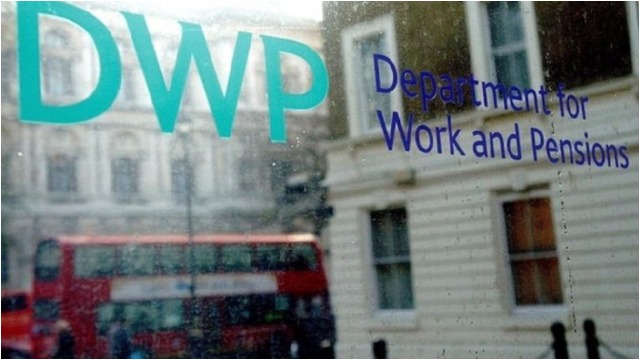
With a rise in new claims, and with demand for support over the phone increasing, the Department for Work and Pensions is taking unprecedented action to make sure people can get the support they need, including moving 10,000 existing staff to focus on processing new claims.

In line with recent Government guidance and to best serve those who need support, the Work and Pensions Secretary has taken the decision to limit access to jobcentres from tomorrow, with members of the public not admitted into jobcentres unless they are directed to do so with a booked appointment.

Only the most vulnerable claimants who cannot access DWP services by other channels will be invited to attend, with the public urged to use online services.

In addition, the Secretary of State has also today announced that reviews and reassessments for disability benefits are being suspended for the next three months. The suspension will be kept under regular review and extended if necessary.

These stronger measures come in response to the changing situation and mean more staff are being deployed to process new claims and make payments, with remote support a top priority for the department.

Around 10,000 existing staff will be moved to process new claims, with 1000 already in place. In addition, the Department is expecting to recruiting 1500 extra people to aid the effort.

The changes are part of the Government’s effort to stop the spread of the virus, supporting people to stay at home, protect the NHS and save lives.

The measures follow Government guidance last week that people were not expected to attend face to face jobcentre appointments, and the suspension of face-to-face assessments for all sickness and disability benefits for the next 3 months.

In the meantime, all services can be accessed online and over phone with the Work and Pensions Secretary Therese Coffey is urging people to use online services first, helping keep phone lines free for those who really need them.

Secretary of State for Work and Pensions Therese Coffey said: “Our jobcentres are fully committed to supporting people facing challenges during these extraordinary times.

“To help people most effectively and efficiently, we need people to claim online. If you cannot get online, phone us for help and we will only see people face to face in our jobcentres if invited.”

Those looking to put in a claim for Universal Credit or Employment and Support Allowance should apply online.

For more information visit Understanding Universal Credit


Face-to-face health assessments for benefits suspended

Face-to-face assessments for all sickness and disability benefits will be suspended for the next 3 months, the government announced yesterday.

The temporary move, effective today, is being taken as a precautionary measure to protect vulnerable people from unnecessary risk of exposure to coronavirus as the country’s response ramps up in the ‘delay’ phase. The DWP says they will ensure those who are entitled to a benefit continue to receive support, and that new claimants are able to access the safety net.

It affects claimants of Personal Independence Payment (PIP), those on Employment and Support Allowance (ESA) and some on Universal Credit, and recipients of Industrial Injuries Disablement Benefit.

The suspension of face-to-face assessments also covers new claims to those benefits.

Work and Pensions Secretary Thérèse Coffey said: “As we move into the next phase of our response to coronavirus, it is right we take steps to protect those with health problems.

“Temporarily suspending face-to-face assessments for sickness and disability benefits will allow us to ensure we continue to provide a safety net for those in need, while removing unnecessary risk of exposure to this disease.”

Anyone who has a face-to-face assessment appointment scheduled from today – Tuesday 17 March – onwards does not need to attend and will be contacted to discuss next steps and alternative arrangements, which could involve either telephone or paper-based assessments. DWP expect this measure will be in effect for the next 3 months but will regularly review the position in line with Public Health advice.

No further action is required by any claimant as a result of this change. They will be contacted with advice on next steps.

DWP continues to accept new claims for all benefits. Anyone already receiving PIPESA, Universal Credit or Industrial Injuries Disablement Benefit, will continue to receive their current payments as normal while alternative arrangements are put in place to review or reassess their claim.

Suspending face-to-face health assessments is a precautionary measure which reflects the Prime Minister’s decision to trigger the ‘delay’ phase. It is important to note that this change does not affect or change any existing public health advice.

Read the current NHS guidelines on coronavirus, including advice on those who should stay at home.

Benefits: break the barriers

The UK and Scottish Governments must work more closely together to ensure people get the benefits they are entitled to, a new report by the Scottish Parliament’s Social Security Committee has said.  It is estimated that currently billions of pounds in benefits go unclaimed every year.

The Committee welcomed the Scottish Government’s statutory duty to have a benefit uptake strategy and praised the Scottish Government for their attempts to increase the take-up of devolved benefits.

However they expressed express alarm at the DWP’s lack of benefit take-up strategy. The Committee suggested that Social Security Scotland could take the lead on driving forward uptake strategies for both devolved and reserved benefits.

The report raises concerns about the lack of accurate data on estimating eligibility and take-up, meaning the full extent of the problem is not known. The Committee recommended the UK and Scottish Government commission joint research to improve the data available.

The Committee also highlight the continuing barriers which can mean people do not claim benefits they are entitled to. These include the stigma of claiming, people being unaware of what they are entitled to, onerous application processes, and those living in rural Scotland facing geographical barriers.

The report also warns that the current ‘digital by default’ approach in Universal Credit is excluding people who are not IT literate or don’t have access to the internet. The Committee wants all benefits to be available through multiple application channels.

Bob Doris MSP, Convener of the Social Security Committee said: “It is simply not good enough that billions in benefits continue to go unclaimed every year. Given one of the DWP’s stated aims with Universal Credit was to increase take-up, the fact they have no strategy to achieve this is deeply alarming.

“It is absolutely vital we get more accurate data on the numbers entitled to benefits so that any communications strategies can be targeted at those in need who are missing out.

“Data sharing across Governments and agencies is a key factor in improving take-up rates and we are adamant that GDPR must not be used as an excuse to not share data. It’s also crucial that welfare agencies are adequately funded and we are seeking increased and sustained funding for these agencies going forward.

“Our evidence has made it clear that both governments must do more to work productively together to ensure people receive the benefits they are entitled to and remove any barriers which mean people miss out.”

The convener added: “We have also heard concerns over a possible policy spillover issue where if the Scottish Government increases the uptake of a reserved benefit, then they may have to financially compensate the UK Government.

“That’s unacceptable. We need urgent clarity on this issue and a far greater level of coordination for maximising benefit take-up, whether devolved or reserved, is required”.

benefit take-up report

Sixteen year old Scots won’t face PIP ordeal

The Scottish Government will use its new benefits powers to remove the need for children to take part in Department for Work and Pensions (DWP) Personal Independence Payment (PIP) assessments.

Under current DWP rules, children getting Disability Living Allowance for Children are asked to apply for PIP six months out from their 16 birthday, but under the Scottish Government changes, young people will continue to get DLA Child, as long as they remain eligible, up to the age of 18.

This means that they will not need to do a DWP PIP application or assessment – which many people say are stressful.

The change comes as the Scottish Government takes full responsibility for disability benefits from April this year.

Social Security Secretary Shirley Anne Somerville said: “We know from people like June Jamieson, a parent who has had direct experience of the current system, that making the transition from child to adult services can be a challenging time for their child and family.

“Adding to this, young people may be going through changes in a number of other areas of their life at the same time. We’ve also been told that the fact that this transition is to PIP, creates even more stress and anxiety.

“This is why we are using our new social security powers to extend the eligibility,  ease the pressure on families and make sure young people in Scotland have adequate time to move from children to adult social security support.

“Our priority for people already getting this support from the DWP is to move them over in a safe and secure way and make sure that people get the financial support they expect, when and where they expect it.”

Ms Jamieson, from Edinburgh, has recently applied for PIP for her son Alex, who turned 16 in January. She said: “So many things are happening in a child with additional needs life when they turn 16, for example they need to think if they are staying on at school, and parents may need to apply for guardianship.

“It will really take the pressure off lots of other families not to have to worry about this. Although Alex won’t benefit from the changes I am really pleased that other people will. I have the fear of the unknown waiting to hear the outcome of his PIP application.”

More ways to apply for new benefit

Applications for the new Child Disability Payment will be available online, face-to-face and by telephone – for the first time ever.

The Scottish Government is introducing the new benefit this summer, replacing the UK Government’s Child Disability Living Allowance.

By offering a variety of ways for people to apply, the Scottish Government wants to make it as easy as possible for those applying when this first disability benefit opens to new claimants. Paper-based applications are the only possible method under the current UK Government system.

Other improvements include:

  • local delivery staff across the country to provide pre-application support
  • rolling awards with a maximum review period of ten years when the condition of applicants is unlikely to change
  • the option of financial short-term assistance if a person challenges a decision to reduce or stop their disability payment
  • Child Winter Heating Assistance will provide a £200 payment to families with disabled children who receive the highest rate of payment

Social Security Secretary Shirley-Anne Somerville said: “We want to remove barriers to accessing the financial support people are eligible for and end the stress and anxiety felt by those using the current UK Government system.

“Offering different, convenient ways to apply, as well as consistent, considerate and sensitive support through the application process, will transform the experience for parents, guardians and carers applying for their loved ones.

“These are the improvements people have told us matter to them. By listening to those with experience of the social security system we can create a system from the ground up that meets the needs of the people of Scotland.

“It is a system that recognises that social security is a human right and will treat people with fairness, dignity and respect.”

Funeral Support Payment to be increased

Extra support will be made available for people on low income benefits to pay for the cost of a funeral.

The Funeral Support Payment’s rate for expenses such as funeral director fees, a coffin, and flowers, is to be increased from £700 to £1,000 for all applications received from 1 April.

The Funeral Support Payment is made up of three separate parts: burial or cremation costs; travel costs; and a standard rate for other expenses – and it is this element which is being increased.

Introduced in September last year, the Funeral Support Payment replaced the UK Government’s Funeral Expense Payment in Scotland, greatly increasing eligibility. It is intended to help alleviate the burden of debt faced by those on low income benefits when paying for a funeral.

Social Security Secretary Shirley-Anne Somerville said: “At a time when families are struggling to come to terms with the death of a loved one, the last thing they need is extra financial stress.

“I am proud we are increasing the standard rate by 40% to £1,000 to support those paying for a funeral just months after introducing this important new payment.

“This increase, alongside the extended eligibility we have introduced, means the Funeral Support Payment is there to ease the pressures on up to 5,000 people annually at such a difficult time in their lives. So far the total average pay-out has been around £1,500.

“This benefit is part of the new Social Security system we are building from scratch for the Scottish people, with fairness, dignity and respect at its heart.”

The flat rate payment for other expenses may be used towards any other funeral expenses such as funeral director fees, a coffin, and flowers.

Those eligible for the Funeral Support Payment must be living in Scotland, have had the nearest relationship to the person who has died, be financially responsible for the funeral and be on a qualifying benefit or tax credit (e.g. Income Support, Jobseekers Allowance, Universal Credit, Employment and Support Allowance, Pension Credit, Housing Benefit, Child Tax Credit, Disability or severe disability element of Working Tax Credit).

Around 5,000 people are expected to be supported annually by the payment.

For more information or to apply online go to: https://www.mygov.scot/funeral-support-payment/

Scotland in crisis

The amount given in crisis grants to those most in need has increased by more than a third, latest figures show. The Scottish Welfare Fund paid out a total of £3.2 million in crisis grants between July and September 2019 – 34% more than the same period the previous year.

The Scottish Welfare Fund is distributed by local authorities and provides Crisis Grants and Community Care Grants.

Crisis Grants help families on low incomes with unexpected expenses arising out of an emergency or a disaster. Community Care Grants help those on low incomes live independently in the community or to help people maintain their home in the face of exceptional pressure.

The most common reason families said they applied for emergency funding was because their benefits or other income had been spent – up 33% on the previous year.

Estimates suggest the UK Government’s social security spending in Scotland is set to reduce by £3.7 billion per year by 2021. In addition, the benefit freeze and benefit cap are now in their fourth year.

Social Security Secretary Shirley-Anne Somerville said: “This is the latest evidence that the UK Government’s swingeing benefit cuts are hitting the poorest in Scotland hardest.

“The large increase in people applying for emergency funding shows how much those on low incomes are struggling just to make ends meet.

“The Scottish Government will not stand by and let people who are already in need continue to face a reliance on food banks and the stress of debt and rent arrears.

“That’s why we are continuing to spend over £100 million each year to mitigate the worst effects of the UK Government welfare cuts – part of the £1.4 billion we spent last year to support low income households.

“This is money we should be able to invest elsewhere to help pull people out of poverty but we instead we need to use it to protect the most vulnerable in our communities.

“We are introducing the Scottish Child Payment to tackle child poverty head on which will start for eligible families with a child under six by Christmas. But there is no doubt that without the cuts inflicted on families by the UK Government this could go so much further.”

170,000 children eligible for ‘game-changing’ new benefit

poverty family JRF

Applications will be taken in advance for Scottish Child Payment to help with expected high demand.

An estimated 170,000 children will be eligible for the new £10 weekly Scottish Child Payment when it goes live later this year.

To help manage demand, families will be invited to apply in advance of the benefit being introduced in the autumn. Parents will be able to apply by post, phone and online.

Applications will be assessed for eligibility in the autumn with the first payments made by Christmas.

In an additional move to assist families, Best Start Grant payments, Best Start Foods and the new Scottish Child Payment will all be available through a single application – making it more straightforward for people to access the money they are entitled to.

Social Security Secretary Shirley Anne Somerville said: “The Scottish Child Payment has rightly been described as game-changing in terms of the potential to reduce child poverty.

“That is why we are doing everything we can to introduce this as early as possible, whilst ensuring we do so in a way that is safe and secure and protects implementation plans for the other social security benefits.

“When we launched the Best Start Grant payments we experienced significant demand with 14,000 applications in the week that we opened the School Age Payment. With 170,000 children from approximately 140,000 households expected to qualify for Scottish Child Payment, eligibility is on a unprecedented scale and, as this is a recurring payment, it also brings additional complexity.

“We are gearing up to process applications carefully, accurately and efficiently. We are building capacity across our processes, systems, premises and people. And with the roll-out plan, we are asking families to help us by getting their applications in early so that we can process and start making payments as quickly as possible once this new benefit has been introduced.”

What a waste: Holyrood spends £100 million to mitigate Tory welfare cuts

This year more than £100 million has been spent to mitigate the effects of UK Government austerity and this money could have been better spent on more anti-poverty measures, Social Security Secretary Shirley-Anne Somerville has said. Continue reading What a waste: Holyrood spends £100 million to mitigate Tory welfare cuts