Are you looking for a volunteering opportunity like no other? Then don’t miss our Special Constable Recruitment event at the Scottish Police College on Saturday, 11 May 2024.
Sign-up today using the below link to guarantee your place.
Being a Special Constable is not just about upholding the law and catching criminals, it’s also about supporting communities by building trust, respect, and positive relationships. You will be there to make a difference to those who need it most.
Do you want a volunteering role that is built around you, one that will improve the safety and wellbeing of the people, places, and communities of Scotland, one that upholds the law and our values of integrity, fairness, respect, and our commitment to upholding human rights, we want you to apply to become a Special Constable.
The benefits are:
• You will be part of a team of highly trained professionals.
• You will have identical powers to that of a police officer.
• You will receive excellent training and wellbeing support.
• You will find out if the job of a full-time police officer is for you.
The groups pitched their ideas to a panel of judges, including teachers and senior Deloitte partners
Pupils from an Edinburgh secondary school put their business skills to the test last week in an attempt to win over judges in a Dragon’s Den style competition hosted by Deloitte.
Six ‘Pupil Action Groups’ (PAGs) from Craigmount High School, made up of pupils from S1 to S6, have been working throughout 2024 on proposals for the school to tackle major issues, including sustainability, mental health, equalities, equity, digital learning and children’s rights.
The groups pitched to a panel of judges, including teachers and senior Deloitte partners, at Deloitte’s new offices in Haymarket. They competed to secure support for their proposed initiatives, including the creation of a Mental Health Festival, the development of a school newspaper and the purchase of reusable water bottles.
Craigmount High School is one of Deloitte’s partner schools through its 5 Million Futures Programme, which helps people overcome barriers to education and employment.
Working with schools and charities, Deloitte mobilises its people through volunteering, fundraising and pro-bono work to build better futures for people throughout the UK.
On the day, the pupils that make up Craigmount’s Charities and Equity PAG were named the Most Impactful Group and the school’s Sustainability PAG was awarded Best Group Presentation.
Deloitte also presented an award for Most Effective Individual Presentation to Imaiyal (S2) from the Equalities PAG, who reflected on her group’s efforts to champion equality in Craigmount’s community. Their work involved holding a bake sale during Transgender Awareness Week and organising a dress down day to raise money during Women’s History Month.
Imaiyal said:“I’m really happy to be recognised for my hard work to help improve equality at my school.
“I had a really good time at the Deloitte offices for the Dragons’ Den competition and I enjoyed working with my school friends to figure out how we can solve these big problems.”
Lesley Smillie, Partner, Public Sector at Deloitte in Scotland, said:“We were really pleased to welcome pupils from Craigmount High to share their visions for the future.
“We were so impressed by the pupils’ presentations – it’s really encouraging to see their passion and enthusiasm to solve the various important issues we discussed.”
Alison Clark, Deputy Headteacher, Craigmount High, said:“I’m very proud of our Pupil Action Groups who have worked so hard this year to improve our school and community.
“I’d also like to thank our partners at Deloitte for hosting this competition, which has given our pupils the chance to develop and demonstrate their communication skills and teamwork. We look forward to continuing to work together in the future.”
Significant steps forward have been made to decide the future of the Gorgie City Farm site after a series of setbacks.
Dangerous buildings, frozen pipes, flooding, the barn roof being partially blown off and the collapse of a ceiling were events which all halted progress at various times. Structural damage to several of the Farm’s buildings was also discovered during a survey, and as a result the Farm site has had to remain closed to the public for safety reasons.
Despite unexpected events, a lot has been going on behind the scenes, and progress has really picked up pace.
Planning for the Farm site’s future is being supported by EVOC (Edinburgh Voluntary Organisations’ Council) alongside an advisory group.
A new Company Limited By Guarantee has been formed and the new company will apply for charitable status in the near future. The new company will lead on future development on the site, and local people will play an important role in progressing medium and long term ambitions for the Farm.
Local people have already contributed their thoughts and wishes for Gorgie Farm site’s future. An extensive community consultation exercise was led by Project partner Edinburgh Health and Social Care Partnership, with hundreds of people contributing ideas.
Farm Site Manager Suzanne Campbell is pleased to see ideas for the site’s future taking shape: “The Farm has a very special place in the hearts of the people of Gorgie, Dalry and the wider city, and the input of local people to what the site might look like in the future has been outstanding.
“It’s taken longer than we hoped to start to put together options for its future, but we are now in the process of preparing a report which will be presented to the Council in August.”
The report will outline four fully costed options for the future of the Gorgie Farm site will be presented to City of Edinburgh’s Culture & Communities Committee on 24 August 2024.
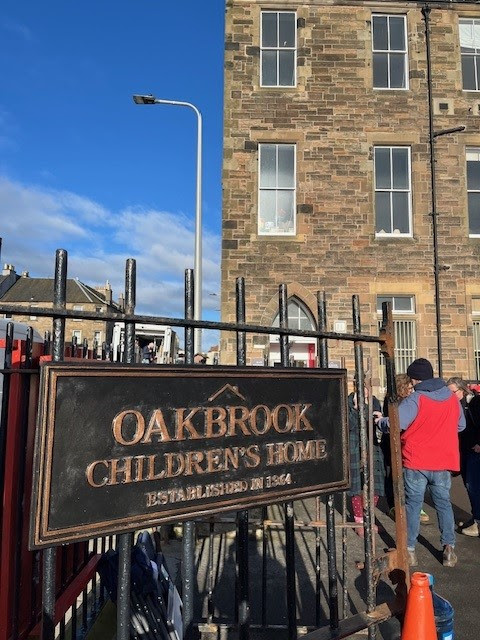
We hope the recent filming did not inconvenience you too much. We were excited to see what went on and can’t wait to see the finished result.
The production crew had to set up beforehand of course, replacing the ground floor window grilles that we had taken down and reintroducing grime and dirt that we had cleaned away, not to mention covering up umpteen things that were not in keeping with their vision of a run-down children’s home.
Then of course everything had to be reinstated when they had finished with the actual filming. We were quite exhausted!
We’ll keep you informed once the film is released and we can all see the results.
Building Works Updates
Final Handover
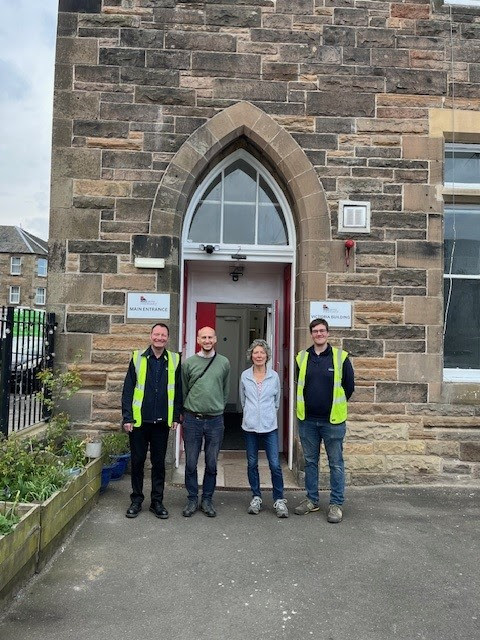
Findlay Wallace and Tommy Bell from Ashwood’s have finally completed the recent renovation works, and have handed the building back to Judy Crabb (Chair HONC) and Hugo Target (HONC Architect with John Gilberts) as pictured below.
It will be good to be free of scaffolding and hard hats but it was worth it!
Update on the Heart’s record-breaking Christmas Tree
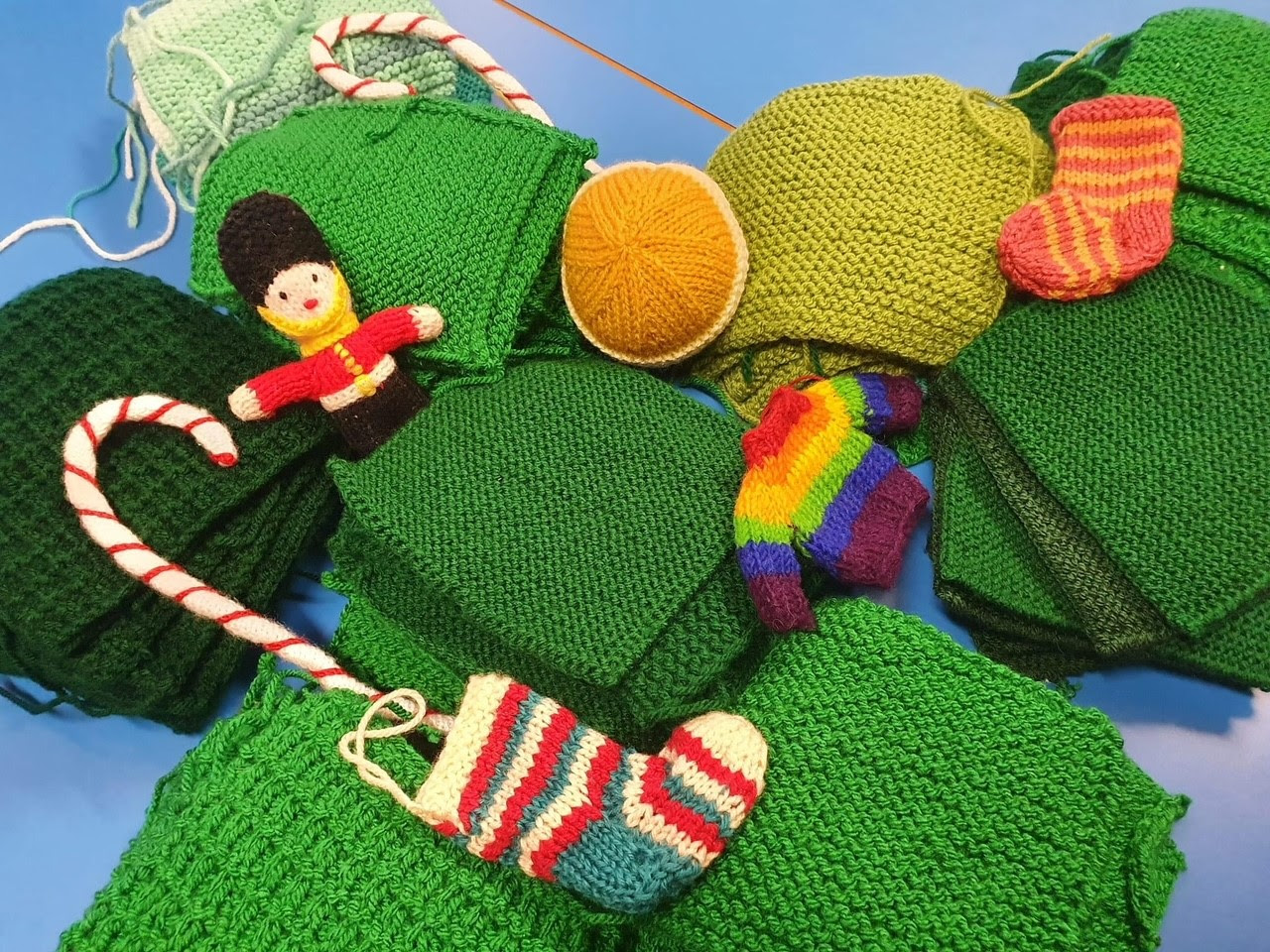
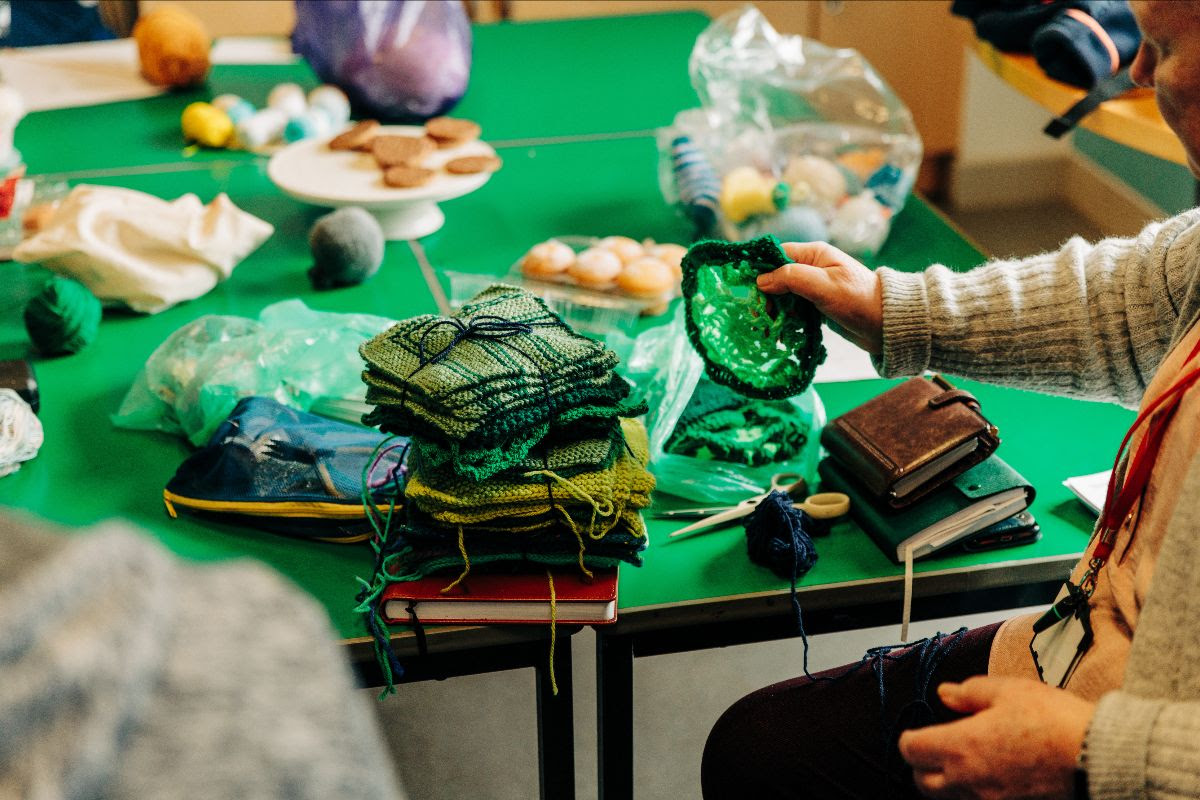
Hello to the Heart’s army of knitters. The Christmas Tree Project is making great progress and we are one third of the way there, with lots of squares and decorations being delivered by hand and by post, but we still need you to keep knitting even when the sun tempts you outside.
We are planning to fireproof the squares and decorations that we already have, towards the end of May. Then in June we need volunteers to come to the Heart and stitch the squares ready to hang on the branches and of course there will be cake and tea for all those involved.
More about this next month.
On May 11th there is a craft fair at the Eric Liddell centre and we shall be advertising our Christmas Tree.
Please come along with your squares and decorations and support the Eric Liddell 100 celebration. We have been very fortunate to receive a donation from Bailie Gifford to help with our project, so many thanks to that organisation.Happy knitting and crocheting.
Open for Coffee
The recent Open For Coffee morning on Saturday 13th April, proved a great hit, with some hundred people coming along to enjoy the free food and entertainment.
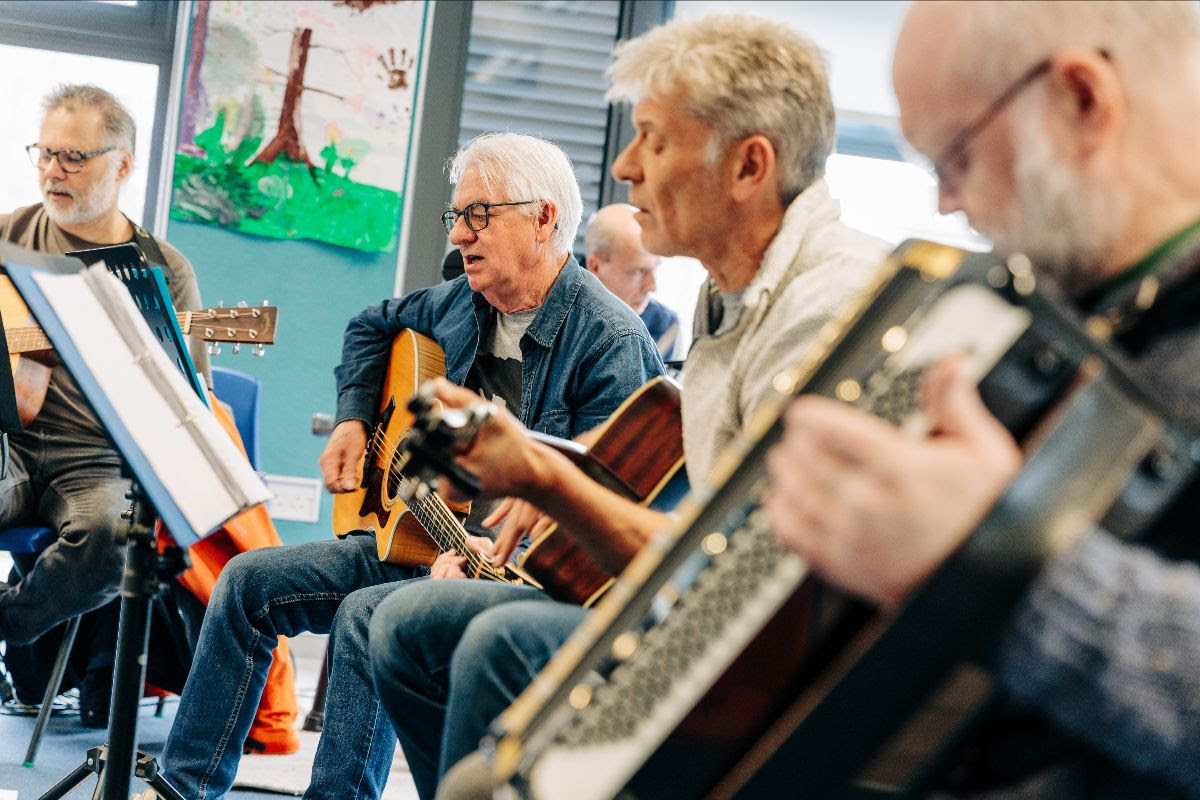
The Scran Van rolled up to provide free lunches and the food was accompanied by musical performances from the Men’s Shed.
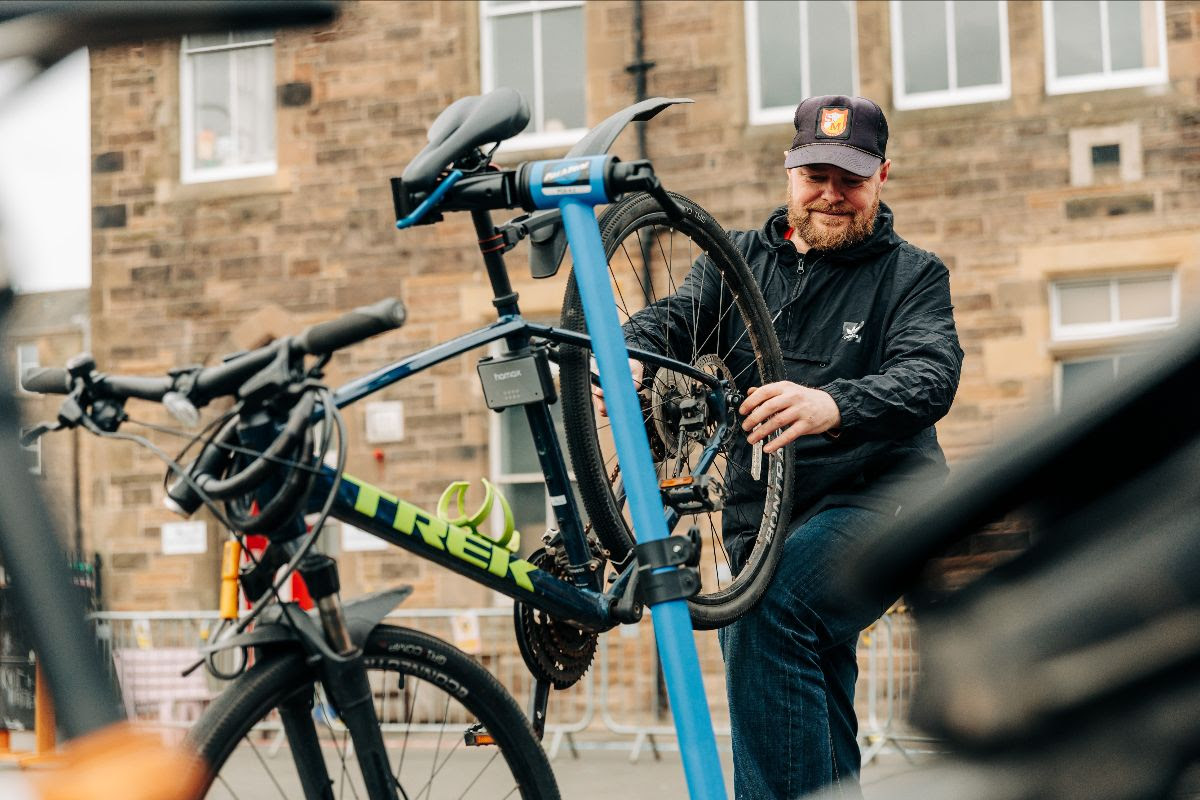
The free bicycle maintenance provided by EZ Bike Tours was also in great demand.
Role-Play teachers wanted
Our Partner, the History of Education Centre is keen to recruit some new role-play teacher volunteers for their Victorian Schoolroom.
The facility on the first floor of the Heart has been proving so popular for visits that new volunteers are needed to help cope.
Volunteers always work in pairs and the most common time to be needed is on weekday mornings.
Gala Day is fast approaching, when the Gala Queen and Fisher King arrive in the harbour and are met by a parade of fishwives and pirates to be escorted up to the grounds of the Heart for an afternoon of family fun.
This is the biggest local community event of the year, and we need your support to make it the success we all enjoy.
Can you help us serve refreshments on the day? Can you help steward and keep people safe? Can you help us to promote activities that go on at The Heart? i.e give out leaflets, talk to people and get sign-ups to our newsletter?
The Dreadnought Shanty Crew was originally started in January 2020 at The Dreadnought Pub and shortly after ran into heavy weather.
They navigated Covid by singing weekly online and then went into dry dock for repairs when their skipper absconded to The Northern Isles!
Now back by popular demand with the barnacles scrubbed off and seeking new recruits, The Dreadnought Shanty Crew can be found singing on Wednesday lunchtimes from 1-2pm in the Anchor Building.
There are no auditions; apparently all you need is a broad mind and a sense of humour!
The first session is free and then by donation to cover the cost of room hire.
Jan B Brown, leader of the Dementia Meeting Place and the Dreadnought Shanty Crew
Jan B Brown, leader of the Dementia Meeting Place and the Dreadnought Shanty Crew
Staff Update
You can now meet our caretakers – come and say hello when you come into the Heart .
Mike Gourlay – JohnRobert Townsley – Emmanuel Alor
Coming up soon
Saturday 18th May – Join us at the Heart for a day of free events being organised by the National Film and Television School – 10.30 till 4pm – a day of insight into some of the many creative careers available in film and television.
Three sessions will be delivered by film and TV professionals, including award-winning documentary filmmaker Miranda Stern, animator Ana Songel and sound designer Anya Przygoda.
LifeCare Edinburgh has been awarded a significant funding boost of over £75,000 from the ScottishPower Foundation. The funding will go towards its vital Help at Home and Meals on Wheels services, enabling the charity to reach over 200 local older people living on a low income with free support.
Twenty charities across England, Scotland and Wales have been awarded funding totalling almost £1.2 million for projects tackling a range of issues, from cost-of-living support, to promoting diversity and inclusion and raising awareness of the ongoing climate and biodiversity crises.
Sarah van Putten, Chief Executive of LifeCare said: “The funding from The ScottishPower Foundation will make a significant difference to the lives of hundreds of local older people.
“At LifeCare, we believe everyone should be enabled to thrive in their own home and be active within their community. Over 75% of the people we help live alone and without LifeCare, many older people would be left critically isolated.
“Our services help people to keep well in both body and mind; delivering fresh, hot and nutritious meals to doorsteps with a smile and a chat, providing help with practical tasks when things are getting more difficult to manage, and offering companionship activities to keep people connected.
“With a rapidly growing older population we are struggling to cope with demand for care coupled with the rising costs of service delivery. None of our services are fully funded and we rely on our fundraising to sustain our life-affirming services.
“Thanks to this support we will be enabled to offer our meals on wheels service for free to those that need it and open our Help at Home service for free for those on low incomes for the first time. We are all extremely grateful.”
Melanie Hill, Executive Officer and Trustee at the ScottishPower Foundation, said: “Projects like LifeCare’s free Help at Home and Meals on Wheels services are a prime example of how the ScottishPower Foundation’s support is helping to create a better future.
“With this year’s projects providing vital support set to aid vulnerable people, communities, and natural ecosystems across the nation, it’s important for us to recognise and boost the incredible work of these charities.”
For more information about LifeCare’s services and activities visit:
Carer Support Payment extended to 10 new council areas
Thousands more unpaid carers in Scotland will be eligible for a new benefit, if regulations laid this week in the Scottish Parliament are approved.
Carer Support Payment is the replacement for Carer’s Allowance in Scotland. It was first launched in November 2023 in three pilot areas, Perth & Kinross, Dundee City and Na h-Eileanan Siar (Western Isles).
It will be available in 10 new local authority areas this summer as part of the next phase of the roll-out, starting with North and South Lanarkshire and Angus on 24 June. From August it will extend to Fife, Aberdeen, Aberdeenshire, Moray, and North, East and South Ayrshire and be available in the rest of Scotland in November.
Eligible carers who live in areas where Carer Support Payment is not yet available are still being urged to still apply for Carer’s Allowance to make sure they don’t miss out on support.
Since it launched Carer Support Payment, unlike Carer’s Allowance, is also available to carers aged 16-19 in full-time “advanced” education and carers aged over 20 in full-time education at any level.
These regulations will see eligibility further extended to some 16-19-year-old carers in full-time “non-advanced” education, such as school, from 24 June.
Social Justice Secretary Shirley-Anne Somerville said: “Unpaid carers provide a huge amount of physical, mental and emotional support. The work they do is invaluable, both to the people they care for and to Scottish society as a whole.
“I am therefore delighted we are ready to roll-out the next phase of Carer Support Payment, allowing thousands more unpaid carers to get the benefit
“This is particularly important for those who aren’t eligible for Carer’s Allowance, but are eligible for Carer Support Payment, including many full-time students.
“Having spoken to carers in the pilot areas, I know Carer Support Payment is not only providing financial support to students who couldn’t get it before, but it’s allowing carers to study full-time who never thought this would be possible.
“I urge anyone who lives in an area where Carer Support Payment is available to apply for it as soon as possible.”
We want to continue to invest in services that matter most to our residents. But with reducing budgets, rising costs and increasing demand, we need to do things differently and more efficiently while saving £143 million by 2028/29.
We want to hear residents’ views on:
where we can save money
where we’re doing well
where we need to improve.
Your feedback and suggestions will help us to develop proposals to balance our budget. They’ll also help Councillors understand your needs and priorities when they make decisions about how to spend the city’s budget.
How to get involved
You can fill in our online budget survey or come along to any of our drop-in sessions around the city. You don’t need to book and can come any time between 10am and 1pm.
Tuesday 7 May 10am to 1pm – Morningside Library, 178-182 Morningside Road, Morningside, EH10 4PU
Tuesday 14 May 10am to 1pm – McDonald Road Library, 2-8 McDonald Road, EH7 4LU
Tuesday 21 May 10am to 1pm – South East Locality, 40 Captain’s Road, EH17 8QF
Tuesday 28 May 10am to 1pm – Fountainbridge Library, 137 Dundee Street, EH11 1BG
Tuesday 4 June 10am to 1pm – South Queensferry, 9 Shore Road, South Queensferry, EH30 9RD
Tuesday 11 June 10am to 1pm – North East Hub, 101 Niddrie Mains Road, EH16 4DS
Tuesday 18 June 10am to 1pm – North West Locality, 8 Pilton Gardens, EH4 4DP
Tuesday 25 June 10am to 1pm – South West Locality, Westside Plaza, EH14 2ST
A 29-year-old man has been sentenced to 4 years in prison for a serious sexual assault on a woman in Edinburgh on Sunday, 19 December, 2021.
Toby Gayfer was sentenced at Edinburgh Sheriff Court today (Friday, 3 May, 2024) following his conviction on 5 April, 2024.
Detective Inspector Keith Taylor said: “This was a hugely distressing experience for Gayfer’s victim and I hope that today’s sentencing will provide her with some closure.
“He now faces the consequences of his despicable actions.
“I hope this sentencing sends a clear message that this type of violence will not be tolerated. We are wholly committed to tackling sexual crimes and bringing those responsible to justice.
“I’d encourage anyone who has been a victim of such crimes to come forward and report it to us, regardless of when it happened.
“We’ll thoroughly investigate and have specially trained officers and partner agencies to support you throughout.”
The Coronation Roll is the official record of the Monarch’s accession and crowning
King Charles III’s Coronation Roll presented to Their Majesties The King and Queen on Wednesday by Deputy Prime Minister Oliver Dowden and Antonia Romeo.
The Public will be able to view the Roll online.
For the first time in history people will be able to explore a digitised version of the Coronation Roll through a new UK Government project.
The Coronation Roll is the official State record of a monarch’s accession and Coronation. The Roll contains details of The King’s accession, the planning of the Coronation, and a detailed description of the ceremony. Rolls include the monarch’s oath to govern according to the customs and laws of the realm, and detail the ceremonial of the coronation – the prayers, the service, the blessings, the order of service, and official guests. For centuries the roll has been authored by the Clerk of the Crown in Chancery.
The practice of creating rolls for monarchs’ coronations dates back to Edward II in 1308. Originally they were written in Latin and French. Rolls have been written in English from the seventeenth century and Charles III’s will be the first to be digitised to allow new generations of people to view it.
Visitors to the site will be able to view video and photographs from the Coronation and exclusive interviews with many of the key participants including Archbishop of Canterbury Justin Welby, Lord President of the Council Penny Mordaunt and Earl Marshal, the Duke of Norfolk.
Charles III’s Coronation Roll was authored by Antonia Romeo, the Clerk of the Crown in Chancery.
It was produced by skilled craftspeople: hand-written by calligrapher Stephanie Gill, and decorated by heraldic artist Timothy Noad with national symbols of the United Kingdom including the English rose, Scottish thistle, Welsh leek and Northern Irish Shamrock. Rather than traditional vellum, it was created on high-quality animal product-free paper.
Deputy Prime Minister Oliver Dowden and Antonia Romeo presented the new Coronation Roll and its digital version to Their Majesties The King and Queen at Buckingham Palace on Wednesday. Their Majesties also viewed several historic rolls: Elizabeth II’s, Victoria’s, William and Mary’s and Edward II’s.
Deputy Prime Minister, Oliver Dowden, said: “The Coronation Roll is a beautifully illustrated record and an important document of the accession and Coronation of Their Majesties The King and Queen.
“The Coronation marked a new chapter in our national story and it reflects the very best of our national traditions – which are admired the world over.
£For the first time, this Coronation Roll will be digitised – bringing the tradition into the twenty-first century and giving as many people as possible the opportunity to see it.”
Charles III’s Coronation Roll will be stored with other coronation rolls in the National Archives.
In the wake of a flood, the ESUB has made a significant location change, moving from our previous address at 1 Waterfront Avenue to a new home at 1 Lochside View, Edinburgh Park.
This move ensures the continuation of the vital service we provide to the community, offering school uniforms to families in need.
In our new location, we are set to carry on with our important work, undeterred by the huge challenges posed by the flood.