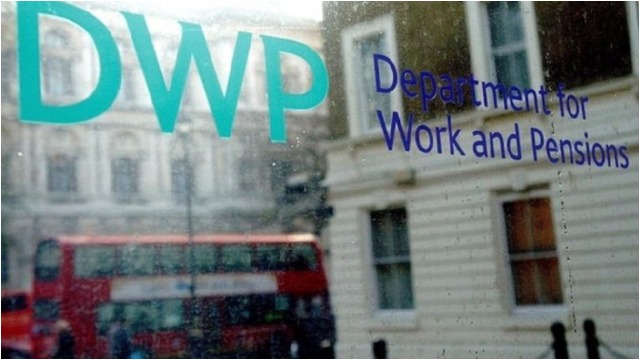
PIP claims plummet but help is at hand

New claims for PIP have plummeted by more than half since the beginning of the coronavirus crisis, the work and pensions committee was told last week.

At the committee session, Justin Tomlinson, minister for disabled people, stated: “We have seen a significant drop in the number of new claimants. We’re not totally sure why.

“But in January 51,000 new claimants in the month. At the beginning of March it was around about 12,000 a week, that’s now down to 5,000 a week as of last week.

Mr Tomlinson also stated that although there were fewer staff now available to deal with disability benefits, new claims for PIP were actually going through more quickly, partly as a result of a switch away from face-to-face assessments and partly due to a drop in the number of claims.

He said the average length of time from the beginning to end of the process has actually improved.

If you are experiencing problems with a PIP claim or need benefits advice Granton Information Centre can help. Due to the Coronavirus restrictions the office is currently closed to the public, but GIC is still operating!

Please call Monday – Friday, 9.30am – 4pm on 0131 551 2459 or 0131 552 0458 if:

•You would like to arrange a telephone appointment to discuss money, benefits, housing or debt
•You wish to discuss an existing case
•You require a foodbank referral

All messages will be returned as long as you clearly leave a telephone number for us to reach you on.

Emails will be monitored daily – our email address is info@gic.org.uk

Thousands come forward to help NHS Scotland in COVID-19 emergency

More than 22,000 students and returning health and social care workers have come forward to support the NHS in its response to the coronavirus (COVID-19) outbreak.

The figure includes nearly 7,000 students in nursing and midwifery, medicine and the allied health professions and scientific disciplines. In addition there are almost 3,000 former social care workers, professionals and experienced healthcare workers returning from career breaks and retirement and individuals joining the NHS from the independent sector.

Applicants are being held on a list, with Protecting Vulnerable Groups (PVG) and Disclosure checks being fast-tracked to allow new recruits to take up posts as soon as possible.

Offers of employment are being made across NHS Scotland with more than 160 applicants ready to be deployed and more than 3,600 returners in the process of completing their pre-employment checks.

The Scottish Social Services Council is taking forward applications and pre-employment checks for the social care workforce, with 140 individuals now matched into roles and a further 225 ready and available for deployment.

Health Secretary Jeane Freeman said: “I thank the thousands of students and retired health and social care workers who have answered our calls for support, and put themselves forward to help the NHS response to COVID-19. 

“This has been an outstanding response and we are working with NHS Education for Scotland and our boards to ensure returners and students are deployed as quickly and effectively as possible.

“While increasing capacity in our NHS is essential we must also do it safely which is why the processes, induction and training must be carefully followed and I thank those who have registered for their patience as we urgently work through these details.

“The steps we are taking now are about targeting and prioritising our workforce where it is most needed which means adapting our staffing plans as we move through the different stages of this pandemic.

“While not all of those who have applied to help will be needed immediately, the offers are very much appreciated, and this is giving us the scope to be as flexible as we can, so we can make the best use of the different talents which our students and returning NHS and social care staff are offering.”

The NHS recruitment drive is part of the Scotland Cares campaign which is also looking at formal volunteering to support public services and other charities and groups in the local community.

Of the 22,611 who have so far come forward (as at 26 April 2020), 3028 have registered with NHS Greater Glasgow and Clyde, 1700 with NHS Lothian and 17,883 through the dedicated NHS Education for Scotland (NES) Accelerated Recruitment Portal.

Data from the 17,883* applicants processed through the NES Accelerated Recruitment Portal is broken down as follows:    

  • 3053 Nurses (17%)
  • 1512 Doctors (9%)
  • 307 Physiotherapists (2%)
  • 366 Biomedical Scientists (2%)
  • 190 Occupational Therapists (1%)
  • 221 Midwives (1%)
  • 82 Paramedics (<1%)
  • 2547 Care professionals (15%)

6904 NHSS Students (39%)

  • 5440 Nursing Students (31%)
  • 662 Medical Students (4%)**
  • 405 Midwifery Students (2%)
  • 106 AHP Student Final Year (1%)
  • 291 Other Student  (2%)

*The breakdown above does not add up to the total as while it includes a selection of identified roles, it does not include other roles such as drivers, speech and language therapists and podiatrists among others.

**Final year medical students who have graduated and received provisional registration are able to express interest in a FiY1 (foundation interim year 1) post or Healthcare Support Worker role. Medical students who are not in their final year can express interest in a Healthcare Support Worker role only.

All applications are now received via the NES Recruitment portal. People can register here.  

Boris Johnson’s back

PM Boris Johnson made a statement in Downing Street this morning:

I am sorry I have been away from my desk for much longer than I would have liked 

and I want to thank everybody who has stepped up

in particular the First Secretary of State Dominic Raab

who has done a terrific job

but once again I want to thank you

the people of this country

for the sheer grit and guts

you have shown and are continuing to show

every day I know that this virus brings new sadness and mourning to households across the land

and it is still true that this is the biggest single challenge this country has faced since the war

and I in no way minimise the continuing problems we face

and yet it is also true that we are making progress

with fewer hospital admissions

fewer covid patients in ICU

and real signs now that we are passing through the peak

and thanks to your forbearance, your good sense, your altruism, your spirit of community

thanks to our collective national resolve

we are on the brink of achieving that first clear mission

to prevent our national health service from being overwhelmed

in a way that tragically we have seen elsewhere

and that is how and why we are now beginning to turn the tide

If this virus were a physical assailant

an unexpected and invisible mugger

which I can tell you from personal experience it is

then this is the moment when we have begun together to wrestle it to the floor

and so it follows that this is the moment of opportunity

this is the moment when we can press home our advantage

it is also the moment of maximum risk

because I know that there will be many people looking now at our apparent success

and beginning to wonder whether now is the time to go easy on those social distancing measures

and I know how hard and how stressful it has been to give up

even temporarily

those ancient and basic freedoms

not seeing friends, not seeing loved ones

working from home, managing the kids

worrying about your job and your firm

so let me say directly also to British business

to the shopkeepers, to the entrepreneurs, to the hospitality sector

to everyone on whom our economy depends

I understand your impatience

I share your anxiety

And I know that without our private sector

without the drive and commitment of the wealth creators of this country

there will be no economy to speak of

there will be no cash to pay for our public services

no way of funding our NHS

and yes I can see the long term consequences of lock down as clearly as anyone

and so yes I entirely share your urgency

it’s the government’s urgency

and yet we must also recognise the risk of a second spike

the risk of losing control of that virus

and letting the reproduction rate go back over one

because that would mean not only a new wave of death and disease but also an economic disaster

and we would be forced once again to slam on the brakes across the whole country

and the whole economy

and reimpose restrictions in such a way as to do more and lasting damage

and so I know it is tough

and I want to get this economy moving as fast as I can

but I refuse to throw away all the effort and the sacrifice of the British people

and to risk a second major outbreak and huge loss of life and the overwhelming of the NHS

and I ask you to contain your impatience because I believe we are coming now to the end of the first phase of this conflict

and in spite of all the suffering we have so nearly succeeded

we defied so many predictions

we did not run out of ventilators or ICU beds

we did not allow our NHS to collapse

and on the contrary we have so far collectively shielded our NHS so that our incredible doctors and nurses and healthcare staff have been able to shield all of us

from an outbreak that would have been far worse

and we collectively flattened the peak

and so when we are sure that this first phase is over

and that we are meeting our five tests

deaths falling

NHS protected

rate of infection down

really sorting out the challenges of testing and PPE

avoiding a second peak

then that will be the time to move on to the second phase

in which we continue to suppress the disease

and keep the reproduction rate, the r rate, down,

but begin gradually to refine the economic and social restrictions

and one by one to fire up the engines of this vast UK economy

and in that process difficult judgments will be made

and we simply cannot spell out now how fast or slow or even when those changes will be made

though clearly the government will be saying much more about this in the coming days

and I want to serve notice now that these decisions will be taken with the maximum possible transparency

and I want to share all our working and our thinking, my thinking, with you the British people

and of course, we will be relying as ever on the science to inform us

as we have from the beginning

but we will also be reaching out to build the biggest possible consensus

across business, across industry, across all parts of our United Kingdom

across party lines

bringing in opposition parties as far as we possibly can

because I think that is no less than what the British people would expect

and I can tell you now that preparations are under way

and have been for weeks

to allow us to win phase two of this fight as I believe we are now on track to prevail in phase one

and so I say to you finally if you can keep going in the way that you have kept going so far

if you can help protect our NHS

to save lives

and if we as a country can show the same spirit of optimism and energy shown by Captain Tom Moore

who turns 100 this week

if we can show the same spirit of unity and determination as we have all shown in the past six weeks

then I have absolutely no doubt that

we will beat it together

we will come through this all the faster

and the United Kingdom

will emerge stronger than ever before.

Heart Research UK: Healthy Heart Tips

Heart Research UK Healthy Heart Tip, by Dr Helen Flaherty, Head of Health Promotion at Heart Research UK

Physical activity for adults while staying at home

At a time when gyms are closed and the population is being asked to stay at home, finding ways to keep active can be challenging. Regular physical activity is strongly associated with a reduced risk of chronic conditions, such as cardiovascular disease, obesity and type 2 diabetes as well as improving mental health.

Even small increases in physical activity can positively impact on health. Heart Research UK have some tips to help you meet the recommended amount of physical activity while staying at home.

How much physical activity is recommended?

The Government recommends at least 150 minutes of moderate intensity or 75 minutes of vigorous intensity activity each week.

It is also recommended that adults engage in strengthening activities on two days each week, such as lifting weights or press ups. If you are not yet in the habit of doing this amount of physical activity, you can start small and build up to the recommended amount over time.

Moderate Intensity Activities

(150 minutes weekly)

Your heart will beat faster, you will breathe harder, you will get warmer and you can probably maintain a conversation

E.g. Brisk Walking or cycling

Vigorous Intensity Activities

(75 minutes weekly)

Your heart will beat rapidly, you will breathe much harder, you will get warmer and it will be difficult to have a conversation

E.g. Running or football

Replace your daily commute with physical activity

If you are working at home, you may be saving time that would normally be spent on commuting to and from work. Why not put this time to good use by scheduling in some physical activity. For example, you could go for a brisk walk, jog or cycle outdoors or walk briskly around the house, including going up and down flights of stairs.

Find a range of exercises you can do inside your home

Find exercises that you can do in short bursts of ten minutes or more, at regular intervals throughout the day. For example, you could try some gentle weight-lifting, using cans of baked beans. The NHS provide tips for exercising without gym equipment on their Website

Don’t be a couch potato

Rather than spending your evenings sitting on the sofa without moving much, why not try a few gentle exercises, such as leg raises, while watching your favourite TV show.

Examples of some exercises you can do from your sofa can be found on the NHS website, and you can find lots more healthy tips, advice and recipes at heartresearch.org.uk.

If it was urgent before COVID-19, it is urgent now

A message from Dr Scott Davidson, Deputy Medical Director for Acute and Dr Kerri Neylon, Deputy Medical Director for Primary Care at NHS Greater Glasgow and Clyde:

We understand the COVID-19 pandemic may have made people anxious about accessing healthcare services in the same manner they would previously have done. 

However, we would like to reassure everybody that we have both the capacity, and the patient pathways in place to ensure anyone requiring urgent hospital care, COVID-19 or non-COVID-19, is appropriately and safely assessed.

If you have symptoms of COVID-19 that are deteriorating including persistent fever, worsening cough or breathlessness then please call NHS24 on 111.  This may involve being assessed at one of our established COVID-19 Community Assessment Centres.

For all other health issues please do not delay in contacting your GP as you normally would. It is incredibly important that if you do have symptoms that are of significant concern and may reflect an underlying serious illness such as cancer, that you are assessed as quickly as is possible.

Our GPs are all open and you will initially be assessed over the phone by a clinician who you can talk to about your symptoms. If required, a follow up video consultation or face-to-face appointment will take place at your practice.

For patients suspected of having cancer, please rest assured if you are referred on to the hospital that our hospital based specialty teams will arrange assessment for you as quickly as is possible.

We have all had to make changes to the way we work due to COVID-19 and it may be that you are offered a telephone or video (attend anywhere) appointment with your consultant, rather than visiting the outpatient clinic. You may be offered a test such as a specialized scan as a first assessment, with appropriate advice, reassurance, or, a follow up appointment and plan for further investigations, if required.

Please be reassured that every precaution has been taken to shield you from COVID-19. If you do require to visit a hospital site, our staff will work with you to provide specific times to attend via safe pathways separate from other patients. If transport is required, we can provide that as well.

All our staff are trained in the correct procedures and will be wearing appropriate PPE to ensure that neither you, nor anyone else is put at risk.

Your safety and wellbeing are our utmost priorities, and the sooner you are able to be assessed, the sooner we can put you on the appropriate care pathway.

Remember, if it was urgent before COVID-19, it is urgent now

Environment Secretary’s statement on coronavirus: Sunday 26 April

UK Environment Secretary George Eustace spoke at the daily government press conference on 26 April 2020 to give the latest update on the response to the COVID-19 pandemic:

Good afternoon, and welcome to today’s Downing Street Press Conference. I’m pleased to be joined today by Stephen Powis, the National Medical Director of NHS England.

Before I update you on the latest developments in the food supply chain, let me first give you an update on the latest data from the COBR coronavirus data file. Through the government’s ongoing monitoring and testing programme, as of today:

  • 669,850 tests for coronavirus have now been carried out in the UK, including 29,058 tests carried out yesterday;
  • 152,840 people have tested positive, that’s an increase of 4,463 cases since yesterday;
  • 15,953 people are currently in hospital with the coronavirus in the UK, down from 16,411 on 25 April.

And sadly, of those hospitalised with the virus, 20,732 have now died. That is an increase of 413 fatalities since yesterday.

We express our deepest condolences to the families and friends of these victims.

At the beginning of the outbreak of this virus we saw significant problems in panic buying. That episode quickly subsided and food availability now is back to normal levels and has been for several weeks. All supermarkets have introduced social distancing measures to protect both their staff and their customers and it is essential that shoppers respect these measures.

The food supply chain has also seen a significant reduction in staff absence over recent weeks. As staff who had been self-isolating through suspected coronavirus symptoms have returned to work.

So absence levels are down from a peak of typically 20% in food businesses three weeks ago to less than 10% at the end of last week and in some cases individual companies reporting absences as low as 6%.

We have put in place measures to support the clinically vulnerable. So far 500,000 food parcels have been delivered to the shielded group, that is those who cannot leave home at all due to a clinical condition that they have.

In addition, the major supermarkets have agreed to prioritise delivery slots for those in this shielded group. So far over 300,000 such deliveries have been made, enabling people to shop normally and choose the goods that they want to buy.

We recognise that there are others who are not clinically vulnerable and therefore are not in that shielded group but who may also be in need of help.

Perhaps through having a disability or another type of medical condition, or indeed, being unable to draw on family and neighbours to help them. We have been working with local authorities to ensure that those people can be allocated a volunteer shopper to help them get their food needs. Charities such as Age UK and others can now also make also direct referrals on the Good Samaritan App to locate volunteers for those in need.

Many supermarkets have taken steps to increase the number of delivery slots that they have. At the beginning of this virus outbreak there were typically 2.1 million delivery slots in the entire supermarket chain.

That has now increased to 2.6 million, and over the next couple of weeks we anticipate that that will grow further to 2.9 million. So supermarkets have taken steps to increase their capacity but while this capacity has expanded, it will still not be enough to meet all of the demand that is out there.

Some supermarkets have already chosen to prioritise some vulnerable customers with a proportion of the delivers slots that they have and others have offered to work with us and also local authorities to help establish a referral system so that when somebody is in desperate need, a local authority is able to make a referral to make sure that they can get a priority slot.

As we look forward more generally towards the next stage in our battle against this virus, there are encouraging signs of progress, but before we consider it safe to adjust any of the current social distancing measures, we must be satisfied that we have met the five tests set out last week by the First Secretary.

Those tests mean that the NHS can continue to cope;

  • that the daily death rate falls sustainably and consistently;
  • that the rate of infection is decreasing; and operational challenges have been met;
  • and, most important of all, that there is no risk of a second peak.

For now, the most important thing we can all do to stop the spread of the coronavirus is to stay at home, to protect the NHS and save lives.

I want to pay tribute to all those who are working throughout the food supply chain from farmers, manufacturers and retailers. The response of this industry to ensure that we have the food that we need has been truly phenomenal.

Thank you.

Coronavirus (COVID-19) update Scotland: Sunday 26th April

Statement given by the Health Secretary Jeane Freeman at a media briefing in St Andrew’s House, Edinburgh, on Sunday 26 April:

Good afternoon. Thanks once again to all of you for taking part in this media conference.

I want to start with an update on some of the key statistics in relation to COVID-19 in Scotland.

As at 9 o’clock this morning, there have been 10,324 positive cases confirmed – an increase of 273 from yesterday’s figures.

As always, let me be clear that these numbers will be an underestimate.

A total of 1,735 patients are in hospital with COVID-19 – this is a decrease of 13 from yesterday.

And a total of 133 people were last night in intensive care with confirmed or suspected cases of COVID-19. This is a decrease of seven since yesterday.

It is with sadness that I report that 18 further deaths have been registered, of people who had tested positive for COVID-19. That takes the total number of deaths in Scotland, under that measure, to 1,249.

As I have said previously at these Sunday briefings, these figures should be treated with some caution. Although deaths can be registered at weekends, registration numbers are usually relatively low. This should be taken into account when looking at today’s figures.

And of course, the number of deaths that is reported every day is so much more than a statistic. Each death represents an individual whose loss will be a source of grief and sorrow to many, and I want to extend my deepest condolences to all of those who have lost loved ones.

As Health Secretary, I also want to thank once again those who are working in our health and care sector, for the incredible work that you are doing.

Those thanks are due to everyone – the doctors and the nurses, the paramedics, the care home staff, the porters, the cooks, the healthcare assistants, the cleaners and many, many more.

Your work is crucial to the health and wellbeing of our country. You will have the same worries and anxieties as the rest of us but you go to work each day, putting that aside to care for others. All of us are truly grateful to you for everything that you are doing

I have two issues I want to update you on today. The first is about people volunteering to join or re-join the NHS and care workforce.

It is now almost four weeks since – as part of our ‘Scotland Cares’ campaign – we established a web portal for students, and former NHS and care workers, to apply to work in the NHS or the care sector, as they respond to the COVID-19 outbreak.

In total, more than 22,000 people have now volunteered.

The volunteers include experienced former staff, doctors, nurses, social care professionals and nursing, medicine, midwifery, and Allied Health professional students who are either now graduated or coming towards the completion of their training.

We are working with NHS Education for Scotland, our health boards and the Scottish Social Services Council to ensure that volunteers can start work as quickly as possible – while still following the correct induction and training processes.

A number of volunteers have been placed with NHS boards, and more than 3,000 are completing their pre-employment checks – which are being fast-tracked – just prior to being deployed.

The Scottish Social Services Council has placed almost 150 people into work in the care sector, and a further 200 are ready and available for deployment.

Not everyone who has applied to help us will be needed immediately.

But please bear with us – your volunteering and your offer to bring your skills and your talents really does matter, and we will need you, as we go through this pandemic.

Having such a large number of volunteers really matters – it provides us with important flexibility, as we look at staffing needs through the different stages of this pandemic.

I am immensely grateful to everyone who has offered to support our NHS and care services in this way.

The second point I want to update you on is support for those who are shielding. That term, as you know, refers to approximately 160,000 people in Scotland, who are at the highest clinical risk from COVID-19, and who are therefore being asked to isolate themselves completely.

A text message service has been in place for almost a month now, so that people who are shielding can ask for support and receive information.

So far, more than 78,000 people have registered for the text service. I would encourage everyone who is shielding to register.

Even if you don’t need additional help at the moment, as many people don’t, registering will be useful if you ever do need that further help.

You should have received information on how to do that – letters to people who are shielding started to go out on 26th March. But I will also read out the number of our national helpline in a minute or so.

One of the services which you can request by text is free delivery of food packages. More than 80,000 food packages have been delivered so far.

In addition, six supermarkets are offering priority deliveries for people who are shielding.

Over 33,000 people have expressed an interest in these priority slots, and we have passed their information on to the participating supermarkets.

Supermarkets have also identified and contacted existing customers who are eligible for priority slots and many have already received deliveries.

And people who were not existing customers of any of the participating supermarkets, received texts last week with details of how to register.

If you don’t have a mobile phone, you can get access to these services through your local authority. Our national helpline will direct you to the local authority that applies to you.

It is a good way of finding information more generally about the support, which is available. The national helpline number is 0800 111 4000, and the line is open between 9am and 5pm every weekday.

I know for many of the people who are shielding, this is a worrying time, and also a very difficult time. Staying at home all the time is necessary for your own protection – but I know that it is even harder than the restrictions which are in place for everyone else.

We are determined to ensure that support is available for you throughout this time – so please, make use of that support if you need to.

Before I hand over to Fiona McQueen, our Chief Nursing Officer, and to Jason Leitch, the National Clinical Director, I want to emphasise once again the importance of sticking to our public health guidance.

Stay at home – unless it is for essential purposes such as exercising once a day, or buying food or medicine.

When you do go out, stay two metres away from other people, and don’t meet up with people in other households.

And wash your hands thoroughly and regularly.

These restrictions are tough – and I know they get tougher as the weeks go by, and especially when the weather stays warm. But they continue to be essential. They are the way in which all of us can slow the spread of the virus, protect our NHS, and save lives.

So thank you once again to everyone who is doing the right thing and staying at home. You are making a difference, and you are saving lives, and I thank you very much indeed.

Witness appeal after assault in King George V Park

Detectives are investigating after a man was assaulted in Edinburgh on Saturday (25 April 2020).

At around 2pm on Saturday afternoon, a 21-year-old man was in King George V Park when he was verbally abused by a group of four men. The man continued on his journey, walking towards a tunnel which leads to Broughton Road.

As the man got towards the end of the tunnel, the four suspects followed him, continuing to shout at him. They then demanded money from him before racially abusing him and assaulting him.

Suspect one is white, in his early 20s, around 6 ft. tall with a slim build. He was wearing a block hooded jacket with white lining and black jeans.

Suspect two is black, in his early 20s around 5 ft. 4 inches in height with a muscular build. He was wearing a black hooded top, blue jeans and dark coloured gloves.

Suspect three is white, in his early 20s, around 5 ft. 10 inches in height with a medium build. He was wearing a black hooded top and blue jeans.

Suspect four is black, in his early 20s, around 5 ft. 6 inches in height and wearing a dark coloured puffer jacket.

Officers continue to gather and review CCTV footage for any additional information on the suspects.

Detective Inspector Kevin Tait said: “I am appealing to anyone who was in the area around the time of the incident.

“I appreciate the number of people out and about is limited during these times but for those who were out, I would ask them to consider if they saw these men or witnessed the incident to contact us. It is unacceptable for people to be targeted in this way and we will do everything we can to trace the men responsible.”

Anyone with information is asked to call Police Scotland via 101, quoting incident number 2925 of 25 April 2020. Alternatively, Crimestoppers can be contacted on 0800 555 111 where information can be given anonymously.

Jobs secured as Pure Electric takes over 11 Halfords Cycle Republic stores

  • Specialist electric mobility retailer, Pure Electric, announces the opening of eleven UK wide former Halfords plc ‘Cycle Republic’ stores earmarked for closure, securing 85 jobs
  • Founded by entrepreneur and investor Adam Norris, Pure Electric made its name in electric scooters and is now moving to e-bikes and wider e-mobility
  • Norris calls on the government to ‘get a move on’ with proposed legislation for E-Scooters, which are currently banned in the UK but legal in most other countries such as Germany and France

Pure Electric, the specialist electric mobility retailer formerly known as Pure Scooters, has announced its rapid retail expansion plans for 2020.

The company was looking at four key locations across the UK, but now has a fantastic opportunity to accelerate its growth by taking over eleven of Halfords plc’s Cycle Republic stores earmarked for closure, securing a total of 85 jobs.

Halfords plc made the announcement to colleagues at the eleven Cycle Republic stores on Monday, including the store on Lothian Road, informing them that their jobs would be safe and employment transferred to Pure Electric; all jobs at those stores will be retained.

The announcement bucks a high street trend of closures and marks the beginning of a transport revolution, says the company.

Last month, the Department for Transport (DfT) launched an open consultation in March 2020 entitled “Future of transport regulatory review” which calls for evidence on whether e-scooters and other micromobility vehicles should be permitted. The DfT stated that micromobility could “help us decarbonise transport and tackle congestion and air pollution, make travel more affordable and convenient.”

Launched fourteen months ago by entrepreneur and former Hargreaves Lansdown director, Adam Norris, Pure Electric has ‘a passion to make a real, meaningful positive impact on the way we all travel every day’.

Norris’ passion for game-changing technology is aiming to help tackle urban transport and climate problems by delivering fun, affordable and practical mobility solutions.

The company has recently diversified into e-bikes, stocking the iconic Brompton Electric with a broader e-bike range planned when stores open. In 2018 in the Netherlands, e-bikes outsold regular bicycles equating to €823m of €1.2bn in bicycle sales in 2018. In a similar trend in Germany in 2018, e-bikes outsold electric cars.

Last year, Deloitte predicted that 130 million e-bikes are to be sold globally between 2020 and 2023. It also noted that “the number of e-bikes on the roads will easily outpace other e-vehicles by the end of next year.”

The 11 Pure Electric branded stores are due to open by early summer 2020, subject to government lockdown restrictions.

Pure Electric stocks market-leading ranges of electric scooters, electric bikes and accessories and is calling on Secretary of State for Transport, Grant Shapps, to accelerate legalisation on electric scooters.

Electric scooters are becoming hugely popular in the UK but are only allowed to be ridden on private roads with the landowner’s permission, because of the archaic 1835 Highway Act, despite being legal in most other countries.

The company recently launched a petition, already gathering 3,000 signatures, calling on the Government to get a move on with proposed legislation to bring the UK up to speed on electric scooters.

Adam Norris, Founder of Pure Electric, said: “The world of mobility is moving incredibly fast and we’re absolutely committed to being at the forefront of this exciting sector by opening prime city-centre locations.

“Our products have the potential to have a huge positive impact on our transport system. Recently, we’ve seen the role that e-scooters and bicycles have had in providing transport to key workers across the UK, helping them avoid public transport where risk of transmission is much higher.

“We need to look hard at the future of our transport system and COVID-19 has accelerated the scrutiny of the status quo. Last week, in a YouGov study, just 9% want a complete to return to normal and 51% have noticed cleaner air. The time for change is now.”

He added: “A staggering 24% of all trips by car in the UK are under one mile and it’s these short journeys which can be swapped out by e-scooter or e-bike, with monumental impacts to congestion and air quality; travelling by these methods is fun too.

“The government needs to work fast to provide these future options, especially as we come out of the current lockdown restrictions. Public transport isn’t the safest option in terms of transmission, so we should be urgently looking at other options, without adding to air pollution.”

Norris concluded: “Our new stores show our vision and the market potential to not only transform the way people move, but the way people try and buy e-scooters and e-bikes. We can’t wait to serve customers a bigger range and offer free e-bike test rides.

“Every store will have a fully equipped workshop for servicing and repairs providing a first class service for commuters. We’re delighted that in the process of our expansion, we’ve been able to secure 85 colleague jobs from Halfords plc, and look forward to welcoming our new colleagues to the Pure Electric team. We thank Graham Stapleton (CEO Halfords plc,) and the team at Halfords plc for their collaborative approach.”

Peter Kimberley, (previously MD of Cycle Republic and Tredz Bikes), now Pure Electric International Managing Director, said: “I know these fantastic high street sites well and I’m looking forward to bringing the Pure Electric brand from online to major cities across the UK, opening up  new personal services including test rides to commuters and everybody who is interested in changing the way they move.

“It’s an incredibly exciting time for the world of e-bikes, e-scooters and mobility solutions. Personally, I’m really delighted to be able to bring along some great colleagues from Cycle Republic into the Pure Electric family. We can’t wait to open our doors and start serving the needs of customers across the UK.”

For more information, please visit www.pureelectric.com 


BBC’s Big Night In raises over £67 million

BBC’s The Big Night In has raised £67,110.010.

£47m of this figure will be split between Children in Need and Comic Relief, who will use these funds to support many charities and projects helping vulnerable people of all ages across the UK.

The UK Government pledged to match everything raised on the night, with the first £20m going to National Emergencies Trust and the rest split between BBC Children in Need and Comic Relief. So far the Government has given £13,555,005 to BBC Children in Need and Comic Relief. This takes the total raised, with all government match funding, to an incredible £67m.

All the money raised will now be available to go to good causes, through BBC Children in Need, Comic Relief and The National Emergencies Trust.