

Learn how to avoid online scams – you’ll feel safer when you:
- download heating and electricity bills
- submit meter readings online
- manage your heating and electricity accounts online
- look for cheaper deals online
Sign up now to this free event!
Learn how to avoid online scams – you’ll feel safer when you:
Sign up now to this free event!

EU citizens in Edinburgh, we’re back in our offices and ready to support you with your settled and pre-settled status applications !
!
You now have a second chance to find FREE and multilingual support
 14-27th June 2021
 St Margaret’s House, 151 London Road, Edinburgh, EH7 6AE

Citizens Rights Project in Scotland provide support to EU citizens to apply for settled and pre-settled status.
We’re based in Edinburgh and we are holding Open Days until 27 June
Our support is FREE and multilingual
LIMITED appointments offered due to social distancing measures in place.
Book yours now: https://bit.ly/3fAViqm
Our website: https://citizensrightsproject.org/

Feniks is located in the St Margaret House on 151 London Road EH7 6AE Edinburgh.
Use the London Road entrance if you can use the stairs. For wheelchair users there are free parking spaces behind the building and access via lifts from the basement:
https://www.edinburghpalette.co.uk/contact/find-us/

Come to our events in the Lothians and the Borders to receive free help in applying for ‘pre/settled status’.
To apply, bring your passport or other ID, National Insurance Number, proof of address and telephone. The information you share with us is confidential. Social distancing measures apply. Book your tickets now to secure your place.

Changes to the questions people are asked before they are accepted as blood donors come into effect today – meaning all potential donors are treated the same.
The changes, implemented on World Blood Donor Day, will allow more men who have sex with men, and people whose partners have previously lived in areas such as sub-Saharan Africa, to give blood if they meet the other blood donation criteria.
Questions about recent sexual activity will be the same for all donors, regardless of their sexuality.
The changes follow recommendations by the specialist research group For Assessment of Individualised Risk (FAIR), made up of leading medical and academic experts and LGBTI+ groups. The new questions will mean that people will still be unable to donate where there is evidence of recent sexual activity that could lead to a higher risk of a donor having blood-borne virus infection.

Public Health Minister Maree Todd said: “I welcome the changes being made today and am grateful to everyone who currently gives blood and everyone who wants to give blood in future. Your support is vital to save lives and ensure our NHS has enough blood components to meet the needs of all those who will need a blood transfusion.
“Previous rules meant that automatic time bars were in place for a number of people, including men who have sex with men. It’s clear that such a blanket approach was simply not fair – not least to gay and bisexual men in committed relationships.
“There are also some people who have partners who previously lived in sub-Saharan Africa, but have been in the UK for a long time. These changes to the questions will allow more people in these groups to donate, and continue to ensure the blood supplied to our hospitals is safe.”

Development Manager for the Equality Network Scott Cuthbertson said: “I’ve been campaigning on the issue of blood donation for gay and bisexual men for over 15 years, and I welcome the support of Scottish Ministers in approving this change.
“For me this was never about a right to give, but the fact that there were many gay and bisexual men that could do so safely.
“I’m pleased the evidence, assessed by experts, has concluded that to be true, and that many thousands of gay and bisexual men will be able to donate their blood and help save lives.
“Today, during Pride Month, I’m proud to donate my blood for the first time alongside many other gay and bisexual men across the UK as the rules are changed to be fairer for all.”

Teen Boutique is back! 


For us it’s very important to offer young people and their families the possibility to buy nice/good quality clothing at an affordable price.
Also, the concept of upcycling and giving clothes a second life is another topic we care about.
This is why we love our project TeeBo so much! 
You can come visit our shop to find out more on the following dates:
Saturday 26th June 11am-2pm
Saturday 31st July 11am-2pm
Saturday 21st August 11am-2pm
We look forward to seeing you and in the meantime, spread the word!

To celebrate World Blood Donor Day today (14 June), the charity Global Blood Fund (GBF) has released multiple interpretations of Pete Townshend’s song ‘Give Blood’, performed by leading musicians from around the world.
Set to video to encourage sharing on social media and through other channels, these are being donated by the charity free-of-charge to blood services in low and middle-income countries throughout Africa, Latin America and the Middle-East for use on and around World Blood Donor Day.
Pete Townshend, guitarist and principal songwriter for the legendary rock band The Who comments; “Although it is now more than 35 years since I wrote the song ‘Give Blood’, this is the first time it has actually been used to encourage donation.
“Shortage of blood around the world is a huge issue, particularly in poorer countries, and so I was delighted to give permission for Global Blood Fund to use my work to help communicate the need for more donors to come forward.”
The World Health Organisation (WHO) states that the minimum number of units of blood needed to sustain an adequate level of health equals 1% of a nation’s population – 10 units per 1000 people.
Yet many poorer countries fall well short of this goal. The lack of infrastructure and equipment for collection and processing of blood components is a key impediment to providing a sustainable blood supply, as is a severe shortage of volunteer donors.
Though blood and safe transfusion services are essential parts of any strong health system, the safety, sustainability and adequacy of blood remains a major health challenge for numerous countries.

GBF’s Executive Director, Gavin Evans, explains the thinking behind the approach. “Each year it becomes harder for messages about the importance of blood donation to cut through to the public, even though tens of thousands tragically die because of blood shortages.
“But with music such an influential part of people’s lives – especially in many of those countries that struggle most to collect enough blood – for 2021 we are using lyrics and melody to highlight the extraordinary impact of donor generosity.
“Not only do these individuals help save the lives of those in need of a blood transfusion, but the benefit to family, friends and the wider community of helping that patient recover is also profound. Using music as the medium, we think we have some really powerful messaging – and a great set of songs that people will enjoy in their own right.”
Working closely with national and regional blood services around the world, the music tracks will be released through multiple channels in the run up to 14 June, with national blood services encouraged to ‘get creative’ in how they use materials; as young donors in Bungoma County in Kenya did here and in Cameroon here.
Evans adds; “Our hope is that thousands of new life-saving blood donors will come forward in all the countries using these materials.”
The following versions of the song, which are featured in a purpose-made video, are being released:
As well as YouTube links above, all materials can also be accessed via:
https://globalbloodfund.org/wbdd-resources/

G7 leaders have agreed commitments to halt and reverse biodiversity loss by 2030, and tackle deforestation, marine litter and illegal wildlife trade.
At the G7 Leaders’ Summit in Cornwall yesterday, countries came together and agreed a shared G7 Nature Compact.
This is a key agreement which brings G7 countries together to address the most pressing international and interlinked challenges of biodiversity loss and climate change. Leaders have also agreed to review progress against the Nature Compact to ensure delivery of its 2030 vision.
This next milestone marks a crucial commitment to supporting global consensus and taking bold action for the delivery of ambitious outcomes for nature in 2021. Climate change is one key driver of biodiversity loss, and protecting, conserving and restoring biodiversity is crucial to addressing climate change.

The G7 Nature Compact commits world leaders to:
Through this Compact, the UK Government is committing to supporting the global consensus and to taking bold action for delivery of ambitious outcomes for nature in 2021 at the Convention on Biological Diversity (CBD) COP15 in Kunming and United Nations Framework Convention on Climate Change (UNFCCC) COP26 in Glasgow.
The Prime Minister has also launched the UK’s Blue Planet Fund. The £500 million fund will support countries to tackle unsustainable fishing, protect and restore coastal ecosystems like mangroves and coral reefs, and reduce marine pollution.

Environment Secretary George Eustice said: “For the first time, the G7 has committed to halting and reversing the loss of biodiversity in the next decade.
“This is a major step forward on the path to CBD COP15 and COP26 and is a sign of the dedication to accelerate action within the G7 – and beyond – to tackle the interdependent crises of climate change and biodiversity loss.
“We have seen major progress this weekend and we welcome the collaboration between global leaders to raise our ambition and remain accountable in this critical decade.”
The Compact’s commitments will be embedded in national plans as appropriate, raising ambition wherever possible, and the G7 will hold themselves to account for delivering effective action integrated with that to support climate change mitigation and adaptation.
Through existing G7 mechanisms, including at the G7 Leaders’ Summit in five years, the G7 countries will review options to ratchet up action and ambition, as needed, to ensure delivery of the vision for 2030.
The full G7 Nature Compact can be read online here.

As the covid crisis hopefully eases, concerns are being focused on the impact of lockdown on other health conditions. With health centres forced to postpone routine screenings last year, there are fears some conditions may have worsened in the absence of early diagnosis and treatment.
During Diabetes Week this week [June 14-20th], the national sight loss charity RNIB Scotland is emphasising it is more important than ever that people with diabetes attend their regular check-up appointments, now that these have resumed.

RNIB director James Adams said: “Diabetic retinopathy, a complication of diabetes, can affect the small blood vessels at the back of the eye and is a major cause of sight loss among working-age adults. But damage to vision can be arrested if detected early enough.
“While it’s possible that diabetes won’t cause any changes to your sight, the most effective thing you can do to prevent this is to go to your retinal screening appointments and eye examinations, where safety measures are in place.”

The message is also being emphasised by NHS Scotland. Dr Mike Gavin, clinical lead for the national Scottish Diabetic Eye Screening Programme said: “We are working hard to see patients for screening, after the service was temporarily paused during the first lockdown in 2020. Patients should always attend screening whenever they are invited to prevent avoidable loss of sight.”
Each year, 5,500 patients with diabetes in Scotland need to undergo further imaging or see an NHS eye specialist for the first time due to worsening in their retinopathy.
There are 3.5 million people in the UK who have been diagnosed diabetes, and an estimated 500,000 people living with undiagnosed diabetes. Within 20 years of diagnosis, nearly all people with type 1 diabetes and almost two-thirds of people with type 2 diabetes will have developed some form of diabetic retinopathy. People with diabetes are also at increased risk of glaucoma and cataracts.
People from a South Asian or African-Caribbean background are two to four times more likely to get type 2 diabetes. They tend to develop it at a younger age which means they live with the condition for longer.
The risk of complications increases with the length of time people have the condition. It is not known why this is the case, but it is likely to be a mixture of genetics, lifestyle, and environmental factors.
RNIB Scotland is on the steering committee of a five-year study that is following 1,100 retinopathy patients from across Scotland.
The LENS (Lowering Events in Non-proliferative retinopathy in Scotland) trial is testing whether a cholesterol-lowering medicine, fenofibrate, can slow the progression of retinopathy.
LENS is being co-ordinated by the Universities of Oxford and Glasgow in partnership with Aberdeen, Dundee and Edinburgh, and with NHS Scotland’s Retinal Screening Service. More information about the trial is available at: www.ctsu.ox.ac.uk/lens.
* If you’re worried about your vision, contact RNIB’s Sight Loss Advice Service on 0303 123 9999 or visit www.rnib.org.uk/eyehealth.
For more information on the NHS Scotland eye-screening service, visit https://www.nhsinform.scot/illnesses-and-conditions/diabetes/diabetic-retinopathy.

The parents of a six-week old baby girl who is one of the first in the UK to be given access to a new, potentially life-saving drug are thanking the NHS Greater Glasgow and Clyde team for giving their daughter a chance of a normal, healthy life.
Isabella Winfield was born on 30 April in Elgin to her parents Richard and Margaret, and within her first day of life it was clear that something was not quite as it should be.
Mum Margaret, from Archiestown said: “From her first check-up, the midwife was concerned that Isabella appeared to be floppy and told us she would need to refer her on to the paediatricians. From then they started lots of tests, focussing on her muscle function.
“As a new mum it was quite overwhelming. One minute I was a new mum, the next I had a very sick baby. But the team were great and their support was invaluable. Gene tests were started and we waited 11 days for the results.”
Tests concluded that Isabella had Spinal Muscular Atrophy. Babies born with Type 1 SMA, which is the most common form of the condition, experience progressive muscle weakness, loss of movement, difficulty breathing. Sadly, without treatment, 90% don’t survive past their first year of life.
While this was devastating news, there was hope – in the form of Zolgensma. Zolgensma has just been made available on the NHS after the health service struck a deal with manufacturers Novartis Gene Therapies.
Margaret said: “I was aware of Zolgensma but thought it was still in trials. As soon as they said it was available to us, we just thought yes, go for it. We had no hesitation. If it’s available for her, it’s her best hope.”
Looking after Isabella and her family was Royal Hospital for Children neurologist Dr Iain Horrocks, who has spent his career specialising in neuromuscular disorders in children.

Dr. Horrocks said: “Tragically, most babies with Type 1 SMA would die within six months. There was no treatment. It’s a disorder of the Motor Unit and the missing gene means messages from the spinal cord where the gene is located to the muscles aren’t received. This results in muscle atrophy (or death). Typically it presents as babies struggled to feed, but it was often as late as six months before it became apparent.
“For the last few years we have had access to a drug which works well in stopping muscle deterioration, but it needs to be given every four months for life. It’s injected into the spine. As they get older, patients hate getting it and there can be problems getting access to the spine, so it’s not ideal. And it’s not a gene therapy.
“Zolgensma is a game changer. Time is of the essence – the sooner it’s given the better and muscle function is protected from any further deterioration. Literally every day counts. It’s also less invasive as it’s given as a single, once only infusion, rather than being injected into the spine.”
Isabella was diagnosed at just 11 days old and nine days later received her potentially life-saving treatment.
He said: “It all happened really quickly. I met them on the Wednesday with the diagnosis “virtually” with my colleague Dr Elma Stephen from Aberdeen Children’s Hospital. We brought them down to the Royal Hospital for Children in Glasgow, the following Wednesday, gave her some steroids, and infused her on the Thursday.
“Isabella was the ideal candidate for Zolgensma. As she presented so young she managed the viral load of the gene therapy infusion really well. She was the perfect candidate for this treatment presenting at the perfect age”.
“I’m so pleased that we got to her so early. We only treated her about three weeks ago when she was only three weeks old, so it is probably too early to talk about the future, but we are, of course, optimistic. She is prime candidate to do really well with this therapy and we should see some real improvements with her in the next couple of months.
“The expectation from Isabella is that she could go on to hit her motor milestones within the WHO (World Health Organisation) classifications, such as sitting, standing and walking. So we really hope she will progress nicely, albeit, she will be a bit weak. We hope she will be able to have a full life whereas a few years ago I would never have been able to talk about SMA babies like this.”
Dr Horrocks says he feels re-invigorated in his work, having had so many years where he was unable to hold out any hope for babies like this and their families.
He added: “This has radically turned the approach with these patients on its head! It re-enthuses you for your work. I think I can do this for the next 15 or 20 years because it makes it all worthwhile. I am very hopeful for children with this condition in the coming years. It’s life changing.”
Back in Archiestown, Richard, Margaret and baby Isabella are settling into life – with hope for her future.
Margaret said: “At the end of the day, we have hope for her to go on and be a happy, healthy little girl. We are so grateful to everyone involved.”
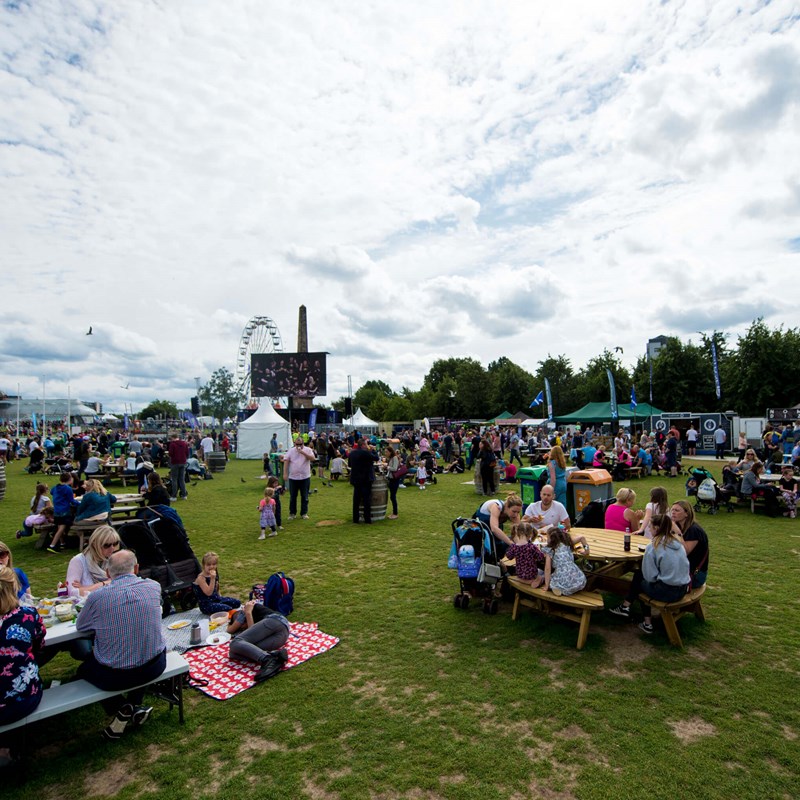
Rapid lateral flow test kits will mailed from today to all visitors to the Glasgow Fan Zone to encourage testing. 17,000 ticket holders due attend the UEFA EURO 2020 Fan Zone at Glasgow Green will be contacted.
The move is part of a series of measures to help reduce the risk of transmission before and after the event.
In addition, a mobile testing bus is also now at Glasgow Green to provide on-site lateral flow testing, while attendees may be asked by COVID marshals on site whether they have taken a test as part of ongoing reporting on the site.
Health Secretary Humza Yousaf confirmed the arrangements yesterday as he was given a tour of the facility alongside Scotland’s National Clinical Director Professor Jason Leitch.

Mr Yousaf said: “I am encouraged to see first-hand all the mitigations in place at the fan zone which have helped to ensure that it is a low risk event. Supporters can gather here safely in a controlled environment – with necessary physical distancing and hygiene measures in place – to enjoy the football.
“I am also pleased that feedback from fans and staff so far on the arrangements in place – and the atmosphere – has been overwhelmingly positive.
“Ticket holders have already been contacted to emphasise the importance of self-testing. It is important to test both before and after the event, so we are now offering test kits to all fans attending to help minimise the risk of transmission. Additionally a mobile testing unit will be on site. Anyone with symptoms of COVID-19 or whose receives a positive test result must stay away, self-isolate and book a PCR test.
“Stewards will closely monitor the site and ask a sample of attendees about uptake of testing prior to arriving, while public health advisors will continue to look at data to ensure the event is being managed as safely as possible.
“The fan zone provides a focal point for celebrations and showcases the city. We want other businesses in Glasgow, including bars and restaurants, to be able to benefit from a boost in trade as a result of the tournament.”

In another development, people over 40 whose second coronavirus (COVID-19) vaccination appointment is scheduled more than eight weeks after their first are now being encouraged to seek an earlier slot.
It follows recent advice from the Joint Committee on Vaccination and Immunisation (JCVI) recommending that the interval for second doses be brought forward from 12 to eight weeks – where supply allows – particularly in areas where the Delta variant is a major threat.
The national vaccination programme is already scheduling appointments to reflect the latest guidance. However, many people – particularly over 40s – have already received an invitation in line with the previous recommendation of a 12 week interval, and they are now being invited to reschedule an earlier appointment.
Supplies permitting this will also apply to under 40s when their second dose appointments are due.
A new vaccine journey tool on the NHS Inform website allows people to check the status of their second appointment. If it is more than eight weeks from the first, another slot can be booked if there is one available. The national helpline can also be used, and drop-in clinics are being set-up around the country.

Health Secretary Humza Yousaf said: “We are working closely with NHS boards to ensure the number of appointments can be increased in line with national guidance to help combat new variants and provide protection to as many people as possible.
“Boards are boosting their capacity to administer second doses alongside the delivery of first doses to younger cohorts and appointments are now being issued in accordance with the new recommendation of an eight week gap.
“The second dose is vital in providing greater and longer lasting protection against the virus – particularly the new Delta variant. In line with the advice from the JCVI, we encourage those whose appointment was already scheduled – which is mainly over 40s at this time – to use the NHS Inform online tool, drop-in clinics or the national helpline to get their second dose appointment as close to eight weeks after their first as possible.
“In the six months since vaccinations started in Scotland we have delivered first doses to more than three quarters of the adult population and second doses to more than half. We remain on track to offer the vaccine to all adults by the end of July, but the emergence of the new variant shows we cannot be complacent.
“The vaccination programme is one of the main ways – along with restrictions and testing – that we are working to beat this virus and so it is crucial that everyone attends for their appointments.”
LOCKDOWN easing in England is set to be delayed.
So-called ‘Freedom Day’ was scheduled for 21 June, but Prime Minister is likely to announce a four week delay to retrictions when he addresses the nation at a press conference this evening.


This Summit was the first gathering of G7 leaders – in fact the first gathering of pretty much any leaders – in almost two years.
And I know the world was looking to us to reject some of the selfishness and nationalist approaches that have marred the initial global response to the pandemic, and to channel all our diplomatic, economic and scientific might into defeating covid for good.
And I do hope we have lived up to some of the most optimistic of hopes and predictions
I should say I am sorry to hear that, owing to their pre-existing commitments, the England football team are not able to watch this press conference live in the way I’m sure they’d like to.
But I hope that, following their resounding victory, they will be able to catch up on the triumphs of the G7 later on (!)
A week ago I asked my fellow leaders to help in preparing and providing the doses we need to help vaccinate the whole world by the end of 2022.
I’m very pleased to announce that this weekend leaders have pledged over 1 billion doses – either directly or through funding to COVAX – that includes 100 million from the UK, to the world’s poorest countries – which is another big step towards vaccinating the world.
And that’s in addition to everything scientists and governments and the pharmaceutical industry have done so far to roll out one of the largest vaccination programmes in history.
And here I want to mention, in particular, the role the Oxford-AstraZeneca vaccine – the world’s most popular vaccine, developed 250 miles from where I’m standing today- by scientists who have rightly been given honours by the Queen this weekend.

Today over half a billion people are safe because of the development and production of that vaccine, funded – I may add – by the UK Government. And that number is rising every day.
It is popular, of course, because it is being sold at cost to the world and it was designed for ease of use in mind.
And because of that act of generosity by AstraZeneca who, just to reiterate, are making zero profit on the production of that vaccine, millions more vaccines have been rolled out to the poorest countries in the world. In fact 96% of the vaccines delivered by the COVAX distribution scheme have been Oxford-AZ.
But this weekend our discussions went far beyond defeating the pandemic.
We looked towards the great global recovery our countries have committed to lead, and we were clear that we all need to build back better in a way that delivers for all our people and for the people of the world.
And that means preventing a pandemic like this from ever happening again, apart from anything else by establishing a global pandemic radar which will spot new diseases before they get the chance to spread.
It means ensuring that our future prosperity benefits all the citizens of our countries and indeed all the citizens of the world.
At the G7 Summit this weekend, my fellow leaders helped the Global Partnership for Education – an organisation working to make sure that every child in the world is given the chance of a proper education – reach half of its five-year fundraising goal, including a £430m donation from the UK.
It’s an international disgrace that some children in the world are denied the chance to learn and reach their full potential, and I’m very very pleased that the G7 came together to support that cause.
Because educating all children, particularly girls, is one of the easiest ways to lift countries out of poverty and help them rebound from the coronavirus crisis. With just one additional year of school a girl’s future earnings can increase by 20%.
I’m proud that G7 countries have agreed to get 40 million more girls into school and 20 million more reading by the end of primary school in the next five years, and the money we have raised this week is a fantastic start.
But of course the world cannot have a prosperous future if we don’t work together to tackle climate change.
Later this year the UK will host the COP26 Summit, which will galvanise global action on fighting climate change and create a healthy planet for our children and grandchildren.
G7 countries account for 20% of global carbon emissions, and we were clear this weekend that action has to start with us.
Carbis Bay is one of the most beautiful places in the world as you can see and it was a fitting setting for the first ever net zero G7 Summit.
And while it’s fantastic that every one of the G7 countries has pledged to wipe out our contributions to climate change, we need to make sure we’re achieving that as fast as we can and helping developing countries at the same time.
And what unites the countries gathered here this weekend – not just the G7 but Australia, India, South Africa and South Korea who have joined us (I should say in India’s case joined us virtually) not just our resolve to tackle climate change, but also our democratic values.
It’s not good enough for us to just rest on our laurels and talk about how important those values are. And this isn’t about imposing our values on the rest of the world. What we as the G7 need to do is demonstrate the benefits of democracy and freedom and human rights to rest of the world.
And we can partly achieve that by the greatest feat in medical history – vaccinating the world.
We can do that by working together to stop the devastation that coronavirus has produced from ever occurring again.
And we can do that by showing the value of giving every girl in the world access to 12 years of quality education.
And we can also do that by coming together as the G7 and helping the world’s poorest countries to develop themselves in a way that is clean and green and sustainable
I want to thank finally, the police, everyone who helped organised this summit and all the people not just of Carbis bay (who certainly helped us put the carbs into Carbis Bay), but all the wonderful people of Cornwall for their hospitality.
It’s been a fantastic summit and I know that all the other delegations would want to express their thanks as well.