Petition launched for an official Sir Harry Lauder Day
A Greenock-born musician, now living in the US, is on a mission to mark the life and legacy of a legendary Scottish entertainer.
Carl Peterson has started a petition to create an official Sir Harry Lauder Day from August 4th 2027 onwards and it is already garnering thousands of signatures.
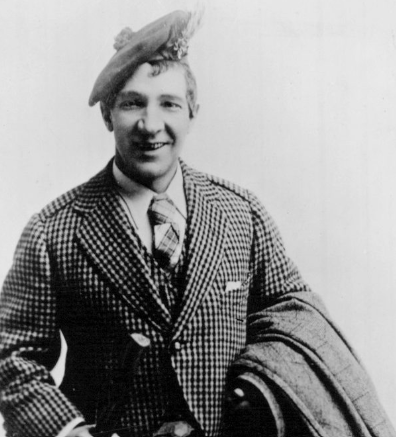
Harry Lauder was a pioneering Scottish singer, comedian, and global music hall superstar recognized for his signature kilt and crooked walking stick. Rising from humble beginnings as a coal miner, he became the world’s highest-paid entertainer and first million-selling recording artist.
He was born in 1870 in Portobello near Edinburgh, spent much of his life in Dunoon and was laid to rest in Hamilton in 1950. His showmanship won him millions of fans around the world.
Carl explained: “Harry Lauder was the world’s first ‘pop star’ and he was loved wherever he performed. Indeed, tens of thousands of folk in Australia and north America lined the dockside whenever his boat arrived or left as part of his regular international tours.
“We will be looking to organise musical performances and talks about his life in various locations around Scotland and further afield but, first off, we want to get an idea of the sort of appetite there might be for such an initiative. Early signs are very positive!” added Carl who is a regular visitor to Dunoon where he performs live at various venues in the town.
Jamie MacDougall, a leading Scottish tenor and broadcaster who has performed globally in opera, classical and folk music is fully behind the bid: “I’ve loved Sir Harry Lauder’s songs and the story of his life since I was 10 years old, when I was taken to Glasgow’s King’s Theatre to see Jimmy Logan’s one-man production, Lauder.
“It charted Sir Harry’s extraordinary journey from singing as a boy in Arbroath and working in the pits of Lanarkshire to becoming the first music hall performer to be knighted. That honour recognised his tireless efforts to raise over £1 million for wounded servicemen returning from the First World War.
“Years later, I had the privilege of reviving Jimmy’s show with Scottish Opera, and it has been a dream come true to introduce Sir Harry’s remarkable story to new audiences. Most recently, we spent four weeks off-Broadway in New York, where the response from people who had never heard of him or his extraordinary achievements was overwhelming.
“What many people don’t realise is that Sir Harry’s legacy continues today, with royalties from his work still supporting the wonderful work of Erskine Veterans Charity. His kindness and generosity have never stopped making a difference.
“A Harry Lauder Day would be a fitting and lasting tribute to a man who gave Scotland so much and whose influence reached every corner of the world. More than seventy-five years after his passing, he is still bringing joy through his music, inspiring audiences with his remarkable story, and helping veterans through his enduring legacy. That’s surely something worth celebrating every year.”
Anyone wanting to sign the petition can do so by visiting:
As the Union Canal’s summer cruising season nears its end, Seagull Trust Cruises is reminding boat owners, clubs and charities that its fully enclosed dry dock at Ratho is available for their own use when it is not being used by the charity’s own fleet.
The dry dock, the only facility of its kind on the Union Canal, sits at the charity’s Baird Road base and provides a roofed, protected environment ideal for autumn and winter maintenance. With the main cruising season finishing at the end of October, boat owners are encouraged to book early to secure a slot before Seagull Trust’s three passenger boats enter the dock for their annual overhaul.
The dock is made available from Saturday to Saturday for other canal charities, boat clubs and private owners. Its impressive size means draining down or refilling the dock typically takes between two and three hours.
The facility supports a wide range of essential maintenance tasks that can be carried out by the owners, including full hull inspections, out-of-water surveys, hull scraping and antifouling, below-waterline repairs, repainting with marine-grade coatings, engine servicing, propeller and rudder work, and general pre-winter preparation.
In response to increasing demand for above-waterline maintenance, the Trust has recently installed new fall-restraint systems, ‘Safe-Hold’ HLLR 31604 tension rope system to meet current working-at-height regulations.
Training will be available to ensure users have a safe experience while undertaking their vessel maintenance while in the dock facility. The equipment was very generously provided by an anonymous donor
Donations play an important role in supporting Seagull Trust Cruises’ free cruising programme, which carries thousands of passengers each year along the Union Canal. Boat owners wishing to secure time in the dock are advised to book early.
Landmark report evidences the profound impacts of the Edinburgh Festivals, confirming them as one of the most remarkable demonstrations of cultural power in the world
Picture by JANE BARLOW
In the latest of a long line of internationally acclaimed impact studies, the Edinburgh Festivals have published their most recent research across a series of cultural, social and economic indicators – which shows that at a fundamental level the festivals make life better – for residents, artists, visitors, and businesses.
The research identifies the Edinburgh Festivals as a unique civic asset that enhances wellbeing through creative and community engagement, an unrivalled international springboard for Scottish artists and companies, and a major attraction for those choosing to live, work, visit and invest in Edinburgh. The findings clearly indicate that the Festivals define Scotland’s cultural identity on the global stage.
Introducing the latest Impact Study on 29 June, Professor Daisy Fancourt, Director of WHO Collaborating Centre on Arts and Health and UNESCO Chair in Arts & Global Health as well as author of Art Cure: How the Arts Can Transform Your Health and Help You Live Longer said: “The Edinburgh Festivals have long stood as one of the world’s most remarkable demonstrations of the power of arts and culture.
“Shared cultural experiences create opportunities for dialogue, build understanding and challenge ideas. They bring people together across generations, backgrounds and perspectives, helping to build trust and social cohesion. At a time when many communities are grappling with social fragmentation and unrest, cultural participation offers powerful opportunities to strengthen civic life and nurture a sense of common purpose.
“The Festivals show what is possible when culture is placed at the heart of civic life, and this report provides a powerful case for the importance ofsustaining and investing in their future for generations to come.”
The research affirms that while the individual festivals are powerful brands in their respective fields, collectively they are both a unique national asset and a global phenomenon. They are an integral part of the cultural and social fabric of the country and provide an opportunity to showcase a 21st century nation.
The headline findings in this publication show the Edinburgh Festivals as:
cultural adventurers, with 90% of audiences acclaiming the festivals as unique places of cultural discovery
civic drivers, that enhance community well-being with 79% of local audiences stating that the festivals make Edinburgh a special place to live
national investors, spending more than £10m annually with event production companies and creative talent based in Scotland
economic powerhouses, calculated to have a gross economic impact of £4.26 billion over the next five years in Scotland.
Commenting on the publication of the Impact Study, the Scottish Government’s Cabinet Secretary for Education, Culture and Gaelic, Màiri McAllan MSP said: “The Edinburgh Festivals are truly world class — and this research confirms their extraordinary cultural, social and economic value to Scotland.
“A projected national economic impact of £4.26 billion over the coming five years, 90% of audiences describing them as unique places of cultural discovery, and 79% of Edinburgh residents saying they make the city a special place to live — these are remarkable findings.
“As we approach the 80th anniversary of Edinburgh’s status as a festival city, the Scottish Government is proud to champion the festivals and committed to ensuring they continue to thrive for the benefit of people across Scotland and on the global stage.”
Councillor Margaret Graham, Culture and Communities Convener at City of Edinburgh Council, said: “Edinburgh’s festivals are at the heart of what makes our city so special, bringing together residents and visitors to enjoy thousands of shows and events throughout the year.
“This research highlights that these celebrations deliver significant cultural, social, and economic benefits, supporting local communities and businesses while enhancing the city’s global reputation.
“As we approach the 80th anniversary of our festivals, we remain committed to supporting their future while balancing the needs of residents, visitors, and business, ensuring Edinburgh continues to thrive as a world-leading festival city.”
Vicki Miller, Chief Executive of VisitScotland, said: “Edinburgh’s festivals are world renowned, and a key part of what makes Scotland a must-visit destination, drawing thousands of international visitors to the country each year.
FURTHER FINDINGS INCLUDE:
The Edinburgh Festivals have seen a major expansion in their community reach
Alongside its global scale, the report identifies a major expansion in the Festivals’ community footprint. They offer residents of the city and substantial audiences of all ages throughout Scotland, opportunities that support creative expression, social connection and wellbeing, while breaking down barriers, enhancing community cohesion and civic pride.
These core principles were fundamental building blocks of the PlaCE [Partnerships for Creative Excellence] programme, a pioneering three-way partnership between Edinburgh Festivals, Scottish Government and the City of Edinburgh Council. Almost 76,000 community participants took part across the life of the programme.
Over the five years spanning 2018 to 2023, the Festivals delivered a 489% increase in engagement with community groups, a 39% increase in schools participation (from 497 to 694) and a 245% increase in partnership activity.
This growth reflects a significant development of year-round activity and more equitable access, with programmes increasingly reaching communities less likely to have engaged with the Festivals in the past.
The Edinburgh Festivals are a civic asset as well as a global platform
The report reinforces the Festivals’ role within the city itself. Edinburgh residents account for around one third of all attendances, with 79% of local audiences identifying the Festivals as central to the city’s identity and sense of place, making it a special place to live. And 89.9% of audiences say that the Festivals create a welcoming environment in the city.
This dual role – as both a global cultural gathering and a locally rooted civic asset – is identified as a defining feature of the Edinburgh Festivals.
The Edinburgh Festivals are a key investor in Scotland’s creative economy
Beyond audience impact, the Festivals continue to act as a major investor in Scotland’s cultural sector, supporting artists, production companies and creative organisations across the country.
Annual spend with Scottish-based creative talent and production companies exceeds £10 million, helping to sustain jobs, develop skills and build international connections across the sector.
The Edinburgh Festivals provide a platform for Scotland on the world stage
With participants from over 80 countries and audiences from more than 100 countries, the Festivals play a central role in projecting Scotland internationally, showcasing a 21st century nation
The report affirms the Edinburgh Festivals as a globally significant cultural marketplace, while remaining deeply embedded within Scotland’s communities and creative industries. Both a unique national asset, part of the cultural and social fabric of the country, and a global phenomenon making up part of the appeal that will drive Scotland forward.
The Edinburgh Festivals are economic powerhouses
The Edinburgh Festivals delivered an estimated £558 million in net economic impact for Edinburgh and £852 million across Scotland in 2025.
A central finding of the research is that this economic impact is driven by the quality and innovation within the Festivals’ cultural programmes which drive attendances, with 90% of audiences acclaiming the festivals as unique places of cultural discovery
The report concludes that investment in programming is the primary factor that attracts global audiences and generates wider economic activity across tourism, hospitality and the creative industries. With the right investment the future impact is expected to reach £4.26 billion over the next five years.
The findings underline the Festivals’ position as a major national asset, operating at a scale rarely seen in global cultural events. With over 4 million attendances drawn from more than 100 countries last year, Edinburgh hosts one of the largest ticketed event programmes in the world every year, on a scale equivalent with less frequent major events such as the Olympic Games and FIFA World Cup.
Cultural events like these provide authentic and immersive experiences for people across Scotland and from around the world and are vital in strengthening our international profile and supporting local businesses, artists, and performers.”
Lori Anderson, Director of Festivals Edinburgh stated:
‘We are facing challenging times which call for boldness, direction, and vision – and the Edinburgh Festivals, through their pioneering collaborative work, focused strategic thinking, and hugely praised programmes, have these qualities in abundance. They have a powerful role to play in increasing the creative capacity, economic strength, and international reputation of Scotland. Ahead of the 80th anniversary of the birth of our world leading festival city, now is the time to champion and invest in the Festivals’ success.’
Further findings in the Impact Study include:
The Edinburgh Festivals have seen a major expansion in their community reach
Alongside its global scale, the report identifies a major expansion in the Festivals’ community footprint. They offer residents of the city and substantial audiences of all ages throughout Scotland, opportunities that support creative expression, social connection and wellbeing, while breaking down barriers, enhancing community cohesion and civic pride.
These core principles were fundamental building blocks of the PlaCE [Partnerships for Creative Excellence] programme, a pioneering three-way partnership between Edinburgh Festivals, Scottish Government and the City of Edinburgh Council. Almost 76,000 community participants took part across the life of the programme.
Over the five years spanning 2018 to 2023, the Festivals delivered a 489% increase in engagement with community groups, a 39% increase in schools participation (from 497 to 694) anda 245% increase in partnership activity.
This growth reflects a significant development of year-round activity and more equitable access, with programmes increasingly reaching communities less likely to have engaged with the Festivals in the past.
The Edinburgh Festivals are a civic asset as well as a global platform
The report reinforces the Festivals’ role within the city itself. Edinburgh residents account for around one third of all attendances, with 79% of local audiences identifying the Festivals as central to the city’s identity and sense of place, making it a special place to live. And 89.9% of audiences say that the Festivals create a welcoming environment in the city.
This dual role – as both a global cultural gathering and a locally rooted civic asset – is identified as a defining feature of the Edinburgh Festivals.
The Edinburgh Festivals are a key investor in Scotland’s creative economy
Beyond audience impact, the Festivals continue to act as a major investor in Scotland’s cultural sector, supporting artists, production companies and creative organisations across the country.
Annual spend with Scottish-based creative talent and production companies exceeds £10 million, helping to sustain jobs, develop skills and build international connections across the sector.
The Edinburgh Festivals provide a platform for Scotland on the world stage
With participants from over80 countries and audiences from more than 100 countries, the Festivals play a central role in projecting Scotland internationally, showcasing a 21st century nation.
The report affirms the Edinburgh Festivals as a globally significant cultural marketplace, while remaining deeply embedded within Scotland’s communities and creative industries. Both a unique national asset, part of the cultural and social fabric of the country, and a global phenomenon making up part of the appeal that will drive Scotland forward.
The Edinburgh Festivals are economic powerhouses
The Edinburgh Festivals delivered an estimated £558 million in net economic impact for Edinburgh and £852 million across Scotland in 2025.
A central finding of the research is that this economic impact is driven by the quality and innovation within the Festivals’ cultural programmes which drive attendances. 90% of audiences acclaimed the festivals as unique places of cultural discovery.
The report concludes that investment in programming is the primary factor that attracts global audiences and generates wider economic activity across tourism, hospitality and the creative industries. With the right investment the future impact is expected to reach £4.26 billion over the next five years.
The findings underline the Festivals’ position as a major national asset, operating at a scale rarely seen in global cultural events. With over 4 million attendances drawn from more than 100 countries last year, Edinburgh hosts one of the largest ticketed event programmes in the world every year, on a scale equivalent with less frequent major events such as the Olympic Games and FIFA World Cup.
Want to be part of something that makes a real difference?
We’re on the lookout for passionate volunteers who want to make a positive impact in their community and work with amazing young people.
As a Scran volunteer, you’ll be part of a welcoming, supportive family that’s committed to creating opportunities, empowering young people, and making a difference together.
Discover the magic of Theatre School of Scotland Edinburgh!
We’re opening our doors and inviting you to experience everything our Edinburgh campus has to offer at our upcoming Open Day!
If your child has a passion for performing, loves to sing, dance or act, or is simply looking to grow in confidence while making lifelong friends, this is the perfect opportunity to see what we’re all about.
Saturday August 15, 2026
2:30PM – 4:30PM
Edinburgh College, 350 W Granton Road, Edinburgh, EH5 1QE
Open Days give you the chance to:
Meet our expert teaching team
Take a look around our studios
Learn about our exciting performance opportunities
Ask any questions you may have before signing up
At Theatre School of Scotland, we’re proud to be developing Scotland’s next generation of talent, offering high-quality training in a welcoming, supportive environment where every student is encouraged to reach their full potential.
Whether your child is stepping into the spotlight for the first time or already has a love for performing, we’d love to welcome you to our Edinburgh community!
This is a free event, but booking in advanced is recommended!
Families with young children are invited to join local charity LifeCare for relaxed, fun and free intergenerational activities, bringing little ones together with some of the older people who attend one of LifeCare’s day clubs.
Led by local storyteller Claire Mulholland, the sessions will be packed with stories, singing, music, and games – it’s all about giving children and older people the chance to spend time together, play, laugh and share experiences.
Suitable for children aged 1–5, parents and carers are asked to stay for each session.
When: Every Monday 11-12 noon, from 17 August to 14 September
Where: LifeCare Hub and Café, 2 Cheyne Street, Stockbridge, EH4 1JB. The LifeCare Hub and Café is very family-friendly, with plenty of space for prams and buggies. It’s a perfect spot for coffee or lunch before or afterwards, making it easy for families to come along and join in.
A scheme to help people on low incomes and in priority groups buy their first affordable home has opened for applications.
The Open Market Shared Equity Scheme (OMSE) is available for first-time buyers and priority access groups who can’t afford the full price of a home. This includes social renters, disabled people, people aged 60 and over, members of the armed forces and veterans.
The scheme, along with the First Homes Fund, provides financial assistance to prospective homeowners and is part of the Government’s programme of action to provide affordable housing across the country.
Cabinet Secretary for Social Justice and Housing Shirley-Anne Somerville said: “This Government is delivering on affordable housing and this scheme, along with our First Homes Fund, will provide a vital support for those looking to buy their first home.
“We know how hard it is to get that first foot on the property ladder – our shared equity schemes assist households who can sustain mortgage repayments but find it difficult to accumulate the necessary savings to secure a purchase.
“I encourage everyone who is eligible and looking to buy a home to apply to these schemes. Giving more people the chance to buy an affordable home also plays a crucial role in reducing homelessness and eradicating child poverty across the country.”
The Open Market Shared Equity Scheme (OMSE) is open for applications. It is a shared equity scheme designed to help eligible buyers on low-to-moderate incomes purchase a home on the open market by funding a percentage of the price (usually 60% to 90%) while the government holds the remaining equity stake.
The First Homes Fund was introduced by the Scottish Government in June this year. This offers a £10,000 contribution to first-time buyers that struggle to save enough for a full deposit.
We are excited to share a delicious community meal with you tomorrow. We do our best to have a variety of options, including vegetarian and a delicious pudding.
What’s on the menu today:
Root veg medley soup
Crispy chicken
BBQ-style beans
Halloumi pastries
Lemon cheesecake with blueberry compote
Please check the board or ask our volunteers about allergens. And just a heads-up, our food is served until it runs out! Do come along and enjoy. Thank you!




 We’re looking for Academy support volunteers!
 Discover the magic of Theatre School of Scotland Edinburgh!

 Saturday August 15, 2026
 2:30PM – 4:30PM
 Edinburgh College, 350 W Granton Road, Edinburgh, EH5 1QE