More smoke and mirrors: a good deal for Scotland … or is it?

£350 million more for Scotland, proving that ‘we are stronger together in this great United Kingdom’, cried a triumphant Chancellor. No, we’re £2.9 billion POORER, said the Scottish Government’s finance spokesman. Confused? You will be. Continue reading More smoke and mirrors: a good deal for Scotland … or is it?

Better Late Than Dead On Time: road safety theatre at Broughton

Hi Folks

Just a short note to bring your attention to a road safety theatre production which is being delivered in Broughton High School on Tuesday 28th March at 7pm. It’s a free event (refreshments provided as well) and is open to all ages as well as local adults or school staff. 

Given the amount of concerns about accidents/road crimes/road safety etc. I think we’ve timed this perfectly and it should be of huge benefit to the local area.

If you’ve any queries please don’t’ hesitate to give myself, Helen Bourquin or Elaine Lennon (both copied into this email for your info) a shout and we’ll do what we can to answer them!

Best wishes

Callum

Callum McLeod |Community Learning & Development Worker | Schools and Lifelong Learning | Communities and Families| City of Edinburgh Council |Broughton High School , 29 East Fettes Ave, Edinburgh, EH4 1EG | | Tel: 0131 332 6316 | Email: Callum.mcleod@ea.edin.sch.uk | Web: www.edinburgh.gov.uk | CLD Web: www.joininedinburgh.org

Scottish Ambulance Service launches Registration to Resuscitation camapign


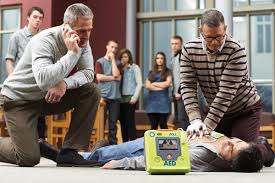
The Scottish Ambulance Service is appealing to communities across Edinburgh and the Lothians to register potentially life-saving public access defibrillators on its dedicated website.

Continue reading Scottish Ambulance Service launches Registration to Resuscitation camapign

Testing times ahead for new councillors

New councillors elected in May face major challenges and need to focus on improving long-term planning, says the Accounts Commission.

In its 2017 overview published today, the local government spending watchdog outlines a long-term decline in Scottish Government real terms funding which makes up around 60 per cent of council income.

At the same time, there continue to be increasing pressures on services, particularly in social care and education which together account for over 70 per cent of council spending.

The report says councils overall have maintained or improved their performance in the face of these challenges. However, public satisfaction is declining and complaints are increasing. Looking ahead, they need to better involve their communities in service design and deliver.

There are wide variations between councils. Some have grasped the nettle in finding new ways to provide services more efficiently. Others have been slower off the mark. Councils have made savings by cutting jobs but half of them still don’t have organisation-wide workforce plans.

Councils must learn more from each other and collaborate better to improve services and reduce costs.

Councillors elected in May must have the necessary training and tools to do an increasingly complex job determining local priorities, overseeing delivery of essential services and working in partnership with other public bodies to improve outcomes for communities and individuals.

Ronnie Hinds, deputy chair of the Accounts Commission, said: “New councillors will require time to settle in and develop skills to make strategic plans, consider options for service delivery and scrutinise how well this is happening in practice.

“But they have four years ahead of them, and they need to plan effectively for the longer term, work with their communities to decide key priorities and then make that plan happen.

“We hope our report is helpful to councillors and officers as they strive to maintain or improve services for the public with reduced resources.”

The report: nr_170307_local_government_performance

The Scottish Greens have commented on the report. Andy Wightman, the Scottish Greens’ local government spokesperson, said:

“Audit Scotland is right to highlight these challenges. The Scottish Greens are committed to strengthening local democracy in Scotland and that’s why we led a debate on the subject only a few months ago. We will also be publishing proposals later this week on a fiscal framework that details how the financial relationship between Holyrood and local government can be improved.

“The six Green MSPs, who were elected on a manifesto pledge to campaign to devolve decisions and budgets to a more local level, will continue to call for councils to have more powers to implement new structures for local democratic participation.”

Dying from inequality

The suicide rate is three times higher among the poorest Scots, according to a report released today by Samaritans. In the week that Philip Hammond is expected to deliver another austerity Budget, Samaritans are calling for more to be done to tackle inequality.

James Jopling, Executive Director of Samaritans in Scotland, writes:

In 2015, 672 people took their own lives in Scotland. It’s clear however, that some people are unequally bearing this burden.

It is simply not acceptable that the risk of a person taking their own life is substantially increased according to how disadvantaged they may be.

We have made significant progress in Scotland in bringing the suicide rate down. In the ten years from 2002, when the first Choose Life Suicide Prevention Strategy was published, there was an 18 per cent fall in the suicide rate. Yet despite real progress, a significant difference in rates between the most and least deprived people in Scotland persists.

Latest figures for Scotland show that the rate of suicide was three times higher in the most deprived tenth of the population compared to the least deprived tenth.

Increasingly, Samaritans are working with others to benefit those on the margins of society.  We are providing our services in foodbanks, in homeless drop-in centres and other locations where contact from us with people in crisis can play a role in helping them manage the situation they find themselves in.

For the first time, Dying From Inequality sets out exactly what contributes to suicide risk in disadvantaged people and communities. This gives us the vitally important opportunity to galvanise other agencies and decision makers into action. So, we’ll be talking to those who can influence change in housing, stigma, lifestyle behaviours and many of the other factors highlighted in the report. We’ll be talking about Scottish solutions, in a Scottish policy and political context, with key agencies that can help us affect change.

As a starter, we think we need to target local suicide prevention work in areas of deprivation within individual local authorities. We need the forthcoming suicide prevention strategy in Scotland to be joined up with welfare, education, housing and employment policies in Scotland.  When we see large employers downsize or shut down, and local and national government seek to help, let’s make sure that help includes consideration of the mental health of the employees affected during a very difficult period in their lives.

We’ve also previously had targets to train NHS staff in Scotland to recognise and understand individuals who are in distress and may be suicidal, we believe we need this kind of programme to be extended to those agencies who might be dealing with people struggling financially, such as welfare agencies or financial services companies.  An effective and appropriate response could make all the difference.

Because it’s simply not right that so many people struggling with deprivation and poverty across Scotland find taking their own life as the only way out.

Samaritans Dying from inequality report – summary


Young Scot chief to chair new women’s advisory council

Louise Macdonald OBE, Chief Executive of Young Scot, has been appointed as independent Chair of the Advisory Council which will raise awareness of gender issues, champion the rights of women and girls, and advocate for changes that can be made across society to deliver equality. Continue reading Young Scot chief to chair new women’s advisory council