The UK’s largest independent road safety charity, IAM RoadSmart, is highlighting the findings from a recent survey which revealed that the majority of road users from around the world support banning people from wearing headphones while cycling and is calling for urgent debate on this important issue while changes to the Highway Code are being considered.
In the survey, conducted across 32 countries by the E-Survey of Road Users’ Attitudes (ESRA), two-thirds (65.8 per cent) of the 35,000 respondents internationally were in support of introducing a ban on cyclists wearing headphones.
Support was a little higher in the UK where 68.2 per cent of people – more than two in three – said that they were in favour of the ban.
Across Europe, support for the ban on cyclists wearing headphones varied. Spain felt most strongly about the introduction of the policy with nearly 80 per cent of all road users surveyed in that country voting in its favour.
Finland felt least strongly, with only one in three (36 per cent) believing the ban would be a good move. In Germany and Hungary, support for the ban was at similar levels to those in the UK at 69.8 per cent and 69.9 per cent respectively.
The European average was 66.5 per cent in support of the ban, with even cycle-loving Holland and Denmark showing small majorities in favour of new controls. This was matched in countries further afield, with most respondents supporting the ban on cyclists wearing headphones across North America, Asia and Africa.
Internationally, female road users were more in favour than males of a ban on headphones or earbuds while cycling, and this was true across all of the continents surveyed: Asia (80 per cent), Europe (69 per cent), Africa (83 per cent) and North America (62 per cent).
Unsurprisingly, those aged 18 to 24 were most against the introduction of any controls on their personal listening habits and internationally an average of only 53.5 per cent of this age group supported the ban. In Europe, support among young people was markedly lower at just four in ten (44.1 per cent) of 18 to 24-year-olds believing the ban would be a good idea.
Neil Greig, Policy and Research Director at IAM RoadSmart, said: “It’s clear that the majority of road users are very concerned about distracted cyclists wearing headphones or earbuds while riding. These findings were consistent right across the world in this substantial survey.
“Being plugged in to either headphones or earbuds is the ultimate distraction, as it completely shuts you off to your surroundings, creating a potential road safety risk to yourself, pedestrians and other road users around you. This is even more critical with the popularity and increasing prevalence of noise-cancelling equipment.
“There are plans to update the Highway Code being discussed as we speak, so now is a great time to have an informed debate about the best way for cyclists to avoid potentially fatal distractions.”
The Scottish Parliament’s Health and Sport Committee has called on the Government to measure the consequences of cancelling all non-urgent care at the height of the pandemic. They say this must be done as a matter of urgency with the pandemic continuing to impact every aspect of the health service.
In the Committee’s pre-budget report, they looked into the wider impact of Covid-19 upon individuals’ health and their use of the health service, with the pandemic causing a huge reduction in those seeking use of these services.
Figures suggest just under 60,000 planned operations took place in Scottish hospitals from March to August of this year, compared to 168,000 over the same period in 2019. The Committee has said detail must be provided on when the backlog of NHS work caused by the pandemic will be resolved.
The Committee express concern about the large degree of uncertainty over budgeting for current and future years caused by Covid-19 and are seeking more detail on the implications for longer term funding plans.
In a wide-ranging pre-budget report, the Committee highlight that health and social care spend accounts for over 50% of the Scottish budget, but there is currently no coherent attempt to identify the outcomes of this spending. The Committee say this makes it difficult to tell whether the taxpayer is receiving value for money.
The Committee also criticise the current budget process whereby Integration Authorities, who account for £9billion of health and social care spending, do not provide basic budget details until six months into the financial year to which the budget relates.
Lewis Macdonald MSP, Convener of the Health and Sport Committee, said:“Covid-19 has caused a huge disruption to many NHS patients and treatments with Public Health Scotland data revealing hospital admissions, attendances at A&E departments, and people attending out of hours services all falling to around half the average levels seen in 2018-19.
“As the pandemic continues to impact every aspect of our health service, the consequences of cancelling all non-urgent care must be measured and the backlog of treatments and waiting lists resolved as quickly and safely as possible.
“The pandemic has created a huge degree of uncertainty over current and future health and social care budgets and we are keen to be given more detail on the long-term implications of this uncertainty.
“We are also surprised at the lack of information available on potential NHS savings caused by the large number of services which ceased operating during lockdown.
“Since the arrival of the pandemic we have seen a remarkable reduction in delayed discharge numbers and there have been welcome innovations across the health service to help respond to this crisis, but the challenge now is to continue these successes and to ensure we do not revert to the old way of working.”
The report also looks into the impact of the pandemic on GP practices. Concerns are raised by the Committee about evidence received which suggested some GPs were refusing to see patients as a result of the pandemic.
The Committee has said there must be consistency in service delivery and accessibility across all GP practices.
The Committee also calls on the Scottish Government to provide detail on how GP workload has been affected by the pandemic, saying the introduction of community hubs inevitably leads to questions of what GPs have been doing during the coronavirus crisis. Similar questions are asked about non-emergency NHS staff.
The Covid-19 international travel and quarantine regulations were also scrutinised by the Committee and they have recommended that all passengers arriving into Scotland should be tested for the virus as a health protection measure and to potentially shorten the length of quarantine periods.
MSPs on the Committee have said identifying, checking and tracing those persons subject to quarantine should be given the highest priority and the numbers being followed up must be substantially increased beyond current target figures.
A Scottish bookmaker saved from administration last year has warned the independent sector faces a ‘make or break’ winter without urgent government support.
Scotland’s largest independent bookmaker Scotbet has urged First Minister Nicola Sturgeon to step in after the firm was denied support from the Scottish Government in the form of business rates relief or small business grants, despite being closed for over three months from the start of lockdown.
Based in Loanhead, Scotbet was rescued from closure in July 2019 following a management buy out. Almost 130 jobs and 30 shops were saved. At its peak, the firm owned 75 shops.
Chairman John Heaton, who led the management buy out, has written to Finance Secretary Kate Forbes and the First Minister demanding answers. He said: “It is simply no way to treat a Scottish business struggling to survive in the grip of a pandemic.
“Due to the Covid restrictions we were forced to close our shops for over three months in March. At the time, small businesses throughout the UK were promised help in the form of small business grants and 12 months of business rates relief. It allowed many independent operators in England, which would otherwise have failed, to remain in business.
“We have received nothing. For reasons, so far not explained, independent betting shop chains were excluded. We are now receiving threats of court action for non-payment of rates for a period when we were not allowed to open. This is simply unfair.
“We now face a very challenging future. Even now, revenue is significantly below pre-lockdown levels and the coming months could be make or break for many independent bookmakers. On behalf of our loyal and extremely hard working employees, I would urge the Scottish Government to do more to support the independent sector before it is too late.”
Lothian MSP and convener of the Cross Party Group on Horseracing at the Scottish Parliament Miles Briggs said: “It is baffling that the betting industry has not been provided the same support that has been given to businesses in other industries.
“Licensed responsible gambling provides entertainment to people throughout Scotland and the thousands of jobs related to the industry are no less valuable than in any other sector.
“I have written to the Cabinet Secretary for Economy, Fair Work and Culture to ask why support has not yet been provided and I have called on Ministers to act immediately to support local jobs in communities across Scotland.”
With proud thanksgiving, a mother for her children, England mourns for her dead across the sea. Flesh of her flesh they were, spirit of her spirit, Fallen in the cause of the free.
Solemn the drums thrill; Death august and royal Sings sorrow up into immortal spheres, There is music in the midst of desolation And a glory that shines upon our tears.
They went with songs to the battle, they were young, Straight of limb, true of eye, steady and aglow. They were staunch to the end against odds uncounted; They fell with their faces to the foe.
They shall grow not old, as we that are left grow old: Age shall not weary them, nor the years condemn. At the going down of the sun and in the morning We will remember them.
They mingle not with their laughing comrades again; They sit no more at familiar tables of home; They have no lot in our labour of the day-time; They sleep beyond England’s foam.
But where our desires are and our hopes profound, Felt as a well-spring that is hidden from sight, To the innermost heart of their own land they are known As the stars are known to the Night;
As the stars that shall be bright when we are dust, Moving in marches upon the heavenly plain; As the stars that are starry in the time of our darkness, To the end, to the end, they remain.
At the eleventh hour on the eleventh day of the eleventh month – we will remember them.
The Armistice, an agreement to end the fighting of the First World War as a prelude to peace negotiations, began at 11am on 11 November 1918.
Armistice is Latin for to stand (still) arms.
To this day we mark Armistice Day around the United Kingdom with a Two Minute Silence at 11am on the 11th day of the 11th month.
With many unable to take part in Remembrance services and events this year due to the Covid-19 pandemic, you can still play your part from home.
Take part in a moment of Remembrance by observing the Two Minute Silence at 11am from your doorstep.
UNKNOWN WARRIOR 100
Huw Edwards presents coverage live from Westminster Abbey of a unique event marking the 100th anniversary of the burial of the Unknown Warrior on BBC One at 10.30am.
HRH The Prince of Wales attends an event marking the centenary of the burial of the Unknown Warrior and the unveiling of the Cenotaph by King George V.
Huw Edwards is at Westminster Abbey with experts to discuss the history of the mysterious Unknown Warrior, whose tomb has inspired similar monuments to the fallen worldwide.
The Order of Service will reflect the funeral of 100 years ago and incorporate two minutes silence at 11am. Ruby Turner performs Abide With Me, Cerys Matthews gives a reading, and there is an address by the Archbishop of Canterbury.
Three council areas are to move up a protection level as cases of Coronavirus (COVID-19) continue to rise in their areas.
Fife, Perth & Kinross and Angus local authority areas will move from Level 2 – where they have been since the new levels system was announced – to Level 3 with the change coming into effect from 6am on Friday 13 November.
All other local authority protection levels are unchanged. The city of Edinburgh remains at Level 3.
Within Level 1, those living in Shetland, Orkney and the Western Isles will, from Friday, be able to meet one other household inside their homes, up to a maximum of six people. Guidance will issue for anyone who travels to the mainland to avoid in-home socialising for a period after their return.
Speaking in parliament this afternoon, First Minister Nicola Sturgeon said there was no immediate requirement to move any local authorities into Level 4 – the highest level – but that this was being kept under strict review.
First Minister Nicola Sturgeon said: “The sacrifices everyone is making are hard – and they feel never-ending. But they are helping. They have made a difference, and they are saving lives. There is no doubt that the restrictions we have put in place have dramatically slowed the spread of the virus.
“But hospital admissions are still too high. The number of new cases we are seeing – more than 1,000 a day on average – is also too high. And we cannot be sure that we are seeing a sustained fall in cases.
“As I have said repeatedly in recent days, a rising or even plateauing rate of infection is not a stable position. We want to see a decline in cases. And so we will be monitoring the situation carefully in the days ahead.
“In light of the situation I have just outlined, it would clearly not be prudent to ease restrictions today.”
The First Minister again stressed the importance of travel restrictions in bringing down the infection rate of the virus.
Those in Levels 3 and 4 should not travel outside their local authority area unless travelling for essential reasons such as work, healthcare, or caring responsibilities, while those in a Level 1 or 2, should not be going into a Level 3 or Level 4 council area, except for those same essential purposes.
She added that these will remain in guidance over the next week but preparation for regulations will continue in the event they are required to be put into law.
Level allocations from 6am Friday 13 November:
Level 1:
Highland
Moray
Western Isles
Orkney
Shetland
Level 2:
Aberdeenshire
Aberdeen
Scottish Borders
Dumfries & Galloway
Argyll & Bute
Level 3:
Fife
Angus
Perth & Kinross
Inverclyde
East Dunbartonshire
West Dunbartonshire
Renfrewshire
East Renfrewshire
City of Glasgow
South Ayrshire
East Ayrshire
North Ayrshire
Stirling
Falkirk
Clackmannanshire
City of Edinburgh
Midlothian
West Lothian
East Lothian
Dundee
North Lanarkshire
South Lanarkshire
The assessment of what level of protection should be applied to each local authority is broadly based on an analysis of five key indicators:
number of positive COVID-19 cases per hundred thousand people over the last week
percentage of positive tests
forecast for new cases in the weeks ahead
capacity of local hospitals
capacity of local intensive care facilities
These factors are assessed alongside the advice and recommendations of local public health officials, National Incident Management Team, the Scottish Government’s chief clinical and policy advisors, and consideration of local circumstances, such as: specific COVID-19 outbreaks; travel and work patterns; and the extent to which health services are provided by neighbouring health boards.
Final decisions are based on all of these factors.
Alongside a table setting out the levels, a detailed analysis paper has also been published setting out the Scottish Government’s assessment and overall decision for each local authority.
The UK Government has published guidance for students to travel home at the end of the term while controlling Covid-19 transmission risk.
The Scottish Government is expected to follow suit with a statement at Holyrood later today.
University students will be able to travel home to spend Christmas with their families once the national restrictions end on 2 December, following steps set out in new Government guidance published today.
In order to travel home safely, students in England will be required to follow the current national restrictions in place until 2 December, completing this four-week period in their term-time accommodation.
From 3 December to 9 December, which will be known as the ‘student travel window’, students will be allowed to travel home on staggered departure dates set by universities, who will work with other institutions in the region to manage pressure on transport infrastructure.
The student travel window will mean students can travel having just completed the four-week period of national restrictions, reducing the risk of transmission to family and friends at home.
Universities should move learning online by 9 December so students can continue their education while also having the option to return home to study from there.
As announced by the Prime Minister this week, the Government will also work closely with universities to establish mass testing capacity. Tests will be offered to as many students as possible before they travel home for Christmas, with universities in areas of high prevalence prioritised.
This will provide further reassurance that where students test negative, they can return home safely and minimise the risk of passing coronavirus on to their loved ones.
If a student tests positive before their departure they will need to remain in self-isolation for the required period of ten days. Moving all learning online by 9 December gives enough time for students to complete the isolation period and return home for Christmas.
The guidance delivers on the Government’s pledge to ensure students can be with their families at Christmas while limiting transmission of the virus.
Universities Minister Michelle Donelan said: ”We know this Christmas will feel different, and following this incredibly difficult year we are delivering on our commitment to get students back to their loved ones as safely as possible for the holidays.
“We have worked really hard to find a way to do this for students, while limiting the risk of transmission. Now it is vital they follow these measures to protect their families and communities, and for universities to make sure students have all the wellbeing support they need, especially those who stay on campus over the break.”
Deputy Chief Medical Officer Dr Jenny Harries said: “The mass movement of students across the country at the end of term presents a really significant challenge within the COVID-19 response.
“The measures announced today will help minimise that risk and help students get home to their families as safely as possible for Christmas. It is crucial that students follow the guidance in order to protect their families and the communities they return to.”
Universities are expected to make plans to ensure students can travel home safely at the end of term, working with local public health officials and transport operators.
Students should follow the Government’s travel guidance, which includes wearing face coverings unless exempt, avoiding busy routes and times, and limiting car sharing with only their household or bubble where possible.
We are working with the other governments across the UK to ensure that all students, no matter where they live or study are treated fairly and can travel home as safely as possible to keep all our communities safe.
English students at universities in Scotland, Wales or Northern Ireland, should follow the guidance relevant to where they are living before returning home.
When they return to England, they should follow their local guidance for their home area. Students returning to their home in England who have not completed the 4 weeks of national restrictions should undertake at least 14 days of restricted contact either before or after return home to minimise their risk of transmission.
Universities have also been asked to provide additional help and practical support to students, particularly for students who remain on campus over Christmas, which can include care leavers, international students and students estranged from their families. Universities should ensure they are properly cared for and can access affordable food, medical and cleaning supplies if needed.
The Government has provided over £9 million to leading mental health charities to help them expand and reach those most in need, as well as working closely with the Office for Students to provide up to £3 million to fund Student Space, a new mental health support platform.
The department also worked with the Office for Students to clarify that providers were able to use existing funds, worth around £23 million per month for April to July this year and £256 million for Academic Year 2020/21, towards hardship support.
Police are appealing for information after a 17-year-old girl was sexually assaulted in the Corstorphine area.
The incident happened at around 6.40pm on Saturday (7 November). She was walking from the direction of the Tesco Extra store at Corstorphine and turned onto Broomhall Road at a convenience store and hair salon.
She was aware of a man following her along Broomhall Road. As she approached the junction of Broomhall Road and Broomhall Loan, she was approached from behind by the man, who asked her for the time.
He then assaulted her before running off along Broomhall Road towards Meadow Place Road.
He is described as white, around 30 to 40-years-old with short black hair and fair eyebrows. He was wearing a black mask and a black padded jacket.
Detective Sergeant Mark Seymour said: “We are appealing to anyone who was in the area both before and after this incident who may have seen this man or know who he is. In particular we are asking anyone with dash-cam footage or private CCTV that may have picked up anything suspicious to get in touch.
“Anyone who can help is asked to contact Police Scotland on 101, quoting incident number 1676 of Sunday, 8 November, 2020, or make a call anonymously to the charity Crimestoppers on 0800 555 111.
Whether you’re considering a change of career or have an interest in innovative ways to solve the global climate crisis, you could be among the swarms of Scots getting smart on insect farming thanks to events from Zero Waste Scotland this month.
Scotland’s circular economy expert organisation will run three public events on the future of food with a focus on farming insects like mealworm and black soldier fly. The events will be delivered in partnership with Dutch insect sector experts NGN, New Generation Nutrition, under the EU project ValuSect.
New European Union regulations introduced in 2017 allow farming of seven insect species which can upgrade food waste to high quality protein. A recent Zero Waste Scotland report¹ identifies insect farming as a sustainable way to produce more food using less resources – and with lucrative jobs potential to boot.
Demand for protein is increasing, yet food systems like agriculture already take up around half of the Earth’s habitable surface. Rearing animals for food accounts for more than three quarters (77%) of that space². What’s more, food systems are behind an estimated 26% of global carbon emissions³.
Both agriculture and aquaculture – or fish farms – have worked hard to maximise sustainability in recent years, but there is still a growing need for more sustainable sources of feed proteins to reduce pressure on the environment, support biodiversity, and help fight the climate crisis.
Insects could play a valuable role as an alternative feedstock for fish, poultry and pigs – while they can also be used to make pet food.
In addition, insect farming could help us add value to some of the food waste generated in Scotland. That’s because insects can be fed on surplus produce from arable farms, supermarkets and bakeries on everything from broccoli to crisps. The exoskeletons can be made into a bioplastic, the oils are a useful feed supplement, and even the manure can be used as a biofertiliser.
Dr William Clark (above), a bioeconomy specialist at Zero Waste Scotland, explained:“Insect farming could become the next big thing – a way to plug the predicted ‘protein gap’ that has real potential to bring Scotland’s carbon footprint down at the same time.
“It’s also open to everyone, from householders to smallholders, existing food producers looking to diversify to companies in the bioeconomy sector, and entrepreneurs with an eye for innovation. That’s because it doesn’t require lots of space – insect farms can range in size from a small shed or a few shipping containers to industrial scale feed mills. You need to know how to look after them but, in all cases, you can produce significant volumes of sustainable protein using a fraction of the resources.
“Insect farming is already well established all over the world. We don’t have an insect industry here yet but Scotland really is a great place to farm insects and we’ve seen lots of interest. It’s great for Scotland’s circular economy ambitions that we’re in a position to take advantage of the opportunities insect farming offers, and I would encourage anyone with an interest to sign up to the events to find out more.”
Zero Waste Scotland and NGN will host An introduction to the insect sector on Tuesday 17 November. To book a place visit http://ngn.co.nl/ukwebinar/
It will be followed by two sessions on protein production and the circular bioeconomy on Thursday 19 and 26 November. To book a place visit https://zerowastescotland.org.uk/events
All events will be free but limited and hosted online.
Celebrating Edinburgh’s creative community and local businesses
Advent Stories: Santa has a special ask of Edinburgh this year.
Neighbourhood Market: Shop local and support city businesses.
Edinburgh’s Christmas is set to help the city celebrate Christmas safely and differently this year, with the announcement of a new digital programme by Underbelly, Producers of Edinburgh’s Christmas.
Following a year of unprecedented hardship for both residents and businesses, this year Edinburgh’s Christmas celebrates its creative community and supports local businesses to bring festive cheer to people across Edinburgh.
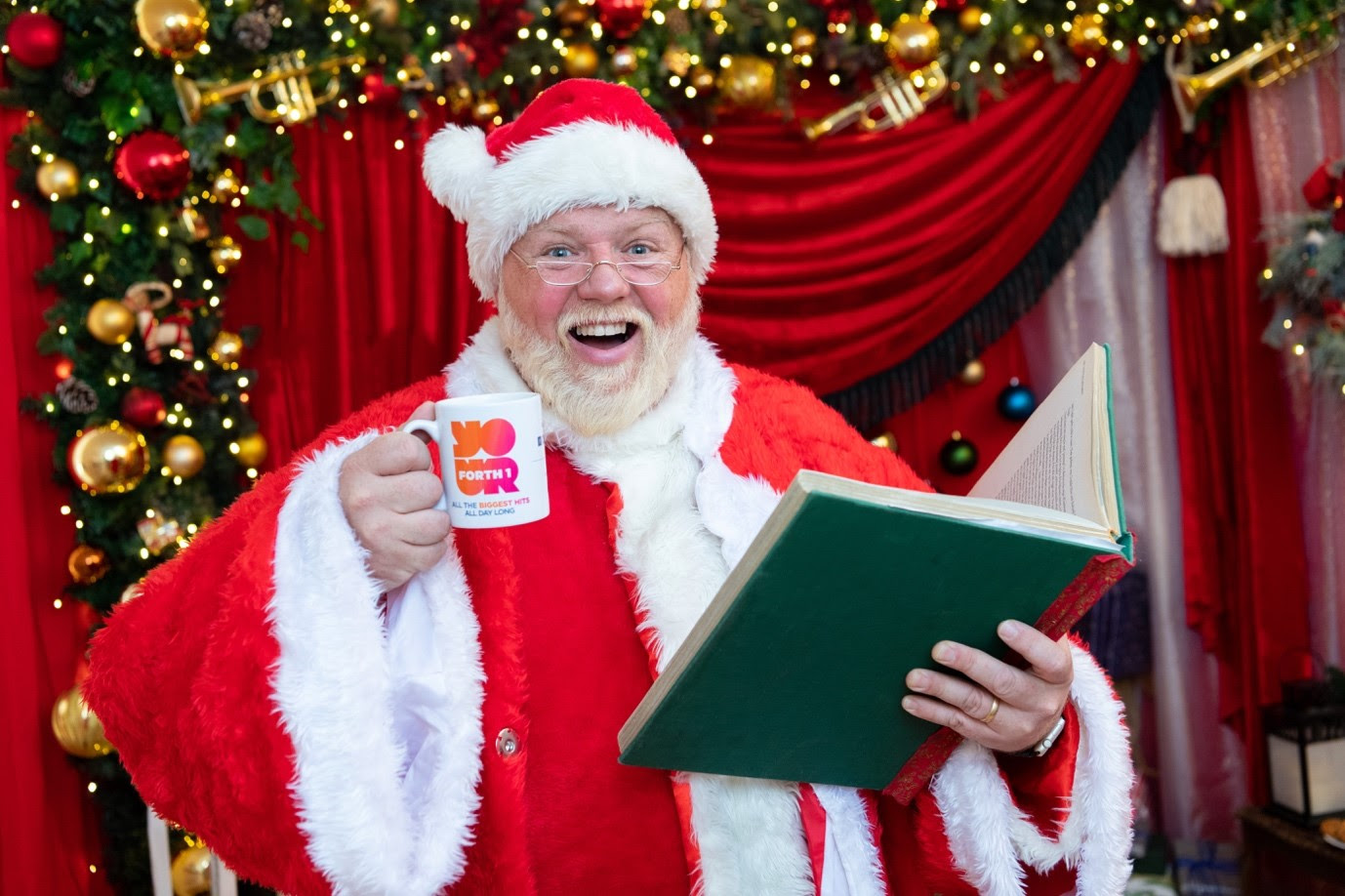
Santa Claus will keep the Edinburgh’s Christmas spirit alive and bring some magic to each day of Advent, by reading a free, festive story every evening before bedtime on Edinburgh’s Christmas website each day of Advent providing families with a daily dose of comfort.
Edinburgh’s Christmas (and Santa Claus, who needs some help as his elves are busy making toys) are calling on budding writers of all ages, from within Edinburgh and the Lothians to send in a story filled with festivity, hope and fun.
Santa Claus himself will select the winners and will read them out, and Edinburgh’s Christmas will publish them on the website.
Entries open today and should be submitted by Sunday 22nd Nov.
Supported by the team at Forth 1, Boogie In The Morning hosts, Boogie & Arlene will be among the presenters who will encourage listeners to enter the competition and will support Santa in reading some of the stories from his grotto in the North Pole.
Shop local at Edinburgh’s Christmas Neighbourhood Market
Edinburgh’s local businesses will be the focus of a new online campaign and virtual shop window in a new online neighbourhood market.
From today, a sign up portal on www.edinburghschristmas.com will open for local, independent businesses to enter their information to be part of the Edinburgh’s Christmas Neighbourhood Market.
The Market is expected to showcase artisan producers, makers, local retailers, bakers, gift companies, accessory and clothing businesses, hotels and restaurants – putting the focus on supporting and celebrating local, independent businesses and will open to customers on 19 November.
The Market is entirely free to sign up to. It will act as a directory to direct people to a fantastic range of local suppliers where they can purchase and interact on the supplier’s own site.
Throughout the campaign, the neighbourhood market will put a spotlight on a range of selected local businesses each day, showcasing the wealth of product and produce on offer in Edinburgh.
In addition to featuring on the Edinburgh’s Christmas website, the promotion and marketing support will extend to the official Edinburgh’s Christmas channels. These include 126,000 followers on Facebook, 9,300 on Instagram and 13,300 on Twitter.
The platform will also highlight activity that is already happening in the city, with information and a location map highlighting each of the local farmers markets in the city.
Ashley Harley, Events Manager at Mimi’s Bakehouse said: “We have always loved being part of Edinburgh Christmas and as a local Edinburgh business we love helping to ensure there is local presence so this digital platform is such a fantastic idea.
“Giving Edinburgh businesses a chance to showcase the amazing gifts, produce, food and drink the city has to offer and utilise to Edinburgh Christmas platform will be sure to generate some sales at a time when the retail and food and drink has taken a real blow. We encourage everyone to shop local this year and support your independents whilst having a safe and happy Christmas.”
Ruth Fisher, Producer of Edinburgh’s Christmas for Underbelly, said: “Edinburgh’s Christmas is a hugely important event for the city and this year’s digital programme has been designed to put Edinburgh’s residents and businesses first.
“The new Christmas Neighbourhood Market is designed to shine a spotlight on the wealth of products and produce that we have here in Edinburgh and encourage residents to shop locally this Christmas.
“As a key worker, Santa is very much at the heart of our plans. We look forward to reading the story submissions and working with Santa and his elves to produce a great series of Advent Stories. In what has been an unprecedented year for Edinburgh, we hope that the Edinburgh’s Christmas programme brings some cheer and enjoyment to everyone this festive season.”
Edinburgh’s Lord Provost Frank Rosssaid: “The festive season is a very special time for our city and our communities and, as Edinburgh’s Christmas goes digital this year, our residents and local businesses will be at the heart of it all.
“What an honour to have Santa Claus himself reading bedtime stories every night leading up to the big day!
“The new online Neighbourhood Market promises to be an exciting and convenient outlet for Christmas shopping and a fantastic opportunity for local businesses of all kinds. This year, more than ever, it’s essential to support our local businesses and through the Neighbourhood Market we can do this while at the same time staying safe and having some festive fun.
“I’m glad that although we can’t be together at our usual popular events this year, this digital programme ensures that the Capital will still have plenty of Christmas spirit.”
Boogie, Presenter of Forth 1’s Boogie In The Morning showsaid: “Forth 1 has worked with Edinburgh’s Christmas & Hogmanay for many years so we are delighted to be involved in Santa’s Advent Stories.
“We all know that Christmas could be very different this year so anything at all that Arlene and I can do to help bring some festive cheer to the fantastic people of Edinburgh and beyond, then we are very keen to support it where we can. We love the Santa’s Advent Stories idea!”