
AN ANNOUNCEMENT FROM NORTH EDINBURGH CHILDCARE

AN ANNOUNCEMENT FROM NORTH EDINBURGH CHILDCARE

A new report released today, 6 February 2025 from The Centre for Homelessness and Inclusion Health at the University of Edinburgh has revealed that Social Bite’s Jobs First initiative delivers significant economic and social benefits.
Jobs First is an innovative employment initiative supporting individuals with lived experience of homelessness and is unique within the sector in its trauma-informed and person-centred approach, providing tailored support to both employers and employees.
The independent evaluation confirmed that for every £1 invested by Social Bite and participating employers, a social benefit of £3 is returned to the UK, while enhancing public finances by at least £0.71.
The independent report, which was launched at the Impact Conference in Edinburgh, outlines the significant socio-economic benefits of the programme for employees, employers, and taxpayers.
Savings are generated by reducing pressure on the UK’s public services such as healthcare, as well as lowering welfare benefit payments, in addition to increasing tax revenues from people who may have otherwise struggled to secure employment.
According to the Centre’s cost-benefit analysis, the social benefit equates to £52,697 per employee gaining employment, which is 2.9 times higher than the cost per employee. This is primarily attributed to increased economic output of £40,000 and enhanced personal well-being valued at £12,000.
The programme has enabled many employees to thrive in their roles and continue employment beyond the programme’s completion. Participants have reported gaining new skills, qualifications, expanded social networks, and increased confidence, all while earning income to secure more stable housing and break the cycle of homelessness.
Employers, including leading hospitality group Mitchells & Butlers, reported that the initiative has helped alleviate recruitment challenges, reduced hiring costs, and provided access to a pool of motivated candidates.
Additionally, participating companies have found involvement in the programme to be rewarding for staff and beneficial to workplace culture. All employers expressed a strong appetite for the programme to be expanded and replicated elsewhere.
The Jobs First programme recently marked its third year of operation and by the end of 2024 had supported a total of 91 individuals into employment with many continuing to thrive in their new roles today. All employees interviewed for the evaluation said they would recommend it to other people with similar backgrounds.

Marzena Farana-Sherlock, Director of Social Impact at Social Bite said: “We are immensely proud of the findings from this independent evaluation by the Centre for Homelessness and Inclusion Health at the University of Edinburgh.
“Time and again, we have seen that homelessness is perpetuated by the vicious cycle where securing employment is difficult without stable housing, and obtaining housing is challenging without a job.
“This systemic issue needs to change, so at Social Bite, we took action to break this cycle in a sustainable way. Thanks to our incredible Jobs First employers, dedicated Social Bite support workers, wonderful charity referral partners, and the determination of our employee candidates, we are already witnessing remarkable outcomes that benefit all stakeholders and the UK economy.
“This is just the beginning for Jobs First. I have no doubt that its impact will continue to grow as we expand, and we would welcome an opportunity to discuss the findings with policymakers.”

Professor Sarah Johnsen, Director of the Centre for Homelessness and Inclusion Health at the University of Edinburgh, added: “Our evaluation of Jobs First has been overwhelmingly positive. It clearly shows that participants found the programme to be highly beneficial and that it was well-received by both jobseekers and employers.
“The impact demonstrated within just three years of the programme is impressive. Furthermore, our findings suggest that the ratio of benefits to costs would be even greater if all the advantages of Jobs First, including its role in reducing long-term homelessness-related costs and changes in public service use, could be fully measured.
“Jobs First employers, employees and support workers should be congratulated for their commitment to and success in the programme. It has been a privilege to hear firsthand from the employees who have taken part about how transformative Jobs First has been for their lives.”

Comfort Mensah moved to Scotland from Ghana in September 2023 and found herself classed as homeless.
She soon sought help through Social Bite’s Jobs First programme her the situation improved when she found work in a Harvester restaurant in January – almost four months after arriving in Scotland.
Now having completed the course while finishing her Masters at Glasgow University, Comfort’s role and support from Social Bite made it possible for her to find somewhere to call her own.
She said: “Social Bite came through. Even though it was hard at first as I didn’t have experience, they helped me through it. Having a job, earning my own money, and then finding a room was totally transformational.
“I never sleep well, but that first night I fell asleep before 8pm and slept right through to 8am – I’d never slept like it. Maybe this is how it is to be at peace.
“My advice to anybody in my situation is don’t give up – there is somebody out there who can help. When you meet that person, your mind will be blown by how much they will help. There is hope in humanity.”
The full report is available to view at https://www.social-bite.co.uk/what-we-do/jobs-first/ .

Leith Theatre Trust today revealed that it has secured a significant funding package potentially worth £4.5m from The National Lottery Heritage Fund.
Just days after being included on the Theatres Trust ‘Theatres at Risk’ Register for the ninth year, and shortly after securing a 50 year lease of the complex from City of Edinburgh Council, Leith Theatre Trust is delighted to announce Heritage Fund backing of its ambitions to create an innovative cultural venue at the heart of its community.
An initial award of £247,947 for its Back to Life: the theatre that isn’t just a theatre project supports Leith Theatre to develop its capital refurbishment plans in close collaboration with The National Lottery Heritage Fund in order to secure the full remaining funding award of just over £4.2m.
The development support from the Heritage Fund also strengthens a community engagement programme, helping to ensure local people remain at the heart of the Leith Theatre story.
An impressive civic space, now suffering from damage and decay, Leith Theatre is a Grade B listed building with classic interwar architecture and a unique political history, built to commemorate the incorporation of Leith into the City of Edinburgh’s new boundaries in 1920.

Lengthy periods of closure have preserved many original features, making the theatre a distinctive and valuable heritage site. Time has left its mark, but despite deterioration, the space retains much of its classic detailing, with its ‘authentic’ and ‘faded grandeur’ continuing to resonate with all who visit.
Between 1961 and 1988, it served as a venue for the Edinburgh International Festival, hosting performances by world-renowned musicians like the Amadeus Quartet and Benjamin Britten. The theatre hosted contemporary music in the 1970s, with iconic bands like AC/DC and Kraftwerk performing on the stage.
As it reawakens, Leith Theatre has woven itself into the local community, making it an important local asset, celebrating the heritage and civic pride of Leith.
As one of few buildings in Edinburgh to sustain war damage, the theatre was closed in 1941. The Main Auditorium has now been closed for more than half its life, yet Leith Theatre has still taken its place in the community weaving an incredibly rich story and heritage.
Without support, the curtain could have fallen on Leith Theatre’s rich social and cultural history forever. This funding from The National Lottery Heritage Fund opens up the possibility of significant refurbishment and a year-round, permanently open Leith Theatre for the first time since its initial opening.

The Future
As a mid-sized music and performance venue, Leith Theatre’s past informs its future. However, the building is not just a space for entertainment but also a much-loved community hub appealing to a diverse and intergenerational audience.
The Trust’s ambition is to save this valuable community asset so it can take its rightful place at the heart of Leith and in the cultural landscape of Edinburgh, contributing to local vibrant life and ultimately benefitting future generations.
The vision for the refurbishment is to ensure the building fulfils these original purposes but as a contemporary space that preserves the charm and heritage that makes it so enthralling to visitors. It will be a remix of the old and the new, retrofitting the iconic venue to preserve its rock-and-roll spirit while hitting the right notes on sustainability.
Everyone will be able to take part in the refurbishment project through events and heritage opportunities, allowing many people to access the venue and play their part in preserving and creating Leith and the City of Edinburgh’s history. People can stay up to date on these opportunities by signing up to the organisation’s newsletter and social media channels.
In the longer-term, this project ensures organisational sustainability in order to offer employment opportunities and skills development, bringing economic and social benefits to Leith.
Leith has featured in several ‘best neighbourhood’ polls and articles in recent years due to its mix of creative businesses, artists, Michelin starred restaurants, vibrant bar scene and new tram links direct from the airport. Leith Theatre’s return at last gives the area and Edinburgh a brilliant mid-size live music and performance venue in an accessible, yet out of city centre location.

Lynn Morrison, Chief Executive from Leith Theatre Trust said: “We are delighted with this initial support from The National Lottery Fund. Thanks to National Lottery players we can continue to progress our strategic plans to revitalise and reimagine this beautiful heritage building.
“This is a significant milestone, and I am very proud of the team that has helped realise this ambition, which is one that I have been aiming for since appointment. It will be invigorating working in partnership with the Heritage Fund to develop and bring visibility of such an exciting lottery project to the heart of Leith.”

Anna Higham, Funding and Finance Manager from Leith Theatre Trust, said: “This project to bring Leith Theatre back to life really shines a spotlight on heritage and how important it is for communities to retain buildings of local value.
“Although this feels like the culmination of lots of hard work, it is really just the beginning, and we are excited to continue our next step development plans and launch our full capital fundraising campaign.”

Caroline Clark, The National Lottery Heritage Fund Director for Scotland said: “We are thrilled to be able to help make plans for a restored and revitalised Leith Theatre a reality.
“As a historic theatre with nearly a hundred years of stories, creativity and characters there is so much to celebrate and explore in its heritage.
“Thanks to National Lottery players, Leith Theatre Trust’s plans for the future will be developed with the community ensuring this wonderful theatre has a bright future as a lively venue and as a place for local people to experience and be involved in the arts, culture and creativity.”

MSP for Edinburgh Northern and Leith, Ben Macpherson, said: “It’s a wonderful building and I have been pleased to support the Leith Theatre team, and dream, in any ways that I could, since being elected in 2016.
“I recall first being shown around the place back then, when it was in a state of disrepair, and the progress in the years since has been remarkable. I pay tribute to all of the staff, board and volunteers for everything that has been achieved up until now.
“The space is a fantastic venue, and I cannot wait to see and hear the shows and concerts that will now take place in the near future. Leith is a creative and energetic hub, and I am excited for what is ahead for this theatre.
“I predict there will be significant demand to perform on the stage – by musicians, actors and other various artists alike – and many audiences are in for a treat! Congratulations to everyone involved in getting to this moment, and here’s to a bright future ahead! Open the curtains and turn up the amps!”

For many people, the 2025 Council Elections in England will be the first opportunity in four years to have their say on their local councillor and on who’s been running their Council.
But 16 of the 21 county councils have applied to ‘delay’ their elections due to the UK Labour Government’s devolution plans.
When the Westminster Government first suggested they might allow a delay to elections, it was clear that it would only be for a year. However it’s become increasingly clear that any reorganisation involving these councils will take much longer than 1 year.
The Government now says it expects the new local authorities to be up and running in 2027 and 2028.
That would mean current administrations and councillors on these councils will end up with a 6 or 7 year term!
In effect, elections will be cancelled and voters will have no say on who runs their council or who their councillor is for 2 or 3 more years, when the new local authorities are ready to take over.

Democracy shouldn’t be put on hold in this way – people deserve their vote and their voice!
That’s why Unlock Democracy has started a campaign to ensure elections go forward as normal on May 1st this year. Voters should have their say on what’s going on in their communities and importantly on the local government reforms that are being imposed by the Government.
We have written to the Deputy Prime Minister urging her to ensure elections go ahead.
The Government’s dalliance (and we hope it’s just that) with cancelling elections reveals some much deeper problems at the heart of our democracy. These won’t go away without the kind of major political reforms which Unlock Democracy is campaigning for. Let’s look at those issues –
A gaping hole in our democracy
There’s a serious question as to whether any Government should have the power to delay or cancel elections. At the very least, it should be a power that can only be used in truly exceptional circumstances with strong safeguards. No guardrails exist in our democracy and we should all be worried about that.
Trust in politics
To many, this looks like an attempt to avoid a difficult set of elections this May. It’s not just the Government that might suffer, it’s the official opposition too. When these seats were last fought, the Conservatives were on 43% in the national polls and the Labour Party was on 33%.
Today the Conservatives are polling around 20% worse and the Labour Party around 8% worse. Both face a very challenging election in May and it is potentially politically beneficial for both parties not to go to the polls.
With trust already at record lows, voters are unlikely to give the Government the benefit of the doubt when it tries to justify its decision on this.
The relationship between central and local government
Unlock Democracy looked at the state of local government in its 2021 report ‘Local Government in England – 40 years of decline’. Things have not improved much since then!
The relationship can be likened to a parent (central government) and child (local government) relationship, but not in a good way. In this relationship, the parent tries to control everything that the child does and thinks that if the child has any freedom bad things will happen.
It’s the equivalent of saying, if I give my child pocket money, they might spend it on drugs, so I won’t give my child any pocket money!
Over the last few decades, this is where central government has got to with local government. To a significant degree, it’s what we’re seeing in this Government’s devolution plans. Central government can dictate whether councils even exist, they can dictate what powers they have and they control the money. As discussed, it can even dictate whether elections can even take place!
This is not to say that local government has been perfect over the decades. At times Councils have wasted money and taken decisions that have not been in their residents’ best interests. But the same thing can equally be said about central government – HS2 is an obvious example of this.
This is a dysfunctional relationship and needs a reset.

How can we fix it
One of Unlock Democracy’s founding goals is to secure a Written Constitution. It’s the rulebook that our political system is lacking and it’s the guarantee of people’s rights and our democracy.
A written constitution would include rules about elections – when they happen, who can vote and on what grounds, if any, they can be postponed. No Government could ignore a written constitution.
A written constitution, developed with the input of ordinary citizens, would be a major start to restoring trust in our politics. It would contain rules that would ensure that no Government or Prime Minister can ignore. It would restore the checks and balances that have been too easily overridden in recent times.
Finally a written constitution would clearly define the powers of both central government and local government. It would give local government the legal standing it lacks. It will enable a partnership between central and local government in building a better future for their citizens.
People on most, if not all, sides of the political divide agree that our political system isn’t working the way it should. A written constitution should be a key plank in a long overdue reform programme designed to fix things.
We will continue to fight for this, whilst at the same time calling for this year’s elections to go ahead.


Parents and carers, with a child born between 1 March 2019 and 29 February 2020, risk missing out on hundreds of pounds worth of help if they don’t apply for School Age Payment in time.
The deadline is midnight on 28 February 2025.
School Age Payment is worth £314.45 per child. It is one of Social Security Scotland’s Best Start Grant payments. It is only available in Scotland.
The money can be spent on anything the child needs at this stage including; books, bags, clothes and equipment for school. School Age Payment is paid around the time a child is first old enough to start primary school. There is no requirement to take up a place at school.
This is important as parents and carers could miss out on the payment if they defer when their child starts school and don’t apply until then.
The payment is available for multiple children from the same household, as long as each child is the right age.

Social Security Scotland automatically pays School Age Payment to eligible people who get Scottish Child Payment. But those who do not receive Scottish Child Payment or who have opted out of automatic payments must apply before the deadline.
Some families who are not eligible for Scottish Child Payment might still be eligible for the School Age Payment. This includes parents and carers who: receive housing benefit, are under 18 and do not receive any other benefits or are 18 or 19 and dependent on someone else who receives benefits for them.
Social Justice Secretary Shirley-Anne Somerville said: “If you have a child in the family aged five, or who turns five this month, then you could be eligible for School Age Payment.
“We are urging everyone who is eligible to make sure that they don’t miss the deadline for applications, especially as all the children in the household who are the right age can get the payment.
“Best Start Grant is made up of a series of payments designed to ensure that children in Scotland get exactly that – the best start possible in life.
“This money is an important contribution to families at a key stage in their child’s development when they may be facing additional costs.”

A record breaking (and heart-breaking – Ed.) 10,360 children are trapped in often unsuitable temporary accommodation, latest figures from the Scottish Government has revealed.
The number of children in temporary homes has risen for the 10th year* as figures detail the stark reality for thousands of families across Scotland. The statistics cover from 1 April 2024 to 30 September 2024 – during which time the Scottish Government declared a national housing emergency.
It is a national scandal that 7,545 households have been stripped of their rights in only six months, as councils failed to offer a place to those requiring temporary accommodation, also known as gatekeeping.
While Shelter Scotland welcomes the Scottish Government reversing the cuts for housing, it must be clear that funding has returned to the same level as it was in 2022.

The latest figures show:
– 10,360 children living in temporary accommodation on 30 September 2024, an increase of 250 children compared to the previous six months. That’s an increase of 149% since 2014.
– 7,545 instances of failure to offer a place to a household requiring temporary accommodation, also known as
gatekeeping, between 1 April to 30 September 2024. This an increase of 277% in just 6 months or 3.8 x higher. In the 12-month period to September 2024 gatekeeping was at 13,500 recorded cases, a 541% increase compared to the year prior.
– 4,085 breaches of the Unsuitable Accommodation Order between 1 April and 30 September 2024 – a 11% increase compared to the previous six months.
– 16,634 households in temporary accommodation as of 30 September 2024 an increase from 16,330
– 32,272 live homeless cases as of 30 September 2024 an increase from 31,794.
Shelter Scotland is calling on the Scottish Government’s renewed housing budget to focus on reducing the number of children trapped in temporary accommodation, and to ensure local services are fully funded to ensure lifeline housing rights are upheld.
This comes at a time when wider cuts in the public services may push more people closer to the brink of homelessness.

Shelter Scotland Director, Alison Watson, said: “This is the harrowing reality of decades of under-investment in social housing. No child should have to experience homelessness, yet the numbers keep rising to a record-breaking amount and are now staying in temporary accommodation for longer.
“These figures show the direct consequence of the Scottish Government and local authorities failing to prioritise housing and the desperate need for more social homes.
“Everyone deserves the right to be in a safe and secure permanent home where children can thrive. We know children living in unsuitable temporary accommodation can have their mental and physical health detrimentally impacted.
“Children are paying the highest price for the politicians’ failures and the devastating reality of the housing emergency in Scotland. If the Scottish Government is serious about ending child poverty with their new budget, social homes need to be urgently delivered.
“The Scottish Government reversed the brutal cuts to housing, but it needs to acknowledge it brings us to the same amount of funding that we had in 2022. Since then, the number of people living in temporary homes has risen, people are trapped in the system for longer, the number of people rough sleeping has increased dramatically, and the cost of living has skyrocketed.
“The reversal alone will not be enough to end homelessness and there desperately needs to be a long-term plan from politicians, targeting money to the areas where it is most needed.
She added: “The way people are experiencing homelessness is changing with more people becoming homeless and faster than councils can close cases. The Scottish Government need to invest in the areas where applications are the highest. Services to support families at risk of homelessness also desperately need funding from local authorities.
“Children in Scotland forced to live in temporary homes don’t need excuses, they need action if the Scottish Government want to end child poverty in their next budget.”
See full report: https://www.gov.scot/publications/homelessness-in-scotland-update-to-30-september-2024/pages/main-findings-april-to-september-2024/
*Excluding pandemic periods of lockdown 2020-mid 2021

Julie Dennis, Head of Inclusive Workplaces Policy at Acas (The Advisory, Conciliation and Arbitration Service), said: “Time To Talk Day is a great opportunity for employers to raise awareness of well-being at work and to be approachable and available for workers that want to talk about their mental health.
“Taking the time to talk openly about mental health can avoid problems building up and lead to improved morale at work. It might be difficult for someone to talk about their mental health so it’s important for managers to be respectful, supportive and reassuring.”

Acas has some top tips for employers on talking about mental health at work:

The Notice of Election to community councils in Edinburgh was published yesterday (Wednesday 5th February).
Community councils are groups of elected local residents who care about their communities. These councils play an important role in the democratic process and act in the interests of their local areas.
The nomination period runs from today until 27 February. During this time you can nominate yourself to stand for election as a community councillor.
An election will only be held in a community council area if there are more people nominated than places on the community council. Should this be necessary the election date will be 27 March.
The new community council term will start on 28 March and will last four years. The next community council elections are planned for 2029 though this may be subject to change.
Find out more about community councils and how to stand for election on our website along with the full text of the Notice of Election.

Culture and Communities Convener, Councillor Val Walker said: “Community councils remain an integral part of the social and democratic fabric of our city. In my experience as a ward councillor, I truly value my relationship with community councils and the excellent work that they do.
“From campaigning on key local issues, to organising meetings, chairing debates, liaising with local and national representatives and much more – the life of a community councillor in the Capital is never ordinary.
“This is an excellent opportunity to take a lead in your local area and make your community a better place. I’d encourage all residents to consider standing as a community councillor. Edinburgh draws its strength from its citizens, and we need their views and ideas to move forward together.”

Secretary of Edinburgh Association of Community Councils, Ken Robertson said: “You have a community council voice in city life, by right.
“Don’t step to the side and stay silent.”
Councillor Mandy Watt, Finance and Resources Convener, looks ahead to Council Budget day on Thursday 20 February:

Very soon, councillors will be making tough financial decisions to balance the council’s budget and set the rate at which Council Tax will be charged.
Given the increasing need for investment in infrastructure and services, we’ll have to raise Council Tax, parking charges and other fees to fund the delivery of services we all rely on. We are considering a recommended 8% rise in Council tax.
An 8% increase adds £9.65 per month to a band D property and would provide a total of £26 million across all bands for investment and service priorities.
A huge amount of work has already been done to consider options, with detailed proposals considered yesterday at a Special meeting of the Finance and Resources Committee. This has been informed by a huge consultation exercise with residents, and I want to thank all 3,260 people who took part.

We know from the consultation responses that people are aware of the financial challenges we face following years of underfunding, and many are open to a fair rise to Council Tax after last year’s freeze. Other councils are proposing increases of 10% and above, but we’re trying to keep Edinburgh’s increase lower because that’s what the majority of residents would prefer.
Residents also told us they’d like to see Councillors focus on several key priorities when setting this year’s budget. These include spending on education, investing in local facilities and upgrading our roads and pavements. We’ll use the money from an increase in Council Tax to protect and improve these services.
Investment proposals include continuing the extra £12.5 million for roads and pavements that was added last year, with a further £5 million for road safety, especially around schools. There will be five new schools and five extensions of existing schools and £26 million for special needs infrastructure. Fox Covert Joint Campus will be replaced and there’s £15 million for permanently replacing Blackhall Library.

The decision to recommend an 8% Council Tax increase was not taken lightly. Over the last decade cuts in core grant funding of over £400 million have been mitigated by council staff continually delivering more with less resources.
This year’s financial challenges are the UK Government’s increase in national insurance, costing the council £9 million and the Scottish Government changing the stability funding floor, taking away £6.3 million. Fortunately, the UK Government passed on £18million of pEPR (‘producer pays’) funding, which filled those gaps.
While we can expect a slightly better government grant this year following yesterday’s Scottish Parliament budget, the consequences of last year’s cuts to affordable housing remain clear to see.

Huge pressures on health and social care remain unaddressed by national governments. Yet again, Edinburgh is expected to be the lowest funded local authority in Scotland per head of population and we’ll still need to find best value efficiency savings to deal with service pressures of £40million and keep the books balanced this year.

MORE than seventy community groups across Edinburgh are shaking off the winter blues with the exciting news of their share of the latest round of National Lottery funding, announced today (Thursday 6th February).
Among the local projects celebrating this morning are Fresh Start, Living Rent, Granton Parish Church, Project Esperanza, LifeCare, Granton Youth and LIFT at Muirhouse Millennium Centre – who receive not one but TWO Lottery grants!
The Muirhouse centre recently launched an online fundraising campaign so today’s news of lottery success is a welcome boost.

LIFT receives £62,553 to continue delivery of their community support offering
within Muirhouse. Through support and advocacy LIFT aims to tackle child poverty, increase wellbeing for individuals and families, and allow them to move forward from poverty and crisis.
LIFT was awarded a further £23,187 to employ a staff member to work on and develop their ‘sharing shelf’. This is a space where members of the community can come, without a referral, to pick up some food essentials and acts as a link point to other services within the centre.

Hard-pressed community centres have done particularly well in this round of grants: as well as Muirhouse Millennium Centre there are big grants for Space at Broomhouse, Craigmillar’s Sandy’s Community Centre and Southside Community Centre.
This vital support will enable them to continue to bring together local people, deliver essential services, and provide much-needed support to their communities.
This latest round of funding from The National Lottery Community Fund is shared amongst 549 projects across Scotland. A full list of projects is attached.
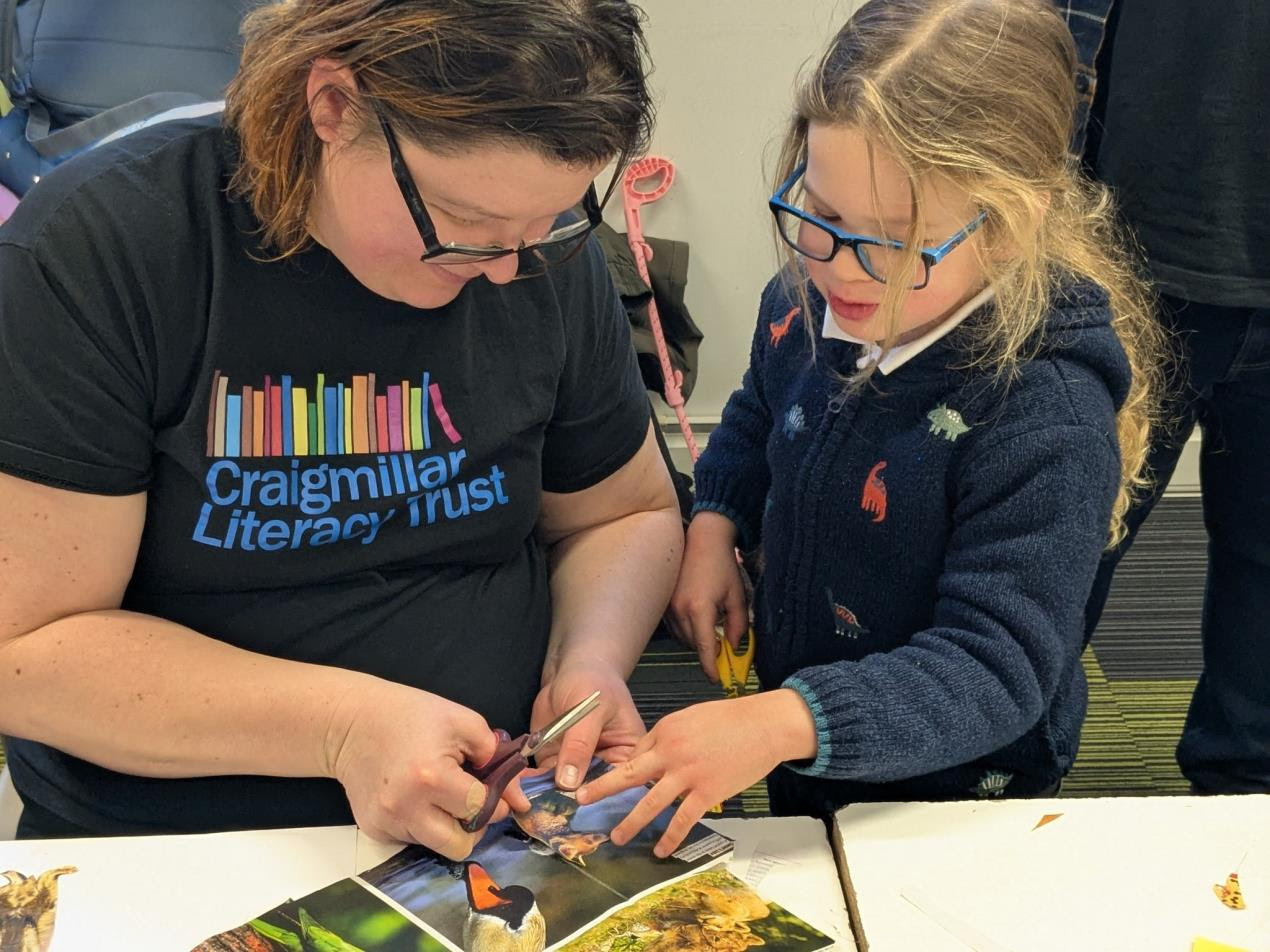
Thanks to an award of £76,336, Craigmillar Literacy Trust will continue to deliver their programme of early and family literacy activities for families, parents and carers for the next two years.
Kara Whelan, Project Manager, Craigmillar Literacy Trust, said: “This funding will enable us to continue to deliver our literacy support programmes to families with babies and young children, specifically, early communication and family literacy through home visits and one-to-one support for individual families. ”

An award of £63,399 means that Living Rent will provide support and guidance around a range of housing issues affecting hundreds of people in Leith, Newhaven and Granton over the next three years.
Emma Saunder, National Organiser for Living Rent, said: “This will have a huge impact on our ability to continue to grow and empower our members.
“This award will support us to grow in the Leith area of Edinburgh, as well as building a thriving group in Granton. We can also continue our work, supporting members who are trapped in awful housing conditions through empowering them to know their rights and take action to receive compensation, repairs or stop evictions.
“The National Lottery funding is a continued source of strength and support for local communities helping us to support them to come together to ask for change.”
Lothian Centre for Inclusive Living (LCiL) will expand their ‘Financial Wellbeing’ service for disabled people living in Edinburgh and the Lothians after an award of £25,000.

Florence Garabedian, Interim CEO, LCiL, said: “From our work, we clearly see the impact of the cost-of-living crisis on the lives of disabled people, their families and carers.
“This funding will help us provide a targeted response to the current financial climate, help many more people who are struggling with day-to-day costs and offer accessible advice and information around welfare benefits, income maximisation and financial security.”

Announcing the funding, Kate Still, Scotland Chair, The National Lottery Community Fund said: “At The National Lottery Community Fund we are so proud to be able to support local groups to make a real and lasting difference and help address the challenges their communities face.
“It’s all made possible by National Lottery players and we’re excited to see the outcomes of all of the funded projects across Edinburgh in the months ahead.”
The National Lottery Community Fund distributes funding on behalf of National Lottery players who raise more than £30 million each week for good causes throughout the UK.
To find out more visit www.TNLCommunityFund.org.uk