

A Happy and Peaceful Christmas to you all!
I’ll be back with all the latest news – if there is any! – tomorrow
All the best
DAVE – Editor

Image by KELLY LATIMORE
A Happy and Peaceful Christmas to you all!
I’ll be back with all the latest news – if there is any! – tomorrow
All the best
DAVE – Editor
Image by KELLY LATIMORE
Seven of the weirdest festive objects PDSA pet patients have eaten at Christmas

Christmas is often dubbed ‘the most wonderful time of the year’, but sadly some pets will need to see a vet this year due to a festive emergency.
This Christmas period, PDSA Vets alongside PDSA Pet Insurance are warning pet owners of certain dangers to be wary of this time of year.
PDSA Vet Nurse Shauna Walsh explains: “Festive foods, gifts under the Christmas tree, decorations, and even the most ordinary household objects can tempt curious cats and dogs, putting them in harm’s way.
“Over the festive period, we all eat things we shouldn’t, and that’s no exception for many pets. Our veterinary teams will likely see many poorly pets in need of emergency treatment after they’ve wolfed down something they shouldn’t have over the festive season.
“In December alone last year, our veterinary teams treated over 53,000 pets, conducted over 61,000 consultations, and performed over 2,300 operations. Some of which will have been related to ingestion of a festive hazard.
“This Christmas, we’re urging owners to watch out for prying paws as we revisit seven of the oddest Christmas-themed objects our pet patients have eaten.”
7 of the oddest Christmas-themed objects PDSA pet patients have eaten
1. Fairy lights
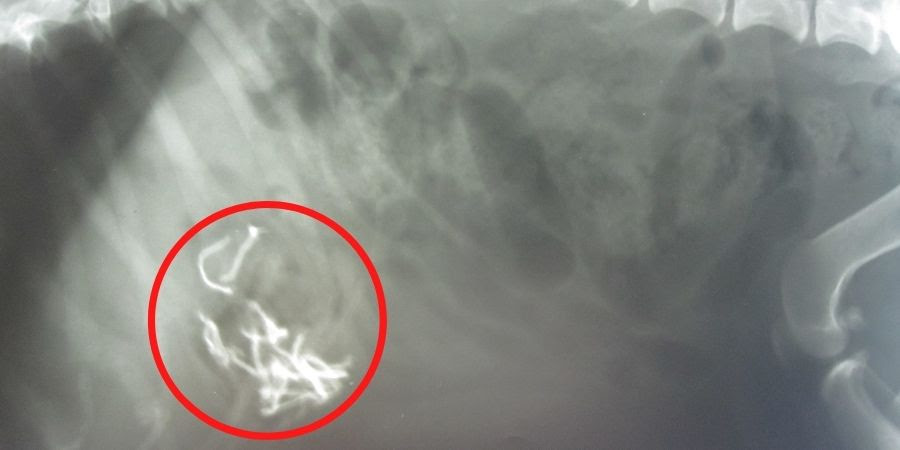
Now, you wouldn’t think fairy lights could look appetising, would you? Think again! Cheeky Charlie underwent emergency surgery at Southampton PDSA when his family discovered he had eaten fairy lights. Thankfully, the glass hadn’t cut his mouth or throat, and he hadn’t bitten through the wire when the lights were on, which could have electrocuted him! Thankfully, vets performed life-saving surgery to remove the lights, and Charlie was able to go home with his family.
2. Tinsel
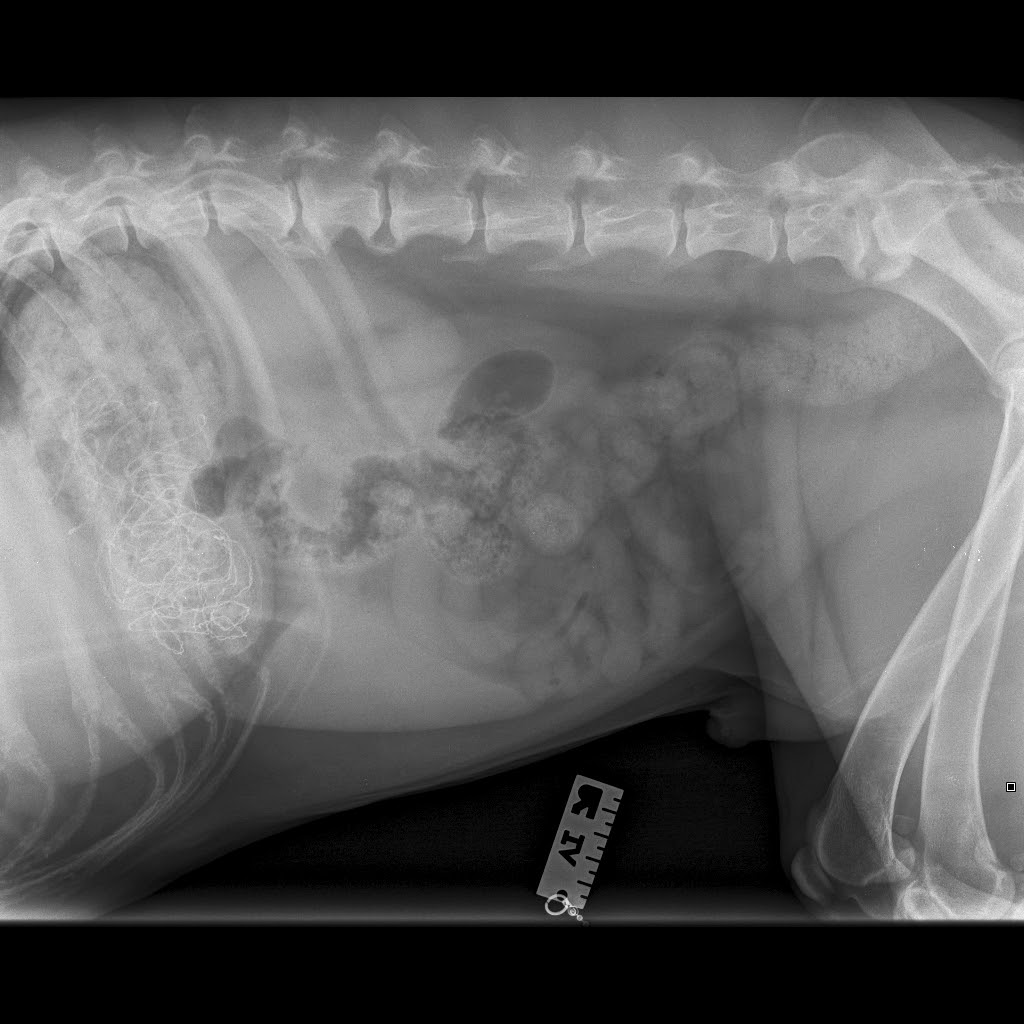
Renowned for eating sofas, carpets, and tinsel in his younger days, when Dexter’s family noticed tinsel was missing from the mantelpiece, they were sure their dog was the culprit. However, Dexter showed no signs of illness until later that night, when he was sick. The following morning, Dexter was taken to PDSA, and x-rays confirmed tinsel in his stomach. Vets performed emergency surgery, and to his owners’ relief, Dexter could go home in time for Christmas.
3. Golf balls
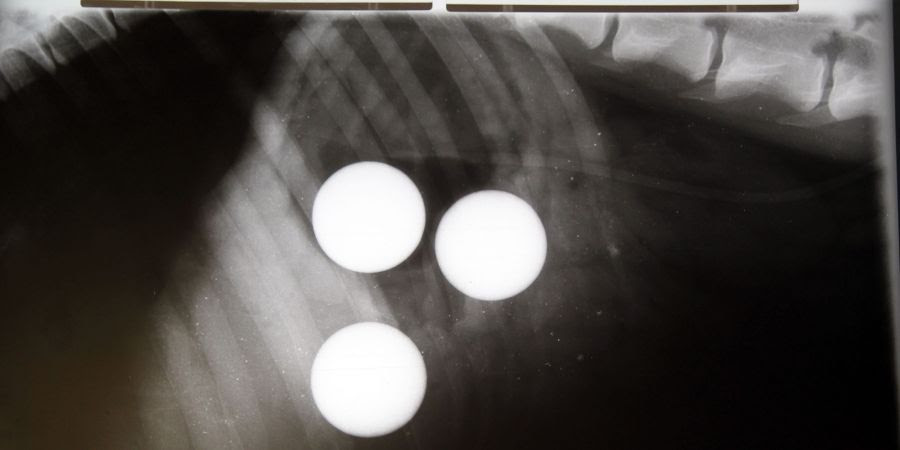
If you’re planning to surprise a friend or family member with golf-inspired gifts this Christmas, be careful around inquisitive pets. When Azar the Doberman suddenly lost weight, his owner took him to her local PDSA Vet. To her surprise, they discovered he had swallowed not one but three golf balls! Sadly, two of the balls had lodged themselves in his small intestine, and he was at risk of suffering stomach injuries. It was touch and go, but thankfully Azar survived the operation.
4. Star-shaped Christmas decoration
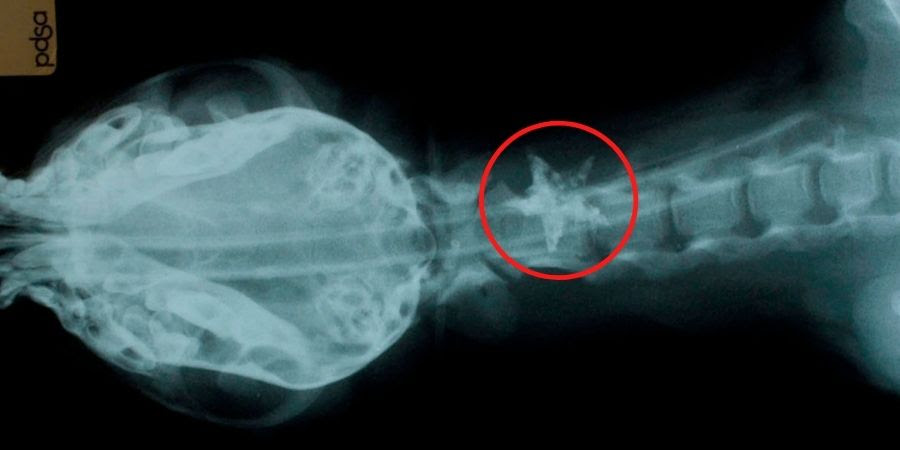
When a five-month-old puppy called Charlie was gagging and struggling to breathe, his worried owner knew something wasn’t right. Charlie visited his local PDSA Pet Hospital, where vets performed x-rays and, to their surprise, found a star shining back at them! Vets had to act quickly to remove the star-shaped decoration with forceps to stop the puppy from choking.
5. Nintendo DS game
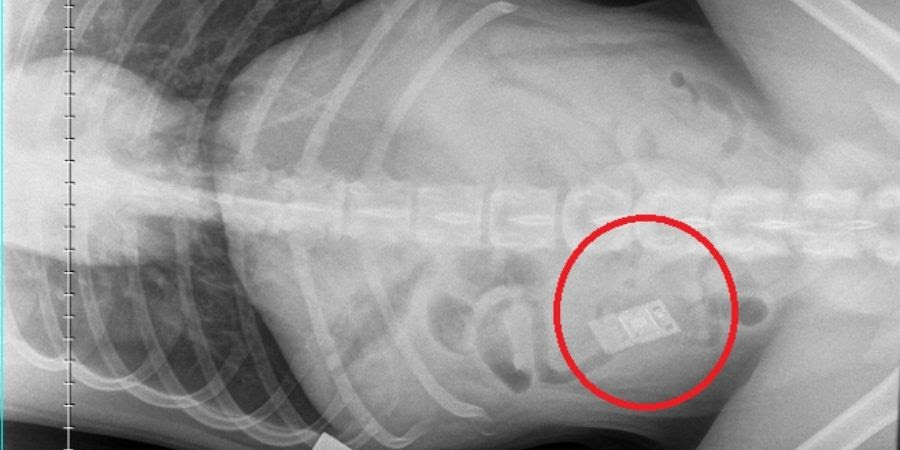
It was almost game over for Rocco when PDSA Vets discovered the curious canine had swallowed a Nintendo DS game. He started vomiting and refused to eat, so his owners took him to PDSA Glasgow Shamrock Street Pet Hospital for an emergency appointment. Vets found a rectangular-shaped object in his gut on x-rays and performed emergency surgery to remove it immediately. They were stunned to retrieve a video game cartridge from his small intestine, but thankfully, Rocco survived and was able to go home to rest and recover the following day.
6. Christmas tree decoration
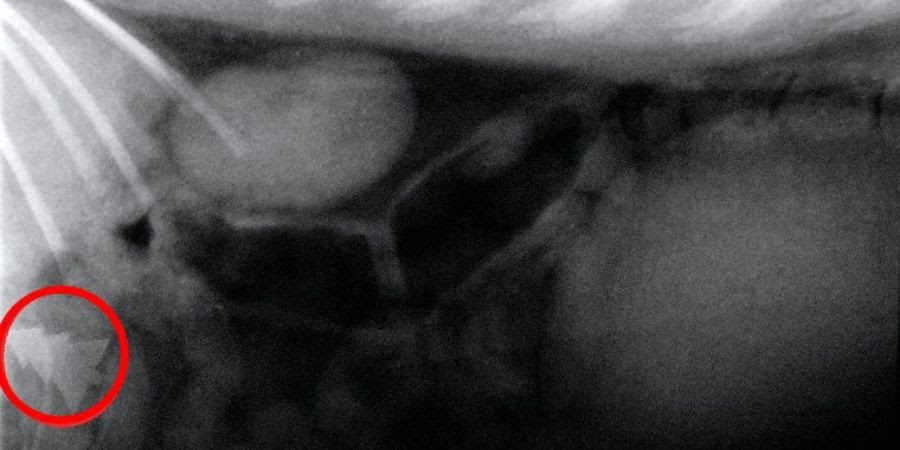
Leah’s owner was distraught when her beloved cat began vomiting and losing weight. Her owner took her to Middlesbrough PDSA to get to the bottom of the issue, only to find Leah had eaten a tiny Christmas tree-shaped decoration! X-rays showed a perfectly formed Christmas tree in the cat’s abdomen. Vets performed emergency surgery to remove it, and thankfully Leah was able to go home with her loving owner.
7. Spoon
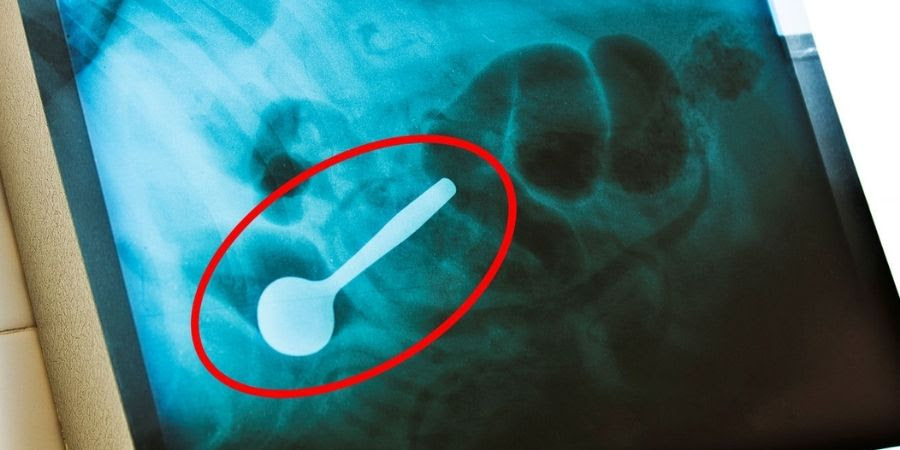
Don’t forget, pets can be drawn to the most ordinary household objects too. Rottweiler Max bit off more than he could chew when he was fed strawberries and cream from a spoon and ate the spoon too! Worried, Max’s owners took him to her local PDSA Pet Hospital. An x-ray showed the spoon lodged firmly in Max’s stomach, so he was rushed into surgery to remove it. Thanks to PDSA Vets, Max survived.
PDSA is the UK’s largest vet charity providing a vital service for pets across the UK whose owners struggle to afford treatment costs for their sick and injured pets. For many vulnerable pets, PDSA is there to help when there is nowhere else for their owners to turn.
The charity’s insurance arm, PDSA Pet Insurance, offers a range of policies to cover cats and dogs for accidents and illness, as well as providing access to a 24/7 veterinary helpline. Every policy sold raises funds for the charity’s life-saving veterinary work.
To find out more visit www.pdsa.org.uk/pet-insurance-pdsa

Charities, grassroots organisations and other community groups have been awarded a share of over £150,000 from the Home Office’s Community Engagement Fund, to go towards raising awareness of the Windrush Status and Windrush Compensation Schemes.
The fund is providing financial support to 16 diverse groups and organisations, who applied for grants of between £5,000 and £10,000, to assist their engagement with individuals and communities about the Windrush Schemes.
This will bolster efforts to reach as many people as possible who may be eligible to apply for documentation to confirm their status or for compensation. As of the end of September 2023, the Windrush Scheme has provided documentation confirming status or citizenship to over 16,700 individuals. Over £73 million had been paid in compensation, across 2,009 claims, by the end of October 2023.
The Community Engagement funding will support activities and events to provide people with information about eligibility criteria, guidance on the application process, and to address any misunderstandings about what the schemes cover.
The successful bidders have demonstrated how they will reach communities and individuals within and beyond the Caribbean community, including those with roots in Bangladesh, Pakistan, Nigeria, Ghana and India. This follows feedback from Wendy Williams’ progress update that said more needed to be done to identify and reach out to wider affected groups.
The experience of organisations helped through the fund will help the Home Office understand more about why some people might not have yet come forward to apply for documentation and compensation. This will help with future efforts to encourage eligible people to apply for both schemes.

Minister for Legal Migration and the Border, Tom Pursglove MP said: The money we are providing will make sure groups, with roots and well-established networks in their communities, can help the Government reach as many people as possible to encourage them to come forward.
“We know this is the most effective way to get the message out and assure people that they will get the guidance and support necessary to get the documentation they need and to apply for compensation they so rightly deserve, having contributed so much to the UK.”
Activities and projects that the fund supports may include, but are not limited to, hosting small-scale engagement groups, 1-to-1 sessions and creating and sharing materials such as leaflets and posters. Groups will use diverse communications channels such as social media and local radio, and will secure support from corporate partners, advocates and prominent figures.
The fund follows the success of the Windrush Community Fund, a similar fund of £500,000 which was launched in December 2020 to support community groups in carrying out promotional activity for both schemes. The fund was a key element of the Home Office’s work to support and engage with communities.

The Windrush Community Fund reached over 850,000 individuals through a range of activities and events hosted by community groups. Since 2018, the department has also held over 200 engagement events, in person and virtually.
This is the third iteration of Community Engagement Fund which is offered by the Home Office and provides funding to grassroots and community groups to engage communities and raise awareness of priority Home Office policies.
Successful organisations have been awarded grants of between £5,000 – £10,000 and will need to use the funding by the end of the 2023-24 financial year. They will receive up to 25% of the awarded amount as an initial payment for set up costs, with the remaining payments being made in arrears in accordance with their delivery plans.
All organisations successful in applying for funding have been made aware and grant agreements have been signed. Early conversations with those organisations to embed their funded projects are now taking place and names and locations of successful organisations will be published in the new year.

Scottish Labour MSP Foysol Choudhury has raised alarm bells about the latest funding arrangements for Scotland’s culture sector.
There are no year-on-year, real-terms cuts to the culture budget in this year’s budget, with the overall culture budget increasing from £180.8m to £196.6m. However, total culture funding is still less than what it was in 2022-23 – equivalent to a £13.2m cut in real terms.
Foysol Choudhury, Scottish Labour’s Culture Spokesperson, said: “Scotland’s vibrant cultural sector has huge potential and a pivotal role to play in the future of the Scottish economy.
“Sadly, the SNP are sleeping at the wheel and have given up on trying to build a positive future for Scotland’s arts and culture sector.
“Whilst the increased support in this year’s budget is welcome, it comes after years of neglect and total culture funding is still facing a cut in real terms from 2022-23’s funding.
“The arts and culture sector has been crying out for increased funding for so long, yet the offer now presented it simply insufficient.
“The SNP has been treating culture as disposable when they need it to be-I will be working hard for my constituents to hold the SNP to their promises to double culture funding within 5 years.”

The Scottish Parliament’s Constitution, Europe, External Affairs and Culture Committee had previously raised concerns that the culture sector in Scotland is suffering from a “perfect storm” of crises. A storm, Mr Choudhury says, which hasn’t yet been weathered: “The new funding arrangements for culture do not go far enough for our struggling cultural sector.
“Trust from the sector has worn thin and these inadequate funding arrangements, which will likely still lead to struggles in the sector, may be the final straw.
“The SNP Government must urgently recognise the value and contribution of Scotland’s culture sector and help to save it before it is too late, instead of wasting tax-payer’s money on an Independence Minister.”

Information for claimants already receiving payments:
Your payment dates may be brought forward due to the festive period.
Please contact us straight away if there is a problem with your payment.
For more information and contact details visit: https://www.gov.uk/contact…/existing-benefit-claims

This year, we provided 1,369 packs of brand new uniform as well as reaching an additional 1,000 children and young people by establishing school and community partnerships across the city.
As we take a break for Christmas we want to thank everyone who supports our work:
 Our fabulous team of volunteers, they work so hard
Clare and Siobhan, our operations team – they make it all happen
The Trustees, the service would not run without the work you do quietly in the background.
Our supporters for their donations of uniform, funds and kind words that really keep us going
The local businesses that host our drop off points
The professionals out in the community working with families and ESUB to make sure children have what they need
Our funding partners who help us pay the bills
Thank you for giving children a chance to walk into school with their heads held high, ready to learn and play.


It almost Christmas and for many of us, the festivities are well underway. As Mariah, Elton, and Wham! fill our ears with our favourite festive tunes, there are also certain smells that just give us that warm festive feeling. A recent nationwide survey has revealed exactly what those scents are.
The study found that the majority of us (88%) associate different smells with the festive season. Unsurprisingly, for two thirds (66%) of us it is mince pies, nearly three quarters (72%) say it’s festive candles, 63% state it’s cinnamon sticks and 57% admit that the smell of pine needles is what they need for a room to smell festive. These smells have been proven to make Brits feel festive (35%), nostalgic (26%) and cozy (19%).
However, the study also revealed that it’s not just the aroma of sweet treats and warm spices making us feel Christmas nostalgia.
The survey found many associated the smell of Lynx Africa, proudly the no.1 men’s fragrance brand in the world, with Christmas too. This particularly rang true in major cities like Leeds, Newcastle and Nottingham with almost 20% of people saying they associated the iconic scent with Christmas. I mean, what’s the holiday season without a Lynx giftset or two.
A spokesperson from Lynx, said: “Lynx is a Christmas staple and something we see flying off of the shelves around this time of the year, so it’s no surprise to hear that for many people our fragrances are synonymous with festive scents.
“We actually sell more Lynx gift sets than Christmas trees, here in the UK. With around 23 million being sold each year.”
Lynx product range and giftsets are available to purchase at most leading retailers nationwide including Asda, Boots, Superdrug, Sainsburys, Tesco, Sephora UK and online, making it the perfect choice for those last-minute shoppers.

Keep festive anxiety in check!
Daylight is a free app for people living in Scotland. It’s designed to help people who are experiencing symptoms of worry and anxiety. Try it out by going to
https://onboarding.trydaylight.com/daylight/nhs/144#1/1


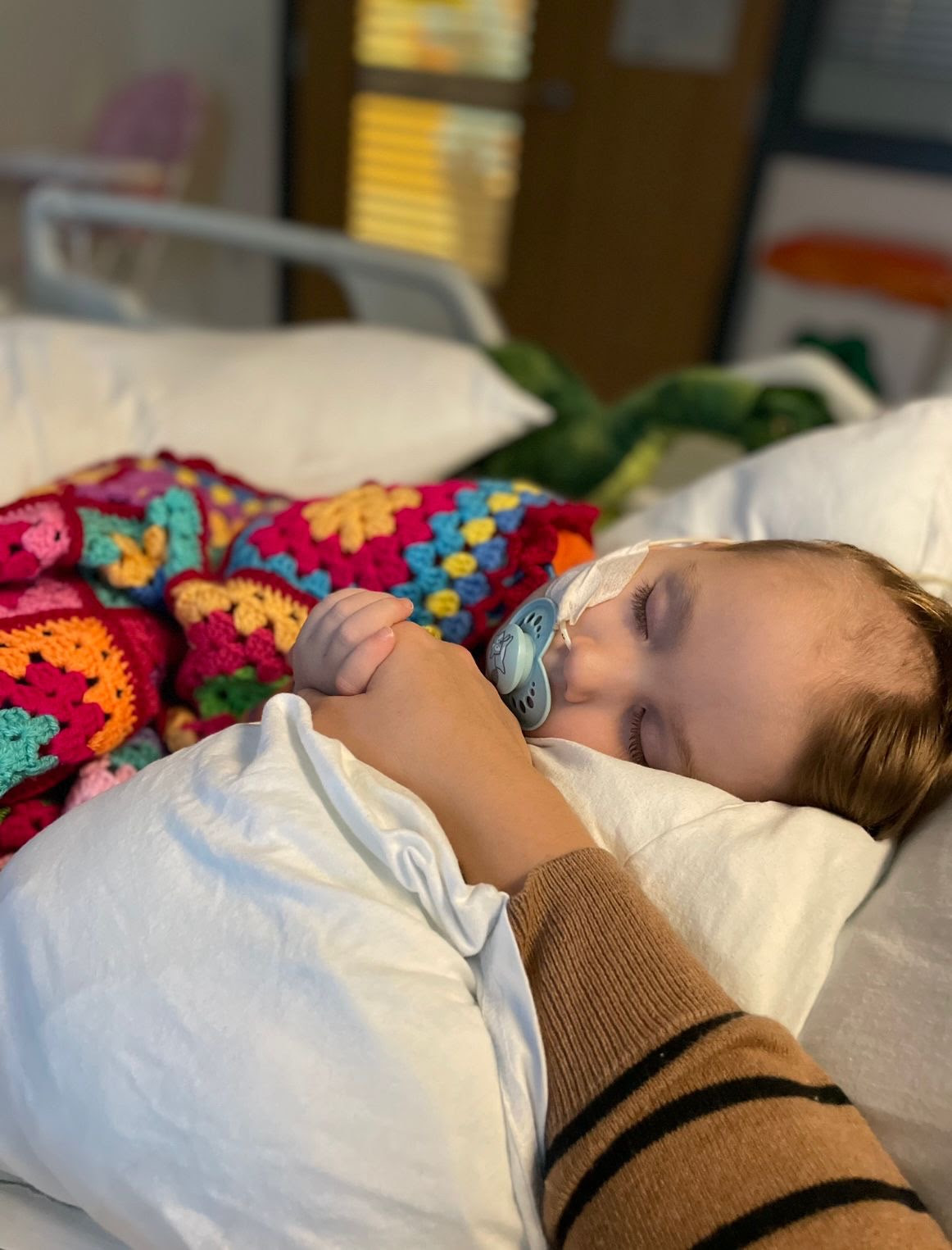
| Last week, Elijah Bell (2) from East Kilbride walked out of hospital and is now having festive fun at home with his mum, dad and brother, Issac (1) following almost three months in the Royal Hospital for Children, Glasgow. During most of Elijah’s stay, he was unconscious in bed. He had no movement on his right side, and his parents – Natalie and Jamie – had no idea what his future looked like. They didn’t know if he would ever move or talk again. Elijah first became unwell on the 23rd of September 2023 when he had a spike in temperature. At first, it was suspected that he had a viral infection, followed by tonsilitis due to his symptoms. Elijah quickly began to deteriorate and could barely stand. He was stumbling all over the place. His concerned GP referred him to Wishaw General Hospital. At hospital, things progressively got worse, and Elijah was sleepy to the point of unconscious. After tests, it was confirmed that Elijah had Pneumococcal Bacterial Meningitis. He was put on antibiotics and after five days, started to show a little bit of progress. |
 |
| Elijah’s mum, Natalie explained: “He was getting on top of his infection, but then on day six, he completely deteriorated, and he started having seizures. It was at this point we were transferred to the Royal Hospital for Children in Glasgow. “When we arrived, the team placed him in an induced coma for two days to try and get control of the seizures and prevent any further brain damage. We thought we were going to lose him. “We had no idea what was going to happen, and we have never been so scared in our entire lives. After a few days, the doctors removed his tubes and he was able to breathe on his own, but he was still very much asleep and unconscious, to the point where he was unable to open his eyes for days in the Paediatric Intensive Care Unit.” The neurologist advised that Elijah had suspected areas of stroke due to vasculitis as a complication of meningitis. After five days in PICU, Elijah was moved to the Neurology Ward, but he was sleeping about 90% of the day. Another scan showed that he had Hydrocephalus, a build-up of fluid in the brain that increases the pressure. Elijah then had an external drain fitted to his head to help drain this. Prior to having the surgery, he had right-sided weakness because of the areas of stroke. He couldn’t move his right leg or arm. After he had the fluid drained, he began to move his right leg again. The drain was in for around two weeks, and, on the 31st of October, he had further brain surgery, and a shunt was fitted for life. |
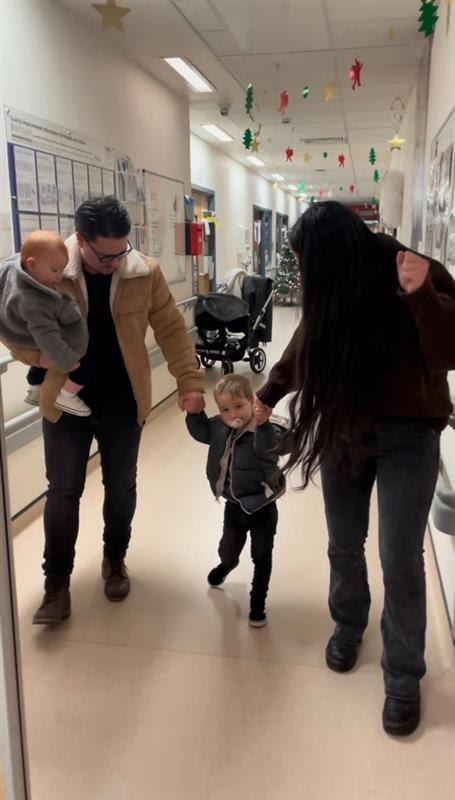 |
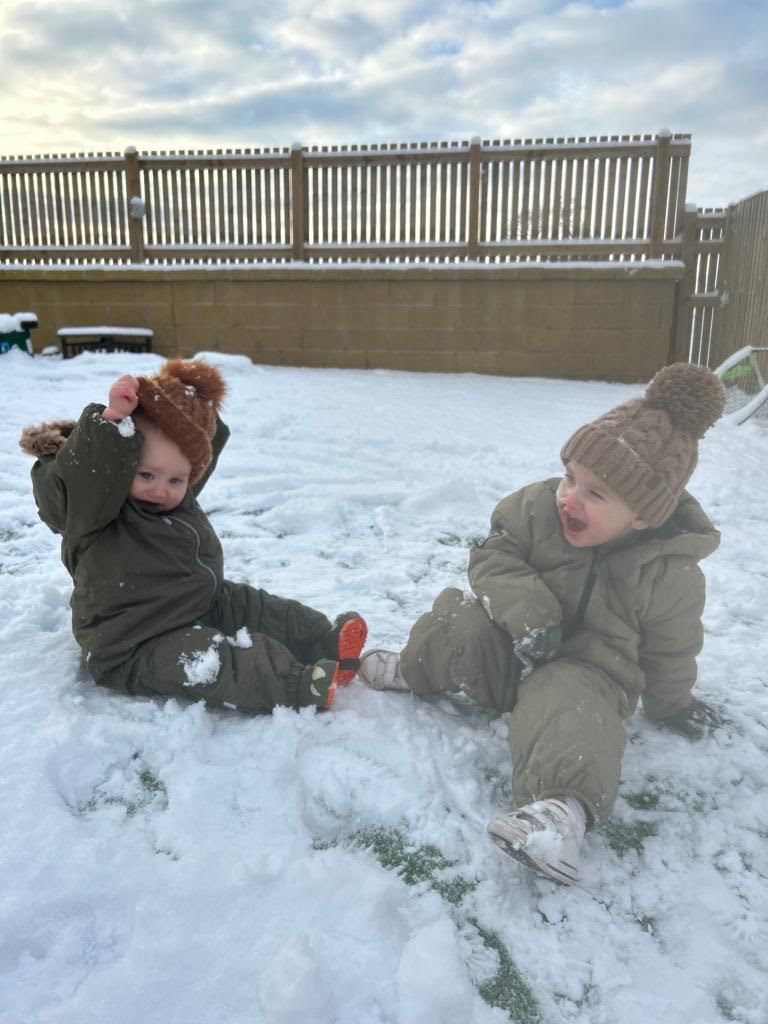
| Natalie continued: “It was at this point that we saw a big improvement in him. After his post-surgery recovery, he had intense neuro rehabilitation which included daily physio, speech and language, occupational therapy and daily visits from different doctors as well. He made amazing progress. “At this point we were allowed home for visits and Elijah took a couple of steps unaided in the house which was amazing. We couldn’t believe he was able to walk. The doctor was lost for words.” The home visits had helped Elijah’s recovery so much that the hospital team decided that he would make more progress at home fulltime. Elijah was officially discharged on the 7th of December 2023, and walked out of the hospital, holding his parent’s hands. Natalie explained that the family now has the future to look forward to, thanks to Elijah’s treatment, medical team, and determination. “We have been staying in Ronald McDonald House the last few months. One of us would stay with Isaac and the other with Elijah. We would switch each night. The first weekend we got home, you would have thought it was Christmas Eve in our house. When the boys woke up the next day, our Christmas tree was up, and it was all snowy outside. It really was magical. “We are looking forward to the next few weeks of Christmas visits and events, followed by a quiet day at home, just the four of us. “We are so grateful Elijah is here. We owe the medical team at the Royal Hospital for Children. They saved our son. Ronald McDonald as well, the amazing facility helped us so much. Being able to stay on the grounds, was amazing. “They made us feel so welcome from the moment we arrived. We may not stay miles and miles away, but we had no idea how Elijah was going to be health wise and being able to be only a few minutes from the hospital was truly amazing. “We also want to say that that we are beyond proud of our brave boy. He has shown the true meaning of strength and courage, and we love him so much. Thank you to everyone who was involved in saving Elijah’s life, we will be eternally grateful to you all,” she said. |
 |
| Shuko Joseph, Consultant in Paediatric Neurology at the Royal Hospital for Children, Glasgow said: “It was our great privilege to be part of Elijah’s recovery journey as part of the neurology- neurorehabilitation team. “The family endured such challenging time with incredible resilience, strength, and hope. It is so wonderful to hear the family is getting on well at home especially at such a special time of year. “Such recovery has been a credit to Elijah and family’s wonderful efforts and excellent engagement with therapy sessions and would not have been possible without the expertise of the PICU staff, ID team, neurosurgical staff, neurology ward staff, nurse specialists and neurorehabilitation therapists. “We are so grateful for everyone involved in Elijah’s recovery.” |

