Supercharging our immune system could tackle cancer

Researchers find new way to “reenergise” immune cells

SUPERCHARGING immune cells could provide an effective way to tackle cancer, according to new research by scientists in Scotland.

The team at the Cancer Research UK Scotland Institute in Glasgow studied how the immune system works and why it becomes “exhausted” by cancer.

T cells, which are the immune system’s front line against disease, eventually become overcome by cancer allowing it to grow.

Their research, published in Cell Reports, has identified a potential way to “boost” T cells, a key defence against cancer.

Lead researcher Professor Victoria Cowling, of the Cancer Research UK Scotland Institute and University of Glasgow, said: “T cells need to rapidly multiply and produce proteins to fight off infections. That requires a huge amount of energy.

“We’ve discovered that a little-known enzyme, called CMTR1, helps switch on the energy supply by changing how certain genes work.

“If we can find ways to boost this process, we could improve how the immune system responds to cancer which could be a game-changer in how we treat the disease.”

CMTR1 plays a vital role in energising T cells, acting as a switch to help the immune cells ramp up their energy production.

The team found that CMTR1 tweaks the instructions inside cells — known as RNA — so that the right versions of energy-related proteins are made.

These proteins help shape the mitochondria, which are like tiny batteries inside cells. With the right shape, mitochondria can produce more energy, helping T cells stay strong and active.

Without CMTR1, the mitochondria break apart and don’t work properly, leaving T cells weak and unable to fight off infections effectively. With CMTR1 present, T cells have more energy allowing them to proliferate and fight infection.

Next steps would be to identify new or existing treatments which increase CMTR1 to give exhausted T cells the power to tackle cancer cells.

Cancer Research UK Director of Research, Dr Catherine Elliott, said: “Scientific breakthroughs like this have the potential to transform how we see and, crucially, how we treat cancer.

“Our immune system is a key area of cancer research and scrutinising how it works can help create real-world impact for those affected by cancer.”

In Scotland, around 34,800* people are diagnosed with cancer each year, with around 16,400** people dying from the disease annually, so finding new ways to tackle the disease is vital.

The study was funded by Cancer Research UK, the European Research Council, the Medical Research Council, and the Wellcome Trust.

Marti Pellow performs live at the Beatson as part of breast cancer awareness campaign

Wet Wet Wet star Marti Pellow put on a special performance for patients and staff at the Beatson West of Scotland Cancer Centre. 

The singer has re-released the band’s hit single Love Is All Around as part of a campaign with ITV’s Lorraine Kelly to raise awareness of breast cancer symptoms and to encourage early detection. 

He visited the Beatson this morning, performing in the Beatson Cancer Charity Café on NHS Greater Glasgow and Clyde’s Gartnavel campus. 

Marti also met patients who are undergoing radiotherapy and chemotherapy in the Centre’s Radiotherapy Department and Macmillan Day Bed Unit, as well as staff members who support them. 

During his performance, he was joined by former Beatson patient, Mairi Milne, 55, from Bridge of Weir, who sings on the track as part of a choir of women who discovered they had breast cancer after watching Lorraine’s chat show.

And he was given a signed copy of a book by former patient Gillian Shirreffs, 54, from the west end of Glasgow, which was written before her breast cancer diagnosis in August 2021. The proceeds of Gillian’s book, Brodie, will go to the Beatson Cancer Charity as her way of giving back for the care she received. 

Marti said: “This is a very special place with such a big catchment area for the whole of the west of Scotland for people receiving treatment.

“Since I’ve come in the door I’ve been met with so many smiles and hugs. 

“It’s quite poignant for me too because my father was given his diagnosis here and I’ve always driven by and when I look at it it makes me think of my father.

“If there’s anything there that’s not your normal, go and get it checked. There’s a good chance there’s nothing wrong with you but it’s important to be aware and get checked if there are changes. 

“The beautiful thing about this is that we are giving the message through the gift of song, and that’s what makes it special and so powerful.”

Lorraine’s Change+Check campaign is now in its sixth year. It encourages women to check their breasts for changes and stresses the importance of seeing a GP if they notice anything unusual. 

Last year’s campaign single with Joss Stone, Golden, reached number one in the charts. 

Love Is All Around, which was originally released almost 30 years ago, is out now, with proceeds going to Breast Cancer Awareness UK. 

Cathy Hutchison, NHSGGC Cancer Consultant Nurse at the Beatson, said: “We were delighted to welcome Marti to the Beatson today, where patients and staff were able to meet him and enjoy a special performance.

“Having someone of his profile highlight the importance of routine checks and screening for breast cancer is invaluable. 

“We’re grateful to Marti for coming along and helping to raise awareness of the work we do here at the Beatson.”

Cancer drug delivery evaluation shows “better quality of life”

Beatson drug delivery study shows patient benefits

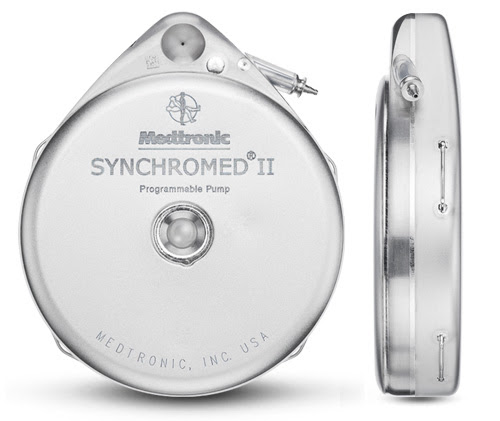
A new service evaluation on the use of intrathecal drug delivery (ITDD) by the Interventional Cancer Pain team at the Beatson West of Scotland Cancer Centre has shown patients having a better quality of life by being able to spend more time being cared for in the community.  

As well as this, the pump devices mean patients are on a lower dose of opioid painkillers, which reduces cognitive impairment.  

Dr Alison Mitchell led the work which has been published in the journal Palliative Medicine.  

The ITDD service offered by the Beatson WoSCC is the only one in Scotland and it is hoped the findings of this study will support the use of ITDD further afield.  

Dr Mitchell, Consultant in Palliative Medicine, said: “We have been using ITDD since 2007 and this research confirms the benefits that it has for patients who have significant pain due to a variety of cancers.  

“It’s an appropriate method of pain relief for a small percentage of patients and makes a real difference to their quality of life.” 

The devices use an implanted catheter in the lumbar area of the spine which allows delivery of anaesthetic and painkilling medication from a pump which sits just below the ribcage.  

After the device is implanted, patients return every two weeks to have the medication reservoir refilled.  

Dr Mitchell explained: “As the medication is delivered directly to the spinal cord, the local anaesthetic administered by the device acts like a dental anaesthetic by numbing pain nerves directly and we try to ensure it does not impair motor function in the way a dental anaesthetic would affect your face muscles.  

“The morphine delivered by the pumps relieves the pain associated with cancers and means patients can reduce their oral morphine use and patients with pumps are on a much lower overall morphine dosage.  

“This means they are better able to spend quality time with their families as they don’t experience the cognitive impairment that morphine usage can cause.”  

Patients requiring pain relief in the lower half of the body are assessed by a multidisciplinary team made up of palliative medicine, physiotherapy and psychiatric specialists and a decision can be made on how appropriate this method of pain relief would be for them.  

Dr Mitchell added: “The team takes a holistic approach to how we help people manage pain in a palliative setting.  

“Patients put forward for this face a life that is limited by cancer but this allows them to have an added quality of life with less time spend in a clinical setting.”