QMU’s Gaelic football success helps build a thriving student community

Queen Margaret University’s growing reputation for Gaelic football is helping create a strong sense of community for students from across the UK and Ireland, with the University’s successful teams offering a welcoming home away from home alongside opportunities to compete at a high level. 

The 2025/26 academic year has been another successful season for QMU Ladies Football Club, with the club growing to more than 70 members and securing its fifth consecutive Scottish Championship League title.

The team also celebrated winning the British Championship Shield in Birmingham in 2025, competing against university teams from across the UK. 

The men’s Gaelic football team has also enjoyed significant success in recent years, winning the Scottish University Championship in both 2023/24 and 2024/25 and finishing both seasons as unbeaten champions.

Following some time away from competition, the team’s re-establishment has been supported by the large Irish community studying at QMU, while also providing an opportunity for students from Scotland and elsewhere to get involved in the sport and Irish culture. 

The success of QMU’s Gaelic football clubs is also helping attract prospective students, particularly those from Ireland who are looking to continue playing the sport while studying in Scotland. 

For some students, the opportunity to join a successful Gaelic football club is an important factor when choosing where to study. 

Nicki Carr, an MSc Speech and Language Therapy student from Dublin, said: “The QMU Gaelic Football team has been a big part of my first year at QMU and has really helped me settle into university life.

“Moving to a new country and starting a busy postgraduate course was a big change, so being part of the club gave me a great way to meet people, make friends and feel more settled. 

“I really enjoyed being able to continue playing a sport I love without there being too much pressure around performance. The team was a good balance of football and socialising, and I got to meet people from different courses and years that I probably wouldn’t have met otherwise.

“Having a thriving Ladies Gaelic Football Club team was actually one of the things that attracted me to QMU when I was applying, as I knew it would be a good way to meet people and get involved in university life. Looking back, joining the team has been one of the best parts of my first year and has given me so many good memories and friendships that I’m really grateful for.” 

Although Gaelic games are deeply rooted in Irish culture, QMU’s clubs welcome students from all backgrounds and experience levels. Whether students have played Gaelic football or camogie (an Irish stick-and-ball team sport played by women) for years, are new to the sport, or simply want to try something different, everyone is encouraged to get involved. 

The men’s team has seen first-hand how quickly new players can take to Gaelic football, with students with little or no previous experience able to develop their skills alongside more experienced players. For the 2025/26 squad, creating a “home away from home” has been an important part of the club alongside building on its recent success on the pitch. 
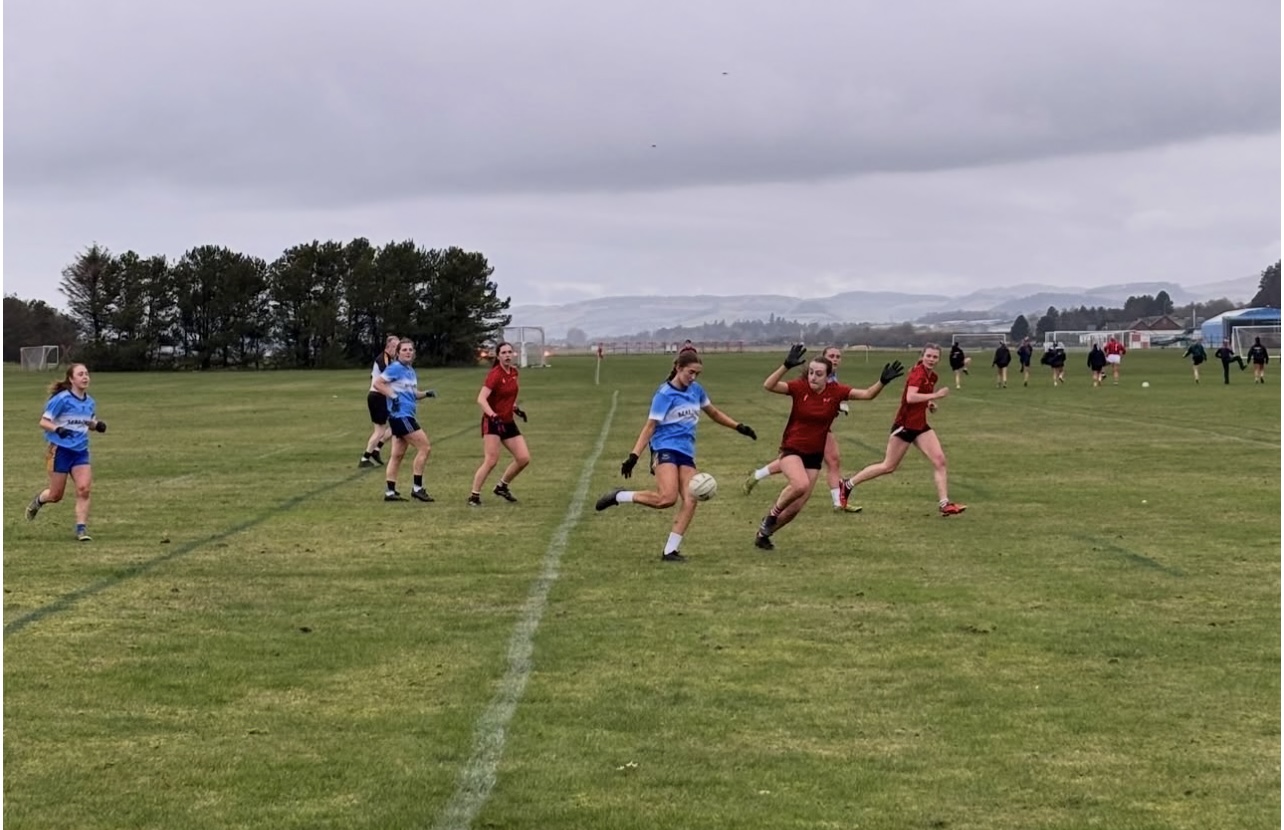
Ciara Brady, Social Secretary for QMU Ladies Gaelic Football Club, said: “The inclusive culture created within the clubs means that members quickly become part of a close-knit community, with friendships formed through training sessions, matches, travel and social events throughout the year. 

“The success on the pitch reflects the commitment and dedication of players, coaches and committee members, but the clubs’ impact extends far beyond trophies. They provide opportunities for students to grow in confidence, meet new people and create memories that last well beyond graduation.” 

The club’s achievements have also been recognised through the QMU Students’ Union Excellence in Sport Award, with the Ladies Gaelic Football Club receiving the award for two consecutive years. 

Joe Agnew, QMU’s Student Union President of Activities, said: “Sport plays an important role in the student experience at Queen Margaret University, and our Gaelic football clubs are a fantastic example of how extracurricular activities can help students build connections. 

“The achievements of our women’s team, alongside the continued success and growth of our men’s team, demonstrate the strength and enthusiasm for Gaelic games at QMU. The clubs give students the chance to compete at a high level while developing skills and connections that can last throughout their time at university and beyond.” 

With both clubs continuing to grow, QMU’s Gaelic football teams are combining sporting success with opportunities for students to try something new, develop their skills and become part of university life. 

Today’s Menu at Drylaw Neighbourhood Centre

Monday’s menu for the cafe!

A cafe classic of baked tatties for lunch, and we’re still planning dessert, so it’ll be a surprise! Check our page on Monday to find out what we’re making.

We welcome everyone along to our community cafe – so hope to see you there!

Joseph Rowntree Foundation: Poverty in Scotland 2026 report published

CHALLENGE POVERTY WEEK 2026

We are publishing this report at a critical crossroads in Scotland’s journey to a possible future, one free from poverty.

In this year’s election campaign and programme for government, we have consistently heard the First Minister describe eradicating poverty as his defining mission (Scottish Government, 2026a). This commitment is welcome, but there is an increasing disconnect between the Scottish Government’s rhetoric and the reality of life for families in poverty across Scotland.

New data for 2022–25 shows that:

  • 17% of people in Scotland were in poverty, 11% in deep poverty and 7% in very deep poverty. Around 2 in 5 people in poverty in Scotland are in very deep poverty
  • relative child poverty sits at 21%
  • over 9 in 10 children in poverty are in one or more of the Scottish Government’s priority families.

Despite some progress, the legal target to reduce relative child poverty to 10% by 2030/31 is set to be missed by a wide margin. Interim targets have been missed, and the Scottish Government’s current plans will not deliver the scale of change needed to shift the dial.

We want a better start for all children in Scotland, and there is clear evidence of overwhelming public support for more, and more effective, action on child poverty.

The Scottish Government’s plan to review Scotland’s landmark statutory child poverty targets risks delaying action and lowering ambitions. New targets need to be genuinely stretching, grounded in income as a central measure of poverty, and have teeth to hold the Scottish Government and the Scottish Parliament to account for meeting them.

In parallel, the Scottish Government needs a new, much bolder and properly funded plan to reduce poverty in Scotland. Only 1 in 4 people (26%) somewhat or strongly agreed that the Scottish Government is doing enough to tackle child poverty in Scotland (Birt, 2026a).

This year, as well as assessing the national picture, we have focused on the vital role of local government in reducing poverty, backed by new public attitudes data and engagement with people with lived experience.

In findings that must shape live discussions about the future of local governance and public service reform in Scotland, we have heard that:

  • people think councils are too underfunded to provide the services needed in their area
  • there is significant public disaffection with councils, regardless of people’s backgrounds and across Scotland’s different communities
  • councils are not doing enough to tackle poverty, with people on low incomes and living in more deprived areas reporting worse experiences of services and higher levels of disaffection.

To fix this, the Scottish Government and local government will need to work more effectively – in their own right and in collaboration.

Every council needs to ask itself, just as the Scottish Government should do, whether they have genuinely prioritised child poverty reduction and if their services are best where they are needed the most.

Fundamentally, these should be the core questions of public service reform; otherwise it simply becomes a numbers game of reductions in the number of councils and/or budgets. It is also clear that public service reform needs to go hand in hand with a fundamental rethink of local government funding to rewire our services and tax system to radically reduce poverty.

It is also vital that national and local government’s bandwidth across this parliament is not consumed by bureaucratic strife; families in poverty need to see rapid progress in the immediate term.

We want the Scottish Government, as part of its renewed drive to reform local government in Scotland, to:

  • provide local government with a more stable platform for anti-poverty work — avoiding single-year funding settlements and allowing councils greater freedom to adapt to their communities’ needs
  • take steps to fundamentally reform local government finance in Scotland
  • ground public service reform in 2 key questions: would the changes reduce child poverty and will they make services best where they are needed the most?

We want all councils to:

  • prioritise preventing poverty in their communities, and make full use of their levers including economic development, childcare, employability, transport, housing and schools
  • provide better-quality and more joined-up local services to support families in or at risk of poverty, with genuine partnership with the third sector, co-location of services, a ‘no wrong door’ approach and better use of data
  • significantly improve day-to-day communication with the public, underpinned by deeper and more meaningful work to involve people with lived experience of poverty in local decision-making.

Joseph Rowntree Foundation: Poverty in Scotland 2026 report

Executive Summary

COSLA Resources Spokesperson Cllr Kelly Parry has responded to ‘Poverty in Scotland 2026′ by @jrf_uk : “This report is a stark reminder that far too many children and families in Scotland are still being denied the security and opportunities they deserve.”