Westminster bypass: First Minister moves to seal Scotland’s place in Europe

‘a second independence referendum is clearly an option’ – First Minister  Nicola Sturgeon

Scottish Parliament election 2016

Talks will take place with EU institutions and member states to protect Scotland’s place in Europe, First Minister Nicola Sturgeon said yesterday.

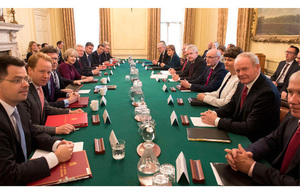
The First Minister chaired a meeting of the Cabinet to discuss the Scottish Government’s next steps following the EU Referendum result.

In addition, regular contact will continue with the EU and, as was planned, Fergus Ewing, Cabinet Secretary for the Rural Economy, will be attending the AGRIFISH Council in Luxembourg on Monday and will meet EU Agriculture Commissioner Phil Hogan where he will raise the concerns of farming community in Scotland. He will meet with other EU Ministers to demonstrate that the EU remains a priority for Scotland

Following the meeting, the First Minister said: “We have had a very full discussion about the result of the EU referendum, its implications for Scotland and the steps we need to take in the days, weeks and months that lie ahead to protect Scotland’s interests.

“Cabinet expressed its pride in the vote in Scotland, the emphatic vote in Scotland, to remain in the European Union. The Cabinet also shared the deep disappointment at the UK-wide result that is clearly felt by a majority of people across this country, and we are determined to act decisively but in a way that builds unity across Scotland about the way forward.

“As I said yesterday a second independence referendum is clearly an option which requires to be on the table, and it is very much on the table. To ensure that option is a deliverable one in the required timetable steps will be taken now to ensure that the necessary legislation is in place and Cabinet this morning formally agreed that work.

“However most of our discussions this morning centred on what we can do in the here and now and in the negotiations that lie ahead, to protect Scotland’s relationship with the European Union and our place in the Single Market. Cabinet agreed that we will seek to enter into immediate discussions with the EU institutions and the other EU member states to explore all possible options to protect Scotland’s place in the EU.

“In doing so, we are determined to draw on as much support and advice from across Scotland as possible and I confirm today that over the next few days I will establish an advisory panel comprising a range of experts who can advise me and the Scottish Government on a number of important matters – legal, financial and diplomatic. It will also seek to encompass voices from across the political spectrum in Scotland and indeed different views on Scotland’s constitutional future. I will say more early next week about the membership of this expert advisory panel.

“Lastly, Cabinet discussed this morning the very important work that we need to do to reassure people across Scotland who are concerned about the implications of this result. An intensive programme of engagement is already underway with stakeholders, especially our business community, to emphasise that Scotland is and Scotland will continue to be an attractive and a stable place to do business.

“One particular group that we are anxious to reassure is the community of EU citizens living here in Scotland. I said yesterday that people from other EU countries that have chosen, done us the honour of choosing to make Scotland their home are welcome here and I repeat that again today. I want to make sure that that is a message we get across strongly in the weeks and months ahead. To that end, I will be inviting the consul generals of all EU member states to a summit here in Bute house over the next two weeks to discuss how we engage with their communities here and make clear how highly we value the contribution they make to Scotland’s economy, to our society and to our culture.

“The final point I want to make this morning is this one. The Scottish Government will be working hard to protect Scotland interests in the period ahead and in the wake of the referendum result. But as we do this we will not be taking our eye off the ball of the day to day business of government. As Westminster is engulfed in political turmoil and as a vacuum of leadership develops, I want to make clear that Scotland is led by a stable and effective government. We are focussed on making sure that Scotland’s interests are protected but we are also determined to continue our work to further improve our schools, our hospitals and our economy.

“As First Minister I am focused entirely on governing this country in the interests of all the people of Scotland, that is my overarching priority.”

Cameron to go following referendum defeat

Prime Minister is first political casualty of EU Referendum result

10 Downing Street

Prime Minister David Cameron made a statement in Downing Street following the outcome of the referendum for the UK to leave the European Union:

The country has just taken part in a giant democratic exercise – perhaps the biggest in our history. Over 33 million people – from England, Scotland, Wales, Northern Ireland and Gibraltar – have all had their say.

We should be proud of the fact that in these islands we trust the people with these big decisions.

We not only have a parliamentary democracy, but on questions about the arrangements for how we are governed, there are times when it is right to ask the people themselves, and that is what we have done.

The British people have voted to leave the European Union and their will must be respected.

I want to thank everyone who took part in the campaign on my side of the argument, including all those who put aside party differences to speak in what they believed was the national interest.

And let me congratulate all those who took part in the Leave campaign – for the spirited and passionate case that they made.

The will of the British people is an instruction that must be delivered. It was not a decision that was taken lightly, not least because so many things were said by so many different organisations about the significance of this decision.

So there can be no doubt about the result.

Across the world people have been watching the choice that Britain has made. I would reassure those markets and investors that Britain’s economy is fundamentally strong.

And I would also reassure Brits living in European countries, and European citizens living here, that there will be no immediate changes in your circumstances. There will be no initial change in the way our people can travel, in the way our goods can move or the way our services can be sold.

We must now prepare for a negotiation with the European Union. This will need to involve the full engagement of the Scottish, Welsh and Northern Ireland governments to ensure that the interests of all parts of our United Kingdom are protected and advanced.

But above all this will require strong, determined and committed leadership.

I am very proud and very honoured to have been Prime Minister of this country for 6 years.

I believe we have made great steps, with more people in work than ever before in our history, with reforms to welfare and education, increasing people’s life chances, building a bigger and stronger society, keeping our promises to the poorest people in the world, and enabling those who love each other to get married whatever their sexuality.

But above all restoring Britain’s economic strength, and I am grateful to everyone who has helped to make that happen.

I have also always believed that we have to confront big decisions – not duck them.

That’s why we delivered the first coalition government in 70 years to bring our economy back from the brink. It’s why we delivered a fair, legal and decisive referendum in Scotland. And why I made the pledge to renegotiate Britain’s position in the European Union and hold a referendum on our membership, and have carried those things out.

I fought this campaign in the only way I know how – which is to say directly and passionately what I think and feel – head, heart and soul.

I held nothing back.

I was absolutely clear about my belief that Britain is stronger, safer and better off inside the European Union, and I made clear the referendum was about this and this alone – not the future of any single politician, including myself.

But the British people have made a very clear decision to take a different path, and as such I think the country requires fresh leadership to take it in this direction.

I will do everything I can as Prime Minister to steady the ship over the coming weeks and months, but I do not think it would be right for me to try to be the captain that steers our country to its next destination.

This is not a decision I have taken lightly, but I do believe it is in the national interest to have a period of stability and then the new leadership required.

There is no need for a precise timetable today, but in my view we should aim to have a new Prime Minister in place by the start of the Conservative party conference in October.

Delivering stability will be important and I will continue in post as Prime Minister with my Cabinet for the next 3 months. The Cabinet will meet on Monday.

The Governor of the Bank of England is making a statement about the steps that the Bank and the Treasury are taking to reassure financial markets. We will also continue taking forward the important legislation that we set before Parliament in the Queen’s Speech. And I have spoken to Her Majesty the Queen this morning to advise her of the steps that I am taking.

A negotiation with the European Union will need to begin under a new Prime Minister, and I think it is right that this new Prime Minister takes the decision about when to trigger Article 50 and start the formal and legal process of leaving the EU.

I will attend the European Council next week to explain the decision the British people have taken and my own decision.

The British people have made a choice. That not only needs to be respected – but those on the losing side of the argument, myself included, should help to make it work.

Britain is a special country.

We have so many great advantages.

A parliamentary democracy where we resolve great issues about our future through peaceful debate.

A great trading nation, with our science and arts, our engineering and our creativity respected the world over.

And while we are not perfect, I do believe we can be a model of a multi-racial, multi-faith democracy, where people can come and make a contribution and rise to the very highest that their talent allows.

Although leaving Europe was not the path I recommended, I am the first to praise our incredible strengths.

I have said before that Britain can survive outside the European Union, and indeed that we could find a way.

Now the decision has been made to leave, we need to find the best way.

And I will do everything I can to help.

I love this country – and I feel honoured to have served it.

And I will do everything I can in future to help this great country succeed.


Poverty misery: blame Westminster!

27081157466_160de7927e_k

Investment in addressing the deep-rooted causes of poverty would be greatly increased if the Scottish Government wasn’t being continually forced to spend money on tackling the negative impact of UK Government welfare cuts. That was the message from new Social Security Minister Jeane Freeman ahead of her first keynote address to the Child Poverty Action Group’s annual conference. Continue reading Poverty misery: blame Westminster!

Universal Credit’s now Scotland-wide

dwp

Today Arbroath, Blairgowrie, Forfar, Montrose and Perth join the rest of Scotland’s jobcentres in offering Universal Credit to single jobseekers. Nearly 25,000 Scots are claiming Universal Credit and over 9,000 have moved into work under the new system, according to the Department of Work & Pensions.

The DWP says Universal Credit is designed to ensure people will be better off in work and the latest statistics show that people claiming it are finding work faster and earning more.

Those on Universal Credit are significantly more likely to find employment than those on Jobseeker’s Allowance and, for the first time ever, support is being offered to claimants to progress in their careers and increase their earnings.

Today, single jobseekers will be able to claim Universal Credit in:

  • Arbroath
  • Blairgowrie
  • Forfar
  • Montrose
  • Perth

The DWP has produced a short video about Universal Credit (below)

Universal Credit will eventually replace 6 existing benefits:

  • Jobseeker’s Allowance
  • Income Support
  • Employment and Support Allowance
  • Working Tax Credit
  • Child Tax Credits
  • Housing Benefit

See the list of jobcentre areas where you can claim Universal Credit.

What’s your experience of Universal Credit? Let us know!

Budget: sweet and sour for Scotland

Budget 2015

Yesterdays’ Budget statement was a perplexing mix of measures and raft of tax changes which pleased some and angered many more. Supporters hailed the budget as ‘historic’ but Labour leader Jeremy Corbin said the budget ‘has unfairness at its very core – paid for by those who can least afford it’ and the SNP’s John Swinney warned of ‘hidden cuts’. Continue reading Budget: sweet and sour for Scotland

Justine Greening: The world cannot wait for women’s empowerment

Speech by the Development Secretary Justine Greening MP on International Women’s Day 2016 as part of ODI’s #GenderDay debates:

justine-greening

Thank you for that introduction. I’m delighted to be here at the end of what I know has been a fantastic, powerful day.

And I’m delighted to be speaking here, on International Women’s Day, looking ahead to what I believe is an absolutely vital year in the battle for girls and women’s rights.

And, actually, I know I said this time last year that 2015 was a key year for gender equality.

And 2015 was an important year for girls and women – as we successfully fought for that standalone gender equality goal, Global Goal 5 in the new Sustainable Development Goals, and – against real opposition – for the first time the world has key targets on sexual and reproductive health, ending FGM and child marriage.

What’s more we’ve made sure that gender equality runs through the Global Goals, because no goal, whether on education, sanitation or health, will be considered achieved unless it’s achieved for everyone – women and men, girls and boys. No one can be left behind.

But that’s why this year, 2016, is so important. Last year was about getting the rights of women and girls on the world’s to do list – this year is about doing that to do list. We shouldn’t lose a single moment when it comes to making these goals a reality.

2016 will also be the year of the UN High Level Panel on girls and women’s economic empowerment – announced by the UN Secretary General in January…the first time the UN have ever put together a High Level Panel on this.

In the UN Secretary General’s words: “To achieve the Goals, we need a quantum leap in women’s economic empowerment”.

I absolutely share that view and I’m very proud to be one of the founding members of this Panel. I believe that women’s economic empowerment is something that simply can’t wait. Girls and women around the world can’t wait, the world can’t wait. A lack of empowerment for women is pulling us all down.

The challenge

But what I want to be very clear about today is that when it comes to winning the battle on gender equality, we are getting there but it’s taking far, far too long.

Yes there have been big victories in the battle for women’s rights – but, frankly, the pace of change has not been good enough – and that’s what we need to keep at the forefront of our minds this International Women’s Day. If we are to achieve the acceleration in progress for girls and women that we want and so badly need.

The problems faced by girls and women will have been set out many times over the course of today. The statistics that, in some parts of the world, paint such a terrible picture for so many women.

  • Child marriage: 1 in 4 girls in developing countries will likely be married before the age of 18, and 1 in 12 before the age of 15
  • 1 in 3 women worldwide are beaten or go through sexual violence in their lifetime. How is that something any of us can accept?
  • 200 million women around the world have undergone FGM. This represents brutal violence against women. In Uganda, a woman is 123 times more likely to die in childbirth than a woman in the United Kingdom
  • Globally, just 50% of women participate in formal labour markets and have the financial independence that brings – compared with 77% of men
  • In 17 countries, husbands can legally prevent their wives from working
  • In 29 countries women are prohibited from working at night
  • And in 34 countries women do not have the same inheritance rights as men.

Even here in Britain we need to ask ourselves searching questions.

It was 150 years ago that John Stuart Mill presented a petition to Parliament to give women the same political rights as men. Over six decades later, in 1928, all women over 21 in Britain finally won the right to vote. Change really took time to happen here – and we still have further to go. There are still glass ceilings to smash.

Party leaders have come and gone, but there’s been just one female leader of a major political party.

There are more women on FTSE 350 boards than ever before, with representation of women more than doubling since 2011.

But as CBI Director-General Carolyn Fairbairn set out earlier this year, there are just 9 more female executive directors on FTSE350 boards than in 2010 and the number of female chief executives has hardly moved.

Even in our schools, where you might think there must be equality as women have been teachers for decades. In fact, only 37% of school heads are women despite three-quarters of teachers being female.

Here in London, the UK’s capital and one of the most advanced in the world, more progress is needed:

  • less than a third of London Assembly members are women (8 of 25)
  • on average men working in the City earn over £20,000 more than women
  • more than half of all newly identified cases of FGM, 1,300, in the UK from July to September last year occurred in London.

When we look globally, according to the World Economic Forum, the global gender gap across health, education, economic opportunity and politics has closed by only 4% in the past 10 years, with the economic gap closing by just 3%. They suggest it will take another 118 years to close this gap completely.

On the flip side of this:

If girls and women were operating at their full potential and playing an identical role in labour markets to men’s then, according to the McKinsey Global Institute’s recent research, an estimated $28 trillion, or 26%, could be added to global GDP in 2025.

They estimate the UK could add £0.6 trillion of additional annual GDP in 2025 by fully bridging the gender gap.

So the world shouldn’t just wait for girls and women’s economic empowerment to steadily happen – we should turbo charge it.

And what that shows is that our global economy needs women’s economic empowerment as much as any other lever that the central bankers can pull.

And as well as being about basic, human rights for girls and women – gender equality is also in all our interests. When women are losing out – we’re all losing out. And at a time when there is still much economic uncertainty in global markets, we can’t afford to lock women out of the workplace – we need them in board rooms, offices and in industry.

Economic empowerment goes right to the heart of women’s rights – it’s about jobs but it’s also about access to bank accounts, tackling violence against girls and women, overcoming discriminatory laws and reducing the burden of unpaid domestic work. All things the High Level Panel must tackle.

I believe women’s economic empowerment is a game-changer – both for tackling poverty and for building global prosperity.

No country can afford to leave half its population behind. This has been going on for too long – I don’t accept it.

The UN High Level Panel is fundamentally about turbo charging all our efforts to deliver real and lasting change and I’m proud to be part of that.

Voice, choice, control

The question for all of us today is not just where we need to go but how fast we can get there – how we can accelerate the pace of change.

What’s that going to take?

I think it comes down to voice, choice and control. We have to look at politics, the business world, the attitudes people have within their communities and in the home.

So what about women having a real voice over the decisions that affect them? Internationally we need the next UN Secretary General to really pick up the baton on gender equality – perhaps for the next UN Secretary General to be a woman for the first time.

Again, on women having a voice, we need women to be equally represented in Parliaments around the world.

In Somalia – where only 14% of MPs are women, in Sierra Leone – where just over 12% are women, but also Japan – where only 9% are women. And Britain – where it’s still only 30% despite all the progress we’ve made. We still need around 130 more women MPs here to be equal. Let’s find the 130 more.

My message to women in Britain is: if you’re a great, capable woman then run, run for Parliament or for local government, or to be a police commissioner, and if you know a great, capable woman – then ask her to run.

What about women being able to choose their own futures? Whether they’re sitting in Britain’s boardrooms or smallholder farmers in Ethiopia they need to be economically empowered.

And finally the control women have over their lives and their own bodies, when and how many children they have, when they get married, not having FGM.

We have to finally overcome those discriminatory social norms that hold women back – the cultures and traditions that can define what a girl is for. Culture and tradition should never be used as an excuse for inaction on girls and women’s rights.

Britain is going to fight for a world where there is voice, choice and control for women.

Nationally, we are getting our own house in order, with new league tables to put the spotlight on companies that are failing to address the gender pay gap. By supporting women to start and grow their own businesses, including through start-up loans & mentoring. And by supporting FGM and forced marriage units as well as refuges and rape support centres.

Internationally, we will continue to work with countries that are moving in the same direction on this – supporting countries like Ethiopia that are focused on stamping out harmful practices such as child marriage and FGM. But this political leadership is, of course, not the case everywhere.

In countries where that political leadership simply is not there, we’ll focus on supporting their grassroots movements, the local organisations and women’s rights groups, the women and men, girls and boys demanding change.

When John Stuart Mill – a man fighting for women’s rights it’s worth pointing out – when he presented that petition to allow women to vote to Parliament, the establishment was all against him. By 1928 resistance had broken down. And that was because of a grassroots movement – the suffragettes – who kept fighting for change and in doing so transformed this country.

It all adds up to this: the mission for gender equality will underpin everything we’re doing at DFID. It underpins what this government is doing in the UK. And it needs to underpin the work of the UN, the work of all governments around the world.

The fight for women’s rights needs to have the same momentum, the same progress, the same deal-making, the same pace and urgency we’ve recently seen around the climate change movement in recent years – culminating in that ground-breaking deal in Paris. If we can do a deal to save the planet, then surely we can deliver gender equality now, in the 21st Century, too.

Call to action

So, I want to conclude with a call to action – not just to this room, but to everyone who cares about this issue, in Britain and around the world.

Inequality between men and women is the greatest unmet human challenge the world continues to face this century. It requires the same global commitment that we’re now seeing around tackling climate change. The whole world needs to rally round women’s rights.

The Sustainable Development Goals is a blueprint for women’s rights around the world – so let’s use it.

In the end by building a better world for women, we are building a better world for everyone. We can see the world we all want – we just need to accelerate towards it as fast as we can. We’ve got to go further, faster.

I’ve often said that when it comes to women’s rights – if we’re not winning this battle then, de facto, we’re losing it. There’s plenty of people who think things have already gone too far and will try to claw back the progress we’ve made. Just to stand still we have to keep winning.

But the other aspect of that is we are now seeing a network effect. As we see more progress, and more rights for girls and women – there’s more and more voices to call for change.

So the more we can be and give a voice to those that don’t have one, the more we shout for change, the more we can give a platform to those voices demanding change – I believe the more irresistible this movement will become until no country can withstand it.

I don’t want someone in my place to be here in 150 years’ time talking about this day and this speech I made. In fact, making a similar speech about the need for more pace and urgency on women’s rights because there’s still more to do. It’s too long to wait. In our lifetimes, for our girls, for our children, for everyone – let’s all of us, men and women, girls and boys, finish off the job. Let’s make women equal.

Thank you.