Join us for a free event exploring the testimony of Scotland’s Care Experienced community on 17 August.
The Promise sets out that by 2030 every child in Scotland will grow up loved, safe and respected to realise their full potential. Yet, over half of Scotland’s looked-after children live in the most deprived areas, are more likely to have additional support needs, lower school attendance and higher rates of exclusion.
How far has Scotland come in fulfilling The Promise?
The panel also features award-winning actor, producer and author Scott Kyle (best known for his role in Outlander).
Russia is reported to be proactively engaging in sabotage and military provocations across Europe, while Europe retaliates with its ‘Readiness 2030 plan’ and increased spending on re-arming.
Will these measures lead to a more united Europe?
And how will the USA fit into this?
Join panellists from @univofstandrews, @StirUni, the University of Edinburgh, and @ohiou at Festival of Politics event ‘Are we at war?’ to be part of the discussion.
In partnership with the Scottish Council on Global Affairs
Russia is reported to be waging a proactive campaign of sabotage, airspace incursions, cyber intrusions and military provocations right across Europe. In retaliation, Europe is re-arming with an estimated budget rise of 100 billion euros and war preparedness set out in the ‘Readiness 2030 Plan’.
Will these existing threats and challenges forge a more united Europe as it sits in the grey zone of WWIII, or will Europe splinter under pressure? And what about its NATO ally America, and President Trump’s claim on Greenland? Can, and will, Europe fight on two fronts and how ready is it for war?
Professor Kristen Harkness is the Director of the Institute for the Study of War and Strategy and teaches in the School of International Relations at the University of St. Andrews. In 2023-24, she served as the Thematic Research Lead for International Affairs and National Security with the UK Parliament.
Professor Holger Nehring is Professor of Contemporary European History at the University of Stirling. He specialises in the history of post-1945 Western Europe, in particular the history of the Cold War, the history of social movements and sub-national diplomacy. He has held visiting positions at Stanford, EHESS in Paris and the Mershon Center at Ohio State University. He co-authored the book Cold War Scotland.
Emile Chabal is Professor of Contemporary History at the University of Edinburgh, with a particular interest in the political and intellectual life of post-war Europe. His latest book is The Age of Hobsbawm: The Life of a Revolutionary Historian.
Scott Milburn is an Executive-in-Residence at Ohio University in the Voinovich School of Leadership and Public Affairs where he focuses on leadership development for state and local public sectors.
Previously he held senior positions at the White House, a presidential campaign, the U.S. House and Senate, and for two Ohio governors.
The Scottish Parliament and the Cross-Party Group on Disability held the second summit for people with disabilities from right across Scotland earlier this year.
Join Festival of Politics event ‘Scotland’s Disability Summit – what next?’ to discuss what any new Cross-Party Group on Disability should raise during the new Parliamentary session.
Panellists include: @lkmulvagh, Meryl-Anne Williams, and Dr Richard Brunner of @UofGlasgow.
Chair: Carol Mochan MSP, Equalities, Human Rights and Civil Justice Committee
Panellists:
Meryl-Anne Williams is a TV personality, content creator and winner of BBC’s The Traitors Series One. She uses her platform to raise awareness of dwarfism, champion disability inclusion and advocate for animal welfare, while sharing honest, family-centred content with her online community. Meryl was a keynote speaker at Scotland’s Disability Summit held at the Scottish Parliament in February 2026.
Lucy Mulvagh is the CEO of Disability Equality Scotland, a national member-led organisation for disabled people. Prior to this, Lucy was a Director at the Health and Social Care Alliance Scotland (the ALLIANCE). She previously worked for the Scottish Recovery Network and in international human rights. Lucy is also the Convener of Engender, Scotland’s feminist membership organisation, and a Royal Scottish Academy Fellow.
Dr Richard Brunner is a Research Fellow at the Centre for Disability Research, Department of Sociology, University of Glasgow. In this role, Richard leads a long-term research collaboration with Glasgow Disability Alliance to challenge barriers to disabled people’s’ equality in Scotland.
Chris Birt leads the Scotland team at Joseph Rowntree Foundation (JRF) that works to find solutions to poverty in Scotland and amplify the voices of people experiencing poverty. Prior to joining JRF, Chris worked for the Scottish Government as Head of the First Minister’s Policy and Delivery Unit.
Louise Hunter is the CEO of Includem, a sector-leading organisation providing intensive support to children, young people and families across Scotland. Louise has worked across the third and public sectors for the past 25 years, supporting the most marginalised groups and lobbying for change. Louise is also a Commissioner as part of the Scottish Poverty and Inequality Commission.
Professor John McKendrick is Professor in Social Justice at Glasgow Caledonian University and was appointed Commissioner for Fair Access (to higher education) by the Scottish Government in 2023.
He is also Co-Director of the Scottish Poverty and Inequality Research Unit in the Glasgow School for Business and Society at Glasgow Caledonian University. He co-edited the book Poverty in Scotland 2021 that brought together almost thirty sector leaders to share their thoughts on what must be done to tackle poverty in Scotland.
The new Community Wealth Building Act aims to give more control to local communities, redirecting wealth back to the same neighbourhoods.
At Festival of Politics event ‘Scotland’s economy, why can’t we own more?’ panellists will be examining how economic models can uplift communities and individuals.
There is now a new Community Wealth Building Act, with the goals of placing more control in the hands of local communities and redirecting wealth back into those same neighbourhoods.
By prioritising local enterprises and the natural environment and preventing wealth extraction by big business, is it also time to re-think how the larger Scottish economy operates for everyday working people?
Rapid changes across technology and energy are taking place, from doughnut economics to foundational and well-being economies. How could new economic models uplift communities as well as individuals?
Panellists:
Neil McInroy is Global Lead for Community Wealth Building at the Democracy Collaborative, an American-based think/do tank. Neil is chair of the the Economic Development Association Scotland (EDAS). At the heart of his work is a belief in the need for deep democratic shifts in how we organise our economies and communities.
Laurie Macfarlane is a Co-Director of Future Economy Scotland and a Fellow at the UCL Institute for Innovation and Public Purpose.
Eleonora Vanello is at the helm of the Peer Works programme at Prosper, where she supports small and medium-sized enterprises across the private and third sectors to work smarter. She facilitates networking and peer-to-peer learning opportunities across Scotland. Previously, Eleonora worked at the Italian Chamber of Commerce and Industry for the UK, where she actively facilitated projects, businesses and services between Italy and Scotland.
Civil disobedience in Scotland has long been a method of achieving social change – from poll-tax sit-ins to the Glasgow Girls.
At Festival of Politics event ‘Civil disobedience – from rent strikes to Kenmure Street’ find out why so many of these events generate cultural expression like film and theatre.
Panellists include Katherine Mackinnon of Radical Glasgow Tours and @UofGlasgow , Tabassum Niamat of Bowling Green Together, journalist and broadcaster Paul English, and Glasgow Girl Cllr Roza Salih.
From trust in public institutions to the impact of social media, democracy is facing new challenges and raising important questions about how we communicate and make decisions together.
This year’s Festival of Politics will bring together leading voices to explore some of the issues shaping public life today, including:
‘Brexit – ten years on’ – A look back at a decade of political and economic change, and where the UK’s relationship with Europe stands today.
‘Trust in public institutions’ – How can confidence be rebuilt after major public scandals?
‘Why social media abuse towards women in politics is damaging democracy’ – Exploring how online abuse and misinformation can affect political participation and representation.
‘When does free speech become hate speech?’ – Where should the line be drawn, and what role do social media platforms play?
‘The evolution of devolution’ – How has devolution changed decision-making across the UK, and what impact has it had over the years?
‘In conversation with Brenda Hale, Baroness Hale of Richmond’ – Hear from one of the UK’s most influential legal figures as she reflects on her career and discusses her latest book, With the Law on Our Side.
A new inquiry into the affordability and sustainability of Scotland’s tax and spending plans has been launched. It is the first Holyrood parliamentary inquiry from the newly formed Finance and Public Administration Committee.
In particular, the investigation will assess the viability of the Scottish Government’s plans to bridge the anticipated £4.77 billion fiscal gap by 2029-30.
The Committee will also consider how the Government’s approach to taxation fits in with its wider plans to ensure the sustainability of public finances.
The Committee’s ‘pre-budget scrutiny’ inquiry is intended to influence the government’s budget preparations later this year.
A call for views is open now.
Finance and Public Administration Committee convener Clare Haughey MSP said: “Our first inquiry of the new parliamentary session involves asking fundamental questions about Scotland’s public finances.
“Are the government’s tax and spending plans affordable and sustainable? How will Ministers bridge the £4.77 billion fiscal gap that’s anticipated by 2029-30. And how will the government respond to inflationary pressures on the Scottish Budget, including in relation to the cost of living?”
“We’ll also want to look at how the Scottish Government should use its financial flexibilities – such as borrowing, bonds, the ‘mutual finance model’ and the Scotland Reserve – to manage budget pressures.
“Our job is to influence the government’s budget preparations and ensure Parliament has transparency on Scotland’s tax and spending plans.”
The committee has launched a call for views asking 11 questions to inform written evidence for its new inquiry.
The call for views opened on 29 June and runs until 14 August 2026.
Their Majesties The King and Queen will join MSPs at the official opening of the Scottish Parliament, taking place on Saturday 27 June.
The Opening Ceremony will include an address by His Majesty, to formally open the Parliament’s Seventh Session.
The event will also include several performances that celebrate Scotland and our rich culture and heritage. They include aspecially commissioned poem for the day delivered by Scotland’s national poet, Makar Pàdraig MacAoidh.
The poem Let This Hall Be Full of Noises will be read by the Makar in Gaelic with an English translation. The National Theatre of Scotland and the NYCOS BSL Youth Choir will also perform.
Their Majesties will then join a reception to meet with “local heroes” who have been chosen to represent constituencies and regions across the country.
Our “local heroes” have been nominated to attend as a special guest of their MSP for making an extraordinary contribution to their community.
Presiding Officer Kenneth Gibson MSP said: “The start of a new Parliament is all about optimism, hope and a renewal of what the Parliament means to the people of Scotland.
“Their Majesties’ support for this institution has been steadfast.
“It’s an honour to have The King and The Queen join us at the start of that journey alongside people from across Scotland, who are at the centre of our plans to commemorate this milestone.
“I look forward to celebrating the very best of Scotland, reflecting on our heritage, acknowledging our traditions but most importantly with a focus on our future.”
Young people from across Scotland will also be represented in various roles throughout the day.
Further details of what to expect from the Opening Ceremony and all those who will be contributing to the event will be announced shortly.
Autistic people and their families across Scotland continue to face significant barriers, including long waiting times for diagnosis, a lack of support in schools and low employment rates.
Too often, children are missing out on education or are excluded from the classroom, while many people are left without support until they reach crisis point.
We and others have long campaigned for the Learning Disabilities, Autism and Neurodivergence (LDAN) Bill – a Bill which the SNP committed to as far back as 2021. This would provide an opportunity to address the challenges facing autistic people and deliver real change.
Legally binding national and local strategies would improve support and accountability, while mandatory training across public services such as health, education and criminal justice would ensure autistic people’s needs are recognised and supported earlier.
Years of consultation have shaped these proposals, with many in the autistic community sharing difficult and traumatic experiences in the hope of having their voices heard.
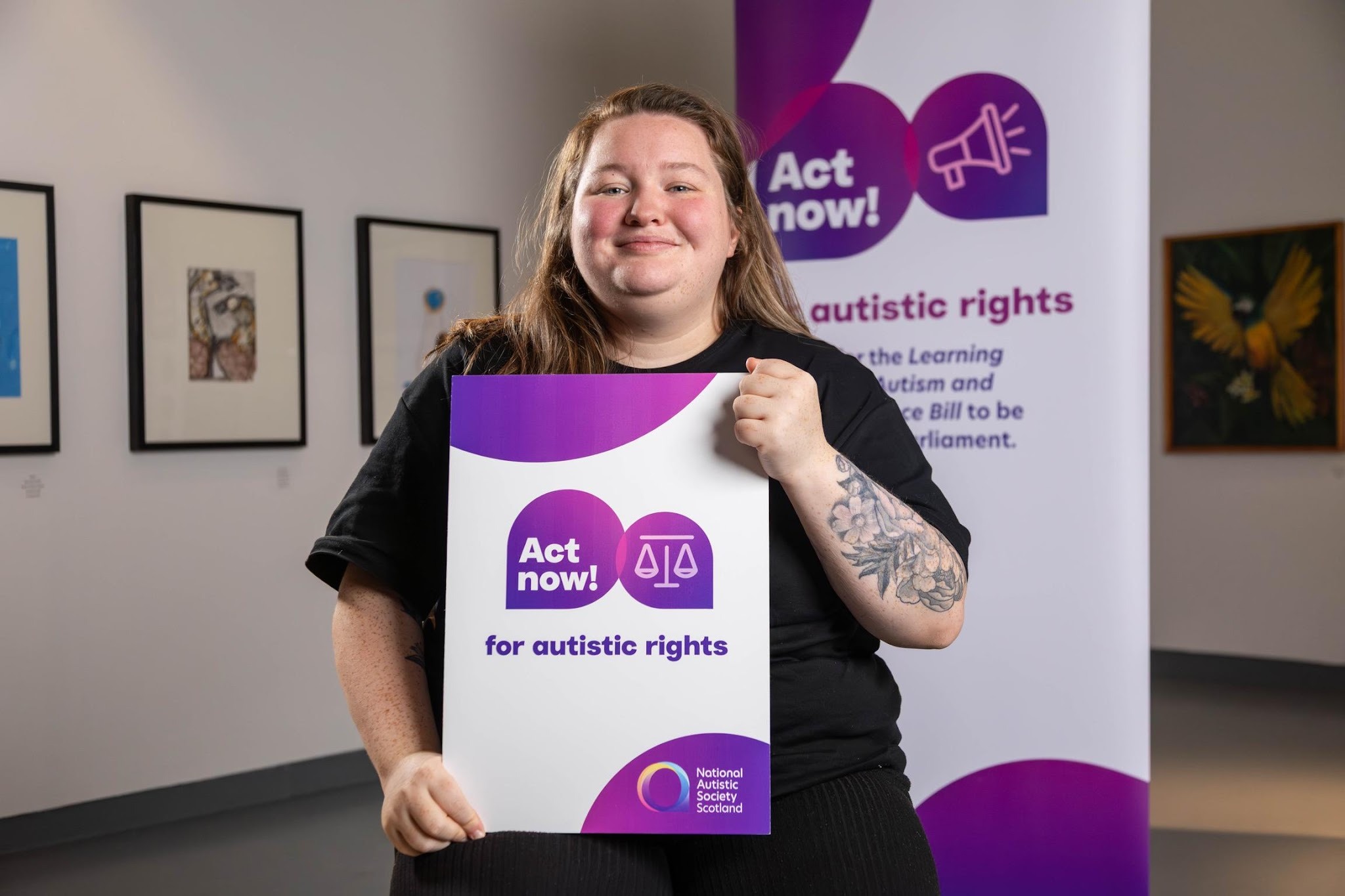
As part of the Act Now for Autistic Rights campaign, our charity has launched a petition urging the First Minister, John Swinney, to include the LDAN Bill in September’s Programme for Government, which will set out the Scottish Government’s key priorities and legislative programme for the coming year.
In the lead up to the recent election in Scotland, more than 5,500 letters were sent by supporters urging party leaders to commit to this legislation. This momentum must now be matched with action. Without a clear commitment from the First Minister, autistic people risk being left behind.
Rob Holland, Director of the National Autistic Society Scotland, said: “Our campaign had a fantastic response during the election period. Thousands of letters were sent urging all parties to commit to the Learning Disabilities, Autism and Neurodivergence (LDAN) Bill, demonstrating a significant level of support for legislation long overdue in helping secure the rights of autistic people and their families.
The importance of the LDAN Bill in tackling the inequalities faced by autistic people and their families cannot be underestimated and this legislation is a vital opportunity to improve outcomes and recognise the rights of some of our most marginalised communities.
“With the election behind us and attention now turning to the first Programme for Government, we need everyone who wants to see urgent change to sign our petition and ensure this vital piece of legislation is introduced as early as possible in the new term.”
Becca, NAS Scotland Campaigner, said: “The LDAN bill is vital for the wellbeing, safety and equality of autistic and neurodivergent people in Scotland.
“Access must be granted, training must be given and voices must be heard to ensure that autistic and neurodivergent people have equal access and opportunity as anybody else.
“The LDAN bill must be included in the Programme for Government to ensure this change happens and lives are improved.
“As an autistic person, it is a struggle to ensure my voice is heard and my opinions are taken into account, so by committing to the inclusion of the LDAN Bill in the Programme for Government, I matter.
“My voice and many others across the country matter.“
You can call on the First Minister to Act Now for Autistic Rights by signing the petition here.


 ‘Brexit – ten years on’ – A look back at a decade of political and economic change, and where the UK’s relationship with Europe stands today.
 ‘Trust in public institutions’ – How can confidence be rebuilt after major public scandals?
 ‘Why social media abuse towards women in politics is damaging democracy’ – Exploring how online abuse and misinformation can affect political participation and representation.
 ‘When does free speech become hate speech?’ – Where should the line be drawn, and what role do social media platforms play?
 ‘The evolution of devolution’ – How has devolution changed decision-making across the UK, and what impact has it had over the years?
 ‘In conversation with Brenda Hale, Baroness Hale of Richmond’ – Hear from one of the UK’s most influential legal figures as she reflects on her career and discusses her latest book, With the Law on Our Side.
 27-28 August
 Browse the full programme and book tickets: