Cost of feeding Santa soars by nearly 40% in a Decade 

THE cost of feeding Santta on Christmas Eve has risen by almost 40% over the last ten years. 

Experts at Ailsa analysed how much it costs to leave a pint of milk, a mince pie, and a carrot out for Santa and Rudolph on Christmas Eve.  

Using supermarket data, they calculated the average cost of each item: a pint of milk is 85p, a pack of mince pies is £1.25, and a 500g bag of carrots is 49p. 

They then ran the figures through the Bank of England’s inflation calculator to see how the price has changed over time. 

This Christmas Eve, families are expected to spend around £2.59 on the tradition. 

But in 2015, it would have cost just £1.86 – that’s a 39% rise over the past decade. 

In fact, the biggest monetary jump was between 2015 and 2025, rising by £0.73, while the biggest percentage rise came between 1975 and 1985, when prices jumped by 151.5%. 

The tradition of leaving treats out for Santa became popular in the 1930s. Back in 1935, families would only be spending 0.05p. 

Overall, the cost of keeping Santa fuelled on Christmas Eve has increased by just over 5,000% over the past 9 decades. 

Year Amount (£) 
1935 0.05 
1945 0.07 
1955 0.11 
1965 0.15 
1975 0.33 
1985 0.83 
1995 1.25 
2005 1.45 
2015 1.86 
2025 2.59 

“Yes, the cost of keeping Santa fed has shot up but that just proves how determined we are to keep the Christmas dream alive,” said Kane Taylor from Ailsa, who conducted the research.

“Even when the world feels a bit heavy, we still leave out the milk, mince pie and carrot with a smile, because the magic matters. 

“For kids, it’s a moment of pure wonder. For the rest of us, it’s a chance to reconnect with the part of ourselves that still believes in something sparkly. If paying a few extra pennies means keeping that glow going, then we’ll happily keep topping up Santa’s snack station. 

“In the end, Christmas isn’t about the cost, it’s about the cheer. So, if the price of mince pies keeps rising, we’ll just keep rising to the occasion.

After all, nothing keeps our spirits higher than keeping the magic alive.” 

Lowest priced food items rising at the fastest rate

Retailers are hiking up the cost of their cheapest food items as the cost of living crisis bites the UK.

Supermarkets are increasing the price of their value items more quickly than more expensive items, according to an analysis by price intelligence company Skuuudle.

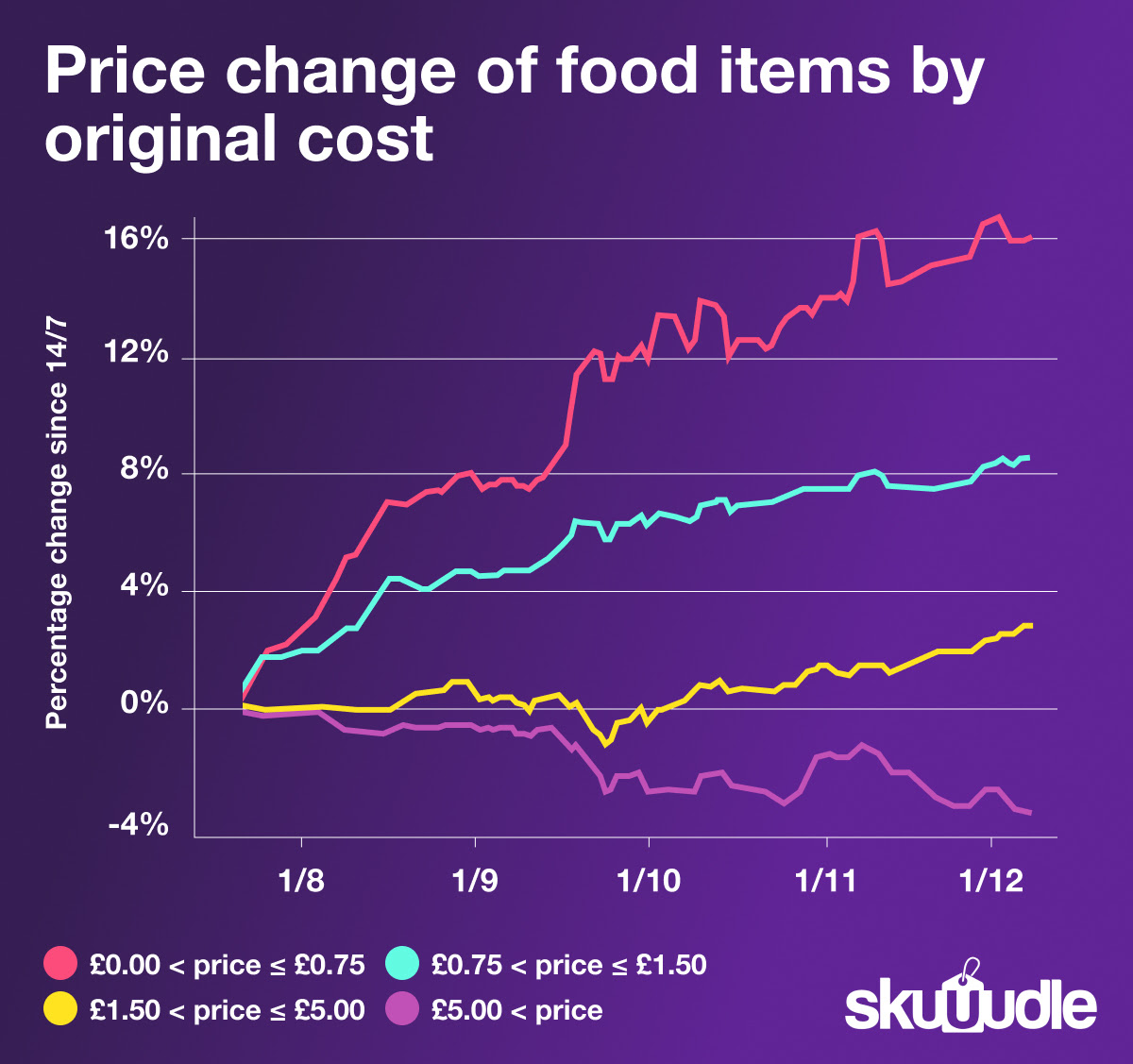
In the biggest study of its kind Skuuudle tracked the cost of almost 19,000 items in UK supermarkets on a daily basis from July to December and found that items originally below 75p accelerated at the fastest rate.

These items include many supermarket value range products including biscuits, chocolate, snacks, oils, rice, pasta, cans and packets of food.

Yet items priced above £5 in July have actually fallen in price, possibly as a result of reduced demand for high cost items.

Food staples selling for under 75p have risen by 16% while items selling for over five pounds have decreased in price up to nearly four percent according to the data.

Experts from Skuuudle tracked the price of 18,790 supermarket food products from sauces to cereals.

The figures show a direct correlation between original cost and rate of increase with cheaper  items increasing in price at a higher rate than more expensive alternatives.

Items priced between 75p and £1.50 back in July increased by eight percent while items priced from £1.50 to £5 went up by almost four percent.

Skuuudle generates market-leading data analytics to help retailers understand the markets they are operating in, to continue to provide optimum prices for consumers – in the face of rising inflation.

This allows retailers to compare like for like products and accurately track changes in price of the same items across different retailers.

This level of insight is critical when accurately tracking the price of a large number of food products with many small variables differentiating one product from another.

Skuuudle spokesman said that retailers have an unenviable ‘balancing act’ to perform when it comes to pricing, having to consider the needs of the customer, their suppliers and the supply chain.

He said: “The changes make difficult reading for those on low incomes who are seeing the cost of many value items increase but who may not be able to benefit at all from the reduction in price of more expensive items.

“This change could well be driven by a reduced demand for more expensive items as more people turn to value products during the cost of living crisis.

“Supermarkets are having to contend with increasing costs associated with production and shipping, while issues of supply are driving costs up further.

“What is interesting is how supermarkets are choosing to pass increased costs onto consumers.            

“Our data reveals that it’s the prices of the cheapest food items which are rising at the highest rate while many expensive items have actually become cheaper.

“It is often the cheapest items in our baskets that we pay the least attention to so understanding that some of these staples might be increasing at a faster rate will help the most value conscious shoppers stay in control of their weekly food shop bills.”