Pandemic policing: public feels safe with Police Scotland

Survey finds strong levels of public confidence in Police Scotland

Strong levels of public confidence in Police Scotland have been reported during the COVID-19 pandemic, with the majority of people supporting our approach to keeping people safe.

When asked for their opinion of policing in their local area and concerns regarding their safety and wellbeing, 84% of respondents who took part in the ‘Your Police’ 2020/21 survey also said they felt safe. 

The survey – which launched on 9 April last year – received more than 36,500 responses from people across Scotland. This will help us to build on our understanding of the views and priorities of Scotland’s diverse communities.

During the survey period, the average public confidence level was 57% – an increase of nine percentage points from pre COVID-19. We learned that the factors which affected public confidence most were local changes to transmission rates and lockdowns, in particular the announcement of the national lockdown which began in January. The restrictions and increasing infection rates were factors for both Police Scotland and other public organisations, in general.

The survey feedback has helped shape and enhance Police Scotland’s response to our communities over the past year, as our officers, staff and Special Constables have continued to play a key role in the national effort to combat the spread of COVID-19.

This response has included:

  • Increased police presence at identified key locations. This was particularly important to those living in rural areas with lower COVID-19 rates, who had concerns about domestic tourists from Scottish regions with higher infection rates visiting their area.
  • The use of enhanced technology. This included the introduction of online reporting for members of the public for perceived breaches of the COVID-19 regulations as well as the use of video appointments for the public and for community meetings, allowing for safe and accessible face-to-face contact.
  • Increased engagement with more than 250 organisations representing the interests of diverse communities and businesses. This helped improve awareness of the needs and challenges faced by those living with physical, sensory and learning difficulties, when practicing social distancing and using face masks. An event exploring public confidence within ‘seldom heard’ communities will also take place on May 19, co-hosted by Police Scotland, to help further enhance our support to these groups – further information below.
  • Tracking responses received from those living and working in communities with tighter restrictions and outbreaks. Monthly public confidence trackers have been created for each Local Policing Division to support local planning, accountability and scrutiny.

Deputy Chief Constable Will Kerr, Local Policing, said: “Despite the continued challenges to policing during such an extraordinary time, Police Scotland has continued to maintain high levels of public confidence, and I am particularly pleased that such a significant proportion of the population continue to feel safe in the area they live.

“The strong relationships we have with our communities have been absolutely crucial, and providing reassurance to the people we serve during this challenging time has been a key priority.

The ‘Your Police’ survey is the largest of its kind in the UK to involve the public in a conversation about policing and COVID-19, and I would like to thank the tens of thousands of people who took the time to get involved.

“The results were reviewed on a weekly basis, helping us to respond to emerging issues, and shape our approaches to policing at a national and local level. The survey has been relaunched to allow the public to continue letting us know their views and opinions over the coming months, and I would encourage you to take part.”

In addition, there was an extremely high level of satisfaction recorded among those who were in contact with police during this challenging time. More than 70% of people, who either reported or witnessed a crime, said they were satisfied with their experience when dealing with Police Scotland.

Furthermore, over 80% of respondents were satisfied with how they were treated by call operators and attending officers, and 87% felt that their needs were properly understood.

DCC Kerr added: “I would like to take this opportunity to thank our fellow citizens for the overwhelming support and co-operation policing has experienced during this very challenging year.

“Our officers will continue to respond with good sense, exercising discretion and when necessary, taking enforcement action where required.”

To take part in the Your Police 2021-22 survey, please visit – https://consult.scotland.police.uk/surveys/your-police-2021-2022/

TOLL: An act of anger, protest, recognition and remembrance

Concrete Block Gallery, Undercroft, 15 Lauriston Gardens, Edinburgh, EH3 9HH

Saturday 15th and Sunday 16th May between 11am and 5pm

As lockdown eases there’s an exhibition opening in an unconventional gallery space in a corner of Edinburgh that might help us to pause and reflect on what has happened before we rush out and enjoy the freedom.

‘Toll’ is an artwork by Edinburgh-based artist Andrew Brooks at the new Concrete Block Gallery, which makes a single mark for each of the first year’s reported deaths involving Covid19 in the United Kingdom.

The total reported deaths involving Covid19 for the first year in the UK was 145,652 and this is the number of marks made over 52 performances by Andrew in the space, each performance representing a single week’s statistics.

Andrew began the project online on March 13th 2021, publishing the first performance video on the one-year anniversary of the first reported deaths in the UK, and will complete this work of protest and remembrance on May 13th.

Andrew Brooks said: “There are two elements to the artwork: the physical piece with the marks made on the paper and also the performance of me in the space making the work – I do it in silence and on my own.  The performance of this is very much the work part of the work and is just as important as the paper.”

Each mark is made with a single brush dab and is 4cm high and made on rolls of paper 1.5m wide and 10m long. The marks fill 53 metres of paper and have used over a litre of black ink.

Each week’s statistics is filmed separately, and the longest film is 3 hours 6 minutes, representing the 6th week of Covid related deaths in the UK which was the highest toll for the year at 9,510.

Andrew continued: “The act of remembrance is very important in the way that I have gone about constructing this, attempting to recognise each one of those deaths. Understanding what one hundred and forty-five thousand marks looks like and how much time it takes to make those.

“I try and be as considered as possible when I make a mark because that is somebody – that is somebody’s family member, somebody’s friend and it’s somebody’s life that’s ended.”

Seeing Andrew’s endeavour on Instagram, documentary film maker, Dave MacFarlane of DMtwo Media, approached him to document the process of making the work.

Dave MacFarlane explained: “This recent filming project is one of those that come along and you can’t help but take notice.

“The subject matter, the artistic concept and the wider social impact were all key factors in wanting to produce this short documentary”.

Reflecting on why he decided to make the work, Andrew said: “When you think about the statistics it easily gets abstracted away but I’m doing this to make it physical and make it so that it can’t be avoided.

“It’s a visualization that really makes you understand what’s happened, over a hundred and forty-five thousand deaths, you have to realise that this is something to get angry about.

“The impetus for this was anger and that’s what’s fed it. It’s anger at Westminster and at central government. I’ve felt that they haven’t been decisive, they haven’t made strong decisions, there has been a lot of waste, that has resulted in over a hundred thousand deaths.

“This is a protest piece, this is my version of holding up a placard and standing out in the street – this is my concerted silent protest. Art can have many roles in society, and one of those is definitely protest and this is my protest”. 

‘Toll’ will be exhibited for viewings at Concrete Block Gallery Saturday 15th and Sunday 16th May between 11am and 5pm. 

Viewings can be booked through Eventbrite here: 

https://www.eventbrite.co.uk/e/toll-exhibition-tickets-153275995629

Pictures: DMtwo Media

Charity funds first study into long-term impact of Covid-19 on stroke

The Stroke Association is funding the world’s first study to determine the long-term impact of Covid-19 on stroke survivors. 

Since the start of the Covid-19 pandemic there have been widespread reports of adults with the virus also having strokes. The charity announces this new study today, amid concerns that the virus may be causing more severe strokes in patients whom doctors are struggling to treat.  

It is thought that the virus could be increasing the chance of blood clots forming in the brain and blocking blood flow.

The Stroke Association is funding this vital research to investigate the difference the virus could make to stroke recoveries, which are already at risk due to disruption to stroke services caused by the pandemic.  

The study will establish which differences in patients with and without the virus may influence their needs for treatment and care, including how to avoid the risk of having further strokes. 

Researchers at University College London Hospitals NHS Foundation Trust (UCLH) led by Dr Richard Perry will follow up to 4,000 stroke survivors, with and without Covid-19 from across 13 emergency stroke units. 

Stroke recovery, rehabilitation and health will be tracked for up to 18 months after their stroke. Researchers will collect and assess comprehensive, specialist medical information from stroke patients, including brain scans, blood samples and measures of disability. 

The findings will help to understand how Covid-19 impacts stroke recovery and which treatments might best support survivors’ recoveries. 

Dr Terry Quinn at the University of Glasgow works with the UCLH team on their Covid-19 and stroke research. Hhe said: “Research that compares stroke in patients with and without Covid-19 is essential to understand if Covid-19 results in more severe strokes, where survivors will need more support to recover from its devastating effects. 

“From the beginning of the pandemic, I would see patients admitted with unusual strokes, who would then go on to have a positive Covid-19 test. This vital research will help us understand why this happens.  

“The findings from this year-long study will inform decisions about the most effective treatment and the rehabilitation needs of this group of patients, including prevention of recurrent stroke. We already know that from the moment a person has a stroke or mini-stroke they are at substantial increased risk of further strokes. 

“We’ve come a long way since the start of the pandemic. In the early days of the pandemic, stroke teams from across the UK came together to share their experiences and data. I was part of this collaborative activity and the exchange of information was crucial for delivering the best possible stroke care.

“This work had no external support and was reliant on busy clinicians giving up their time.  Stroke clinicians will continue to engage with the new project, but the Stroke Association funding will allow us to achieve things that would not be possible without this support.” 

Stroke is a sudden brain attack, stroke strikes every five minutes in the UK, and there are more than 128,000 stroke survivors living in Scotland. It’s estimated there will be around 173,000 by 2035.  

Dr Rubina Ahmed, Research Director at the Stroke Association, said: “Stroke is a leading cause of adult disability in the UK and the second biggest killer in the world. It’s extremely concerning that we’re seeing strokes happening in ways we have not seen before.

“This research is absolutely critical in understanding and treating stroke after Covid-19, to help reduce the devastating effects and ultimately improve lives. Covid-19 is here to stay, so it’s vital we can prevent and treat strokes linked with the virus. 

“The pandemic has shattered our fundraised income and is threatening research that drives life-changing breakthroughs in stroke care. As a result of the pandemic, we have had to halve our budget for stroke research. 

“Research improves treatment and care for people affected by stroke so they can live their best lives possible, and that’s why stroke research is worth saving. Now more than ever, we need the public’s support. If you can, please help us find a way through the research funding crisis by donating today, so that we can fund more life-saving research.”  

In February, the Stroke Association announced the world’s largest study to confirm if Covid-19 increases the risk of stroke and by how much. Together with the new research announced today, the two studies will help doctors to prevent and best treat Covid-19 strokes in the people who are most at risk.  

Over the past 30 years the Stroke Association has played a crucial role in supporting stroke research in the UK. Research helps stroke survivors rebuild their lives, but the pandemic has hit research hard. By saving stroke research, more sure stroke survivors can live life to the full. 

Find out how stroke research helps rebuild lives at stroke.org.uk/rebuildinglives or to donate, please visit: stroke.org.uk/saveresearch 

Invest in Scottish maternity to tackle deprivation, says RCM in message to next government

Tackling Scotland’s social deprivation and inequalities by investing in maternity services and staff must be at the heart of the next government’s policy. That’s the message from the Royal College of Midwives (RCM) in a Blueprint for maternity services published this week.

In five areas for action, it also calls for an end to Scotland’s midwife shortage, saying some areas of the country struggle to attract enough midwives. 

The pandemic has also exposed starkly existing inequalities hitting vulnerable women and those from Black, Asian and minority ethnic communities.  Maternity and other areas of healthcare have a key role to play in efforts to address these inequalities, says the RCM 

The RCM’s five areas for action for the next Scottish Government are: 

  • tackling social deprivation; 
  • delivering the best maternity care for all the people of Scotland; 
  • supporting NHS staff to recover from the pandemic; 
  • ensuring Scotland has birthplaces that are fit for the future; and 
  • ending Scotland’s midwife shortage for good. 

Pulling no punches, the Blueprint says the pandemic ‘has been brutal’ on maternity and other NHS staff, who have worked throughout to ensure safe and high-quality care for women. This has hit their mental and physical health and they must be given the time and support to recover from it. 

Jon Skewes, Executive Director for External Relations at the RCM, said: “There has been a monumental effort from midwives, maternity support workers, and maternity care assistants through the pandemic. It is time to step-up and really invest in them, in their pay and in their working conditions.

“Right now, we have a demoralised and exhausted workforce and women falling through the cracks and not getting the care they deserve. Staff are also often working in old, poorly designed buildings that are simply not fit for purpose. The pandemic has exposed the extent and the impact on care of this crumbling infrastructure.” 

Additional training places for student midwives are also needed in more of Scotland’s universities. When they qualify new midwives generally stay within the regions they trained in leaving the chances of recruiting staff stacked against other areas without midwifery courses.  

Jon Skewes added: “Tackling deprivation goes way beyond maternity and the wider NHS. Fixing it must be done through multiple channels including social care, education, and others.

“Maternity is a very good place to start improving the health of the nation, reduce inequalities and indeed, save lives that should not be lost. This has been a really tough year for the NHS and the people using it as it creaked under the weight of pandemic demands.

“It has also been a remarkable year because of how its staff and the service responded. Now is the time to invest to make it fit for the future.” 

Westminster committee to investigate long-term impact of pandemic on parents and families

Image representing news article

Westminster’s COVID-19 Committee is to hear the concerns of charities who have been supporting families through the pandemic.

While the pandemic has had an impact on all parents and families, the severity of that impact, and the potential long-term consequences, will vary significantly.

While there have been positives for some families in being able to spend more time together, emerging evidence suggests others are experiencing increasing mental ill health, poverty, domestic abuse and child neglect.

There are also concerns around the impact on children’s development, perhaps especially for those born in the last year.

The Committee has decided to conduct a short inquiry on this topic, and will begin by hearing from organisations working with more vulnerable and disadvantaged families about what they have observed over the last year and their concerns for the future.

Witnesses

Tuesday 20 April 2021

At 9.45am, the Committee will hear evidence from:

  • Jabeer Butt, Chief Executive, Race Equality Foundation
  • Sally Hogg, Head of Policy and Campaigning, Parent-Infant Foundation
  • David Holmes, Chief Executive, Family Action
  • Jaine Stannard, Chief Executive, School-Home Support
  • Jane Williams, CEO Founder, The Magpie Project

Themes for discussion

  • How the pandemic has affected more vulnerable and disadvantaged families.
  • What the long-term impact of the pandemic might be for parents and children.
  • What action is needed from Government to respond to these concerns.

Edinburgh women part of upsurge in young entrepreneurs starting their own businesses

  • Number of young people (18-30) setting up businesses nearly doubles in last decade
  • Innovate UK’s Young Innovators programme sees 87% increase in applications over last year
  • Data shows young innovators putting energy into health and digital technology ideas

New data released by Innovate UK, points to a dramatic increase in the number of young people setting up their own businesses in the last decade – with the number nearly doubling (98% increase) from 2009 to 2020.

What’s more, despite the pandemic – and in some cases inspired by the impact of COVID-19 and the subsequent lockdowns – numbers continued to jump in 2020, with a 15% increase in the number of young people starting their own businesses from 2019.

This trend mirrors the increased appetite seen by Innovate UK for its support programmes for 18-30 year olds. The Young Innovators Awards, which recognise young people from across the UK with great business ideas who have the potential to become successful entrepreneurs and future leaders in innovation, saw an 87% increase in applications this year.

This growth combined with the high-quality of applications, led Innovate UK to award 64 Young Innovators, double any previous year.

In particular, young innovators are responding to the needs of the pandemic, with a growing number of business ideas for health and in digital technology.

From socially-aware robotic companions for people living in care homes to projects tackling childhood incontinence and arthritis, double the number of this year’s winners had health projects compared to the 2018 competition winners (13% vs 27%).

Similarly, from a project connecting knitting enthusiasts online to an online marketplace where burgenoing gardeners can sell their home-grown produce, an even greater increase was seen in digital, with 31% of the projects in this field, compared to 13% in 2018.

This trend also reflects the latest report from the UK Business Angel’s Association (UKBAA), which found the sectors where Angels were investing most were Healthcare, Digital Health and MedTech, Bio Tech, Life Sciences and Pharmaceuticals, Software and FinTech.

The UKBAA report these industries and education technology, e-commerce and gaming have been performing better since the onset of Covid-19 – given their role in helping consumers deal with the many challenges of lockdown.

Young Innovators capitalising on this demand include Iona Mackenzie (26, (ABOVE) from Edinburgh), whose Talk and Grow business aims to take the stress out of finding a therapist with an online matching and booking platform to pair clients with local counsellors and Elena Höge (28, (below) also from Edinburgh), who is creating educational games like Wholesome, a mobile forest school experience that teaches children and adults about nature, including how to forage and cook with wild food.

Reflecting on the start-up journey, sustainability entrepreneur Alex Newnes (27, from Aberystwyth), who is producing a fully degradable and non-toxic alternative to plastic, said, “We started PlantSea Ltd with nothing but passion and an idea.

“Since then, we have won awards, networked, and learned an awful lot along the way! None of us knew what the road would look like for a biotech”.

Musician and founder of online music tuition service Starling Music Academy, Rhiannon Jeffreys (27), from Berkhamsted in Hertfordshire, says, “I have been amazed to see how quickly your network can grow, just by having conversations.

“Even people in a completely different sector may be able to put you in touch with someone they know who is in your sector, and I love the idea of being able to do that for others in the future.”

Similarly, Young Innovator Chris Elliot (23, from Reading), creator of Untrapped, a onestop student rental portal, says: “I think the number of new skills you learn as an entrepreneur is surprising. In the last year I’ve gained more skills than any other period of my life.”

Emily Nott, Head of Equality, Diversity and Inclusion at Innovate UK says: “With 2020 proving to be an incredibly difficult year, it is inspiring to see so many young people continuing to take steps to develop their own business ideas and innovations.

“It is this generation of innovators who have the potential to tackle some of the big challenges we’ll face in the wake of pandemic and we must do all we can to support them and to encourage others to follow in their footsteps”.

If you’re an inspiring young innovator, check out how Innovate UK could support you here: https://ktn-uk.org/programme/young-innovators/

Charity welcomes research into mental health impact of pandemic on UK fire service personnel

The continued need for The Fire Fighters Charity’s mental health support services has been highlighted today with the publication of research claiming that 65% of the UK’s fire and rescue service personnel have seen a deterioration in their mental health during the pandemic.

The study, conducted by Mind’s re-launched Blue Light Programme – of which The Fire Fighters Charity is a partner – found that mental health has worsened across all 999 services, with 20% of fire service personnel today rating their mental health as either poor or very poor.

Funded by The Royal Foundation of The Duke and Duchess of Cambridge, the Blue Light Programme brings together The Fire Fighters Charity, The Ambulance Staff Charity, Police Care UK and Mind to further the mental health and wellbeing of the UK’s emergency responders.

Dr Jill Tolfrey, Chief Executive of The Fire Fighters Charity said: “We commend Mind and the Blue Light Programme on the publication of this latest research, which once again highlights the incredible pressures faced by those who work across our fire and rescue services.

“Covid-19 has amplified these pressures for many on the frontline and brought new mental health challenges for others. As ever, our role at The Fire Fighters Charity is to ensure that we are always here for those in need.

“While we have had to move our mental health services online during the pandemic, we have supported thousands through virtual consultations over the past year and will continue to do so, while also bringing back our face-to-face services over the weeks to come.

“My message to anyone facing a challenge to their mental wellbeing today is therefore simple. We are here for you. Please pick up the phone or get in touch through our website and we will do whatever we can to help you.”

Members of the fire and rescue services in need of support with their mental wellbeing can call The Fire Fighters Charity’s Support Line on 0800 3898820 or visit www.firefighterscharity.org.uk/support

Full scale of Britain’s job crisis uncovered in new research

Seven new private sector jobs will be needed to create one viable job post-pandemic

  • Cities will lead economic bounce back but most new jobs are expected to be low-skilled and low-paid.
  • Government must upskill workers and encourage higher-skilled businesses to invest in cities – particularly in the North and Midlands.

New Centre for Cities’ research in partnership with HSBC UK reveals that Britain’s jobs crisis is bigger than realised as the economy will need to create almost ten million new private sector jobs just to reverse the damage done by the pandemic.

Analysis of Britain’s ‘jobs miracle’ from 2013 to 2019 – when the national economy created 2.7 million net new jobs – finds that 19.3 million private sector jobs were created during this period and 16.6 million were lost. This meant that seven new private sector jobs were needed to create one viable job.

If this pattern repeats post-Covid then 9.4 million new private sector jobs will be needed to get the 1.3 million people who lost their jobs during the pandemic working again.

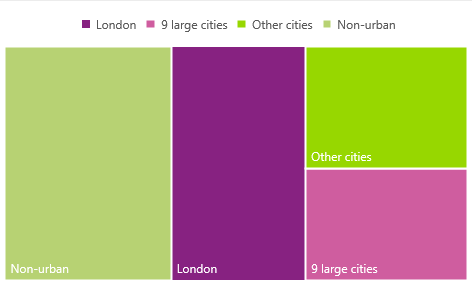
After the financial crisis big cities created the vast majority of new jobs and are expected to do so again post-Covid. London created one in four of all new private sector jobs (790,300) – equal to 17 Scarboroughs, or 25 Hartlepools. Other big cities also played an outsized role: in Manchester, 152,100 new jobs were created; in Birmingham 99,100 were; and in Glasgow 40,800 were.

In total, Britain’s ten largest cities created almost half (45.6%) of jobs during the ‘jobs miracle’, despite accounting for just 3.5% of land. In contrast, smaller towns and rural areas created 36% of new jobs. These findings underline the important role that big cities will play in helping the country recover from Covid-19.

Contribution of cities and non-urban areas to job creation, 2013-19

Fig 1.png

Source: ONS, Business Structure Database (BSD)

Many of the jobs lost in the pandemic were in sectors such as hospitality and tourism. While they are expected to recover quickly once the economy reopens, with an estimated three quarters of new jobs likely to come from sectors such as these, relying on them for new jobs will not address years of poor productivity and pay stagnation, particularly outside London and the Greater South East.

After the pandemic, the productivity problem that UK cities face will need to be addressed.

To do this the Government should invest in adult education to train people for higher-paid jobs in emerging industries. It should also recognise the crucial role that cities will play in building back better from the pandemic. It should invest £5 billion in a new City Centre Productivity Fund to make struggling city centres more attractive places for high-skilled businesses to locate.

The paper’s other proposals to help the country build back better from the pandemic include reforming business rates, which in their current form are a tax on business investment, and devolving more economic powers and resources to local government – particularly England’s metro mayors.

Centre for Cities’ Chief Executive Andrew Carter said: “Britain’s biggest cities will play a central role in our recovery from the pandemic, as they did after the last economic crisis when London alone created a quarter of all new jobs.

“We must use Covid-19 as an economic reset and address many of the long-standing problems that the economy has faced in recent years such as stalled productivity and stagnant pay. To do this the Government will need to focus on investing in adult education to train people for higher paid jobs.

“Addressing these problems will be be essential if the Government hopes to attract higher-skilled businesses in emerging industries to cities and large towns in the North and Midlands and meet its levelling up objectives.

Ian Stuart, CEO, HSBC UK said: “The employment challenge ahead for the country’s economy cannot be underestimated.

“Beyond the sheer volume of new jobs required, the UK will need to create high value, export-led employment across all regions, if it is to address the age-old productivity puzzle.

“Coming out of the Covid-19 pandemic, we will only truly succeed in levelling up the country if the challenge is shared between government and the private sector with a focus on reskilling our people and attracting new business growth and international investment in the sectors where we have a real competitive advantage.”

Commemorating COVID-19

Fund will enable communities to remember in their own way

Communities will be supported by artists to develop projects that help them reflect on the impact of the pandemic, as part of longer term efforts to commemorate those who have lost their lives to Coronavirus (COVID-19).

Greenspace Scotland commissioned artists will engage with community groups, faith groups and those hit hardest by the pandemic to shape ideas that benefit communities and reflect local people’s experiences of the pandemic.

The Covid Community Memorial projects, which could include commemorative gardens, memorials or artworks, will be supported with £4.1 million provided by the Scottish Government and administered by Greenspace Scotland.

The First Minister led a minute’s silence at noon today (23 March 2021), marking a year since Scotland first went into lockdown.

First Minister Nicola Sturgeon said: “None of us will ever forget this year, which has been like no other. We’ve all made sacrifices which have helped to save lives in the past 12 months, and many of us have lost loved ones – each one a person who can never be replaced and whose loss is greatly mourned.

“Vaccines now offer us hope that we can soon get back to a more normal way of life, and give us confidence that we can start to set dates for when it may begin to return. But as we move forward, and our daily lives begin to return to normal, we will – we must – remember those we have lost, and continue to offer our thoughts, solidarity and support to the bereaved.

“Today, after a year where we’ve been forced to live our lives apart in ways that for many will have been unimaginably difficult, we will come together to mark the first anniversary of lockdown, to pay our respects to those we have lost, and to reflect on everything we have been through as a nation.

“In the years to come, projects supported by this fund will provide spaces that people will visit, and cherish; where people will be able to gather in person to mark the pandemic and to remember those who have died – and to remember the many ways we supported one another as a nation through an extraordinary period.”

Julie Procter, Chief Executive of Greenspace Scotland, said: “The heart-breaking and difficult events of the past year have highlighted more than ever how important it is for us all to have access to greenspace. Somewhere for us to breathe fresh air, meet with friends and family, connect with nature and find solace during challenging times.

“The Covid Community Memorial project will connect with communities across Scotland to create special places where people can come to reflect on this time, remember those who have sadly lost their lives, find healing and hope for a brighter future.”

Greenspace Scotland will issue a call for expressions of interest in April with a view to awarding commissions in June. The aim would be for outputs from the commissions by November 2021 and project design and delivery from November to October 2022.

Major broadband providers not up to speed during pandemic

Some of the UK’s biggest broadband providers have been letting down their customers on connection reliability, internet speeds and value for money during the pandemic, according to Which?’s annual customer satisfaction survey.

During the Covid-19 pandemic, broadband has proved more important than ever – with millions of people relying on their internet to work from home, educate their children and keep in touch with loved ones.

In Which?’s annual survey, seven in 10 people (71%) said they had used their connection more since the outbreak of the pandemic, with nearly two thirds of those saying their use has increased substantially.

However, the volume of issues consumers have experienced with their broadband provider has also increased over the past year. Seven in 10 (69%) respondents said they had experienced an issue with their connection in the past 12 months – a substantial increase on last year’s survey.

Very low speeds (59%) and frequent dropouts (53%) were the most common problems experienced more often during the pandemic, compared to before the pandemic. Almost half of respondents (48%) reported they had been left without a connection for more than a day and around four in 10 (44%) said they had been left without internet for more than an hour.

The findings reflect the likelihood that an increased reliance on broadband over the past year means customers are more likely to notice – and be frustrated by – any connection issues.

Although the Big Four broadband providers – BT, Sky, TalkTalk and Virgin Media – supply nine in ten households, our survey found they have left many customers disappointed.

Virgin Media has its own cable network in parts of the UK, which allows it to offer some of the fastest broadband speeds. Yet its customers gave it poor ratings for connection reliability – with one in three Virgin Media customers saying they had experienced a connection outage lasting at least an hour in the past year and almost a quarter saying their connection was slow to upload or download.

Virgin Media customers were also less likely to be satisfied with their customer service, ease of setup and value for money. Overall, Virgin received a low overall customer score of just 53 per cent – leaving it second from bottom in Which’s satisfaction rankings.

TalkTalk and Sky fared similarly, with customer scores of 54 per cent. While TalkTalk scored fairly well for value for money, it had the highest proportion of customers who would not recommend their provider to others.

Sky rated poorly for value for money – perhaps because a quarter of Sky customers experienced frequent dropouts despite paying more for their service than the average broadband customer.

To add insult to injury, more than a quarter of Sky customers said the price of their deal had increased in the past year.

Sky also received low scores for connection speed, connection reliability and ease of setup and dropped three places in this year’s survey. The Which survey also revealed Sky to be the joint worst provider – along with Utility Warehouse – for very slow speeds, which affected three in 10 (29%) customers.

BT earned the highest score of the Big Four providers (57%) but still only managed eighth place overall – just one place up from its ranking last year. It scored middling ratings across the board apart from value for money, which scored poorly.

One BT customer said they were satisfied with BT but believed the provider could do better – especially during the pandemic, when more people are working from home and dependent on an internet connection.

More than half of BT’s customers had never been with another provider, and the majority were not planning to switch. But our results show that out-of-contract BT customers should consider making a move as they are likely to find an alternative that is both cheaper and more reliable.

Only John Lewis scored lower than the Big Four (47%), with low ratings for connection speed, connection reliability and ease of setup.

At the other end of the scale, Zen Internet achieved the highest customer score of 70 per cent and was the highest ranked broadband provider for the second year in a row (scoring 84 per cent in 2020).

Zen achieved high scores across the board and despite not offering the cheapest tariffs, 85 per cent said they would recommend it to a friend.

Zen narrowly missed out on Which? Recommended Provider (WRP) status as it has not yet signed up to Ofcom’s codes of practice on broadband speeds. However the company is actively working towards signing up soon, at which point it will become a WRP.

The survey also found customers who upgraded to fibre broadband often felt the benefits. Of the nearly 3,000 respondents who had fibre broadband, 63 per cent noticed faster speeds after switching and 45 per cent noticed fewer connection dropouts.

However, although superfast fibre connections are available to 96 per cent of the country, many are yet to take them up. Around a quarter of the respondents told Which? they still had standard broadband.

In light of these disappointing results for many providers, the broadband industry must up its game. Consumers are relying much more heavily on their internet connection during the pandemic and broadband companies will have to work harder to meet customers’ rising expectations and provide value for money.

The government has also recognised that as part of achieving its goal for at least 85 per cent of the UK to have access to gigabit-capable broadband by 2025, low consumer demand for these services in the current market must be addressed.

In August 2020, the UK government asked Which? to convene and chair the Gigabit Take-up Advisory Group (GigaTAG) to put forward recommendations on how to encourage more consumers to switch to gigabit-capable networks.

The GigaTAG is considering these barriers and the potential solutions in more detail and will report back to the government in spring 2021.

Natalie Hitchins, Which? Head of Home Products and Services, said: “With so many people at home relying on their internet during the pandemic, a good connection has never been more important – but we found some of the UK’s biggest suppliers are not up to speed.

“Broadband providers must up their game and meet the challenge of providing fast, reliable connections and good customer service for millions of customers whose needs and expectations have risen over the last year.

“The industry and government must also work together to ensure more people have the chance to switch to faster and more reliable gigabit-capable broadband services in the years to come – or risk undermining the UK’s goal of becoming a world leader in connectivity.”