It’s a long road to recovery for many who have contracted COVID-19. In Scotland over 185,000 people have tested positive for the virus, with over 57,000 of these cases recorded within Greater Glasgow and Clyde.
NHSGGC’s Physiotherapy and Occupational Therapy teams have created a new online resource to help anyone who is recovering from the virus, having distilled what they have learned from helping people recover both at home and in hospital.
The new self-management resource is available to the public and is aimed at anyone managing the many types of symptoms associated with COVID-19. It also notes the pace of recovery may be slower than expected.
Common symptoms can include: fatigue, breathlessness, reduced exercise tolerance and lack of physical strength. The resource offers advice on recovering from the virus, managing breathlessness, general wellbeing, managing fatigue, exercise programmes and more.
Lynn Glen, Physiotherapist, NHSGGC, said: “We know that the lingering effects of COVID-19 can vary from person to person. We’ve had younger and older patients admitted to wards and intensive care units, some dealing with debilitating fatigue and breathlessness for months after being diagnosed, requiring weeks and months of rehab and physiotherapy input.
“Other patients may only require physiotherapy input for a shorter period. The length of time recovering from COVID-19 can also vary so we had to find a way to support people at home.
“We wanted to help people get back on their feet, to gain knowledge about the virus, learn how to manage their symptoms and ultimately recover with this new resource.”
You can access the new NHSGGC online resource here:
Lorna Graham, 27, who has been a nurse for three years, was diagnosed with COVID on 8 April 2020 and has not yet fully recovered. She was off work for six months and has since been diagnosed as suffering from Long COVID.
Lorna said: “The acute phase of my illness lasted a few weeks and I can truly say I felt like I was dying. Without question it was the worst I have felt in my life. It’s not that I haven’t been ill before. I have had sepsis and swine flu but this was different. It felt like I was drowning; at times I couldn’t get a breath.
“This all happened despite me being a fit 26 year old. I wasn’t a fitness fanatic, but I was active on my days off. I would go hillwalking regularly, so you could say I was fit and obviously young too.
“In the first few weeks I was at the COVID assessment centre a few times and was sent to hospital, although never admitted. I had a temperature, no taste or smell and just slept and slept.
“I waited to recover fully and it just never came. It was October before I felt able to go back to work.”
Nearly ten months on, Lorna’s health has yet to recover fully.
Top Ten Tips for Recovering from COVID-19:
Take it slow – recovery may take longer than you expect.
Eat well – your body needs nutrients to get better. This can be difficult when you lose your sense of taste / smell but just as important.
Sleep well – your body needs rest, take it easy.
Plan your day – especially important if you’re feeling fatigued. Plan your day and week to include consistent activity, rather than boom and bust cycles which may leave you more tired.
Deep breathing – sit in a relaxed position, breathe in through your nose, out through your mouth, lying on your front can also help.
Stay active – your physical strength may be impacted so build yourself back up with regular activity like walking or at home exercises.
Get up – easy to forget in lockdown, make sure you are regularly standing, set a timer to make sure you’re getting up once an hour.
Get out – make sure to get outside with nature proven to improve our wellbeing.
Relax – remember to relax your mind however that may be. Some people find meditation helpful.
Stay connected – speak to your loved ones regularly about your recovery and how you’re doing. We all need support.
Gallery showcases Queen Elizabeth staff at the heart of delivering care during pandemic
Within the atrium of the Queen Elizabeth University Hospital (QEUH) we have a gallery which pays tribute to the many staff working across the hospital site to look after patients during this difficult time.
Here, we’ve collated some of the images from the ‘Caught in the act of Care’ exhibition alongside some of quotes from staff on what it’s like to work during the pandemic.
Kate Hill, Acute Services Practice Development Nurse “It is a really challenging and difficult situation for all staff in NHS, however, they have worked collaboratively to provide excellent care for patients.”
Anne Watson, Specialist Physiotherapist, Orthopaedics and Emma Brough, Physiotherapist Anne Watson quoted: “It’s been a really tough time but our team has worked extremely well together to support not only our patients but each other.”
Scott Boardman, Domestic services “I feel the patients are like a second family as I am the only visitor some get on daily basis due to no visitors in current climate. I have a lot of long term patients who I enjoy having a bit of banter to pass the time of day and to put a smile on their faces.”
Rachael Matthews, Speech and Language Therapist “It’s been a challenging time but hopefully there’s light at the end of the tunnel now. Keep following the rules as we want you to be able to visit your loved ones as soon as possible.”
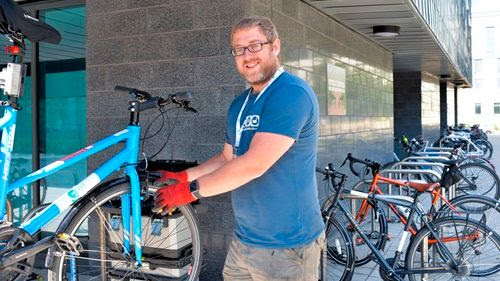
Graeme Condie, Travel Plan officer, Travel plan office “Despite the additional pressures and workload during the pandemic, a real positive for our department has been the increase in appetite from a wide range of staff to move towards a more sustainable form of regular travel to their work.”
Amy Wood, Staff Nurse, Orthopaedics (now moved to community) “The uncertainty was difficult, especially at the start when everything changed so quickly. Everyone pulled together and supported each other though, which was great to be a part of.”
At first glance it looks like any other tribute to our NHS staff – a rainbow taking pride of place on the wall of a busy corridor.
But on closer inspection, it’s clear this rainbow means more than most. It is made of up more than 300 coloured hand-prints, alongside more than 300 names and a simple message – ‘These hands helped, held, healed and honoured … together we were stronger’.
This rainbow is a very powerful, personal tribute to every single member of the Emergency Department at the Queen Elizabeth University Hospital in Glasgow.
Consultants, porters, nurses, domestics, even the volunteers who gave their time at the height of the crisis – they’re all there, side by side. No hierarchy, no pecking order, just one team. A family, in fact.
Ever since the beginning of the COVID-19 pandemic, the Emergency Department at the QEUH, along with every other area of the NHS, have been working under a level of pressure very few have ever experienced.
The effort they put in and the resilience they showed – keeping smiling and keeping supporting each other every day – was something that Leanne Kennedy and Karen Hughes, both Senior Charge Nurses and Emergency Nurse Practitioners in the department, wanted to make sure would never be forgotten.
“Myself and Karen wanted to do something to recognise the efforts that people were putting in when they came to work,” said Leanne.
“COVID has been the first big crisis that the department has had to deal with since the opening of the hospital and, once we’re long gone, we wanted to leave something as a permanent reminder of who they were and the amazing work they did.”
They knew they wanted to do something special, but the idea for the hands came from Karen’s sister.
“We were batting around some ideas of what we could do and I happened to mention it to my sister. She works in M&S, and she mentioned the rainbow of handprints that used to welcome people into the store. The idea came from there really.
“We tried to think of ways to do it, but eventually approached a sign company and asked them for help. They were happy to be involved and the company donated the sign for free, which we’ll always be grateful for.”
In July last year, the finished sign was put up in the corridor used by ambulance crews to bring patients into the department. Staff were thrilled, and Karen and Leanne were delighted to see their dream become reality – a special thank you to every member of the team.
“It’s wonderful to see everyone’s efforts recognised in this way,” Karen said. “When this crisis started we had no idea it would still be going nearly a year on. The way the team has dealt with it – the way they’re still delivering the very best care after all this time – is something I’ll always be proud of.
“At the beginning we all clapped every Thursday for our NHS. But even if we clapped every second, every day, I still don’t think we could do enough to say thank you to the amazing people who work here.”
Alan Whitelaw, Consultant in Emergency Medicine and Clinical Director for Emergency Medicine at the QEUH, said: “All our staff are working extremely hard and face unprecedented pressure just now. Gestures like these, large and small, go a long way in helping raise morale and reminding us we’re all in this together.”
Denise Wilkinson, Lead Nurse at the Emergency Department, said: “This has been a really difficult time for our staff. They have endured long days, wearing hot and sweaty PPE, yet they have kept going and even now, after all this time, they are delivering a fantastic level of care.
“We have a lot of fairly newly qualified staff – how they have dealt with it has been phenomenal. In fact, I don’t know how everyone in the team managed to keep going and support each other through this. I’m so proud of them all.”
The banner in the Emergency Department may carry the names of the hundreds of staff who work there, but Leanne wanted to pay tribute to all staff across the NHS in Greater Glasgow and Clyde and beyond, who have played such an important part throughout the pandemic.
However, she had special mention for the emergency services who work day in, day out with the Emergency Department, and whose badges also appear on the banner.
Helping hands – hundreds of them – a fitting tribute to just one part of the NHS that is doing so much to keep us all safe.
Mass clinic vaccinates 5,000 staff at NHS Louisa Jordan
More than 5,000 health and social care staff were vaccinated at NHS Louisa Jordan today as part of a mass vaccination drive by NHS Greater Glasgow and Clyde.
The operation saw a team of 95 NHSGGC staff working in close collaboration with NHS Louisa Jordan staff to deliver up to 500 doses of the Pfizer vaccine per hour over the course of the day.
Located at the Scottish Events Campus (SEC), a total of 65 vaccine stations have been mobilised, utilising the large floor space at NHS Louisa Jordan to ensure a rapid turnaround in a safe environment. The first injection was administered at 8:45am, with the last vaccination targeted for 7:30pm.
Across NHS Greater Glasgow and Clyde an additional 2,350 staff are being vaccinated over the weekend at different sites.
The rapid rollout will help ensure a well-trained workforce is in place and processes are well developed to deliver the wider national vaccination deployment plan which will see 400,000 people across Scotland receive jags each week by the end of February.
In line with the national plan, once the vaccine has been offered to all eligible health and social staff within NHS Greater Glasgow and Clyde, NHS Louisa Jordan will play a key role as a vaccination hub for the general public.
Members of the public will be informed when they are eligible to book an appointment for a vaccine.
Dr Linda De Caestecker, Director of Public Health for NHS Greater Glasgow and Clyde said: “Today’s mass clinic at NHS Louisa Jordan is testament to the careful planning and professionalism of all the staff involved and I’d like to thank everyone who has made this possible.
“This will play a crucial role in preventing the harm caused by this virus and keeping our vital staff safe to care for patients across healthcare settings.
“While Saturday marks a significant milestone, much work is yet to be done. The rates of infection remain very high in this area and vaccination must work alongside other measures if we are to suppress the virus. Everyone must remember to follow the FACTS and to avoid social mixing in order to save as many lives as possible.”
Health Secretary, Jeane Freeman, said: “To have 5000 vaccinations taking place at NHS Louisa Jordan in a single day is testament to the hard work of all the staff at the hospital and I want to thank each and every one of them for their part in the roll-out of the biggest vaccination programme ever undertaken in Scotland.
“The vaccine offers us hope and as we vaccinate more and more people that hope becomes more real.
“On its own, it won’t be enough to win the race against this virus. Our testing programme is crucial. In addition, each one of us needs to follow the guidance, abide by the restrictions, wash our hands, wear face coverings and maintain 2m distance from others. If we all play our part to suppress the prevalence of the virus, then vaccination can do the job we need it to do.
“Doing all of this will protect us, protect the NHS and save lives.”
After one of the most challenging years in memory, hard-pressed staff at NHS Greater Glasgow and Clyde have been given a very special gift to round off 2021 … a much-needed spot of R&R!
Banking giant Barclays has donated £250,000 to the health board as part of its efforts to help people and communities most impacted by COVID-19, and the money is to be spent on our network of Staff Rest and Recuperation Hubs.
These much-loved spaces help those who work within NHSGGC to recharge and recover from the stresses of their job. They are places to chat to colleagues, eat, exercise or just out your feet up in peace and quiet.
In addition, each hub provides psychological support to help staff cope with the challenges of their job.
Anne MacPherson, Director of Human Resources and Organisational Development at NHS Greater Glasgow and Clyde, said: “We would like to thank Barclays for their generous donation, and we are delighted that it is being put to such good use.
“COVID-19 has touched every one of us in some way and our staff have been working tirelessly throughout the pandemic to support our patients and their loved ones, our colleagues and, ultimately, our local communities, so to be recognised in this way is very welcome.
“This donation will make a real difference to NHSGGC and our workforce, and it is a lovely way to round off such a challenging year.”
The donation came after NHSGGC was named as a charity partner for the bank’s £100 million Community Aid Package – a funding scheme to help those most in need in the UK, the Americans, Asia and Europe. In the UK the money will go towards meeting the needs of low-income families, those facing financial hardship, isolated elderly people, NHS staff and key workers.
Scott Stewart, Head of Barclays Scotland, said: “This crisis has had an unprecedented impact across the UK and we know this is an incredibly challenging time for many across Glasgow and surrounding area. By reaching those most in need of support, NHS Greater Glasgow and Clyde has played a vital role in this crisis to date, and will continue do so.
“As a proud member of our community, and with a growing presence in Glasgow where we are investing in a new home for Barclays in Scotland, we are doing everything we can for our customers, clients and colleagues, and we hope that our partnership with NHS Greater Glasgow and Clyde will allow many others to access the help they need as this crisis develops.”
The Barclays £100m COVID-19 Community Aid Package is supporting charities that are helping vulnerable people impacted by COVID-19, and the associated social and economic hardship caused by the crisis.
Alongside matching colleague donations and fundraising efforts, Barclays is partnering with a number of charities in the UK, Americas, Asia and Europe, delivering help where it is needed most.
You can find the latest list of charity partners here.
The volunteers at NHS Greater Glasgow and Clyde’s Give and Go service have been some of the pandemic’s unsung heroes but together with the bags of laundry and Lucozade they’ve been given to deliver, they have also had some unexpected items in the bagging area!
The delivery service has been a godsend for patients and loved ones alike at a time when visiting’s been restricted. Friends and family simply drop off items for patients and can also collect their dirty laundry.
Dr Margaret McGuire, NHSGGC’s Director of Nursing said: “I simply cannot put into words just what an invaluable part the Give and Go service has played in our Covid response. Sadly for many, many months our patients have not been able to have visitors, due to the risk of transmitting the virus.
“Not only is this lonely for patients but at the beginning it also meant they couldn’t get essentials like fresh pyjamas and their own drinks and toiletries. And then came the amazing response from our volunteers! We’ve had such positive feedback from patients and families about what a difference this has made for everyone. Well done and thank you.”
Over at Glasgow Royal Infirmary there are 83 volunteers helping to keep patients in touch with their families by delivering what they need most. However, there have been a few raised eyebrows at some of the more unusual items they have been asked to transport.
Louise Colquhoun is the Volunteer Manager who runs the service. She said: “We did expect to get the odd cigarette and lighter being smuggled in, but even we were surprised at what we got through the door!
“We have had a 55 inch telly, a microwave, and lots and lots of alcohol, some even ‘cleverly’ disguised. But we rumbled them all and returned them to their rightful owners.
“It’s been a long year for all my volunteers – we deliver around 1,000 items a week to patients. Our unusual drop-offs have kept us all on our toes and given us all a wee laugh.”
The volunteer army will continue to work across hospitals and sites through Christmas and New Year, with many of the deliveries already including festive treats and a few gifts before Santa makes his own appearance on the big day.
A potential treatment for COVID-19, which has shown early promise in China and Japan, will be trialled in NHS Greater Glasgow and Clyde.
Glasgow is the first area in Scotland to have access to the drug, which can be taken at home when patients are in the early stages of disease as well as by hospitalised patients.
Over 300 eligible patients with COVID-19 will be invited to join the new research study into the effectiveness of the antiviral drug, favipiravir.
The trial will target early treatment of the virus for those who test positive and must be taken within four days of a COVID-19 swab test. This treatment is intended for people with milder symptoms.
The ground-breaking research is a collaboration between NHS Greater Glasgow and Clyde and the University of Glasgow, funded by the Chief Scientist Office of the Scottish Government.
The study, Glasgow Early Treatment Arm Favipiravir (GETAFIX), will assess the effectiveness of the drug to help with symptoms and reduce the time it takes to recover from COVID-19.
Favipiravir has been developed by Fujifilm Toyama Chemicals in Japan and an early study on its effectiveness has shown it to alleviate some symptoms.
Three hospitals are taking part including Queen Elizabeth University Hospital, Glasgow Royal Infirmary and Royal Alexandra Hospital. Patients may receive treatment in hospital or as outpatients.
The antiviral treatment is taken in tablet form. Half the patients involved will receive the drug twice a day for 10 days alongside standard treatment, with the other half receiving standard treatment for comparison.
The study is organised by the Cancer Research UK Clinical Trials Unit in Glasgow and supported by the Glasgow Clinical Research Facility.
Prof Rob Jones, Director of the CRUK Clinical Trials Unit, Glasgow, and Chief Investigator of the study commented: “COVID-19 was a disease few of us had even heard of before the spring. Although hopes are high ongoing vaccine trials will help prevent infection, this trial aims to improve current treatment for those unlucky enough to contract it.
“With the GETAFIX trial, we will be rapidly looking at whether this antiviral treatment may help kill off the virus in those affected and prevent more serious complications.”
Dr Janet Scott (MRC-University of Glasgow Centre for Virus Research) said: “This drug is active against many viruses, it is used already for influenza in Japan. We are able to offer it not just to patients in hospital but also for home use.
“Our hope is that it will stop mild symptoms developing into serious ones. We are targeting volunteers who are at higher risk of progressing to serious COVID19 such as those over 60 years old or with underlying health problems.”
Eleven local authorities are to move into the highest protection level as efforts continue to suppress the incidence of Coronavirus (COVID-19) in the weeks up to Christmas.
Speaking in parliament this afternoon, First Minister Nicola Sturgeon also announced that travel restrictions will be put into law to prevent people who live in a Level 3 or Level 4 local authority area from travelling outside their local authority except for an essential purpose – such as work or caring responsibilities.
The regulations also non-essential travel into a Level 3 or 4 local authority area, except for the same reasons.
The changes to protection levels will come into effect at 6pm on Friday (20 November) and will remain in place for three weeks until Friday 11 December.
The City of Glasgow, Renfrewshire, East Renfrewshire, East Dunbartonshire, West Dunbartonshire, North Lanarkshire, South Lanarkshire, East Ayrshire, South Ayrshire, Stirling and West Lothian will move from Level 3 – where they have been since the new levels system was announced – to Level 4.
The City of Edinburgh, Clackmannanshire, Falkirk, Inverclyde, North Ayrshire, Dundee, Fife, Perth & Kinross and Angus will all remain at Level 3.
Restrictions around outdoor socialising for those in Level 1 are to be extended to allow eight people from three households to meet outdoors. Previously only six people from two households were permitted to meet outdoors.
The First Minister said: “In the seven days up to Friday, Scotland as a whole had just over 140 new cases of COVID per 100,000 people. All of the areas moving to Level 4 were above that level – ranging from West Lothian, with a rate of 158 cases per 100,000, to Glasgow with 277.
“We simply do not have the assurance we need that hospital and ICU services will be able to cope as we go deeper into winter. Pressure on hospitals in these areas – and on those who work in them – is already severe and with the additional pressure that the coming weeks may bring, it could easily become intolerable.
“At these levels we would not have the flexibility we need to ease restrictions over Christmas – which, in common with the other UK nations, we so desperately want to do.
“The clear advice of our public health experts is that we must drive infection rates down further in these areas. They are not confident that Level 3 restrictions will do this to the extent necessary.
“That is why, albeit reluctantly, we have taken the decision to place these areas into Level 4 for three weeks. I know people are frustrated that other restrictions have remained in place longer than planned but Level 4 is intended to be short and sharp. And in this situation, it is specifically intended to have an impact in advance of Christmas and the most winter challenging period.
“Our objective in taking this action now is to protect the NHS, open the possibility of seeing some loved ones at Christmas and complete the journey to next spring with as few restrictions as possible and with the minimum impact on life and health.”
Following the announcement from the First Minister that the majority of Local Authority areas within the Greater Glasgow and Clyde area have been placed in Level 4 and additional protective measures will come into effect from 20 November, NHSGGC Chief Executive, Jane Grant said: “We understand that for many the increased COVID measures that have been announced today will be disappointing.
“However, given the increased pressures on our essential services and the rising number of people in our hospitals with COVID, we are hopeful that these measures will help to drive the number of cases in our area down and help to protect our local communities.
“We currently have more than 700 people in our hospitals with COVID, this number has been increasing steadily for a number of weeks. Our staff and services are under the same levels of pressure as they were at the peak of the first COVID wave so we hope these new measures will help us to continue to provide vital services and support to our staff, patients and their loved ones.”
Responding to First Minister Nicola Sturgeon’s announcement in the Scottish Parliament yesterday, the SLTA’s managing director, Colin Wilkinson, said: “This is the worst possible news for the licensed hospitality industry and there will be many operators who will now be seriously considering if their businesses have a future at all – that’s how serious the situation is.
“Many operators in levels two and three areas have already taken the reluctant decision to close down their businesses as it is simply unviable to operate with the current restrictions on the sale of alcohol and the operating times that are currently in place. Even hotels and restaurants serving food feel defeated by these unnecessarily complex and ever-changing guidelines.
“Moving into level four suggests that the closing of pubs and bars in October in five health board areas, prior to the introduction of the tier system, has done little to bring down the rate of Covid-19 infections,” said Mr Wilkinson. “And yet again, there has been no meaningful engagement with our industry and there has been no evidence to prove that the virus is being spread within the licensed hospitality sector.
“We reiterate that we support the goal of suppressing the virus – of course we do,” he continued. “But we also reiterate that we are a sector in crisis with hundreds of businesses facing permanent closure and thousands of jobs hanging in the balance. Sadly, for some, the damage is already irreparable.”
Meanwhile, an SLTA survey of 600 on-trade premises highlighted that within the pub and bar sector, 50,000 jobs could go. The trade body estimates that two-thirds of hospitality businesses could be mothballed or go under in the coming weeks.
Over 50% of jobs in the pub and bar sector could also be lost which will have a particularly deep impact on the employment of young people as over 45% of staff employed are under the age of 25.
Mr Wilkinson added:“Closing these businesses also brings additional immediate financial costs for operators with the cost of actually closing a small wet pub around £2,000, a medium food pub around £6,000 and a large pub between £8,000 and £10,000.
“There are also the ongoing costs while closed which fall far short of support grants currently in place.An SLTA survey revealed that the average fixed costs over a wide range of licensed hospitality business types came to over £11,000 per month.”
Responding to the announcement that 11 council areas will move into Tier 4 restrictions from Friday, CAMRA Scotland’s Director Joe Crawford said: “Pubs in all tiers across the country have been feeling the devastating effects of restrictions on their businesses. Being moved up to Tier 4 will be a devastating blow for pubs in these 11 council areas.
“Many publicans are understandably worried about how and when these restrictions will end and whether they will be able to survive the tough weeks and months ahead.
“We urgently need a long-term, sector- specific support package to help our locals – and the breweries that serve them – survive the winter.
“Lockdowns and restrictions across all tiers has decimated trade and knocked long-term consumer confidence in pubs as a safe, Covid-secure place to meet. Entering the highest tier is putting more local pubs in an untenable position to make it through this crisis.
“Simply put, without greater financial support, we risk seeing hindreds of Scottish pubs and breweries close their doors for good.”
POLICE SCOTLAND are asking the public to comply with the restrictions announced today by The Scottish Government to stop the spread of #Coronavirus.
Assistant Chief Constable Alan Speirs said: “We are asking people to take personal responsibility to do the right thing and remember the purpose of these measures is to aid the collective effort to protect the NHS and save lives by preventing the virus from spreading.
“As we have consistently said throughout the pandemic, the vast majority of the public have been complying with the regulations.
“People have been exceptionally quick to act when new restrictions are introduced. The mandatory wearing of face coverings in shops is evidence of this. Scotland is, generally, a law-abiding nation and I fully expect that public support to continue as these new measures are introduced.
“Therefore, the policing approach we adopted from the outset of the pandemic will not change. Our officers will continue to engage with the public, explain the legislation and guidance, and encourage compliance.
“We will use enforcement as a last resort where there is a clear breach of the legislation.
“The Chief Constable has said publicly on numerous occasions that we will not be routinely stopping vehicles or setting up road blocks, and that will not change as a result of travel restrictions now being in law.
“However, officers may in the course of their duties come across people who are travelling from one local authority area to another. In areas where travel restrictions apply, officers will continue to use the common sense, discretion and excellent judgement that they have applied since the crisis began.”
Updated travel guidance will be published ahead of the travel regulations being introduced on Friday 20 November.
From 6pm Friday 20 November, the level allocations will be:
Level 1: Comhairle Nan Eilean Siar Highland Moray Orkney Shetland
Level 2: Aberdeen City Aberdeenshire Argyll and Bute Borders Dumfries and Galloway
Level 3: Angus Clackmannanshire Dundee City Edinburgh Falkirk Fife Inverclyde North Ayrshire Perth and Kinross
East Lothian and Midlothian will remain in Level 3 until Tuesday 24 November when they will move to Level 2.
Level 4: East Ayrshire East Dunbartonshire East Renfrewshire Glasgow North Lanarkshire Renfrewshire South Ayrshire South Lanarkshire Stirling West Dunbartonshire West Lothian
The assessment of what level of protection should be applied to each local authority is broadly based on an analysis of five key indicators:
number of positive COVID-19 cases per hundred thousand people over the last week
percentage of positive tests
forecast for new cases in the weeks ahead
capacity of local hospitals
capacity of local intensive care facilities
These factors are assessed alongside the advice and recommendations of local public health officials, National Incident Management Team, the Scottish Government’s chief clinical and policy advisors, and consideration of local circumstances, such as: specific COVID-19 outbreaks; travel and work patterns; and the extent to which health services are provided by neighbouring health boards. Final decisions are based on all of these factors.
Alongside a table setting out the levels, a detailed analysis paper has also been published setting out the Scottish Government’s assessment and overall decision for each local authority.
The five-level strategic framework aims to tackle COVID-19 with measures strong enough to reduce virus prevalence while proportionate to the scale of the problem in different parts of the country – and in a way that minimises, as far as possible, the other harms caused by the pandemic.
NHSGGC’s Director of Public Health has produced a helpful video for parents worried about when to get their children tested for Covid.
Dr Linda de Caestecker worked with Glasgow City Council on the video, after a dramatic rise in requests for tests for children after the schools returned in mid August.
Dr de Caestecker said: “The idea of the video is to explain in some detail the work that goes on in Public Health when a positive case is confirmed in a particular school.
“In each case a Public Health doctor will work with teachers, the headteacher of the school and the Education Department to carefully calculate who are close contacts of a case.
“There is also lots of information in the video about the symptoms to look out for and who does and does not need to be tested.
“I really do understand the anxiety that some parents may have but it’s vital we make sure the system is not overloaded. This means it’s really important to keep those testing slots for the people who really need them.
“I hope parents find the video reassuring in what are fairly uncertain times. The NHS inform website is another great source of information – www.nhsinform.scot.”
NHS Greater Glasgow and Clyde’s Public Health team has made an appeal, following a rapid rise in requests for Covid-19 tests.
The following advice is good for people living in other NHS Scotland areas too, including NHS Lothian.
Since schools went back recently there has been a sharp spike in testing requests, particularly from parents concerned for their children.
Dr Linda de Caestecker said: “In order to ensure we do everything we can to prevent a rise in cases, we need to remind people how the testing system works.
“Firstly, only people who are symptomatic need a test unless you are explicitly asked to get a test by public health as part of the management of an outbreak.
“The symptoms are the onset of a persistent cough, or a temperature/fever or a loss of taste or smell. You only need one of these to be tested. This can be done by calling 0800 028 2816 or visiting the NHS Inform website – www.nhsinform.scot. You do not need to call NHS 24 to organise a test.
“I also want to stress that while family members need to self-isolate if someone in their household develops symptoms, they do not need to be tested unless they themselves go on to develop symptoms.
“If you are contacted by Test and Protect to tell you that you are a close contact of somebody with Covid-19, you do not require a test but you must isolate for 14 days. A test will not change the need to self-isolate.
“Another important point is if you do develop Covid symptoms and are ill and are worried about your health, you should call NHS 24 on 111. Please do not call NHS 24 unless you feel you need medical advice to deal with your illness.
“I want to thanks everyone for their continued patience with the system. We all need to work together as we enter this next phase in the fight against the virus.”
Please note you should only call 0800 028 2816 to book a test if you do not have access to the internet.
First of 11 planned walk-through sites set up
People who suspect they may have coronavirus (COVID-19) will be able to receive a test at a walk-through testing centre.
The clinically-approved and risk-assessed model means people can access testing in semi-permanent centres, both indoor and outdoor, just days after a site has been agreed.
Work has begun to set up the first of eleven sites planned to be up and running before winter.
Appointments will be available through NHS Inform to students and the wider community for the first of these, to be housed in the Victory Memorial Hall in St Andrews. Testing is expected to commence at this site in the coming days.
Consideration of location of the further 10 sites which will be easily accessible by bike, wheel or foot is underway including in the Highlands, Glasgow and Edinburgh.
Health Secretary Jeane Freeman said: “Containing and suppressing this virus relies on testing being accessible to everyone. These walk through testing centres will further increase Scotland’s testing capacity ahead of potential spikes as we move into winter.
“They can be operational in a matter of days, and we are working at pace with NHS National Services Scotland and local authorities to roll out more across the country so that more people have access to local testing.
“We will continue to adapt our testing strategy in line with the different stages of the pandemic. However, testing is only one effective intervention that we are using to manage the virus and it remains vital that people continue to follow physical distancing advice and practise good hand and cough hygiene not just for their own safety but in order to protect others.”
NHS Fife Deputy Director of Public Health Dr Esther Curnock said: “The new walk-in testing site in St Andrews is an important resource for the local population and will play a vital role in helping to limit the spread of the virus in north-east Fife.
“With the prevalence of COVID-19 now much lower than it was at its peak, it is easy to think that the virus in no longer a risk to our health, however, that is far from the case.
“It is crucial, therefore, that people arrange to be tested as soon as any symptoms develop, such as a new continuous cough, a fever, or a loss or change in the sense smell or taste, and isolate immediately rather than waiting on the result of their test.”
Professor Sally Mapstone, Principal of the University of St Andrews, said: “We’ve been in discussions for some time with the Scottish Government and NHS Fife about local testing facilities, and this is a positive and prudent development.
“The new testing centre will support the many steps the University is taking to keep our staff, students and local community safe, including our own Covid Rapid Response Service which will support quarantining and contact tracing, and monitor adherence to public health guidelines.”
Co-Leader of Fife Council Cllr David Alexander said: “We are delighted to have been involved in getting one of Scotland’s first walk-in test centres up and running in St Andrews.
“With a high student population, a huge turnover of tourists and a centre of hospitality, St Andrews seemed to be an obvious choice for a test centre like this.”
Co-Leader of Fife Council Cllr. David Ross added: “These facilities are accessible for everyone in the area and will provide an invaluable resource in the fight against the spread of Covid-19 in our communities.”