Care home and hospital visiting

Visits to people in hospital and care homes to continue with additional protection measures

Visitors to hospitals and adult care homes are being asked to take an LFD test before every visit under new guidelines.

Adult care homes and hospitals should continue to support visits for residents and patients, however new recommendations set out that visits should be in line with the rules for the general public brought in to control the spread of the Omicron variant of Covid-19.

The guidance stresses that residents in adult care homes should continue to have opportunities to connect safely with their loved ones, if the protective measures to support safe visiting are maintained.

Under new guidelines no more than two households should meet with a resident at any one time inside the care home and residents are asked to avoid larger gatherings when visiting friends and family outwith the care home.

Staff testing has increased to daily and all visitors should test before every visit. As before named visitors can still be supported  to visit residents in care homes with a controlled COVID-19 outbreak if the local Health Protection Team has agreed this can happen. Essential visits in circumstances such as distress or end of life should be compassionately and generously supported at all times.

Hospital visiting must continue to be prioritised, with appropriate precautions and protections. These include asking all visitors to use an LFD test ahead of visiting, and for no more than two people to visit a patient at any one time, on wards where there is no current active outbreak. Where an active outbreak is being managed, hospitals should allow essential visits only.

Health Secretary Humza Yousaf said: “We are clear hospital visiting must continue, with appropriate precautions and protections in place. We are also mindful of the imminent Christmas period and what this means for patients, staff, visitors and communities.

“Our expectation is that every patient in hospital in Scotland over the Christmas and New Year holiday period should be able to benefit from the support of at least one visitor and, wherever it is safely possible, two.

“These additional measures, in recognition of the rapid spread of the Omicron variant, are on top of existing infection prevention and control measures. As has always been the case, we expect protections such as hand hygiene, face coverings and distancing to continue to be maintained.

“The additional protective measures for adult care homes aim to balance the current Covid-19 risk and the need to keep people safe in line with clinical advice provided about the risks of Omicron variant of COVID-19 at this time. 

“Anyone who visits a hospital or care home should undertake an LFD test before every visit in order to keep patients and residents safe. However the additional measures in care homes and hospitals are based on the principle that, using all the protective measures, people living in care homes or being treated in hospitals should continue be supported to see and spend time with those important to them.

“It is vital that everyone works together to enable people to see each other in the lead up to and over the Christmas period so that everyone can spend time with one another safely and with confidence.

“I want to take this opportunity to thank all health and social care staff who have worked tirelessly to enable people, whether patients or care home residents, to stay connected with their loved ones. Their contribution has been immense.”

Health organisations warn of mounting patient safety crisis in Urgent and Emergency Care

Nearly two thirds of A&Es across the UK had ambulances waiting to transfer patients every day in the past week, according to a new survey from the Royal College of Emergency Medicine.

The latest RCEM survey covers the period 8 November to 14 November 2021 and was sent to Clinical Leads in Emergency Departments across the UK and received 70 responses.

The NHS mandates that ambulance handovers ought to be reliably completed within 15 minutes of arrival, but 61% of Emergency Departments in the survey were struggling to meet this standard every day.

The survey also found that over half of Emergency Departments had provided care to patients in non-designated areas such as corridors every day in the past week.

These findings come following a report by the Association of Ambulance Chief Executives (AACE) which found that 160,000 patients may be coming to harm annually as a result of ambulance handover delays.

While a separate report by the Royal College of Emergency Medicine, ‘Crowding and its Consequences’, found that at least 4,519 patients have died as a result of dangerous crowding in Emergency Departments in England in 2020-2021.

The Royal College’s survey also found:

  • 14% of respondents stated that the longest stay they had had in their Emergency Department was between 48 and 72 hours
    • 36% of respondents stated the longest stay in their Emergency Department was 24 to 48 hours
    • 39% of respondents stated the longest stay in their Emergency Department was 12 to 24 hours
  • 14% of respondents stated that there was no effective Same Day Emergency Care available in their Emergency Department
    • 50% of respondents stated that Same Day Emergency Care had limited availability, less than 12 hours a day or weekdays only in their Emergency Department
  • 71% of respondents stated that they were unable to maintain social distancing for patients in their Emergency Department in the past week

Dr Katherine Henderson, President of the Royal College of Emergency Medicine, said: “These results show the serious state that our urgent and emergency care system is in.

“None of us want to have patients held in ambulances, treated in corridors, or waiting very long times to go up to a ward bed. Sadly, these findings support our stark report on crowding and the AACE’s shocking report on ambulance handovers.

“We all need to work together to solve this acute patient safety problem. We believe enacting many of the suggestions we have made in RCEM CARES: The Next Phase will help. We want patients to feel confident that their Emergency Care system is there for them, but this winter is going to be a huge challenge unless we can get flow back into the system.

RCEM CARES: The Next Phase details our system-wide plan to tackle the current crisis and improve patient care as well as staff wellbeing. In the short-term, to promote flow and to reduce handover delays, capacity must be expanded in a safe way. Same Day Emergency Care must be made available at all Trusts and they must expand its provision, so it is available 12 hours a day, seven days a week. While maximising the service Discharge to Assess will allow patients to be discharged in a timely and supported way.

“In the long-term, we urge the government to publish a long-term workforce plan, this must include actions to retain existing staff as well as recruit new staff. Across the UK there is a shortfall of 2,000-2,500 WTE Emergency Medicine consultants, and crucially, there are also widespread shortages of Emergency Medicine nurses and both junior and supporting staff. At the same time capacity is severely depleted across the UK. The government must restore bed capacity to pre-pandemic levels, this requires an additional 7,170 beds across the UK.

“This is only the beginning of winter and of what may come. We are facing a crisis in urgent and emergency care and a crisis of patient safety. The Secretary of State in the House of Commons spoke of ‘a duty to avoid preventable harm of everyone working in health and social care’, we urge him to act on his own words and prevent avoidable harm and ensure the safety of patients.”

Managing Director of AACE Martin Flaherty OBE QAM said: “These alarming new figures from RCEM underline once again the unprecedented pressures facing the entire urgent and emergency care system.

“We now know that excessive handover delays and crowding in A&E departments are routinely harming patients, some very severely. To resolve this, we need system leaders to further toughen their resolve to deal with this problem once and for all and as a matter of priority and we await details of progress being made in this area, while underlining our commitment to work as part of the solution to this complex issue.”

Tracy Nicholls, Chief Executive of the College of Paramedics, said: “We must not forget that behind all these mounting figures are real people, both staff and patients, who are bearing the brunt of this continuing strain on services. 

“Reform must happen to alleviate the intolerable pressure and reduce the guilt many paramedics and Emergency Department staff feel about dealing with patients who are waiting outside Emergency Departments or, more worryingly, in the community.

“We support any efforts to deal with the here and now, but we commit to working with stakeholders and partners to make real change happen.”

Scottish Government commits extra funding to tackle delayed discharge from hospitals

Humza Yousaf: “This winter is likely to be the most challenging in the history of the NHS”

The Scottish Government is investing an additional £10 million to help patients avoid a hospital stay wherever possible – and to prevent delayed discharge for inpatients.

This is part of a range of actions included in the £300 million winter package of funding to health and social care services, and outlined in the health and social care winter plan, to take the pressure off hospitals and frontline staff.

Two new programmes – Interface Care and Discharge without Delay – will support NHS Boards to explore alternatives to hospital inpatient care where appropriate, and improve the discharge process for those who do need to be admitted to hospital.

Interface Care, backed by an additional £6 million this financial year, will deliver safe, high-quality care as an alternative to hospital admission, or will support early hospital discharge. The programme will be implemented by early winter.

Discharge without Delay, supported with a further £4 million, will improve pathways through hospital settings, reducing inpatient length of stay and building bed capacity. Working with patients, families and/or carers, it will ensure patients are treated in their home where appropriate.

Health Secretary Humza Yousaf said: “This winter is likely to be the most challenging in the history of the NHS, and it’s important we take urgent action to ensure our hospitals and emergency frontline staff are not overwhelmed. That’s why these actions to improve the discharge process, and redirect patients who don’t need to be in hospital, are so important.

“I am confident that through our collective investment in people, capacity and systems to deliver the right care in the right setting, we can improve outcomes for those of us who need to use our health and social care services.”

The Scottish Government has invested more than £80 million this year to support the reduction in waiting times for people having elective procedures, which has been impacted by the pandemic. To minimise delays for those patients waiting on urgent hospital treatment within four weeks, including cancer patients, extra capacity is being provided through private hospitals over the winter period.

Discharge without Delay launches this month, with four early adopter sites to test the approach, with the aim of rolling the programme out nationally across all sites over the next 10 weeks.

The Interface Care Programme launched this month in two pathfinder sites – NHS Greater Glasgow and Clyde and NHS Tayside. Roll out across all boards is planned over the winter.

RCEM Scotland: Performance deteriorates further as four-hour target falls to record low

The latest Emergency Department performance figures for Scotland published by the Scottish Government yesterday for July 2021 show that performance has deteriorated once again with four-hour performance reaching its lowest since records began, and the number of patients delayed in major Emergency Departments continues to rise steeply.

In July 2021 there were 114,392 attendances to major Emergency Departments across Scotland. This is a three per cent decrease compared to June 2021, an 18% increase when compared to July 2020.

Four-hour performance reached its lowest since records began, having deteriorated for the third consecutive month. 79.5% of attendances to major Emergency Departments in Scotland were seen within four hours. 23,493 patients were delayed by four-hours or more in a major Emergency Department, this is the highest figure since records began.

This is equal to more than one in five patients delayed by four hours or more in a major Emergency Department. The number of patients delayed by four-hours or more reached its highest ever figure having increased for the fifth consecutive month.

In July 2021, 755 patients spent 12-hours or more in a major Emergency Department, this is the highest figure since February 2020. This is nearly a 50% increase on the previous month, June 2021. It is a 3,000% increase compared to July 2020 and it is a 200% increase compared to July 2019. The number of patients delayed by 12-hours or more increased for its third consecutive month.

Data also show that 3,477 patients spent eight hours or more in a major Emergency Department. This is the second highest figure since records began. It is an increase of 50% compared to the previous month, June 2021.

It is an increase of over 1,000% compared to July 2020, and it is an increase of 200% compared to July 2019. The number of patients delayed by eight-hours or more increased for its third consecutive month.

Dr John Thomson, Vice President of the Royal College of Emergency Medicine, said: “These figures show an ongoing deterioration in performance. Current pressures are equal to or worse than normal winter pressures – but these figures are for July.

“Among staff there is serious concern and low morale, winter is fast approaching and quite simply there is low confidence that our hospitals and staff are going to be able to cope.

“The number of patients delayed in Emergency Departments has risen steeply for three consecutive months, the pressures on this trajectory could lead the health service into a crisis.

“It is unacceptable that patients are delayed for so long, in one Emergency Department a patient was delayed by 48 hours – these are dangerously long waits that are likely to adversely affect patient outcomes.

“We have a duty to keep patients safe and treat them quickly and effectively. The current challenges are hindering our ability to achieve that, and for both patients and staff alike it is incredibly difficult.

“The entire health service is under severe strain. Our primary care colleagues are facing record demand, the elective care waiting lists continue to grow, all departments and specialties are facing these unprecedented challenges.

“Yet, while demand is high, the numbers of patients are not the challenge – the challenges stem from capacity issues, across-the-board workforce shortages, and the limitations and deterioration of hospitals and equipment – resourcing has not met demand for some time.

“It would be irresponsible to look on these consistently decreasing monthly performance figures and not recognise the potentially looming crisis fast approaching this winter. Now is the time for an appropriate response.

“We need the Scottish Government to take action, to develop and communicate a joined-up plan on how the health service is going to manage ongoing demand and prepare the workforce, hospitals and Emergency Departments for the upcoming winter.”

Delayed Discharge in NHS Lothian returns to pre Covid-19 levels

The number of days that patients who have been delayed from leaving hospital because of no appropriate place to go to has risen to 7,829 for July 2021, the latest month statistics are available for.

This is an increase of 2,004 from 5,825 delays throughout June and triple the number of bed days occupied from delayed discharge at the start of the Covid-19 pandemic when 2,531 delays occurred.

At the start of the Covid-19 pandemic SNP Ministers made the decision to move hospital patients into care homes, to free up hospital space for dealing with the Covid-19 pandemic. It later emerged that patients being moved from hospitals to care homes where not tested for Covid-19 leading to higher rates of Covid-19 deaths in care homes than anywhere else in Scotland.

The level of delayed discharge in NHS Lothian has now returned to pre- pandemic levels with the number of bed days in hospital for delayed discharge being 11 higher than March 2020, 7,278, when hospital patients where moved to care homes.

Edinburgh and the Lothians were in the process of recovering from a Social Care crisis before the pandemic hit, with the peak of delayed discharge in hospitals being in October 2018, when 11,855 combined days when patients were not able to leave hospital, despite being back to health.

Lothian MSP, Miles Briggs, said: “These figures are very concerning, with the number of patients being stuck in hospital without a suitable destination, returning to pre pandemic levels.

“In Edinburgh and the Lothians there has been a long standing challenge to provide social care, which started to shift towards care in the community.

“We are now seeing increasing numbers of patients not able to leave hospital and the Edinburgh Integrated Joint Board are planning on closing more care homes.

“Patients leaving hospital must have a suitable destination to go once recovered, so that we are not in a position where people are waiting days on end in hospital, when they don’t need to be there.”

Two metre distancing to remain in healthcare facilities

Physical distancing will remain in place at health care settings across Scotland from Monday (August 9) when COVID-19 restrictions are lifted elsewhere in the country.

Hospitals, GP surgeries and dentists will be among the locations which will continue to observe the current two metre distancing requirement to help control the spread of the virus.

The measure will be reviewed as the NHS remobilises safely from the pandemic.

Health Secretary Humza Yousaf said: “The safety of patients and healthcare staff is paramount.

“As we move beyond level 0, we must remember that the  virus has not gone away and safeguards like distancing may be needed in some settings as we learn to live with COVID-19.

“Physical distancing in our health system will remain for now as we move safely out of lockdown.

“We will keep the situation under review and will publish a plan for the safe recovery of our NHS in the coming weeks.”

Deputy Chief Nursing Officer Anne Armstrong said: “Hospitals and other health care settings have developed new ways of working to meet the challenges of the pandemic, but there is still a risk of hospitalised cases and winter threats.

“Physical distancing will help protect staff and patients as part of the ongoing management of confirmed or suspected COVID cases.”  

Prepare Emergency Departments now for the next phase of challenges, says RCEM Scotland

The latest data released today by the Scottish Government for March 2021 show that attendances at Emergency Departments are beginning to return to pre-pandemic levels.

In March 2021 there were 90,833 attendances to major Emergency Departments across Scotland. This is a 30% increase compared to February 2021 and a 7% increase when compared to March 2020.

Despite this increase, 87.5% of attendances to major Emergency Departments in Scotland were seen within 4 hours, meaning one in eight patients are waiting for four hours or more before being seen. Although, this represents an increase of 1.6 percentage points compared to February 2021.

In March 2021, 315 patients spent 12 hours or more in an Emergency Department, this is down by one third compared to February 2021 and down by over one quarter compared to March 2020.

Data also show that 1,358 patients spent eight hours or more in a major Emergency Department, this is down by over 22% compared to the previous month and down six percentage points on the previous year.

Dr John Thomson, Vice President of the Royal College of Emergency Medicine, said: “We are beginning to reach pre-pandemic levels of hospital activity and demand for urgent and emergency care services. We fear a return of the pre-pandemic crowding that put patient safety at risk.

“The health service is in recovery, elective care waiting lists are growing, attendances at Emergency Departments are increasing, and the already depleted workforce is exhausted.

“As a result, some hospitals are beginning to face pressures with patients delayed for hours. We must rapidly assess and address our resources, capacity, and the way we deliver care.

“The College launched its campaign Summer to Recover: Winter Proofing the Urgent and Emergency Care system for 2021 which presents a series of actions the Scottish Government, NHS Boards and ED Leadership Teams can take to prepare their departments for the challenges ahead.

“There are threats of a further wave of covid in the late summer and a potentially gruelling winter with seasonal flu in the community. We saw how the NHS in Scotland was underprepared and under-resourced for the pandemic and the brutal winter which followed, now we have a chance to learn and do what we can to ready ourselves for the next phase.

“Staff are exhausted after a difficult year and are facing new challenges on every front, by preparing now and ensuring that departments are ready for this next phase, we may be able to manage demand and cope with system pressures.”

Hospital and care home visiting update

Keeping residents and patients safe over Christmas and New Year period.

Visiting arrangements for hospitals and care homes in Scotland will remain in place over the Christmas and New Year period, it has been confirmed.

For the general public, there will be UK-wide easing of restrictions on travel and gathering between 23 – 27 December.

However, in a joint-letter to NHS Boards, the interim Chief Medical Officer, Chief Nursing Officer and National Clinical Director clarified this would not apply to hospitals over the Christmas period, given the increased vulnerability of hospital patients compared to the general population.

Christmas and New Year guidance has also been published for the adult care home sector, recommending that indoor visiting should continue to be supported where it is safe to do so, as well as setting out specific safeguards that care homes can put in place to safely support festive activities.

Health Secretary Jeane Freeman said: “While most people will see a limited relaxation of existing restrictions over the holiday period, hospital and care home visiting guidance will remain in place to protect patients and residents.

“However, we are encouraging Boards and care homes to continue to apply this guidance with flexibility and compassion, given how important the Christmas and New Year period is for many families, to ensure no-one is unnecessarily isolated over the Christmas period. Essential visits should also continue regardless of local restrictions, as they have throughout the pandemic.

“In care homes this will be facilitated by testing of designated visitors, which will be rolled out to all care homes from Monday onwards. Testing is not required for visiting but it does add an additional layer of protection, and we will make PCR testing available for any care homes unable to make use of lateral flow tests before Christmas.

Coronavirus (COVID-19): hospital visiting guidance

Coronavirus (COVID-19): adult care homes guidance

Visiting in care homes is subject to care homes being free of any COVID-19 symptoms for 14 days, actively participating in the care home testing programme and having visiting risk assessments approved by the local Director of Public Health.

Letter to NHS Boards: see below:

Free hospital parking extended at Royal Infirmary

Free parking has been extended at three of Scotland’s PFI hospitals until January – one of these is Edinburgh Royal Infirmary.

The extension was confirmed by Health Secretary Jeane Freeman in a written answer yesterday:

SCOTTISH PARLIAMENT

WRITTEN ANSWER

25 September 2020

Index Heading: Health and Social Care

Bill Kidd (Glasgow Anniesland) (Scottish National Party): To ask the Scottish Government whether it will provide an update on the car parking arrangements at Ninewells Hospital, Glasgow Royal Infirmary and Edinburgh Royal Infirmary during the COVID-19 pandemic response.

S5W-32056

Jeane Freeman: On 30 March 2020, the three PFI hospital car park providers at Ninewells Hospital, Glasgow Royal Infirmary and Edinburgh Royal Infirmary agreed to remove car parking charges for staff, visitors and patients initially for the three months and extended further by additional three months until 30 September 2020.

The Scottish Government have now reached agreement with the three PFI hospital car park providers to extend the free car parking arrangements by a further four months until January 2021. This extension of free parking continues to support staff and remove the barriers to our staff working with the NHS during these unprecedented times.

Lothians Conservative MSP Miles Briggs said: “The extensions of free parking at PFI hospitals in Scotland until the new year is welcome news, but we need to see a long term solution to allow for free parking at all three PFI hospitals permanently.

“The lifting of parking charges shows that the removal of charges can be achieved and I will continue to work with MSPs of all parties to find a long term solution.

“This is now the second extension to the free parking charges without any clarity on what SNP Ministers are trying to achieve.

“Increasingly questions are being asked over the inability of SNP Ministers to secure a deal and whether value for Scottish taxpayers money is being achieved.”

There is no charge for parking at the Western General Hospital.

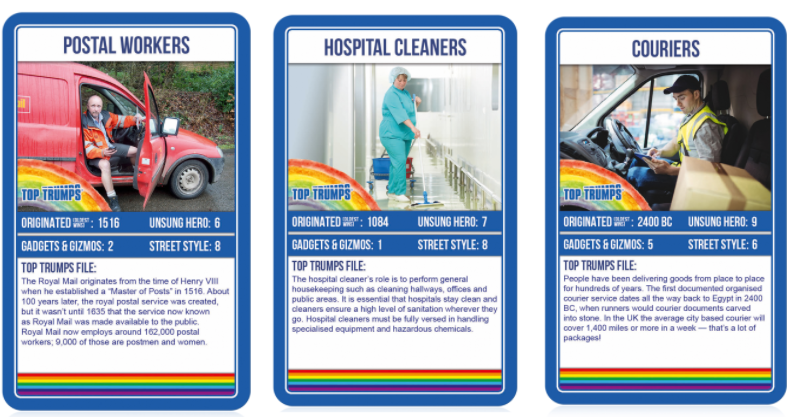
Binmen are tops in new key workers game

The unsung heroes and heroines of the Covid-19 pandemic are bin men and women, alongside couriers, shop workers, journalists and of course, doctors and nurses.

A brand new edition of Top Trumps, honouring Covid 19 key and essential workers, has hit shops … with profits being donated to the NHS.

The game lauds and applauds those key and essential workers who have saved Britain during the Pandemic : from doctors and nurses to less high-profile professions such as pest controllers, midwives and sea merchants.

Politicians, who are depicted on the Top Trumps card by Boris Johnson, and journalists are included too.

One of the four scoring sections in the new game is ‘Unsung Heroes’, and in that category it is the partners of key workers who come out top – they get a maximum 10 out of 10. Binmen and binwomen scored a point lower at nine out of ten. Less unsung heroes like doctors (8), nurses (8) and police (7) fare lower.

In its card citation Top Trumps point out that being a partner of a key worker is “stressful and worrying”.

Claire Simon, from Top Trumps, says: “Every single front-line key worker is, of course, a heroine and hero and would each score 10 (or even 11) out of 10 by any reckoning if we had devised a Hero category.

“By creating an Unsung Heroes category we have ensured varying marks, in keeping with the game’s core classic and its unique and much-loved branding.

“From our research, which has been intensively conducted over the six weeks, partners of key workers came out top in this section. There are an estimated one and a half million partners of key workers in Britain so that’s a lot of Unsung Heroes and Heroines.

“Many of the public we spoke to pointed out that partners too are putting their lives on the line, albeit less directly. As well as being there physically they are providing emotional support. For that reason we listed partners as key workers.”

Other features of the pack include: 

  • Binmen and binwomen being named as the most stylish of all the key and essential workers.  That’s because of their fluorescent and neon clothing, which is all the fashion rage at the moment. They score 10 /10 on ‘Street Style and as they are also runners-up in the ‘Unsung Heroes’ section then they are very much the card not to bin during the game!  In its card citation Top Trumps point out that refuse collectors first began their profession during the 14th Century Black Death that swept across Europe and add: “In terms of facing a pandemic, refuse collectors can rightly joke that ‘we’ve bin here before’ ”.
  • Stuffy politicians score just 1/10 in the style section – with teachers not doing much better and obviously in need of extra fashion homework. They get just 2/10.  Journalists only manage 5/10.
  • Religious and spiritual workers are listed by Top Trumps as the very oldest profession of all the workers in the pack in an ‘Originated’ section. They are named as first appearing in 50,000 BC, which easily wins this category.
  • Gadgets and gizmos winner is the journalist, which isn’t surprising bearing in mind the lightening media advances with Zoom and the like – since the start of the Pandemic. The profession with the least formal gadgets and gizmos includes mental health workers.
  • One of the very best cards to hold in Top Trumps terms is the courier. That’s because it features very well in the Originated section: at 2400 BC. It also scores very highly in the Unsung Heroes category – notching up a nine out of ten. And in terms of gadgets and gizmos it is only shaded by journalists.

Claire Simon, who is Global Marketing Manager at Top Trumps, added: “We are sure that this new edition of Top Trumps can lift spirits in this very challenging and unprecedented period of time, as well as raising money for the NHS, with all net proceeds going direct to the NHS.”

In this version of the celebrated card game 30 different professions are listed, each marked in typical Top Trumps style across four separate scoring categories:

  1. Unsung Heroes: In the pack Top Trumps explains: “All our key workers are heroes, but some jobs are often less praised. We want to make sure key workers are given the praise they deserve”.
  1. Street Style:  Top Trumps explains: “Neon is in! This section assesses the gear and garb a key and essential worker wears”.
  1. Gadgets & Gizmos:  “What equipment the worker uses and carries to do their job.”
  1. Originated:  “The year in which profession was established (or in the case of religious and spiritual workers the estimated year: 50,000 BC!).

Top Trumps Britain at its Best: Key Workers is available priced £5 exclusively at: winningmoves.co.uk and comes in a twin deck (the other pack being Britain at its Best: Hospitals.