This time, we will be working around Water of Leith and the meeting point is off Coburg Street, opposite Ostara Caf, this Saturday (29/04) between 11 am and 1:30 PM.
We should have enough rubbish pickers for everyone, but you are welcome to bring your own!
Kimpton Charlotte Square is honouring the annual World Earth Day (22 April) with a new ‘Plant Pals’ initiative.
The five-star hotel will offer locally sourced plants for guests to enjoy in-room upon request. The complimentary offering is available for all guests and can be arranged at any point prior or during the stay, simply book via the website or request from the front of house team at the hotel.
With the plants named after Scottish philanthropist, Mary Erskpine (Erskine) and one of the first women to graduate from the University of Edinburgh, Flora Philip, guests are invited to immerse in nature and bask in the atmosphere of female empowerment.
What’s more, for every Plant Pal request at the hotel, Kimpton Charlotte Square will in return plant a tree on behalf of the guest through its rewilding charity partner, Trees for Life – as part of its commitment to protect nature against climate change.
Studies have shown that plants have the ability to boost your mood and increase productivity, so this is the perfect in-room addition for those celebrating a special occasion, visiting for work, or touring the city.
Kimpton Charlotte Square also invites non-hotel guests to try remote working in The Garden, an indoor courtyard space, where they can feel a sense of calm among the greenery and natural light as they utilise the space for a ‘WFH’ day.
Plant Pals joins a host of other thoughtful programs and wellness perks at Kimpton Charlotte Square, including yoga mats available in every room and complimentary Kimpton bikes to explore the city. Guests can also relax and recharge in the hotel’s luxurious spa.
Guests looking for the ultimate relaxing spring escape can enjoy the hotel’s All You Can Suite package, which includes an eclectic dining experience at the hotel’s destination restaurant, BABA, and a night stay in a signature suites, alongside complimentary bath salts & invigorating body oil from Scottish skincare brand, Ishga.
To book Plant Pals or add it to the All You Can Suite package, visit kimptoncharlottesquare.com. Standard Double rooms start from £220.
The Scottish Government needs to improve its set up to deliver the country’s climate change goals. says public spending watchdog Audit Scotland.
The government’s climate governance has improved since the former First Minister declared a climate emergency in 2019 – however, adapting to the impact of climate change has received less focus than reducing emissions and hitting net zero targets.
The government is not clear enough on how its internal groups co-ordinate their work. There are gaps in reporting, making it difficult to assess progress against climate policy.
And there has been no workforce plan for climate change since the Net Zero department was established in late 2021. However, one is expected in spring 2023.
Government risk management arrangements around climate change are underdeveloped. For example, the process to identify risks is not always clear. Actions to address risks are sometimes vague.
And there is not a systematic process in place for tracking actions in risk registers.
Stephen Boyle, Auditor General for Scotland, said: “The Scottish Government’s set up for responding to the climate crisis has constantly evolved since 2019. But the different parts of government could be better co-ordinated.
“The government’s risk management arrangements also need to improve, particularly the work needed to ensure Scotland adapts to the impact of climate change.
“Work is ongoing across the Scottish Government to tackle these organisational weaknesses, and it’s vital that happens quickly given the urgency of the climate situation.”
For the month of May, Johnson’s Lawn Seed is encouraging gardeners to say “no” to mowing their lawns, in a move to halt the declining numbers of bees, butterflies, and wildlife, as part of Plantlife’s No Mow May initiative.
A special new product will also be introduced, helping gardeners to further support our beloved creepy crawlies.
No Mow May returns next month and was first launched in 2019 by the botanical charity, Plantlife to highlight the terrifying loss of natural habitats including almost 7.5 million acres of flower-rich meadows and pastures having been lost since the 1930s. The result is fewer pollinators and fewer insect-eating birds, with entire habitats on the verge of complete collapse.
Recognising this, Johnsons Lawn Seed, alongside the No May initiative is highlighting the importance of our gardens, as a place to support vital wildlife. Small steps, such as having a slightly overgrown lawn or planting wildflowers that are rich in pollen and nectar, will attract beneficial insects and bees to gardens.
How to get involved
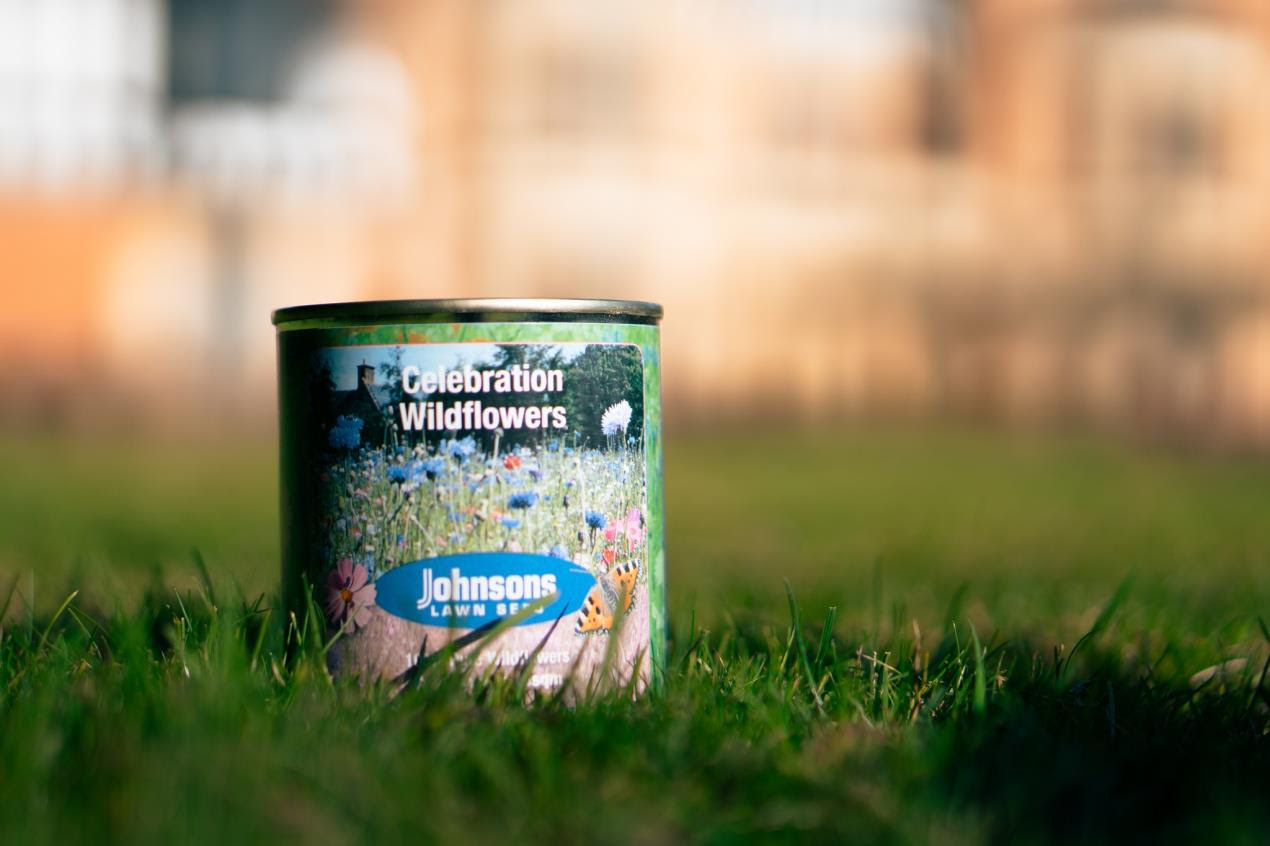
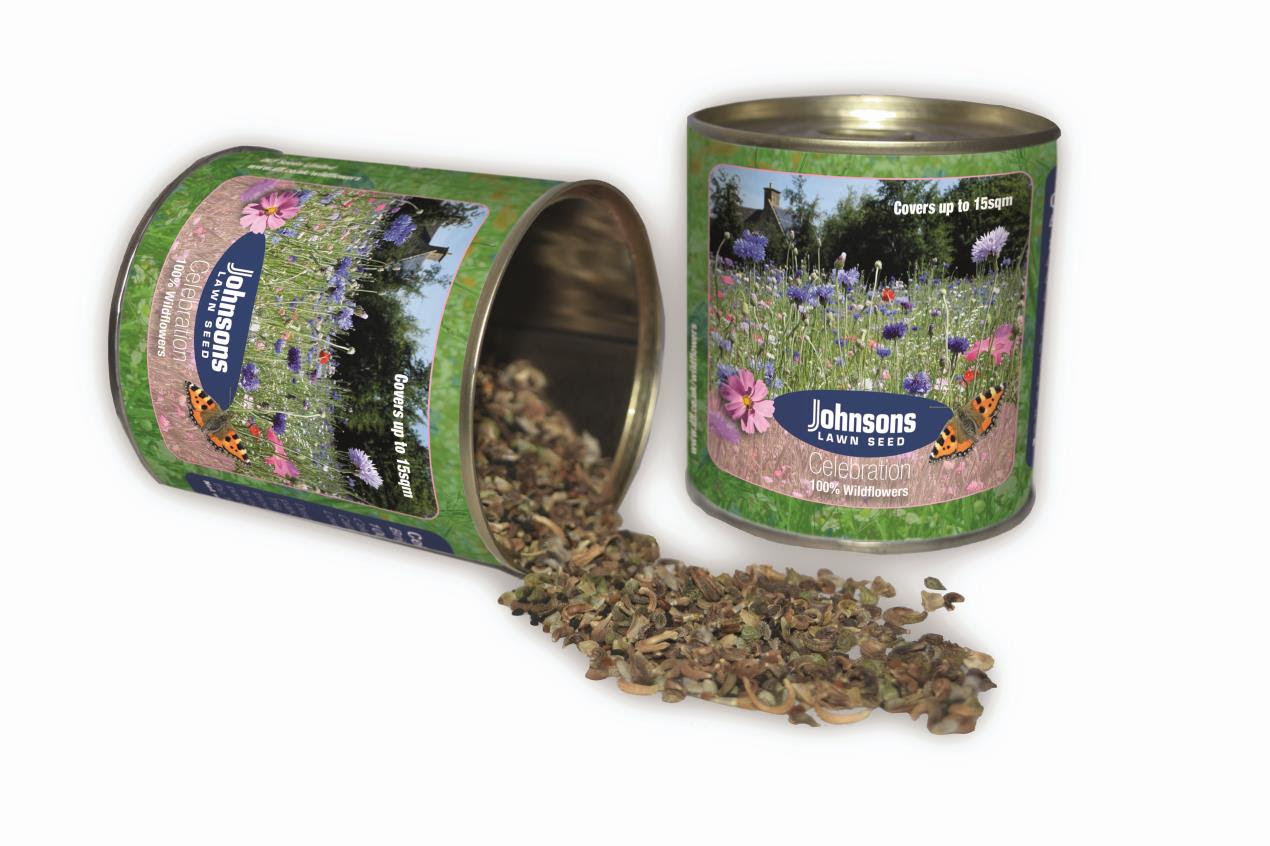
No Mow May doesn’t mean messy, overgrown, and scraggy patches of lawn to attract wildlife. Johnsons Lawn Seed’s Celebration Wildflowers Mix – launched for the 2023 season – can take a part of an existing lawn or flowerbed and convert it into a meadow. Containing bright and vibrant annuals, the mix has 17 different flowering species including cornflowers, poppies, cosmos, marigolds, and daisies, providing a diverse assortment of local insects.
Not only do the Celebration Wildflower tins make ideal gifts for garden-loving friends and family, but they also offer an important gift to nature, as the wildflowers will encourage pollinators into gardens, providing nectar for these vital winged insects.
Outdoor spaces will come alive with bees and butterflies for months at a time as soon as the flowers appear. With coverage of up to 15m2 from one tin and an RRP of just £9.99, Celebration offers a lot more for your money and will bring wildlife to your garden in its droves.
In the Tin
The Celebration Wildflower Tins contain a stunning mix of flower seeds, chosen to create a riot of colour and attract all kinds of pollinators to the garden:
Common Name
Colour(s)
Paper Daisy
White/Pink/Purple
Pheasant’s Eye
Red/Orange
Pot Marigold
Red/Orange/Yellow
Cornflower
Blue/Pink/White
Cosmos
Pink/Purple
Painted Daisy
Red/Orange/Pink/Yellow
Dwarf Morning Glory
Blue/Purple/Pink/White
Chinese Forget-Me-Not
Blue
California Poppy
Multi Colour Mix
Fineflower
Blue/Pink
Farewell to Spring
Pink/Red/White
Baby’s Breath
Red/White
Candy Tuft
White/Blue/Pink/Purple
Love-in-a-Mist
Blue/Pink/Purple/White
Corn Poppy
Red
Why rewilding matters
Bumblebees are by far the most well-known pollinators and without these little buzzing creatures there would be far fewer flowers, fruits, and vegetables growing around us. According to a BBC report, bees pollinate approximately 70 of 100 crop species that feed 90% of the world, with honey bees alone being responsible for $ 30 billion a year worth of food.
Another benefit of leaving your lawn uncut is it protects butterflies as they lay eggs and food for insect larvae as they grow and develop. There are about 60 types of butterflies in the UK, but they are declining more rapidly in urban areas. A major scientific report from Butterfly Conservation shows that almost three-quarters of the UK’s butterfly species in the UK have suffered population declines over the last 10 years.
Seeds created by the wildflowers can also be eaten by garden birds and the taller plants will provide shelter for all kinds of wildlife, increasing biodiversity in an outdoor space. It’s also ideal for the novice gardener as the wildflower lawn is low maintenance, requires little water, and does not require a green thumb to keep it looking bold and beautiful.
Plants grasses too
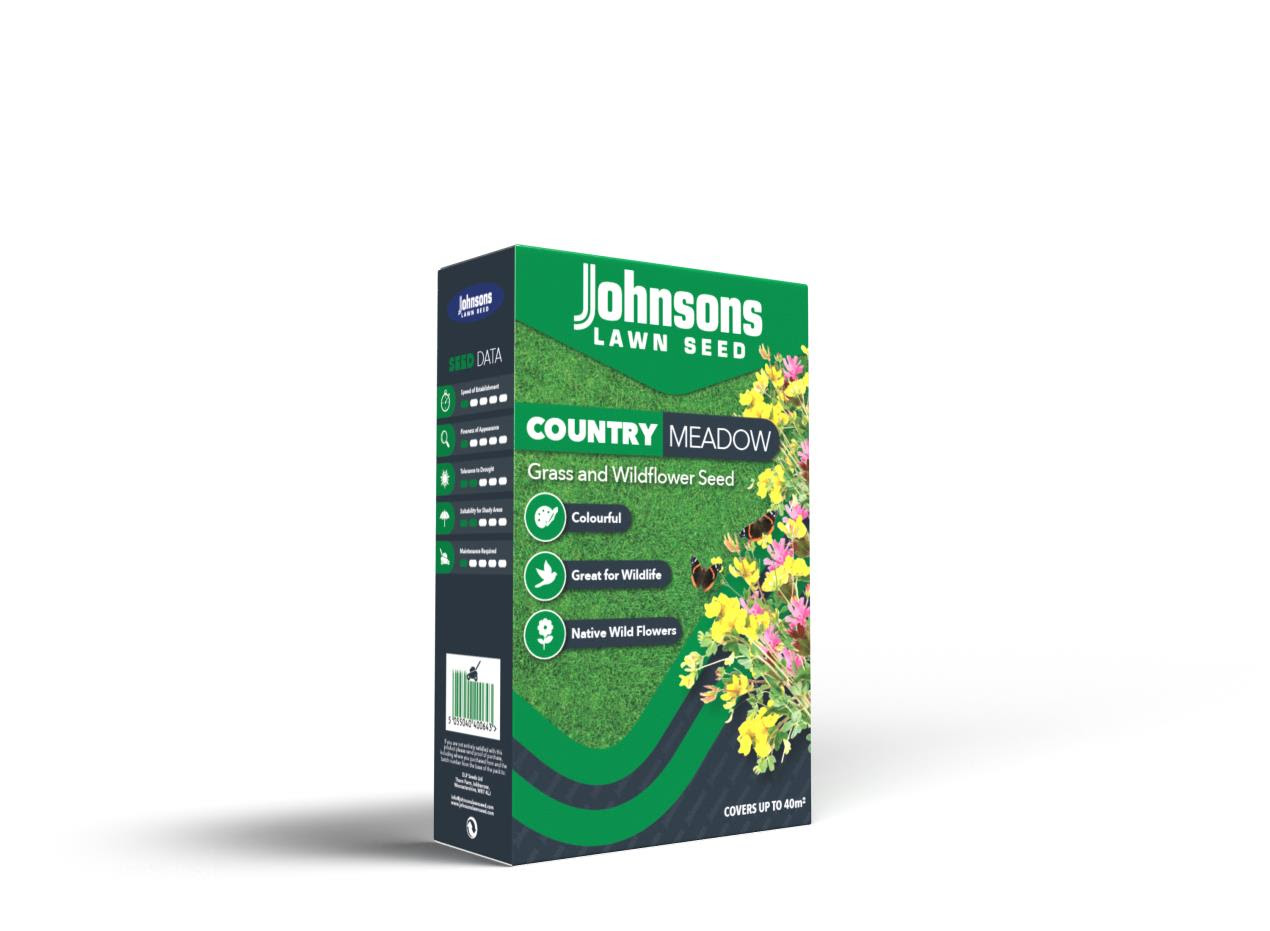
For those that want to establish grasses as well as flowers, Johnsons Country Meadow Mix when planted in an urban setting is beneficial to support insects and other wildlife. By planting native wildflowers, you will provide attractive drifts of colour throughout the summer months, as well as maintain the No Mow May pledge.
The Country Meadow Mix is a mixture of native origin as sown by professionals and contains birdsfoot trefoil, black knapweed, and yarrow, as well as grasses including browntop bent, crested dogstail and Yorkshire fog.
The diverse lawn and native wildflowers are both natural and sustainable and are essential for establishing a healthy wildlife community. Think soft meadow colours, wildflowers, and native plants such as cow parsley, poppies, and buttercups accompanying wispy grasses and you have wildlife-friendly sanctuaries in your backyard.
Get the kids involved
Or why not get the kids involved with No Mow May and use either of Johnsons’ mixes by making a seed bomb? This is a fantastic gardening activity that children will love. All you need is some wildflower mix, some clay, and compost.
Mix with water to form a dough ball. Once they have dried, simply throw them onto your lawn or into your flower bed and watch how a magical meadow of blooms grows.
What’s more, each mixture of Johnsons’ wildflowers will establish within eight weeks. By not mowing the lawn this May, the longer length will create a haven for wildlife, newts, frogs, and hedgehogs to forage, as well as beetles and worms that will also bring birds to your garden to feast on the many invertebrates.
It’s not too late for gardeners to start getting involved now as part of the build-up of the charity’s No Mow May initiative.
Guy Jenkins, Consumer Manager at Johnsons Lawn Seed says: “No Mow May represents an opportunity for homeowners when it comes to native wildflowers and helping to support the biodiversity and nature of their area.
“Our Wildflower mixes can help the pressures our pollinating insects and other wildlife face by creating a sustainable environment within the urban garden.”
Johnsons Celebration Annual Wildflowers are available in 50g tins with an RRP of £9.99.
Johnsons Country Meadow Mix is available in a 200g carton with an RRP of £14.99 Both are available from garden centres or retailers.
A dedicated graffiti removal team and free special uplift service for some residents are just two new street cleansing measures the City of Edinburgh Council is considering to be introduced this year.
A report published yesterday (14 April) to be discussed by councillors at the Transport and Environment Committee on 20 April sets out how an additional £3.078m, allocated when the local authority set its Lib-Dem budget in February, will be spent introducing these as well as several other new initiatives to keep the Capital looking at its best.
The report also updates on Edinburgh’s latest Local Environmental Audit and Management System (LEAMS) survey results, which monitor the city’s cleanliness and highlight areas for action.
As well as demonstrating continued improvement in service performance, reaching pre-Covid levels, the data shows the Capital is performing better than average when compared to similar council areas.
If agreed by committee, £530,000 will be set aside for a dedicated team of officers using specialist vehicles to focus on removing graffiti from public buildings and infrastructure with the ability to raise additional income by charging privately owned buildings for the service.
Committee will also be asked to agree to £500,000 being allocated for a means tested special uplift service, making it easier for those households in receipt of council tax reduction to use the service at no cost.
Other measures being considered are increasing the budget for gully cleaning and channel cleaning by more than 50% (an investment of £380,000), funding of £180,000 for a ‘Rapid Response Service’ to improve cleanliness in the city centre, and additional teams to focus on high density areas which have communal bins and suffer from fly tipping at a cost of £290,000.
A dedicated team to tackle approach roads into the city and rural roads at a cost of £300,000 for additional staff and equipment is also being considered. This multi-skilled team would be tasked with litter picking, mechanical sweeping, gully emptying, and verge and hedge maintenance.
The remaining £940,000 would be used for night shift operations and making sure there is always cover for essential tasks such as litter bin emptying, rapid response teams, city centre and town centre cleansing.
Labour’sCllr Scott Arthur, Environment Convener, said: “Keeping our Capital city clean and tidy for our residents, businesses and those visiting Edinburgh is a top priority for us. We have listened to residents and businesses, and now plan to redouble our focus on cleaning up Edinburgh.
“That’s why we allocated additional funding for our street cleansing team which we set aside in our (Lib-Dem) budget in February.
“If agreed, the measures highlighted in the report will allow us to employ a dedicated team to remove graffiti as well as making sure residents on lower incomes aren’t deterred from having larger items responsibly picked up from their homes through the free uplift service we are proposing.
“We’ll also reduce flood risk by increasing the gully cleaning budget.
“I’d like to thank the street cleansing staff for their efforts in recent months, they have worked within a very limited budget to improve performance.
“The latest data shows there’s been a real improvement in service delivery, and that Edinburgh performs better than average when compared to equivalent Councils.
“This gives me confidence that deploying additional staff, vehicles and equipment throughout the city will further ensure street cleanliness continue to improve.”
Array currently tested before deployment this year
Scotland’s first array of floating solar panels will be installed this year as part of a move to generate renewable energy and reduce carbon emissions.
First Minister Humza Yousaf toured the manufacturing facility of Nova Innovation in Leith yesterday where the panels are being tested before their launch.
The company installed the world’s first offshore tidal turbine array in Shetland in 2016 and subsequently received £6.4 million from the Scottish National Investment Bank in September 2021 to boost production of innovative renewable energy generators.
It has since established project sites in Canada, France and Indonesia. Its floating solar panels build on its expertise in tidal energy and an official launch of the installation will take place later this year with a multi-megawatt international order already in the pipeline.
The First Minister said: “These panels give a fascinating glimpse into the opportunities for Scotland’s future energy system and are the first step towards harnessing our significant potential for floating solar.
“The investment by the Scottish National Investment Bank in Nova Innovation helped expand its manufacturing base here in Leith and aligned strongly with the Scottish Government’s priority of supporting innovative technology that will help us achieve net zero carbon emissions by 2045.
“Scotland is already one of the most advanced hubs in Europe for the testing and demonstration of marine energy technology and I look forward to seeing where the panels will be launched in the near future.”
Chief Executive of Nova Innovation Simon Forrest said: “With record-high energy prices and growing concerns over security of supply, there is an immediate need for Scotland to focus on homegrown energy from our abundant natural resources.
“Scotland is at the heart of the tidal energy revolution and Nova continues to lead the sector with proven technology and unrivalled reliability. With the addition of floating solar to our portfolio, we are ideally placed to help drive the race to Net Zero.
“We were honoured to welcome the First Minister to discuss the economic benefits, job creation opportunities and the part Scotland can play in the global supply for renewable energy.”
Guests invest in good causes with every stay at Ten Hill Place
GUESTS at a forward-thinking Scottish hotel will have the chance to make a meaningful contribution towards improving the environment, simply by forgoing housekeeping visits mid-stay.
Ten Hill Place Hotel in Edinburgh will contribute towards ecological initiatives every time a guest opts out of room cleaning during a two-or-more night stay.
Contributions made by the hotel, which is owned by the Royal College of Surgeons of Edinburgh, when guests abstain from housekeeping will offset half a tonne of CO₂e a night.
The new collaboration with Ecologi has already resulted in 100 tonnes of CO₂e offset through a verified carbon avoidance project in Thailand, generating electricity from wind. 100 tonnes of CO₂e is roughly equivalent to 55 round-trip flights from London to New York.
The next project set to receive support will be a small-scale onshore wind power project in Sri Lanka – with projects set to change every four months.
The new initiative follows a major carbon audit on every aspect of the hotel’s operations by Carbon Futures Ltd and Business Energy Scotland which has already resulted in rolling out daylight sensors and set the plans for plant equipment upgrades that would help the Old Town hotel introduce its own energy sources.
Mark McKenzie, General Manager at Surgeons Quarter which operates the 129-bedroom hotel, said: “It’s very important to us that we make decisions which positively impact the environment and ensure this is at the heart of all of our operations – while also actively encouraging guests to minimise their effects on the environment.
“Ten Hill Place Hotel is a good choice for conscious consumers as we are committed to doing our bit for the planet. With more and more people looking to live a greener life at home –it makes sense to stay at a hotel with similar ambitions.
“However, we’re still mindful of the effects that travel and the tourism industry have on our planet which has been reflected into how we fulfil all our green commitments and continue the highest standards possible.”
A doorhanger has been designed for all guest rooms explaining the initiative with a QR code linking to the venue’s Ecologi profile so guests can learn about the various projects supported to date.
Linda Adams, Head of Partnerships at Ecologi, said: “When businesses put sustainability in their plans, the list of wins really does go on and on. It is great to be working with Surgeons Quarter and see organisations stepping up and taking climate action to make a positive difference.”
The venue’s commitment to sustainability has been ongoing for many years. In 2019 the hotel joined a Scottish Water campaign and removed single use bottles of water in the 129 bedrooms to reduce plastic waste. This has already saved around 80,000 plastic bottles and £22k per year.
Six electric EV points are available for use by guests staying at Ten Hill Place, with more than £20,000 invested into the Garo charging ports with an ambition that the Hill Place hotel car park will, in the near future, only be accessible to electric vehicles.
Surgeons Quarter Brand ambassador, Sandra Carruthers, added: “Working in partnership with Ecologi has enabled us to identify creative ways to be more sustainable while positively influencing and adhering to legislation at local and national levels.”
The 129-bedroom hotel is operated by Surgeons Quarter– the commercial arm of the Royal College of Surgeons of Edinburgh (RCSEd) – with profits put back into advancing surgical standards and improving patient outcomes worldwide.
Surgeons Quarter has also retained Gold Green Tourism Award since 2008 for the efforts to minimise its impact on the planet.
CRAMOND and Barnton Community Council is involved in organising a local litter pick on the weekend of 22 and 23 April. Can you give up an hour or so to help to keep our community tidy?
LAST week was a week of community action in West Pilton, where the city council’s housing team worked with commercial partners, tenants and local school children to spring clean estates.
After a build up of flytipping and littering, it was time to call in the skips and work together to help the community tackle problem area hot spots.
These before and after photos and CEC’s video of the clear up show the huge amount of hard work which was involved. Skips were collected over four days at West Pilton Crossway, Ferry Road Drive, West Pilton Park and Ferry Road Avenue.
In response to help from little litter pickers from local schools, 1,000 Easter eggs were shared out through West Pilton catchment schools, generously donated by ISS UK cleaning services and idverde UK grounds maintenance.
Councillor Jane Meagher, Housing, Homelessness and Fair Work Convener, said: “It really has been a massive clean-up operation and I’d like to thank everybody who pitched in. “
“A lot of hard work has been put in by many different people and a massive difference has been made. A lot of the rubbish was sadly a result of flytipping, which is always disappointing. It has been an issue in the area for some time and I think a lot of people will appreciate the efforts which have been made to sort it out. Let’s hope the estate can stay cleaner and greener for some time.”
Designed to promote community spirit and help commercial partners of the council to add financial and social value that benefit local people, the events were coordinated by CEC’s housing operations team supported by colleagues from waste and cleansing and schools.
The council would like to thank the following organisations for giving up their valuable time and resources to help us with waste collection, weeding, litter picking and equipment to help ensure a week of success:
ABM UK cleaning services
Belac Group Ltd specialist construction
Biffa PLC waste management
Changeworks energy efficiency
Idverde UK grounds maintenance
ISS UK cleaning services
NWH Group Trade Waste Collection & Recycling Services


 Booking is essential: email the team at thrivinggreenspaces@edinburgh.gov.uk