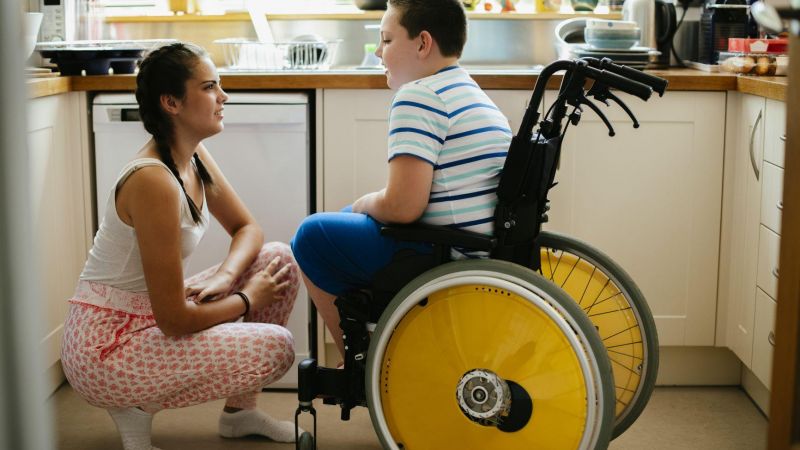
Eligible families can apply for a grant of at least £120 to help with the cost of school uniforms.
The Scottish Government and local authority leaders have reached an agreement to increase the national school clothing grant to a minimum of £120 per eligible primary school pupil and £150 per eligible secondary school pupil. This will be supported by £11.8 million of additional funding to local authorities.
The announcement marks another commitment for the first 100 days of this Government.
Education Secretary Shirley-Anne Somerville said: “School uniforms can place a significant financial burden on families, some of whom are already facing additional hardship as a result of the pandemic.
“This school clothing grant will help to relieve some of that pressure for around 145,000 families and it will help to ensure that all children can go to school feeling comfortable, confident and ready to learn.”
COSLA Children and Young People’s spokesperson Councillor Stephen McCabe said: “Councils and schools are working to tackle the costs of the school day, ensuring that all children are able to fully participate in their education.
“Working with the Scottish Government, we are pleased that the national minimum school clothing grant has been increased and that families can get extra support as we continue on the road to recovery from the pandemic.”
Eligible families can apply for the school clothing grant through their local council.
Gordon MacDonald, MSP for Edinburgh Pentlands, is urging young people in the area to apply for the Job Start Payment if they are starting a new job after a period of unemployment.
The Job Start Payment is available to 16-24-year-olds who have been on certain benefits for six months or more. Eligible young people can apply for the one-off payment worth £252.50, or £404 if they have children.
The payment will help with the costs of starting a job including travel, new clothes or childcare. People can apply via www.mygov.scot/job-start-payment or by calling 0800 182 2222.
SNP MSP for Edinburgh Pentlands, Gordon MacDonald said: “The pandemic has been particularly difficult for young people in Edinburgh and the Job Start Payment is a fantastic source of support for young people to ensure they can get off to a good start in a new job.
“Starting a new job can be very expensive for young people when you take into consideration the costs of travel, buying clothes and other costs associated with a new job.
“I would encourage all young people who have been unemployed for a long period of time and are starting a new jo or have recently started one to apply for this support.”
Social media campaign kicks-off for benefit to 16 – 24 year olds
Social Justice Secretary Shona Robison has urged eligible young people to apply for Job Start Payment if they are starting a new job after a period of unemployment.
Eligible 16-24 year olds, who have been on certain benefits for six months or more, can apply for the one-off payment worth £252.50, or £404 if the applicant has children. The payment will help with the costs of starting a job including travel, new clothes or childcare.
Ms Robison visited Remploy’s offices in Dundee to meet hairdresser Mystialeigh Smith who recently used the payment to buy work clothes and travel.
Ms Robison said:“We want to give our young people all the support they need when they start work including making sure the costs associated with taking up a job don’t get in the way. We know lockdown has impacted job opportunities for many young people and getting money to those who need it is our priority.
“Access to this support is a right, and we are ensuring people receive all the financial support that they are entitled to.
“It is great to see organisations across the private and public sector highlighting the availability of Job Start Payment to their new employees. I strongly encourage all eligible young people who have recently started a new job or are about to start a new job to apply now.”
Peter Craig, Contracts Director at Remploy said:“The pandemic has had a major impact on the lives of our service users across Scotland.
“The Job Start Payment will be invaluable to young people accepting a job, helping them with any associated costs such as travel or childcare.”
Mystialeigh Smith 17, from Dundee, an apprentice hairdresser at Macintyres hairdressers who accessed Job Start Payment, said:
“Upon gaining employment my keyworker advised me to apply for the Job Start Payment on the social security website. It took roughly two weeks to go into my bank and it helped me buy work clothes and travel until I received my first pay.”
People can apply for Job Start Payment for up to three months after their start date.
You can find out more and apply through mygov.scot or by calling 0800 182 2222.
Figures published this week reveal that 2,945 young carers in Scotland have received one or more annual payments of Young Carer Grant since its launch on 21 October 2019 until 30 April 2021.
The Young Carer Grant quarterly statistics show that 3,615 payments were issued up to 30 April 2021 and that the total value of Young Carer Grant payments issued to clients by 30 April 2021 was £1.1 million.
The payment is £308.15 each year for young people who provide care for an average of 16 hours a week.
Applications were received from young people living in all local authorities throughout Scotland. The highest number of applications were 780 from Glasgow – accounting for 14% of all applications received to the end of April 2021. The next highest was 435 from North Lanarkshire, 350 from Fife and 310 from South Lanarkshire.
The School Age Payment is open to families who get tax credits or certain benefits and have a child who was born between 1 March 2016 and 28 February 2017.
The one-off payment can be used for anything from a new pair of shoes to books or arts and crafts materials. Parents who have deferred their child’s entry to school from August 2021 to August 2022 should still apply before the closing date on 28 February 2022 – if an application is made after this time it will be too late.
Best Start Grant School Age Payment is one of 5 benefits for families in Scotland.These are:
• Scottish Child Payment • Best Start Grant Pregnancy and Baby Payment • Best Start Grant Early Learning Payment • Best Start Grant School Age Payment • Best Start Foods
Eligible parents of children aged 4 and 5 are being encouraged to apply for financial support worth over £250 – applications opened on 1 June 2021.
The School Age Payment is open to families who get tax credits or certain benefits and have a child who was born between 1 March 2016 and 28 February 2017.
The one-off payment can be used for anything from a new pair of shoes to books or arts and crafts materials.
Parents who have deferred their child’s entry to school from August 2020 to August 2021 should still apply before the closing date on 28 February 2022 – if an application is made after this time it will be too late.
Speech by the Social Justice Secretary, Shona Robison, opening yesterday’s Tackling Poverty and Building A Fairer Country debate
Presiding Officer, I am pleased to open this debate on the urgent need for us to tackle poverty and build a fairer, more equal country.
We must seize the opportunity, build upon our strong efforts to date, and use every lever at our disposal to bring about the change needed to tackle this problem.
We already invest around £2 billion each year in support for people on low incomes, including over £672 million targeted at children. We have a strong focus on those at greatest disadvantage, including disabled people. And we are supporting innovative action with our £50 million Tackling Child Poverty Fund.
But we must do more. That is why we have committed a wide range of ambitious action to be delivered in the first 100 days of this Parliament – maintaining the tremendous pace taken of change throughout the COVID pandemic.
This is a priority across all Ministerial portfolios. No one action will bring about the change needed, it needs all parts of government and broader society to work together and to impact the drivers of poverty reduction – increasing household incomes from work, reducing costs on essentials and maximising incomes from social security.
The eradication of poverty and building a fairer more equal country must be a national mission for government, for our parliament and for our society. We must try, where possible, to unite on this issue and work together to create a fairer Scotland.
Backed by over £1 billion of additional funding, our response to the pandemic shows that we can make change happen at the pace and scale required to support people and improve their lives. And we wand to build on this can do approach.
We delivered free school meal support during all school holidays and periods of remote learning for children from low income families – helping to tackle food insecurity during the pandemic. We will continue this whilst expanding Free School Meal support to all primary pupils, which will start within the first 100 days of this Parliament.
Also, in our first 100 days we will complete the roll-out of 1,140 hours of funded Early Learning and Childcare and have set out the next stage of our ambition to expand childcare further and develop a wraparound childcare system, providing care before and after school, all year round. This will make an important contribution to children’s development and will unlock the potential of parents in the labour market.
We will also deliver our £20 million summer programme for pupils, helping children socialise, play and reconnect – an essential investment to support the wellbeing of all children and young people [backed by £7.5 million from our Tackling Child Poverty Fund].
Through two Pandemic Support Payments of £100 to low income families with children we put money directly into the pockets of those who needed it most.
Building upon this approach, we will effectively pay the Scottish Child Payment through introducing bridging payments of £520 for families not yet eligible for the Payment, with £100 to be paid to families this summer. We will also provide £130 to every household who received Council Tax Reduction in April, reaching around 500,000 households.
I am pleased I can also make two announcements.
First, building on the practical support we offered during the pandemic, we will be providing the British Red Cross with a further £250,000 to continue their cash-first crisis support to those most at risk of destitution. This includes help to those impacted by the UK Government’s hostile policies that exclude them from most mainstream supports including the Scottish Welfare Fund.
And secondly, in recognition of the importance of listening to families affected by poverty, we will trial Family Wellbeing Budgets to put families firmly in control of the support they need. This new support will be delivered in partnership with the Hunter Foundation and will help to improve people’s wellbeing and capabilities.
Presiding offer, where we have the powers we are making a difference to people’s lives.
Nowhere is this more evident than in our approach to housing. Scotland has led the way in the across the UK with almost 100,000 affordable homes delivered since 2007, over 68,000 of which were for social rent. This is making a significant difference to people right across the country, and particularly for families with children.
We want to deliver a further 100,000 affordable homes by 2032. It is our aim that at least 70% of those homes will be for social rent, helping to tackle child poverty and homelessness.
But to tackle poverty effectively we must deliver a fair work future for Scotland, and we are working hard to do just that just now – but we are constrained by the powers available to us.
We cannot accept a future where two thirds of children living in poverty come from working households and where people are forced to rely on benefits to top-up their earnings.
We have to transform workplaces to tackle poverty and long-standing labour market inequalities, such as the disability employment gap and the barriers to employment faced by people from minority ethnic backgrounds.
With full powers over employment we could, as a minimum, ensure that all employees in Scotland receive the Real Living Wage, ensuring that their wages represent the true cost of living.
We could outlaw unfair fire and hire tactics, prohibiting employers from dismissing employees and subsequently re-employing them on diminished terms and conditions, and we could ban inappropriate and exploitative use of zero hour contracts, giving people the certainty about their working hours – ensuring they can plan their lives and incomes.
That’s why I have asked all party leaders to support our request to the UK Government for the full devolution employment powers to this parliament. So we can tackle poverty with the powers we need to make the change.
Social security is also an important tool to tackle poverty, and again those powers don’t lie in our hands. 85% of spending remains at Westminster alongside income replacement benefits such as Universal Credit and Employment and Support Allowance.
If we didn’t already need it, the pandemic further evidenced that the UK welfare system is not fit for purpose and risks undermining hard won progress. This is the system people in Scotland have to rely on and we shouldn’t have to mitigate against polices we disagree with like the £80 million we spent last year on Discretionary Housing Payments to mitigate the bedroom tax in full and support people with housing – we could be investing in other anti-poverty measures. If we had the powers here we would be able to do that.
The removal of the £20 uplift to Universal Credit is a callous act which will push 60,000 families across Scotland, including 20,000 children, into poverty and will result in families unable to work receiving, on average, £1,600 less per year than they would have done a decade ago – a decade ago – in 2011.
That’s a massive threat to the progress we could make here. We could be delivering the doubling of the Scottish child payment with one hand, only to see it removed by Westminster welfare policies with the other. Surely there is no-one across this chamber that can think that isin any way a good idea or a fair system?
We need to make significant investment into the pockets of those who need it most need. The Scottish child payment does that. That’s why it’s so important.
We have urged the UK Government to make the changes needed and to deliver a social security system which is fit purpose – scrapping harmful policies such as the two child cap, the rape clause, the benefit cap and 5 week wait under Universal Credit. Unfortunately, our calls, alongside many charities, organisations, and even the UN Poverty Rapporteur have been ignored. It’s time for full powers to come here so we can make the difference.
We have already shown we can make a difference – a public service based on human rights with respect and dignity at its heart and viewed as an investment in the people of Scotland. Principles we enshrined in law.
Through our powers, we are tackling child poverty head on, with the Scottish Child Payment, which currently pays £40 every four weeks for every eligible child under 6. We are committed to doubling this to £80, making even greater impact.
Alongside our Best Start Grant and Best Start Foods we are providing over £5,300 of direct financial support for families by the time their first child turns six and further for subsequent children as we don’t put a cap on children. These payments are making a real difference to low income families, helping them to access the essentials they need.
That support is unmatched anywhere else in the UK.
Presiding officer, our next steps will build on the strong foundation we have set, and will be taken forward at pace these changes. No one who sits in this parliament, whatever their political beliefs, can underestimate the scale of the challenge that we face.
I want to take that forward and I’m pleased to work with anyone across this chamber who wants to join me in doing that.
Young people returning to work are being urged to check if they are eligible for Job Start Payment.
Over 1,000 young people have already benefited from this support since it launched during the COVID-19 pandemic. That’s more than £277,000 invested so far in helping those whose job prospects have been hardest hit over the past year.
Job Start Payment is now £252.50, or £404 if the applicant has children and is available to young people who have been on certain benefits for 6 months or more. This payment could help with travel costs or could be used for clothing, lunches and other expenses that need to be met before someone receives their first salary.
Figures recently released cover the period from 17 August 2020, when Job Start Payment launched, to 31 March 2021.
People can apply for Job Start Payment for up to 3 months after their start date.
You can find out more and apply through mygov.scot or by calling 0800 182 2222.
Low income parents are being encouraged to apply for the financial support they are eligible for. This year’s Best Start Grant School Age Payment opens today to families who get tax credits or certain other benefits and have a child who was born between 1 March 2016 and 28 February 2017.
Even if the child is not starting school, eligible parents and carers should still apply before the closing date on 28 February 2022.
The payment is part of five family payments delivered by Social Security Scotland that also include: Best Start Foods, Best Start Grant Pregnancy and Baby Payment, Best Start Grant Early Learning Payment and Scottish Child Payment.
Best Start Foods payments are set to increase to £4.50 per week on 1 August to support low income families to buy healthy food for children under the age of three.
To maximise the support available to families, income thresholds that apply to certain qualifying benefits are also set to increase.
Minister for Social Security Ben Macpherson said: “The Scottish Government is working hard to tackle poverty and to create a fairer society, with the powers and resources that we have.
“As part of this, we are set to increase our Best Start Foods payments within the first 100 days of this new term of government, and we are determined to make sure families with young children get all the financial help that is available.
“We are providing support worth about £5,000 by the time a child turns six through our Best Start Grant, Best Start Foods and the Scottish Child Payment. People can apply for these payments on one simple, straightforward form – and I urge all those who are eligible to make sure they apply by visiting mygov.scot/beststart or calling 0800 182 2222.
“Access to financial support is important and we want people get the money they are entitled to. So please check if you’re eligible and, if so, make sure to apply – and let others know too, so that together we can help build a fairer society here in Scotland.”