As football fans across the city look forward to the Edinburgh Derby tonight on the 27th December, the four-legged residents of Edinburgh Dog and Cat Home have donned both teams’ colours. They don’t mind who you support, they would just love to watch by your side.
In 2023, Edinburgh Dog and Cat Home has seen a record number of requests to surrender pets or access support from their pet foodbanks.
Getting in the matchday spirit, Alfie a 4-year-old Domestic Shorthair cat, Copper a 7-month-old German Shorthaired Pointer, Peter a 12-year-old Lurcher, Lily and Daisy 1.5-year-old Jack Russel x Poodles, and finally Reggie and Ronnie a pair of 8-year-old Jack Russels, have been sporting the famous colours of both Edinburgh teams.
Lindsay Fyffe Jardine, CEO of the Edinburgh Dog and Cat Home, said: “We know how much football means to people across Scotland, ahead of the Edinburgh Derby we wanted to highlight that our residents who are looking for a new home, don’t care who you support, they just want to be by your side.
“This year we have seen a record number of surrender requests as well as a significant increase in the need for pet food bank support. Winter is especially difficult for us, and we are extremely grateful to anyone who can donate towards our winter appeal, or able to give a pet a loving home.”
The Edinburgh Dog and Cat Home finds winter an especially difficult season as higher costs drain funds while demand for their vital services increases.
They recently launched a Winter Appeal, seeking donations to enable the Home to cope with the increased demand, continue providing vital support to animals in need and help people to keep their beloved pets at home.
To make a donation and to read more of their life-altering stories please visit:
Seven of the weirdest festive objects PDSA pet patients have eaten at Christmas
Christmas is often dubbed ‘the most wonderful time of the year’, but sadly some pets will need to see a vet this year due to a festive emergency.
This Christmas period, PDSA Vets alongside PDSA Pet Insurance are warning pet owners of certain dangers to be wary of this time of year.
PDSA Vet Nurse Shauna Walsh explains: “Festive foods, gifts under the Christmas tree, decorations, and even the most ordinary household objects can tempt curious cats and dogs, putting them in harm’s way.
“Over the festive period, we all eat things we shouldn’t, and that’s no exception for many pets. Our veterinary teams will likely see many poorly pets in need of emergency treatment after they’ve wolfed down something they shouldn’t have over the festive season.
“In December alone last year, our veterinary teams treated over 53,000 pets, conducted over 61,000 consultations, and performed over 2,300 operations. Some of which will have been related to ingestion of a festive hazard.
“This Christmas, we’re urging owners to watch out for prying paws as we revisit seven of the oddest Christmas-themed objects our pet patients have eaten.”
7 of the oddest Christmas-themed objects PDSA pet patients have eaten
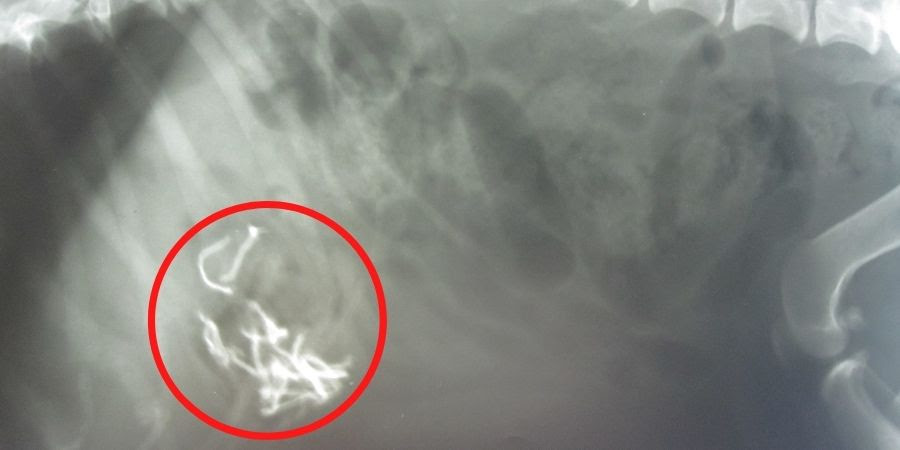
1. Fairy lights
Now, you wouldn’t think fairy lights could look appetising, would you? Think again! Cheeky Charlie underwent emergency surgery at Southampton PDSA when his family discovered he had eaten fairy lights. Thankfully, the glass hadn’t cut his mouth or throat, and he hadn’t bitten through the wire when the lights were on, which could have electrocuted him! Thankfully, vets performed life-saving surgery to remove the lights, and Charlie was able to go home with his family.
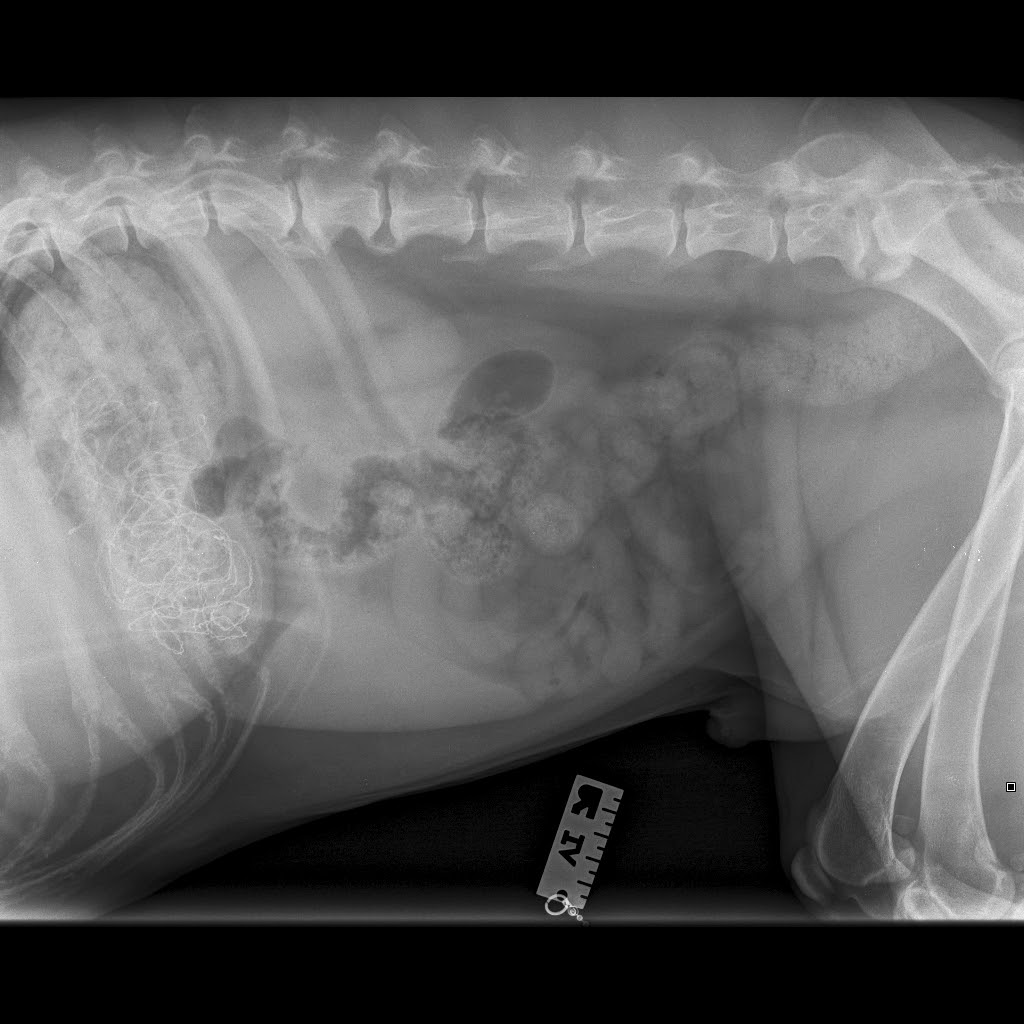
2. Tinsel
Renowned for eating sofas, carpets, and tinsel in his younger days, when Dexter’s family noticed tinsel was missing from the mantelpiece, they were sure their dog was the culprit. However, Dexter showed no signs of illness until later that night, when he was sick. The following morning, Dexter was taken to PDSA, and x-rays confirmed tinsel in his stomach. Vets performed emergency surgery, and to his owners’ relief, Dexter could go home in time for Christmas.
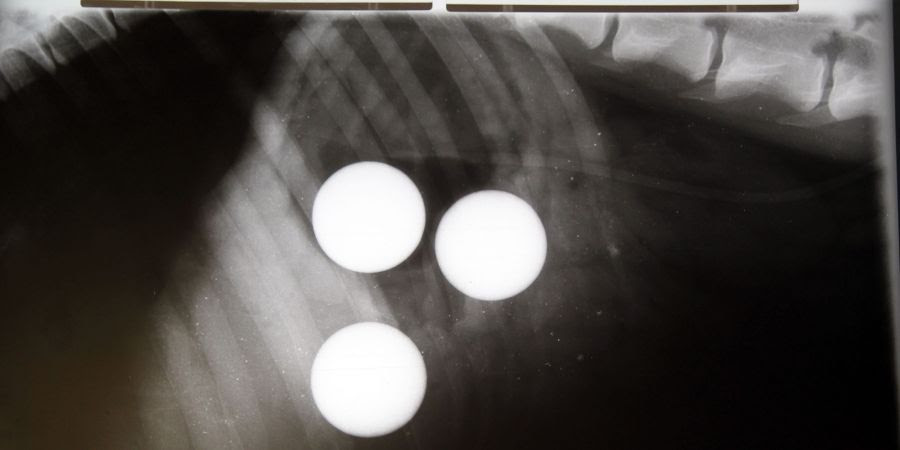
3. Golf balls
If you’re planning to surprise a friend or family member with golf-inspired gifts this Christmas, be careful around inquisitive pets. When Azar the Doberman suddenly lost weight, his owner took him to her local PDSA Vet. To her surprise, they discovered he had swallowed not one but three golf balls! Sadly, two of the balls had lodged themselves in his small intestine, and he was at risk of suffering stomach injuries. It was touch and go, but thankfully Azar survived the operation.
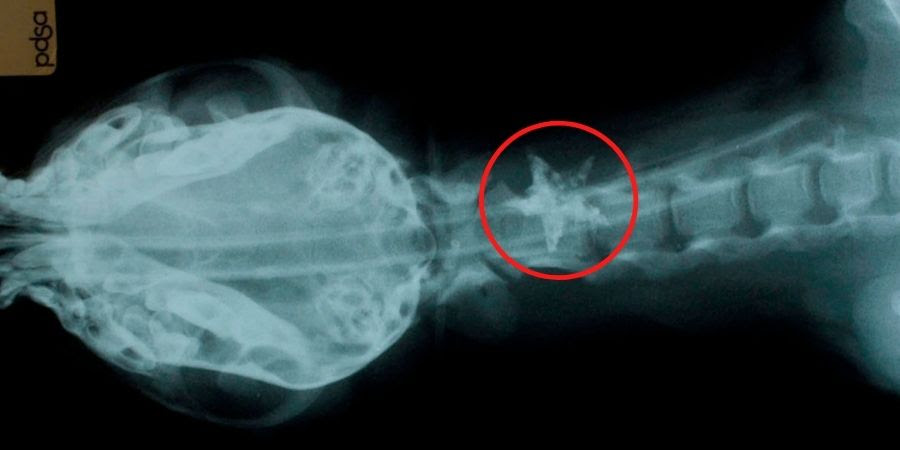
4. Star-shaped Christmas decoration
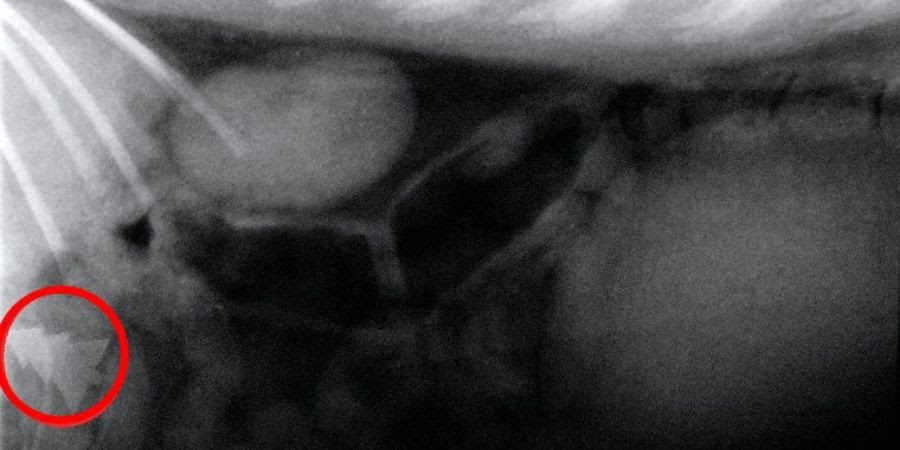
When a five-month-old puppy called Charlie was gagging and struggling to breathe, his worried owner knew something wasn’t right. Charlie visited his local PDSA Pet Hospital, where vets performed x-rays and, to their surprise, found a star shining back at them! Vets had to act quickly to remove the star-shaped decoration with forceps to stop the puppy from choking.
5. Nintendo DS game
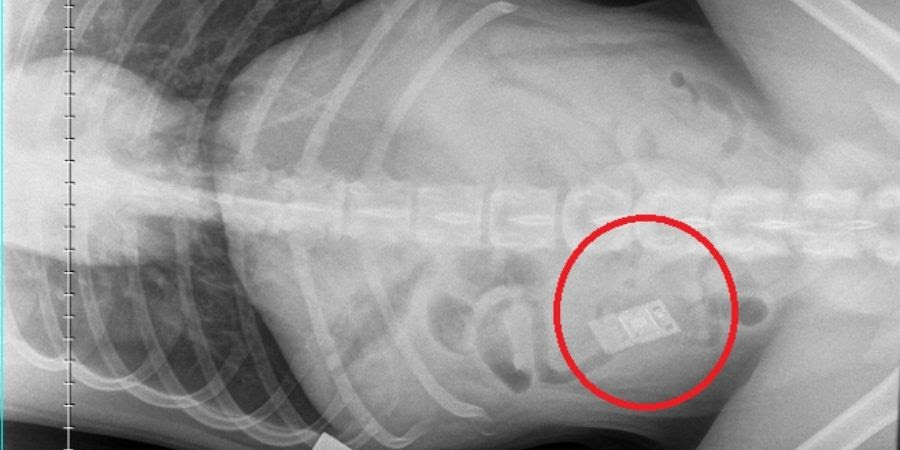
It was almost game over for Rocco when PDSA Vets discovered the curious canine had swallowed a Nintendo DS game. He started vomiting and refused to eat, so his owners took him to PDSA Glasgow Shamrock Street Pet Hospital for an emergency appointment. Vets found a rectangular-shaped object in his gut on x-rays and performed emergency surgery to remove it immediately. They were stunned to retrieve a video game cartridge from his small intestine, but thankfully, Rocco survived and was able to go home to rest and recover the following day.
6. Christmas tree decoration
Leah’s owner was distraught when her beloved cat began vomiting and losing weight. Her owner took her to Middlesbrough PDSA to get to the bottom of the issue, only to find Leah had eaten a tiny Christmas tree-shaped decoration! X-rays showed a perfectly formed Christmas tree in the cat’s abdomen. Vets performed emergency surgery to remove it, and thankfully Leah was able to go home with her loving owner.
7. Spoon
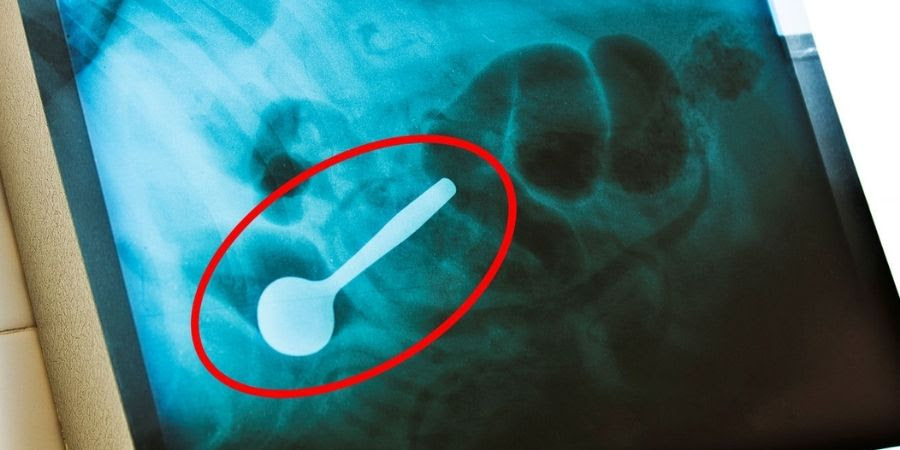
Don’t forget, pets can be drawn to the most ordinary household objects too. Rottweiler Max bit off more than he could chew when he was fed strawberries and cream from a spoon and ate the spoon too! Worried, Max’s owners took him to her local PDSA Pet Hospital. An x-ray showed the spoon lodged firmly in Max’s stomach, so he was rushed into surgery to remove it. Thanks to PDSA Vets, Max survived.
PDSA is the UK’s largest vet charity providing a vital service for pets across the UK whose owners struggle to afford treatment costs for their sick and injured pets. For many vulnerable pets, PDSA is there to help when there is nowhere else for their owners to turn.
The charity’s insurance arm, PDSA Pet Insurance, offers a range of policies to cover cats and dogs for accidents and illness, as well as providing access to a 24/7 veterinary helpline. Every policy sold raises funds for the charity’s life-saving veterinary work.
World’s Loneliest Sheep – Ambaasador for Mental Health Message
A sheep which shot to stardom last month when she was rescued after two years living at the bottom of some remote cliffs, is now helping to encourage steps to prevent loneliness in the agricultural community.
The Scotch Mule cross Charollais ewe was named Fiona by the team of friends; Graeme Parker, Als Couzens, Ally Williamson, James Parker and Cammy Wilson of The Sheep Game, who rescued her after she became known as the “world’s loneliest sheep” when Jill Turner spotted her while kayaking near the base of the cliffs.
The story of Fiona’s rescue attracted interest from the media around the world, with numerous TV stations and newspapers running the story – from CNN and the New York Times to the Sydney Herald.
She is now enjoying life – and lots of company – at Dalscone Farm, Dumfries where she is now helping to raise the profile of RSABI’s #KeepTalking campaign and the Scottish Association of Young Farmers Clubs’ AreEweOK? mental health message.
“Fiona settled in here straight away and she’s doing really well,” said Ben Best, who runs Dalscone.
“We’re delighted that not only has she helped to raise £11,000 for RSABI and the Scottish SPCA, thanks to donations from people keen to help, she is now also helping to spread the word about such an important message at this time of year.”
Carol McLaren, Chief Executive of RSABI, said: “We know there can be a lot of loneliness in the farming community, particularly at this time of year, and the #KeepTalking campaign highlights how important it is for people to keep in touch and keep an eye out for anyone who could be feeling low or lonely.
“We know that just a little kindness can make a massive difference for someone who is struggling.”
RSABI offers free practical, financial, and emotional support including counselling services, delivered quickly after receiving the initial enquiry.
Its free confidential support service is available 24 hours a day, every day of the year, by calling 0808 1234 555 (calls won’t show up on phone bills) or through a confidential webchat service, available on RSABI’s website www.rsabi.org.uk.
You can find further information on the RSABI website www.rsabi.org.uk.
PDSA is appealing for support so that we can continue to help keep people and pets together this Christmas.
Our charity provides free and low cost vet care for owners who are struggling to afford the treatment costs for their sick and injured pets. The cost of living crisis is hitting hard meaning many people are struggling – nearly a quarter (23%) of the owners we help have used a food bank for them or their family over the last 12 months. With basic essentials such as food unaffordable for so many, our vital, life-saving services are needed now more than ever.
In December 2022 our dedicated teams treated more than 53,000 pets, and performed over 2,300 operations. In fact, we treat 10 pets every minute! But in the last 12 months there has been an estimated 1.6% increase in people receiving benefits, meaning many more people are now eligible for our charitable veterinary services. This equates to an additional 83,000 people who may turn to us, desperate for help in their time of need.
Our pets give us so much unconditional love and companionship, but without our help thousands of people could suffer a devastating loss because they can’t afford vital treatment for their pet. We don’t receive any government funding, relying entirely on generous public support to keep our 48 Pet Hospitals open.
With the festive season in full swing, the time for gift giving is about to be upon us.
This December, leading vet charity PDSA is hoping people can give the gift of time and do their bit in helping the charity support those who need it most – by volunteering in one of it’s charity shops across the UK.
Jennie Pearson, Volunteering Business Partner at PDSA, said: “We’re heading into a widely celebrated time of year for generosity and giving, and we’d be forever grateful for some helping hands this holiday season. For anyone looking to give back to the community, we’d love to have you on board in our team of volunteers.
“Our volunteers are an amazing group of people who all contribute something very special to PDSA. By giving us the gift of their time, they are helping us to support pet owners in their time of need – who would otherwise struggle to cover the cost of unexpected veterinary bills should their pet fall ill or become injured. Their efforts mean we can help families stay together.”
Benefits of volunteering
“We offer a warm and supportive environment for all of our volunteers. The shops enable people to give something back to their local community, all whilst supporting a vital charity cause.
“Our shops welcome people from all walks of life within local communities, whether they are coming to the shop for a browse or to donate an item. They are great social spots for both volunteers and visitors.
“Volunteering can also help people improve their confidence while enabling them to develop and improve on their knowledge and skills.
“It can be a great way to get out of the house, especially for those who may feel isolated, and all for such a good cause.
“Our charity shops are vital to PDSA. They provide much needed funding for our 48 Pet Hospitals across the UK, so the teams can continue to help thousands of the nation’s most vulnerable pets. All of our volunteers provide an essential contribution to the charity, and every hour spared to help out goes a really long way.
“We are extremely grateful to all of the people who support PDSA because they believe in what we do. It’s the generous support from donating unwanted items, making a purchase, or volunteering in our charity shops, that goes back into helping keep people and pets together in their times of need through our Pet Hospitals.”
If you would like to make a positive difference to your own life and the lives of others by lending a hand, there are lots of volunteering roles available across PDSA’s over 100 charity shops up and down the country.
Whether you would like to help customers with their shopping, sort through donations, create eye-catching window displays or serve at the till. To find out more about volunteering, head to PDSA’s website: www.pdsa.org.uk/volunteering
As Christmas approaches vet charity PDSA has issued a chocolate warning for all pet owners, after a 13-year-old dog decided Christmas would come early, tucking into an entire gift-wrapped selection box.
Staffordshire Bull Terrier, Max, was discovered by his stunned owners next to the Christmas tree, with scraps of wrapping paper and the remains of what was a gift-wrapped selection box.
Having had Max since he was a puppy, he had never shown interest in presents under the tree, or tried to get his paws on chocolate, so his family was in total shock to find he’d ripped open a present from under the tree, and eaten not only all six packets of chocolate in the selection box, but some of the box itself and the wrapping paper!
Max’s loving owner, Stacey, said: “Max is the light of our lives, he’s definitely a real character, but after all these years we never imagined he’d open up a gift from under the tree!
“We know chocolate can be really bad for dogs, so I immediately searched online to find out the total grams, to see how bad it was. I then called the vets, who told me I needed to bring Max in straight away.”
Across it’s 48 Pet Hospitals, PDSA sees a 35% increase in a medication used to treat poisonings around Christmas, which is likely linked to the abundance of dangerous food in the home such as chocolates and mince pies.
PDSA Vet Nurse Shauna Walsh said: “The seriousness of chocolate poisoning depends on how much your pet has eaten, how big they are, and the cocoa content of the chocolate – the darker the chocolate the more toxic it is for your pet.”
Thankfully for Max, it didn’t take long for him to perk up again after being treated with fluids, charcoal and medication to induce vomiting. He was soon able to head home to fully recover, and enjoy the rest of the festive season with his family.
The most severe cases of chocolate poisoning in pets can lead to heart failure, coma and even death. Although this is rare this is why it’s really important to keep chocolate safely away from any curious pets. Especially during celebrations like Christmas when there’s likely more chocolate than usual in the house.
Symptoms of chocolate poisoning usually appear within two to four hours, but can take up to 12 hours. In severe cases, toxicity can cause:
Fast breathing or panting
Shaking, trembling and tremors
High temperature (fever)
Seizures
A fast heart rate
High blood pressure
It’s also important to be aware of mild symptoms too:
Hyperactivity
Vomiting
Diarrhoea
Signs of abdominal discomfort/pain
If you think your pet could have ingested some chocolate, don’t wait for chocolate poisoning symptoms to appear, keep the packaging and call your vet immediately.
Thousands of people could suffer a devastating loss because they can’t afford their pets veterinary treatment, together this Christmas we can save pets’ lives. For more information on how you can help PDSA keep people and pets together this visit:
The British Veterinary Association (BVA) has warned pet owners of the risks posed by unsuitable food and other festive perils over the Christmas season.
Traditional treats, presents, decorations and chocolates will be arriving in many households this month. But these seemingly innocent pleasures must be stored securely by pet owners if they want to protect their pets and avoid an emergency trip to the vets this year.
Chocolate, raisins and other dried fruit – such as that in mince pies or Christmas puddings – onion, garlic, xylitol in sugar-free products and seasonal decorations like mistletoe and holly can all be dangerous, and even fatal, to dogs and cats if eaten. BVA Voice of the Veterinary Profession research carried out last year revealed that four in five companion animal vets saw at least one case of toxic ingestion over the 2021/2022 festive period.
Our most recent stats showed that 76% of vets saw cases of chocolate poisoning and 69% saw dogs taken unwell after easing raisins or sultanas. Around a fifth (19%) reported cases caused by the artificial sweetener Xylitol. Foreign body ingestion in dogs was also common, with gifts for humans, being the most common cause (14%) while consumption of Christmas decorations and gifts for pets (12%) were also highlighted by vets as causing issues.
And dogs weren’t the only animals requiring emergency treatment: more than a quarter of vets (27%) also saw cases of toxic ingestion in cats, who were most likely to have ingested non-food items such as seasonal plants like holly or mistletoe (reported by 18% of vets) or antifreeze (seven per cent). Thirteen per cent of vets saw cats with foreign body ingestion.
British Veterinary Association Junior Vice President Liz Mullineaux, said: “Vets across the country will be on call over Christmas but there’s nothing we’d like more than empty waiting rooms and all of our patients safe at home.
“Unfortunately, the fun human festivities include a lot of potential perils for pets. So we strongly recommend being vigilant and taking a few key precautions to keep your pets happy and healthy over the festive period.
“Keep all tempting treats, decorations and anything else a pet may mistake for food out of their reach to prevent an emergency visit to the vet. We also recommend keeping pets to their normal diets and avoiding feeding them any human food. But if you are concerned your pet has eaten something they shouldn’t, please do contact your vet as soon as possible.”
Top tips for keeping Christmas hazard-free for pets
Protect your pet from poisons: A range of festive treats and traditions, such as chocolate in advent calendars and sweets, raisins, xylitol (found in sugar-free treats), nuts, grapes, liquorice, poinsettia, holly and mistletoe are toxic to cats and dogs.
Keep decorations out of reach: Ribbons, wrapping paper, baubles, tinsel and tree lights can seem like appealing playthings to cats and dogs but can be very dangerous if broken, chewed or swallowed. Batteries for Christmas gifts also need to be kept safe as, if ingested, they may cause severe chemical burns to the mouth, throat and stomach.
Forget festive food for pets: We all enjoy a richer diet over Christmas, but fatty foods and Christmas dinners shouldn’t be shared with the animals of the household. They can trigger sickness and diarrhoea or other conditions from gastroenteritis to pancreatitis, so try to stick to your pet’s regular diet and routine. Too many treats can also lead to pet obesity.
Keep away the bones: Cooked bones, including turkey bones, should not be given to pets as they can splinter and puncture the digestive tract.
Know where to go: Even with all the care in the world, animal accidents and emergencies can still happen. Make sure you’re prepared by checking your vet’s emergency cover provision and holiday opening hours or, if you are away from home, use the Royal College of Veterinary Surgeons’ Find a Vet facility.
Members of the UK’s leading vegan charity, Viva!, will be handing out free mince pies at Royal Mile (High Street) in Edinburgh this Saturday (9 December), as part of their latest Christmas campaign.
Staff and volunteers will be speaking to members of the public to encourage them to opt for a vegan Christmas this year, which campaigners say is the only way for Christmas to be truly cruelty-free.
Every year in the UK, millions of turkeys are slaughtered for human consumption during the festive period. In addition to the turkeys who lose their lives, large numbers of pigs, salmon and other animals are killed just so that Brits can eat them. Viva! is taking to the streets to educate people that delicious vegan alternatives exist, so that no animals have to die this festive season.
As well as handing out free mince pies, the team will be showing footage from Viva!’s undercover investigations that expose the reality of factory farming, as well as handing out leaflets and guides to help people transition to a vegan lifestyle.
In addition to the event in Edinburgh on 8 December between 12 and 4pm, the team will also be taking this Christmas campaign toCardiff, Queen Street (3 – 7pm, 14 December 2023).
Speaking of the upcoming Christmas tour, Viva!’s managing director, Laura Hellwig, said: “Every year, millions of animals are killed just so humans can eat them for Christmas dinner.
“These animals typically live short, unhappy lives in cramped conditions on factory farms. Given that Christmas is a time for love and compassion, it doesn’t feel right that this sentiment isn’t extended to the animals we share the planet with!
“Viva! is encouraging people to choose kindness this Christmas by opting for plant-based alternatives to animal products. These vegan alternatives not only spare animals from suffering or death but they’re also better for the planet, as animal agriculture is a leading cause of the climate emergency.
“You can try out some delicious vegan festive recipes at viva.org.uk/xmas.”
To find out more and get involved, head to Viva!’s website.
Edinburgh’s insta-famous ‘petfluencer’ Hunter (@hunter.the.good.boy) has been named as Edinburgh Dog and Cat Home’s very first ‘Ambassadog’.
Stepping up for the role, Hunter visited the home to find out more about the services they offer and lend a paw loading up the food-bank donations van.
A frequent visitor to the Home’s Big Dog Park, located at Seafield promenade, Hunter’s owners often book out the private hire outdoor space to allow him to enjoy some free time to run around in a secure space.
Edinburgh Dog and Cat Home enlisted the help of Hunter to help spread the word about their winter campaign as they face an unprecedented increase in demand for their support services including food banks and emergency food packages.
The charity’s Winter Appeal is calling out for support to enable them to provide vital aid for animals in need and help people to keep their beloved pets at home this winter.
Depending on the funding from public donations and the assistance of volunteer support to help staff, The Edinburgh Dog and Cat Home finds winter an especially difficult season as high energy prices drain funds while demand for their vital services increases.
Lindsay Fyffe-Jardine, CEO of Edinburgh Dog and Cat Home, explained, “We have seen a devastating increase in the number of surrender requests that we have received this year.
“This is due to various factors, including financial difficulties, behavioural issues and personal circumstances. We have supported pets for 140 years and it’s so important now, more so than ever, that we continue to receive donations and help provide pets with a safe place to recover, find love and also enable owners going through hard times to stay together with their pets.
“We don’t judge anyone or their circumstances and know that the rise in the cost of living has caused some to struggle to make ends meet. Winter can be especially tough, so with the support of our new Ambassadog Hunter, we are appealing to those who can, to make a donation. £20 can provide a cat with the vaccinations they require to be rehomed or £100 could keep a dog warm in the Home for three months.”
Texts will cost the donation amount plus one standard network rate message, and you’ll be opting into hearing more from Edinburgh Dog and Cat Home. If you would like to donate but don’t wish to hear more, text SURRENDERNOINFO instead.
Dog behaviourists reveal why our pets can feel SAD, just the same as humans
Whilst it’s common knowledge that 2 million people in the UK suffer from seasonal affective disorder (SAD), did you know that dogs can be impacted by it too?
Vet charity PDSA found that 1 in 3 dog owners notice their pets appear down or depressed during the dreary, cold months, which equates to around four million dogs across the UK.
With this in mind, the outdoor dog gear experts at Ruffwear have collaborated with Rachel Rodgers, clinical animal behaviouralist at Nose to Trail, on how dogs can suffer from SAD, how to spot if your dog is experiencing SAD and how to overcome it with your four-legged friends:
Speaking to Ruffwear, clinical animal behaviourist Rachel Rodgers said: “When the clocks change, and the dark nights draw in, this can be the time where people notice their dog showing signs of ‘sadness’ or ‘doggy depression’ similar to SAD. Dogs typically thrive off routine, so when this changes, it can throw them off.
“Many breeds, particularly younger dogs with lots of energy, really do need ample amounts of exercise. Hence, if you’re out working all day and then not doing as much with them in the evening, what we may see is them being quite bored and miserable. It isn’t just the physical activity they are missing out on, but walks provide mental stimulation.
“Sniffing releases dopamine which has a calming effect on the brain, it also lowers heart rate and blood pressure so has other benefits for the dogs which they may be missing out on at this time of year.”
Six signs that your dog is suffering from SAD
In order to spot if your dog is suffering from SAD, Ruffwear have provided the top six signs to look out for this winter.
Changes in their sleeping patterns
Much like humans, dogs can experience a change in sleeping patterns which can be influenced by their owners. Excessive sleeping or difficulty sleeping can be indicative of emotional distress.
Decreased energy levels
If your dog seems unusually tired, lacks energy, or is less interested in activities they usually enjoy, it might be a sign of SAD.This can also manifest itself in your dog not wanting to go on walks or not being as physically active as usual.
Naughty and destructive behaviour
During the winter months, in comparison to low energy levels, some dogs may exhibit destructive behaviour. This can include the likes of chewing furniture or personal items.
These naughty and destructive behaviours tend to occur when they are feeling stressed or anxious, and also a result of boredom.
Withdrawal and less interaction
Dogs that are feeling down may withdraw from social interactions. They might not greet you at the door as enthusiastically as usual or may prefer to be alone.
Changes in appetite
A decrease or increase in appetite can be a sign of emotional distress. Some dogs may lose interest in food, while others may start eating more than usual.
Increased vocalisation
Some dogs may express their distress through increased whining, barking, or howling. On the other hand, some dogs may become unusually quiet.
Four expert tips to overcome SAD with your dog
If you’ve spotted these signs of SAD in your dog, Ruffwear have also provided their top tips on how to help overcome it and set a new routine.
It’s important to note that the first thing you should do is to check with your vet to ensure there is no underlying pain causing your dog to seem depressed, as this can sometimes cause behavioural changes in our pets.
Teach your dog a few new tricks
The saying goes you can’t teach an old dog new tricks, but when it’s dark and miserable outside, work through some new training.
Make feeding fun
If your dog isn’t getting excited about their feeding time, something is definitely up. Try to make meal times a little more exciting for them by using puzzle games or fun treat dispensers.
Increase your one-on-one time
Spend more one-on-one time with your dog. Rachel advises “As we get closer to the festive season some people will be out more vising friends and family, or at the office Christmas do and your dog may just be missing that social companionship with you.”
Prep for next year
Once you’ve figured out what works for both of you, you can keep this in mind for next year. You know your dog better than anyone, and if you notice something isn’t right with your dog, it’s always best to have a plan in place for when the miserable weather comes back around.