Edinburgh International Conference Centre (EICC), has revealed that it will play a significant role in the operational delivery of the Tour de France 2027 when the world’s biggest cycling race arrives in the UK next year.
Marking the first time in the event’s history that the race has started in Scotland, the Grand Départ will begin in Edinburgh on 2 July 2027 and cover 184km to Carlisle, showcasing Edinburgh and Scotland to millions of spectators worldwide.
Working closely with the Grand Départ GB team, Edinburgh City Council and partners across Edinburgh, the EICC will host the race headquarters and official international press centre for the duration of the Grand Départ in July, while the team presentation will take place at Edinburgh Castle on 30 June.
Adept at delivering complex, high-profile international events at scale, The Tour de France Grand Départ selected the EICC as its race and media hub because of its proven operational expertise, unmatched technical infrastructure and highly experienced team.
The landmark international venue, centrally located in Edinburgh’s Exchange District, has connected people, ideas and industries for over 30 years, welcoming more than 2.2 million delegates across over 5,000 events.
Chair of the EICC board, Councillor Lezley Marion Cameron, said: “The Tour de France Grand Départ in Edinburgh is a historic moment and a huge honour for the city, cementing Edinburgh’s reputation as a world-class events destination, with EICC at its heart.
“We are immensely proud that EICC has been trusted with a significant part of the operational delivery of this most prestigious sporting event, becoming the nerve centre for the race and international media for the duration of the Grand Départ.
“All eyes will be on Edinburgh and the EICC during this time, and the event’s legacy will benefit the city and Scotland’s wider events industry. Bringing this to fruition was a complex collaborative effort between the Grand Départ GB team, the City of Edinburgh Council and our partners across Edinburgh, highlighting the city and EICC’s collective approach to delivering events of this scale and complexity.”
Paul Bush, Managing Director of Grand Départ GB, said: “We are delighted to be working with the EICC’s expert team and to have their world-class facilities to host the race headquarters and press centre ahead of next year’s historic Grand Départ.
“These facilities will be the focus of much of the build-up ahead of stage one beginning in Edinburgh, and there is nowhere better to be at the heart of the city than with the EICC.”
EICC’s infrastructure, technical capability and team will support hundreds of accredited international journalists, photographers and broadcasters for the duration of the Grand Départ, with the press centre’s official launch on Tuesday 29 June 2027.
For more information on the Grand Départ and the route please visit:
People across Edinburgh are improving their health, building confidence and finding connection, according to Edinburgh Leisure’s new 2025–26 Impact Report.
The findings support the charity’s 2030 mission to transform the city’s health and wellbeing by reducing barriers, developing new ways to deliver activity, and working with people and communities to help more residents be active.
The report highlights why access to sport and physical activity matters at every stage of life, from children learning to swim, to older adults rebuilding strength, and people facing barriers finding safe and welcoming ways to move.
It shows how Edinburgh Leisure combines scale with targeted support; welcoming millions of visits while focusing additional help on people who face the greatest barriers to being active.
In 2025–26, Edinburgh Leisure welcomed 5.976 million customer visits, reached an all-time high of 38,383 active members and supported 15,764 people to overcome barriers to physical activity. Together, these figures show the charity’s reach across the city and the targeted support it provides to help more people be active.
Key highlights include:
9,846 people on low incomes accessed subsidised or free activity, helping reduce financial barriers to participation
9,415 health and exercise referrals came from health, social care and charity partners
979 people supported to improve their mental health through Healthy Active Minds
644 care-experienced children and young people were supported
7,673 children learned to swim
13.7% reduction in carbon emissions, supporting the charity’s work to reduce its environmental impact
556 local sports clubs were welcomed across the estate
Jen Holland, Chief Executive of Edinburgh Leisure, said:“Behind every number is a person: someone learning a new skill, feeling stronger, meeting familiar faces, or taking a step towards better health.”
“The challenge now is to build on this progress, so more people across Edinburgh can access the support, spaces and opportunities they need to be active. As a charity, our role is to reduce barriers and work with communities and partners to make physical activity part of everyday life for more people.”
The report also shows that Edinburgh Leisure has strengthened its financial position, moving close to an underlying break-even position and reducing its reliance on additional Council support. This creates a more sustainable foundation for the charity’s long-term work.
Jen Holland added: “Being financially stronger helps us keep doing what matters most: opening up more opportunities for people across Edinburgh to be active.
“As a charity, every step towards sustainability means we can better support our communities now and plan with confidence for the future.”
The full Edinburgh Leisure Impact Report 2025–26 is available to read at:
Gifted: New Acquisitions at the City Art Centre presents a selection of historical and contemporary Scottish artworks recently received as donations and bequests.
The City of Edinburgh’s Fine Art collection charts the history of the visual arts in Scotland from the 17th century to the present day.
Containing more than 5,000 individual artworks, the collection continues to grow every year, with new acquisitions filling historical gaps and introducing contemporary talents. Many of these artworks are generously donated by artists, cultural organisations and members of the public.
Gifted reveals over 50 recent gifts and bequests, ranging from 19th century oil paintings to modern-day artists’ prints. The exhibition explores the stories behind each acquisition, celebrating donors and their important role in developing the Fine Art collection.
Over 40 different artists feature in the new exhibition, including: Victoria Crowe, Agnes Miller Parker, Wilhelmina Barns-Graham, John Bellany, Jessie M. King, Robert Blomfield, David Cass, Gareth Fisher, Tess Glen, Bet Low, Will Maclean, Caroline McNairn, Robin Philipson and Willie Rodger.
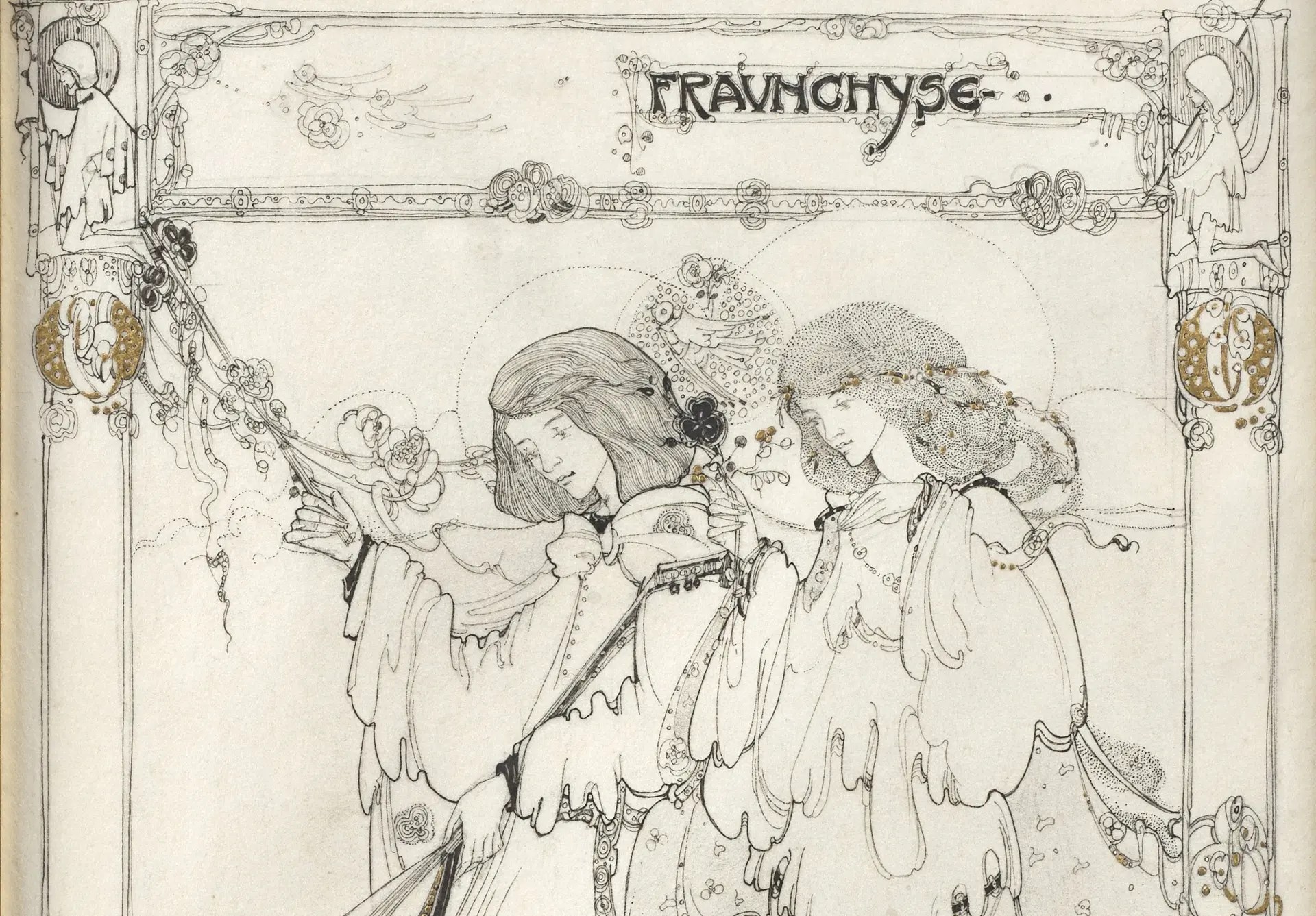
Among the highlights are Jessie M. King’s exquisite Art Nouveau drawing Fraunchyse (c.1907), Robin Philipson’s colourful still life Poppies on a Gold Ground (1984), and a group of miniature scenes painted on found objects by contemporary artist David Cass.
Cllr Margaret Graham, Culture and Communities Convener, said:Edinburgh’s art collection tells a remarkable story of Scotland’s creative talent, made possible in large part through the generosity of those who have gifted works to the city.
“From drawing and painting to photography and sculpture, the collection reflects the richness and diversity of Scottish art.
“This exhibition gives residents and visitors the chance to experience works by artists such as Victoria Crowe up close, and to enjoy them completely free of charge.”
Curator Dr Helen Scott (pictured top) said:“Over the last few years, we’ve been really fortunate to receive so many wonderful artworks as donations and bequests to the Fine Art collection.
“Some pieces have been gifted by artists themselves, while others have been offered by cultural organisations and members of the public. Such generosity allows us to increase the breadth and depth of the collection, sharing artworks in the public domain that might otherwise never be seen.
“Many of these artworks are being displayed here for the first time since their arrival. I’m really looking forward to visitors discovering them, and perhaps even finding a new personal favourite.“
As part of our ongoing work around the Knife Angel, South West officers have been carrying out targeted enforcement activity:
– We executed an MDA warrant which resulted in positive findings for cocaine and cannabis. The occupiers were linked to crimes of violence, including stabbings;
– One individual was arrested on a warrant in relation to a violent crime;
– We traced a missing person, who, when located and searched, was found in possession of a large kitchen knife and heroin. He was arrested and conveyed to custody;
– Proactive patrols led to the arrest of an individual following a theft by shoplifting in the city centre, with further action taken in relation to knife carrying;
– Our Oxgangs CPT officers and SW LIT team were involved in a foot chase with a nominal riding a Sur-Ron bike. They apprehended and identified the rider, with further enquiries ongoing following the arrest.
This incredible work demonstrates our continued commitment to identifying those involved in violence, drug supply and weapon carrying, and taking positive action to protect our communities.
WESTMINSTER’s Joint Committee on Human Rights has called for a new AI Bill to address the scale and seriousness of threats posed to human rights by artificial intelligence systems.
In a report published today, the Committee sets out a range of human rights risks that the existing regulatory and legal framework are ill-equipped to prevent or respond to. It calls for a new regime of safeguards that can address the complexity of AI supply chains and speed at which new systems develop.
Chair of the Joint Committee on Human Rights, Alex Sobel MP said: “AI is heralded as an unprecedented era of technological development with the potential to transform our lives for better or for worse.
“It is moving with such speed and complexity that its impact is hard to accurately predict. What is clear is that at present we are unprepared to deal with its consequences however potentially dire they may be.
“Nowhere in the world, including the UK, has a current legislative and regulatory approach to AI that is fit for purpose. New legislation is needed to establish a comprehensive set of protections that deal with the entire AI supply chain and its lifecycle. A single AI regulator should be established to set policy, monitor performance and with the teeth to ensure enforcement.
“We also recognise that AI has the potential to provide great benefits to society, including improving how human rights are protected. That is why it will be important to ensure that regulation is proportionate and targets the areas of AI development and usage that pose the greatest risks.
“Fundamentally, this is about making sure that you, as an individual, know when AI is being used in the decisions that affect you. We also want to make sure that if something does go wrong then avenues of redress will be available. We need these protections in now, it cannot wait until fear human rights risks become reality.”
Existing laws and regulation
UK laws that could apply to AI do so primarily at the point of deployment, leaving the responsibility on its users rather than its designers. Regulators lack the power to test and evaluate AI systems before they are released or to prevent their release if they are considered to pose unacceptable risks. Model developers engage with the AI Security Institute on a voluntary basis and it has no statutory power.
The current legal framework that applies to AI is fragmented and difficult to navigate. It relies on harm-specific and sector-specific legislation leaving gaps in protection which fails to address preventable human rights risks.
The right of an individual to seek effective remedy against decisions made against them is endangered by the use of AI. Insufficient transparency concerning how AI systems are used in decision making and a lack of effective mechanisms to challenge those decisions threatens the rights of people in the UK.
The risks of AI harms are particularly acute for already minoritised communities, including Black and Minority Ethnic people. As well, the right to privacy is under serious threat.
To address the global nature of AI harms, governments need to collaborate to identify risks and promote consistent standards. The UK should continue to play a leading role in international AI summits and seek to be party to international declarations and agreements on AI safety.
New AI Bill
A new Bill should take a risk-based approach to addressing AI harms. Low risk AI systems should be subject to fewer and less demanding legal requirements. Legislation should not place unjustified burdens on businesses, to enable UK companies to innovate and take advantage of the benefits AI can offer.
The AI Bill should establish a regulatory regime that classifies different risk levels and mandate more demanding obligations for higher risk AI systems and models. Obligations should be placed on all stages of the AI lifecycle, ensuring those responsible in the supply chain for designing, amending and utilising AI systems are aware of their obligations and they are effectively addressed.
Some uses of AI should be prohibited outright because they are incompatible with human rights. Potential areas for action include subliminal techniques, and inappropriate use of profiling or biometric data.
There should be a public consultation over the detail of what is prohibited. Other AI systems posing a high risk of causing human rights harms should require prior approval.
Legislation should place requirements on actors at all stages of the supply chain to undertake due diligence necessary to prevent an unacceptable risk to human rights when designing, developing or deploying AI systems. The requirements should be graded based on their role in the supply chain and the gravity of the risk posed.
Mandatory transparency requirements should be in force across the AI lifecycle. AI systems that can have significant impacts on individuals, groups and communities should include an obligation to state when AI systems are being used and how.
Data protection law provides specific safeguards for when automated decision making is used. The needs to be greater clarity in the law to ensure these safeguards operate effectively in practice. UK GDPR rules should be strengthened to ensure there are robust protections against the mis-use of automated decision making.
The mere presence of a ‘human in the loop’ is not sufficient to constitute meaningful human involvement or intervention.
Urgent action is needed to close gaps in the regulatory framework which is currently fragmented and difficult to navigate. A single, independent AI oversight body should be established on a statutory basis.
The body would act as the central point of contact for raising concerns about the use of AI and carry out oversight and monitoring of AI harms and risks. It should have strong powers to hold AI providers to account including setting codes of practice, transparency requirements and the power to sanction wrongdoing.
Bilal Iqbal from Livingston, and Ellen Verth from Edinburgh, who are both visually impaired, have teamed up to take on the Edinburgh Kiltwalk 2026 in support of Sight Scotland.
Bilal, who has been severely sight impaired since birth, and Ellen, who became visually impaired following a brain injury sustained in a cycling accident in 2012, have been friends for several years. Despite her own visual impairment, Ellen retains limited vision on her left side and regularly guides Bilal on outings, trips and at events.
Bilal, 31, who went to the Royal Blind School in Edinburgh and now works at the Scottish Braille Press as a Braille proofreader, comments: “I have wanted to take on a fundraising challenge for Sight Scotland for some time.
“Having attended the Royal Blind School, worked at the Scottish Braille Press, and been involved with Sight Scotland’s Policy Group and Sight Loss Councils Edinburgh, I have seen first-hand the incredible work the charity does.
“Sight Scotland not only provides vital support to people with visual impairments, but also works tirelessly to improve accessibility, raise awareness, and create opportunities for people with visual impairment across Scotland. Taking part in the Edinburgh Kiltwalk feels like a good way to give something back and help support that important work.
“It’s great to be taking part in the Kiltwalk with Ellen. We have been friends since 2018, and she has been a tremendous support to me, guiding me on days out and to events. We do something together at least once or twice a month. Ellen is truly inspirational. She has been through so much, yet she still finds time to help others. She supports me in so many ways, and I can’t thank her enough.”
Ellen, who also volunteers with Sight Loss Councils Edinburgh, comments: “My accident happened in 2012.
“I was on a cycling trip with my partner near Peebles when I crashed. I do not remember the accident itself, but I was in hospital for six months and spent five-and-a-half weeks in a coma. The accident resulted in a severe brain injury that caused both visual and cognitive impairments. I can be forgetful now and sometimes get confused, which can be frustrating.
“However, I also consider myself fortunate because I still have some vision. My sight is hazy, and not good on my right side, and I may also be developing a cataract. But I am still capable, and recently I travelled to Australia and Thailand which was amazing.
“I love being part of Sight Loss Councils Edinburgh, it has had a huge impact on my life. It gets me out of the house, keeps me active, and gives me a real sense of purpose. Sight Loss Councils are all about helping people and making the world more accessible for those living with visual impairment.
“Before my accident, I was always busy with work. I ran my own financial consultancy business and regularly travelled to London. Then, after the accident, there were several years when life became much quieter.
“When you are not connected with other people who have visual impairments, it can be easy to feel isolated. Being part of the Sight Loss Councils reminds us that we are not alone. We support one another, challenge misconceptions, and help people understand that we are still capable of living full, active lives and doing the things they enjoy.
“That is one of the reasons it’s so great to be taking part in the Kiltwalk for Sight Scotland. Raising money is important, but just as importantly, it’s an opportunity to raise awareness of the challenges people with visual impairment face and to highlight the support that is available.”
Sight Loss Councils Scotland are run by Sight Scotland, Sight Scotland Veterans and Visibility Scotland and are delivered in partnership with the Thomas Pocklington Trust. There are currently three Sight Loss Councils in Scotland, based in Edinburgh, Glasgow and Dumfries and Galloway.
Each Council is made up of a group of visually impaired volunteers who draw on their lived experience to address local and national issues and to champion accessibility, inclusion and equality.
As we mark the 86th anniversary of Battle of Britain Day on 15 September, we remember the courage, sacrifice and resilience of the remarkable generation known as ‘The Few’.
During the summer and autumn of 1940, they fought and won against incredible odds in the skies over southern Britain, helping to defend our nation in one of its darkest hours and secure the freedoms we enjoy today.
Their legacy continues to inspire generations that have followed.
This commemoration carries a deeply personal meaning for me. As a former RAF Sergeant and parachute jumping instructor, I know first-hand the challenges military service can bring. During a routine exercise, my main parachute failed and my reserve became tangled, resulting in a 6,000ft fall that left me paralysed.
With the support of the RAF Benevolent Fund, the RAF’s longest-standing charity, I was able to rebuild my life, regain my independence and find a new purpose. Today, I am proud to serve as an ambassador, helping others understand that support is available when they need it most.
The men and women who fought during the Battle of Britain faced extraordinary pressures and uncertainty. While the nature of military service has changed over the decades, the demands placed on those who serve remain significant. Around the world, members of the RAF continue to deploy and operate wherever they are needed, often at considerable personal cost to them and their families.
That is why it is so important that we continue to honour our commitment to those who serve. No one who has served their country should face life’s challenges alone. Just as the RAF Benevolent Fund was there to support RAF personnel and their families during and after the Second World War, it remains committed today to providing support when need arises and to strengthen the resilience and wellbeing of the RAF Family, enabling individuals, families, and communities to thrive through all stages of life.
The Battle of Britain provides a poignant reminder not only of what was achieved through courage and determination, but also of our responsibility to look after those who have served. It is a responsibility that spans generations and remains as relevant today as it was eighty-six years ago.
If you know anyone who could benefit from the life-changing services the Fund provides, you can find more details at rafbf.org, or you can call on 0300 102 1919.
Yours sincerely,
Bob Greig
RAF veteran and RAF Benevolent Fund Ambassador
Bob Greig picture by Ollie Dixon
Battle of Britain crew picture: MOD Crown Copyright
Welcoming guests from over 100 nations, visitors from the US, Hong Kong and Mauritius all flocked the 17th-century site this season.
One of Edinburgh’s leading heritage attractions, The Real Mary King’s Close, has celebrated a record-breaking summer after welcoming 106,477 guests across June, July and August.
Admissions at the historic attraction, located beneath Edinburgh’s Royal Mile, increased by 12% year on year across June and July, with August admissions 6% ahead of the same period in 2025.
The strong performance comes during another busy summer for Edinburgh, as visitors from around the world travelled to the capital during its tourism peak.
The Real Mary King’s Close recorded visitors from more than 100 countries and territories this summer, underlining both Edinburgh’s continued international appeal and growing interest in the city’s hidden history.
The United States was the attraction’s largest identifiable overseas market, with 6,357 visitors, followed by Canada with 1,304 and Germany with 1,037. Strong numbers were also recorded from France, Spain, Australia, the Netherlands and Italy.
Guests travelled from across Europe, North and South America, Asia, the Middle East, Africa and Oceania, including visitors from locations as far afield as Afghanistan, French Polynesia, Samoa, Mauritius and the Cayman Islands.
Paul Nixon, General Manager at The Real Mary King’s Close, said:“Welcoming more than 106,000 guests and achieving a record-breaking summer is a fantastic result for The Real Mary King’s Close and our dedicated team.
“This performance comes against the backdrop of an increasingly competitive tourism market, with visitors understandably more conscious of how and where they spend their money. Our team has worked incredibly hard to achieve these results and ensure that every guest enjoys an experience which offers both quality and value.
“It has been another incredibly busy summer for Edinburgh, and it is encouraging to see visitor numbers continuing to grow. Welcoming guests from more than 100 countries and territories demonstrates the enduring international appeal of the Capital and the appetite for authentic heritage experiences that bring its history to life.
“We are proud to play our part in Edinburgh’s world-class tourism offering and look forward to building on this momentum throughout the remainder of the year.”
For more information about The Real Mary King’s Close and bookings, please visit:
BBC Scotland’s Debate Night is coming to Edinburgh on the evening of Wednesday the 23rd of September – and local people are being invited to take part.
The programme, hosted by Stephen Jardine, gives members of the public the chance to put their questions directly to a panel of politicians and public figures and debate some of the biggest issues facing Scotland.
Producers are looking for people with a wide range of views and experiences to join the Edinburgh audience – from students and young people to parents, carers, workers, business owners and retirees.
16.02.22 Tinopolis Factual Group BBC Scotland Debate Night Series 3 tx1 Stirling Presenter Stephen Jardine
Contact KATIE COSTELLO Production Manager Tinopolis Factual Group
London | 4th Floor, No 1 Smiths Square, 77 – 85 Fulham Palace Road. London W6 8JA Glasgow | 5th Floor, 5 Morrison’s Court, 20 Buchanan Street, Glasgow G1 3LH m. 07811946280 e. graemehunter@mac.com”